

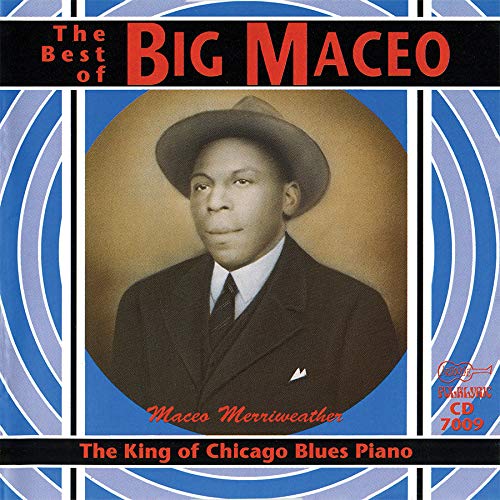
Big Maceo: The King Of Chicago Blues Piano Audio CD, 1941–1945 recordings
Product description
For a listening session focused on early piano blues, The King Of Chicago Blues Piano brings together recordings made in Chicago from 1941 to 1945. The listing identifies the release as an Audio CD credited to Big Maceo.
Its appeal is its defined historical scope: this is music recorded in Chicago during the early 1940s, not a modern recording. That context makes the album relevant to listeners exploring piano blues or Chicago blues.
The available details do not provide a track list or disc count. That makes it harder to judge the exact program before buying, so the release is a more straightforward choice for listeners drawn to the artist and period than for someone selecting an album by specific songs.
Who it’s for
This CD suits listeners building a collection around Big Maceo, piano blues, or Chicago blues recordings from the early 1940s. It can also provide a focused starting point for exploring music from that scene without choosing a broader, multi-artist overview. Worth considering if the recording period and artist are more important to you than a listed set of tracks.
It might not be a great match if you specifically want contemporary recordings: the material here was recorded in 1941–45. The supplied information does not describe the sound or identify individual performances, so it cannot establish what the listening experience will be like beyond that historical setting.
What you’ll notice day to day
The CD format gives the release a physical place in a music collection, while the title and artist credit make its focus easy to identify. For example, it could fit into a listening session centered on early blues piano, followed by other Chicago blues records from the same broad period. The recording dates offer useful context when organizing a collection or comparing different eras of the genre.
The listing says this material had previously been reissued on Blues Classics LPs 28 and 29, as well as through other sources. That background may matter to collectors who are comparing releases, but the provided details do not specify which recordings appear on this CD or how its contents compare track by track with those earlier issues. A release with a full track listing would be easier to assess if song selection is your main priority.
Worth noting
The clearest reason to choose this release is its combination of Big Maceo, piano blues, and Chicago recordings from 1941–45. The provided product information identifies an Audio CD, but does not state the disc count, track list, or additional packaging details. Those omissions leave the exact contents uncertain from this information alone, they are not evidence that any particular feature is included or missing.
For a practical choice, treat it as a period-specific artist release rather than a fully documented overview of Chicago blues. If you want a wider introduction across performers, a multi-artist collection may be a better fit. If you already know you want Big Maceo’s early Chicago material in CD format, the stated scope gives you a concrete basis for choosing it.
Before you decide
When were the recordings made? The material was recorded in Chicago from 1941 to 1945.
Who is the release credited to? The product listing credits Big Maceo and identifies the format as Audio CD.
Was this material issued before? The listing says it had previously been reissued on Blues Classics LPs 28 and 29 and through other sources, it does not give a track-by-track comparison with this CD.
Final verdict
Choose The King Of Chicago Blues Piano if you want a physical CD centered on Big Maceo and recordings from Chicago in 1941–45. Its historical focus is clear, but the supplied listing does not reveal the track selection or disc count. Listeners who need those details to compare releases may prefer a listing with a complete track list before deciding.