

A-Premium AD100 OBD2 Scanner for Cars
Product description
This compact OBD2 scanner from A-Premium helps identify check engine causes quickly, offering code reading, clearing, live data and basic battery checks for gasoline vehicles made since 1996. It is designed for DIY mechanics and owners who want a straightforward diagnostic overview before seeking professional repair.
Key Points
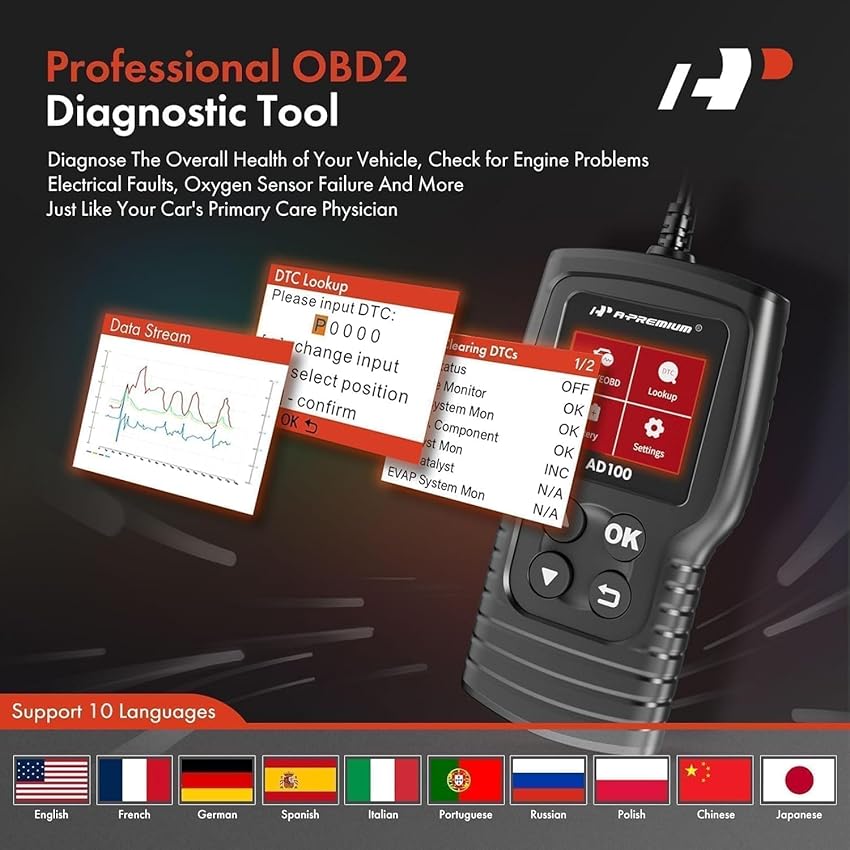
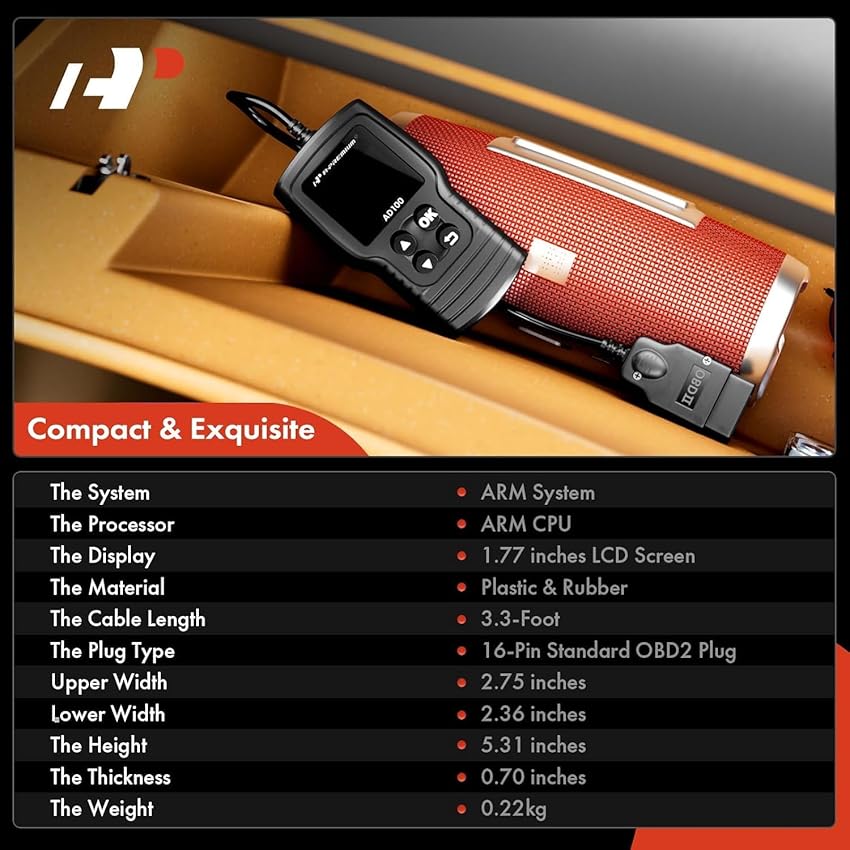
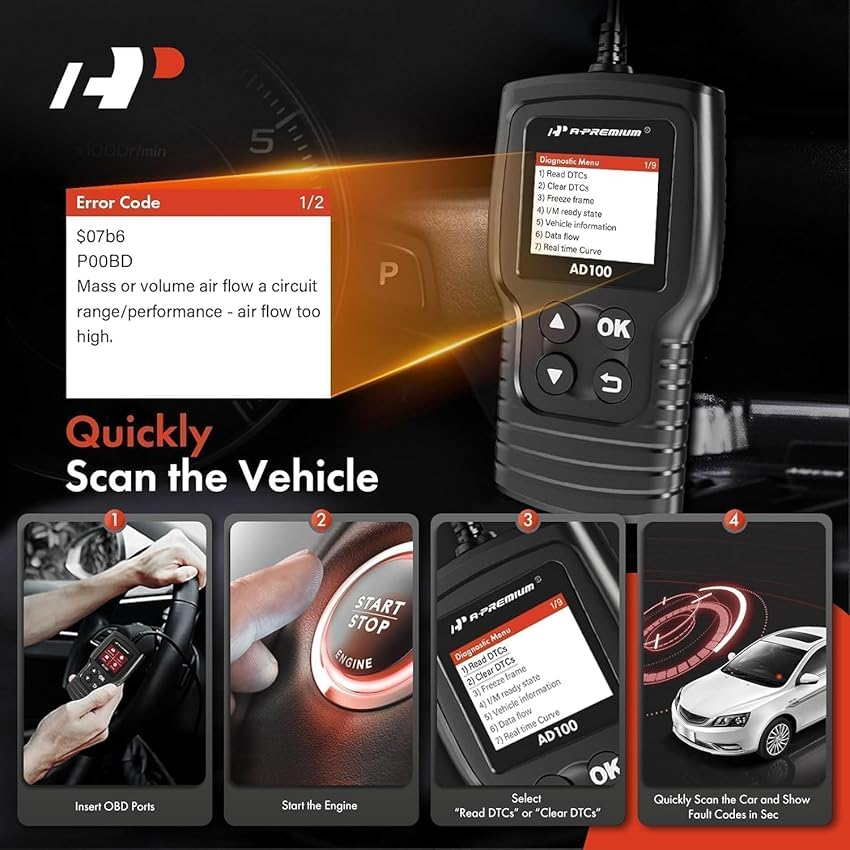
The AD100 reads and clears diagnostic trouble codes and includes a DTC library with a large reference set of fault descriptions according to the manufacturer. It displays live data streams and freeze frame information so you can observe sensor values while the engine runs. The tool also performs an I/M readiness check for smog-related monitors, which helps determine if emission systems report readiness. The unit is handheld, with a 1.77-inch screen and a 3.3-foot cable that gives some flexibility when accessing the OBD port. ⚙️
Technical Specifications
- Name: A-Premium AD100 Universal OBD2 Scanner Diagnostic Tool
- Display: - 1.77-inch screen.
- Cable length: - 3.3 feet (approximate).
- CPU: - 32-bit processor.
- Protocols supported: - KWP2000, ISO9141-2, J1850 VPW, SAE J1850 PWM, and CAN (15765-4).
- Vehicle coverage: - Gasoline vehicles 1996–2024 (USA), 2000–2024 (Europe), 2008–2024 (Asia).
Benefits
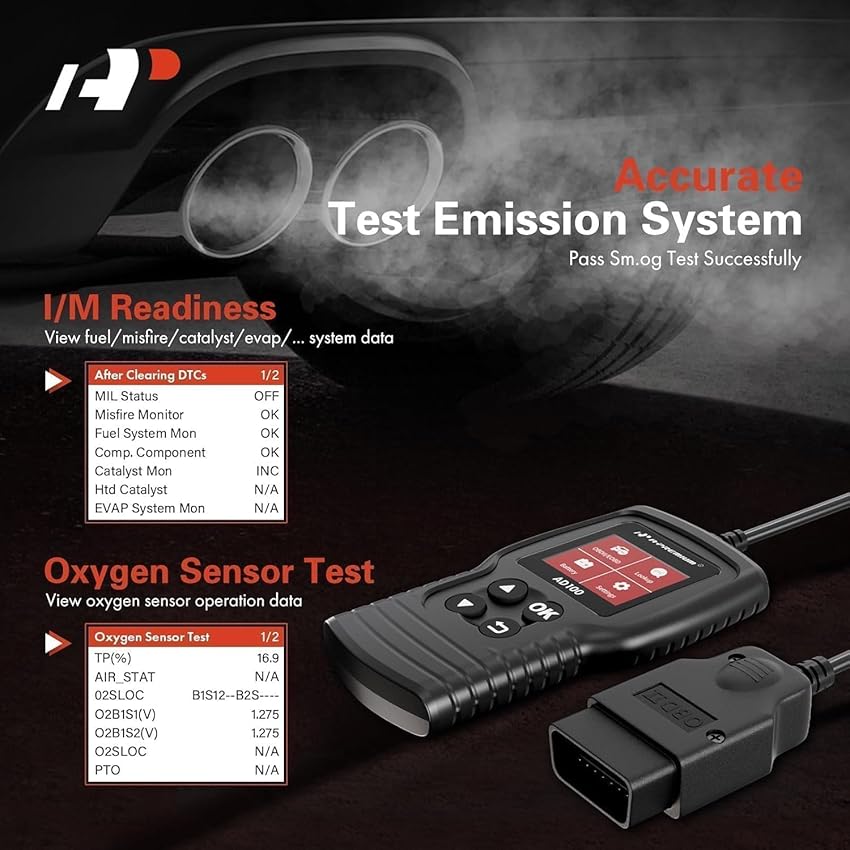
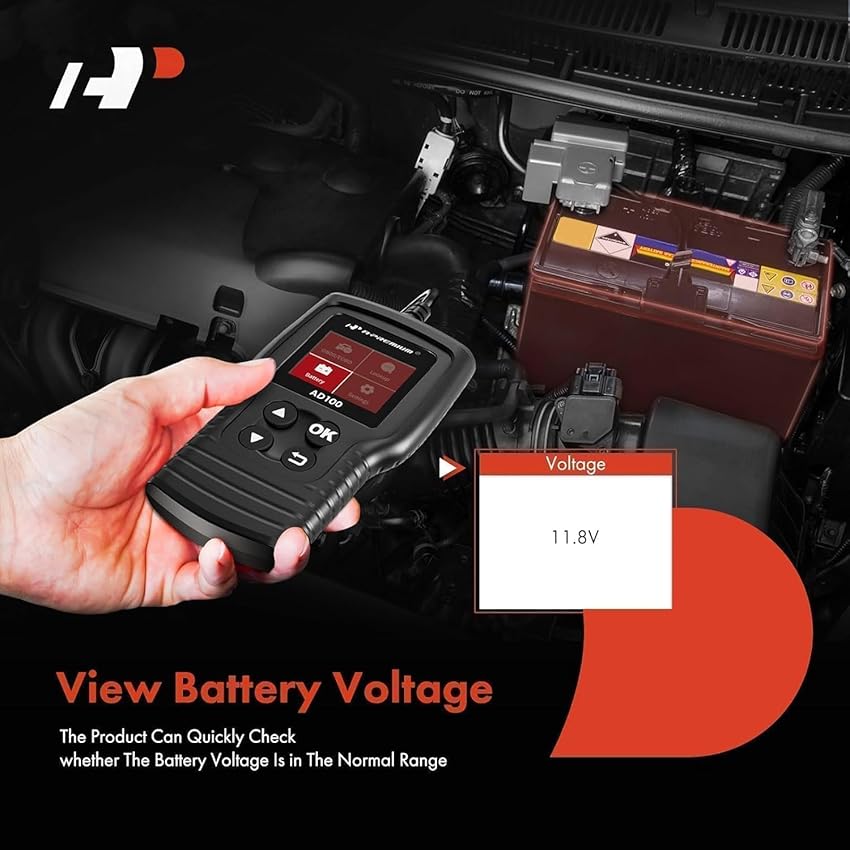
Reading codes is fast and the included DTC database of around 100,000 entries makes it easier to understand generic and many manufacturer codes without additional apps. Live data and real-time graphing help with basic diagnostics such as monitoring O2 sensor response or checking misfire counts. The battery test function gives a quick status check for starting/battery-related issues when you suspect weak charging or cranking problems. 🔧
Usage Recommendations
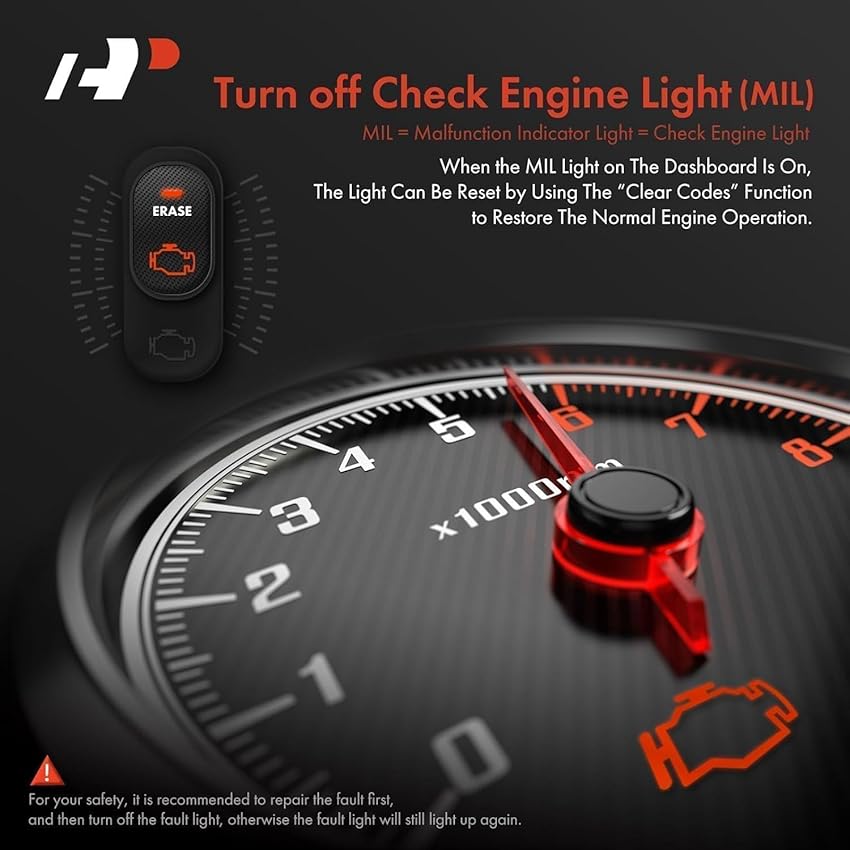
Plug the scanner into the vehicle OBD2 port with the engine off and then start the car or follow the unit prompts to access live data. Use the I/M readiness function before a smog check to confirm monitor status. Consider clearing codes only after repairs are completed, because unresolved faults will cause the light to return according to the manufacturer. Note that this model does not support full electric vehicles or 24V heavy trucks, and some advanced manufacturer-specific functions will be unavailable on older or very new models. 📊.