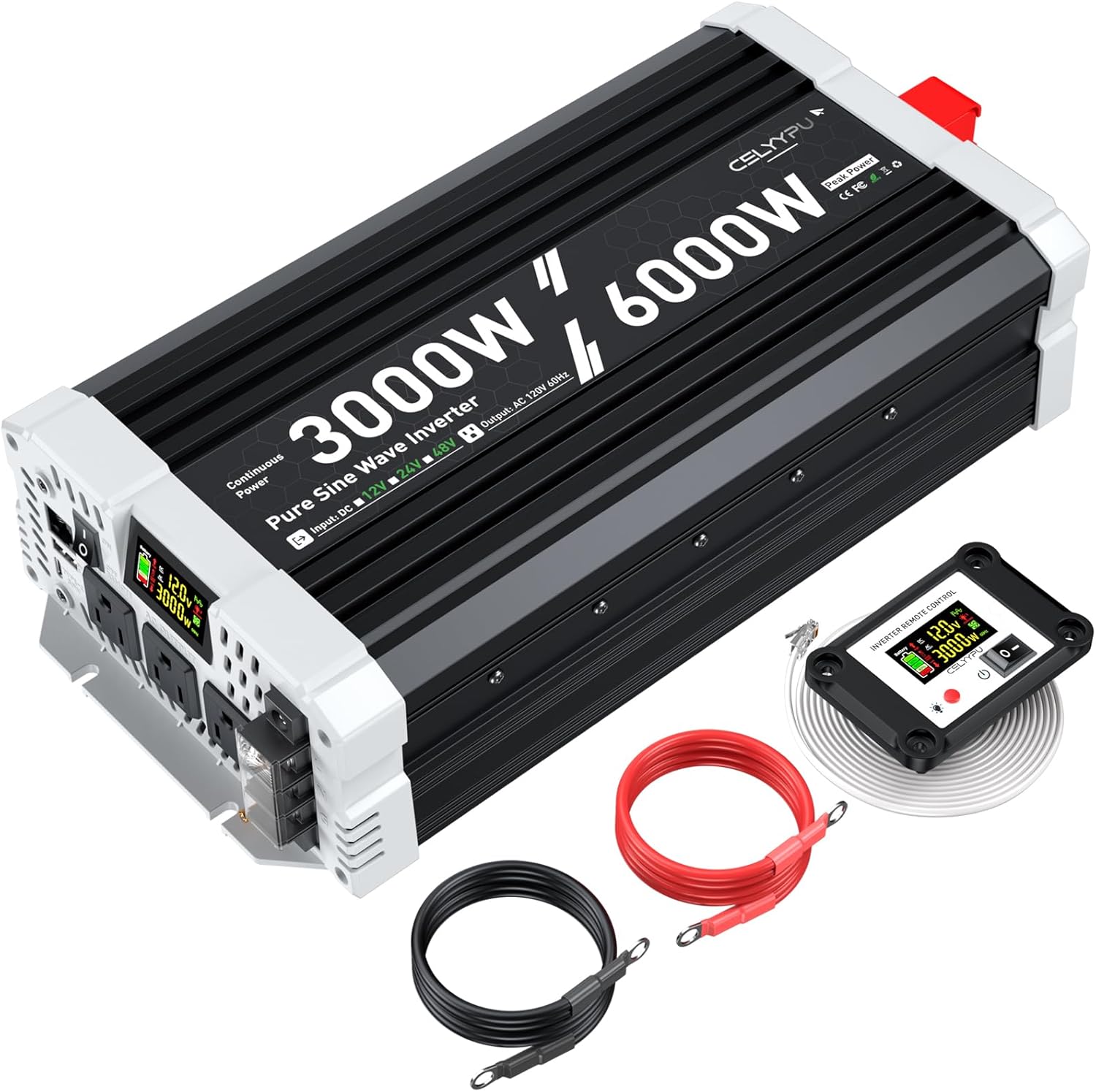
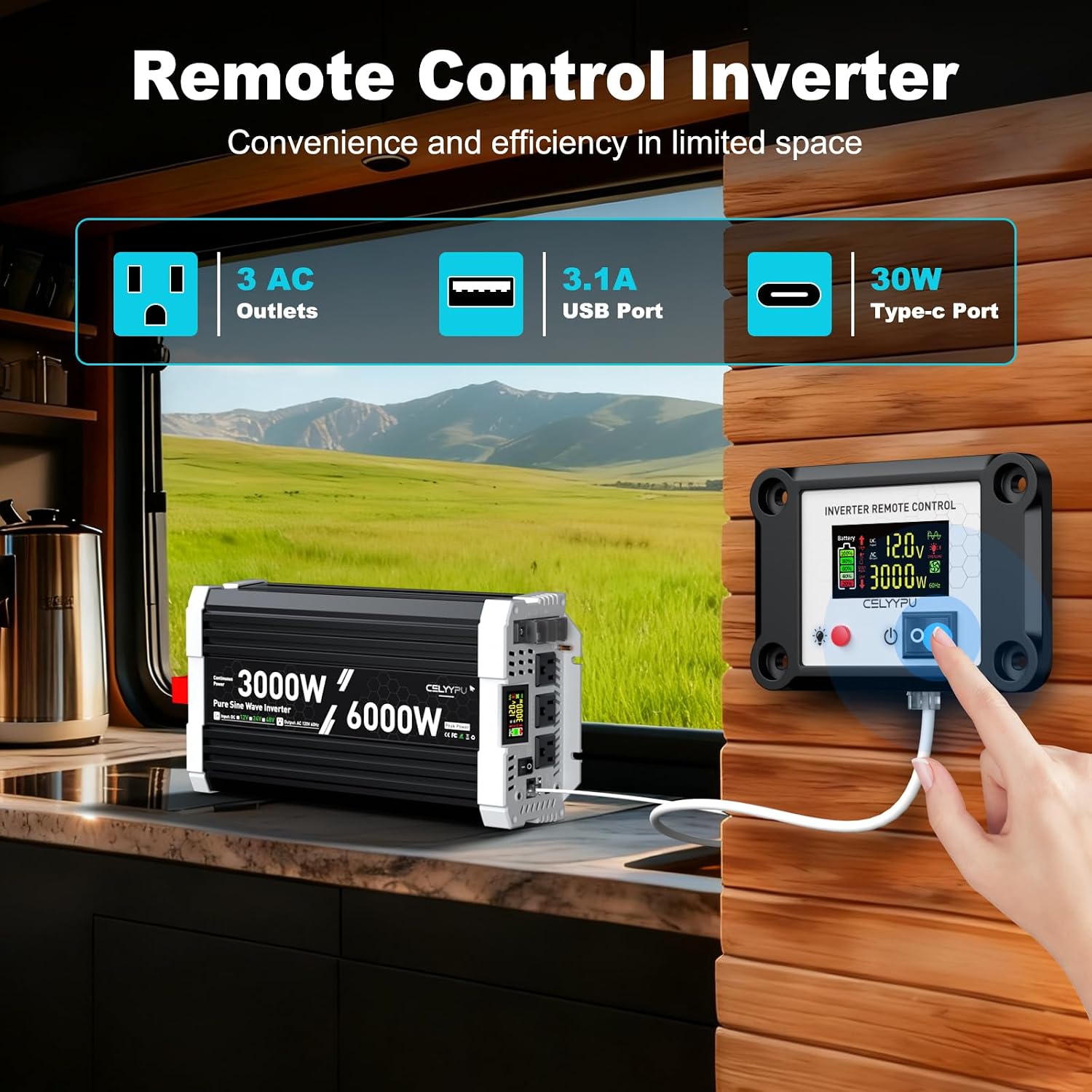
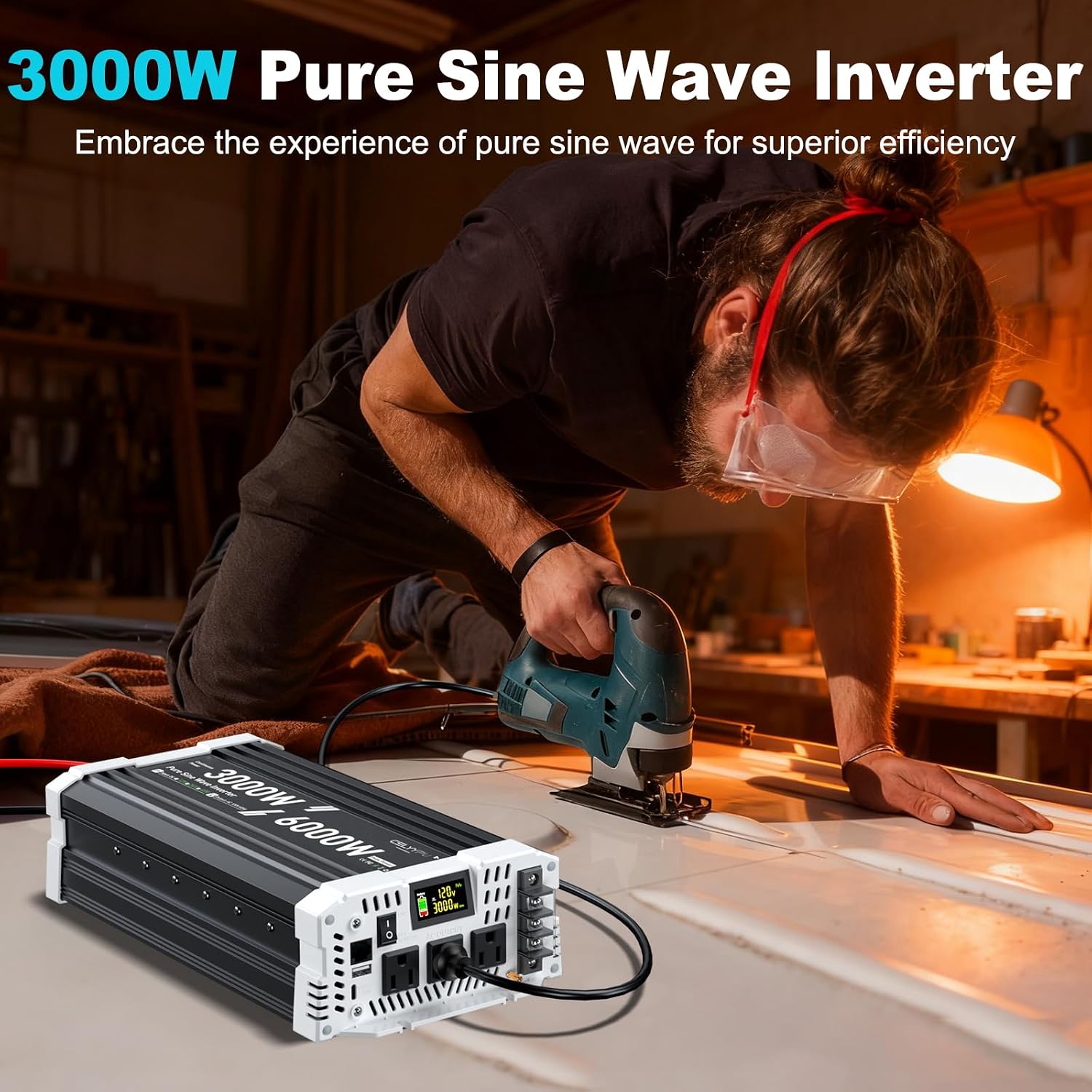
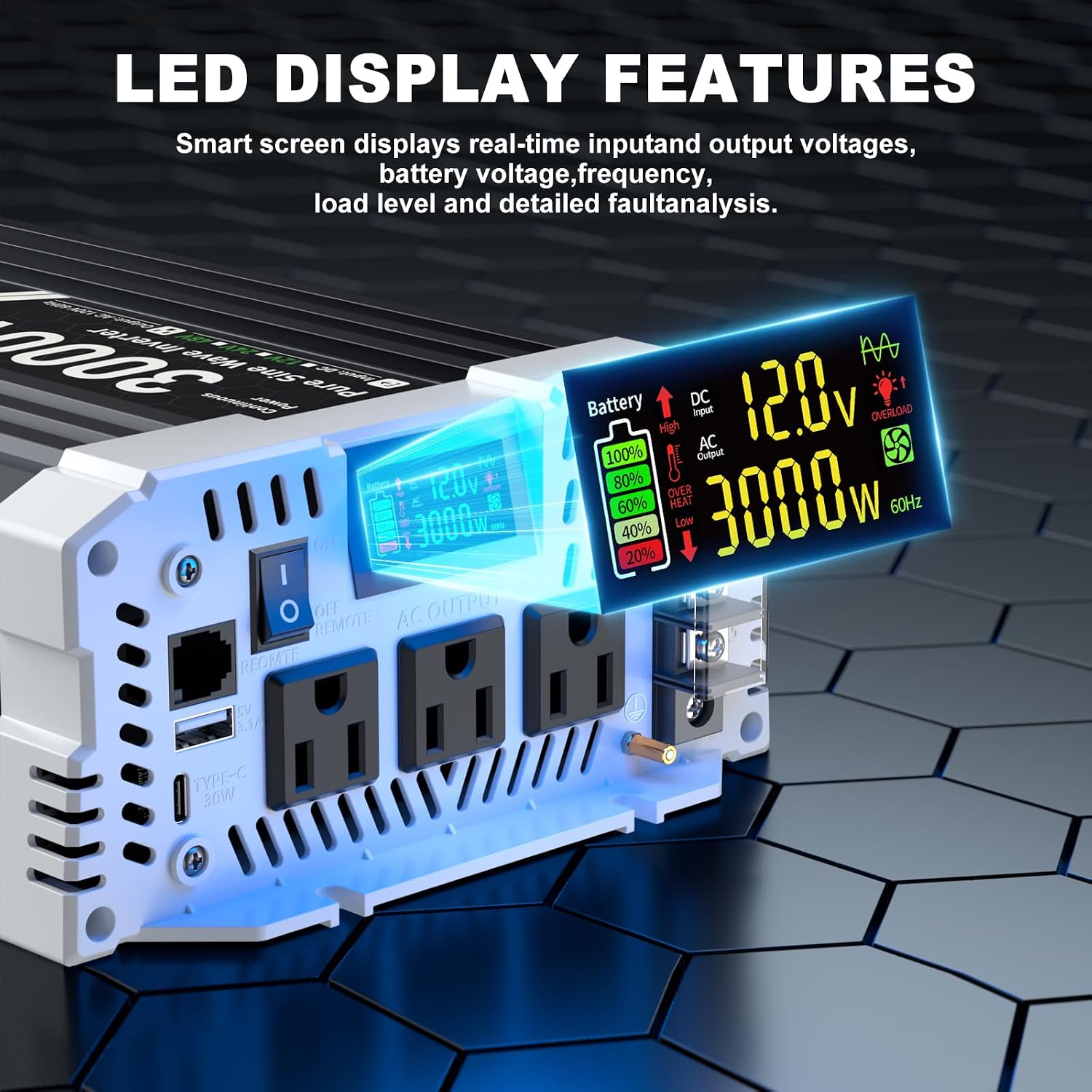
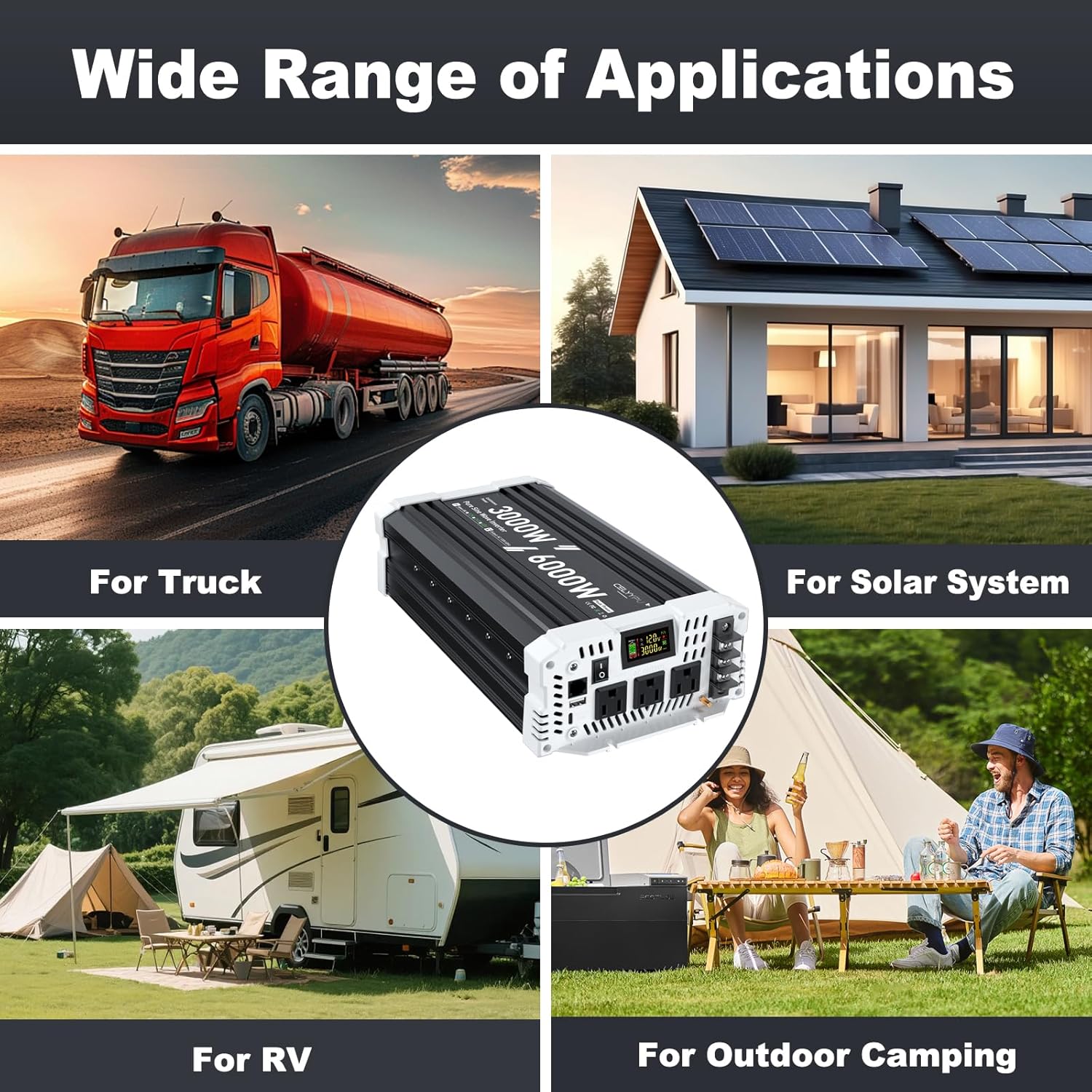
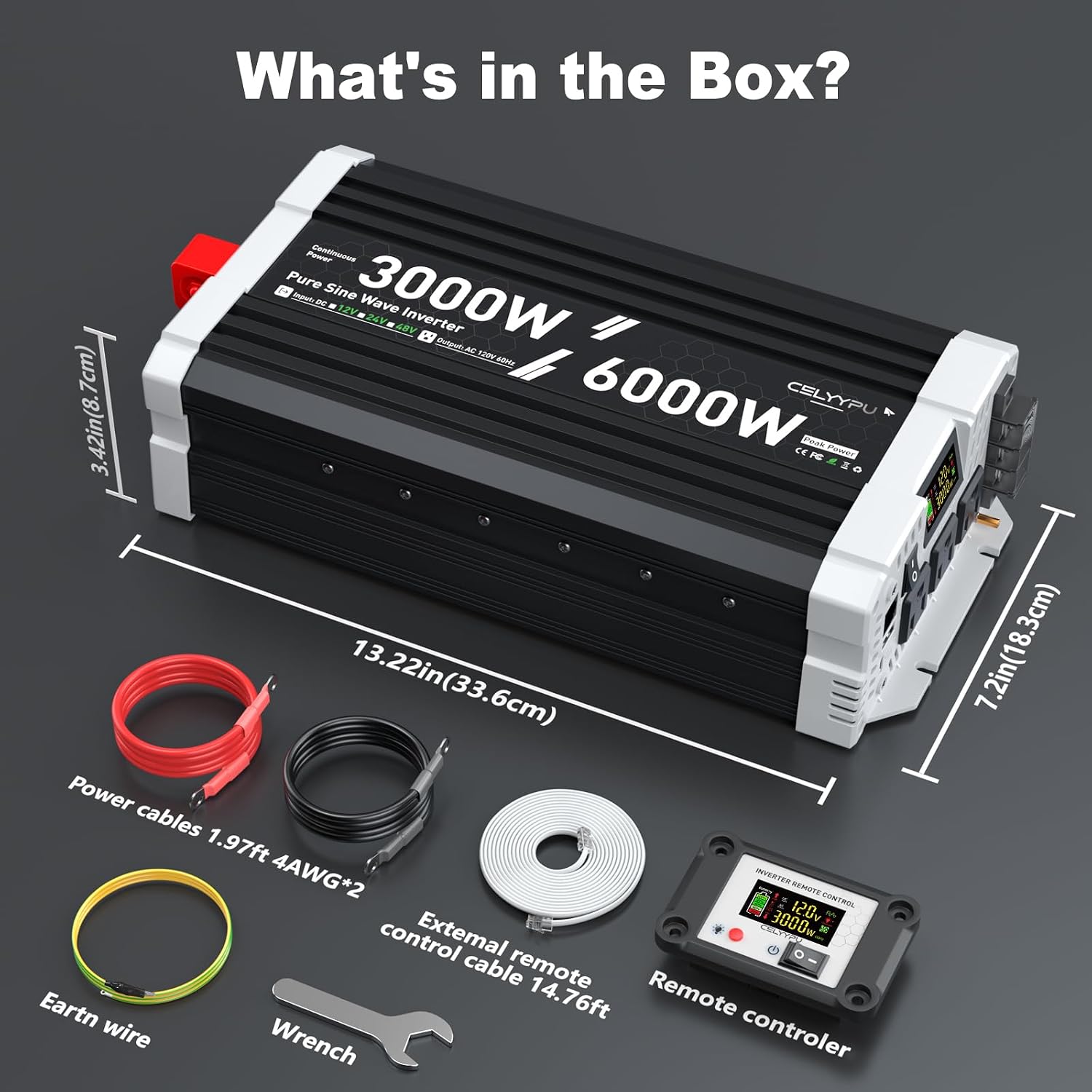
What it is and what problem it solves\nThis 3000W pure sine wave inverter converts 12V DC from a battery system into 110V/120V AC, designed for RVs, off-grid homes, and emergency power setups. With a peak power of 6000W, it aims to support larger loads while keeping output smooth and clean on the same waveform as the public grid. If you’re trying to protect sensitive appliances and reduce irregular noise from power conversion, this unit is positioned to fill that gap without requiring a dedicated generator.\n\n## How it works in practice\nThe device uses advanced pure sine wave technology to minimize no-load losses and maximize efficiency, targeting over 91% under typical operation. That efficiency can translate to longer battery runtime in off-grid contexts, especially when paired with a solar setup or a backup battery bank. The aluminum/plastic housing keeps the unit relatively portable for a 3000W class inverter, which matters if you need to move it between an RV, shed, or vehicle.\n\n## Key features that matter in real life\n- 12V DC input to 110V/120V AC output, with three AC sockets and a hard-wired port, plus USB and Type-C for quick device charging.\n- Hard-wiring terminals are labeled L, N, G, which is useful if you’re integrating the inverter into a more permanent electrical setup.\n- Dual LCD display and a 14.76-foot wired remote provide visibility and control without having to reach the unit itself. You’ll see input/output voltages and battery load status at a glance, which helps with troubleshooting during outages.\n- Built-in safety protections include under/over-voltage, overload, over-temperature, short-circuit, and reverse connection safeguards. The cooling and enclosure materials suggest durability for field use.\n\n## What stands out in daily use\nOn the surface, the combination of a robust 3000W rating with a clean sine wave output and a long remote cable is convenient for RVs or cabins where you want reliable power without frequent generator running. The three AC outlets and a USB-C port cover common charging and appliance needs, while the hard-wired option helps when you’re powering more demanding devices directly from a battery bank.\n\n## Limitations and where it might fall short\n- AC outlets are rated at a maximum of 15A, if you plan to run devices that draw more, you’ll need to connect through the hard-wired port to avoid tripping or outlet burnout.\n- As with any high-wattage inverter, heat and load management matter, ensure adequate ventilation and consider pairing with a temperature-aware controller if you’ll run near peak for extended periods.\n- The exact performance under continuous heavy load depends on your battery and solar setup, so real-world runtime can vary.\n\n## Ideal user profiles\nThis inverter makes sense for RV owners, off-grid homes, or work trucks that need a reliable 110V supply from a 12V battery system and want a safer, cleaner sine wave for sensitive electronics. It’s particularly appealing if you value a built-in remote display and a straightforward integration path with a solar array.\n\n## When it’s not the best fit\nIf your priority is ultra-compact size, ultra-high-efficiency under light loads, or you seldom need more than a few outlets, there might be smaller or simpler options that fit your needs more tightly. If you’re powering devices that regularly pull more than 15A per outlet, you’ll rely on the hard-wired port, for some users, that adds setup steps.\n\n## What to check before buying\n- Confirm your battery bank and solar charger can support the inverter’s 3000W continuous or lower continuous load needs.\n- Map out which devices will run on which outlets, and plan to use the hard-wired port for high-draw equipment.\n- Ensure adequate ventilation and consider a remote monitoring plan to track temperature and load.\n\n## Practical usage example\nImagine a weekend RV trip with a mid-size fridge, a microwave for quick meals, and a laptop for work. The inverter can power the fridge and laptop through the 110V outlets while you recharge devices via USB-C. If you fire up both a microwave and fridge at the same time, the system’s safety protections are meant to prevent damage, though you’ll want to monitor the load to avoid tripping the 15A outlets.\n\n## FAQ (practical answers you can trust based on available data)\n- Can I run a high-draw AC device through the outlets? Yes, but the maximum per outlet is 15A, for heavier loads, use the hard-wired port.\n- Does it show real-time status? Yes, the dual LCD displays input/output voltage and battery load, which helps with on-the-fly decisions.\n- Is it suitable for sensitive electronics? Yes, the pure sine wave output helps protect devices that are sensitive to waveform irregularities.\n\n## Should you buy it?\nThis is a solid pick if your setup requires 12V to 110V conversion with a clean sine wave, multiple outlets, and a clear remote display for off-grid or RV use. It isn’t perfect for everyone—if you often need more than 15A per outlet or prioritize the smallest footprint, you may want to compare with lighter-duty or differently configured inverters. The decision hinges on how you balance peak power needs, safety features, and the convenience of the dual LCD remote across your typical camping or emergency scenarios.