


The “Deal Calendar” Method: When to Buy Online (and When to Wait)
A practical US-focused way to time online purchases using seasonal sales, price alerts, and smart trade-offs—without guesswork.
Buying online isn’t just about finding a coupon—often the biggest savings come from buying at the right moment. The trick is building a simple “deal calendar” mindset: know which seasons tend to discount which categories, then use price alerts and a few decision rules so you don’t wait forever (or overpay).
Below are practical, real-world scenarios with the trade-offs spelled out. You’ll walk away knowing when waiting usually pays off, when it doesn’t, and what to do in the days leading up to big sale weekends.
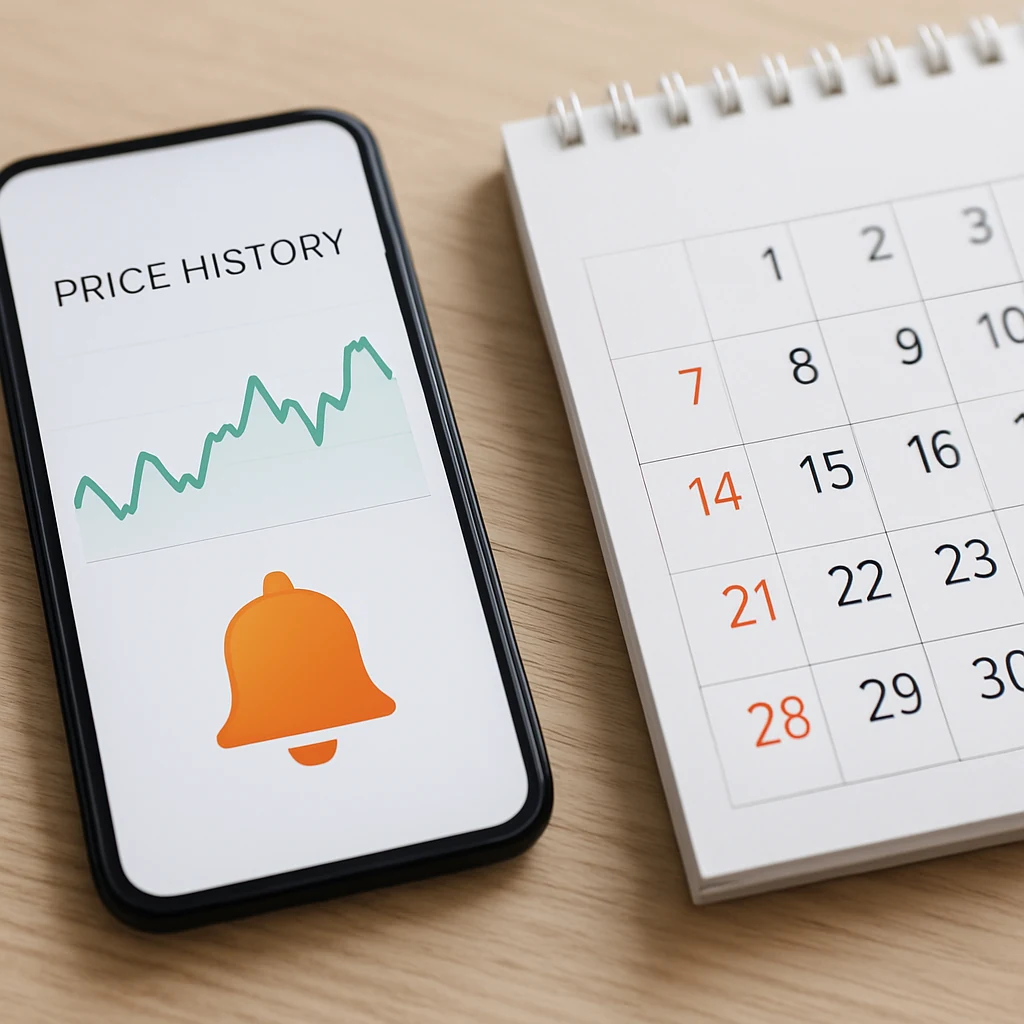
The deal calendar mindset (in plain English)
Think of online discounts as waves. Big retail moments (Memorial Day, Prime Day-style events, Back-to-School, Labor Day, Black Friday/Cyber Monday) create predictable pressure for stores to compete—especially in certain categories.
But “wait for a sale” isn’t always smart. Waiting has a cost: you might need the item now, miss your return window, lose stock, or watch a model refresh make accessories incompatible.
A practical approach is:
- Match your item to a season that commonly discounts it.
- Set a target price you’d be happy paying.
- Use price tracking so you don’t rely on memory.
- Decide your “buy vs wait” point before you’re emotional about it.
This method is especially useful for mid-to-high ticket purchases where a good sale can beat any random promo code.
Case study #1: You need a laptop soon (but don’t want to overpay)
Scenario: Your current laptop is dying. You can stretch it maybe 2–3 weeks, but not months. You’re shopping online at major retailers and brand stores.
Trade-off: The best laptop pricing often shows up around large sales events (and sometimes when new models are announced). But if you wait too long, your old machine could fail, and “urgent buying” tends to lead to overpaying or settling for the wrong specs.
What to do (decision-first):
Start by picking your spec floor (the minimum you’ll accept), then decide whether you’re buying:
- New (safer warranty/returns, cleaner condition)
- Open-box/refurbished (can be a strong value, but check return policy and who handles warranty)
If you need it within weeks, aim for a strategy like this:
- Week 1: Build your shortlist (2–3 models), then watch prices across a couple of major retailers.
- Week 2: Set price alerts and watch for “instant savings” or limited-time promos; don’t wait for a mythical perfect deal.
- Week 3: If your laptop is unstable, buy when you hit your target price—even if a bigger event is coming. The savings from waiting can be wiped out by rush shipping, downtime, or buying a backup device.
The overlooked win: Pay attention to bundles (laptop + accessory discounts) and student/teacher, military, or employer discounts if you qualify. Those often run outside the big holiday weekends and can beat a one-day promo.

Case study #2: Back-to-School shopping… when you’re not a student
Scenario: You want a tablet, headphones, a printer, or a desk chair for your home setup. You’re not shopping for school, but you can benefit from the same seasonal competition.
Trade-off: Back-to-School promos can be excellent for tech accessories and home office basics. The downside: popular models sell out, and some deals are “good” because they’re older inventory.
How to shop it like a pro:
Instead of searching “best deal” broadly, focus on what retailers tend to push during Back-to-School:
- Accessories and peripherals (keyboards, mice, webcams, headsets)
- Printers and ink bundles (watch ongoing ink costs, not just the printer price)
- Storage and networking (external SSDs/HDDs, Wi‑Fi gear)
If you’re flexible on color or minor features, you’ll usually find more options. If you’re picky (specific model, specific color), set alerts earlier and be ready to buy when it hits your number.
Returns reality check: Back-to-School timing can overlap with shifting return policies. Before you click “buy,” skim:
- return window length
- whether return shipping is free
- restocking fees for opened electronics
Those policies matter more than saving a few dollars.
Case study #3: The “Prime Day effect” even if you don’t shop that site
Scenario: You’re looking for smart home gear, small appliances, or everyday items (razor refills, detergent, pet supplies). You’re not loyal to one marketplace.
Trade-off: Mid-summer deal events tend to trigger competitors to run parallel promos. The opportunity isn’t just the featured site’s prices—it’s the competitive reaction across the web.
The move: Use the event week to compare across at least two other stores you already trust. Sometimes you’ll find:
- the same brand at a similar price but with better returns
- a bundle (extra filters, extra attachments) that’s a better overall value
- faster shipping without a membership requirement
The hidden trap: Some everyday items look discounted but aren’t great value because the pack size changed (smaller count, same price). Always confirm unit price when you can.

Case study #4: Black Friday/Cyber Monday for “boring” buys (and why timing matters)
Scenario: You want a vacuum, air purifier, espresso machine, or TV. You’re aiming for Black Friday/Cyber Monday.
Trade-off: Big events can bring real discounts, but also:
- limited-time promos that vanish fast
- model-number variations made for specific retailers
- deal fatigue that leads to impulse upgrades
A better approach: Decide your purchase window before November.
If you can, set up your plan in early fall:
- Identify 2–3 acceptable models.
- Track prices for a few weeks so you recognize a true drop.
- Choose your “buy line”: the price where you’ll stop looking and purchase.
Then, during Black Friday/Cyber Monday, your job becomes simple: buy if it hits your line, ignore everything else.
This removes the stress and prevents the common outcome of “I bought the better version because it was only $X more.”
How to build your own deal calendar (without turning it into a hobby)
You don’t need a spreadsheet empire. You need a repeatable flow.
Step 1: Pick your next three purchases
Don’t track everything. Track only what you actually plan to buy in the next 30–90 days.
Example trio:
- new running shoes
- noise-canceling headphones
- air fryer
Step 2: Set a target price and a deadline
A target price answers: “What would feel like a win?” A deadline answers: “When do I stop waiting?”
This is the key trade-off control. Without a deadline, you’ll always be waiting for a better deal.
Step 3: Use two forms of tracking
Use a wishlist/cart save plus a price alert (via your preferred tool/extension). The wishlist tells you what you intended to buy; the alert tells you when the market moves.
If you’re comparing sellers, make sure you’re tracking the same thing (same model, size, color, and condition).
Step 4: Evaluate the total cost, not just the sticker price
In the US, what you pay can change at checkout due to sales tax, shipping, and sometimes fees.
A “deal” that’s $10 less can lose if it has:
- paid shipping
- shorter return window
- slower delivery that forces you into an alternative purchase
If you want more checkout-specific tactics, you can also browse more guides on our homepage: https://your-site.com/.
Quick tips (fast, practical, and easy to forget)
- If a product has multiple versions, confirm the exact model number before you compare prices.
- For items you might return, prioritize retailers with easy returns over a slightly lower price.
- If you’re near a big sale weekend, don’t buy early unless the store offers price matching or price adjustments (and you’ve read the fine print).
- Don’t ignore “boring” timing: even a random three-day weekend sale can be the best moment for home goods.

FAQ
Is it ever a bad idea to wait for a big sale event?
Yes—when you have a real deadline (a trip, a broken device, a gift date) or when stock is likely to disappear. Waiting can also backfire if a new model refresh changes compatibility (cases, chargers, accessories).
How do I know if a discount is real?
You don’t have to be perfect. Track price for a short period (even 2–4 weeks helps) and compare across a couple of trusted retailers. If the current price is clearly below what you’ve consistently seen, it’s likely meaningful.
What if the best price is from a third-party marketplace seller?
Treat it as a trade-off: you might save money, but you’re taking on risk. Check shipping speed, seller ratings, return policy, and whether the manufacturer warranty applies. If returns are complicated, paying a bit more from a major retailer can be cheaper in the long run.
Should I buy open-box or refurbished during sales?
It can be a great value, especially for higher-end categories. The key is making sure you’re comfortable with the condition grading and the return window. If you’re buying a gift, new might be worth it for peace of mind.
The one action to take today
Pick one item you genuinely plan to buy next, set a target price and a deadline, and set up a price alert. When it hits your number, buy confidently—and stop scrolling.
You may also be interested

Cash Back or Coupon? Keep Your Online Savings From Disappearing
Learn when to use coupons, cash-back portals, or card offers—and how to avoid tracking mistakes before Black Friday and Cyber Monday.

Open-Box and Refurbished Deals: A Smarter Way to Shop Holiday Sales
Learn how to vet open-box and refurbished deals before Black Friday, from condition and warranties to battery health, seller quality, and gift readiness.

Discounted Gift Cards: 6 Mistakes That Can Erase Your Savings
Buying discounted gift cards for holiday shopping? Avoid balance problems, refund traps, and bonus-card restrictions before locking up your money.