


Split the Cart: When Two Orders Beat One Big Online Purchase
Use shipping thresholds, coupons, and return risk to decide when to split or bundle online orders—and save money at checkout.
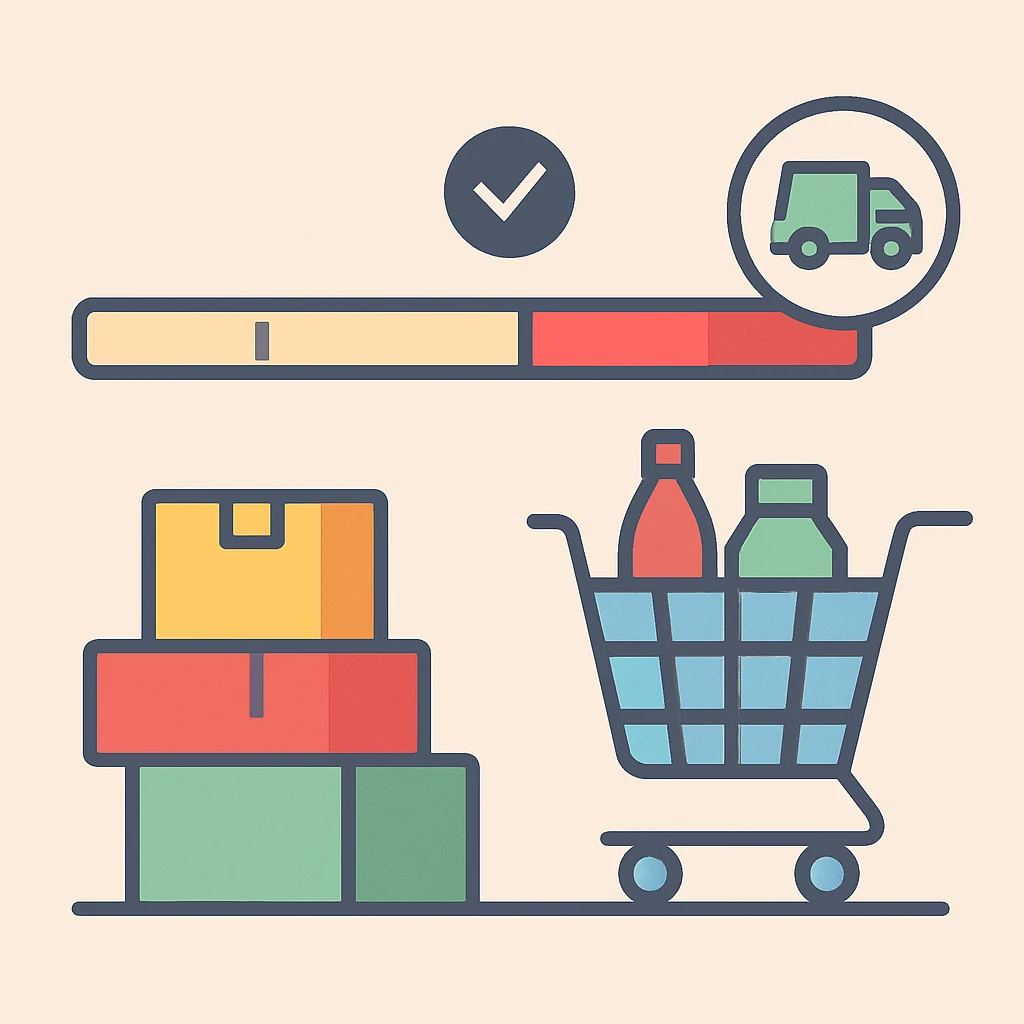
Splitting an online purchase into two (or more) orders sounds like the opposite of saving. More boxes, more steps, more chances to mess up—right? Sometimes, yes. But in the real world of free-shipping thresholds, one-time coupons, category exclusions, and return policies, “one big cart” isn’t always the cheapest or the safest.
This is a practical playbook for deciding when to bundle items into one order and when to split them on purpose—using trade-offs you can actually control: shipping, sales tax, returns, and promo rules.

The core idea: optimize for the checkout total, not the sticker price
Most shoppers compare item prices and stop there. But your actual cost is the final number after:
- shipping (or free shipping thresholds)
- sales tax (sometimes different by seller/warehouse)
- coupon rules (minimum spend, exclusions, “one per order” limits)
- return shipping/restocking fees (and how painful the return will be)
The “best” choice is often the cart structure that gives you the lowest expected cost—factoring in the chance you’ll return something.
Case 1: Free shipping threshold vs. coupon minimum (the classic trap)
You’re buying a $28 household item. The store offers free shipping at $35. You also have a 15% off code… but it requires $50+ and excludes “everyday essentials.”
If you try to hit every threshold in one cart, you’ll usually add filler. That filler rarely stays “cheap” once you include sales tax—and it often becomes the item you regret.
Here’s how splitting can win:
- Order A: the $28 item, shipped with a small add-on that you genuinely need soon (not random snacks). If the store has a “ship to store” or local pickup option, that can replace the free-shipping chase entirely.
- Order B: delay the bigger $50+ coupon order until you have a real list that qualifies (or until a seasonal event changes the rules).
The trade-off: you might pay shipping once. But you avoid buying $20 of “filler” you wouldn’t have purchased otherwise—and that’s often the bigger leak.

Case 2: The high-return-risk item should live alone
Anything size-sensitive or preference-heavy—shoes, jeans, bras, office chairs, headphones, even some skincare—has a higher chance of coming back.
If you combine a risky item with “definitely keeping” items, you can accidentally create return headaches:
- You may lose a “spend $X, get $Y off” discount if returning drops the order below the threshold.
- Some retailers refund minus the promotional discount allocation.
- You may not get back the original shipping cost.
A cleaner approach is to isolate the risky item so returns don’t contaminate the rest of your savings.
Example decision: you’re ordering a $60 pair of running shoes you’re not sure about and $40 worth of pantry staples.
- Bundled order: maybe free shipping and one box. But if the shoes get returned, the pantry items might effectively become “full price,” depending on how the promo was structured.
- Split orders: staples in one order (likely no return), shoes in a separate order (returnable without breaking the math).
The trade-off: potentially paying shipping on the shoe order. But if the retailer offers free returns (or easy drop-off), the expected savings from keeping promos intact can be worth it.
Case 3: Marketplace sellers and “sold by Ofertas shipped by” differences
On big marketplaces, two items that look like one cart can behave like totally different purchases.
Different sellers can mean:
- different shipping charges and delivery dates
- different return windows and return shipping rules
- different warranty coverage (especially for electronics)
Bundling feels convenient, but it can hide a cost: you think you’re “getting free shipping,” then see separate shipping lines at checkout.
Splitting can actually increase control. One order for items you only want from the platform’s own fulfillment (fast shipping, simpler returns), and a separate order—only if it’s truly worth it—for third-party sellers.
If you’re uncertain, click into the offer details before you commit. “Free returns” and “ships from” language matters more than the headline price.
Case 4: When sales tax and fees change the ‘deal’ more than the discount
In the US, sales tax is usually calculated at checkout and depends on your shipping address and what you’re buying. You can’t “coupon” your way out of tax in most cases.
What you can control is whether you accidentally add taxable filler just to hit a threshold.
Think of it this way: if you add an extra item you don’t need, you’re not just paying its price. You’re also paying sales tax on it, and possibly paying higher shipping if it pushes the order into a heavier or oversized category.
A practical habit: before you add filler, ask, “Would I buy this at full price next week?” If not, splitting the cart and paying a small shipping fee can still be the cheaper move.
The decision points (fast, realistic, and not perfect)
You don’t need a spreadsheet. You need a quick “should I split?” gut-check that includes returns and promo rules.
Use these triggers:
- If one item has a high chance of return, isolate it.
- If a coupon is “one per order,” compare one bigger order vs. two smaller orders with separate coupons.
- If you’re adding filler just to hit free shipping, pause and price the shipping instead.
- If items come from different sellers/warehouses with different return policies, consider separating.
Case 5: Timing splits around US sale seasons (without waiting forever)
Waiting for “the next big sale” is a strategy… until it turns into procrastination.
Instead, split by urgency.
Scenario: back-to-school vs. everyday household needs
Back-to-school promos can be great for laptops, backpacks, calculators, dorm supplies, and basics like socks and underwear—depending on the retailer. Household needs (detergent, paper goods) might not get the same discount patterns at the same time.
Splitting helps you buy what you need now, while keeping a second cart “ready” for a seasonal drop.
Scenario: Prime Day-style events vs. “I need it this week” purchases
Big mid-year events can create real discounts, but they can also create messy promos (limited-time coupons, app-only deals, lightning-style offers that disappear).
If you need something immediately, buy it now from the best reliable option, and reserve deal-hunting energy for the non-urgent stuff. Two smaller, intentional orders often beat one stressed, impulse-loaded order.
Scenario: holiday shopping and returns
During the holidays, return windows can change (sometimes longer, sometimes stricter—read the policy). If you’re buying gifts and personal items together, returns can get confusing fast.
Separate “gift orders” from “for me” orders. Even if the total is the same, you’ll thank yourself when you’re tracking packages, receipts, and return deadlines.

A practical way to test split vs. bundle (in under two minutes)
Here’s the simplest method that works across most US retailers:
Build your ideal cart. Screenshot the checkout total (including shipping and sales tax). Then remove the “risky” or “filler” items and screenshot again. If the difference between the two totals is smaller than the cost (and hassle) of the extra items, you’ve got your answer.
This isn’t about being perfect—it’s about not paying $20 extra to save $6 on shipping.
If you want more strategies like this, start from the home page and pick the guide that matches what you’re buying.
Common questions (that change the math)
Will splitting my order increase my shipping costs?
Sometimes, yes. The goal isn’t “never pay shipping.” The goal is “never buy junk to avoid shipping.” Compare the shipping fee to the after-tax cost of the filler you’d add.
Can splitting help me use more than one coupon?
If the promo is truly “one per order” and doesn’t require a minimum spend that forces bad add-ons, splitting can help. But always check exclusions—some categories (gift cards, subscriptions, certain brands) may not qualify.
Will splitting make returns harder?
It can, if you create too many orders to track. That’s why the best split is usually just two orders: one “safe keep” order and one “maybe return” order.
Is it ever better to bundle everything?
Yes—when the retailer’s promo is based on total spend and the items are all low-return-risk, bundling can lock in the best discount and reduce shipping. Bundling also makes sense when you’re close to a free-shipping threshold with items you already planned to buy.
My recommendation (do this on your next purchase)
On your next online buy, separate items into “likely keep” and “might return.” Price both checkouts—bundled and split—using the real totals with shipping and sales tax. Pick the option with the lowest expected cost, not the prettiest discount banner.
You may also be interested

Cash Back or Coupon? Keep Your Online Savings From Disappearing
Learn when to use coupons, cash-back portals, or card offers—and how to avoid tracking mistakes before Black Friday and Cyber Monday.

Open-Box and Refurbished Deals: A Smarter Way to Shop Holiday Sales
Learn how to vet open-box and refurbished deals before Black Friday, from condition and warranties to battery health, seller quality, and gift readiness.

Discounted Gift Cards: 6 Mistakes That Can Erase Your Savings
Buying discounted gift cards for holiday shopping? Avoid balance problems, refund traps, and bonus-card restrictions before locking up your money.