

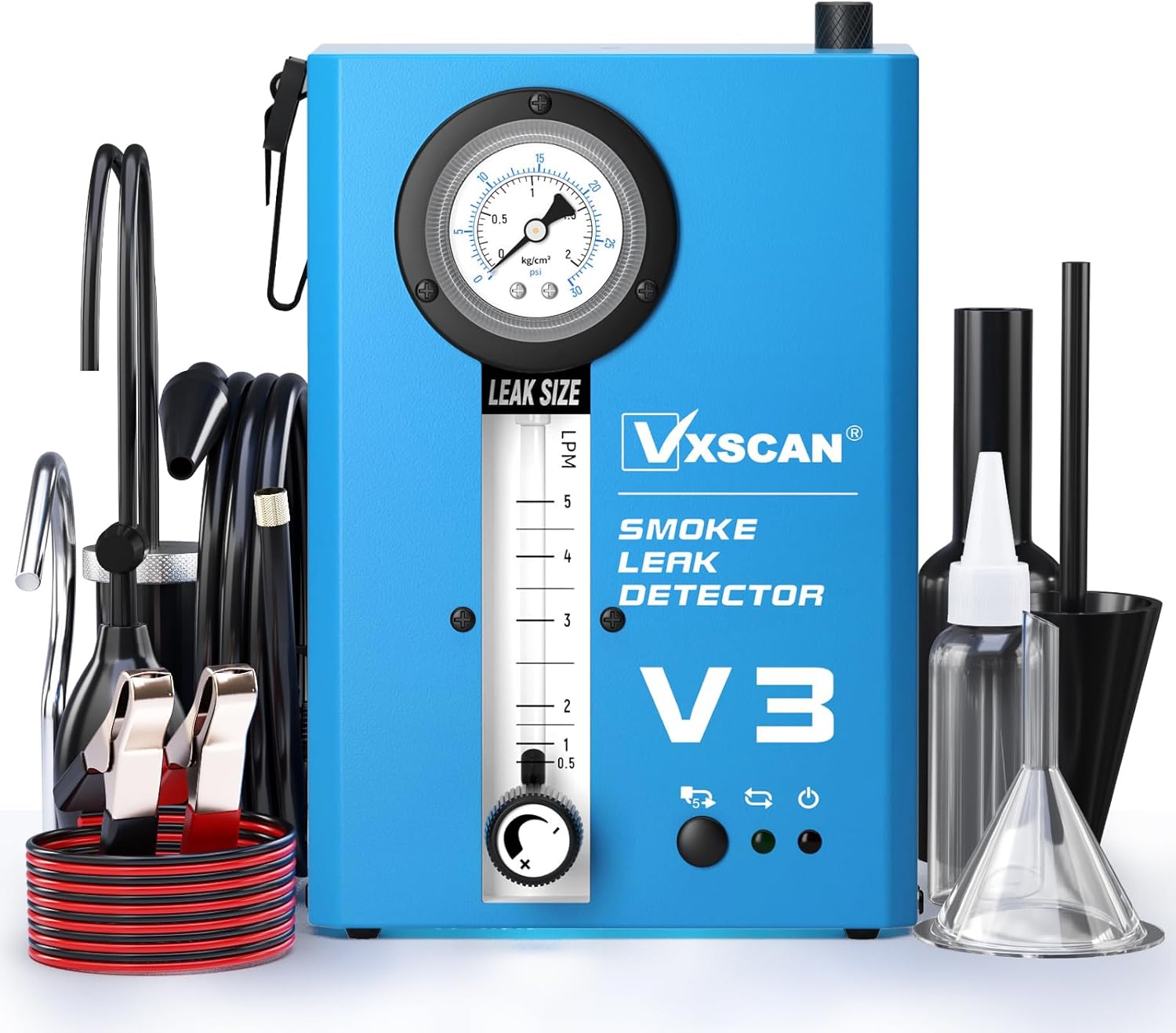
VXSCAN V3 Automotive Smoke Machine Leak Detector for EVAP, Vacuum and Fuel Systems (12V)
Product description
What it’s for
If you’ve ever chased an elusive EVAP, vacuum or small exhaust/fuel leak, a smoke test tool can make the job far more straightforward than guesswork. The VXSCAN Automotive Smoke Machine Leak Detector (V3) is designed to introduce visible smoke into a vehicle’s pipework system so you can spot where it escapes.
On paper, it’s aimed at the kind of DIYer or workshop user who wants to diagnose sealing issues around hoses, connectors and related components—without having to strip half the bay first. The description also flags a dual approach: an air mode to confirm whether there’s a leak, and a smoke mode to help pinpoint the location.
Key features that matter in the real world
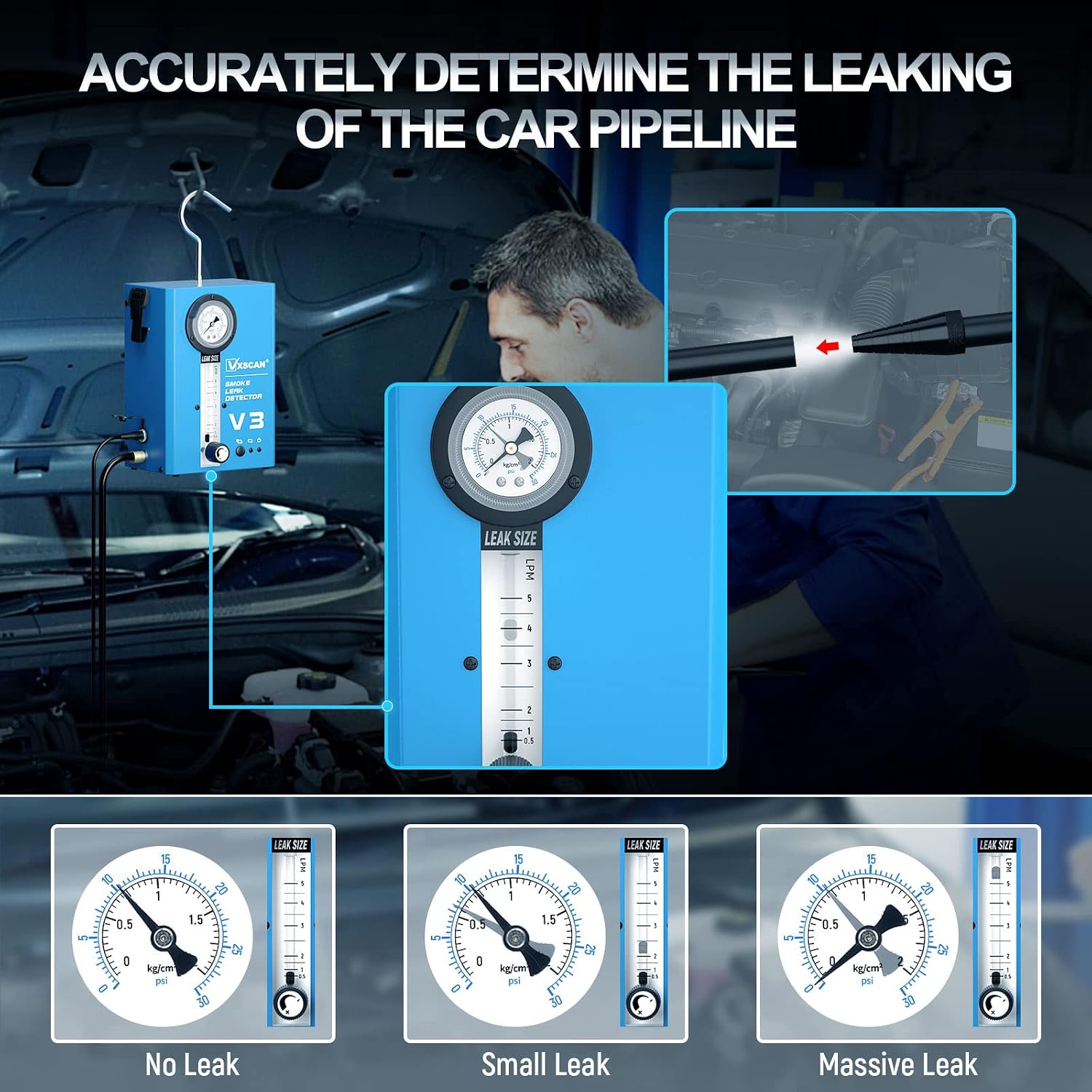
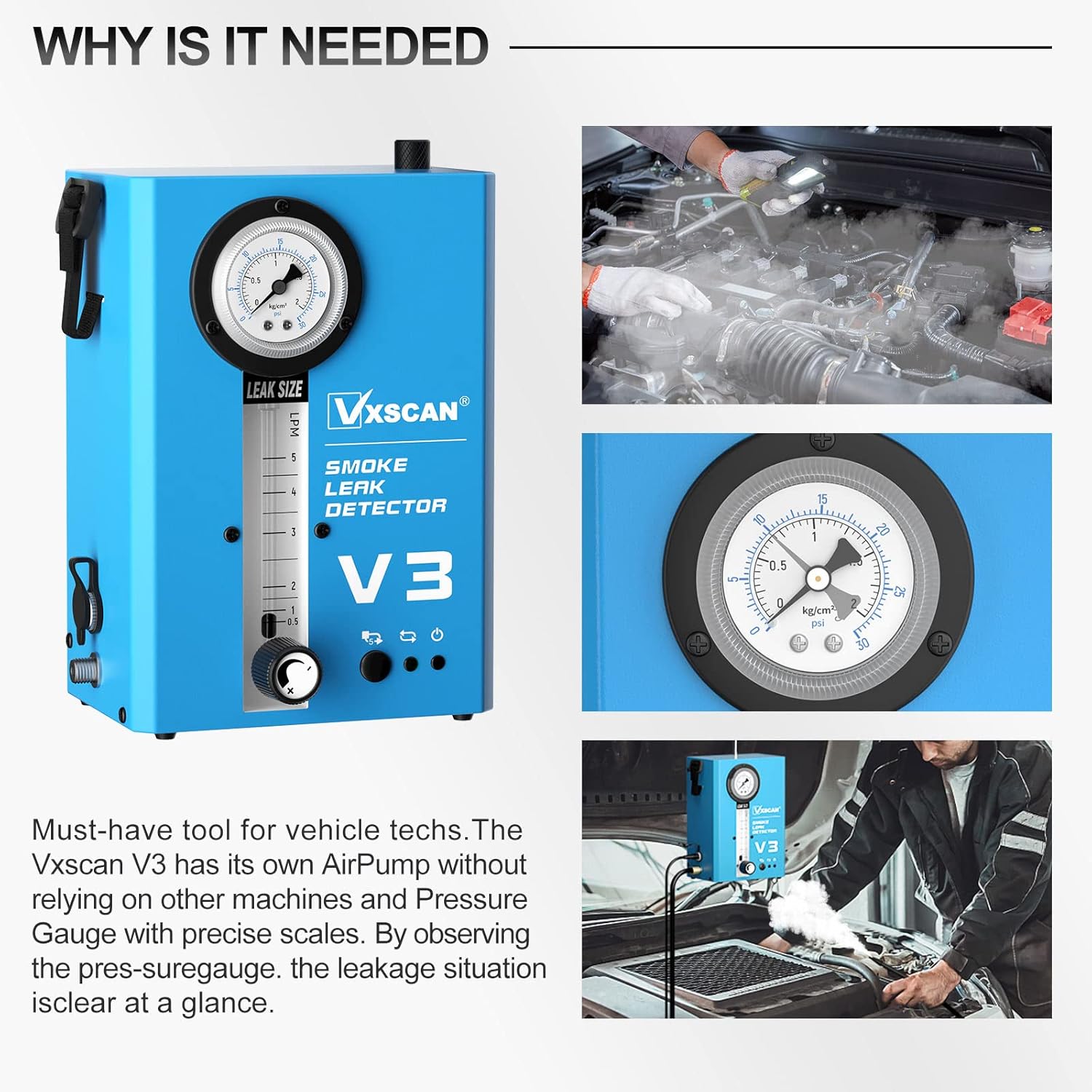
Where this model stands out is the built-in air pump plus measuring tools. You’re not just dumping smoke in and hoping for the best, you can monitor pressure and flow (the flow meter is described as adjustable, and there’s a pressure gauge/barometer-style indicator).
The unit is described as producing smoke in roughly 30 seconds, which can reduce waiting time when you’re doing repeated checks. It’s also positioned for broad vehicle coverage: the listing says it’s suitable for all makes and models, and it’s intended for a wide range of vehicle types beyond standard cars.
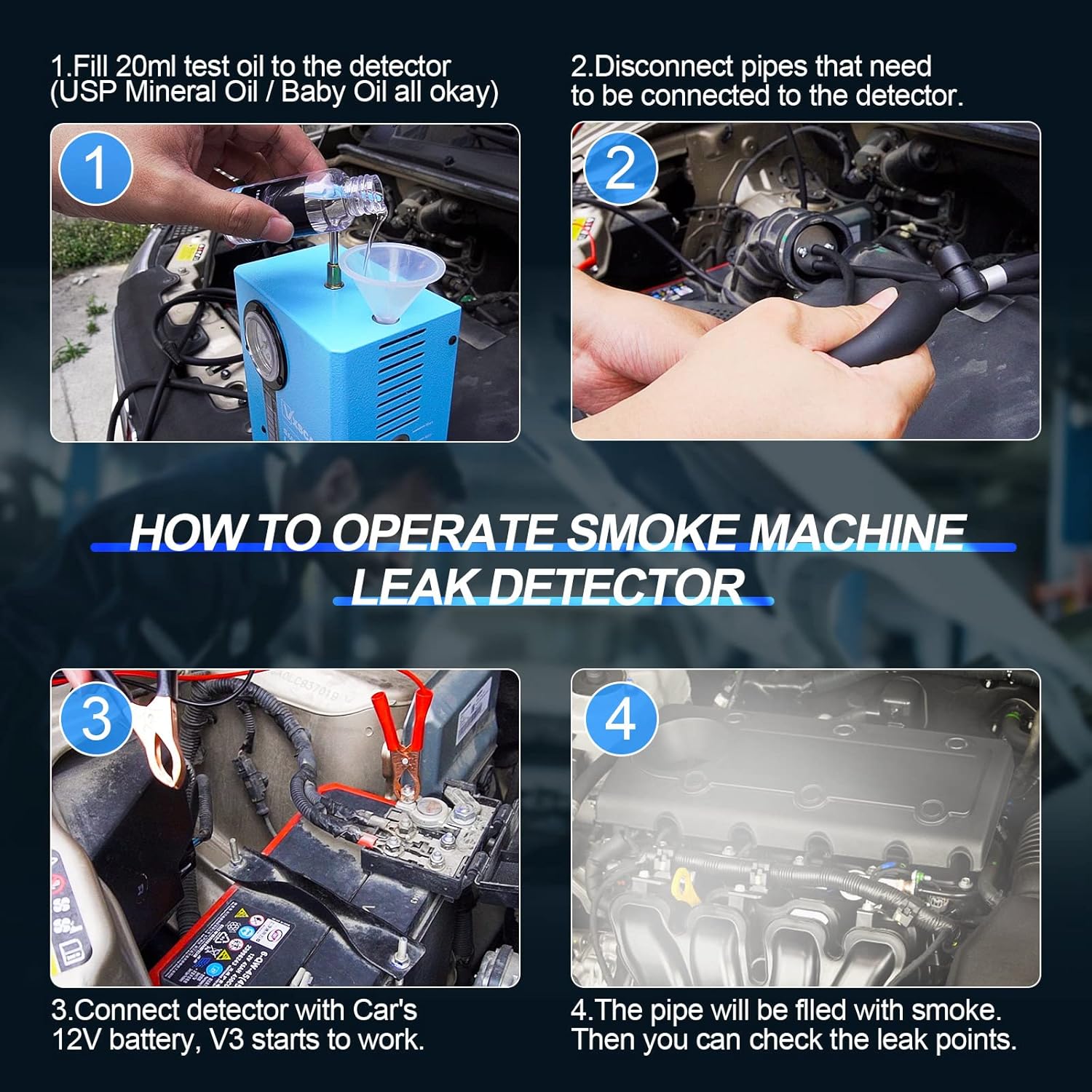
Here’s the practical way it’s meant to be used, based on the provided steps: - Add baby oil (the listing mentions filling an oil bottle labelled “Johnson” from 10 ml to 20 ml, noting that this oil is “the most suitable”) to the detector. - Disconnect the vehicle intake tube and connect it to the detector. - Power it with a 12 V DC battery. - Let the pipework fill with smoke, then inspect suspected leak points.
Important limitation to keep in mind: the packaging doesn’t include the oil, but the listing mentions a delivery oil bottle.
Tech specs (as described)
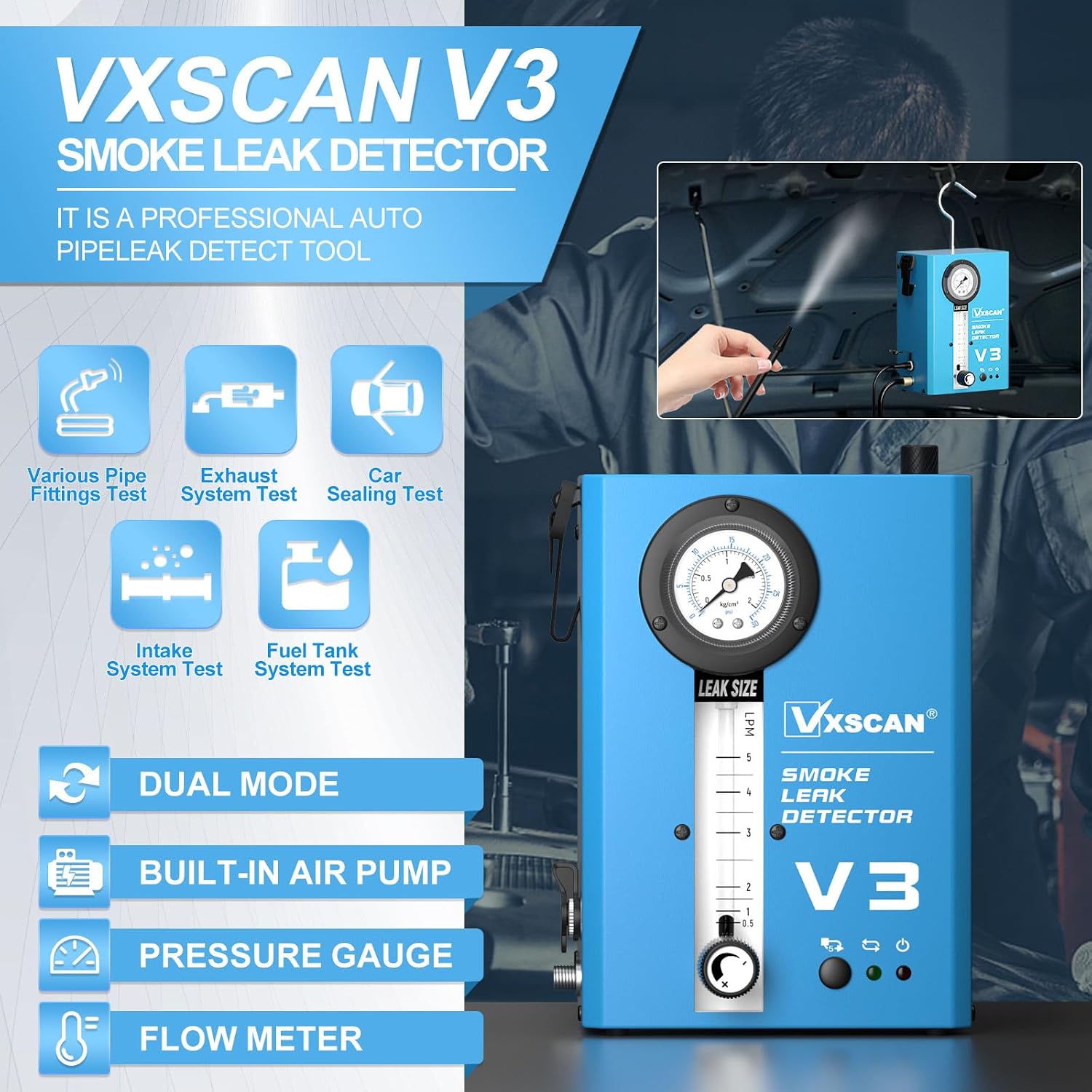
The details provided in the listing are relatively clear on the essentials: - Air pressure (compressor output): 0.8 bar / 11.5 Psi - Power requirement: 12 V DC battery, with a current range of 8 A–10 A - Dual mode: air mode to determine if there’s a leak, smoke mode to locate leaks
It also includes guidance on why those gauges matter. The listing warns that if the air pressure is too high, the pipework could be damaged, and if it’s too low the leak may not be detected reliably.
Where it shines (and where it may fall short)
This type of smoke machine is most useful when leaks are intermittent, small, or located somewhere you can’t easily see. The VXSCAN V3 is written for that exact scenario: you introduce smoke, then visually confirm the escape point.
The built-in pump and the gauges can be a big deal if you don’t want to operate blindly. In practice, being able to observe pressure/flow trends helps you decide when to stop and adjust rather than continuing with a test that isn’t pressurising the system correctly.
That said, it’s not perfect for every situation. The listing specifically notes that it can’t be connected to a 12 V power source in an office for smoke output, it’s intended for a 12 V battery setup within the stated current range. If your workshop setup doesn’t allow that, you may find it more hassle than expected.
Also, smoke testing depends a lot on correct connections and the right entry point into the system. If you don’t have a clear plan for where to connect during your particular job, the test can still feel fiddly—even if the tool itself is doing what it should.
Who it suits best
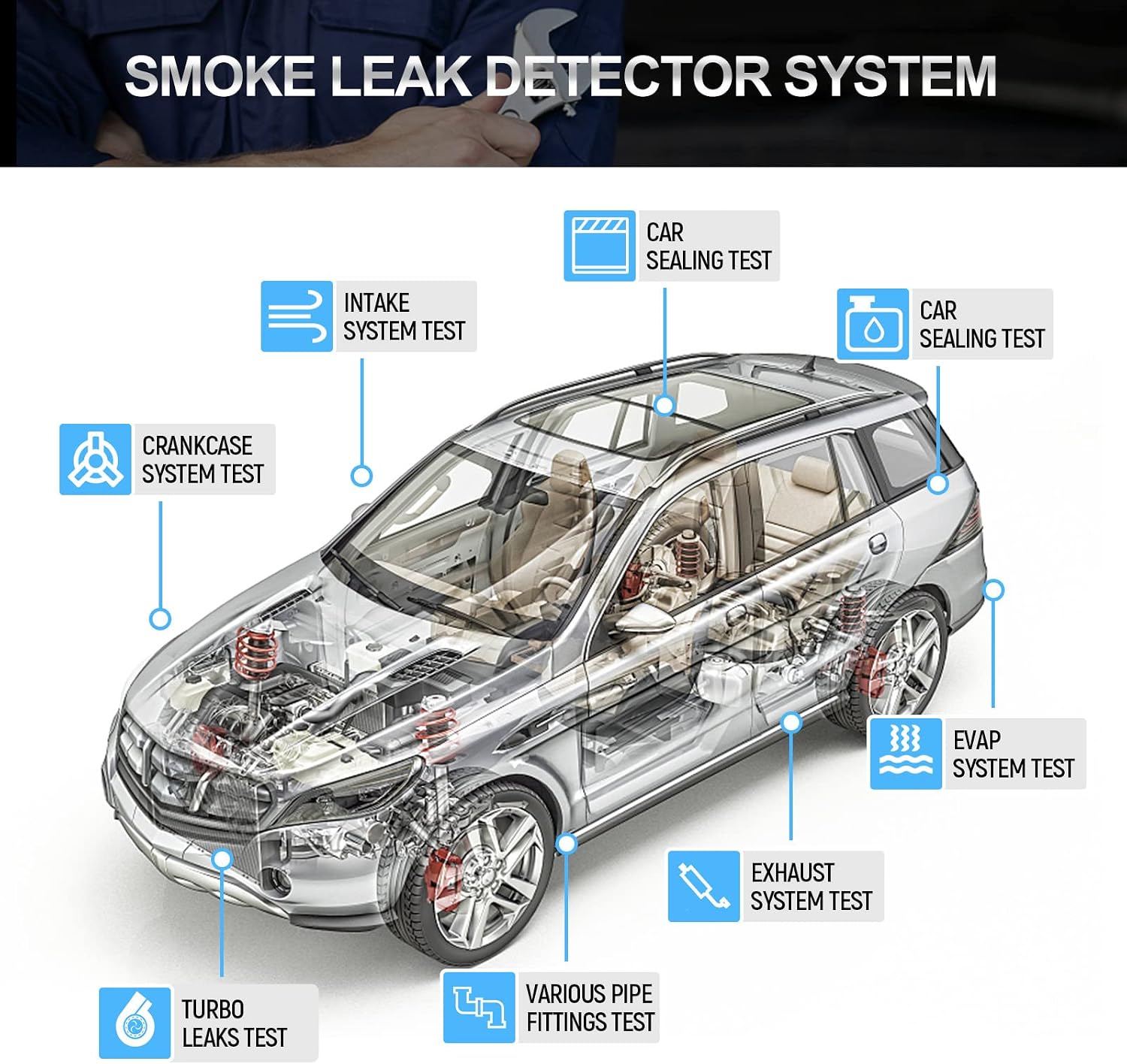
It makes sense if you regularly diagnose sealing and hose-related issues across: - EVAP systems - vacuum/boost-related components (the listing mentions turbo and intake/exhaust contexts) - fuel system deposit-related leak checks (as written) - EGR, cooling-related system checks, and other accessory pipework leak possibilities
It also fits the “problem-solving” approach: you want a repeatable method for locating leaks instead of replacing parts based on symptoms. If you do a bit of everything—cars, and possibly other vehicle types listed—this kind of tool can be handy to keep around.
When you should skip it
You may want to skip this if: - You don’t have access to a suitable 12 V DC battery setup (the listing is specific about the battery current range). - You’re expecting it to work via an office-style 12 V connection, the description implies it won’t emit smoke reliably in that scenario. - Your main needs are basic fault-finding only. In that case, you might find other simpler diagnostic approaches more efficient.
Worth noting: the listing doesn’t mention vehicle-specific adapters or detailed compatibility beyond “all makes and models”, so you’ll still need to rely on the right connection approach for the system you’re testing.
Quick FAQ
How long does it take to produce smoke?
The listing states the machine can produce a lot of smoke in about 30 seconds.
Does it include the oil?
The packaging doesn’t contain oil, but the listing mentions there is an oil delivery bottle.

What’s the difference between air mode and smoke mode?
Air mode is for determining whether there’s a leak, while smoke mode is intended to help locate where it’s coming from.
What power does it need?
It needs a 12 V DC battery with a current range of 8 A–10 A.
Should I worry about the pressure gauge?
Yes, the description explicitly warns that too high pressure could damage pipework, while too low pressure may fail to detect the leak.
Is it worth it?
A solid buy if you want a practical EVAP/vacuum/fuel-system smoke leak detector approach with built-in air assistance and gauges, especially when you value being able to confirm a leak and then visually track it to the source. It’s aimed at users who don’t mind doing the physical setup—disconnecting and connecting the intake/tubing as described—because that’s where the tool’s usefulness really kicks in.
It may not be the best match if your power setup is limited to something like an office 12 V connection, or if you’re short on the ability to connect the machine properly during testing. If you can meet the battery requirement and you’re the type who likes diagnosing rather than guessing, this VXSCAN V3 looks like a worthwhile addition to your toolkit.