


UWalk OBD2 Car Code Reader with battery health & carbon deposition test (OBDII)
Product description
What it is and why drivers look at OBD2 readers
An OBD2 scanner is the quickest way to get beyond the vague “check engine” light and read the underlying diagnostic trouble code(s). This UWALK OBD2 car code reader is built around that practical idea, and it goes a step further than basic “read and clear” tools by adding extra test functions (battery health, carbon deposition, and a few system checks mentioned in the description).
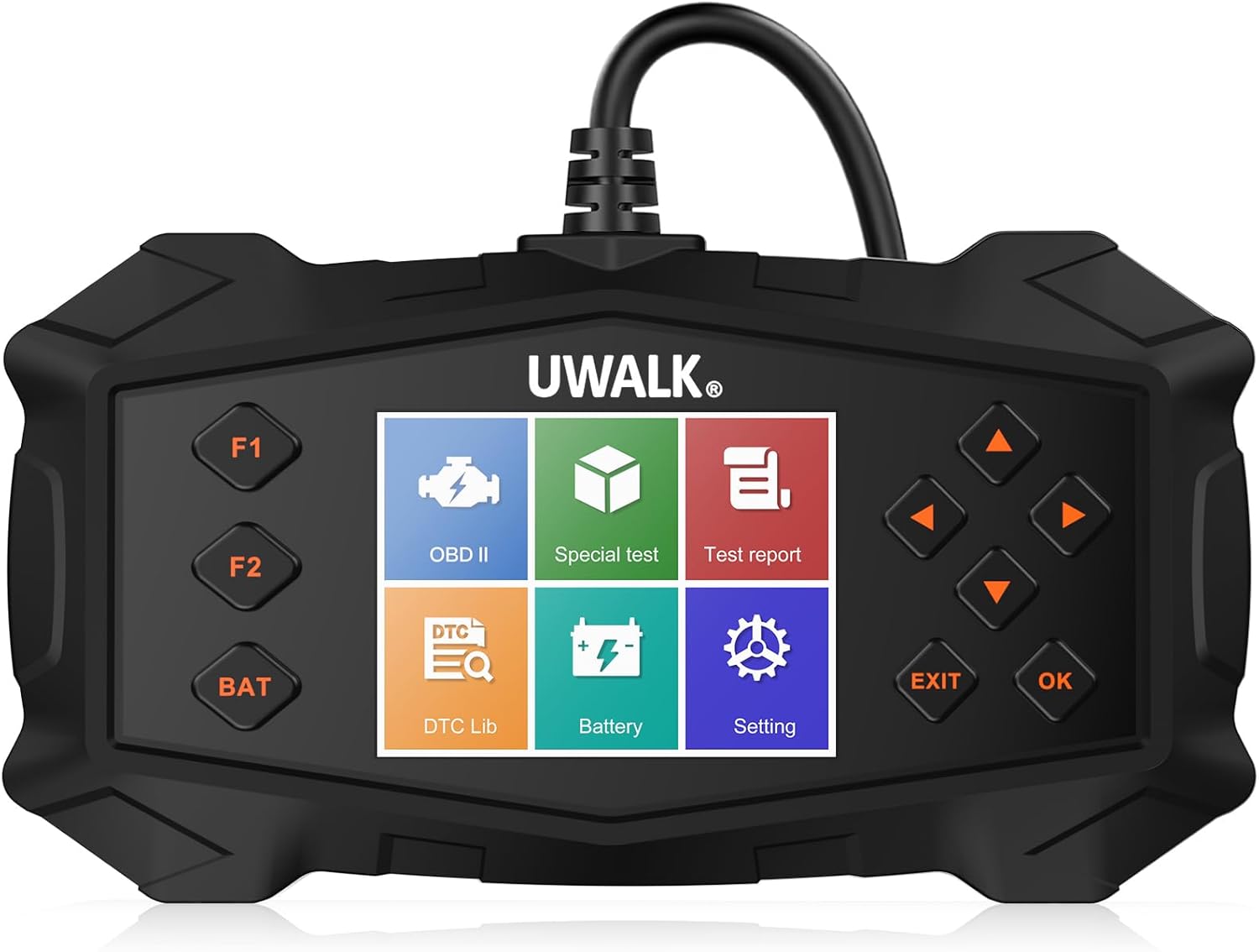
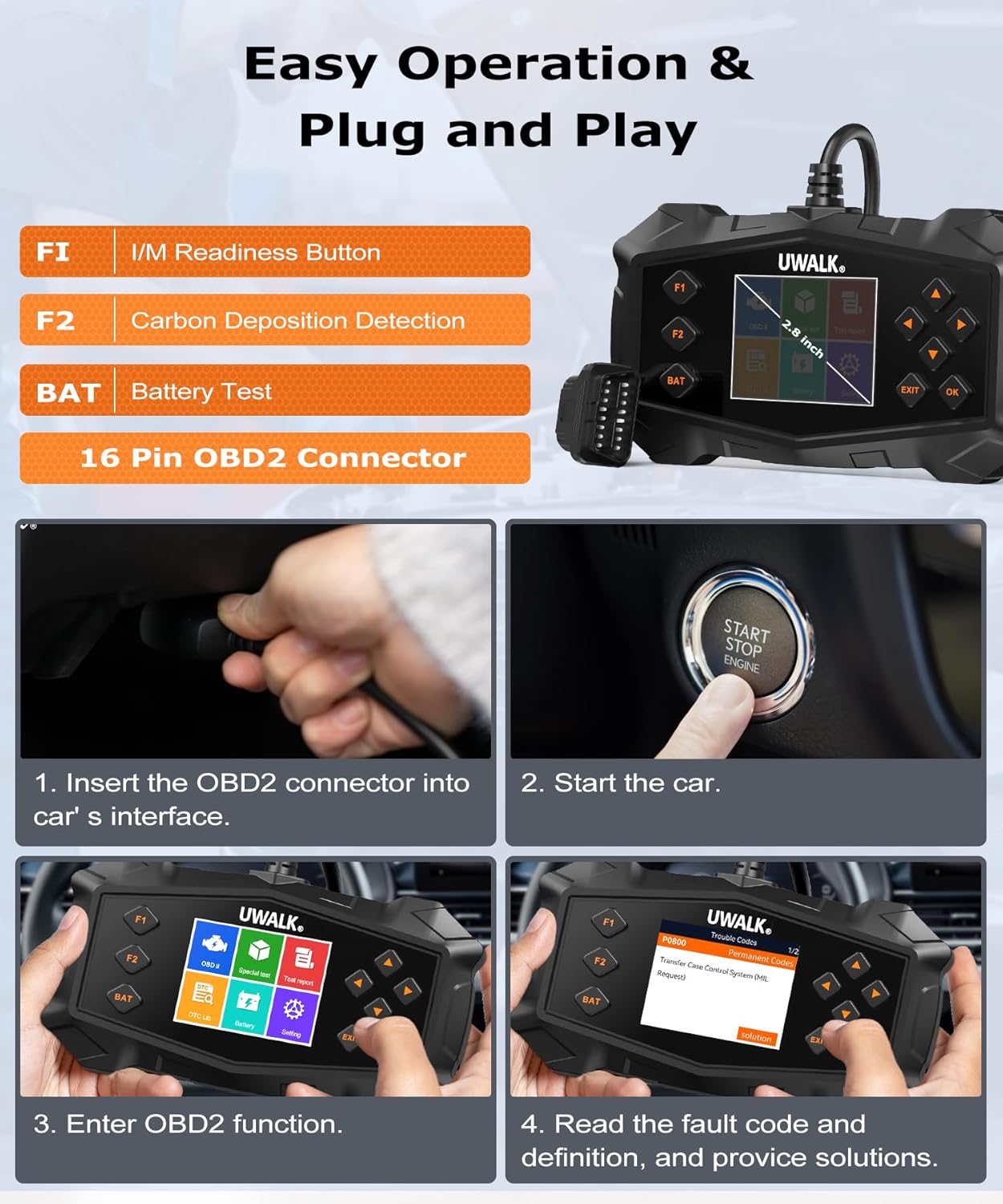
On paper, it’s aimed at everyday drivers and home mechanics who want clearer next steps without guessing. You plug it straight into the OBDII port, it powers from the vehicle, and the results are shown on a built-in colour TFT screen with icon-style navigation. No app, no Wi‑Fi, no external power lead to juggle.
A small but important note: it’s designed specifically for engine system diagnostics via OBDII. If you’re chasing ABS/airbag-type issues, or you need compatibility for diesel/EV/hybrid systems, this model may not be the right tool for the job.
The essentials: tests and what you can do
This is more than a simple code reader. The description highlights an “all-in-one” approach for engine diagnostics, including:
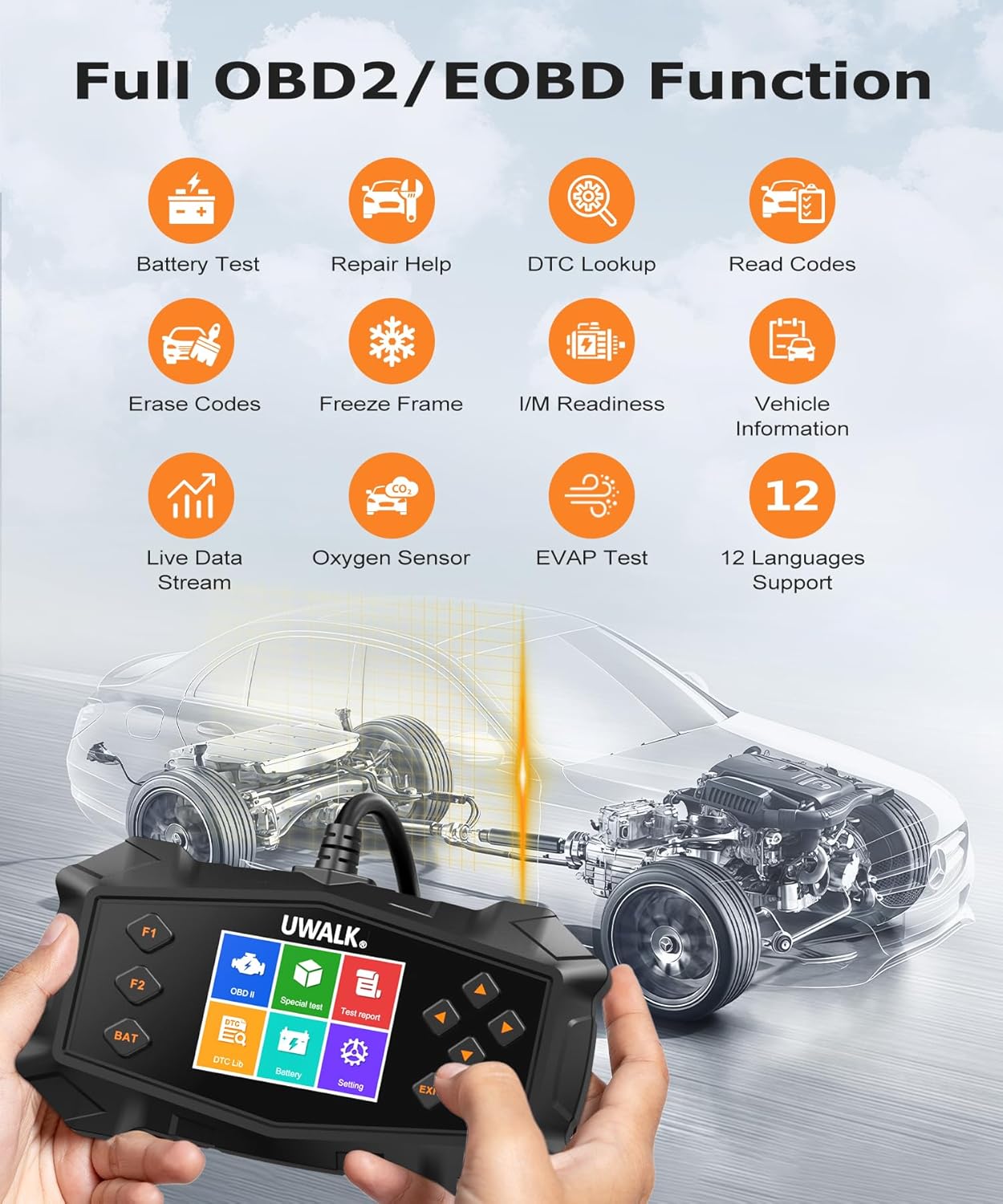
- Identify DTC OBD2 codes that trigger the engine light, with built-in code definitions intended to help interpretation.
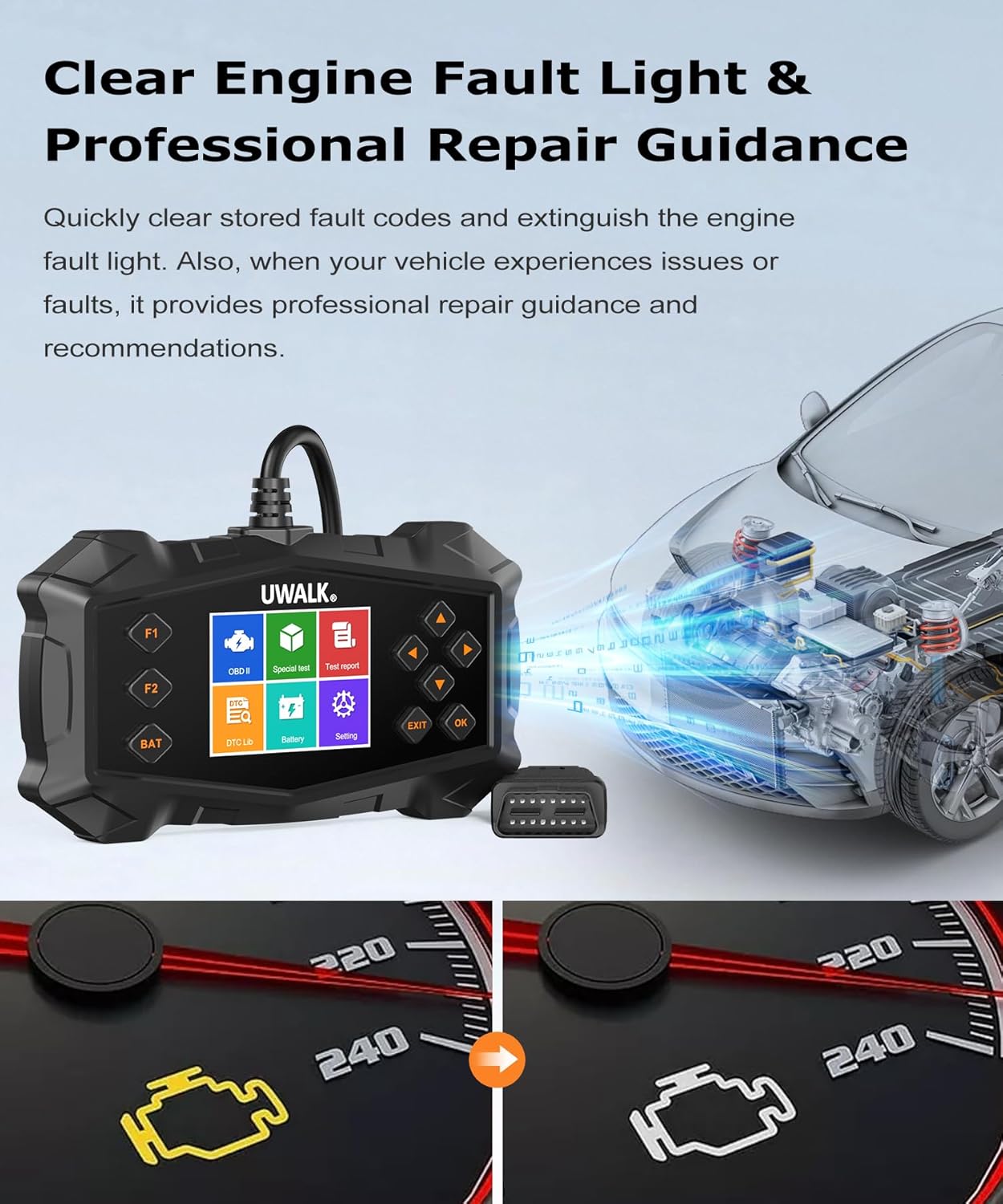
- Read and clear error codes.
- View live data and capture freeze frame data (useful when you’re trying to understand what was happening when the fault was logged).
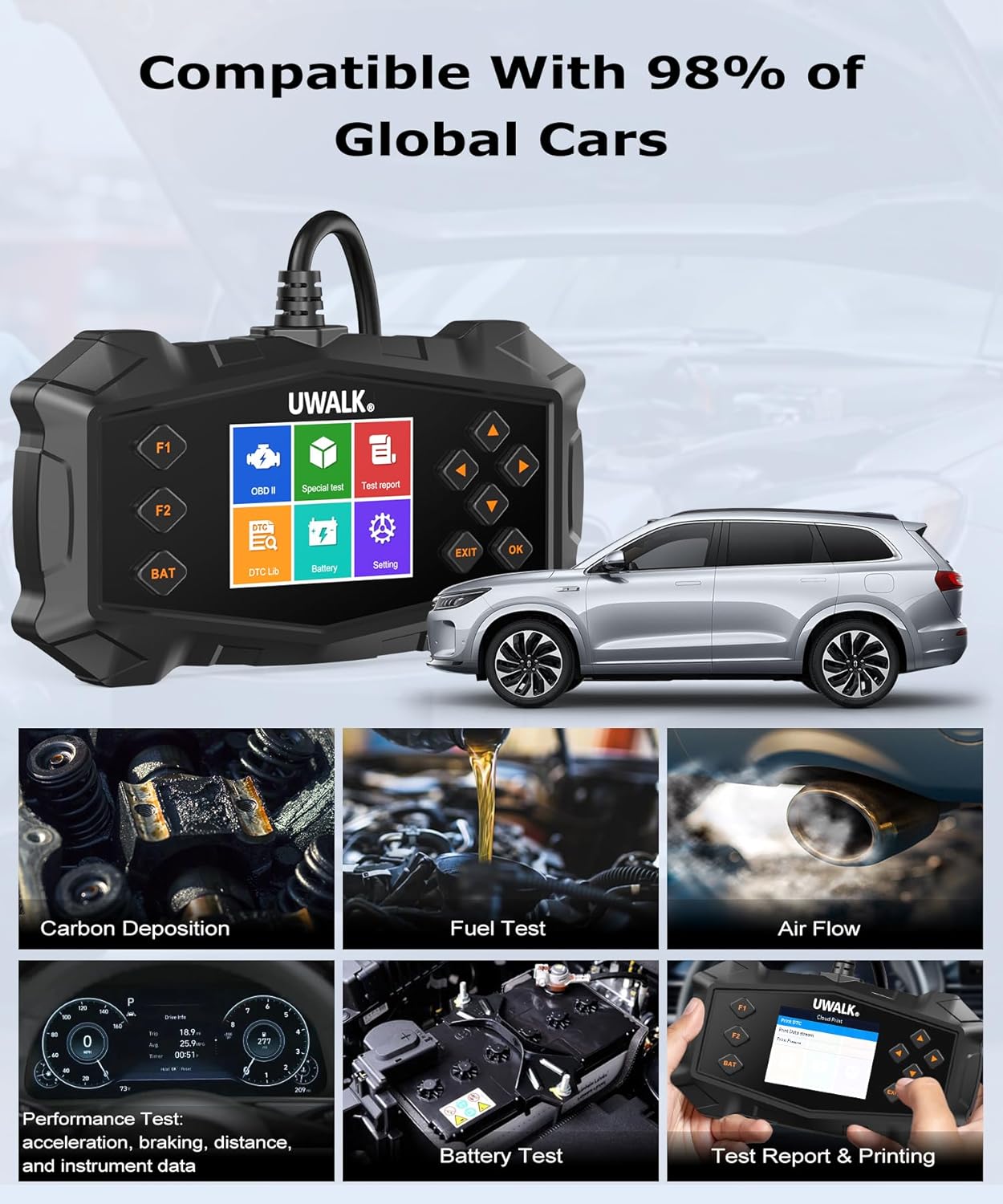
- Run the extra checks mentioned: battery health test, carbon deposition test, airflow test, fuel system test, and performance-related testing (acceleration, braking, and a distance test are referenced).
- Support for I/M checks and analysis of oxygen (O2) sensors, plus detection related to evaporative system emissions or leaks.
- Summarise test reports and print them (the description mentions simplified access through these reports).
It’s also positioned as being multimake, with an internal library of OBD2 codes. That matters if you’re comparing this kind of device to cheaper scanners that only provide raw codes with minimal guidance.
What stands out in day-to-day use
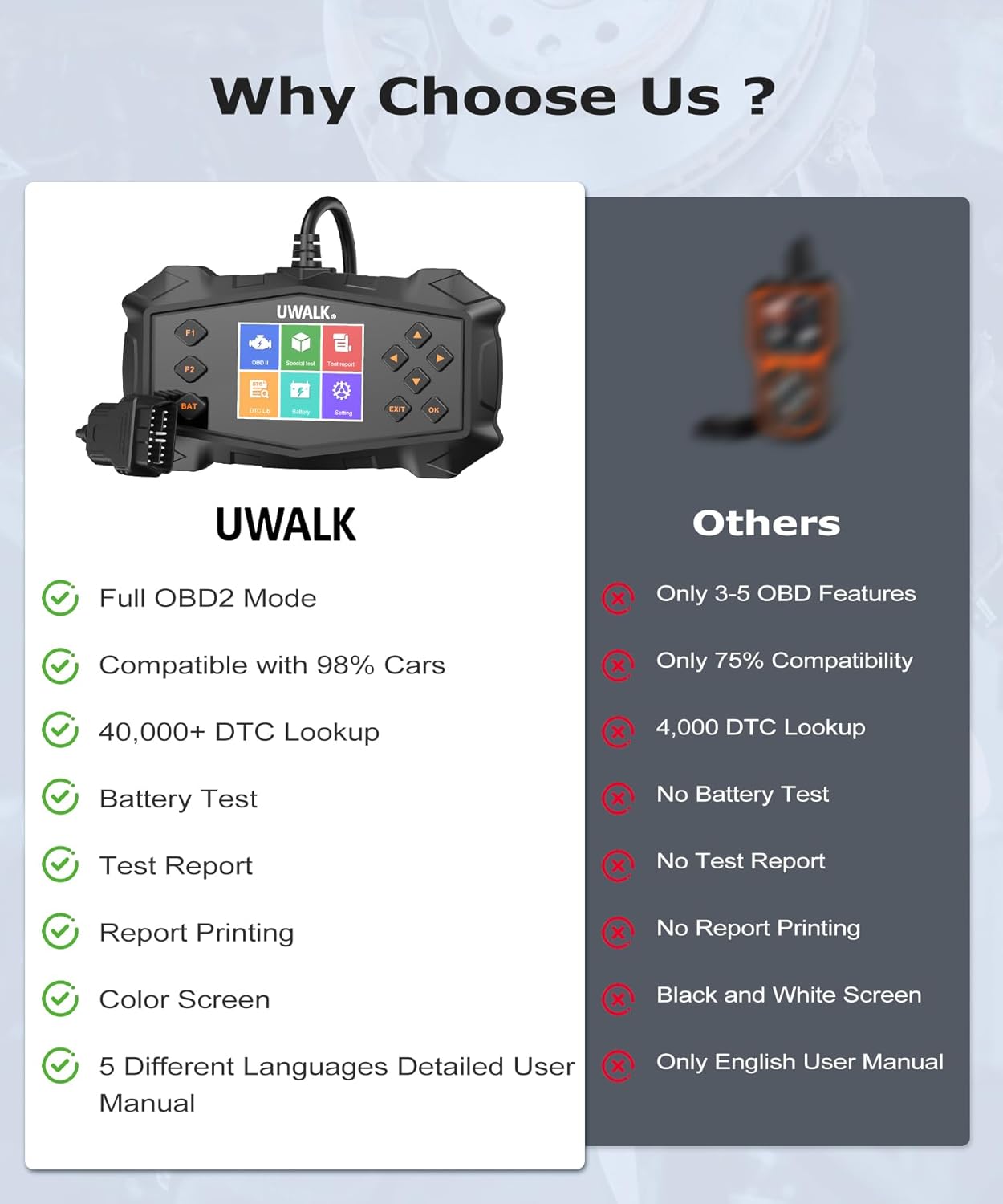
The “no-complications” side of this scanner is the real selling point. Plug-and-play via the OBDII connector means you’re not reliant on a phone connection or an app account. The interface is based on a 320x240 colour TFT screen and a set of buttons designed for navigation and quick access to functions.
In real-world terms, it can be the difference between waiting for a garage quote and doing a first pass at home. For example, you could connect it when the engine light appears, read the code, check live data, and then decide whether it’s something you can investigate further (like an airflow or fuel-related problem) or whether you should book it in straight away.
That said, don’t expect miracles: if the fault is intermittent, the code you see might not tell the full story every time. The freeze frame support helps, but you still need to interpret results sensibly.
Limitations to consider before buying
This is where you should be a bit strict with yourself.
It’s not intended for diesel vehicles, nor for electric or hybrid vehicles, and the description explicitly says it doesn’t support ABS or airbag systems. It also can’t diagnose non‑OBDII systems. In other words, it’s an engine-focused tool.
Compatibility matters too. The listing describes broad coverage for many post-1996 American vehicles and post-2004 European/Asian vehicles with OBD2/CAN, but it still asks you to verify compatibility before purchase. If your vehicle falls outside those ranges, you could end up with a scanner that connects but doesn’t deliver useful diagnostics.
Finally, while the description mentions that it can “interpret” codes using definitions built in, it’s still not a replacement for proper mechanical diagnosis. It can reduce costly guesswork, but if you’re trying to identify a complex fault, you may need further testing.
The specs that affect buyer experience
The core user experience is built around the screen and controls. The scanner uses a colour TFT display (320x240) to present results clearly with icons, and it includes nine buttons for navigation and function access.
From the information provided, the notable function keys include: - F1 for I/M status - F2 for carbon deposition detection - BAT for the battery test
It also supports multiple languages (12 listed in the description), which can help if you’re not comfortable sticking to English-only interfaces.
Buying decision: when it makes sense
Worth considering if you want an OBD2 engine diagnostic tool you can use at home with minimal setup, especially if you’re dealing with an engine light and want more than just “code readout”. If you like having extra test options such as battery health and carbon deposition, and you value built-in code definitions and live data, this approach can be genuinely useful for day-to-day troubleshooting.
It makes sense if you’re the type of person who prefers to start with evidence—reading DTCs, checking live readings, and using freeze frame context—before guessing at parts.
It might not be a great match if you drive a diesel, an EV, or a hybrid, or if you need ABS/airbag diagnostics. You may want to skip it too if you don’t have an OBDII-compatible petrol engine setup, because the listing is clear it’s limited to OBDII engine system diagnostics.
Quick FAQ
How do you power it?
It connects directly to the vehicle’s OBDII port and, according to the description, does not need an external power supply or phone connection.
Does it work for any car?
It’s described as compatible with many post‑1996 (American) and post‑2004 (European/Asian) vehicles with OBD2/CAN, but you should verify compatibility before buying.
Can it diagnose ABS or airbag faults?
No. The description says it does not support ABS or airbag systems, and it’s designed exclusively for engine system diagnostics.
Can it clear warning lights?
The description says it can read and clear error codes, which typically helps with resetting the engine light after a fault is addressed.
Is it suitable for EVs or hybrids?
No—this model is not compatible with diesel vehicles, electric vehicles, or hybrid vehicles (as stated in the description).
Should you buy it?
If you own a petrol vehicle that supports OBDII and you want a straightforward, app-free code reader with added test functions for battery health and carbon deposition, this UWALK scanner looks like a solid home-first tool. However, if your priority is ABS/airbag diagnostics, or you need diesel/EV/hybrid support, you’ll likely be better off choosing a device designed for those systems.