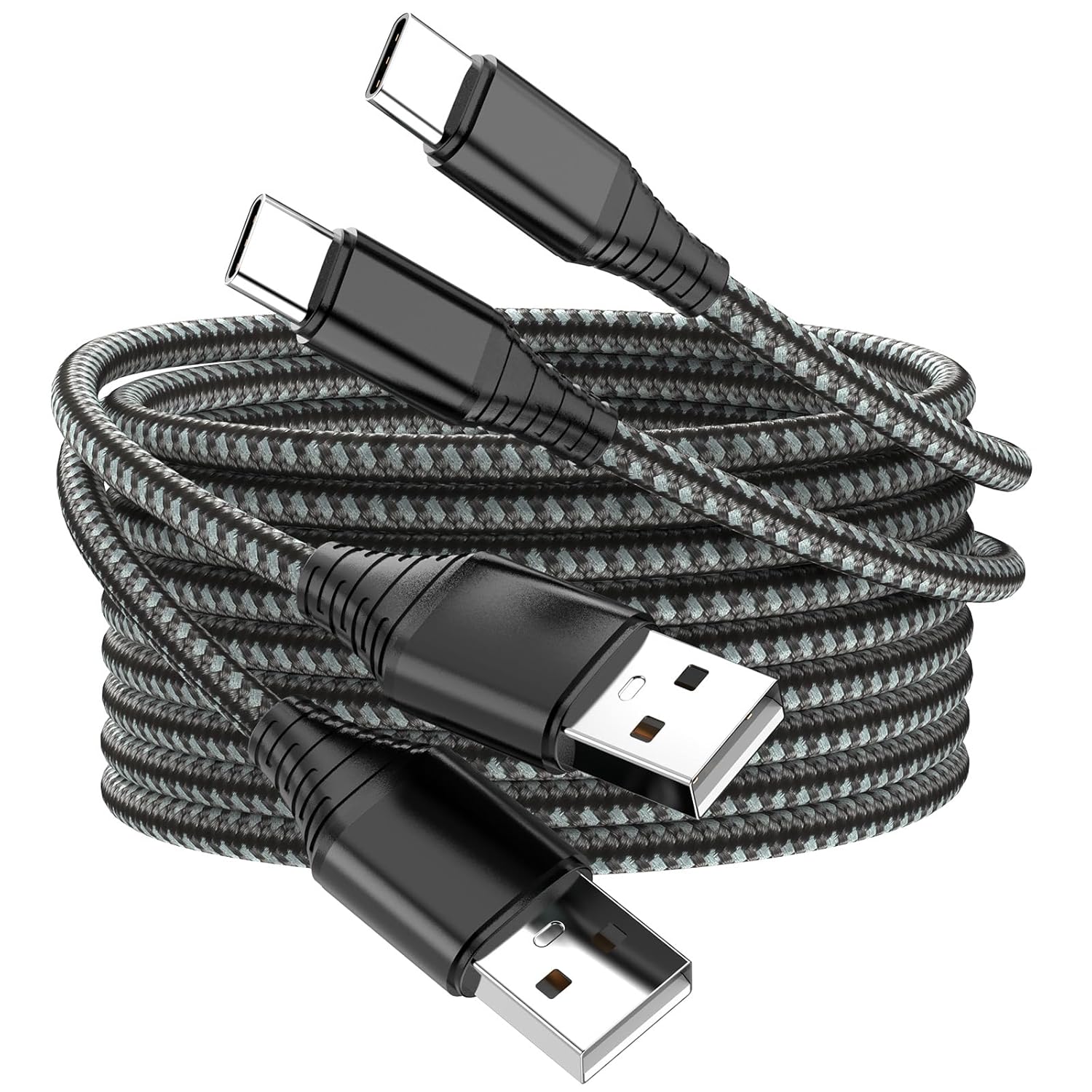
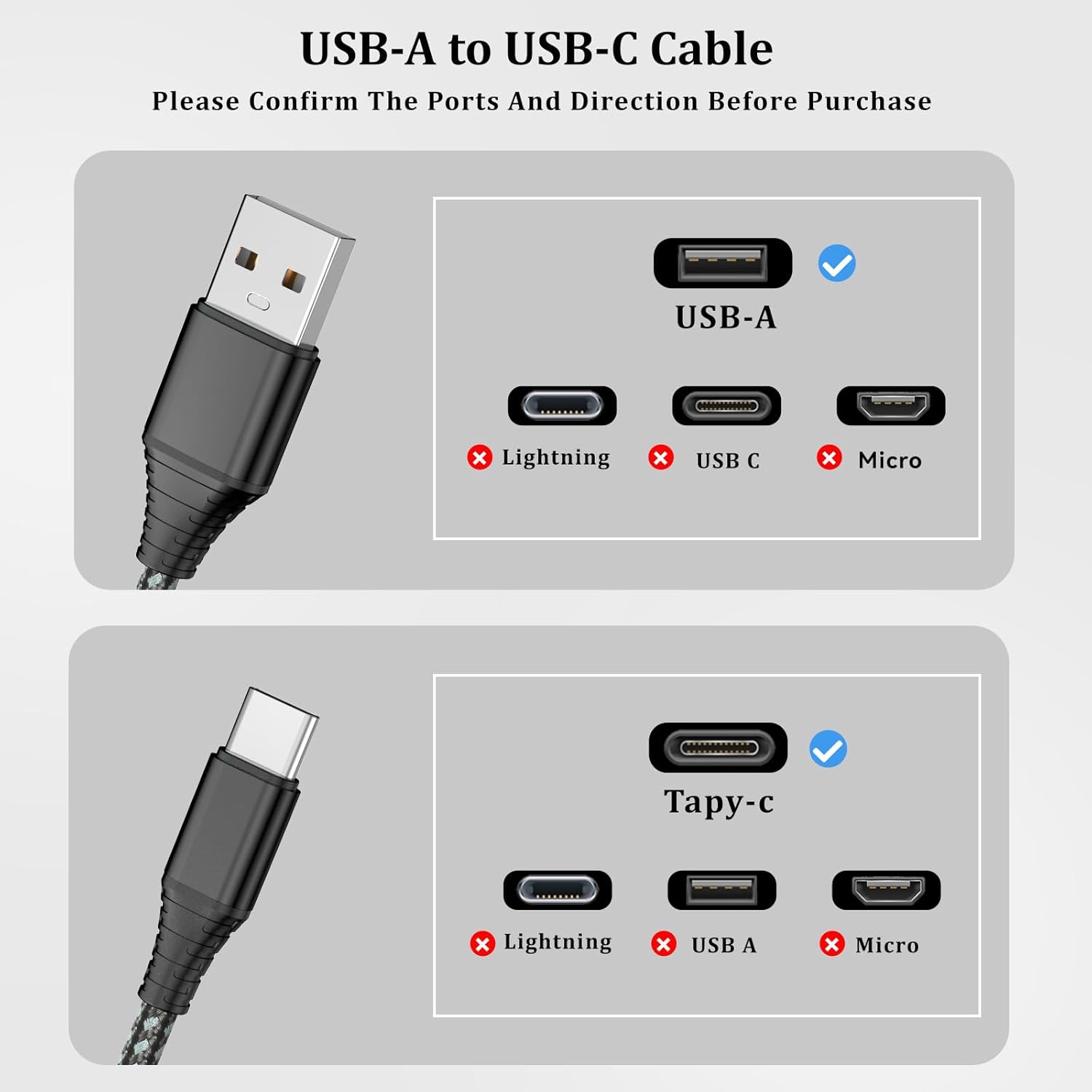
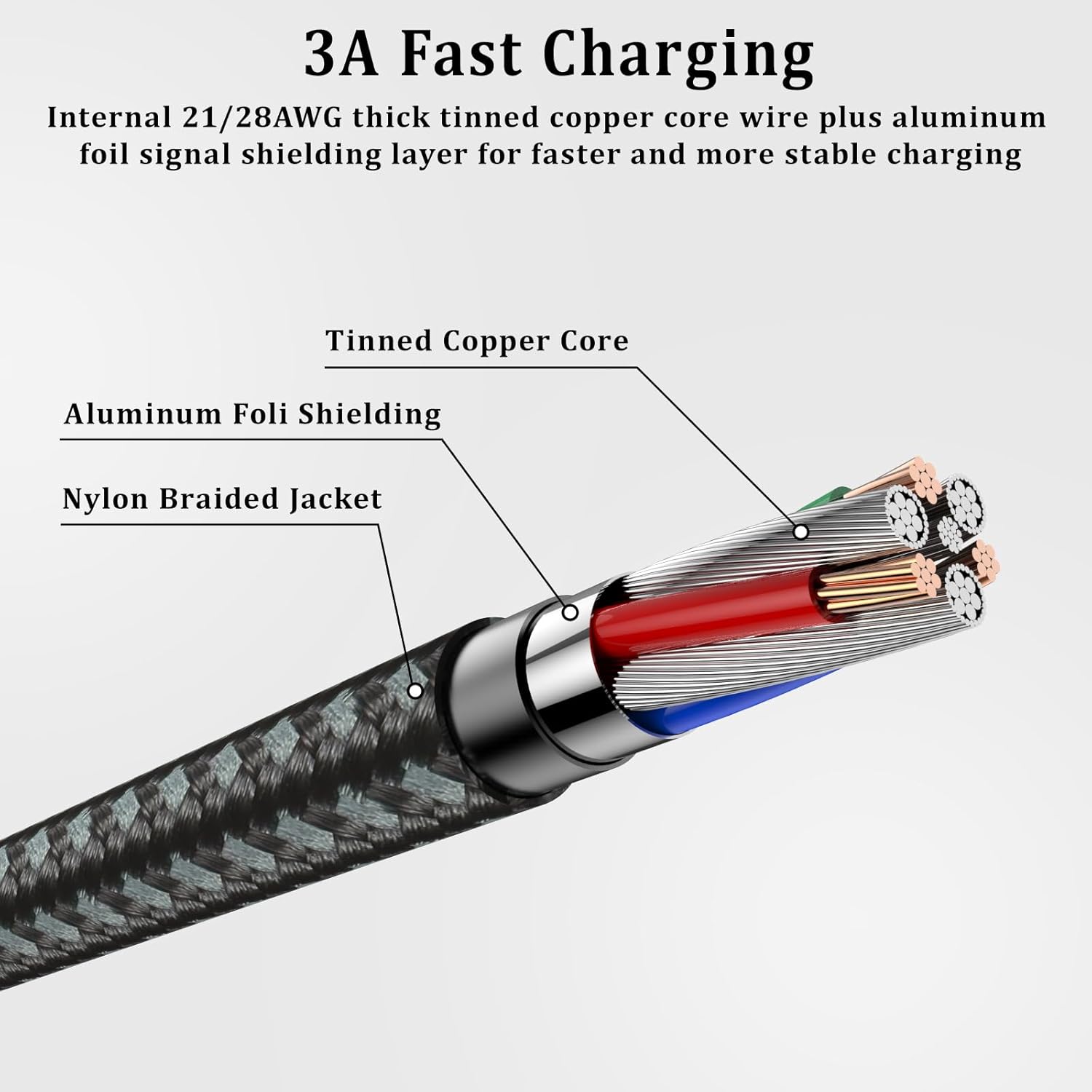
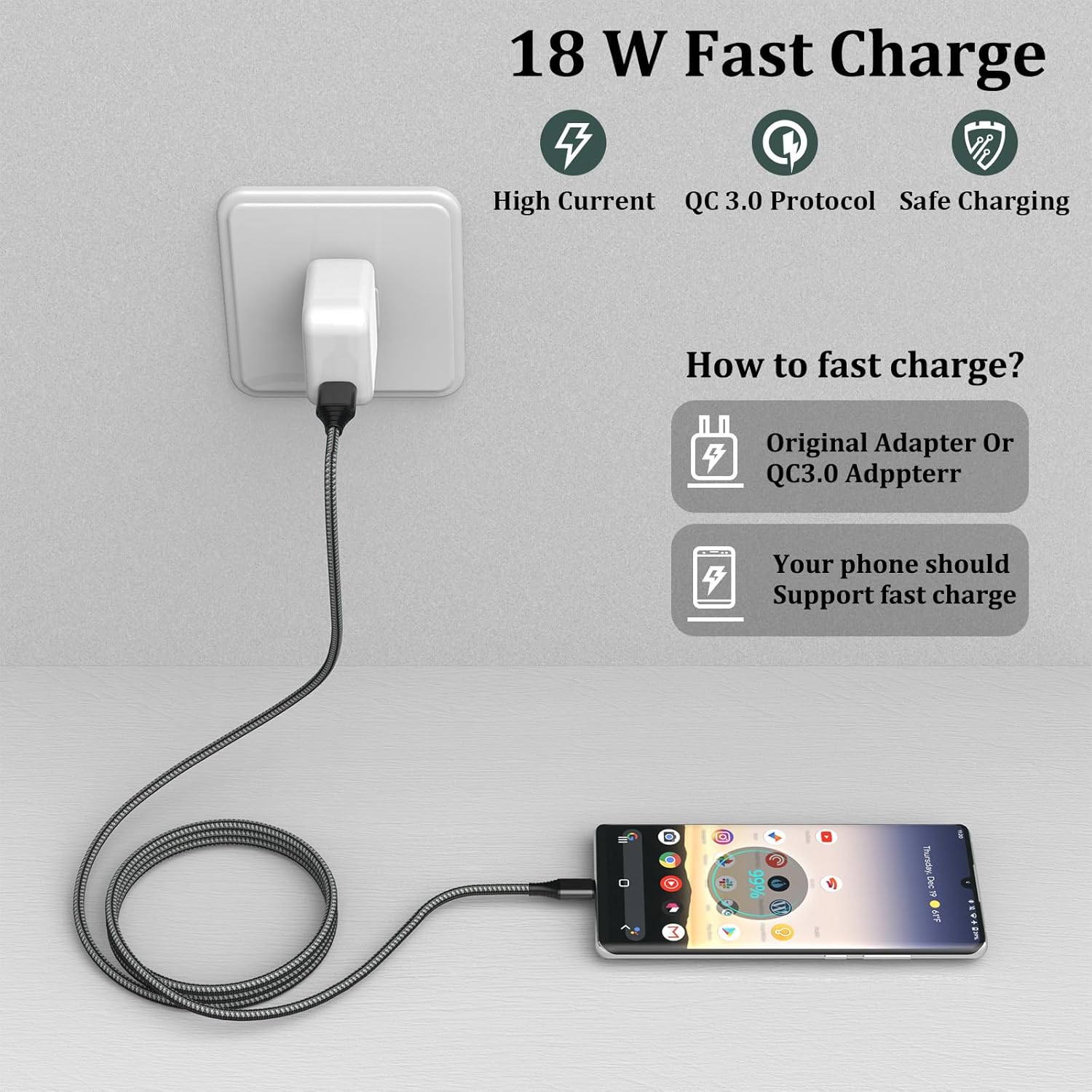
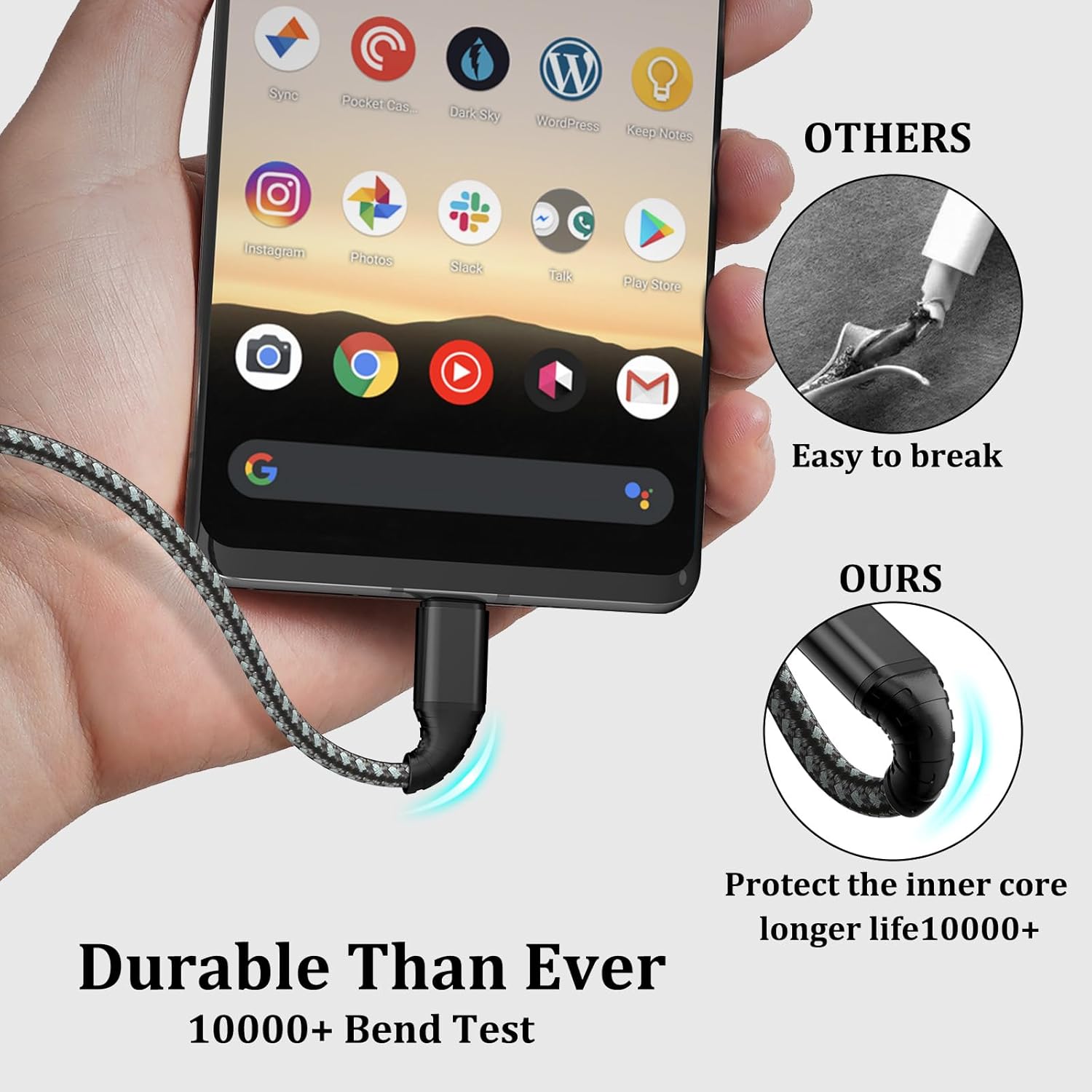
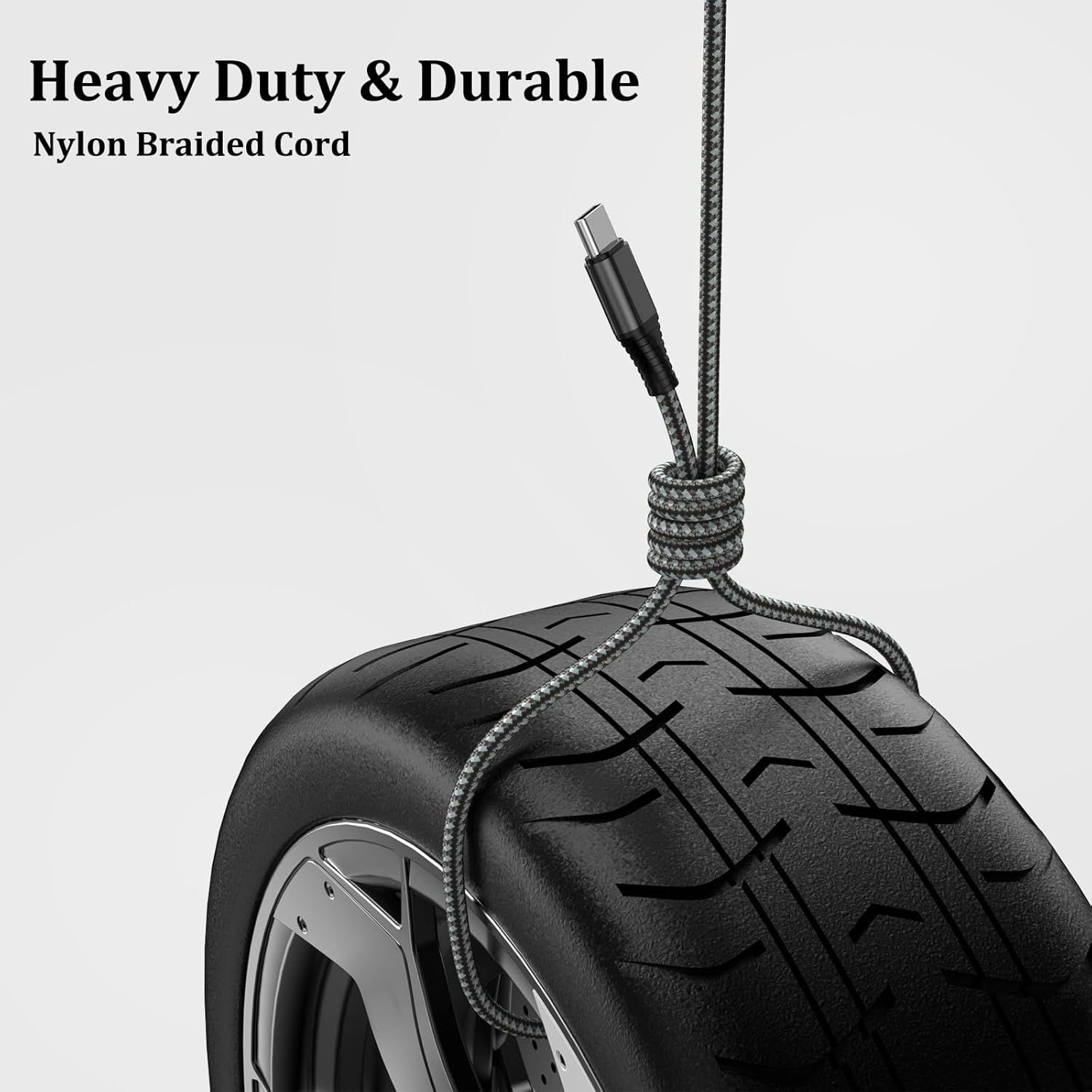
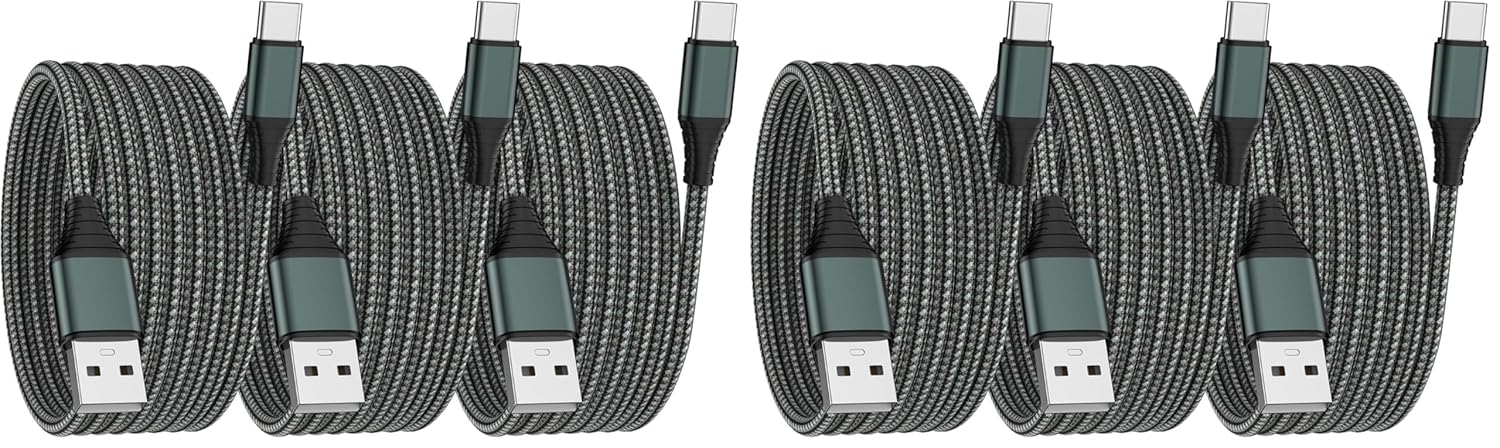
What it is and what it solves\nThis is a two-pack of USB A to USB C cables designed for charging and data transfer. Each cable is 3 metres long and features a durable braided nylon exterior with an aluminium shell at the connectors. The design targets everyday use around home, office or while travelling, substituting worn or fraying cables with a sturdy alternative. If you’re looking for a simple, reliable way to power USB‑C devices from a USB‑A charger or computer, this set aims to cover common scenarios without needing extra adapters.\n\n## Build quality and durability\nA key selling point is the reinforced stress points at both ends and the protective aluminium shell. The braided exterior helps resist tangling and wear, which is useful if you tend to move around or plug in and out frequently. It’s not a miracle cure for every kinking scenario, but the construction is designed to hold up to daily rigours rather than feel premium for aesthetics alone.\n\n## Length and value\nWith two 3-metre cables, you gain flexibility: you can sit on a sofa and reach a wall outlet, or work at a desk without moving devices around. The two-pack approach means you can keep one at home and one at the office, or share with a family member. If you often find cables too short or constantly misplacing them, this setup mitigates those issues.\n\n## Performance: charging and data transfer\nThe cables support fast charging up to 5V/3A, compatible with common fast-charging protocols like QC 2.0/3.0 depending on the charger and device. Data transfer tops out around 480Mbps, which is enough for quick transfers of photos, small video files and everyday documents. It’s not designed for high‑bandwidth tasks like large 4K video streaming or very large backups, but for most daily file transfers it remains adequate. Consider whether your device and charger support higher speeds before expecting peak performance.\n\n## Compatibility: what works with it\nThese cables are described as universal for USB‑C devices when paired with a USB‑A charger or port. That broad promise covers many smartphones, tablets, laptops and USB‑C peripherals. In practice, you’ll want to verify your charger’s output and device compatibility to realise the 3A charging potential. If you rely on a charger that only supplies lower currents, you’ll likely see slower charging.\n\n## Practical use and real‑world scenario\nImagine using the 3 m cable to charge a phone from a wall socket while you’re seated comfortably on a couch, or connecting a laptop to a USB‑C hub on a desk without stretching a single cable. The extra length can reduce friction during setup and reduce the need to perch devices in awkward positions. However, if your primary need is the shortest possible cable for a bedside table or a compact travel kit, you might prefer shorter options.\n\n## What to check before you buy\n- Confirm your charger or power bank can supply up to 3A for best charging speed.\n- Ensure your device supports USB‑C charging from USB‑A sources at the intended rate.\n- If data transfer speed matters for you, note that 480Mbps is adequate for everyday file moves but not for large, time‑critical transfers.\n- Consider the environment where you’ll use it most, the nylon braid helps with durability, but it’s still a cable that can wear with heavy folding or crushing pressure.\n\n## How it compares to other approaches\nIf you prioritise durability and length over compactness, a 3 m nylon‑braided USB‑A to USB‑C cable makes sense. It sits between basic, shorter cables and top‑spec high‑speed data cables. For users who mainly charge while on the move or require occasional data transfer, this setup provides a robust, value‑oriented choice.\n\n## FAQ (quick answers)\n- Q: Can I use this to charge a USB‑C device from a car USB outlet? A: Yes, provided the outlet (and any adaptor) can supply up to 3A.\n- Q: Is it compatible with all USB‑C devices? A: It’s described as universally compatible with USB‑C devices, but charging performance depends on the charger.\n- Q: Will the 3 m length cause extra charging loss? A: Basic electrical considerations mean longer cables can introduce slight losses, in normal use, you should still get practical charging speeds if the charger supports 3A.\n- Q: Is data transfer as fast as high‑end cables? A: Not at the top end, 480Mbps is suitable for standard file transfers rather than large, time‑critical backups.\n\n## Final decision\nIs it worth it? If you value a durable, long and versatile USB‑A to USB‑C solution for everyday charging and data transfers, this two‑pack offers practical coverage for multiple spaces (home and office) without needing to swap cables around. It may not be the best choice if you require ultra‑fast data transfer or the shortest possible cable for a compact travel kit. If you prioritise reliability and convenience with a sensible price, these cables are worth considering.