

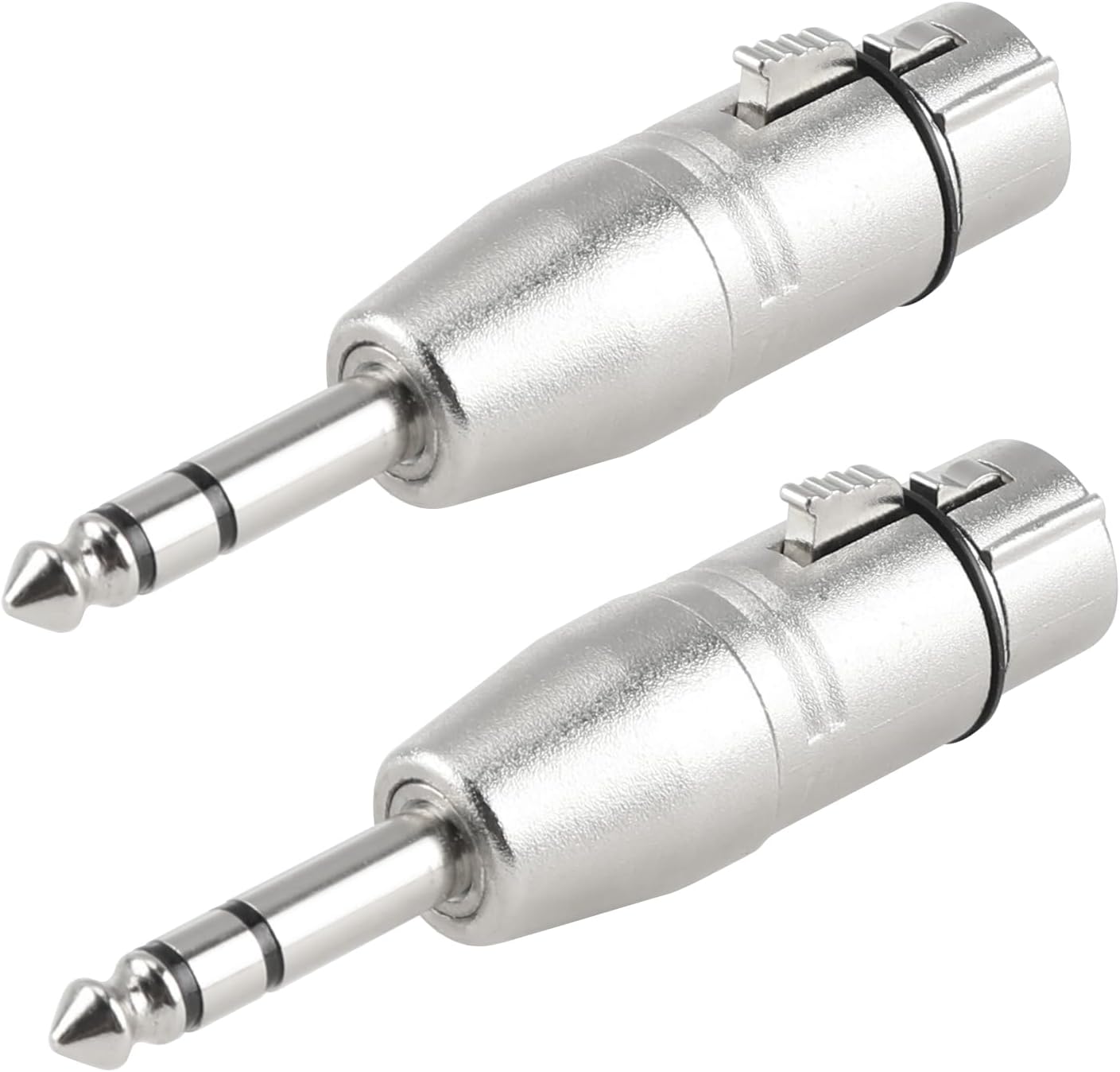
talNite XLR to 1/4 inch TRS Adapter (Balanced), 2-pack — XLR Female to TRS Jack
Product description
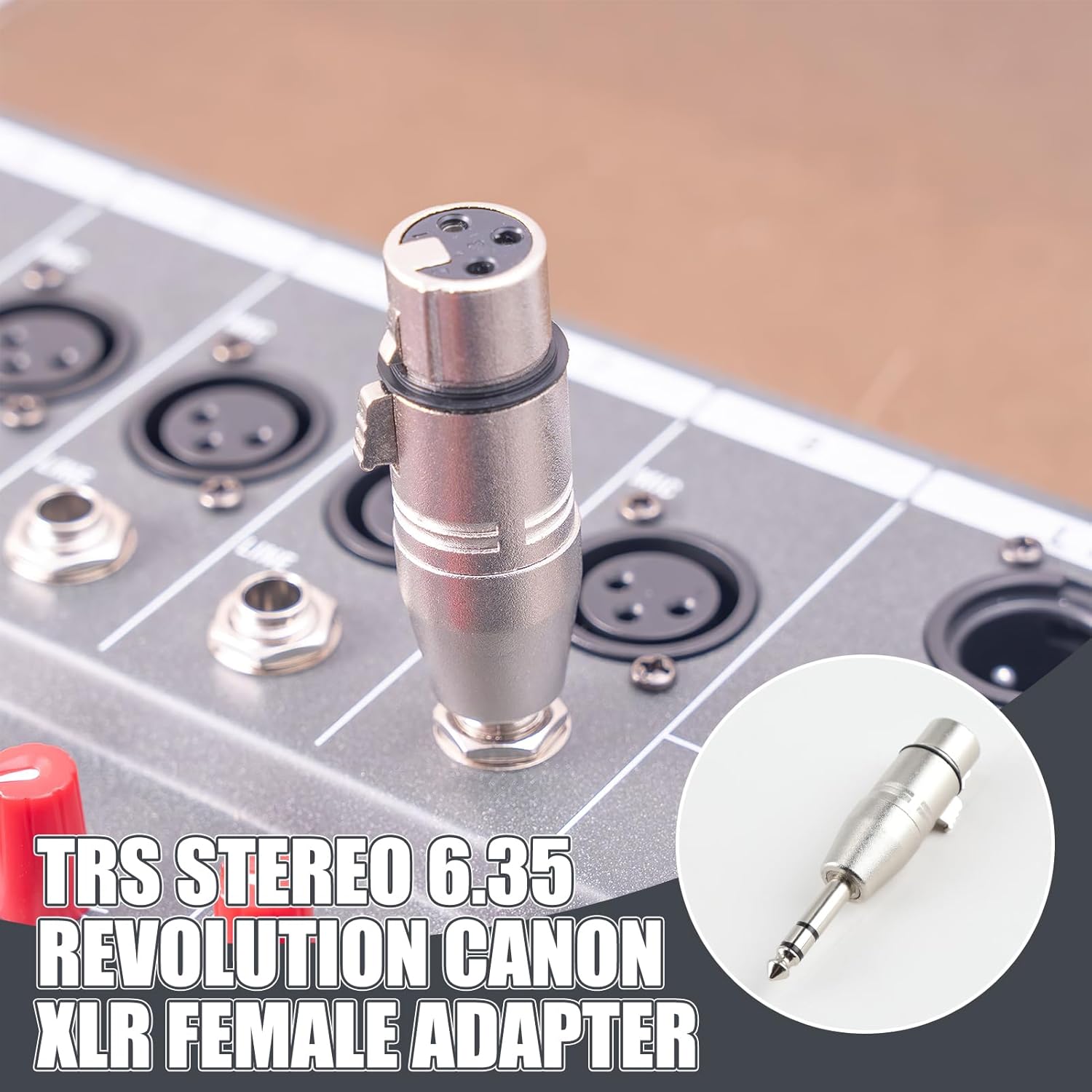
If your kit mixes balanced XLR with 1/4 inch TRS-style inputs, you end up hunting for adapters more than you’d like. These talNite XLR to Jack TRS adapters are built for that exact crossover: XLR female to a 1/4 inch TRS (metal adaptor), supplied as a 2-pack.
They’re aimed at practical day-to-day audio setups, whether that’s a home studio patching, a gigging rig, or the kind of mixer/amplifier/speaker connections you tweak often. The pitch is clear—balanced conversion with a firm, robust feel—though, as with any adapter, the real test is whether the rest of your gear expects the same wiring and connector type.
The essentials
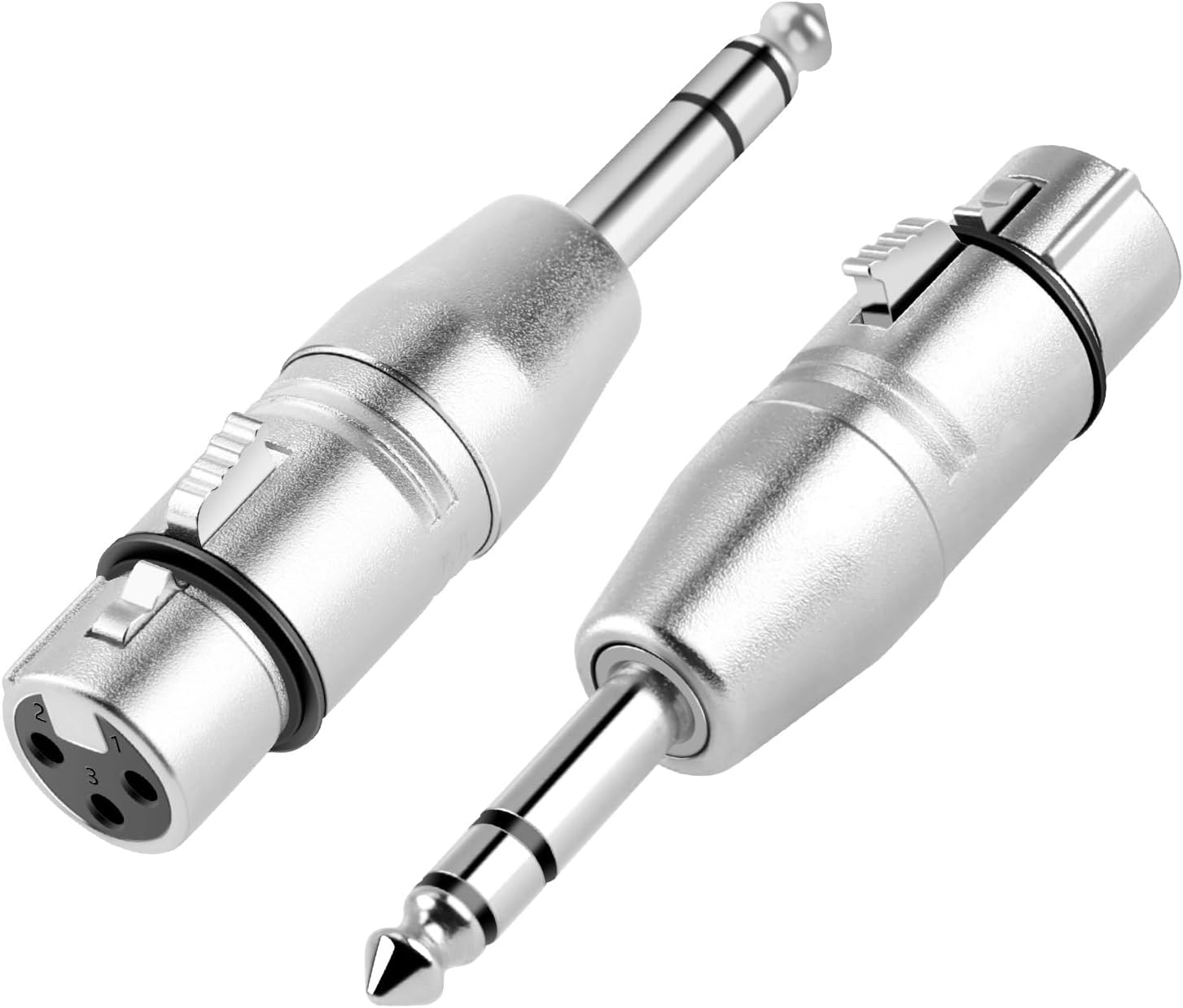
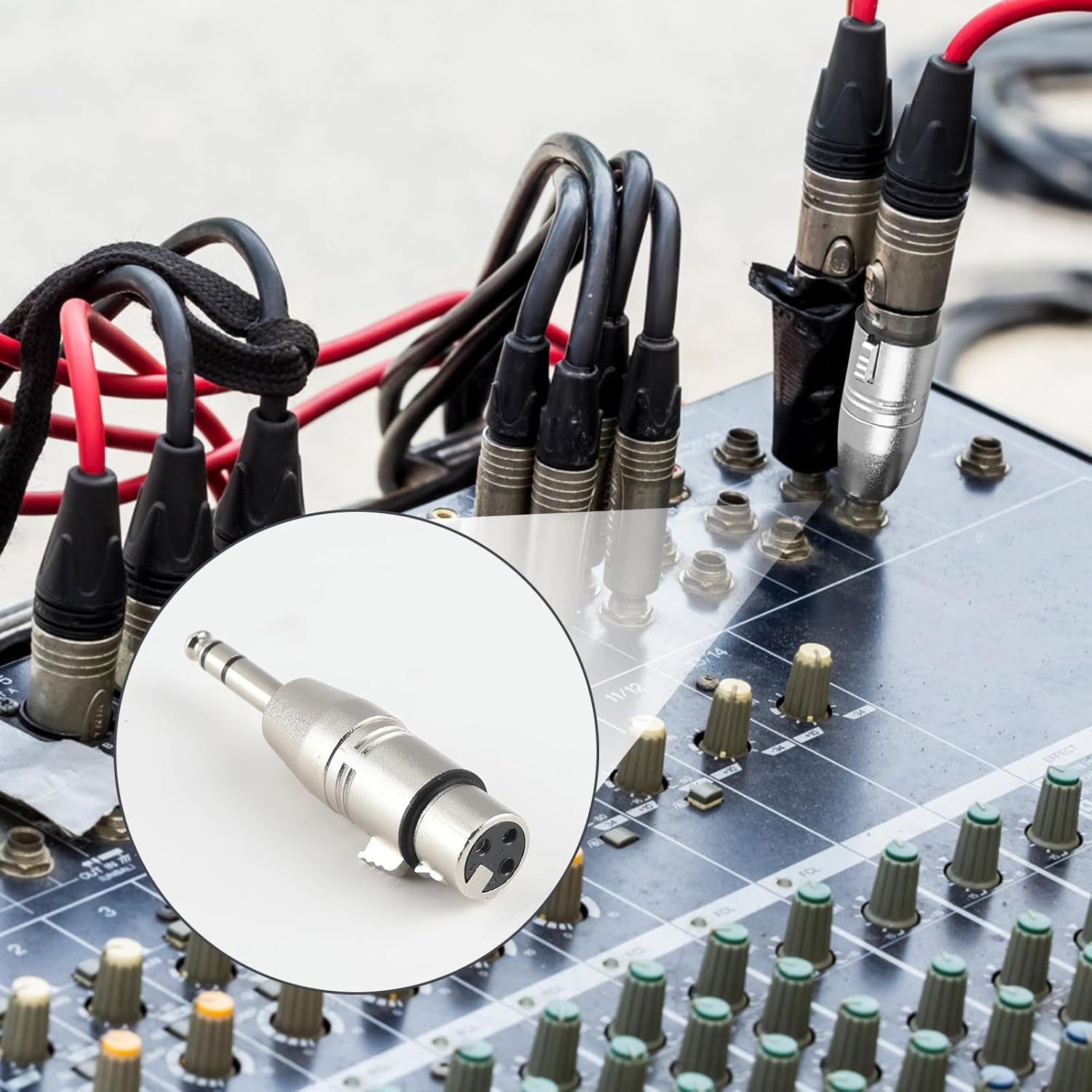
These adapters change the gender and connector format: an XLR female end on one side, and a 1/4 inch TRS male jack plug on the other. In other words, they’re designed to help you connect equipment that uses XLR outputs to devices that take 1/4 inch TRS inputs.
The listing frames them as balanced XLR-to-quarter-inch adaptors, which matters if your system is set up to work with balanced signal paths and you want to keep the signal clean. They’re also sold as durable, with sturdy connectors intended to handle frequent plug/unplug.
What you’ll notice in use
On paper, the main advantage is simple: fewer “wrong connector” moments. You can keep the audio chain where it belongs and avoid awkward workarounds.
For a concrete example, imagine you’re recording vocals and want to run a microphone signal into a mixer channel or interface that accepts 1/4 inch TRS. Instead of swapping cables or re-cabling your desk, you use the XLR-to-TRS adapter at the end of the existing lead. Once it’s in, you can move between devices with less fuss—especially useful when you’re doing quick setup changes.
The listing also mentions noise-free performance and reduced interference. Again, there’s no measurement data provided here, but the design intent is clearly balanced signal handling, which is exactly what you’d look for when your gear supports balanced connections.
Where it fits best (and who it suits)
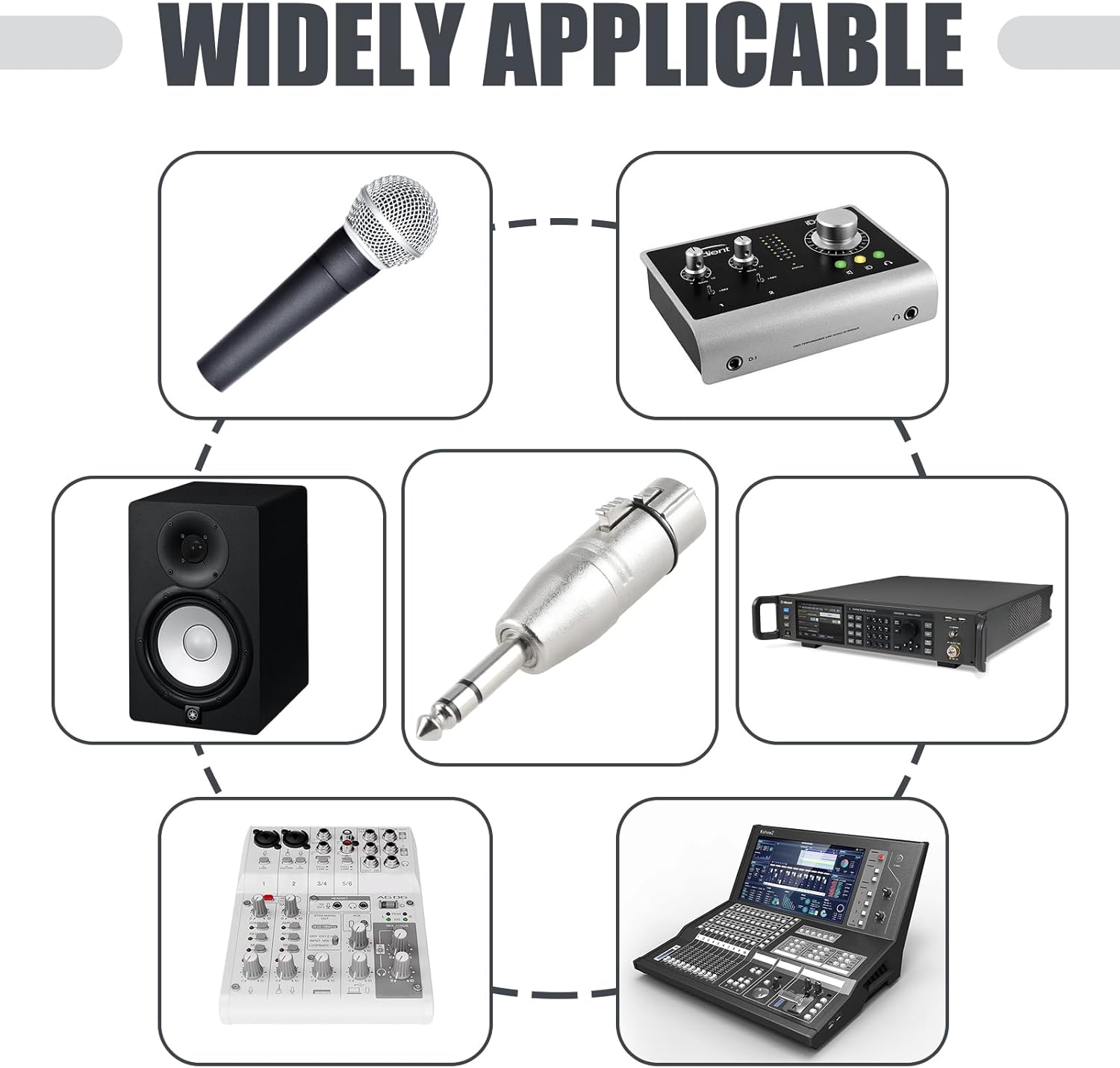
This is the sort of accessory that makes sense if you regularly connect microphones, mixers, headphone amplifiers, studio monitors, amplifiers, or similar audio equipment that uses XLR and 1/4 inch TRS in different places.
It’s also a sensible buy for people who want a small “spares and swaps” kit: two adapters means you can prepare a couple of common links (for example, one for recording, one for rehearsals), without relying on a single fragile point in your setup.
What to watch before buying
Adapters are convenient, but a couple of details can make or break compatibility.
It’s worth checking that your 1/4 inch input is actually TRS (not TS/mono), because the adapter is specifically described as 1/4 inch TRS balanced. Likewise, confirm that the device on the XLR side expects an XLR female connection in that configuration.
Another limitation to bear in mind: while the product is described as minimising interference and providing a clear, balanced sound, the listing doesn’t provide technical specifications like impedance or wiring diagram. If you’re doing something very particular (or the rest of your signal chain is non-standard), you may want to verify your equipment’s input/output requirements first.
Durability and build: the practical angle
The listing emphasises robust connectors and a durable design intended to stand up to frequent use. For most everyday setups—plugging into a mixer, connecting studio monitors, moving between rooms—that’s exactly the kind of expectation you want.
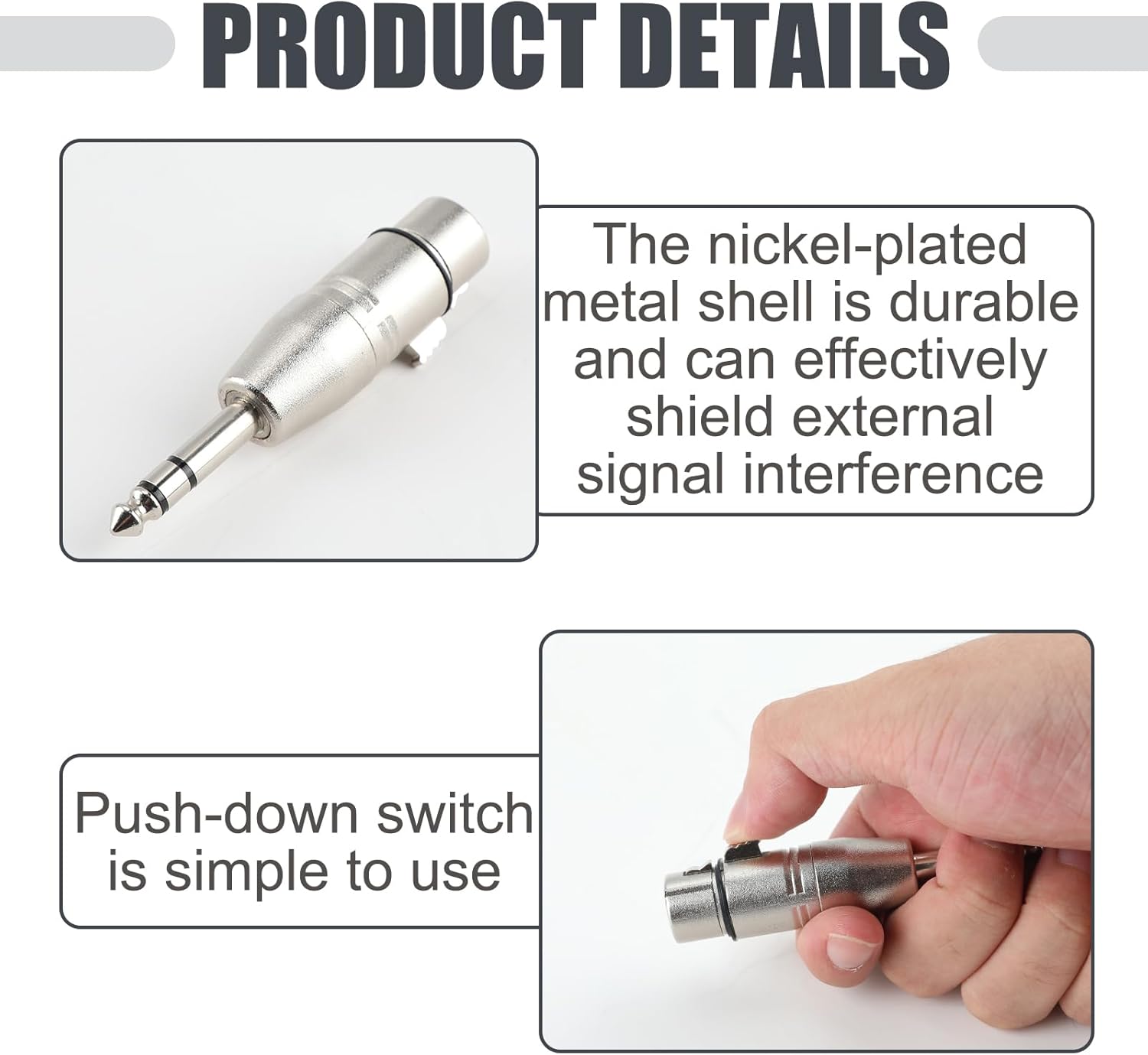
That said, adapters take mechanical stress at the connection point. If you’re repeatedly moving cables around, stressing connectors, or using them in tight spaces, you’ll still want to handle them carefully. Durability helps, but it won’t make a poorly managed cable run feel “effortless”.
Pros and limitations
- Balanced XLR female to 1/4 inch TRS conversion, useful when your gear uses different connector standards.
- Supplied in a 2-pack, so you’re not left scrambling if one connection needs fixing.
- Described as designed for clear, balanced sound and reduced signal interference.
- Metal adaptor construction is referenced, which usually suits repeated plug/unplug.
On the other hand, don’t assume universal fit: the adaptor is aimed at TRS specifically, so you’ll want to ensure your destination input is TRS-compatible. Also, the listing doesn’t include hard technical specs, so it’s not the best choice if you need detailed electrical matching data.
In the box (what you get)
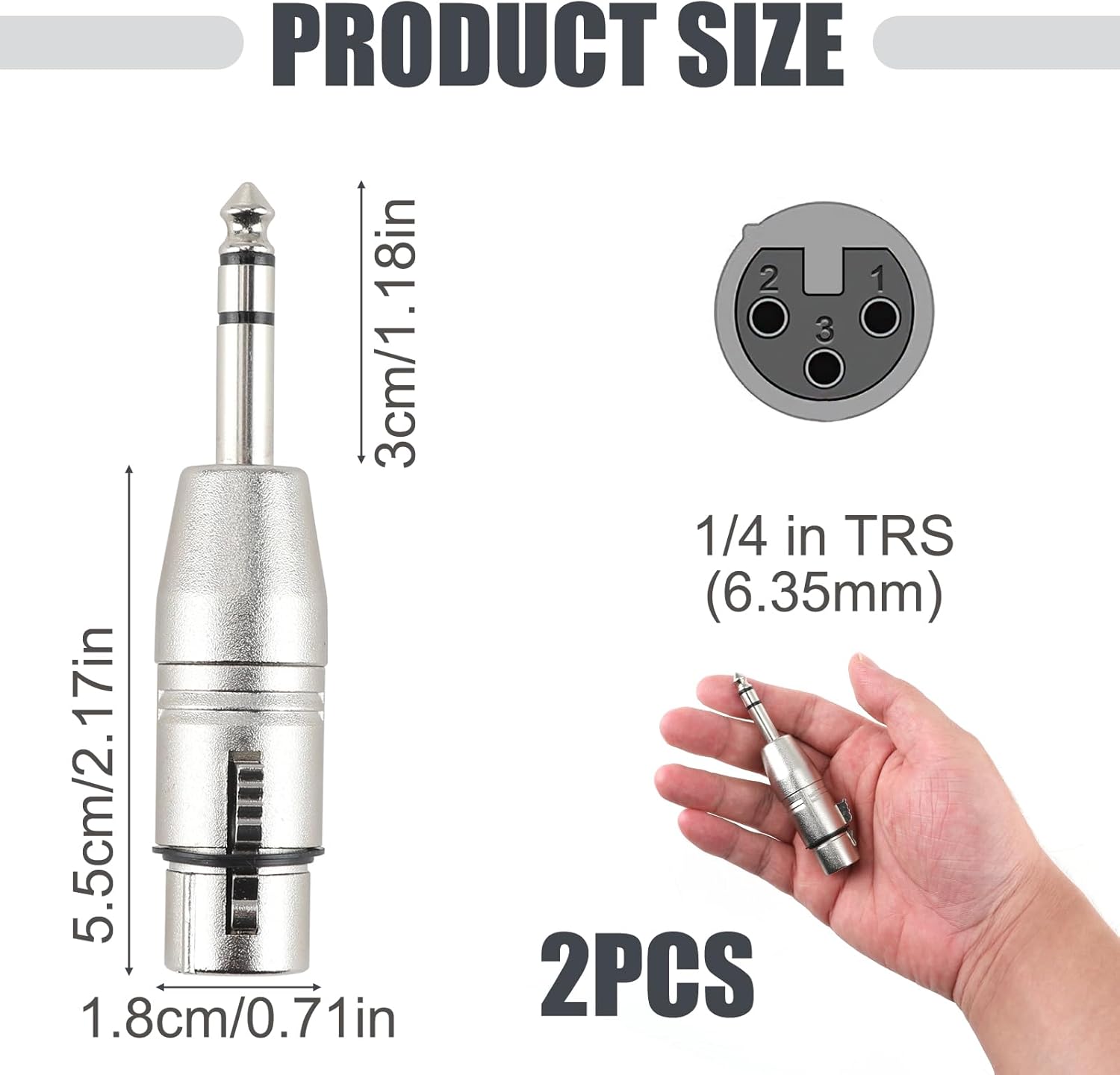
This pack contains 2x XLR to 1/4 inch TRS adapters, described as XLR male to XLR female / TRS plug gender change adaptors in the listing wording (the key practical point is that you end up with an XLR female connection and a 1/4 inch TRS side to match your equipment).
Is it worth it?
Buying this talNite XLR to 1/4 inch TRS adapter makes sense if you frequently bridge audio gear that mixes XLR and balanced 1/4 inch inputs—think mixers, amplifiers, studio monitors, and similar setups where TRS is the expected connector.
You may want to skip it if your 1/4 inch inputs are actually TS/mono, or if your equipment’s requirements are unusual and you need exact wiring/electrical specifications beyond what’s provided here. For straightforward, balanced connector crossover jobs, the 2-pack format and the “durable, robust” intent are the practical reasons to take a closer look.
Mini FAQ
Are these adapters for balanced connections?
They’re described as balanced XLR to quarter-inch TRS adaptors, with the goal of maintaining clear, balanced signal handling.
Do I need 1/4 inch TRS inputs specifically?
Yes, the adaptor is described as a 1/4 inch TRS connector type. If your device uses a different 1/4 inch standard, compatibility may not be what you expect.
How many adapters are included?
The pack includes 2 adapters.
What are they most commonly used for?
The listing points to audio gear connections such as microphones, mixers, headphone amplifiers, studio recording setups, and amplifiers/monitors where XLR and 1/4 inch TRS come together.
Will they fix connector issues permanently?
They’re best seen as a flexible conversion tool for your existing cables and equipment. If the long-term setup truly needs a different cable format, that might still be worth considering—but for day-to-day patching, adapters like this are often the easiest route.