

SUNLU ABS Filament 1.75mm (Silver) – High-strength, high-temperature 3D printing filament, 1kg spool
Reviews
Price
Product description
What this is (and what it’s for)
SUNLU’s ABS filament in 1.75mm is aimed at prints where you want more than basic “PLA-style” convenience. On paper, ABS tends to be chosen for parts that need toughness, better impact resistance, and improved behaviour when things get warm.
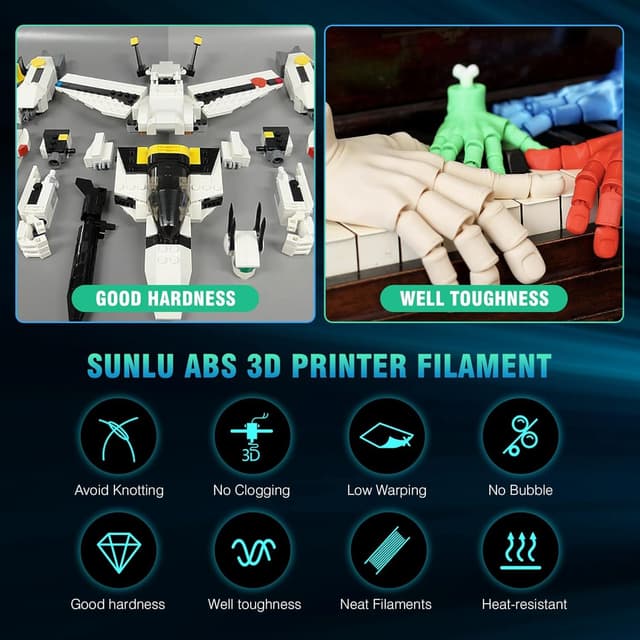
This spool is positioned around three practical goals: strength and durability for functional pieces, higher temperature resistance up to 80 °C (so the part is less likely to soften in warmer conditions), and a lower-distortion approach meant to reduce warping and shrinkage while printing. If your usual problem is that your parts look fine but don’t feel robust enough, or if heat causes droop or deformation, this is the kind of filament people reach for.
That said, ABS also has a reputation for being a bit more demanding than simpler filaments. Even with “low deformation” claims, it may not be the easiest material for a quick first success—especially on larger prints or when conditions in your printer aren’t very stable.
Key points you’ll care about day to day
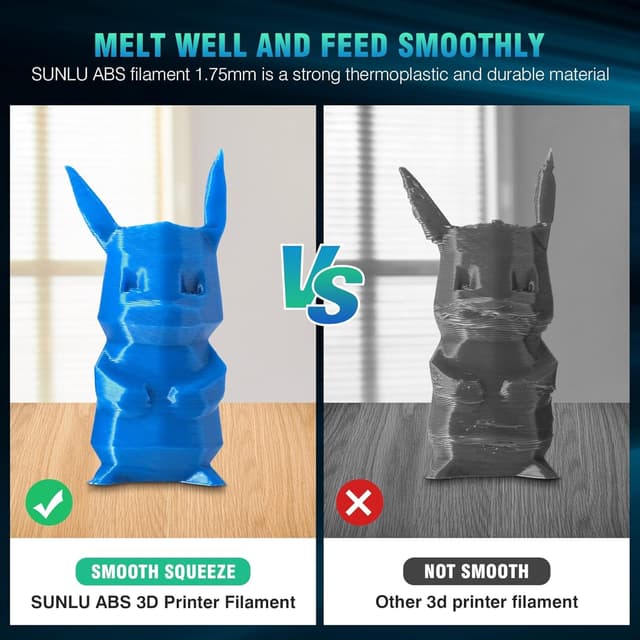
This filament is built around performance consistency and print reliability: the diameter is described as precise (± 0.02 mm) to help keep feeding smooth and reduce the risk of nozzle issues.
It also focuses on layer adhesion. Strong bonding between layers matters if you’re printing functional components like brackets, gears, tool-like parts, or automotive-related internal components (examples mentioned include gears, tools, and automotive components).
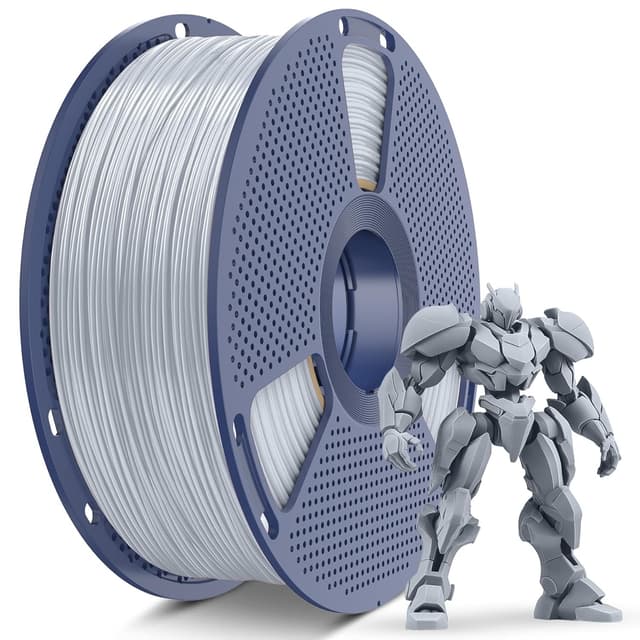
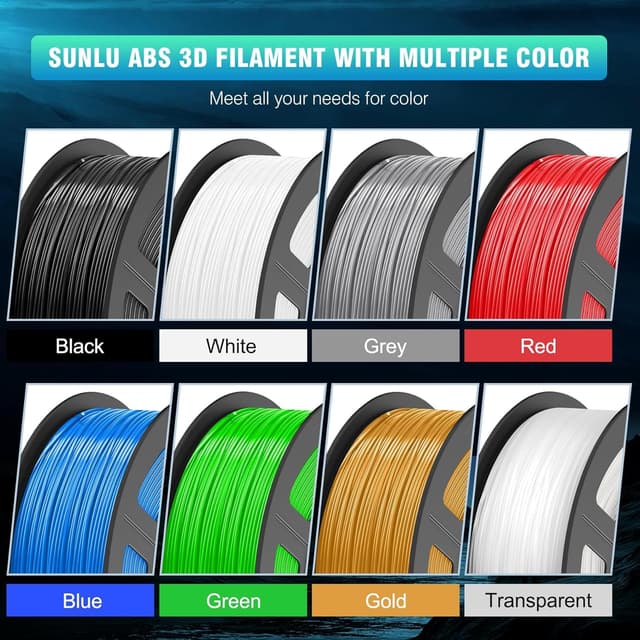
Colour consistency is another real-world angle. The silver finish is described as consistent across spools and batches, with a matte look. That’s useful if you plan to print in multiple sessions and don’t want mismatched shades.
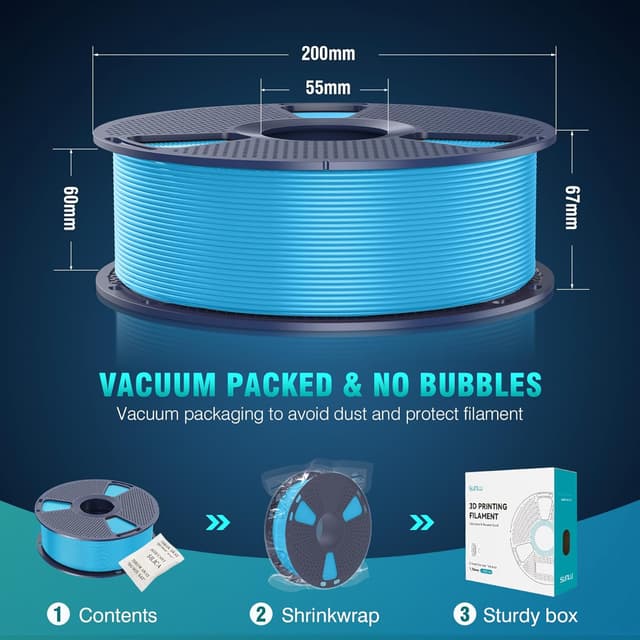
And there’s the practical “getting started” detail: the filament is vacuum-sealed with desiccant in a reusable moisture-resistant bag, so you’re less likely to start with damp filament.
Tech specs
- Name: SUNLU ABS Filament
- Type: 3D printer filament
- Material: ABS
- Colour: Silver
- Diameter/Format: 1.75mm
- Capacity: 1kg spool
- Temperature resistance: up to 80 °C
- Dimensional precision: ± 0.02 mm
- Print method: FDM (heated build plate required, per the product description)
Where it really fits (and when it might disappoint)
It makes sense if your project leans functional: parts that need hardness and impact resistance, plus components that may face heat stress. The product description calls out examples like gears, tools, and automotive components, including situations such as motor compartments and other higher-temperature environments.
It also suits you if you’ve struggled with warping and shrinkage. The filament is described as low-deformation, aiming to reduce contraction and curling, which should help with success rates on complex or large-format prints.
However, it may not be the best match if your priority is maximum ease and minimal setup. ABS generally asks for more careful printer environment than “forgiving” materials. You should expect that results depend quite a lot on your printer setup (enclosure, bed adhesion approach, and keeping temperatures stable).
Getting the most from ABS (practical usage tips)
A good way to think about this spool is as “fit for functional ABS printing” rather than a casual daily driver.
Before you print, the vacuum-seal + desiccant helps, but it still pays to handle filament sensibly: only open the bag when you’re ready to load, and keep it stored protected when it’s not in use. If you’ve ever had brittle layers or inconsistent extrusion from moisture, you’ll appreciate why this matters.
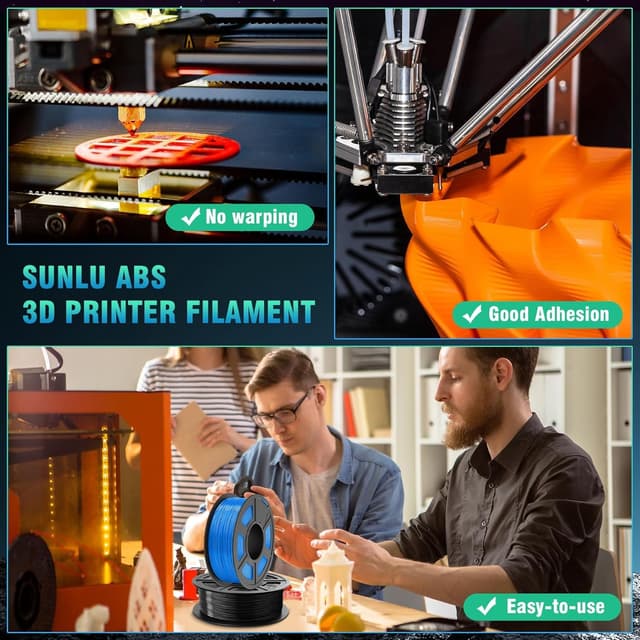
During printing, pay attention to first-layer reliability. The description mentions good bed adhesion on heated beds, but ABS tends to reveal weak first layers quickly—especially on larger parts.
A micro-example: imagine printing a small gear or a tool-like component. With ABS, you’re aiming for sturdier layer bonds and fewer structural weak points. If your previous PLA prints chipped or rounded off under load, ABS’s strength and impact resistance (as claimed) are exactly what you’d be testing. If you see lifting or edges curling, that’s where the “low deformation” idea is supposed to help—but it won’t magically override a poor thermal setup.
Care, storage and consistency
The filament is packaged vacuum-sealed with desiccant in a reusable moisture-resistant bag. That’s the kind of prep step that can quietly improve print reliability, particularly for ABS, where moisture can lead to more problems.
On colour: if you’re doing multi-part projects, the silver consistency across spools and batches is highlighted as important. It won’t solve mismatches caused by different print settings or finishing differences, but it helps reduce one source of variation.
Should you buy it?
It’s a solid pick if you want ABS for tougher, more functional FDM prints, especially where temperature resistance matters and you’d like a filament designed to reduce warping and shrinkage.
You may want to skip it if you’re after the most beginner-friendly material or if your printer setup can’t keep things steady—ABS success depends quite a lot on conditions, even when the filament is marketed as low-deformation.
Worth considering if you’re comparing approaches that focus mainly on easy printing rather than strength. Here, the pitch is durability, impact resistance, layer bonding, and a temperature ceiling up to 80 °C—so it’s more about long-term usability than quick prototypes.
Mini FAQ
Is this ABS filament compatible with most FDM printers?
The description says it’s designed for excellent performance on most FDM 3D printers with heated print beds.
What temperature is it rated for?
It’s described as resistant to high temperatures up to 80 °C.
Does it arrive ready to print?
It’s described as vacuum-sealed with desiccant in a reusable moisture-resistant bag to help ensure it arrives dry.
Will it warp less than other ABS?
The product claims low deformation to reduce contraction and curling. That can help, but results still depend on your printer and setup.
Final verdict
If your goal is stronger, more durable ABS parts—potentially with exposure to heat—this SUNLU 1.75mm silver filament makes a lot of sense. Just be realistic: it’s not marketed as “zero effort” ABS, so make sure your printer environment and bed setup can support ABS printing, or you may find it harder than more forgiving filament types.