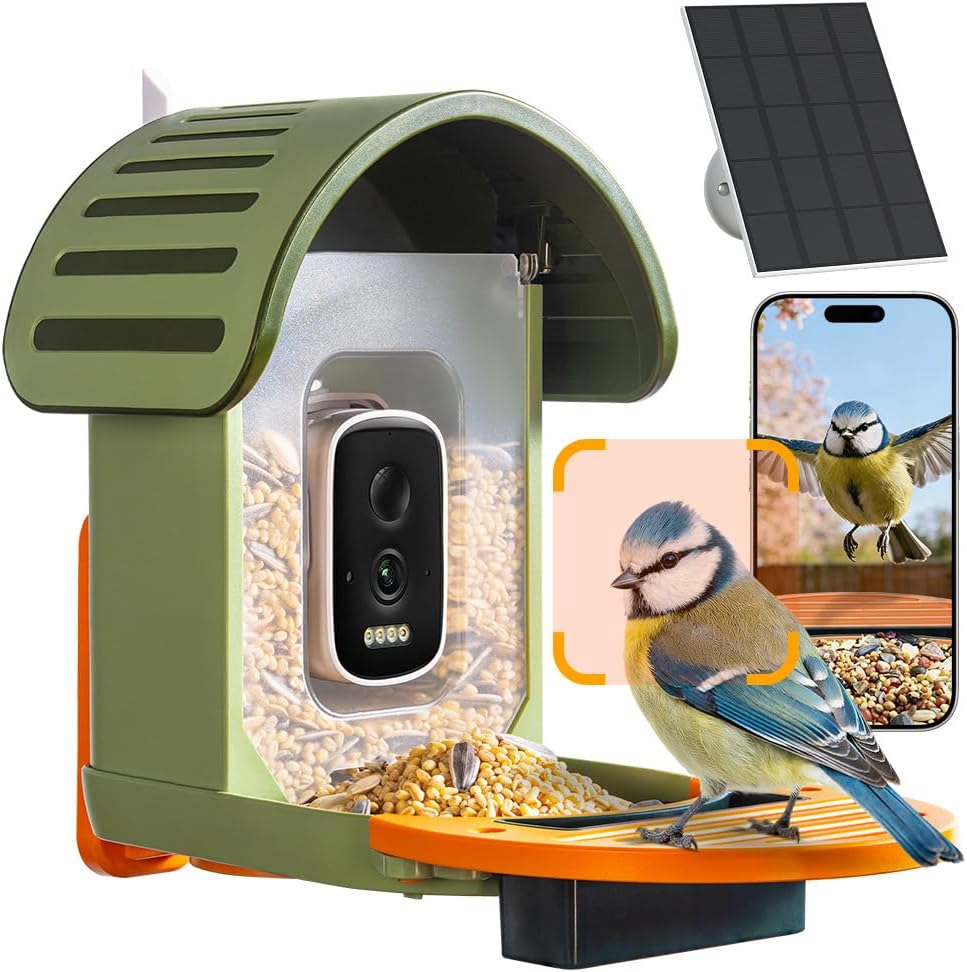
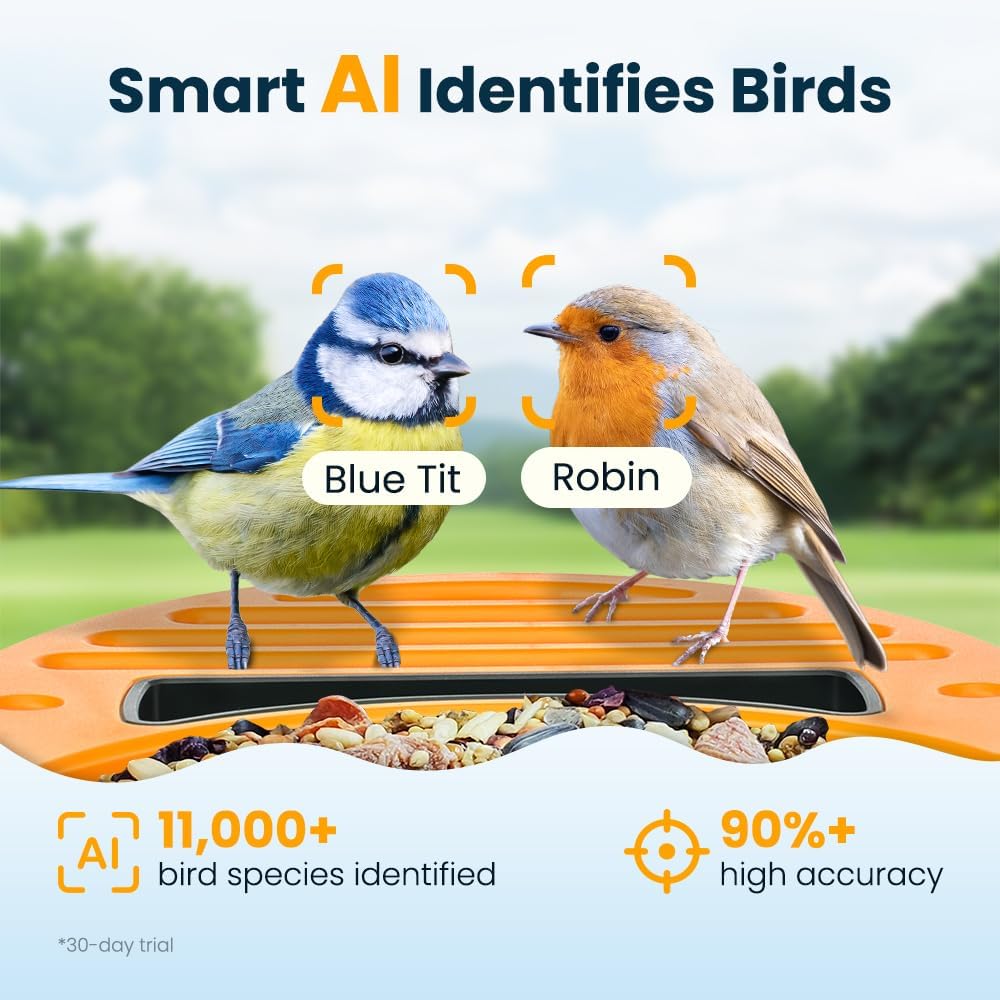
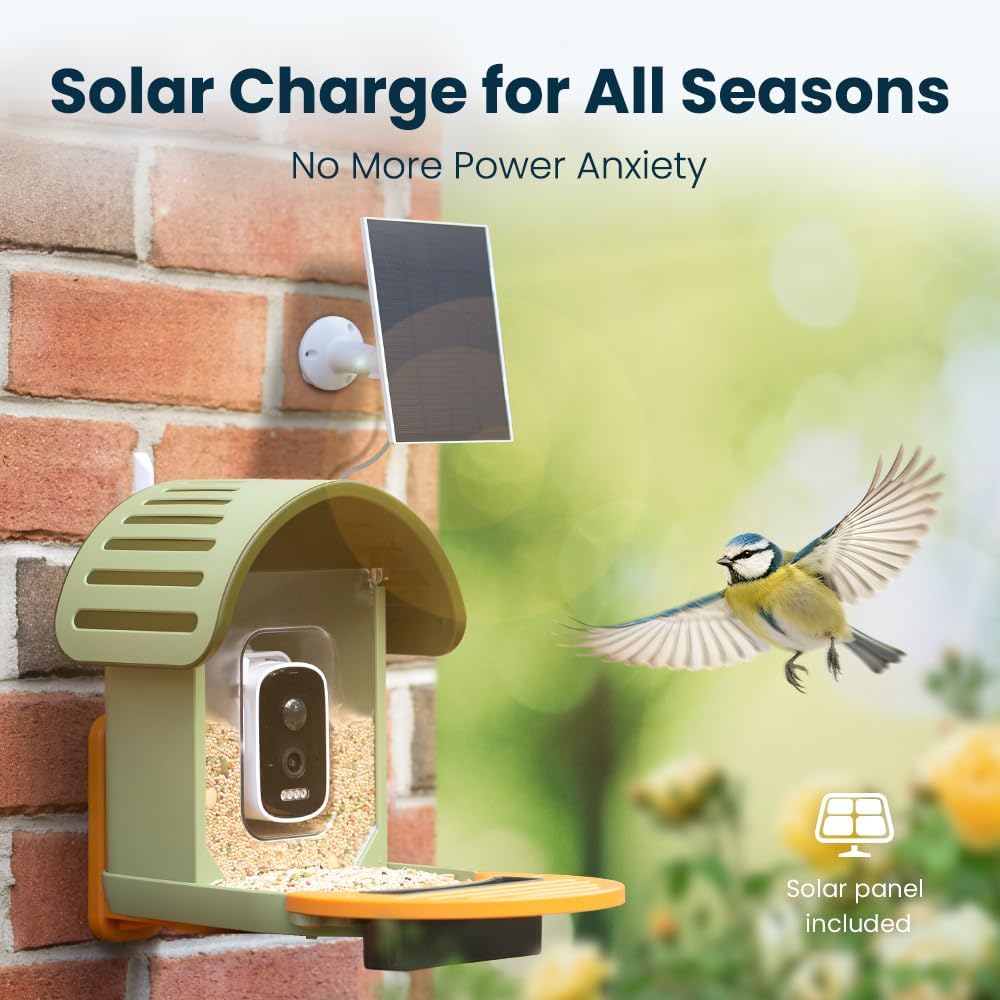
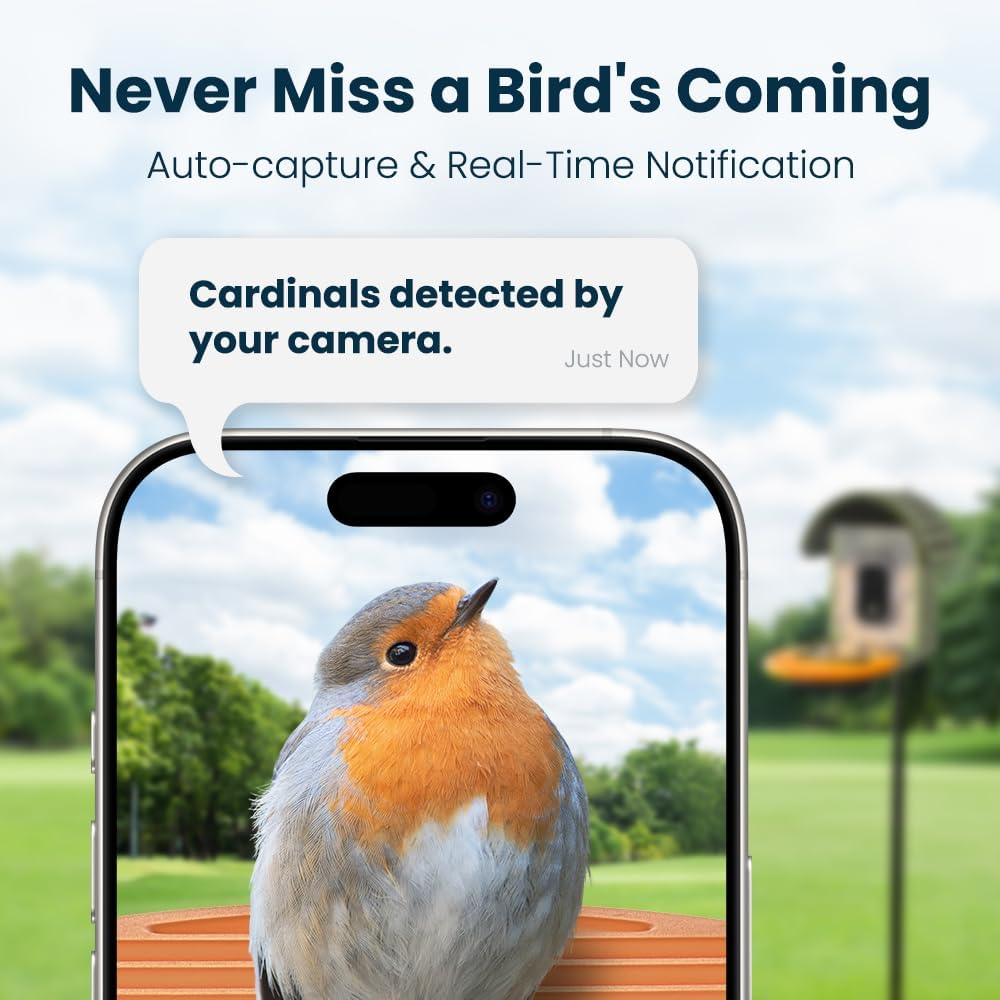
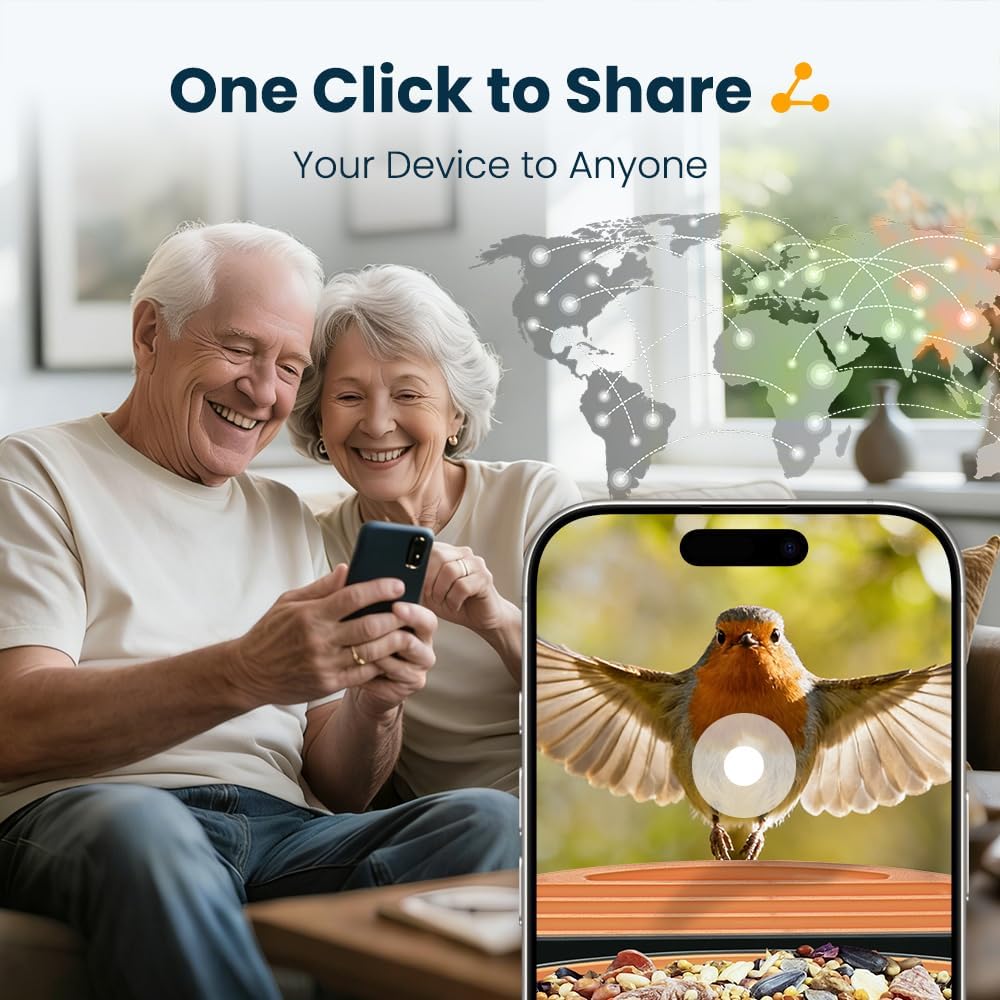
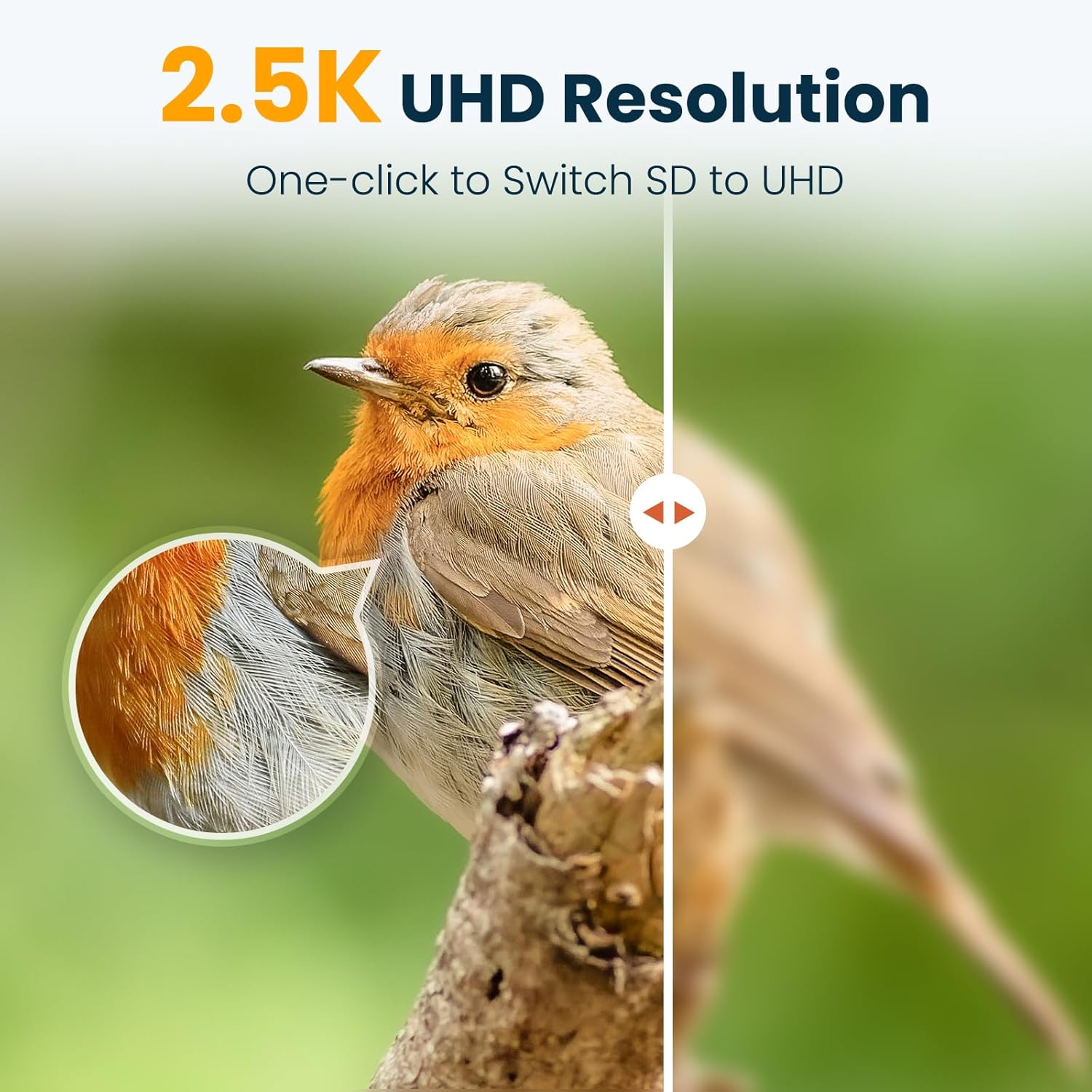
What it is and what it’s for\nThis Smart Bird Feeder with Camera is a solar-powered outdoor observation tool that combines feeding birds with smart monitoring. Its main appeal is not just watching birds at your feeder, but a hands‑free, data‑rich way to learn about wildlife in your garden. If you prioritise constant access to feathered activity without fiddling with batteries, this device aims to deliver. However, as with any camera-enabled feeder, you’ll want to manage expectations about reliability in extreme weather and network coverage.\n\n## How it works in practice\nThe feeder uses AI to identify over 11,000 bird species, delivering alerts when activity is detected and letting you review recordings in 2.5K HD. A 130° vertical viewing angle offers a broad view of the feeding zone, while night vision ensures an after‑dark window into your garden visitors. Two‑way audio lets you listen to birds and respond in real time, which can feel surprisingly immersive. For sharing moments, there’s a one‑click option to post to social media or share with family and friends.\n\n## What stands out day to day\nOne of the strongest selling points is the combination of a relatively generous 1.5L food capacity and solar power, which reduces maintenance compared with frequent refills or battery swaps. The 2.4GHz WiFi connection is designed for a stable live feed, and cloud storage—up to 365 days—means you can review past visits quickly. It also accepts up to 128GB of TF card storage for extra footage locally.\n\n## The practical pros and cons\nPros: AI species recognition, high‑resolution video, remote alerts, solar powered, IP66 rated for outdoor use, decent food capacity, cloud and local storage options, two‑way audio.\nCons: Effective AI depends on clear camera angles and lighting, solar power is contingent on sunlight, setup quality relies on a reliable WiFi signal, may be overkill for casual birdwatchers who only want simple feed‑and‑watch.\n\n## Who it suits\nIt’s well suited to families and garden enthusiasts who want to learn species, share sightings with friends, or create a little nature corner in their yard. It also works as an educational tool for kids, inviting curiosity about local birds and ecosystems.\n\n## Who it isn’t ideal for\nIf you expect ultra‑budget pricing, extremely long battery independence in shadowy locations, or a purely offline experience without cloud storage, this model may not be the best match. It also depends on consistent WiFi at the feeding spot for live video and alerts.\n\n## Before you buy, quick checks\n- Ensure your garden gets adequate sun to maximise solar charging.\n- Check WiFi coverage where you plan to place the feeder.\n- Consider whether you’ll actually use AI species identification or primarily want a camera‑watching tool.\n- Think about space and access for refilling the 1.5L hopper and cleaning the unit.\n\n## How it compares to simple feeders and other approaches\nIf your aim is pure observation with minimal setup, a basic feeder with no camera is cheaper but misses live interaction and recognitions. If you want rich data and viewing options, this model sits between standard feeders and high‑end wildlife cams, offering convenience with built‑in AI and cloud storage rather than a separate recording setup.\n\n## Buying decision: Is it worth it?\nYou’ll like it if you value intelligent bird identification, remote alerts, and the ability to share moments easily. It makes sense for avid bird lovers who enjoy learning in real time and who have reliable solar exposure and WiFi at the garden. Not the best pick if you’re after a simple, low‑cost feeder with no camera or if you expect perfection in low light or overcast days.\n\n## Quick FAQ\n- How many birds can the cloud storage handle? Up to 365 days of cloud storage, plus support for 128GB TF card.\n- Can it operate without WiFi? It relies on a stable WiFi connection for live video and alerts.\n- Is the AI identification accurate for all species? The system identifies over 11,000 species, but accuracy can vary with lighting and distance.\n- What about night viewing? The device includes colour night vision for after‑dark observation.