

Saker aluminium alloy sliding T-square with precision angle adjustment scriber
Product description
What it is (and what it’s for)
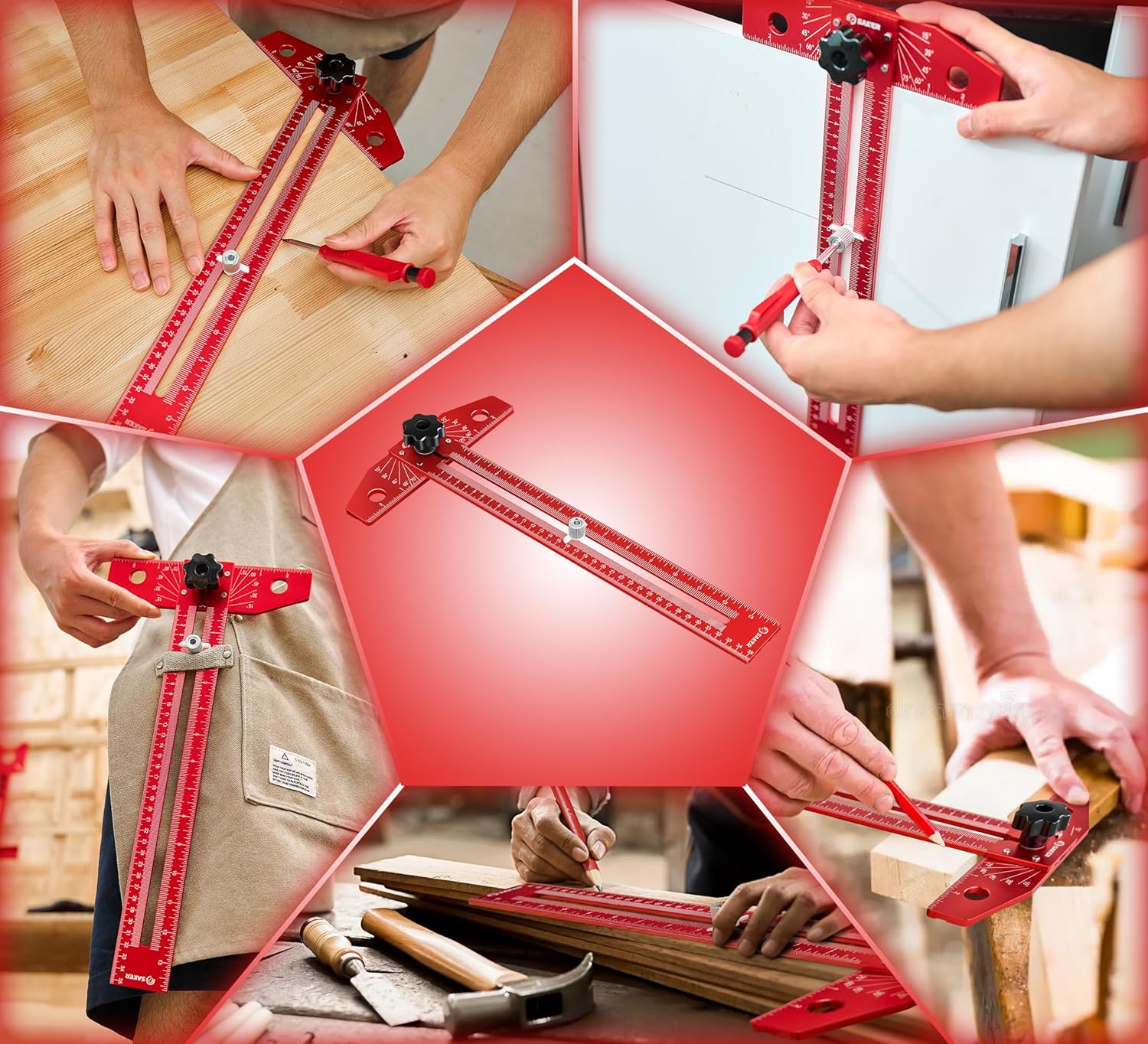
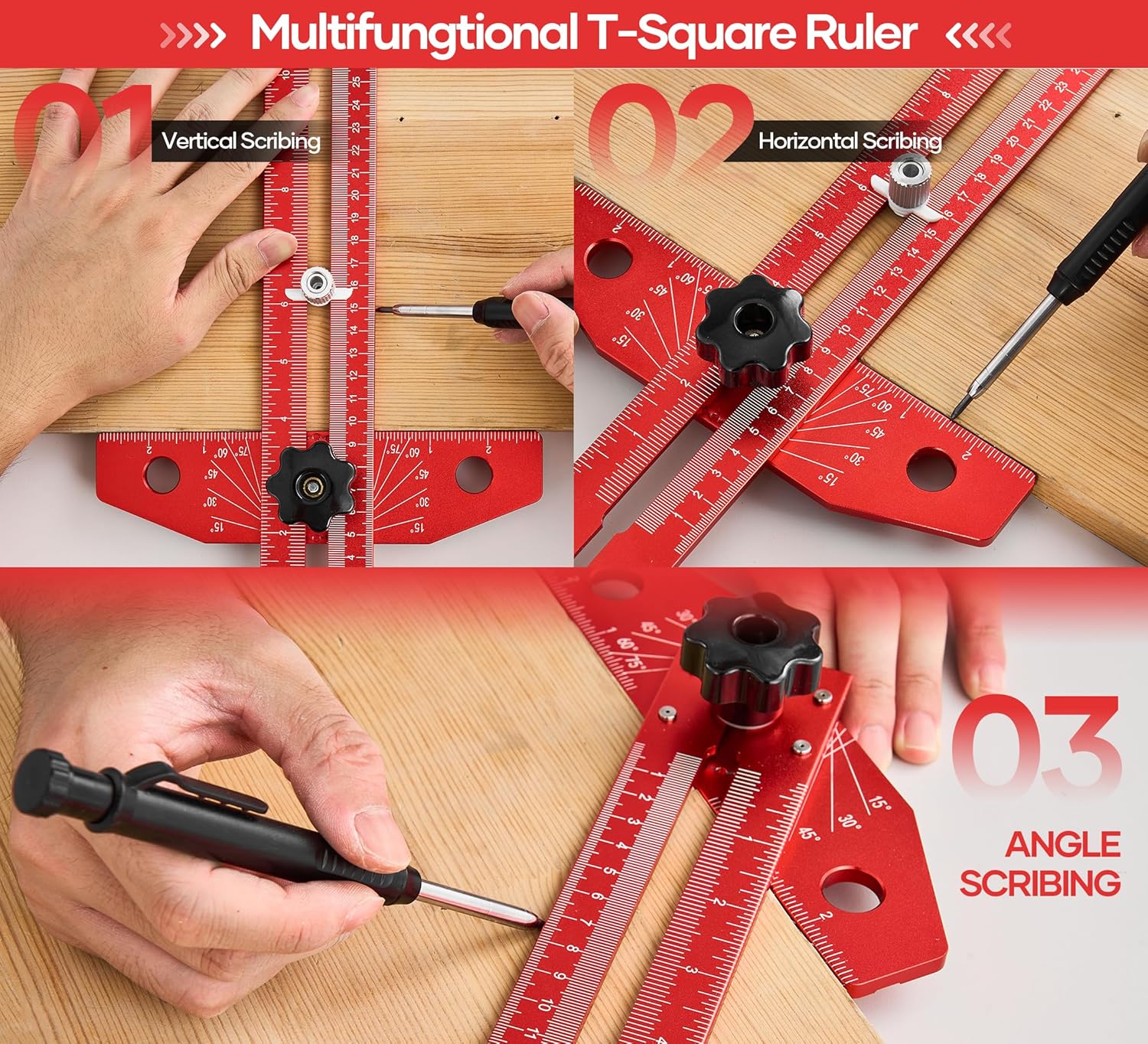
This Saker sliding T-square is designed to do two jobs in one go: straight-line marking with a ruler, and angle measuring/setting using an adjustable protractor-style guide. On paper, that combination is exactly what many people want when they’re laying out measurements for woodworking, engineering-style work, or architectural sketching—because you don’t have to keep swapping between a T-square and a separate angle tool.
The key idea is that you can measure length and angles, then use the same aid to mark lines for tasks like bevel setting or drawing radial lines. If you’ve ever lost time moving between tools (and double-checking whether you set the right angle), this is the sort of “single station” layout tool that could appeal.
That said, it’s worth keeping expectations realistic: the product description suggests accuracy and readability via engraved scales and a sturdy aluminium body, but it doesn’t provide any specific calibration method or tolerance figures. So if you need metrology-grade precision, you may still want to cross-check with a dedicated angle gauge.
What you’ll notice in use
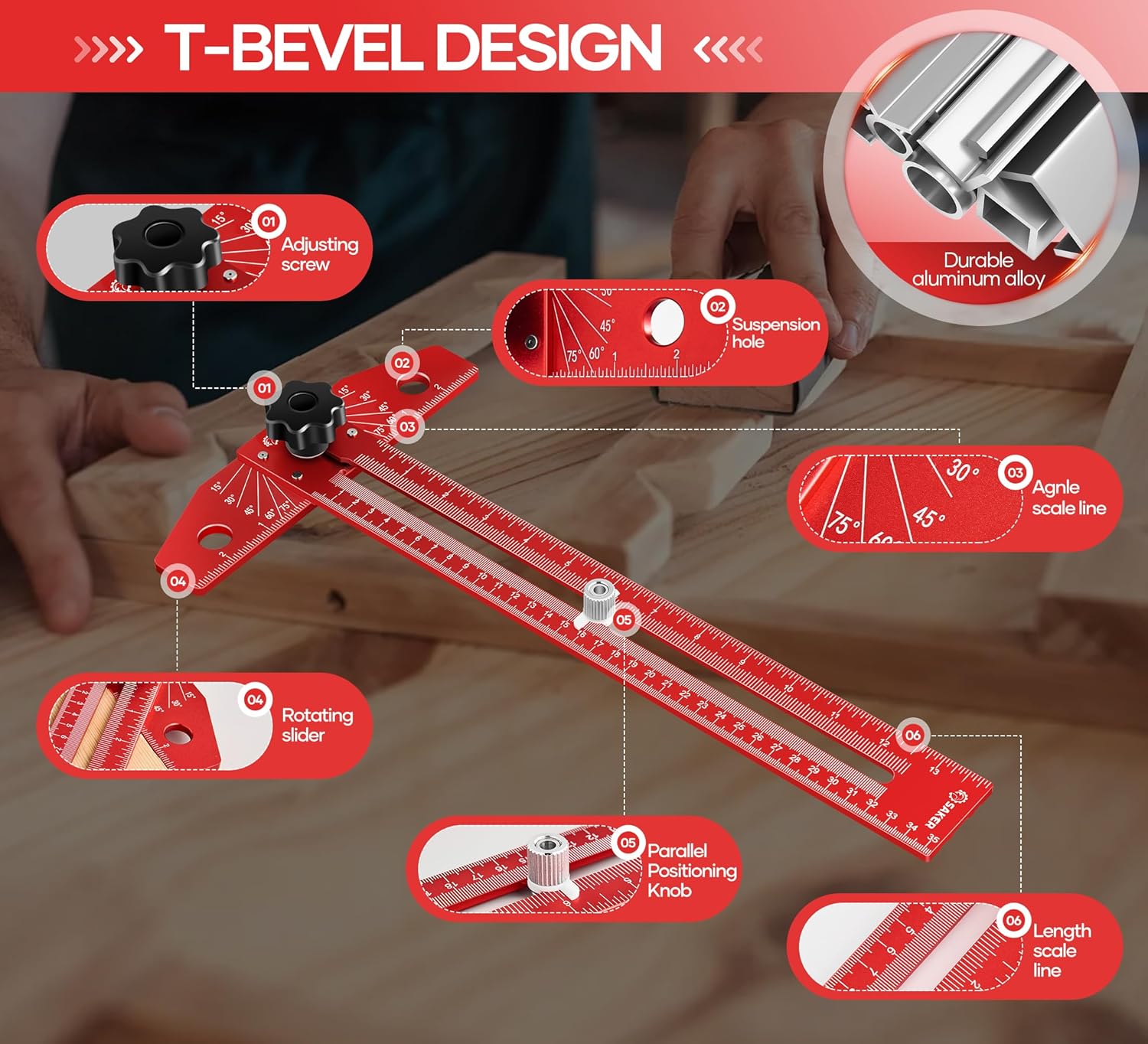
The tool is built around an aluminium alloy body for stiffness and abrasion resistance, and it’s described as lightweight but sturdy. The adjustable angle finder is the headline feature: instead of being a fixed protractor, you can adjust to a desired position (by loosening a nut in the chosen setting), then identify angles and draw straight lines.
In practical terms, imagine you’re laying out a bevel for a cut: you set the angle using the adjustable scale, lock it down, then draw the straight reference line. The “sliding” element suggests you can align the ruler portion to your layout surface without awkward measuring—helpful when you’re trying to keep lines square and consistent.
Also, the scales are laser engraved. That matters more than you might think for day-to-day workshop use, because printed scales can wear down or become hard to read once you’ve handled the tool often or worked in different lighting.
Where it shines (and the trade-off)
This is a good match if your work involves repeat layout tasks—engineering drawings, angle measurement, design work, or general marking where a consistent workflow helps.
Strengths that stand out
- Adjustable angle scribing in one layout tool: the multi-angle function is aimed at quick angle identification and straight-line marking.
- Laser engraved measurements: the description emphasises clarity and durability, including readability in different environments.
- Aluminium alloy construction: positioned as resistant to abrasion and less likely to deform.
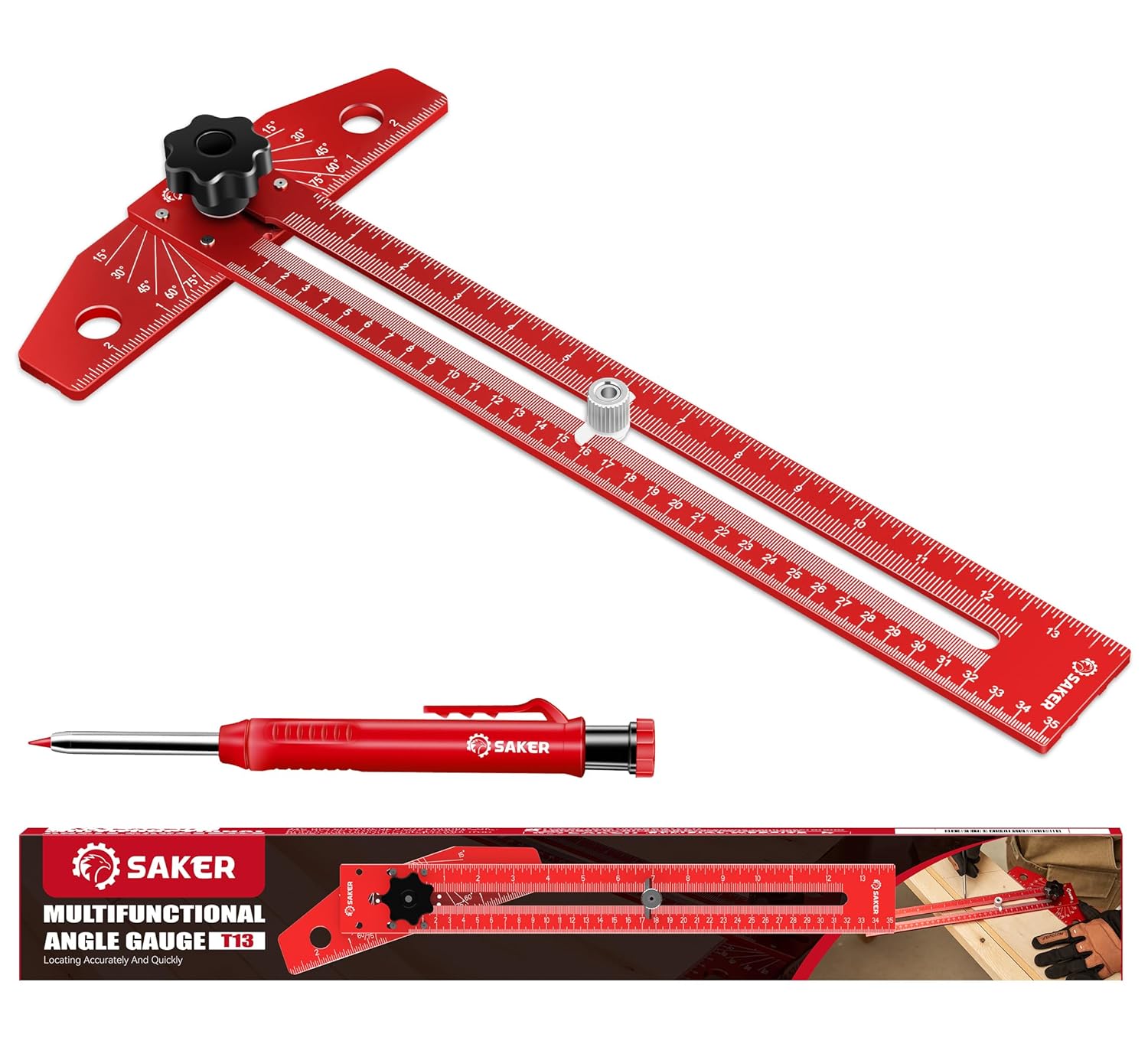
- Includes a marking pencil: a red mechanical pencil with 8 refills is included, which reduces the “you’ll need extra bits” friction.
A limitation to keep in mind
- Angle measurement accuracy isn’t quantified: there’s no stated precision/tolerance, so if you’re relying on exact angles for critical work, it’s smart to verify with another reference tool.
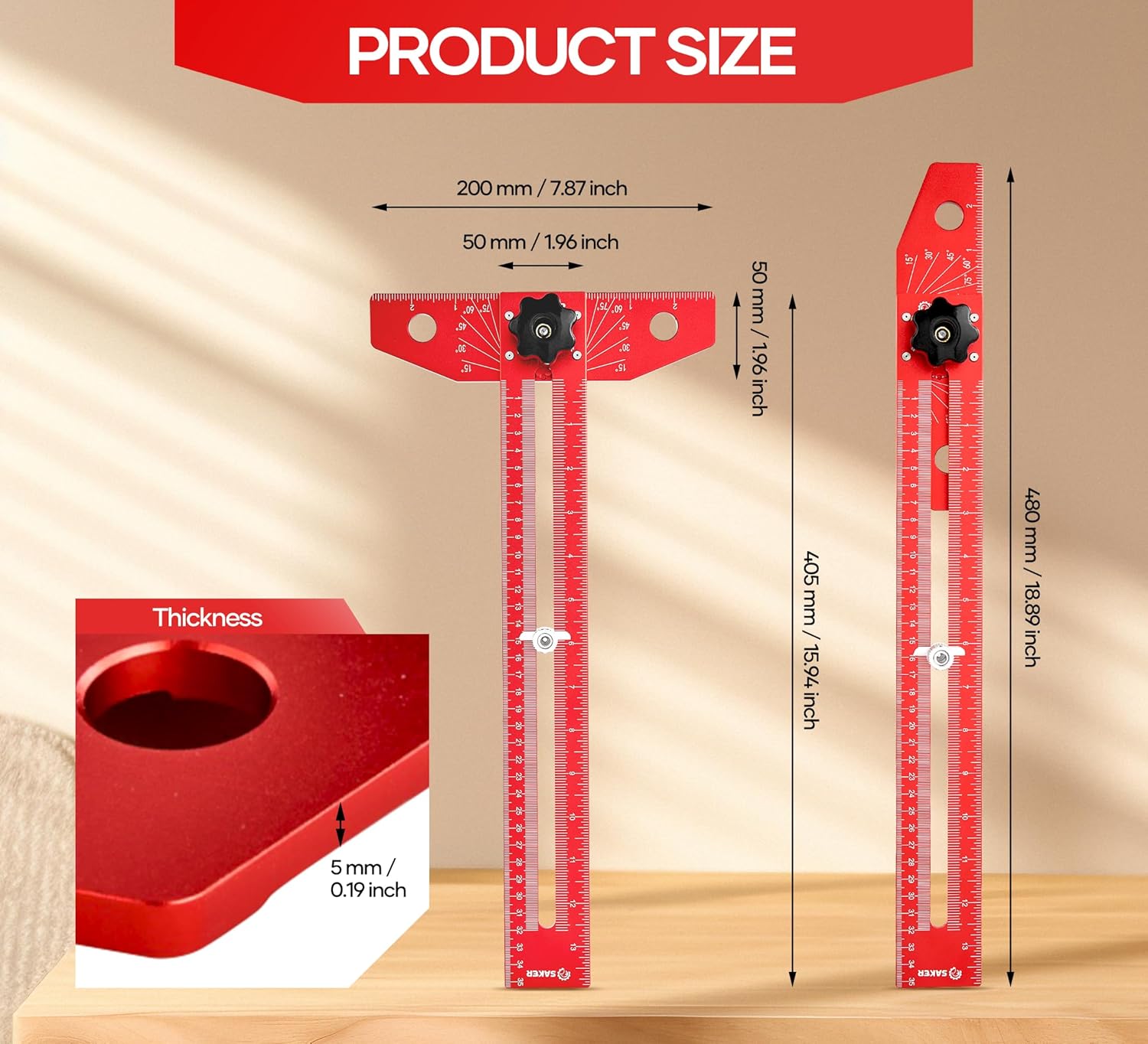
- Length range is stated, not unlimited: length measurement is listed as 0–48 cm (0–18 inches). If your projects routinely need longer marking, you may find the range restrictive.
The essentials in plain English
The T-square and angle feature work together: you’re not just measuring, you’re meant to mark. The included mechanical pencil and refills reinforce that it’s intended for hands-on drawing and layout.
The description also frames the protractor as multi-functional—use cases mentioned include setting bevels, drawing radial lines, and measuring/marking angles. For a lot of DIY and professional-craft scenarios, that’s a more useful combination than owning a ruler that only measures length and a protractor that only measures angles.
Key features to look at before you buy
Since some details (like exact scale type, degree increments, or how the locking feels) aren’t included, you’ll want to sanity-check a few points when buying on any listing:
- Does the stated measurement range suit your biggest layout needs? The description mentions 0–48 cm.
- Are you comfortable with an adjustable nut-based setting? It should be fine for repeatable marking, but if you prefer quick-lock mechanisms, keep that preference in mind.
- Do you mainly work in conditions where engraved marks must stay legible? The laser engraved scales are a positive here.
- Is your project more sketching/layout than precision engineering? This tool seems aimed at practical drawing and measurement workflows.
If you’re already set up with a high-end digital protractor or a precision angle gauge, this may feel more like a convenient “layout aid” than a replacement for specialist instruments.
Who it’s for (and who should skip it)
It makes sense if you’re doing regular layout work and you want fewer tools on the bench. Think of people who mark lines for engineering/technical drawings, architectural design, woodworking/bevel setting, or artists/designers who frequently use straight lines plus angle references.
It might not be the best choice if: - you require very tight tolerances and need confidence that comes with quantified accuracy specs, - you often need to mark beyond the stated length range, - you don’t particularly care about scribing workflow (you’re more about measuring once, not drawing lines to match).
Mini FAQ
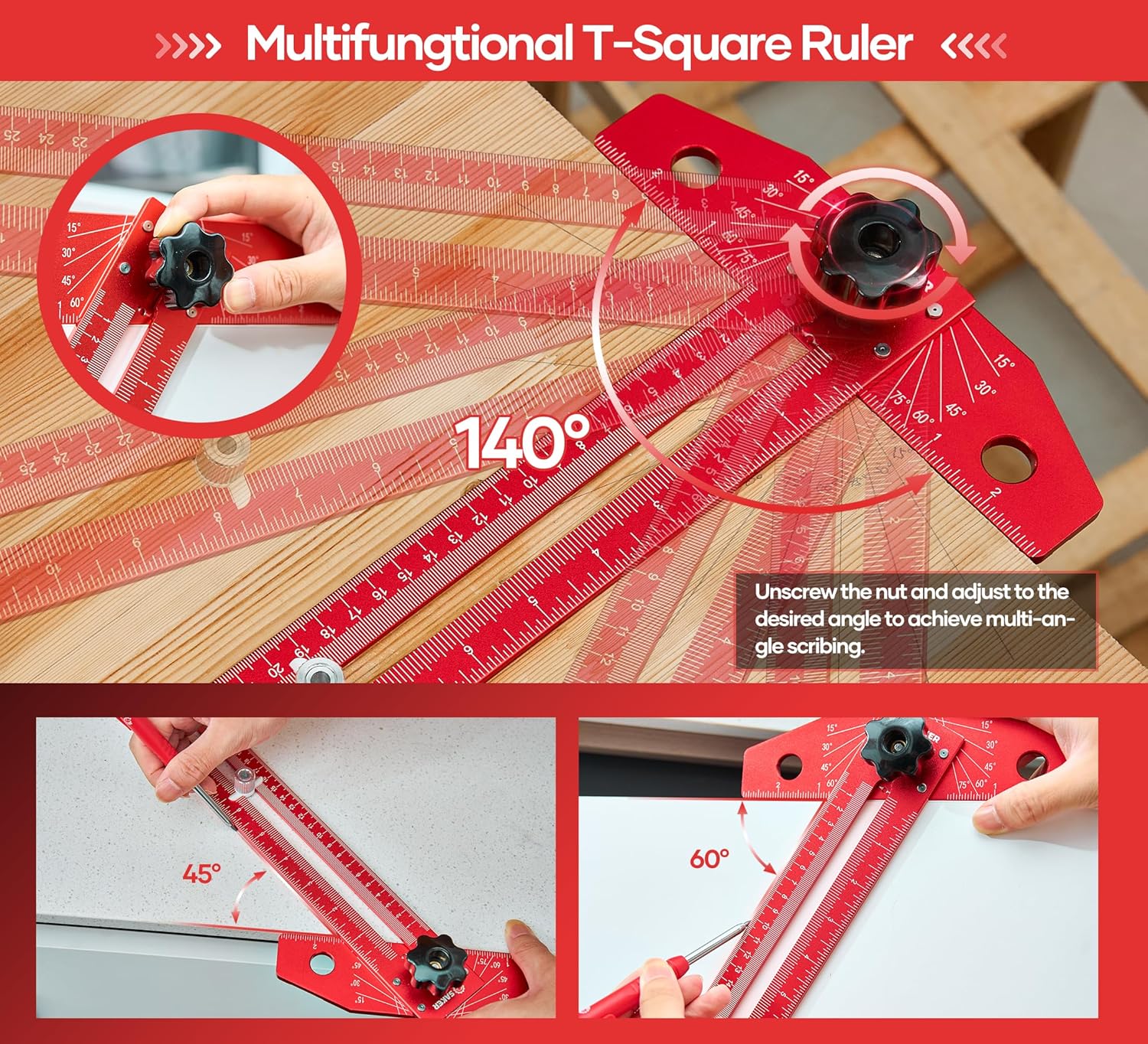
Is the angle adjustment meant for scribing, not just measuring?
Yes—based on the description, it’s set up to identify angles and draw straight lines for setting bevels and creating radial lines.
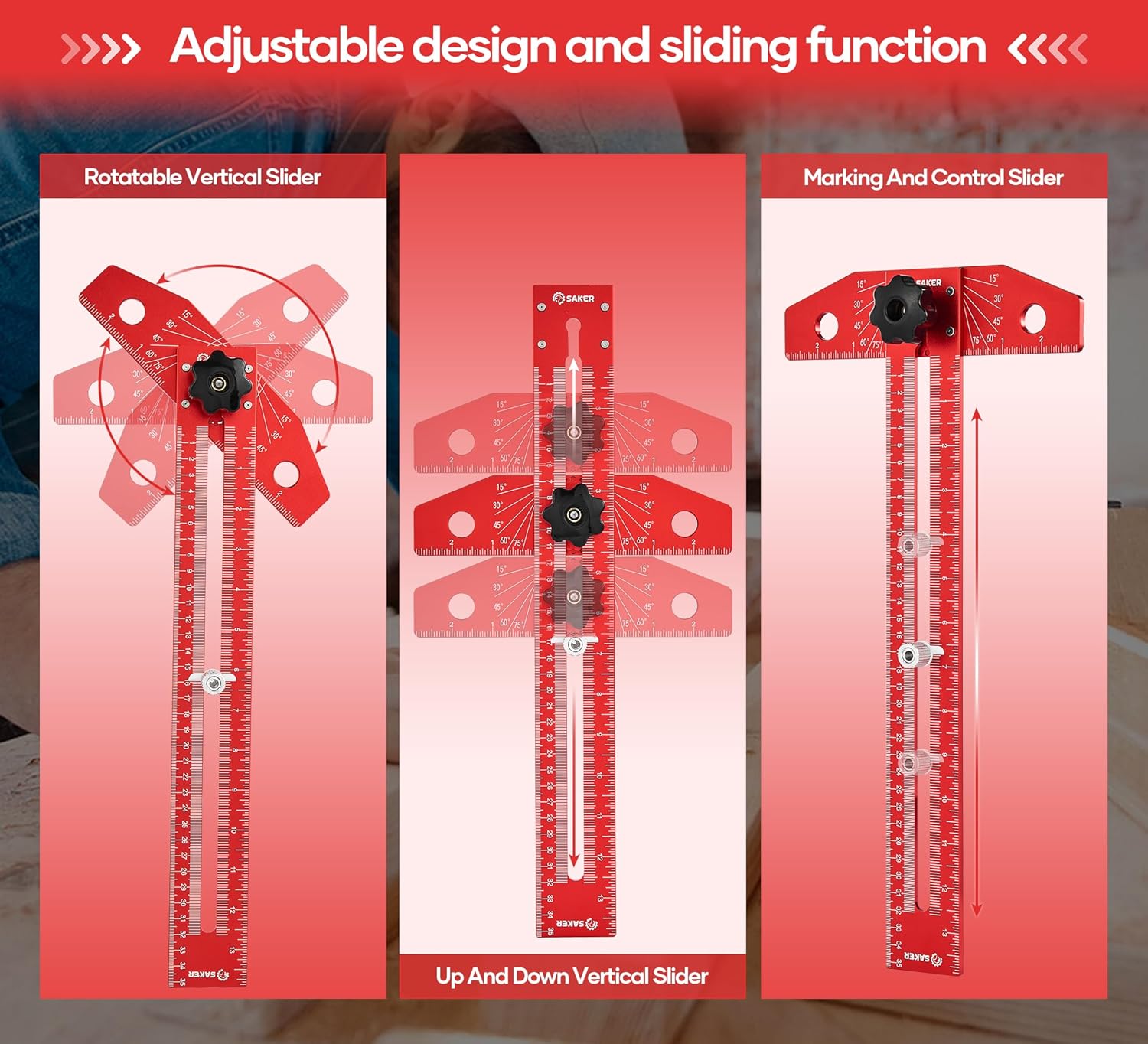
How long can it measure?
The description states a length measurement range of 0–48 cm (0–18 inches).
Are the scales likely to stay readable?
The scales are described as laser engraved for clear readability and durability, including in different environments.
What’s included for marking?
It includes a red mechanical pencil with 8 refills.
What’s the main advantage over using separate tools?
The advantage is workflow: one tool for straight-line marking (ruler/T-square) and angle setting/marking (adjustable protractor function), rather than switching between separate instruments.
Final verdict
Worth considering if you want an aluminium sliding T-square and adjustable angle scribing aid for practical marking—especially when your projects involve angles plus straight lines and you value legible laser engraved scales. It’s less convincing if you need quantified accuracy for critical work or if your layouts routinely exceed the stated length range. If you prioritise a tidy bench and faster layout from measurement to line, this one’s built for that, just don’t assume it replaces precision instruments without cross-checking when it matters.