

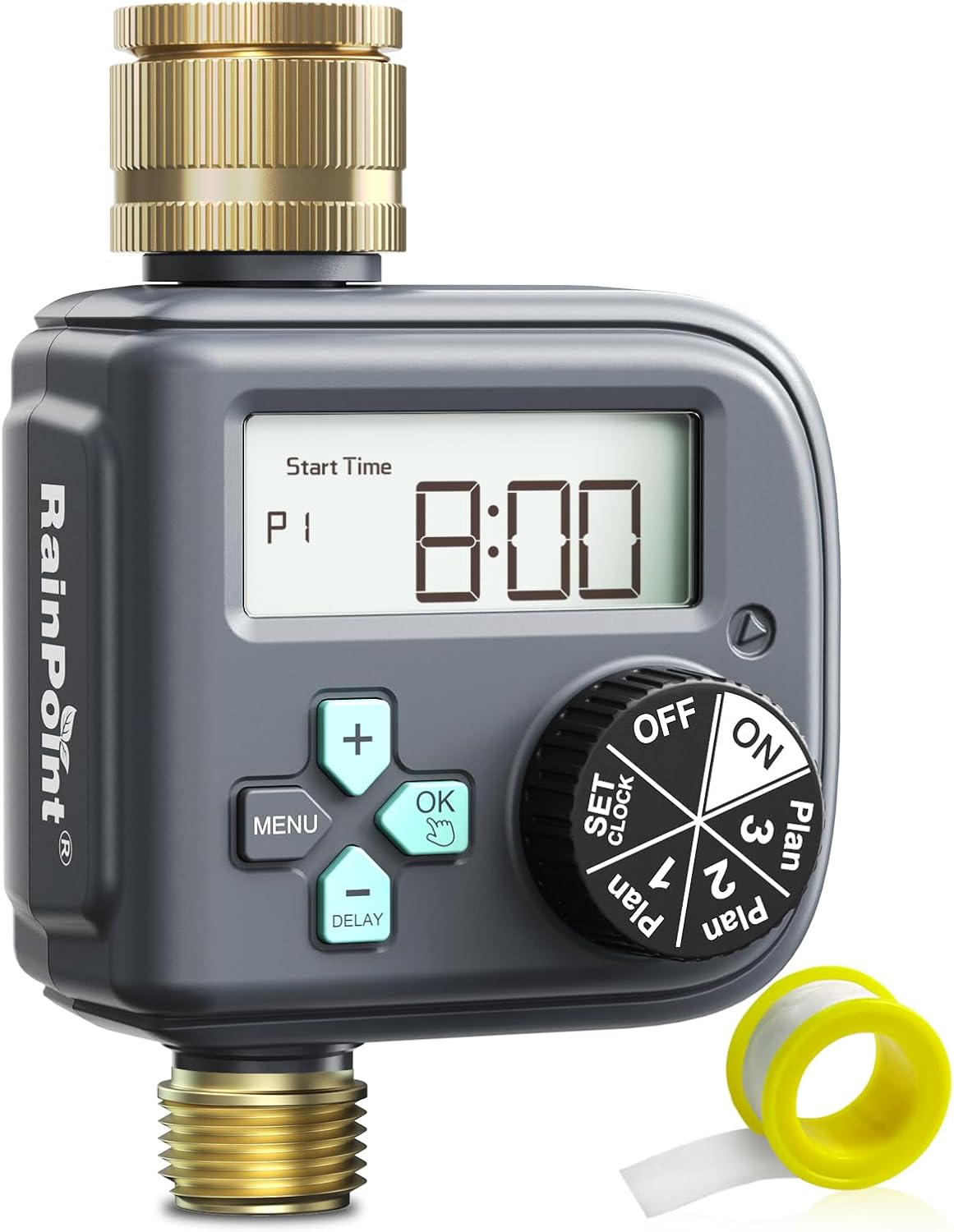
RAINPOINT Water Timer with Brass Inlet & Outlet, 3 Independent Programs and Rain Delay
Product description
The essentials
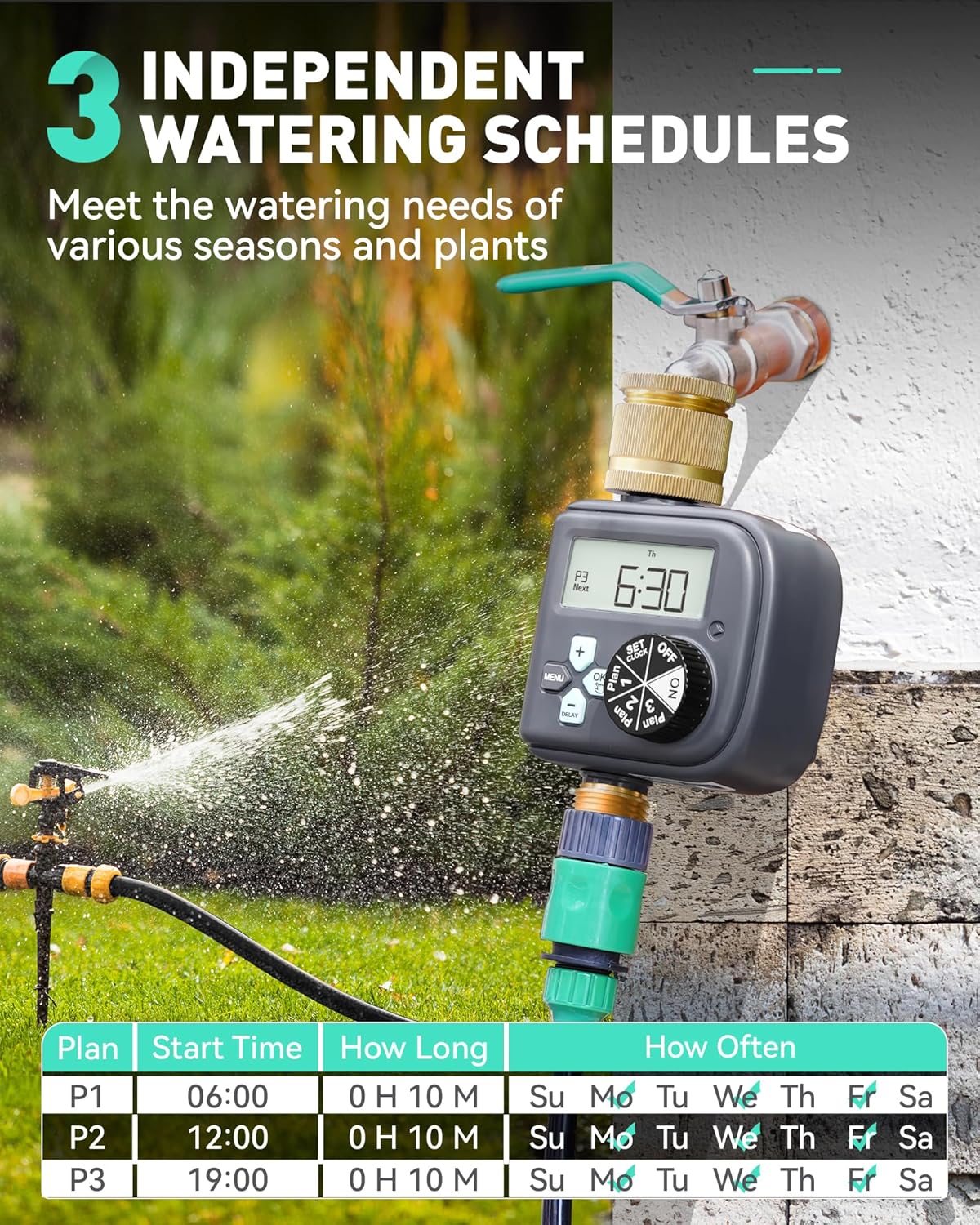
If you’re trying to keep garden or lawn watering consistent without having to remember every day, a hose-end water timer can do most of the thinking for you. The RAINPOINT Water Timer is built around three independent schedules, so you can set up different routines (for example, different zones or different plant needs) without relying on a single one-size-fits-all cycle. It also includes a rain delay feature and a manual start option, which is handy when the weather or your plans don’t match the original schedule.
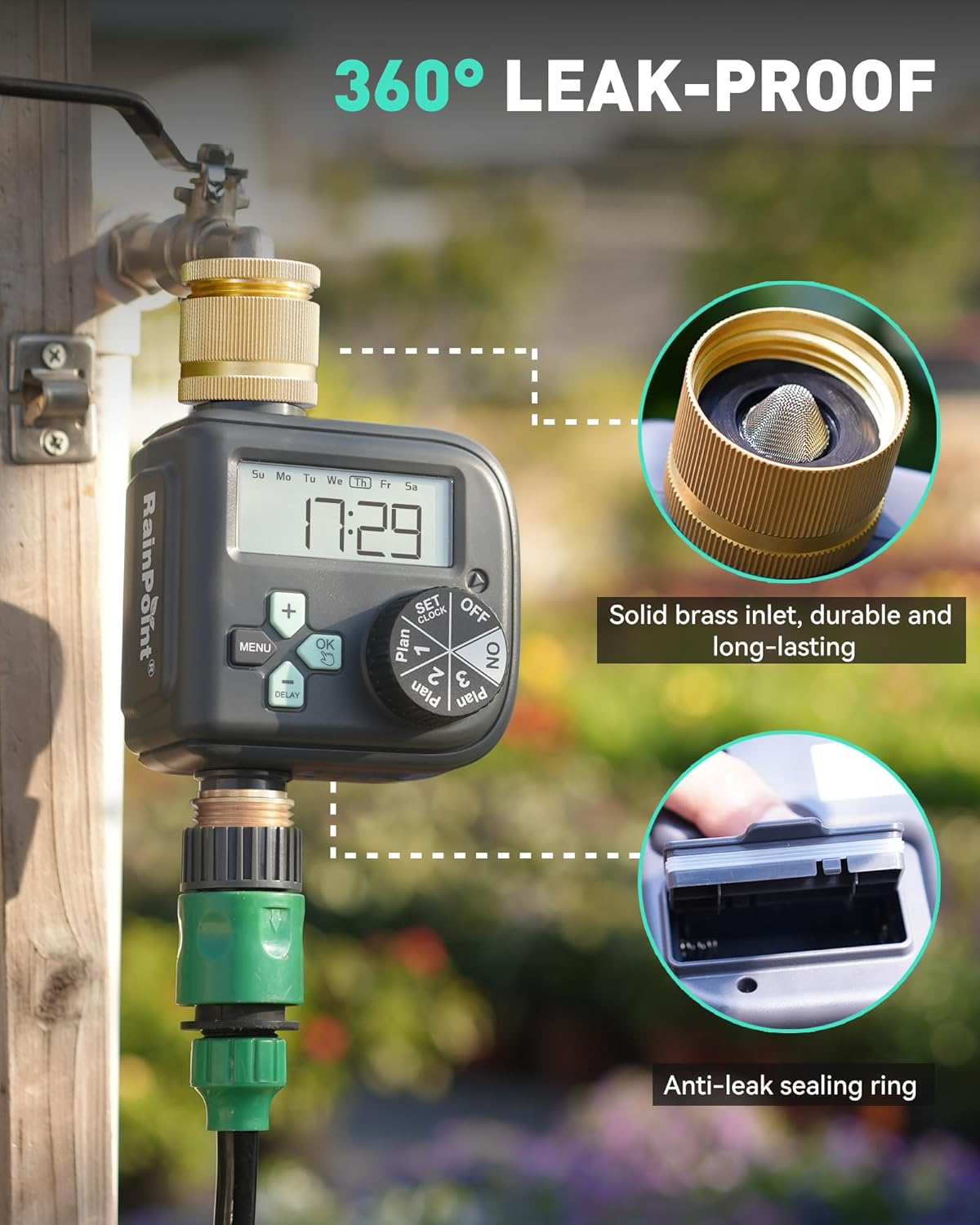
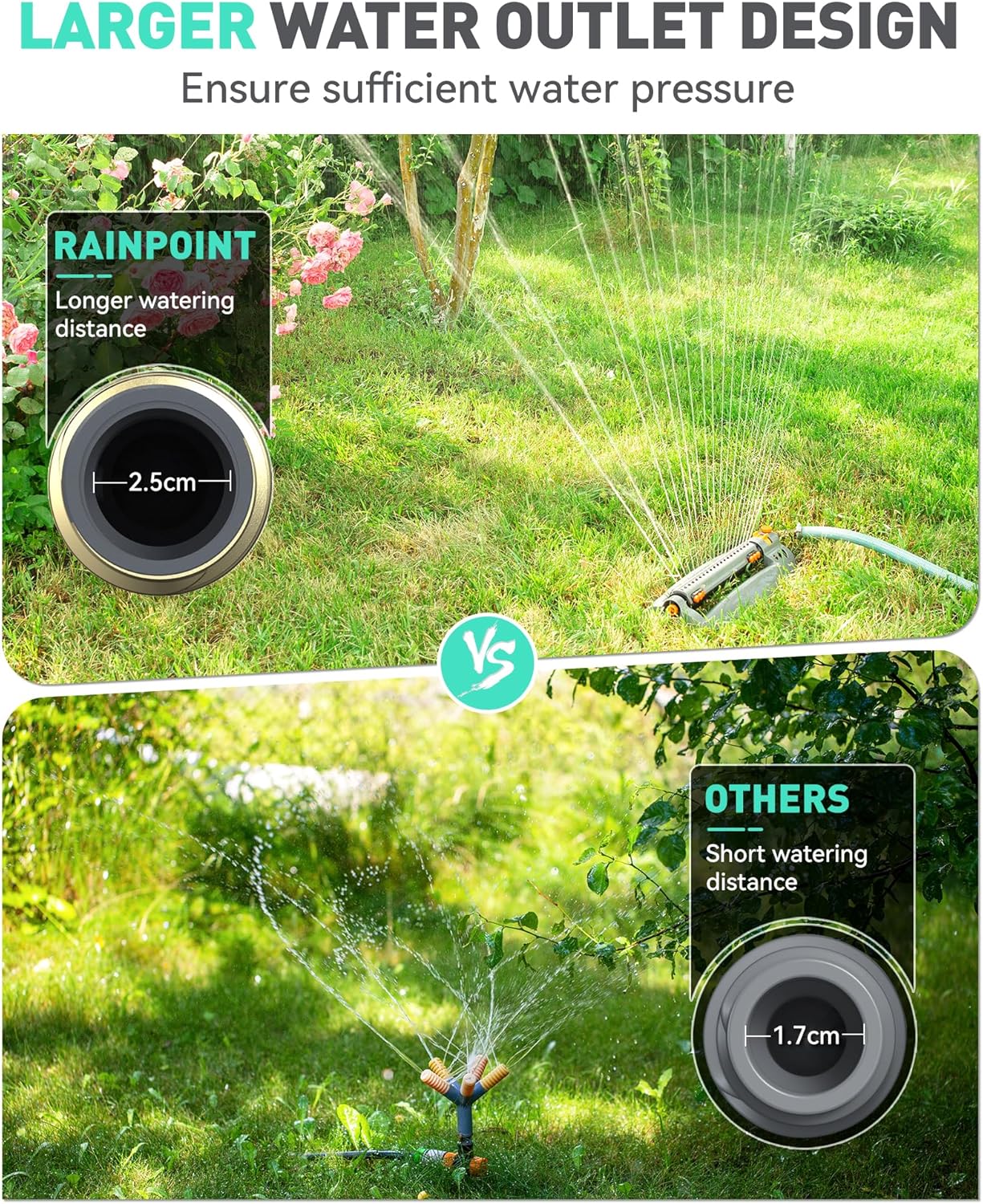
On paper, the biggest differentiator here is the brass inlet and outlet. In plain terms: brass tends to wear more slowly than plastic connectors where threads and repeated tightening matter, and that can make day-to-day use feel more “solid” over time. It’s not a smart home controller—no app, no Wi‑Fi mentioned—but as a straightforward scheduling timer it should suit anyone who wants reliable timed watering with minimal fuss.
Key features that actually affect day-to-day use
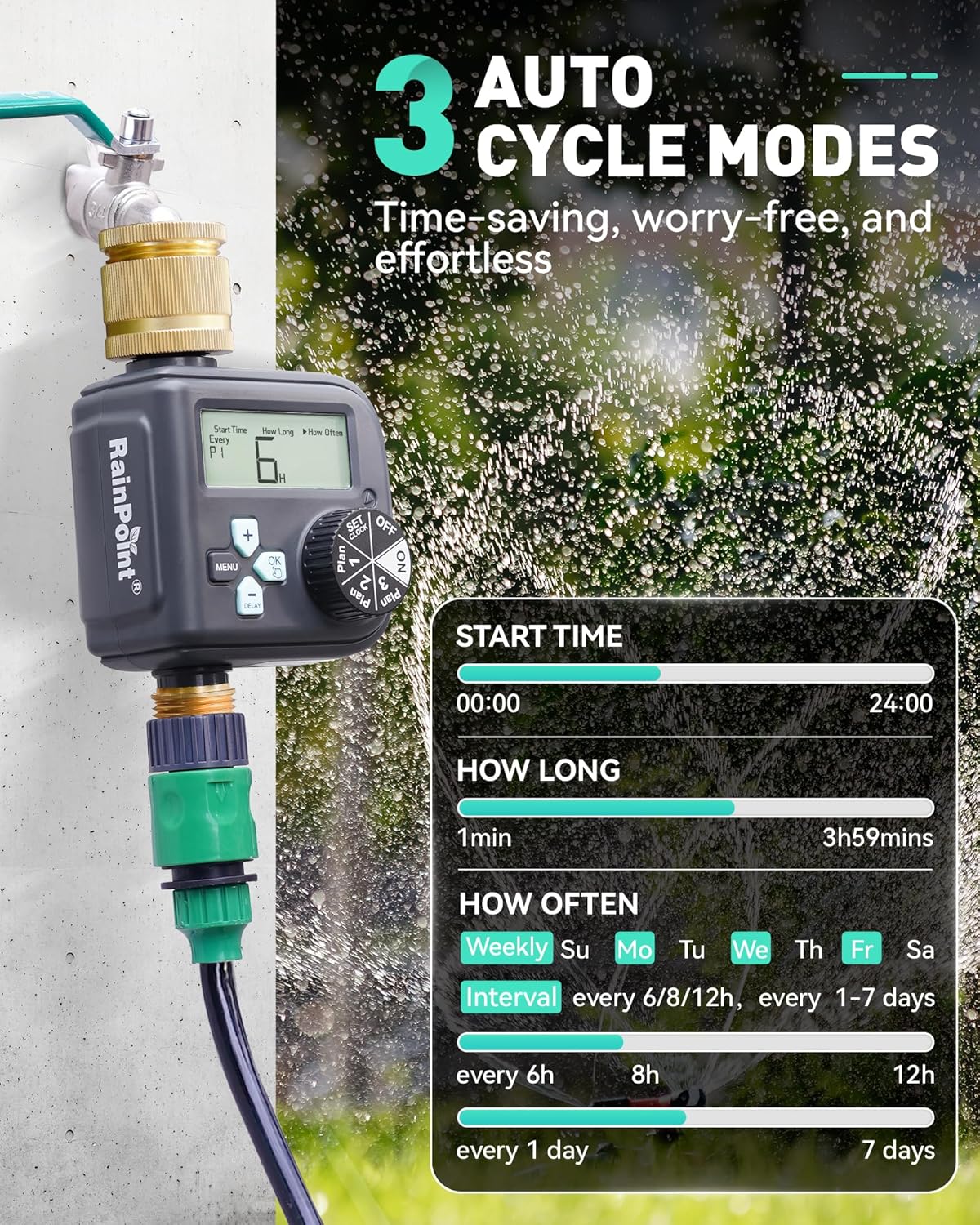
Three independent programs is the feature you’ll notice first. Instead of one repeating timer plan, this unit lets you run three separate schedules with their own start time, duration, and frequency. Depending on your setup, that can mean anything from short, frequent watering patterns to different timing windows across the week.
The scheduling options are fairly flexible too: you can work with days of the week, every 6/8/12 hours, or every 1–7 days. So if your plants need frequent short watering, or you just want something that runs more often during the hottest spells, there’s room to set it up the way you tend to think about it.
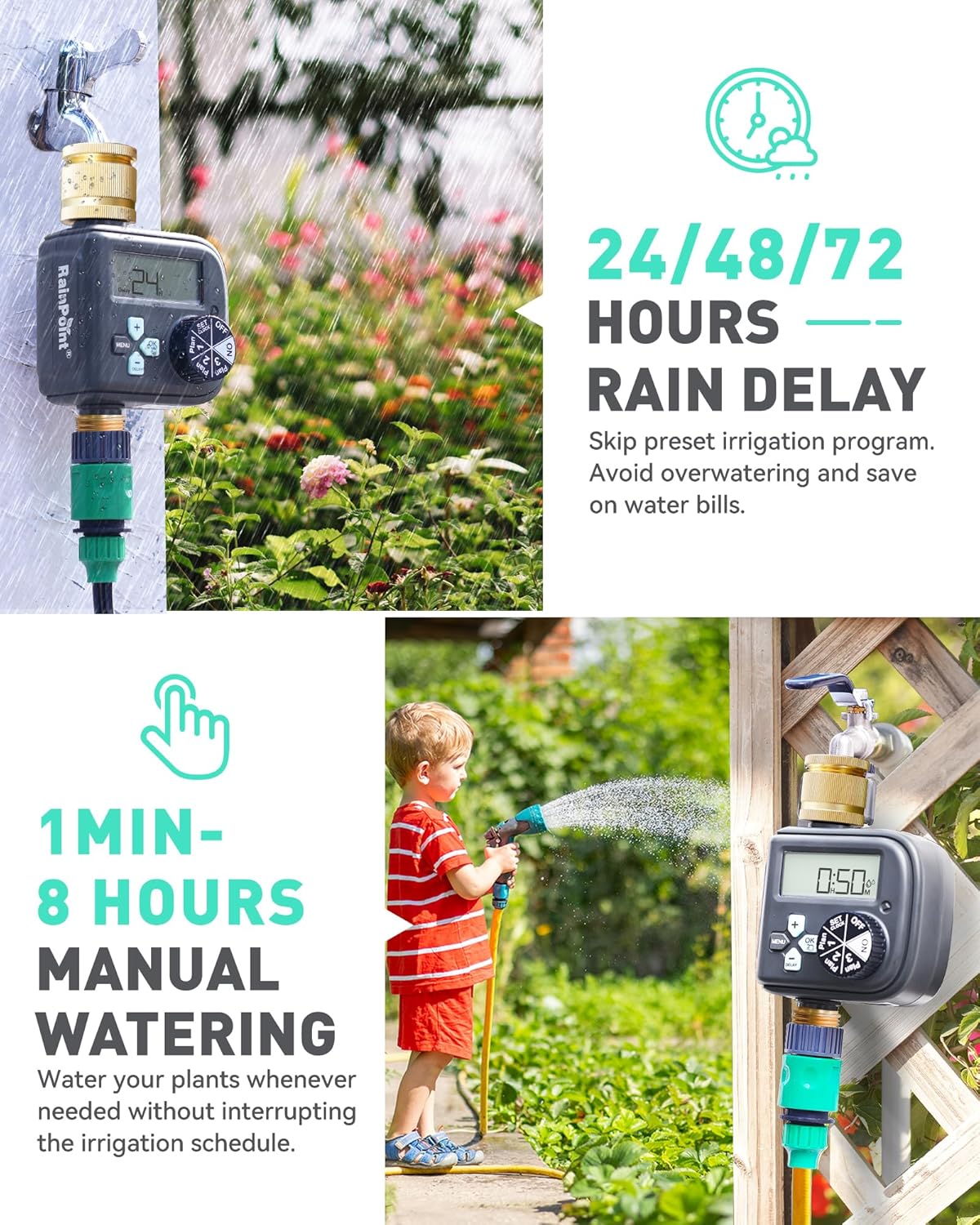
There’s also a rain delay (24/48/72-hour options). When activated, it skips the preset watering schedule to help reduce the risk of overwatering after rain, then automatically resumes afterwards. That’s a practical safeguard, especially if you’ve got sprinklers or a hose sprinkler arrangement and you don’t want the system “fighting the weather”.
One more useful touch: a manual watering button that can start irrigation immediately for a set time (from 1 minute to 8 hours). Importantly, it’s described as not interrupting the watering schedule, so you can give plants an extra boost without having to redo your settings.
What to know about the build and controls
The inlet and outlet are listed as brass, which is a sensible choice for longevity where threads are involved. You also get a navigation button layout with a rotary dial for setup, plus a large LED display that shows the next watering time, the current time, and battery status.
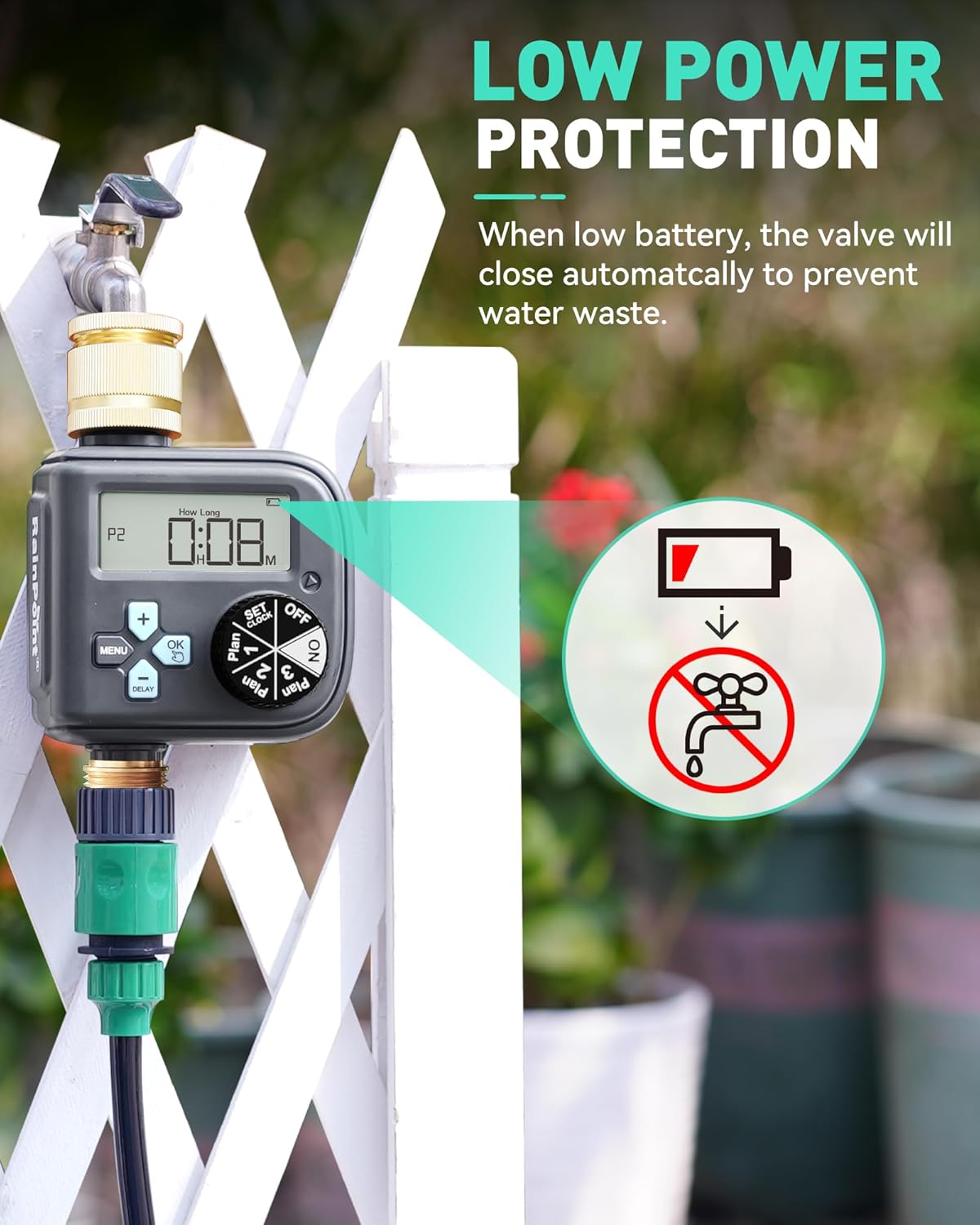
It’s also designed to prevent wasted water when the battery is running low: when the battery is low, the timer valve closes automatically. That’s the sort of safety detail that you only really appreciate when you’re away from home—so it’s a benefit worth taking seriously.
One limitation to be aware of: the information provided doesn’t mention any smart detection (like weather integration) or sensor-based control. The rain delay is time-based, not a live moisture check, so you’ll still be relying on timing rather than real plant/soil data.
Who it suits (and when it might fall short)
It’s a solid pick if you want scheduled watering that you can configure in multiple ways—especially if you’re dealing with plants that benefit from shorter, more frequent watering cycles. The three independent programs can also be useful when you want different start times or different day-based routines rather than a single routine for everything.
You may want to look elsewhere if you need advanced automation beyond basic scheduling—things like app control, sensor integration, or more advanced zone management aren’t mentioned here. Also, if your only goal is one simple daily watering plan, the triple-program approach could be more complexity than you actually need.
The brass inlet/outlet is a sensible upgrade compared with purely plastic connectors, but whether it matters to you depends on how often you connect and disconnect your hose timer, and how rough your garden storage routine is.
Quick example of practical use
Imagine you’ve got a lawn area that generally prefers regular watering, and a couple of beds with plants that like shorter bursts. You could set one schedule for frequent cycles (using the every-6/8/12-hours style frequency) and keep another schedule tied to specific days or a longer interval for the beds. If it rains, you can trigger the rain delay for 24, 48, or 72 hours so the timer skips the next run window, then automatically continues afterwards. If you spot something that needs extra attention mid-week, the manual button lets you start watering immediately for a chosen duration without necessarily wiping out your preset plan.
Tech specs
- Name: RAINPOINT Water Timer with Brass Inlet and Outlet
- Type: Hose sprinkler / water timer
- Schedules: 3 independent programs
- Rain delay: 24/48/72-hour rain delay function
- Manual watering: 1 minute to 8 hours
- Power: 2 AAA alkaline batteries (batteries not included)
Is it worth it?
It makes sense to buy the RAINPOINT water timer if you’re after a fairly flexible, time-based scheduling setup with three independent programs, plus a rain delay that helps reduce overwatering after wet weather. The brass inlet and outlet are a credible durability angle, and the LED display plus battery-status behaviour (auto valve closure when low) are the kind of details that reduce the chance of unpleasant surprises.
It might not be the best match if you only need one basic schedule, or if you’re specifically looking for sensor-driven automation or smart/weather-linked control beyond the time-based rain delay.
If you’re choosing between “basic on/off timers” and something more configurable, this one sits closer to the configurable end thanks to the independent schedules and multiple frequency options. Just double-check that the frequency patterns (days of the week, every 6/8/12 hours, or every 1–7 days) match how you actually water, and consider how often you’re likely to move the timer between hoses or areas.
What to check before you buy (mini FAQ)
What schedules does this timer support?
You can set three separate watering schedules. Each can be configured with its own start time, duration, and frequency using days of the week, every 6/8/12 hours, or every 1–7 days.
How does the rain delay work?
It offers a 24/48/72-hour rain delay. When activated, it skips the preset watering schedule, then automatically resumes afterwards.
Can I water manually without messing up the programmed schedule?
Yes. There’s a manual button that starts irrigation immediately for a selected time (from 1 minute to 8 hours). It’s described as not interrupting the watering schedule.
What power does it use?
It uses 2 AAA alkaline batteries, and the batteries are stated as not included.
What does it do when the battery is low?
When the battery is low, the timer valve automatically closes to help prevent water waste.