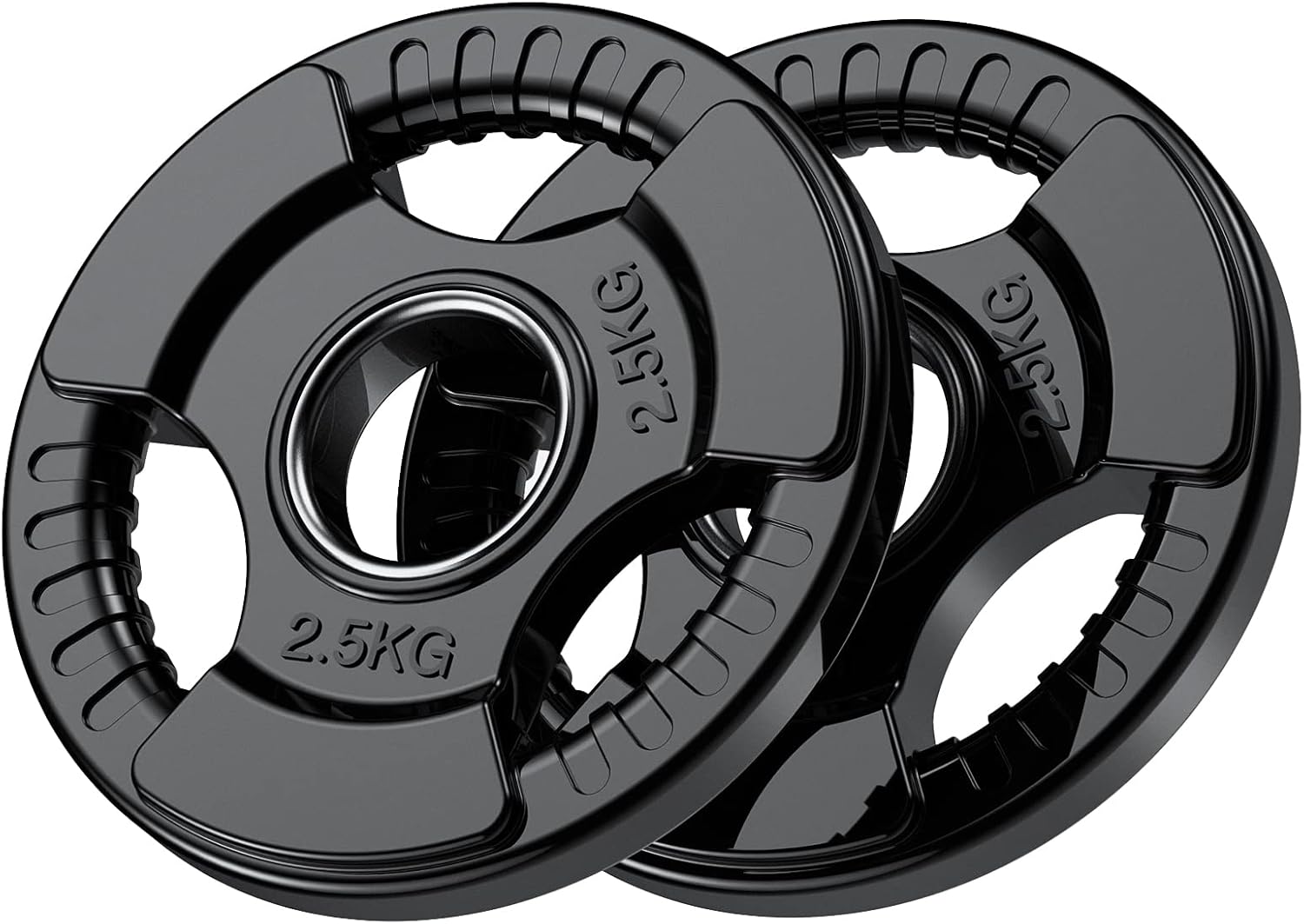
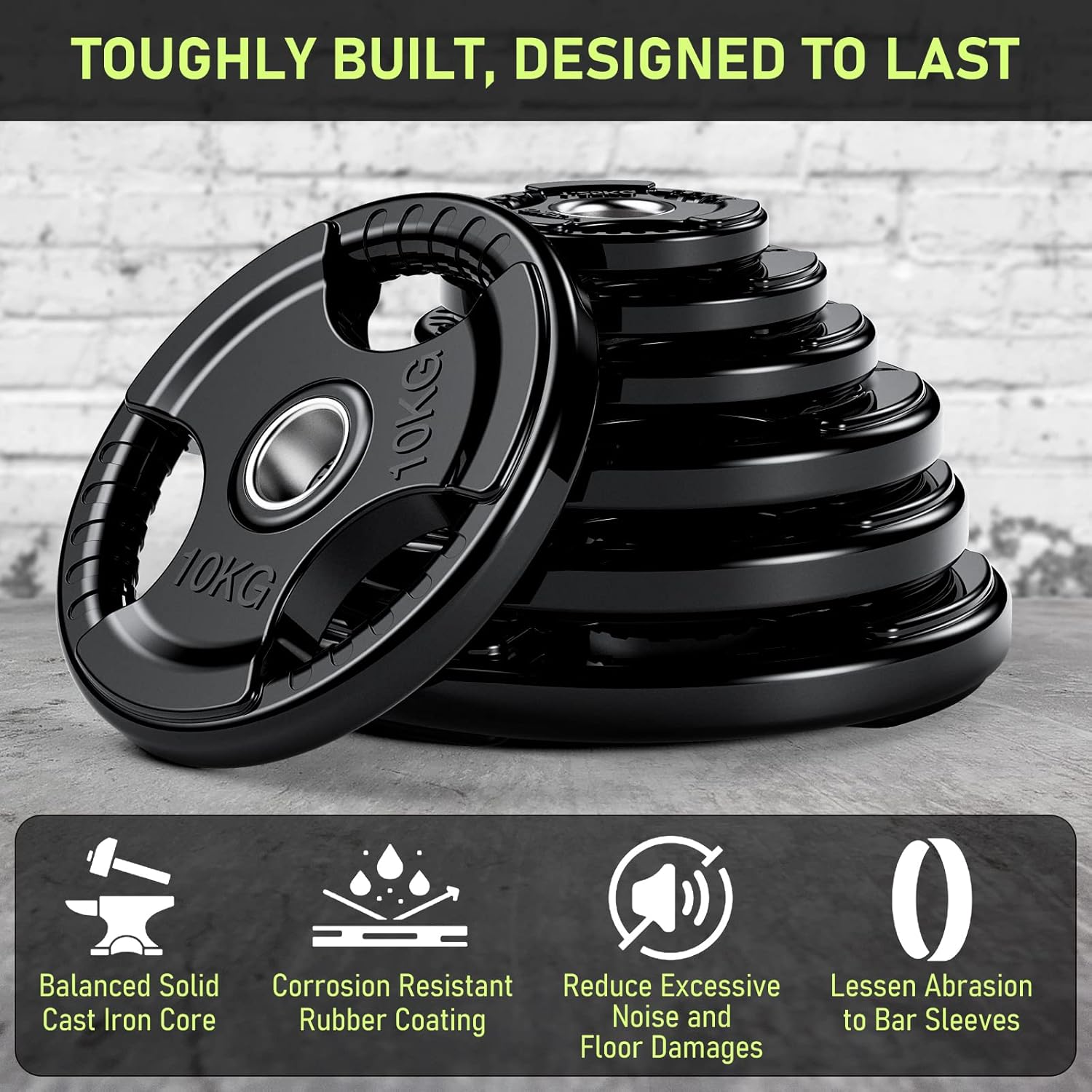
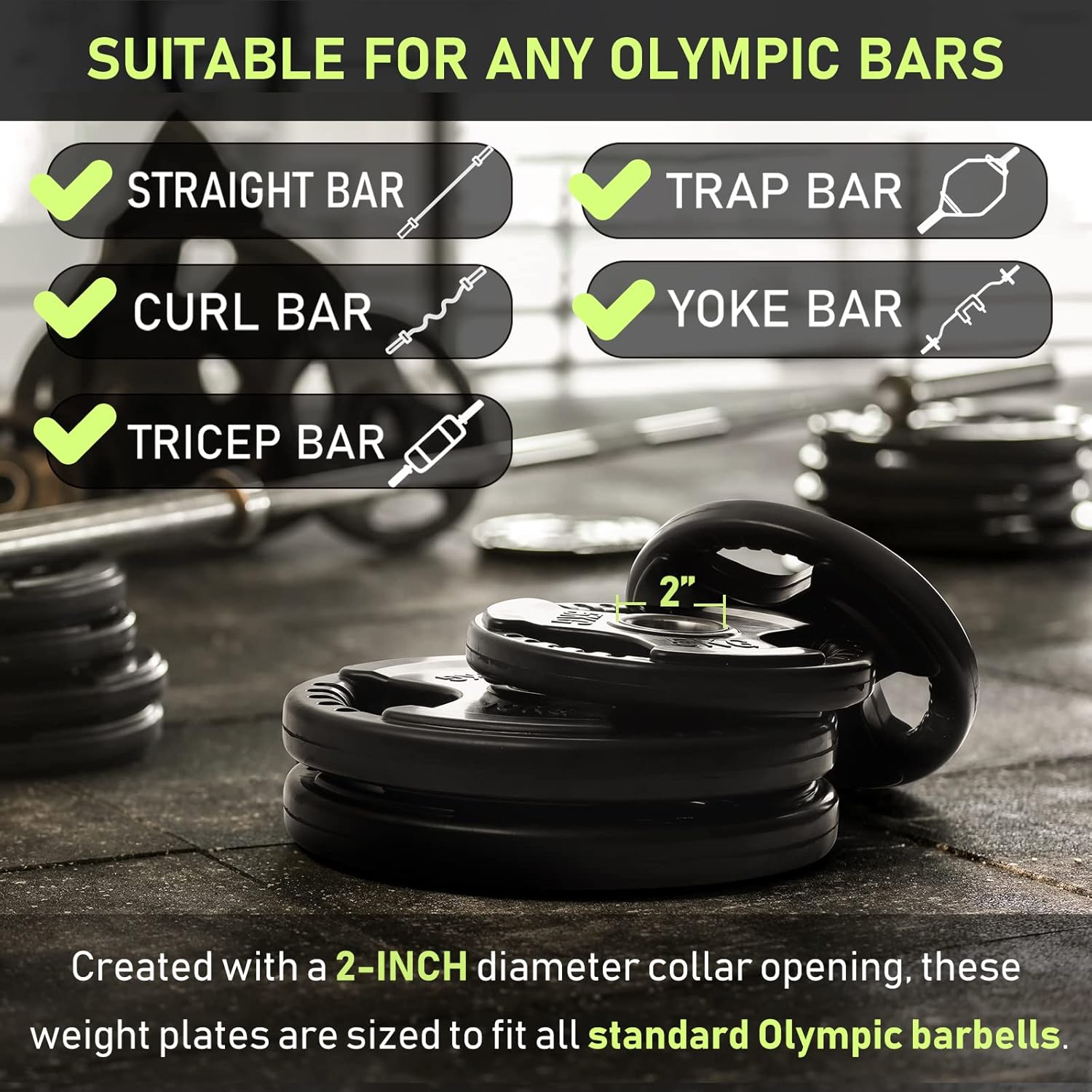
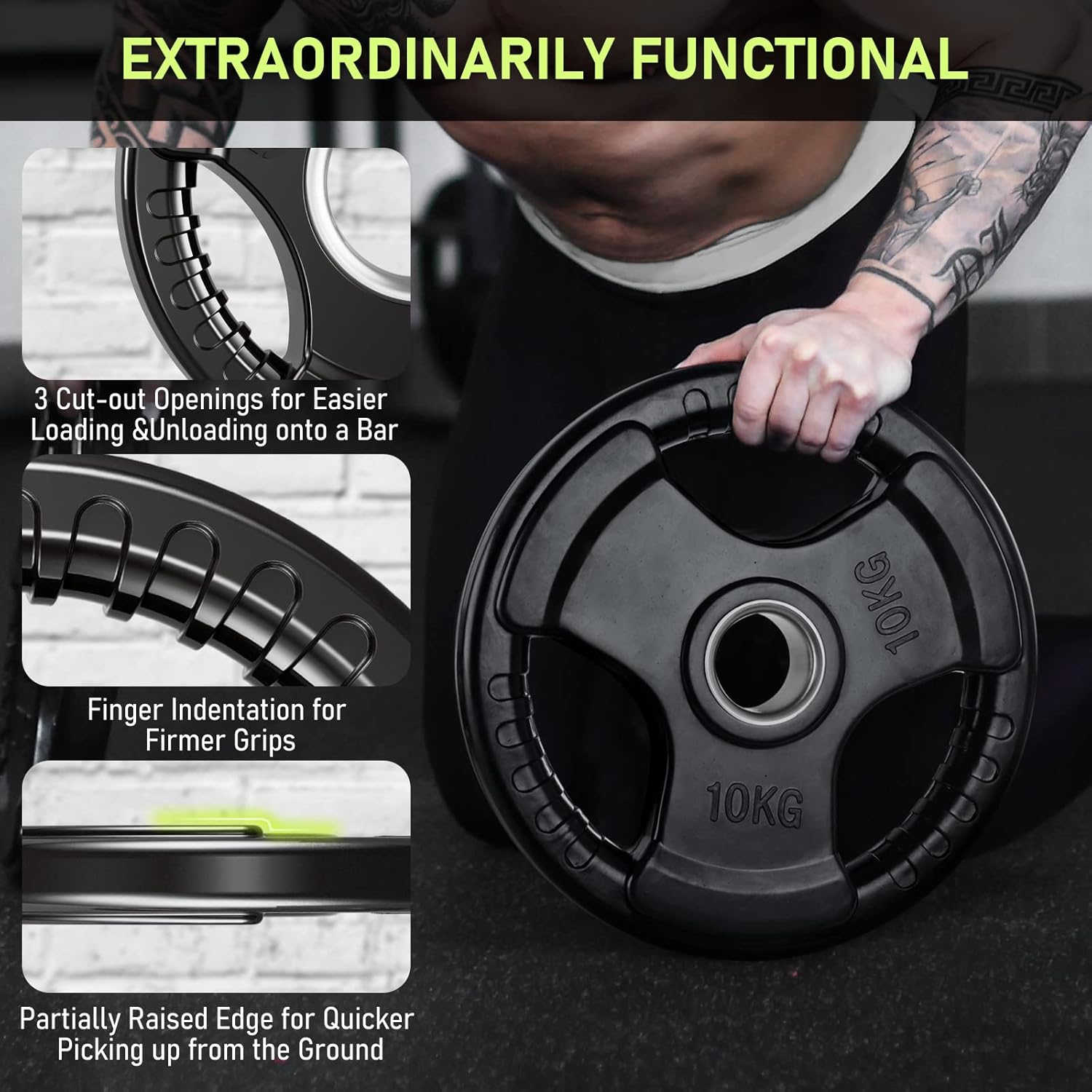
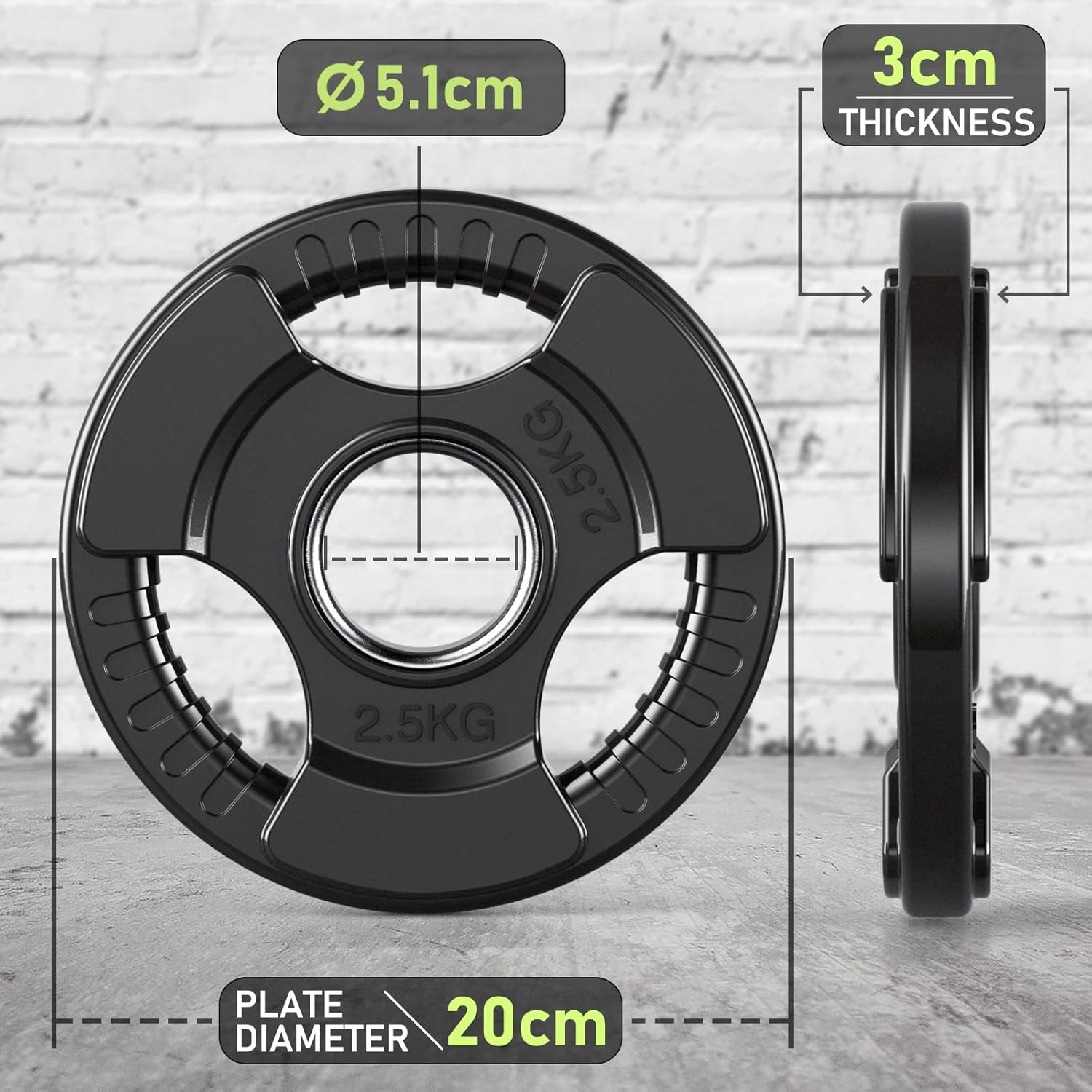
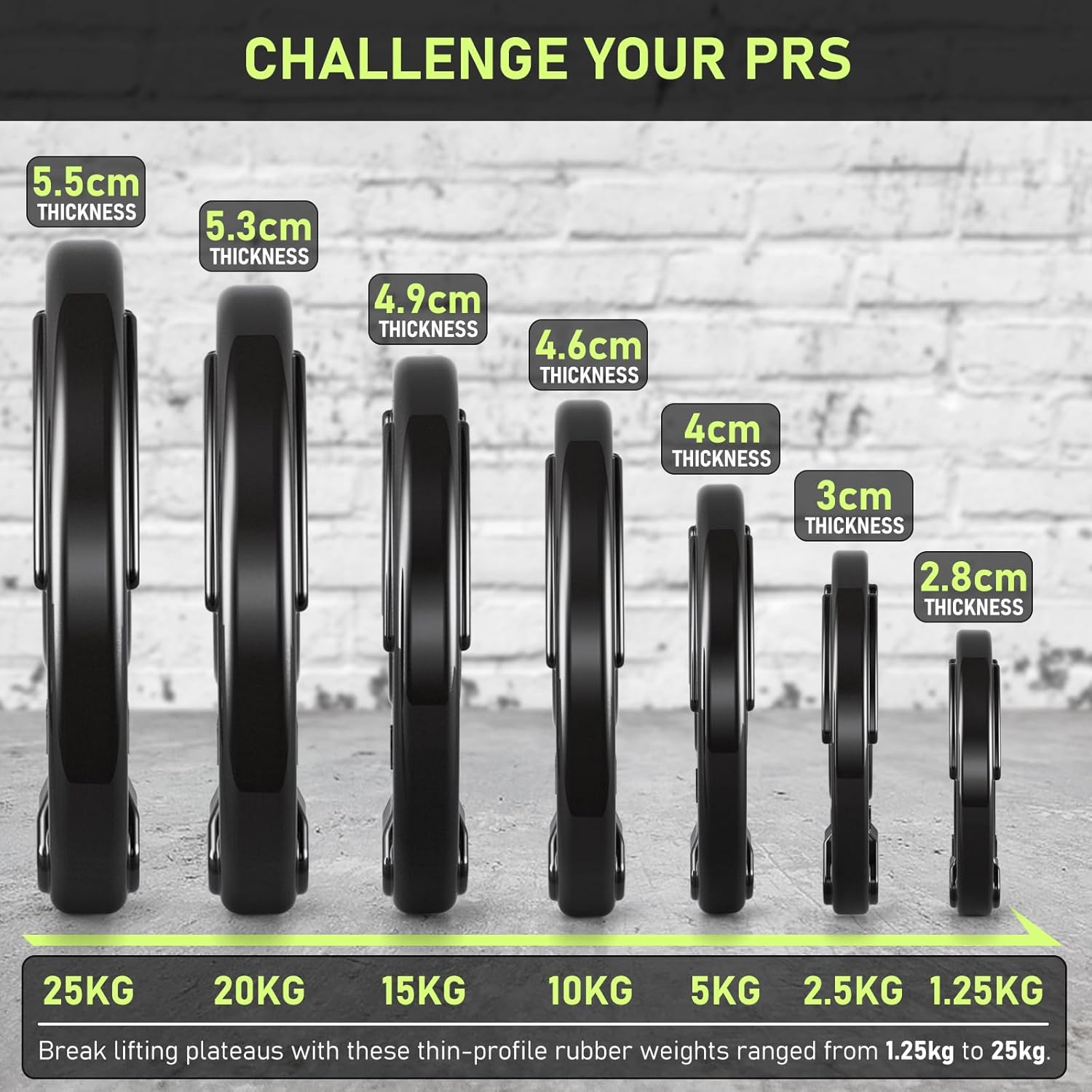
What it is and what it solves\nThe PhysKcal 50 mm Olympic weight plates are solid cast iron discs finished with a dense, 5-mm rubber coating. Designed for home gym use, they aim to reduce noise and floor impact while protecting bars and flooring. With a central flange ring of stainless steel and a 2” (50 mm) collar opening, these plates fit standard Olympic barbells and a variety of bars, including curl, trap, and safety bars. The weight range from 1.25 kg to 25 kg enables progressive loading, so you can tailor workouts from lighter hypertrophy sets to heavier strength work. The three cut-out grip holes, plus enhanced finger grips, are purposely arranged to simplify loading and unloading and to make carrying easier from floor to rack.\n\n## How they perform in everyday use\nOn the practical side, the plates’ thin profile supports more plates on the bar, which can be handy if you’re aiming to push past plateaus or experiment with higher total loads without a bulky footprint. The embossed KG markings provide clear visibility from a distance, helping you set up quickly between sets. In a home gym, where space is at a premium, the compact design is an advantage for storing stacks neatly and efficiently. However, the trade-off with rubber-coated discs often includes the potential for cosmetic scuffs or slower loading when compared with bare cast iron discs, depending on usage conditions.\n\n## Build quality and materials\nPhysKcal emphasises a sturdy, purpose-built construction. The discs are described as perfectly balanced with a cast iron core and a robust rubber finish designed to resist corrosion and minimise noise and floor damage. The stainless steel centre ring is intended to reduce abrasion to bar sleeves, potentially extending the life of both plates and bars. While the exact life expectancy isn’t named, the combination of materials points to durability in a home setting where equipment is regularly loaded and unloaded.\n\n## What to know before you buy\nIf you prioritise quieter lifts and floor protection in a home gym, these plates address those concerns through their rubber coating. The 50 mm diameter collar opening confirms compatibility with standard Olympic bars, and the available weights from 1.25 kg up to 25 kg allow you to plan a scalable programme. For those who use free-standing plates for accessory work or need to place plates on a storage rack, the thin profile can be beneficial for space management.\n\n## Pros and cons in context\n- Pros: durable, rubber-coated reduces noise and floor impact, central stainless steel flange helps protect bar sleeves, three grip holes plus finger grips ease loading and handling, slim profile supports more plates on the bar and saves storage space, clear weight markings for quick setup.\n- Cons: rubber coatings can show wear over time with heavy, frequent use, not everything about grip ergonomics is universal, so some users may prefer alternative grips depending on bar height and lifting style.\n\n## Who it’s for\nThis set is well-suited to gym‑at‑home users who want a durable, multipurpose weight plate with safer handling and easier loading. It’s appropriate for strength training, standalone plate exercises, and progression work across a home gym routine. If you repeatedly rack heavy loads or require ultra-silent operation in a shared living space, the rubber finish is a sensible feature.\n\n## When it makes sense to buy\nIf you value practical loading convenience, safer handling, and a platform that fits a wide range of Olympic bars and related equipment, these plates offer a balanced option for a home gym, especially where space and noise are considerations. They are probably most compelling for responsive progression in strength training and for users who want to keep bar sleeves protected over time.\n\n## When you might want to look elsewhere\nIf your setup leans heavily on bare steel discs for the lightest touch and fastest loading, or if you prioritise absolute minimal diameter and other custom features, you may find alternatives more aligned to those preferences. Likewise, if you require non‑rubber coatings for reasons of sweat management or cleaning, consider other materials.\n\n## What to check before purchasing\n- Confirm your Olympic bar is compatible with 50 mm collar openings.\n- If possible, evaluate how the three grip holes and finger grips feel for your typical loading height and grip preference.\n- Consider storage space, thin-profile plates help maximise capacity in a compact rack.\n\n## Practical usage example\nDuring a typical home workout, you might start with lighter plates to warm up a set, then increase load using the 5–25 kg range. The grip holes can speed up transitions between sets, and the rubber coating helps keep the surrounding area quieter and more comfortable underfoot, which is handy if you’re exercising in a multi‑use living space.\n\n## FAQ\nQ1: Are these plates compatible with all Olympic bars? A1: They have a 50 mm collar opening, intended for standard Olympic bars. Q2: Do the grip holes affect plate strength? A2: The grip holes are designed to aid loading/unloading without compromising overall balance. Q3: How durable is the rubber finish? A3: The finish aims to resist corrosion and reduce noise, real-world wear depends on use and care. Q4: Can I use these plates for utilising other bars like curl or trap bars? A4: Yes, the 50 mm opening suits a variety of bars, subject to sleeve dimensions.\n\n## Final decision – Is it worth it?\nIt makes sense if you want safer handling, lower noise, and a versatile set of weights that fits a broad range of Olympic bars in a home gym. If your priority is maximum lightness or you require non-rubber finishes, you may want to compare alternatives. Overall, for progressive strength work at home with a focus on durability and practicality, these plates align with a value-for-money, long-term purchase.