

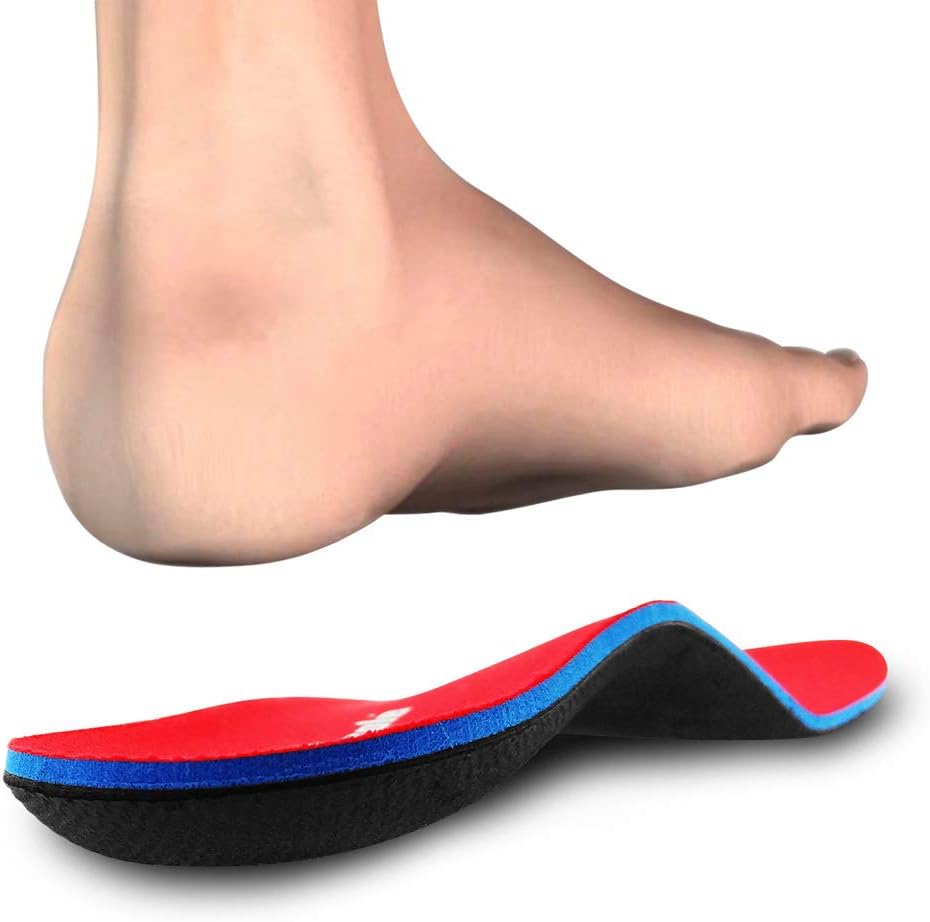
PCSsole Orthotic Arch Support Shoe Inserts for Flat Feet, Plantar Fasciitis & Foot Pain
Product description
What it is and what it’s trying to solve
PCSsole’s orthotic arch support insoles are aimed at people who feel let down by flat feet, over-pronation, or general arch/heel discomfort. The pitch is fairly specific: semi-rigid arch support to encourage better foot alignment, plus cushioning in key pressure areas (notably around the forefoot and arch) to help reduce fatigue during day-to-day walking.
On paper, this sits in the “supportive but wearable” bracket rather than a strict, stiff orthotic. The arch support is described as strong but elastic cork, so you’re not meant to feel like your foot is trapped in a hard block. That nuance matters if you’ve ever tried an insole that felt too rigid straight away.
The essentials (and where the cushioning is meant to help)
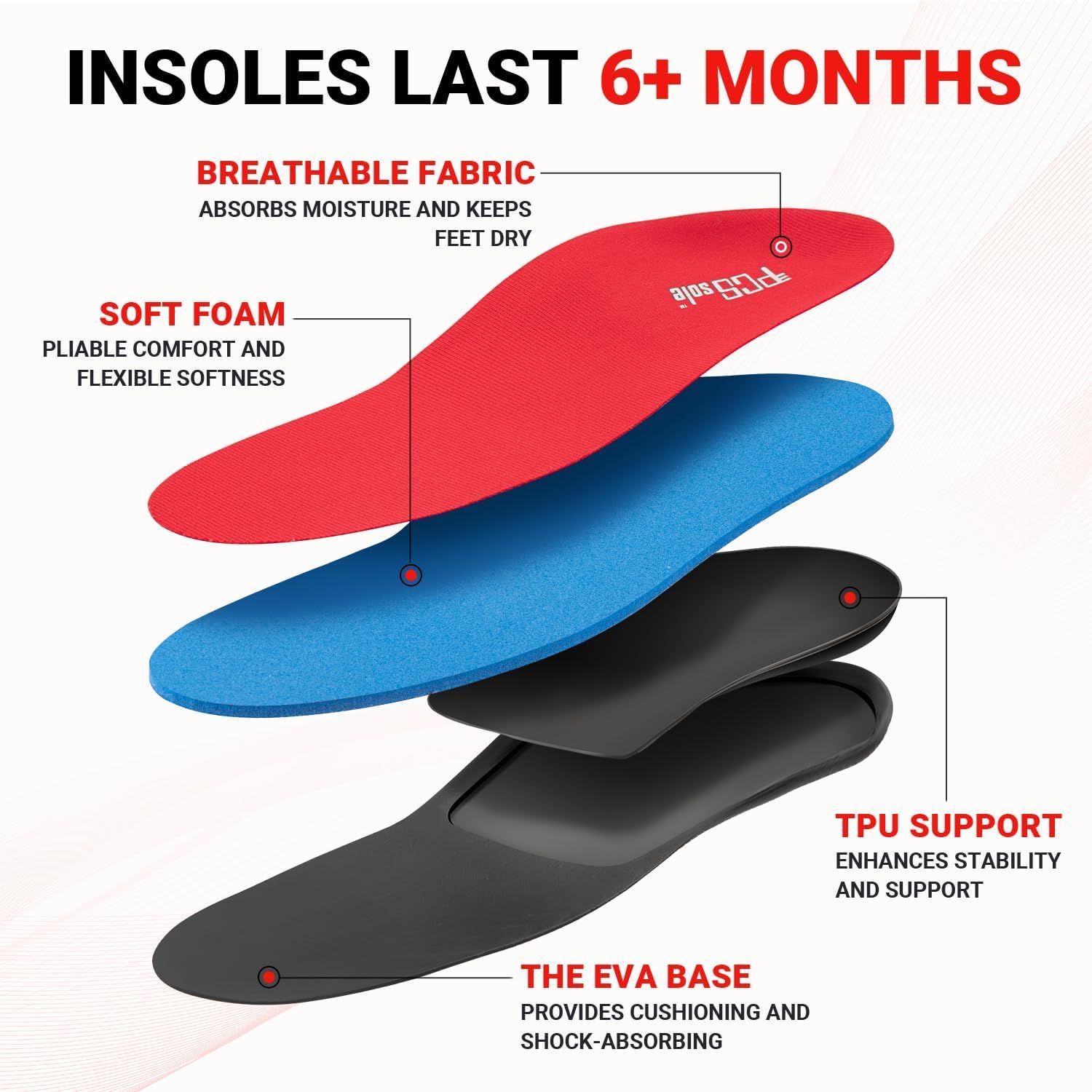
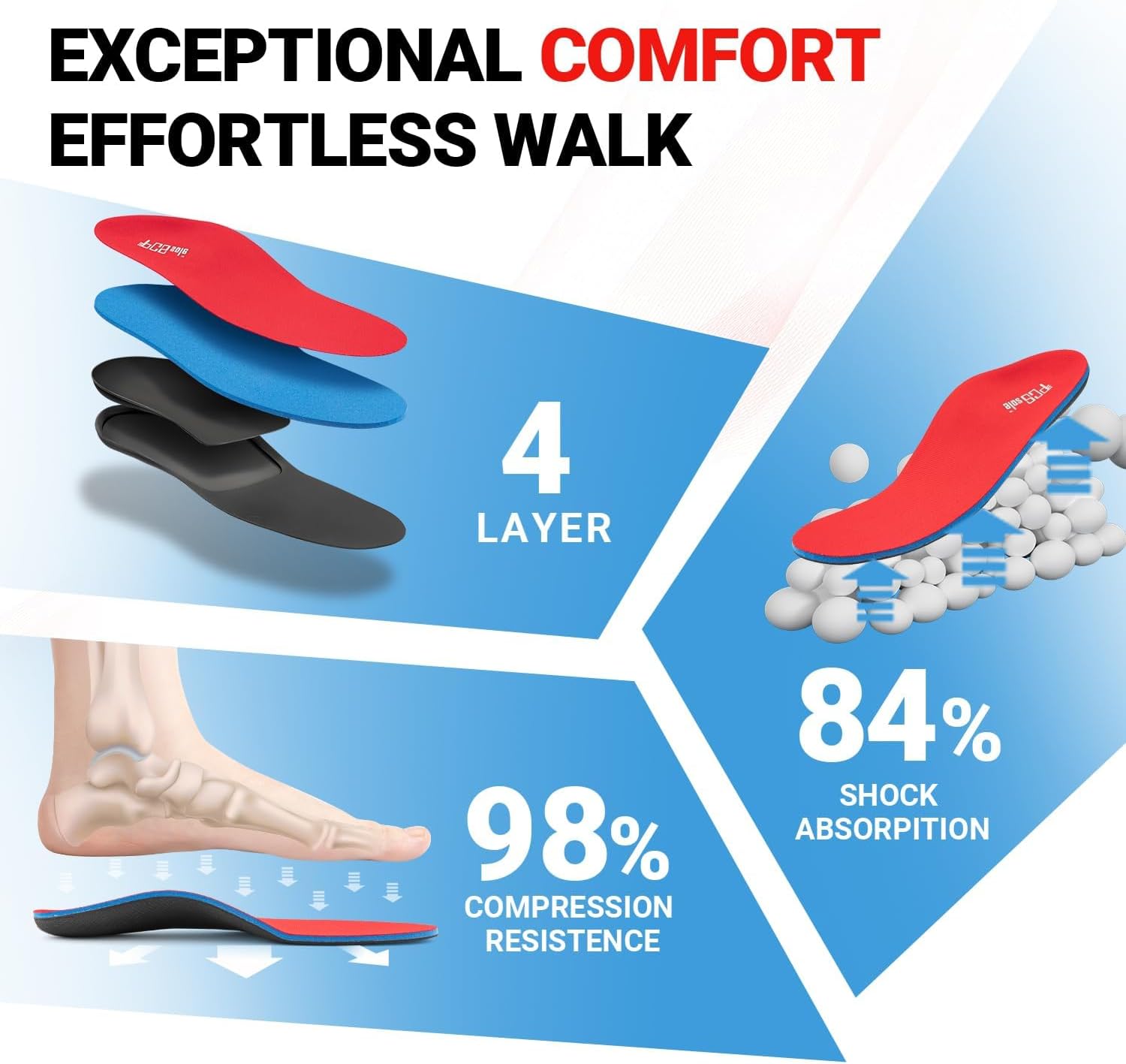
The design includes: - An arch support with a semi-rigid heel cup that’s meant to stabilise your foot and support posture when you’re standing. - A metatarsal pad intended to ease forefoot pressure and reduce foot fatigue. - A durable EVA foam base paired with multi-layer memory foam for walking, running, and hiking (depending on your footwear). - An anti-slip velvet fabric top layer described as skin-friendly, soft, and breathable, designed to keep feet comfortable.
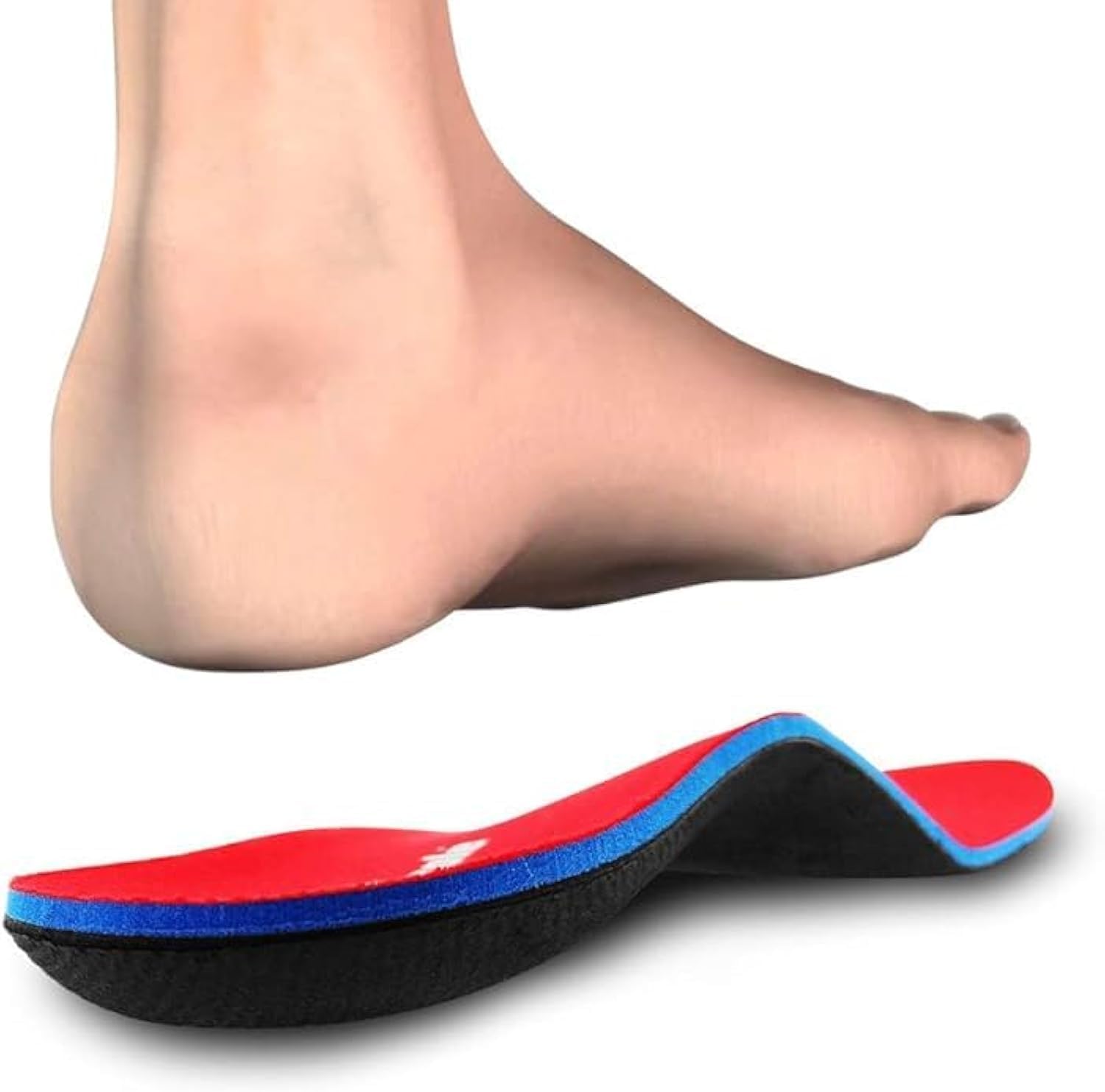
If you often end the day with sore arches, heavy feet, or discomfort that feels worse with time on your feet, these are designed to target those patterns. They’re also positioned for mild to moderate flat feet, pronation, metatarsal pain, heel spur, and arch discomfort—plus foot pain that can be associated with plantar fasciitis.
That said, it’s not magic. If your pain is severe, complex, or worsening, you may need medical guidance rather than relying purely on an insole.
Key features you’ll notice in everyday use
A lot of insoles sound good on paper, what differentiates this one is the combination of support elements and the “getting used to it” approach.
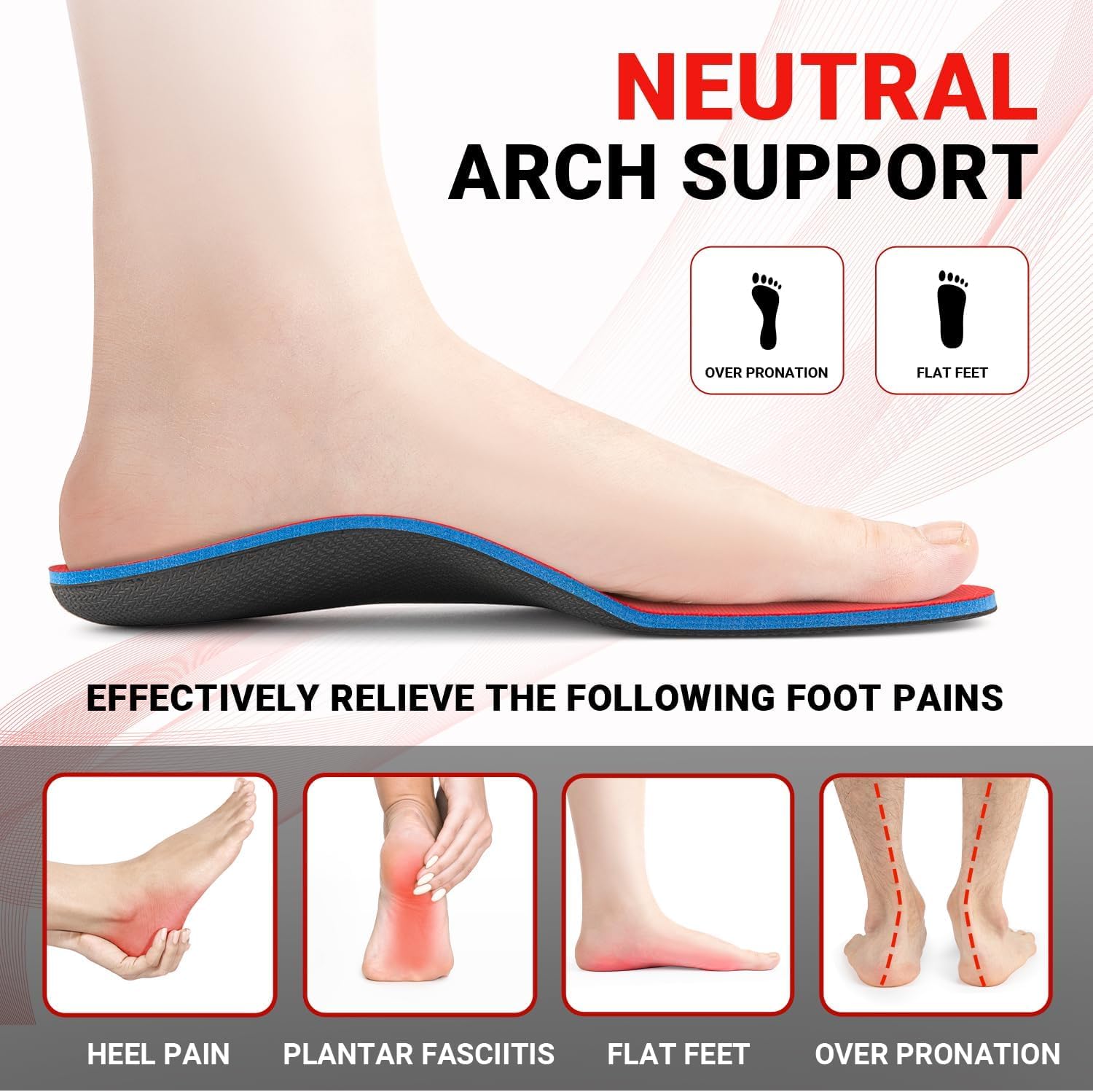
The heel cup and arch support are meant to give you moderate control. The memory foam and cushioning approach is there so you’re not just adding structure—you’re also adding comfort where pressure builds up.
There’s also a clear onboarding recommendation: allow about three days to get used to the insoles, starting from around 2–3 hours per day and increasing gradually. In real life, that’s the difference between “this feels helpful” and “this feels uncomfortable, so I gave up”.
A practical example: if you wear work shoes for long shifts, start with 2–3 hours during a lighter day, then build up. After the adjustment window, you’re more likely to notice whether the arch support helps reduce that tired, aching feeling underfoot.
Tech specs
- Name: PCSsole Orthotic Arch Support Shoe Inserts Insoles for Flat Feet, Feet Pain, Plantar Fasciitis
- Type: Shoe inserts / insoles with semi-rigid arch support and cushioning
- Materials mentioned: EVA foam base, multi-layer memory foam, anti-slip velvet fabric
Where it shines (and where it may fall short)
Worth considering if
- You have mild to moderate flat feet or pronation and want more structured support than basic cushioned insoles.
- You’re dealing with arch discomfort and tired feet, and you want cushioning in addition to support.
- You need something suitable for everyday footwear as well as sports or outdoor walking (the description mentions walking, running, and hiking).
It’s not for you if
- You want a fully customised orthotic-style solution. These are described as inserts, not bespoke medical devices.
- Your pain is severe or you have a condition that requires professional assessment—an insole alone may not be enough.
- You dislike the adjustment period. Even with supportive designs, your feet may need time to adapt.
Getting the best results from these insoles
This is a “moderate control” type of support, so placement and gradual use matter. The brand specifically advises easing in over several days. If you jump straight to all-day wear, you might feel pressure more than you’d like.
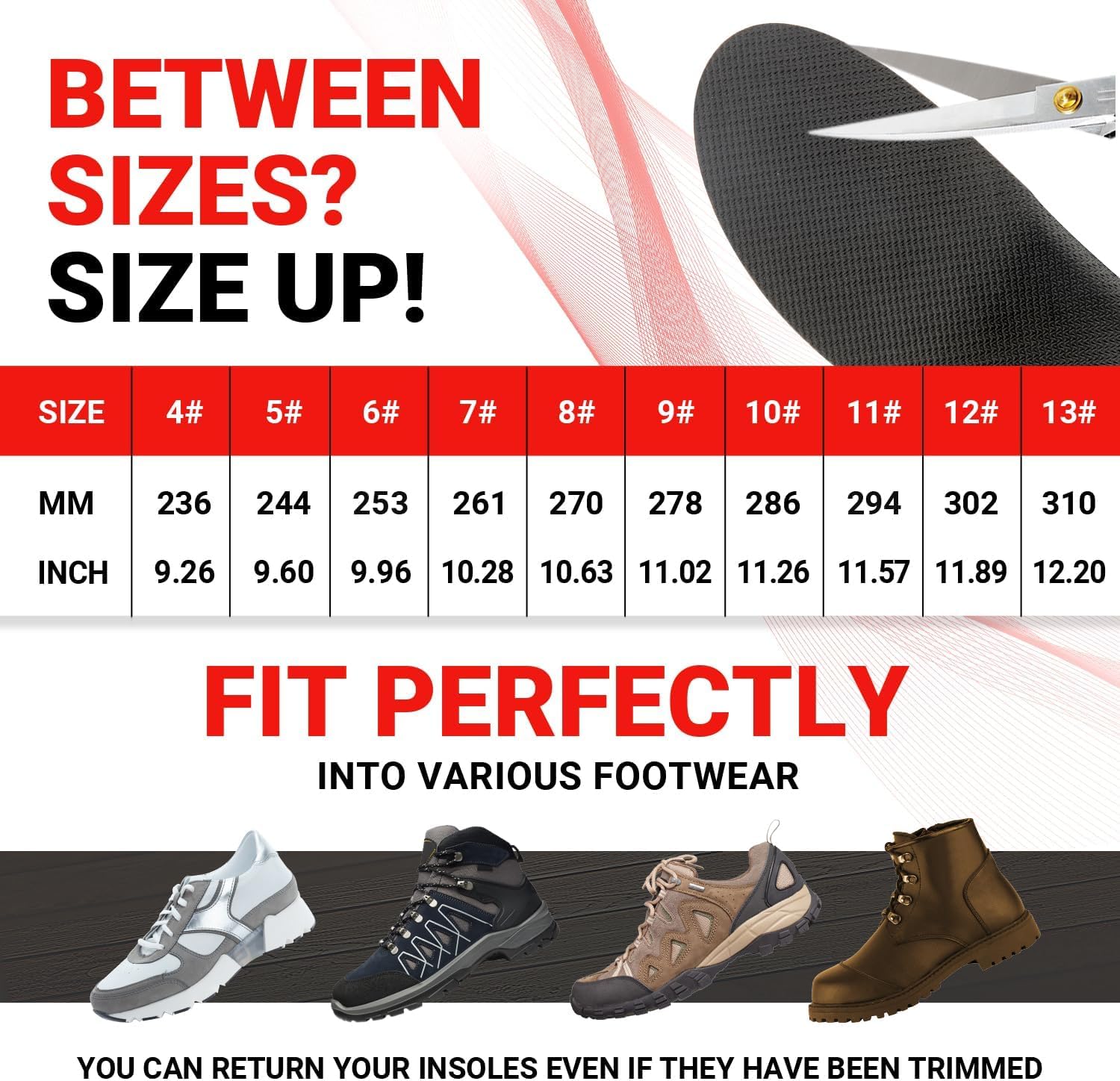
Also, these are described as working best in “walking or sports shoes, work shoes and boots, high volume dress shoes, hiking shoes”. If your shoes are low-volume or very snug, you may find there’s less room for the insole, which can affect comfort.
Finally, the memory foam/cushioning approach suggests they’re meant to feel comfortable, not bare and clinical. If you prefer very firm, minimal cushioning, the soft layers might not match your taste.
Should you buy it?
If you’re looking for a supportive insole for flat feet, pronation, and common arch or heel discomfort—and you’re prepared to wear them gradually for a few days—PCSsole’s inserts make sense. They’re built around a semi-rigid arch support concept with a heel cup for stabilisation, plus cushioning designed to reduce forefoot pressure and fatigue.
You might want to skip them if your needs are more medical and severe, or if you’re after a strictly hard orthotic feel without an adaptation period. In most cases, the success factor is whether the “strong but elastic” support matches your comfort tolerance and whether your footwear gives the insole enough space.
Mini FAQ
How long does it take to get used to them?
The brand notes it usually takes about three days to get used to the insoles, recommending starting at 2–3 hours a day and increasing gradually.
Are these meant for plantar fasciitis?
They’re described as suitable for foot pain associated with plantar fasciitis, along with heel spur and arch discomfort—especially for mild to moderate issues.
What kind of shoes do they suit?
They’re described for use in walking or sports shoes, work shoes and boots, high volume dress shoes, and hiking shoes.
Do they focus on support or cushioning?
Both. The arch support and heel cup aim to stabilise and support alignment, while the EVA and memory foam layers aim to cushion pressure points.
What if they don’t suit you?
The description states there’s a 100% risk-free offer, with replacement or refund if you’re not satisfied, after contacting the seller.