

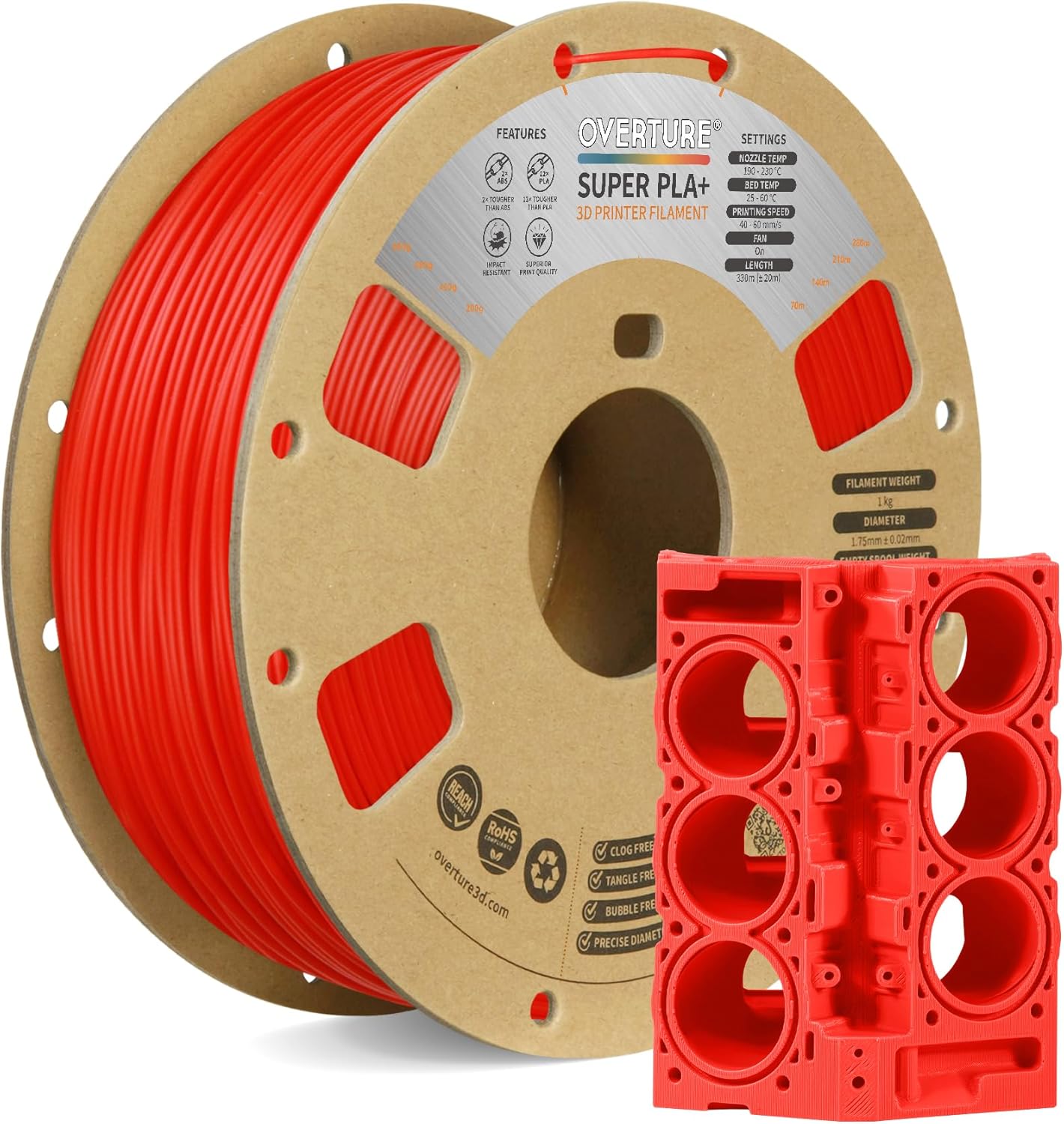
Overture Super PLA+ Filament 1.75mm – Toughness Enhanced, 1kg (Red)
Product description
What matters most
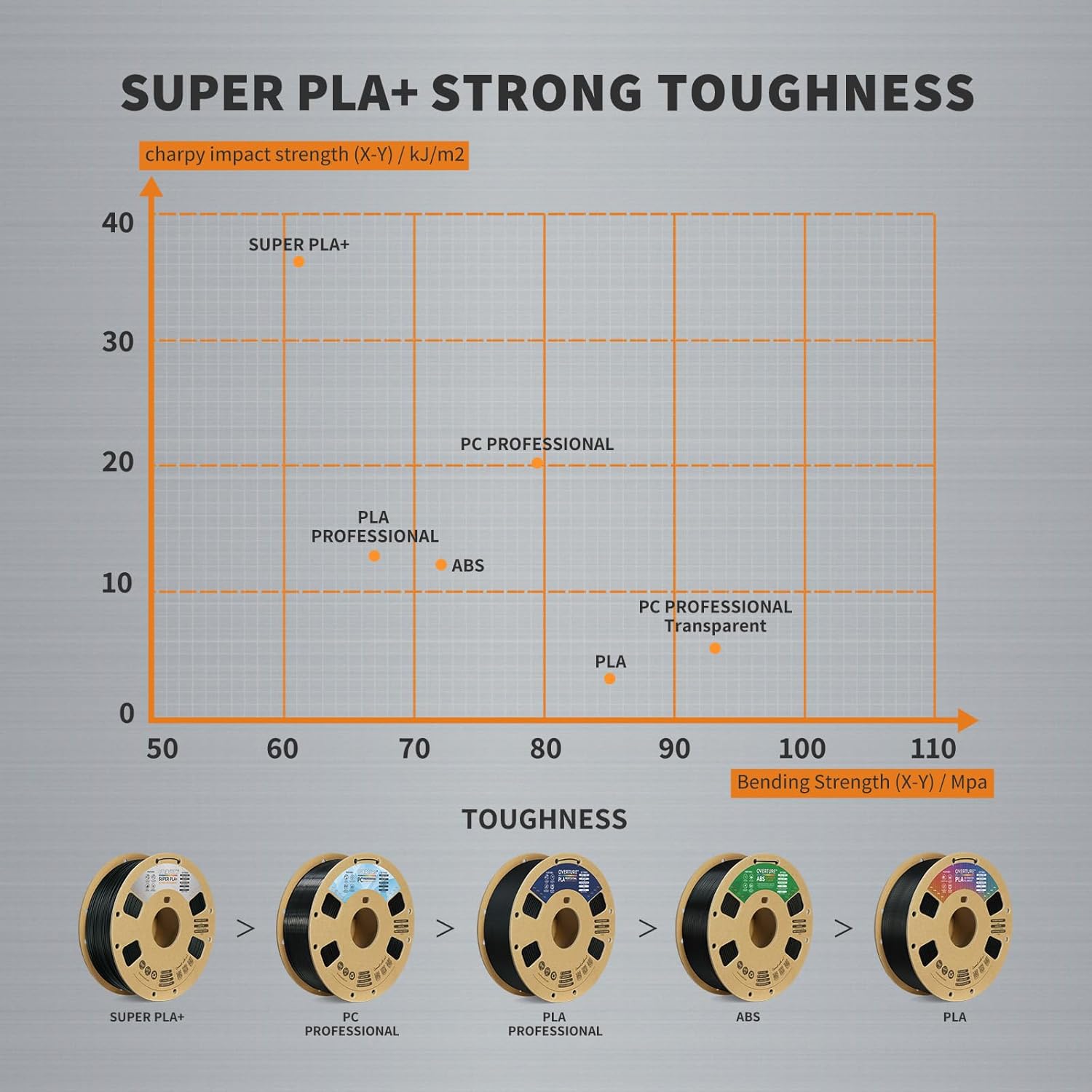
Overture Super PLA+ is a toughness-enhanced PLA Plus filament designed to bridge the gap between easy printing and functional, durable parts. On the page, the focus is not on hype but on a material that claims higher impact resistance and steel-like toughness while retaining PLA’s user-friendly printing traits. If you occasionally need functional prototypes, tools or mechanical components that don’t require ABS, this filament may be a sensible option to consider. It’s not a magic bullet for every tough component, but its core promise is clear: better structural performance with minimal warping and straightforward print settings.
How it works in practice
On the surface, it behaves like PLA Plus: straightforward extrusion, good bed adhesion and predictable layer bonding. The claimed improvements in layer adhesion and reduced warping give this filament an edge for larger prints and more intricate geometries, where dimensional stability matters. Importantly, the manufacturer emphasises compatibility with a wide range of consumer and industrial printers, which reduces one common sticking point for filament adoption—the worry that a new material won’t play nicely with your machine.
What stands out in design and process
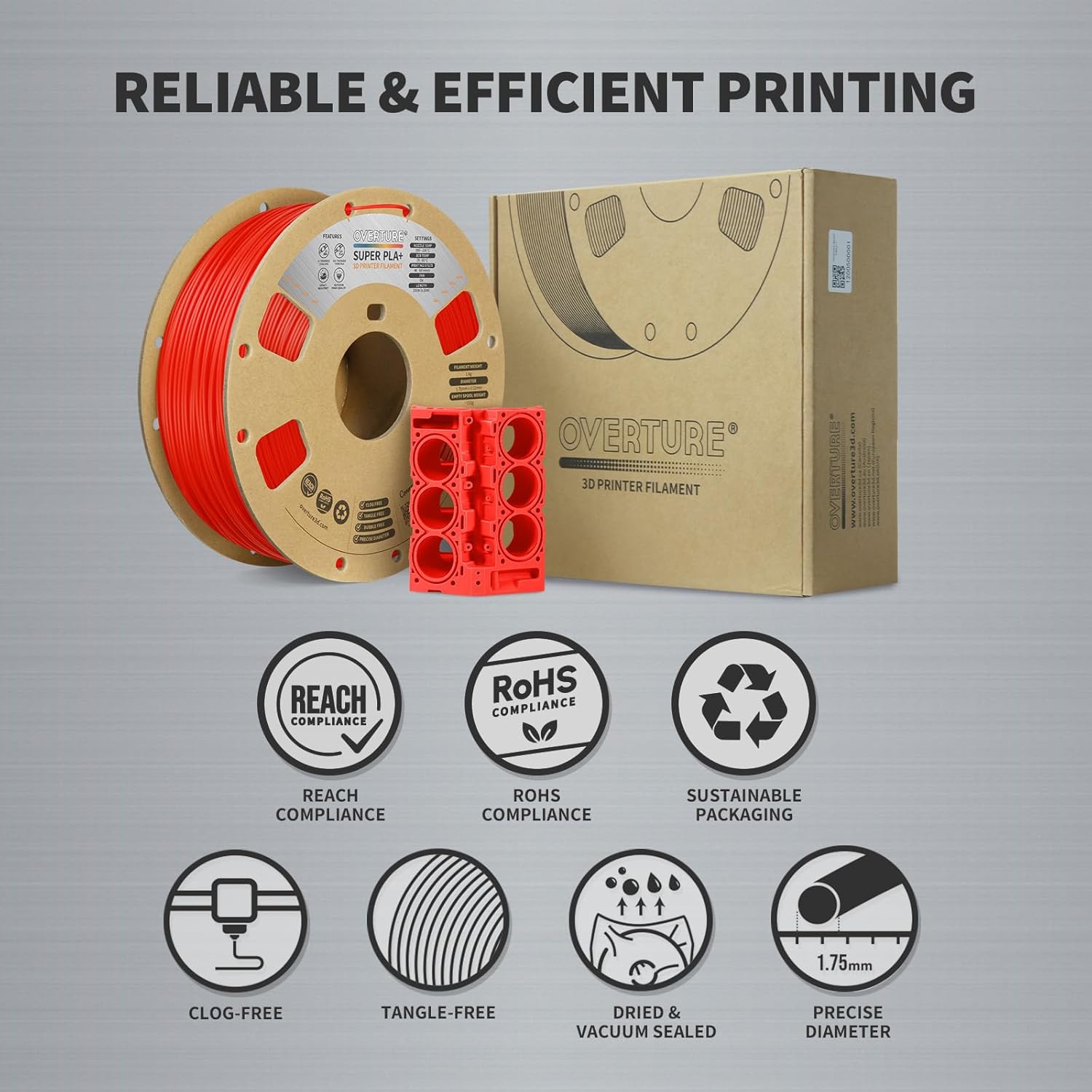
A notable feature is the Clog-Free technology, which aims to deliver a smoother, more consistent print experience. The material arrives pre-dried for 24 hours and vacuum-sealed with desiccants in a reusable nylon bag, supposedly small moisture risks that can otherwise affect print quality. The winding is described as precise, with inspection aimed at avoiding tangles and breakage. For users who value reliability and fewer print fails, this packaging and handling claim is worth weighing up.
Practical use cases and who it suits
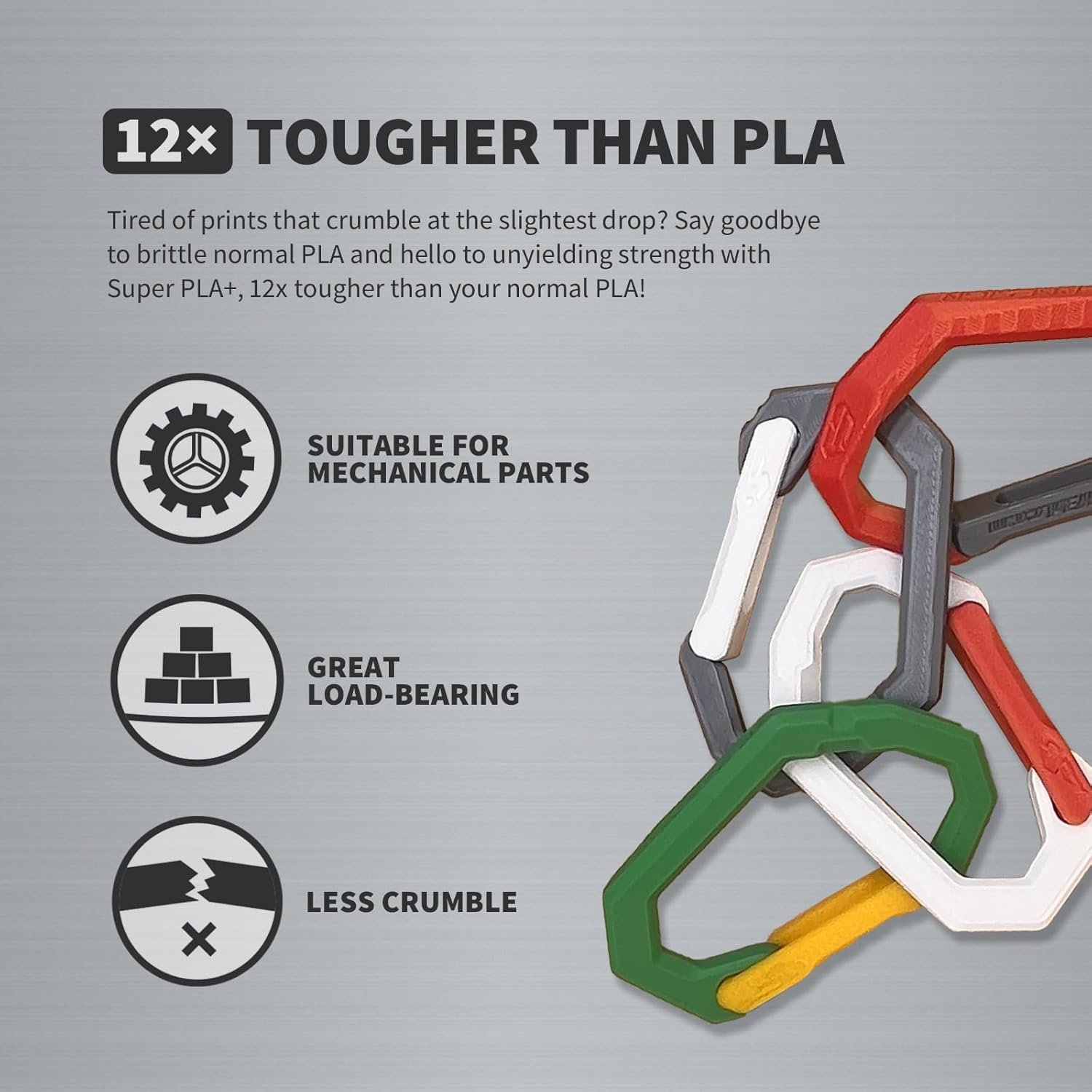
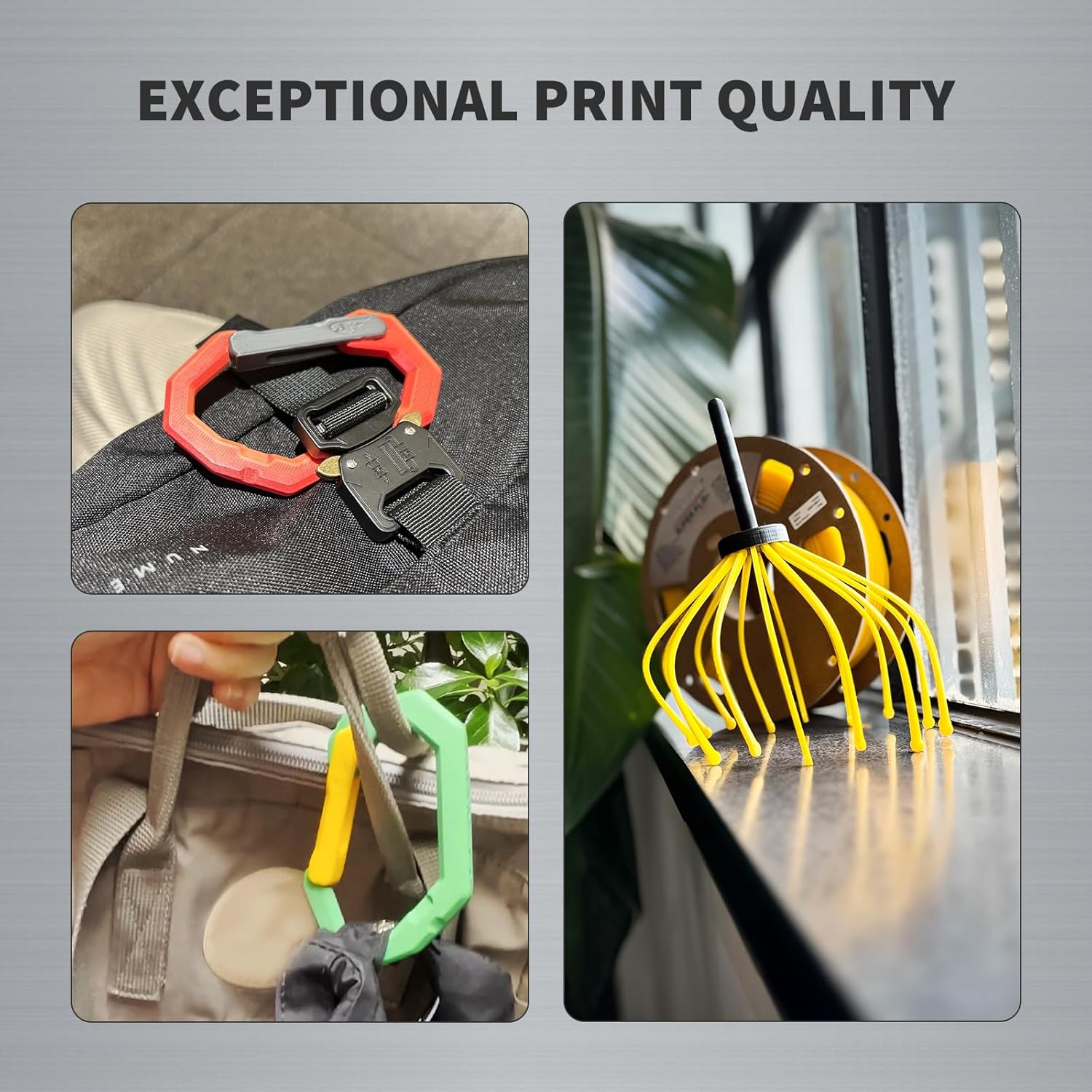
If your projects include functional prototypes, jigs, mechanical components, or tools that benefit from greater toughness than standard PLA but don’t justify ABS or PETG, this filament presents a reasonable middle ground. It may appeal to hobbyists moving into more demanding prints or small workshops needing repeatable results without the complexity of high-temperature materials. However, if you regularly print large, heat-exposed parts or operate in a highly demanding engineering setting, you might still reach for a more purpose-built material.
What’s good and what might not convince you
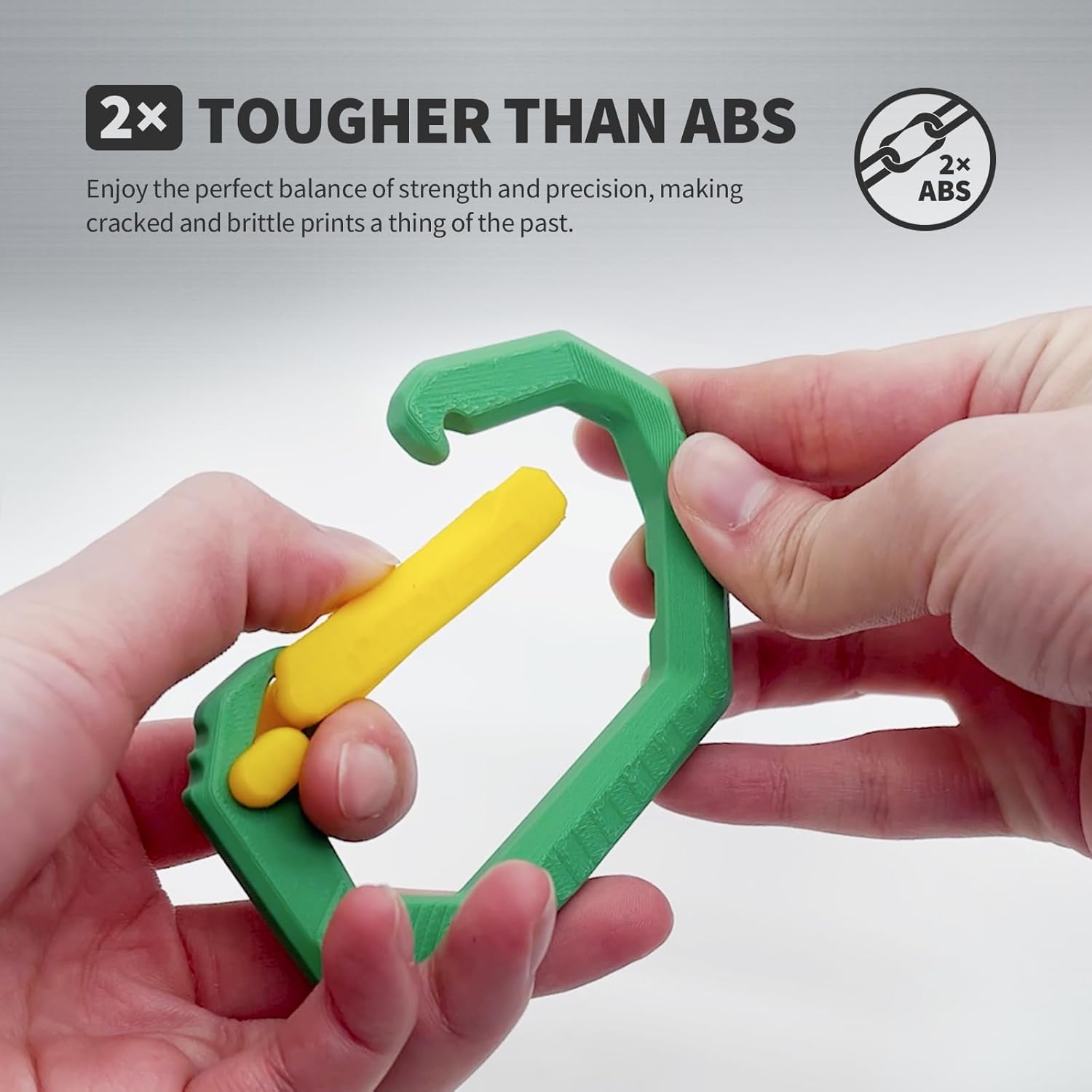
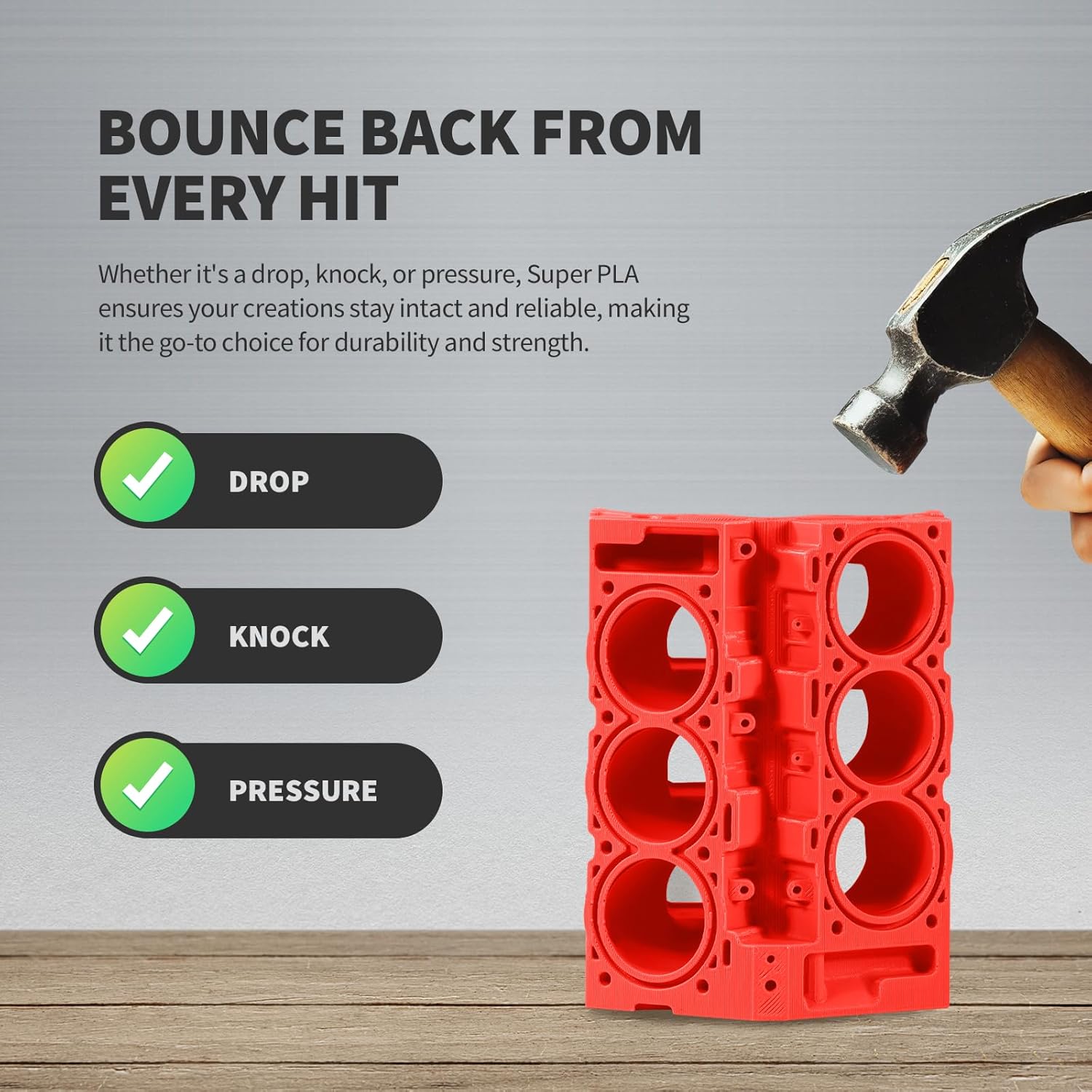
What’s persuasive here is the balance: improved impact resistance and potential for better heat resistance relative to plain PLA, combined with easier printing compared with ABS. The claim of low warping and excellent layer adhesion helps with larger, intricate prints. On the downside, the durability gains are described rather than quantified in the entry, and real-world results can depend on printer calibration, nozzle size, and ambient conditions. If you prioritise absolute heat resistance or maximum rigidity, you may find this sits between standard PLA+ and more advanced engineering plastics rather than as a primary replacement.
Before you buy: considerations and checks
- Check your printer’s nozzle and bed setup, even with low warping, temperature settings will influence results for PLA+. If you rarely print without a heated chamber, you may want to test a small batch first.
- Consider your typical print size: larger parts benefit from reduced warping, but the final strength also depends on layer orientation and infill strategy.
- Storage matters: the product arrives vacuum-sealed and desiccant-packed, keep it dry to preserve print quality.
- Take note of the packaging: a 1kg spool size is standard for ongoing projects, but ensure your feeder can handle the spool’s weight and width.
Quick comparison and buying logic
Compared with basic PLA+, this variant emphasises toughness and tough‑enough functionality for practical parts. If your use case sits in the spectrum between normal PLA+ and more demanding engineering thermoplastics, this could offer a better value-for-money balance. If your priority is extreme mechanical performance or high heat resistance, you may be better off weighing options that target those traits more aggressively.
Is it worth it?
Final verdict: It’s worth considering if your work involves functional prints where a PLA‑based material would normally be used, but you want a little more resilience and reduced print issues. It isn’t guaranteed to replace dedicated engineering plastics in every scenario, but it does appear to straddle the line between easy printing and practical toughness. If you prioritise reliability and familiar workflow over pushing the limits of material science, this filament could fit your needs.
FAQ (quick answers)
- Q: Can I print this without a heated chamber? A: The description suggests good layer adhesion with minimal warping, and says it’s suitable for forms that don’t require a heated chamber, but results can vary by printer.
- Q: How long does it take to dry before use? A: It’s pre-dried for 24 hours prior to packaging.
- Q: What kinds of parts is it best for? A: Functional prototypes, tools, jigs and mechanical components where increased toughness over standard PLA+ is advantageous.
Final decision point
- It suits users who want a straightforward PLA‑based filament with improved toughness and reliable printing, for everyday functional parts.
- It may not be ideal if your application demands maximum heat resistance or the highest possible mechanical performance from engineering plastics.
- It should appeal to hobbyists or small shops seeking predictable prints and reduced warping on mid‑ to large‑sized parts.
- If you’re unsure, run a small test print to gauge how your machine handles the material and whether the strength gains align with your needs.