

OREI HDA-912 4K HDMI Audio Extractor: Dolby/DTS Pass-through with Optical & 3.5mm Output
Reviews
Price
Product description
What it is and what it does
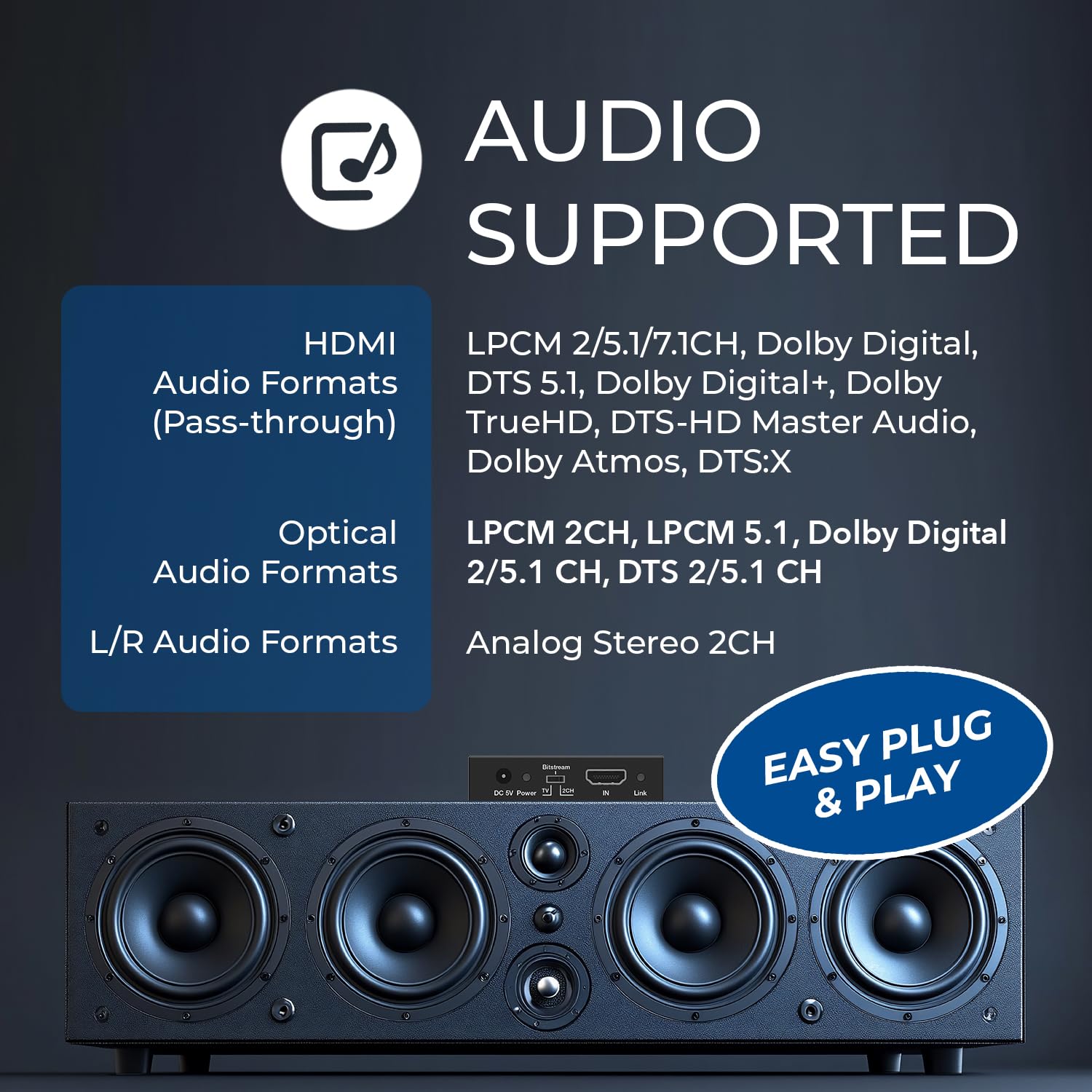
The OREI HDA-912 is a compact HDMI audio extractor designed to pull audio from any HDMI source and deliver it to an Optical S/PDIF or high‑quality 3.5 mm stereo output. It keeps video in its original form, passing through up to 4K @ 60Hz (4:4:4) and supporting 1080p at higher refresh rates. If your setup calls for theatre‑grade audio formats, this device handles LPCM (2/5.1/7.1) as well as Dolby Digital, DTS, Dolby Digital+, Dolby TrueHD, DTS-HD Master Audio, and newer object‑based formats like Dolby Atmos and DTS:X via pass‑through. It also supports HDMI High Bit Rate (HBR) audio and CEC bypass, making it a practical bridge between modern sources and legacy or dedicated audio systems.
What stands out on paper
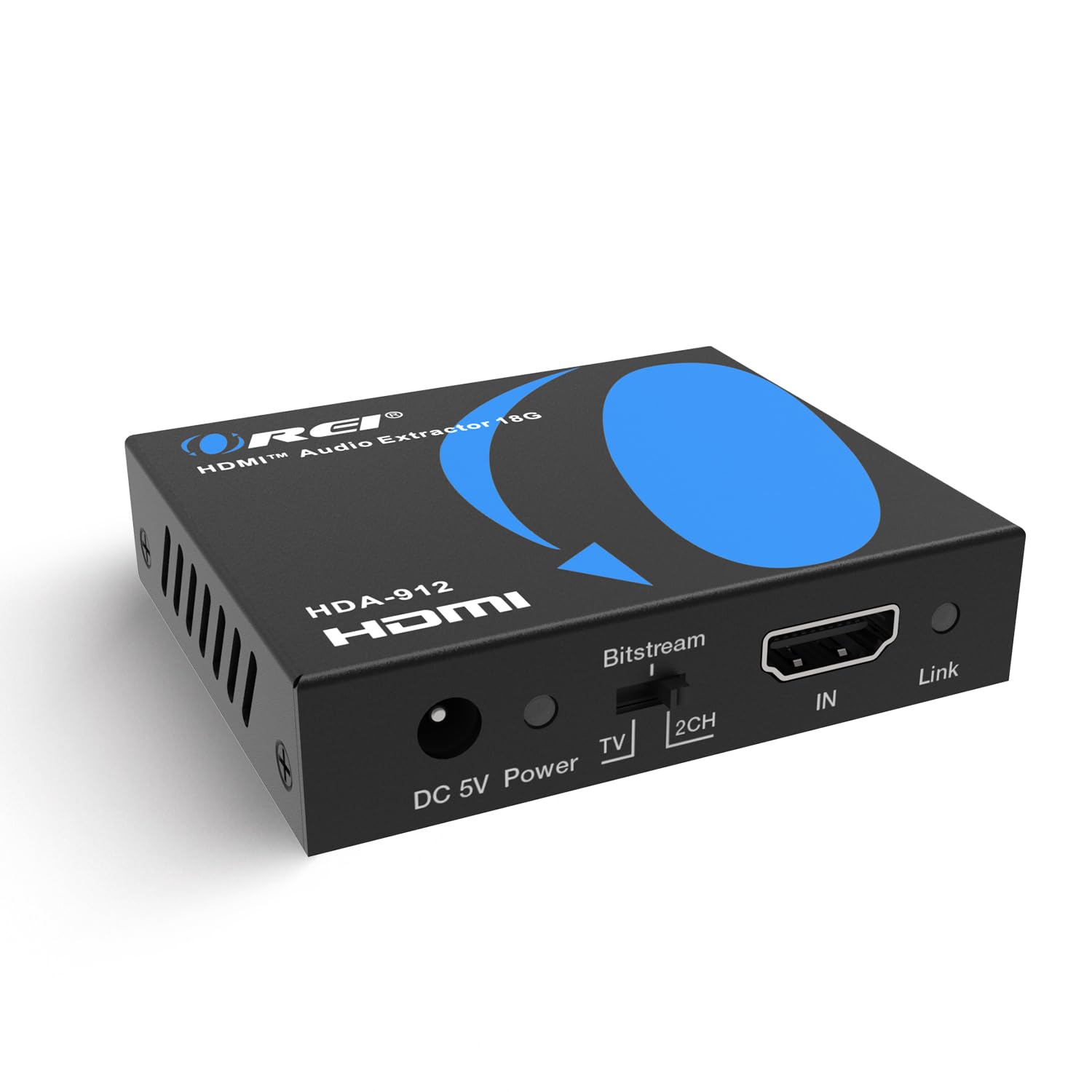
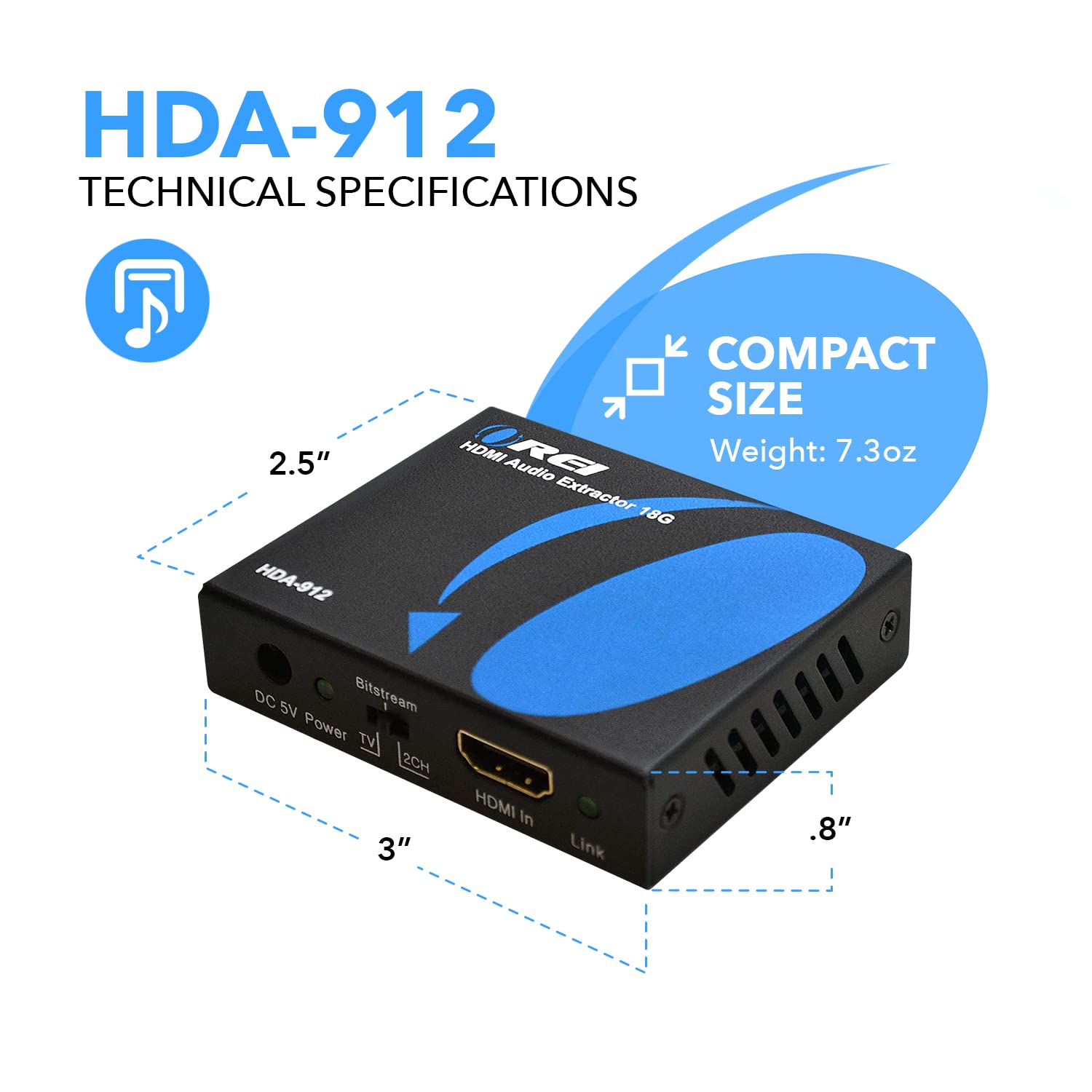
On the hardware side, the HDA-912 arrives in a heavy‑duty metal enclosure that helps with heat dissipation in everyday use. It provides one HDMI input and one HDMI output so you can keep your video path intact while extracting audio for separate playback. The package includes a universal 100–240 V power supply, which means you can use it worldwide without fuss. The device supports HDCP 2.2 and is DVI‑compliant, though note that ARC is not supported.
Tech specs at a glance
This extractor supports video pass‑through up to 4K @ 50/60 Hz in YUV4:4:4, plus 4K @ 30 Hz and 1080p options, including 3D at 60 Hz. Audio support spans LPCM up to 7.1, plus Dolby Digital, DTS, Dolby Digital+, Dolby TrueHD, DTS-HD Master Audio, Dolby Atmos, and DTS:X. The unit is HDMI 2.0b (18 Gbps), with HDCP 2.2 and CEC bypass enabled.
Practical benefits and limitations
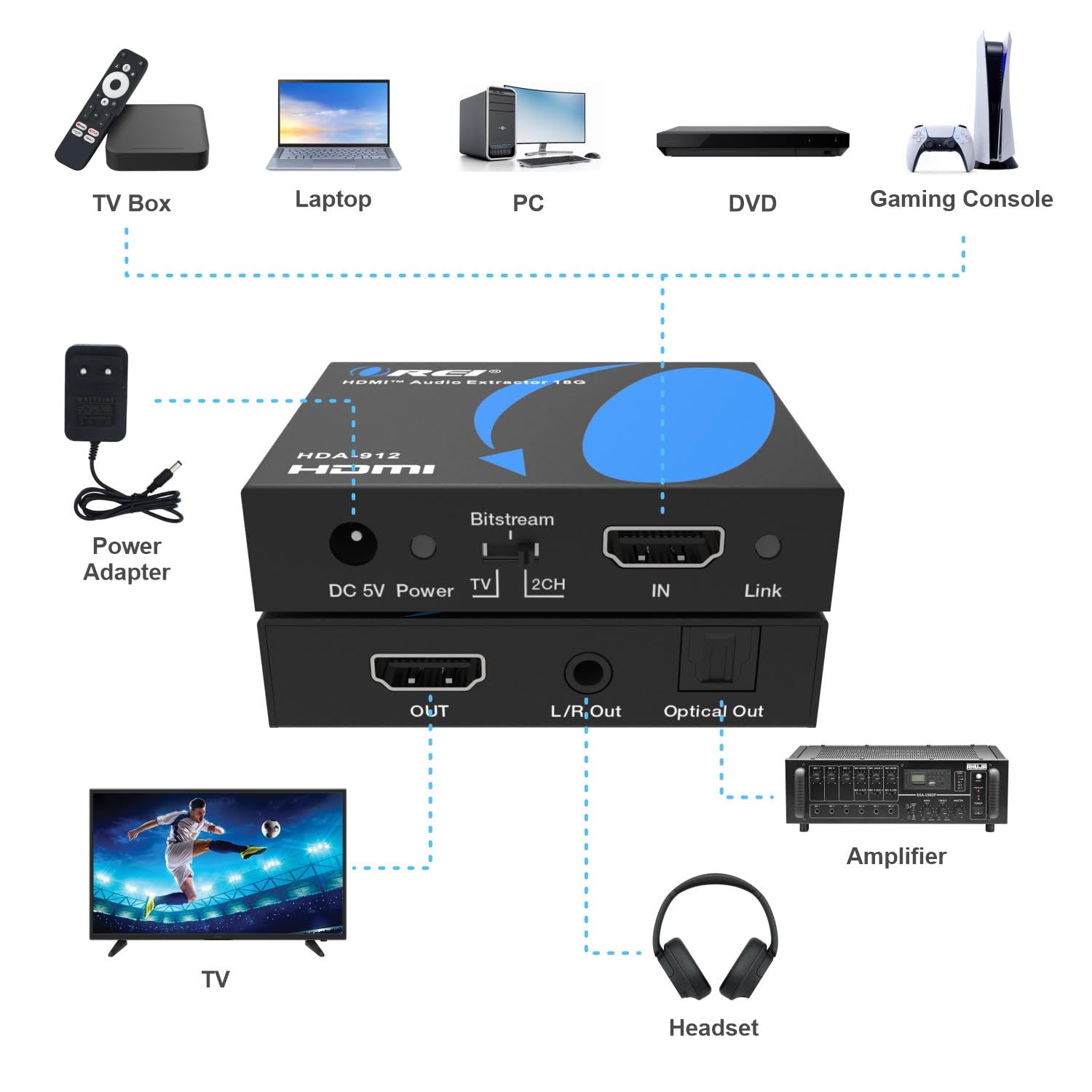
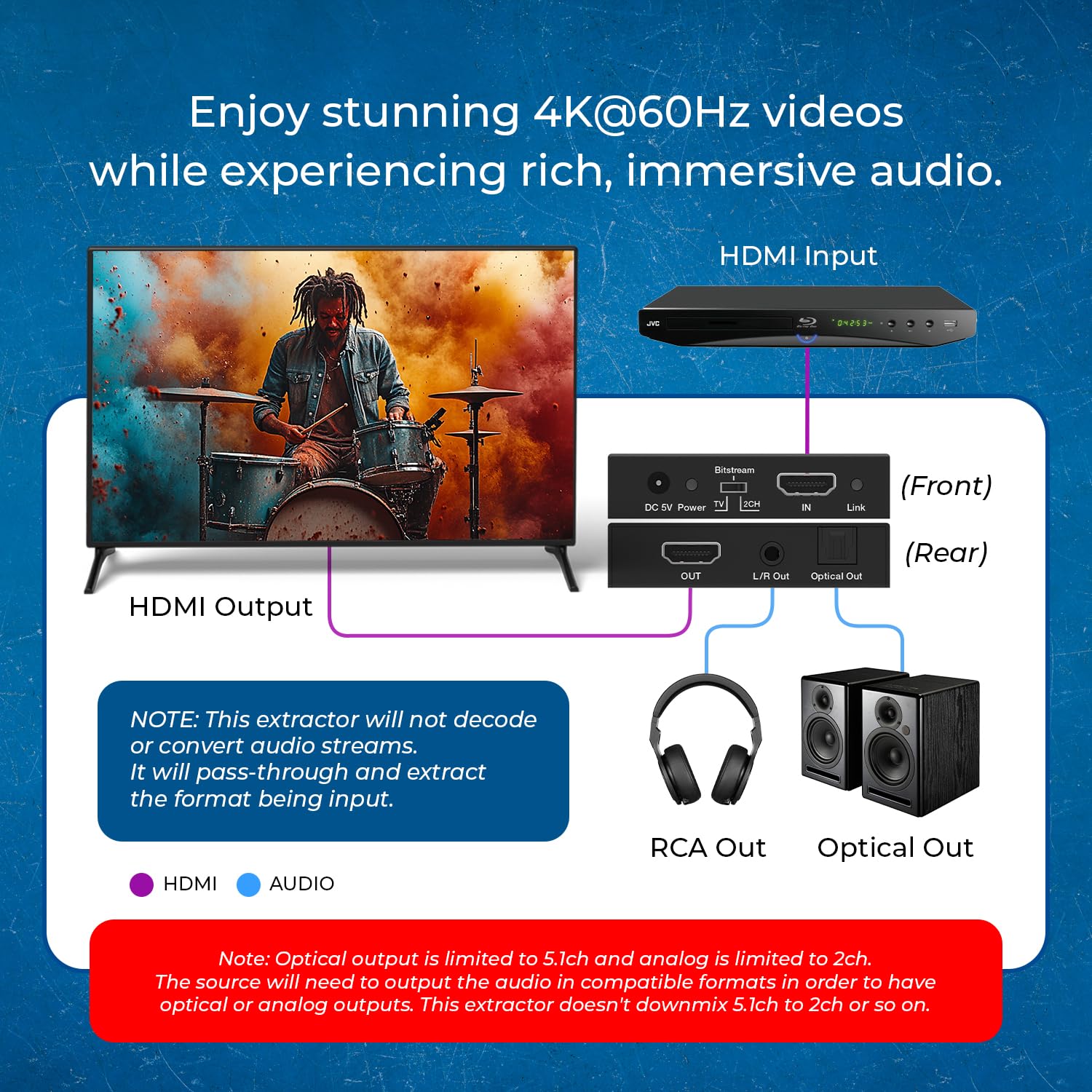
If you’re wiring a home cinema or living room system that uses a separate amplifier or soundbar with optical or analogue inputs, this extractor can simplify connections without sacrificing video quality. It’s worth noting that while it handles a broad range of audio formats, there’s no ARC support, which might affect setups relying on audio return from a TV. For many users, that means you’ll route audio from the HDMI source to the extractor, then to the audio device, while continuing to drive the display via another output path.
What you’ll like about it
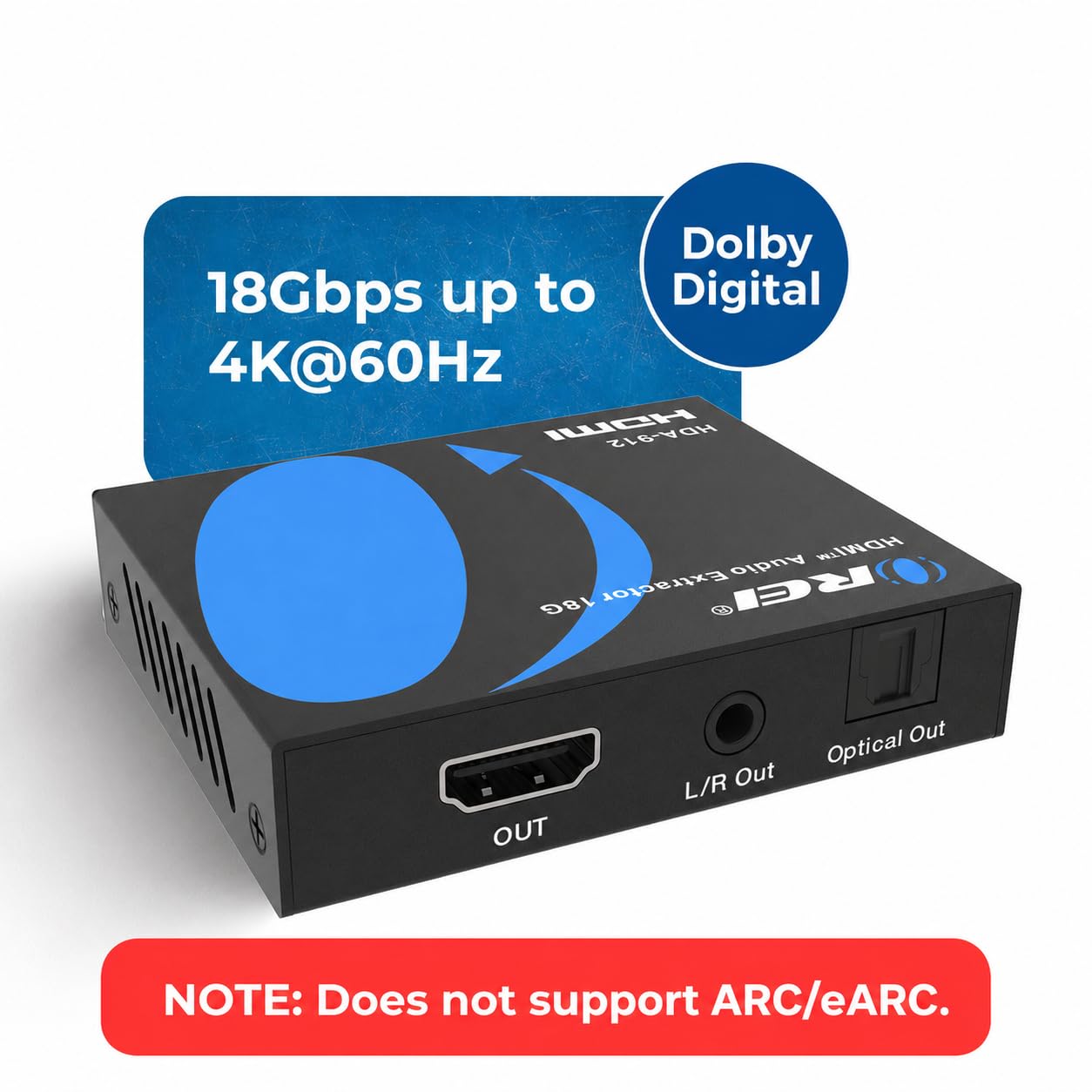
- Keeps video passthrough intact while giving you flexible audio routes (optical S/PDIF and 3.5 mm line‑out).
- Broad audio format support, including lossless and object‑based formats via pass‑through.
- Solid, heat‑dissipating enclosure and simple plug‑and‑play installation.
- Worldwide power compatibility with an included auto‑switching supply.
What may give you pause
- No ARC support, so TV–audio return scenarios won’t be handled natively.
- No built‑in room calibration or advanced audio processing, it’s a straightforward extractor, not a sound‑integrator.
- If your setup relies on HDMI‑ARC for simplicity, you’ll need a separate path for audio.
Who it’s for
If you’re connecting a modern HDMI source to an external DAC, home theatre receiver, or soundbar with optical or 3.5 mm inputs, and you want to preserve high‑quality video while extracting audio, this device is a sensible option. It’s particularly suitable for users who value broad format support and a robust mechanical build, and who don’t need ARC or additional room‑tuning features.
Who it isn’t the best for
Not ideal for setups that rely on ARC or for those seeking built‑in audio processing features. If your priority is a compact all‑in‑one device that combines HDMI passthrough with ARC, you might prefer alternatives that handle ARC via the TV connection.
When to buy it
Consider this extractor if you: want to preserve 4K video while sending high‑quality audio to an external system, need Optical or 3.5 mm outputs, and require broad LPCM/Dolby/DTS support with reliable build quality. It’s a practical upgrade when your existing audio path is cramped or incompatible with current HDMI audio formats.
What to check before buying
- Confirm your source supports the required HDMI spec (2.0b/HDCP 2.2) for 4K @ 60 Hz pass‑through.
- Decide which audio route you’ll use most (Optical or 3.5 mm) and ensure your playback device accepts that input.
- Be aware of the lack of ARC support and plan your cabling accordingly.
Practical use example
Imagine you’ve got a 4K Blu‑ray player or a streaming box connected to a TV, with a separate home cinema amp that handles Dolby Atmos. You’d place the HDA‑912 between the source and the TV to pass video to the display and deliver rich multichannel or high‑quality stereo audio to your amp via Optical, keeping your video path clean and your room setup tidy.
FAQ (brief)
- Does it support 4K at 60 Hz for all content? It supports 4K @ 60 Hz in pass‑through, exact compatibility may vary with source material.
- Can I use the 3.5 mm output for high‑impedance headphones? The 3.5 mm output is intended for line‑level audio to an amplifier or speaker system, not for direct headphone listening.
- Is ARC supported? No, ARC is not supported on this model.
Is it worth it?
Worth considering if you need reliable audio extraction without sacrificing 4K video, and you don’t rely on HDMI ARC for TV audio. If your setup can work with Optical or 3.5 mm outputs and you value broad format compatibility, this device provides a straightforward, durable solution.