

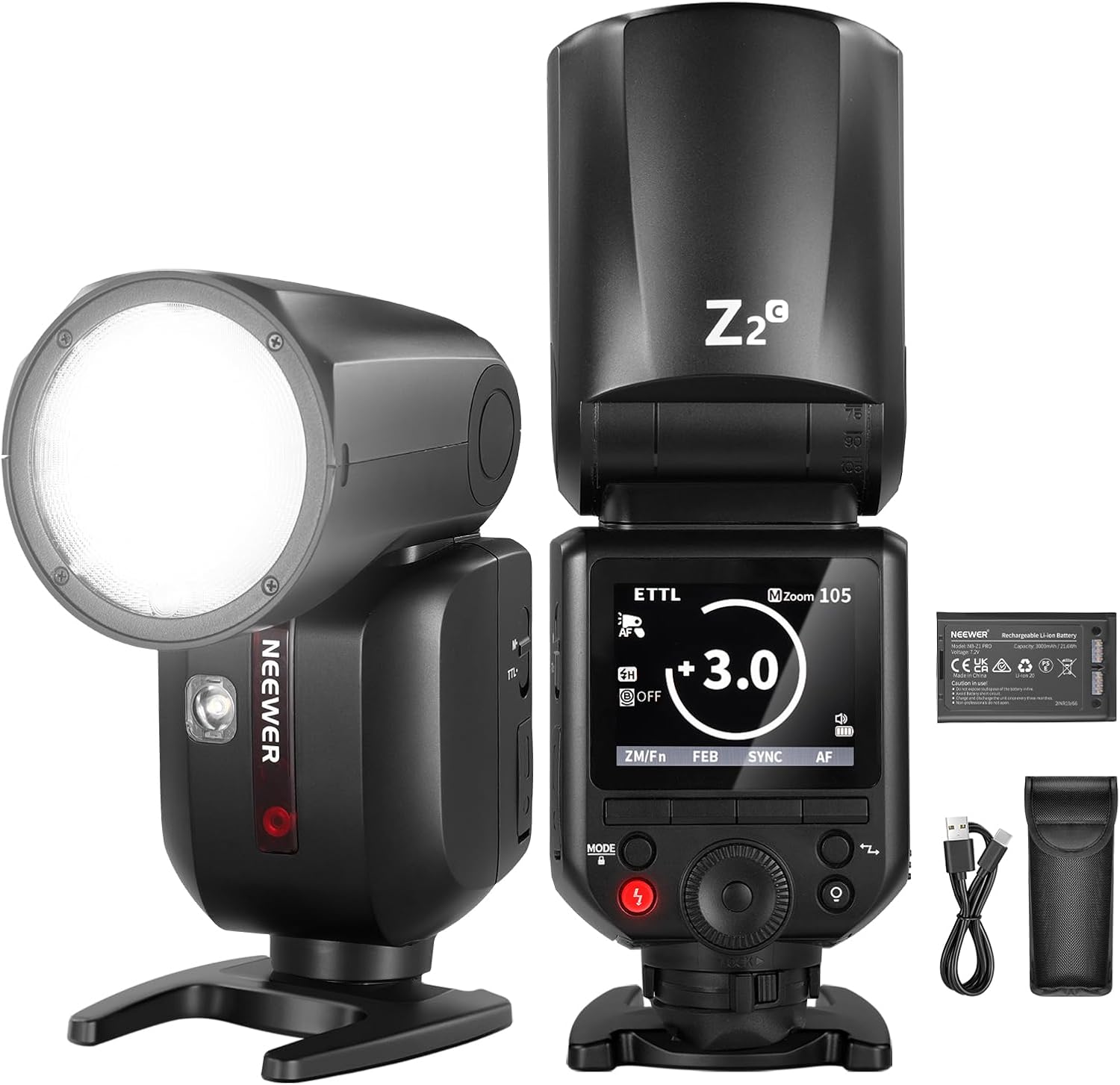
NEEWER Z2-C 2.4G TTL Round Head Flash Speedlite for Canon with HSS (up to 1/8000s) and wireless Q control
Product description
What it is and why you might want it
The NEEWER Z2-C is a Canon-compatible flash speedlite built for photographers who want more control than a basic hotshoe flash, without stepping into the most expensive flagship territory. On paper, it’s aimed at people who shoot events, portraits, or general flash work where you need reliable TTL, the option to go manual, and the ability to trigger off-camera flashes using a 2.4G wireless system.
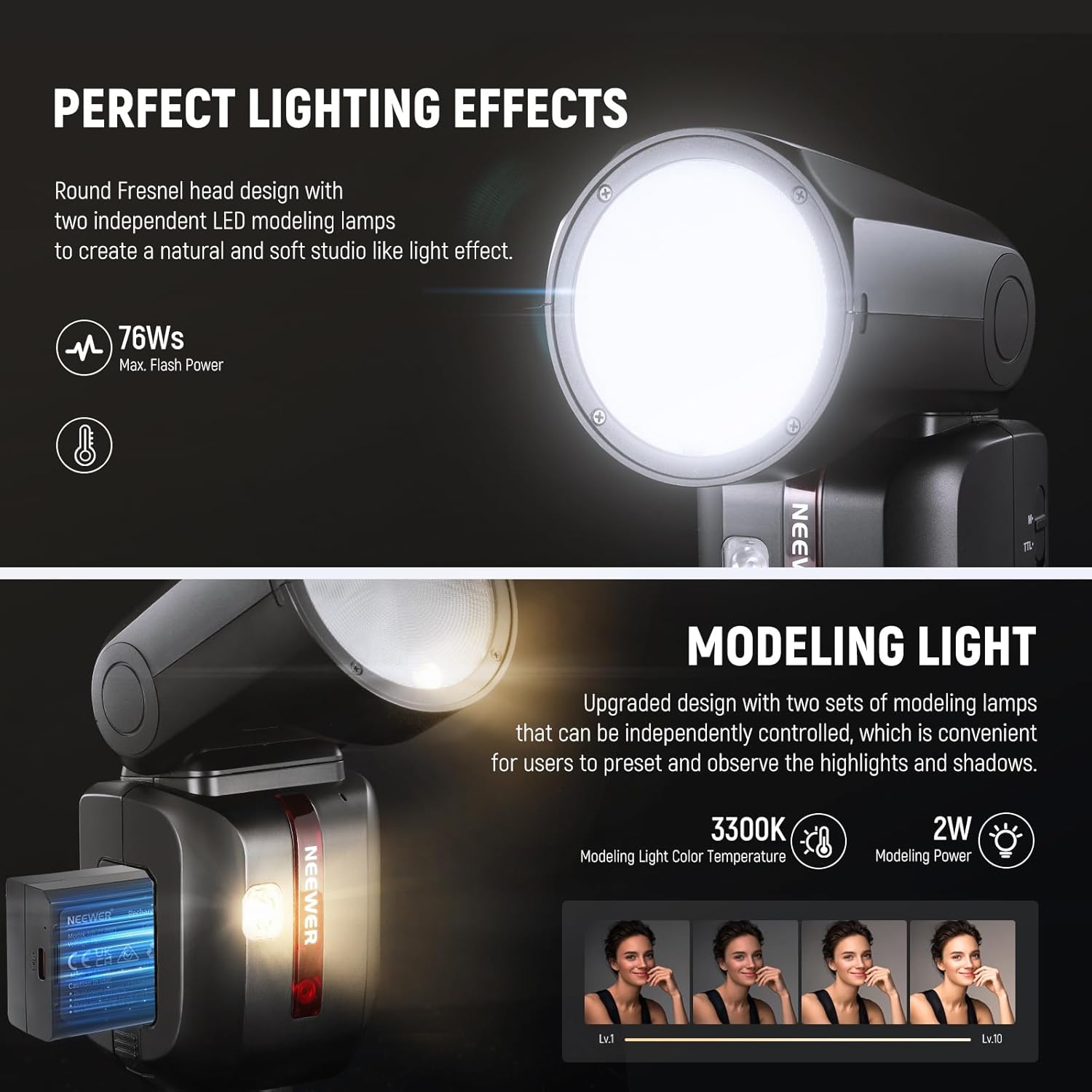
It also leans into practical lighting tweaks: there are two adjustable LED modelling lamps, a circular Fresnel head for a more even spread, and a head that can swivel and tilt for bounce use. If your workflow includes mixing ambient light with flash, or you like the idea of using HSS for brighter daylight scenes, the Z2-C is designed to support that.
What stands out in day-to-day use
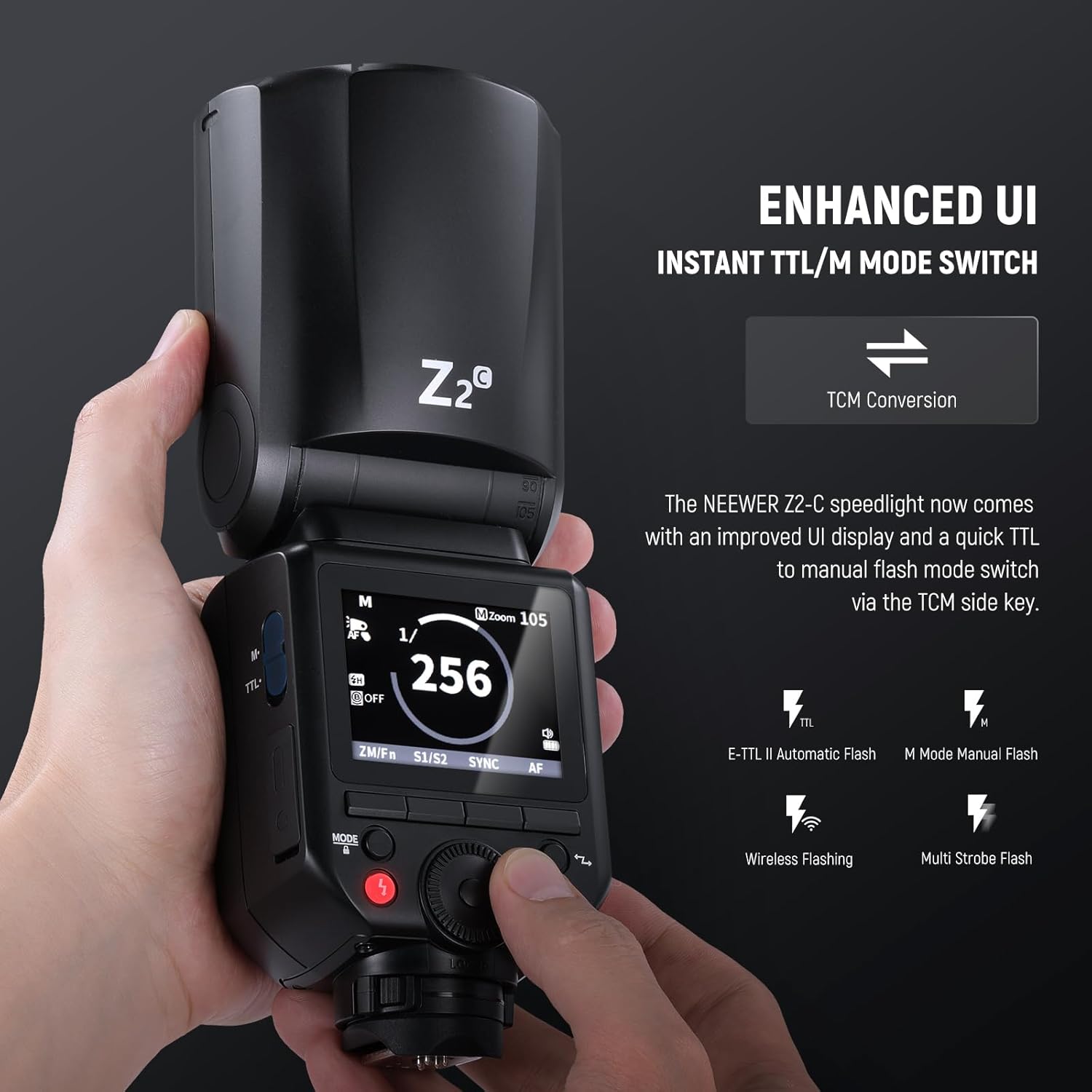
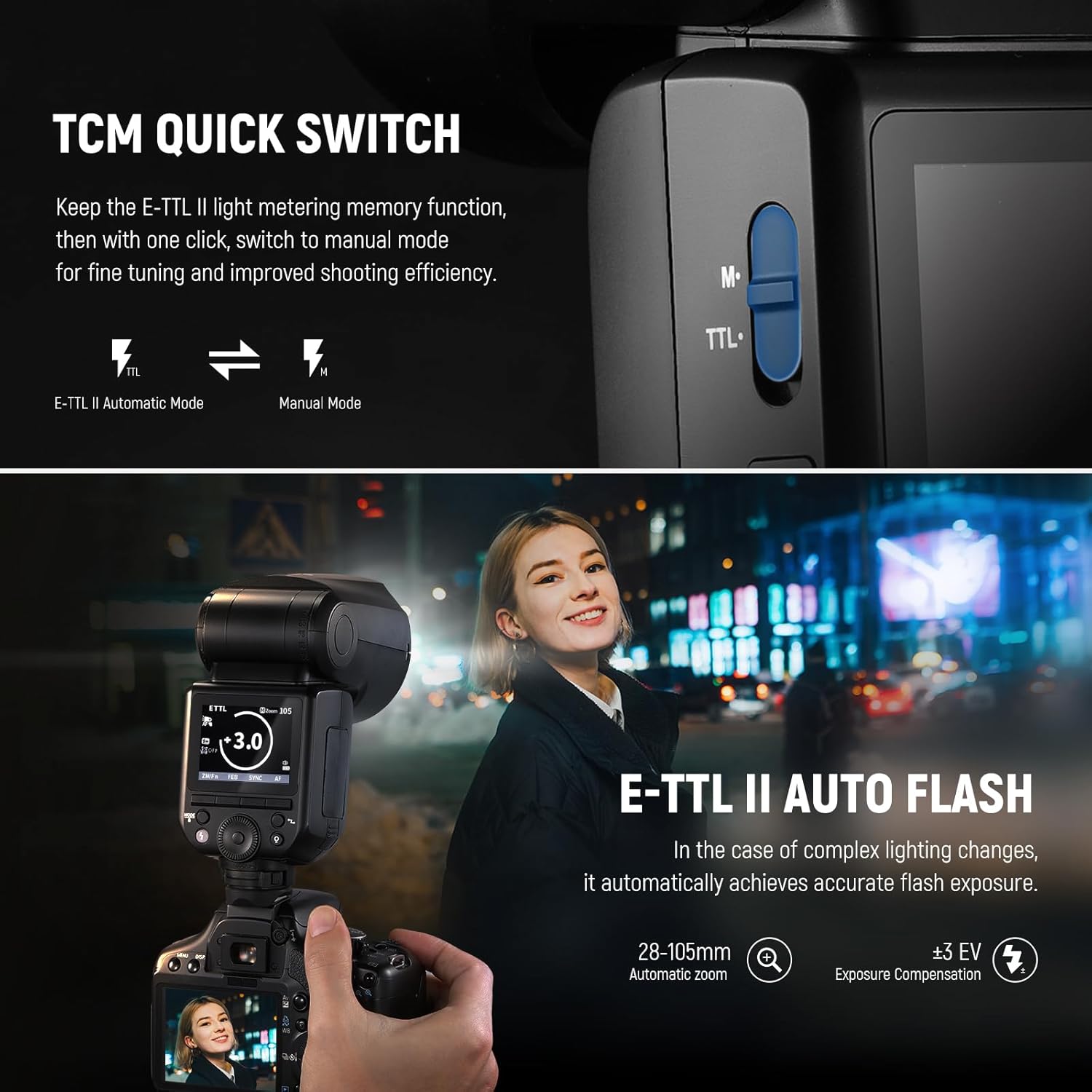
The most “useful” headline features here are the TTL/M switch and the wireless control approach. The TTL/M switch is meant to let you flip between modes quickly, which matters because flash settings often change while you’re shooting (think: switching from one lighting setup to another, or dialling down power for more subtle fill).
For lighting consistency, the flash uses automatic metering and supports front/rear curtain sync. It also offers flash exposure options like FEC and FEB/FEL, which are the sort of tools you’ll notice when you’re trying to keep skin tones or exposure looking stable across a burst.
There’s also HSS up to 1/8000s. In practical terms, that’s useful when you’re outdoors with a shutter speed you can’t easily drop—though it’s the kind of feature that only really helps if you routinely use wider apertures or need fast shutter speeds to manage motion.
Wireless 2.4G Q system: good for off-camera setups
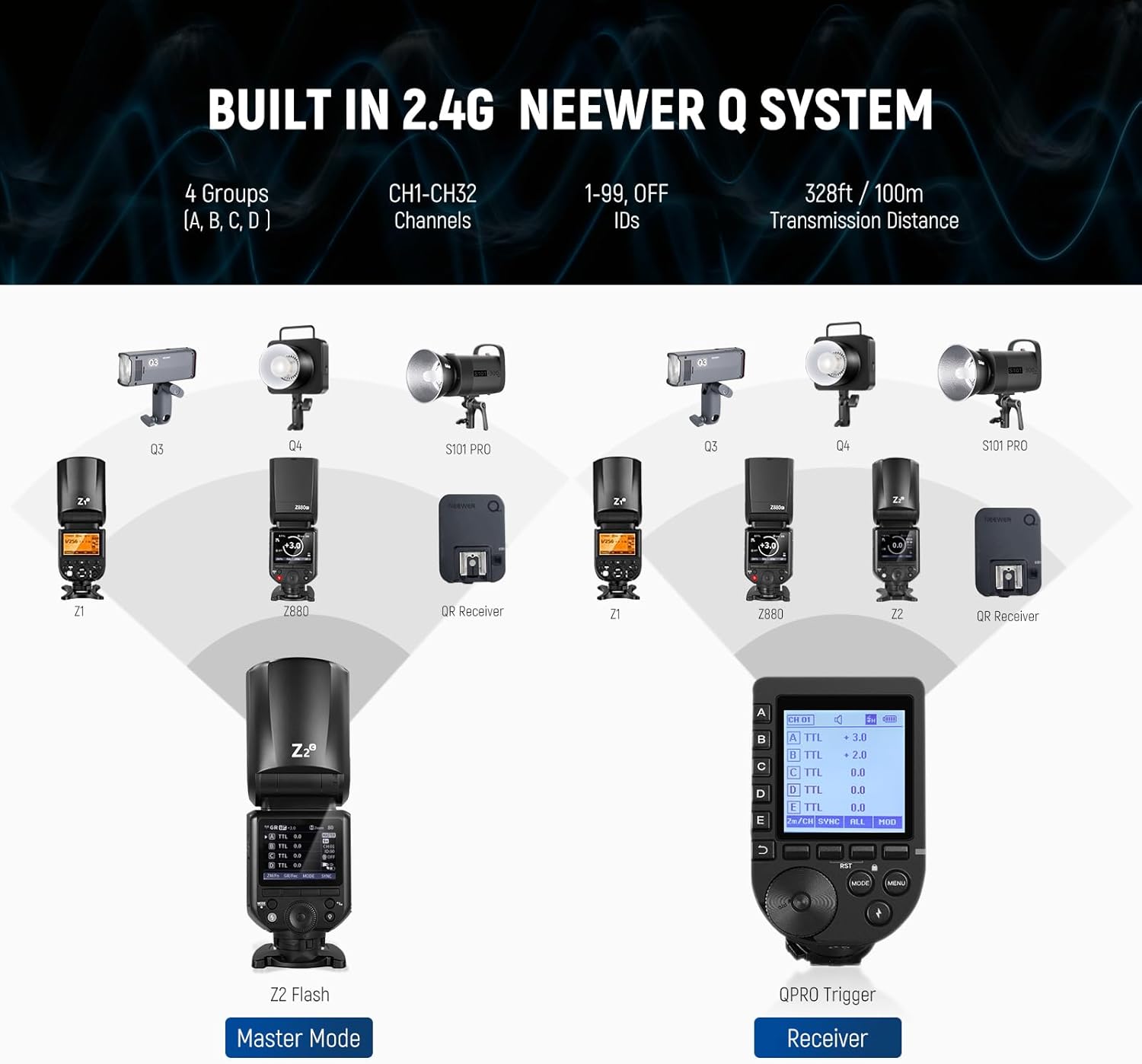
This speedlite includes a built-in 2.4G wireless Q system with four wireless control groups (A/B/C/D), 32 channels (1-32), and 99 IDs (1-99). It can also work as a master or slave unit for other Q-system flashes, with a stated range of up to 328 ft/100m in ideal conditions (no obstacles).
The key limitation to keep in mind: QPRO-C TTL transmitters are not included. So if you don’t already have the right Q system transmitter, you’ll want to check what you currently own before relying on wireless TTL.
The look you can expect: round head, Fresnel, and modelling lamps
The Z2-C uses a circular Fresnel flash head, which—based on the design intent—should help produce more even, softer light rather than harsh hotspots. That’s a plus for portraits and “stop and shoot” moments where you’re trying to keep the lighting flattering without over-complicating setups.
Two modelling lamps (each described as 2W, 3300K) sit around the head area, with 10 brightness levels (01-10). These can help you preview where light will land, especially when you’re using bounce or when you’re setting up a shot and want to judge direction and relative intensity.
Key specs that affect creative flexibility
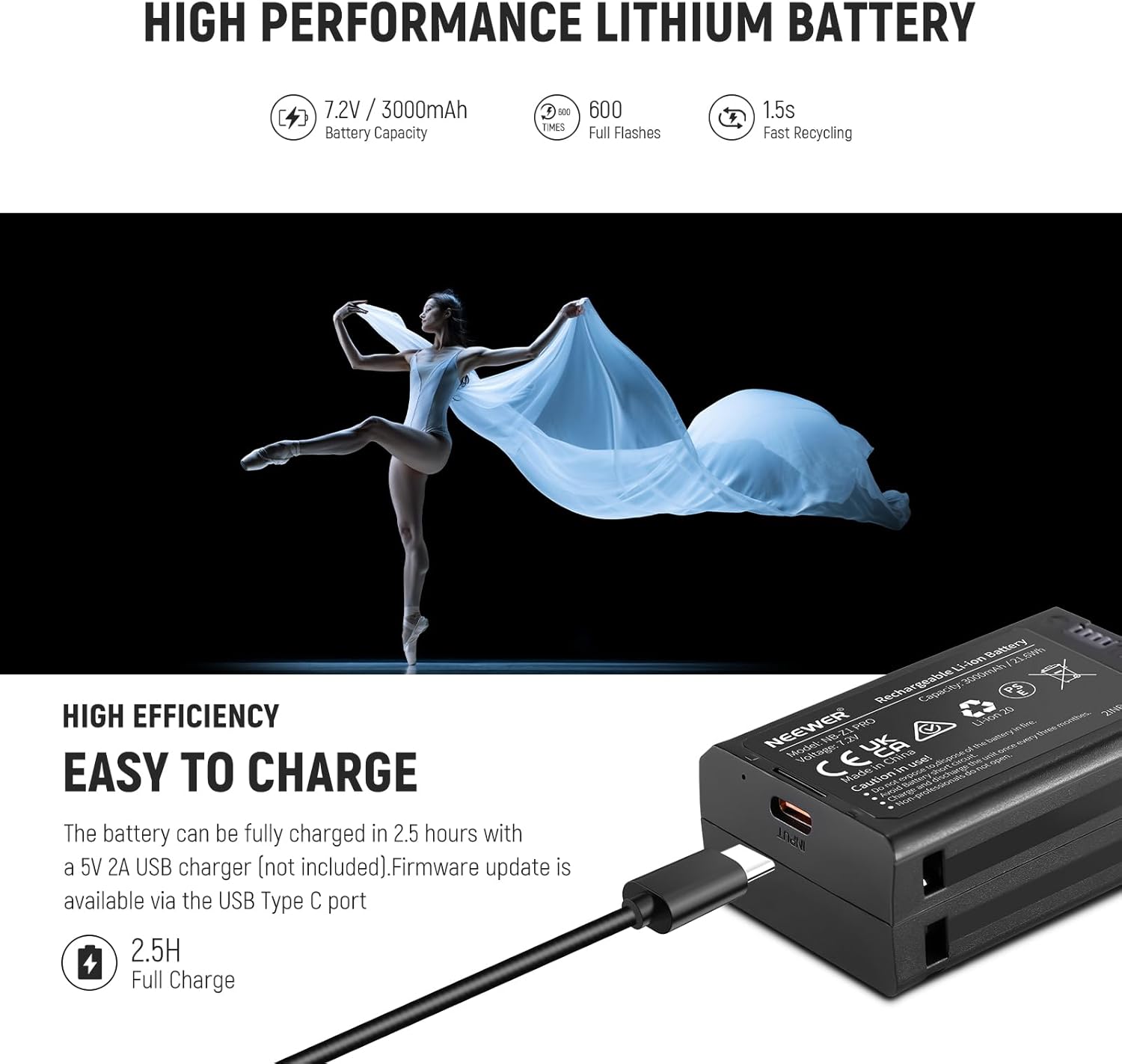
- Power and output: rated up to 76Ws maximum output and up to 600 full power flashes (with the stated battery capacity).
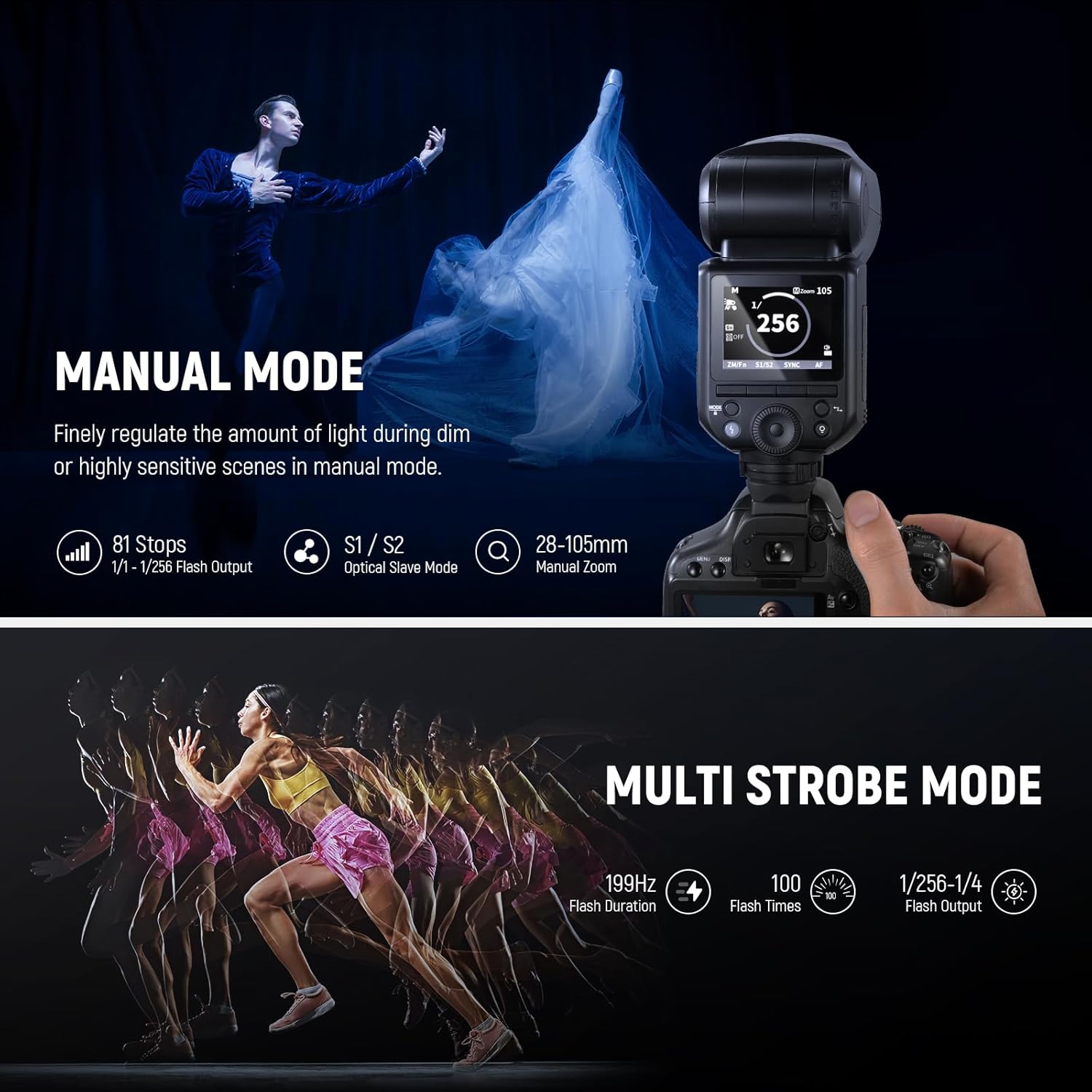
- Recycling and flash duration: listed as around 1.5s fast recycling, with flash duration given as 1/180–1/20000s.
- Dimming and focal range: manual dimming from 1/1 to 1/256, with 28–105mm focal length coverage.
- Sync and exposure tools: supports HSS (up to 1/8000s), front/rear curtain sync, plus FEC/FEB/FEL.
- Optical slave modes: S1/S2 optical slave options for triggering via light signals.
If you’re the type who changes focal length mid-session (or swaps between tighter and wider compositions), the 28–105mm coverage is one of those specs that quietly matters.
Where it may feel like a compromise
It’s not a “set-and-forget” flash with every possible ecosystem feature included. The wireless TTL angle depends on the Q system transmitter you have access to (since QPRO-C TTL transmitters aren’t included).
Also, while the flash offers stroboscopic flashes and modelling lamps, the practical performance you can squeeze out of any speedlite will always depend on your shooting style—high-speed action, heavy modifiers, and constant full-power use can highlight limits faster than light occasional bursts.
Finally, the Canon compatibility list is fairly broad, but it specifically notes it’s not compatible with RP R50. If you shoot on a newer Canon model outside the list, it’s worth double-checking before buying.
Usage tips to get the most from it
If you’re starting from scratch with TTL flash, a simple routine can help: use TTL for your first couple of frames to get a baseline exposure, then switch to manual if you want the flash output to stay consistent even when background brightness changes.
For a quick portrait example: tilt and swivel the round head for bounce—then use the modelling lamps to sense how the light direction changes. When you like the look, lock in your exposure settings (FEC/FEL-style adjustments) and avoid constantly chasing exposure on every shot.
And if you’re experimenting with off-camera lighting, set up your wireless groups (A/B/C/D) first, then tweak power in each group rather than changing everything at once.
Is it worth it?
It’s a solid pick if you want Canon-compatible TTL performance, HSS up to 1/8000s, and built-in 2.4G wireless control for off-camera speedlites—especially if you’re already in (or plan to use) a Q system setup.
You may want to skip it if you specifically need wireless TTL without owning the compatible Q transmitter (since transmitters aren’t included), or if you shoot a Canon body that falls outside the stated compatibility and you can’t confirm it will work.
Mini FAQ
What does the TTL/M switch do?
It lets you switch from TTL to M mode quickly (in the feature description), which can be handy when you’re changing lighting conditions mid-session.
Does it support off-camera flash?
Yes. It includes a built-in 2.4G wireless Q system with groups/channels/IDs, and it can operate as a master or slave within the stated range in ideal conditions.
Can it do HSS?
Yes. HSS is listed up to 1/8000s.
Are the modelling lamps adjustable?
Yes. There are two adjustable LED modelling lamps with 10 brightness levels.
Which Canon cameras is it not compatible with?
The description states it’s not compatible with RP R50.