

NEEWER 67mm Polarizing Filter (CPL) with 30-Layer Nano Coatings
Reviews
Price
Product description
What this CPL filter is for
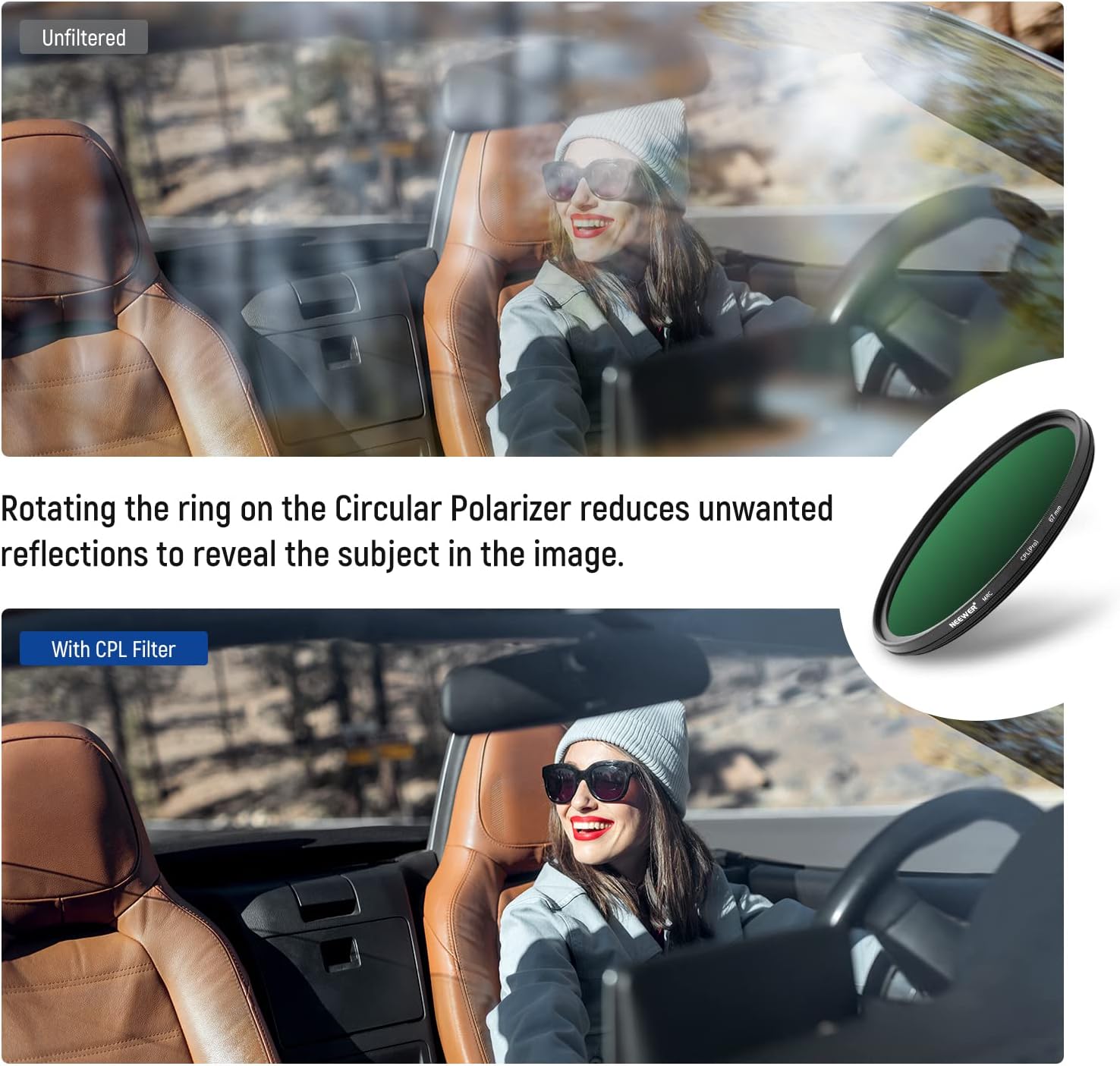
A polarising (CPL) filter is one of those accessories that can make a noticeable difference, especially when reflections get in the way. The NEEWER 67mm Polarizing Filter is designed to reduce glare from non-metallic surfaces (think water, glass, shiny rocks) and help boost contrast so skies look deeper and scenes feel a bit more defined.
On paper, the idea here is straightforward: use the polariser when you want cleaner tones and fewer washed-out highlights, then rotate the front ring to fine-tune the effect. It’s the sort of filter that suits landscape work, travel photography and everyday shooting outdoors—particularly when you’re dealing with bright light and lots of reflective surfaces.
Key points to expect in your photos
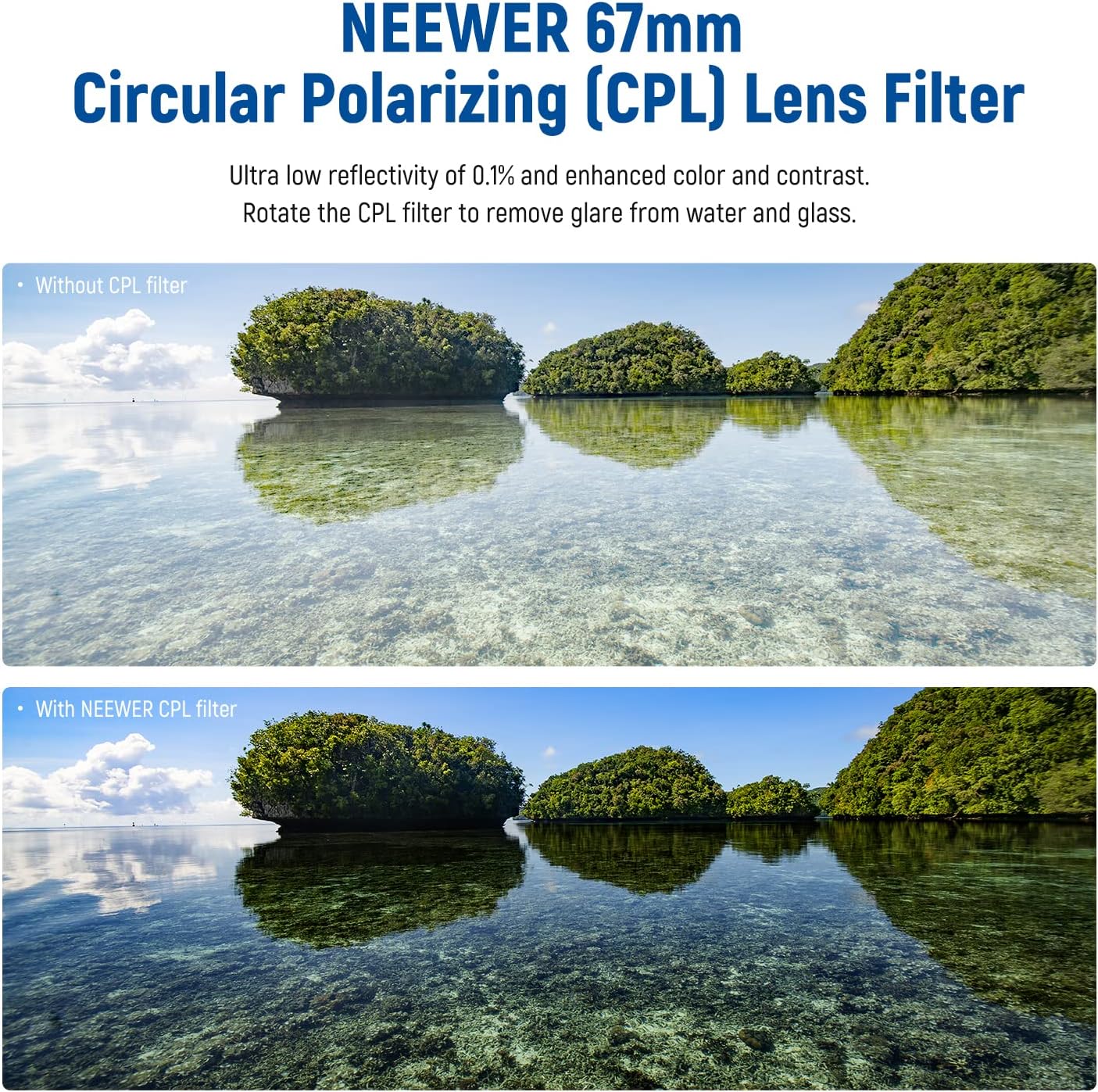
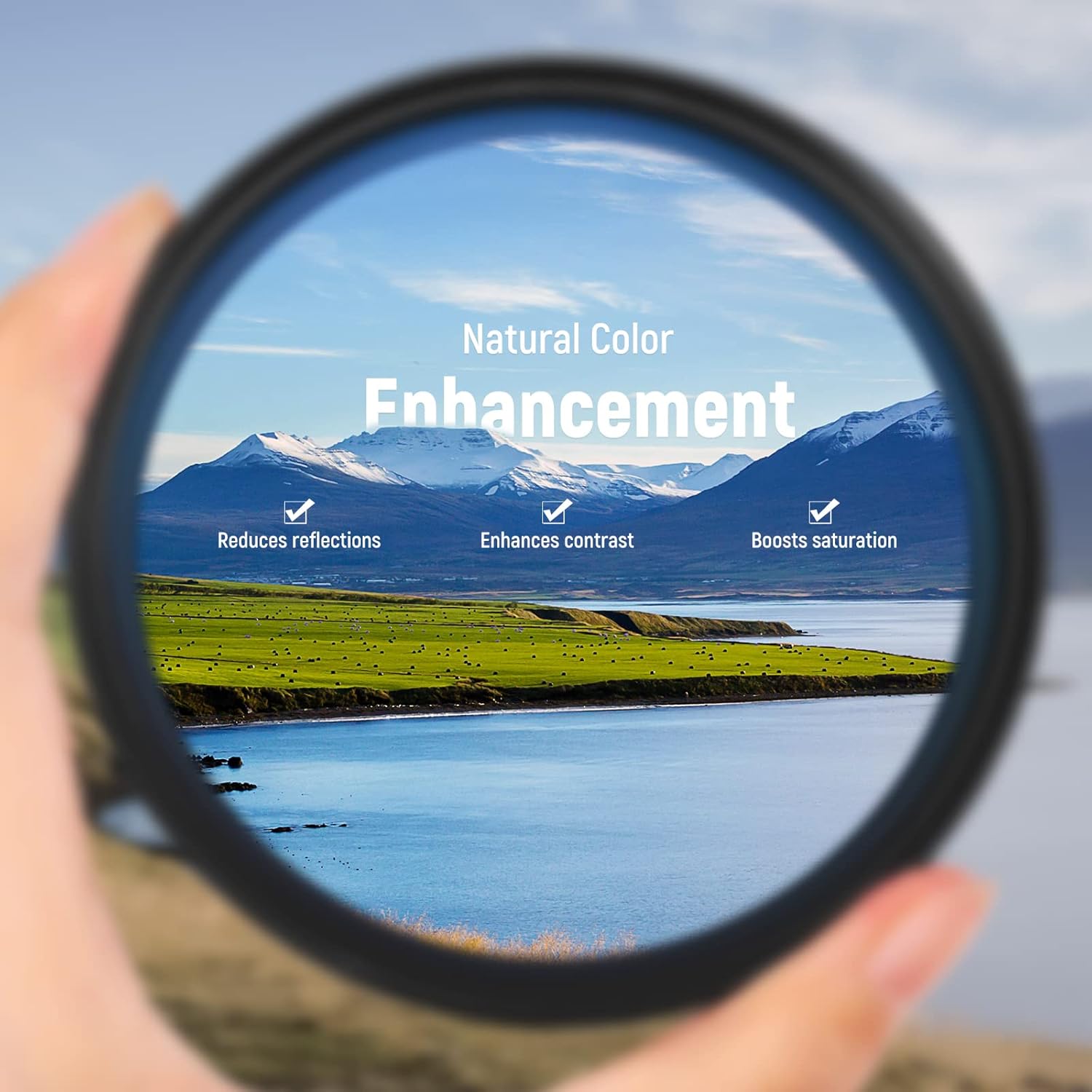
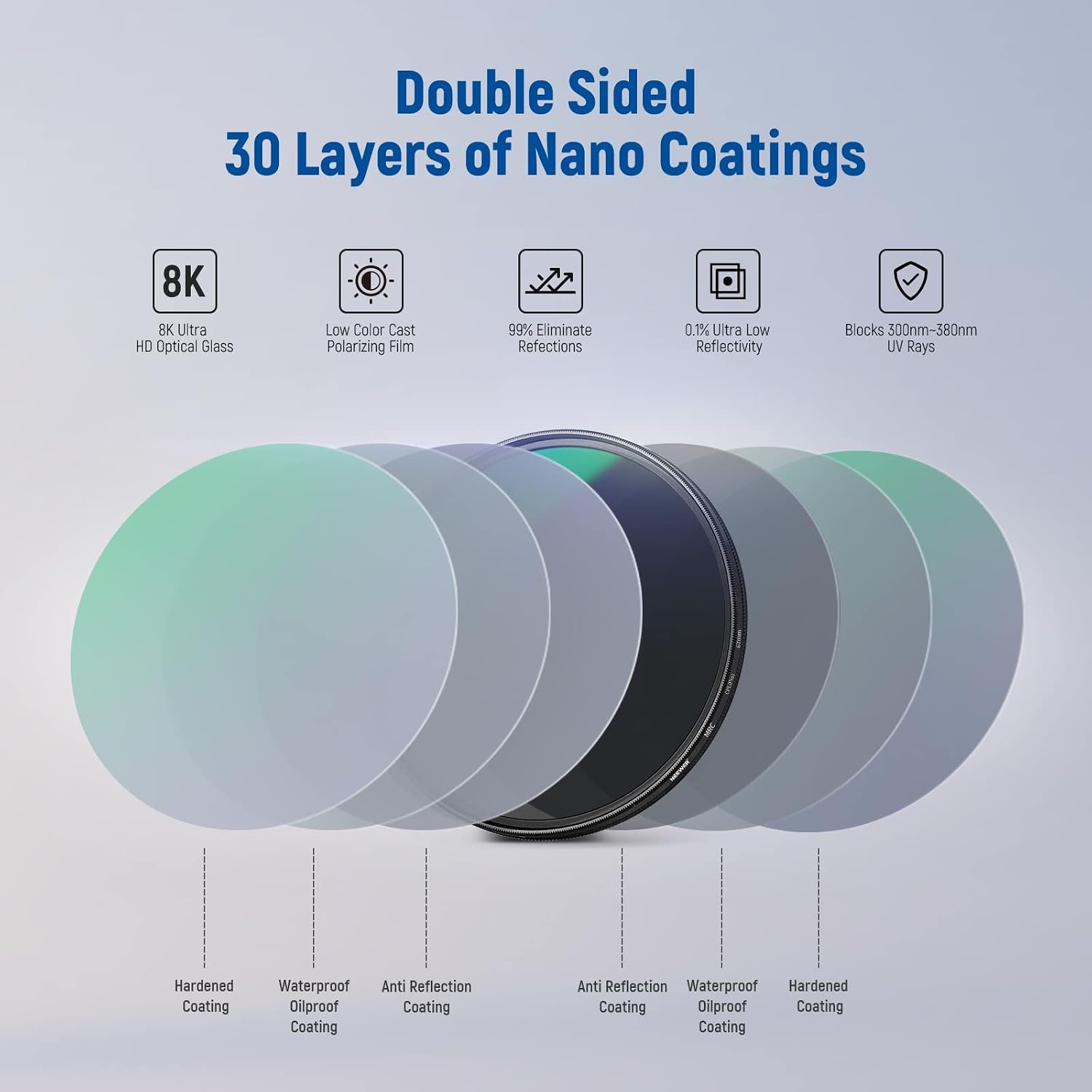
Where this CPL stands out in the product details is the polarising performance and the coating approach. It claims that the imported polarising film removes 99.9% of reflections from non-metallic surfaces, which lines up with the typical reason people buy CPLs in the first place. It also talks about improving contrast and saturation for richer colour and fine detail—so it’s aimed at making the final image look more “sorted”, not just brighter.
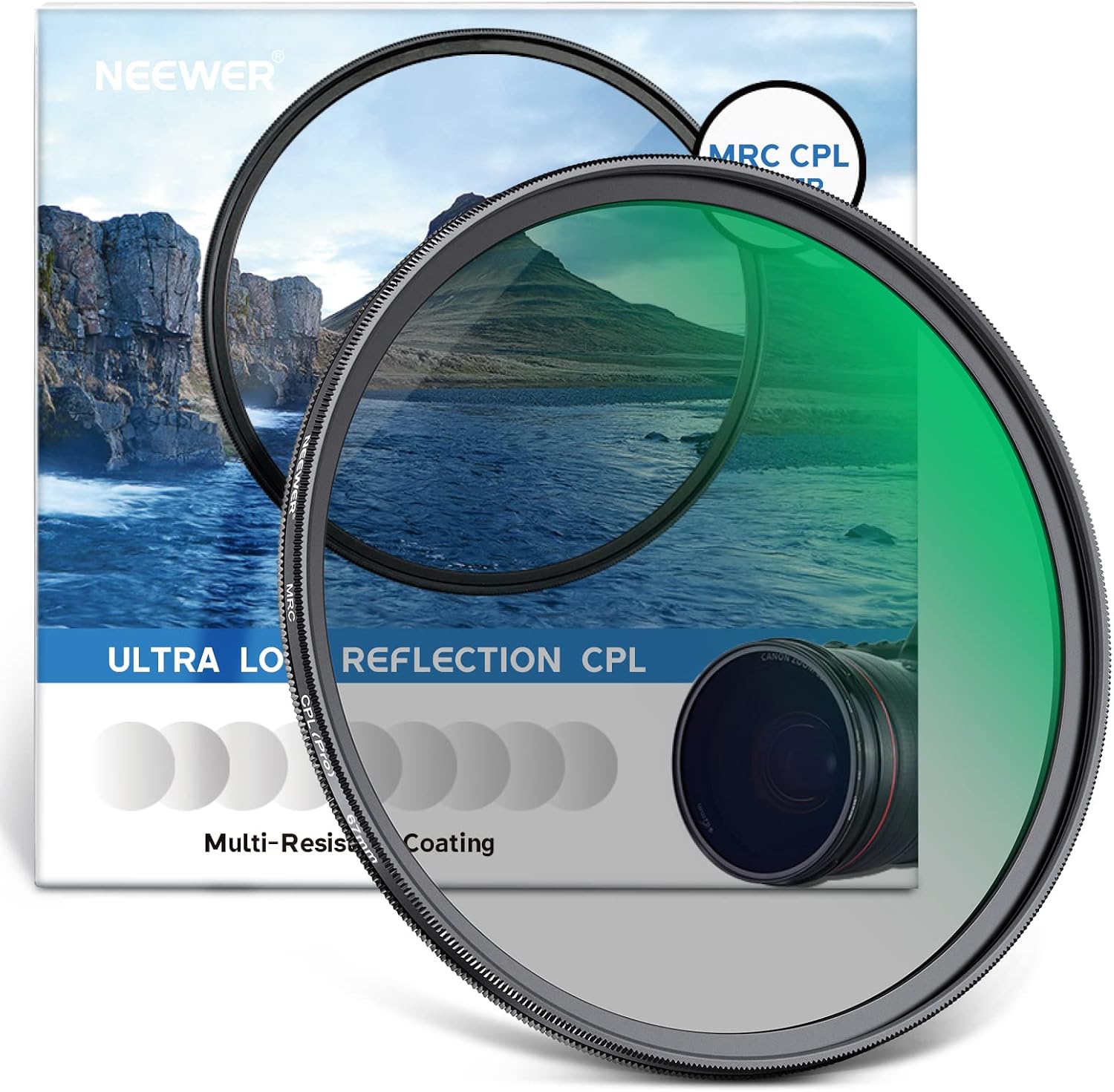
It also includes an “HD” angle via an optical glass polariser and a stated low reflectance (less than 0.1%). The intention is fewer flare-style distractions and ghosting, plus a more accurate colour reproduction while you’re out shooting.
One small limitation to keep in mind: CPL filters can’t magically remove reflections from everything (especially metallic surfaces), and in some lighting situations the effect may be subtle. If your scenes are mostly flat, overcast, and reflection-free, you might not see the big leap people expect.
Coatings and handling: easier cleaning, less hassle
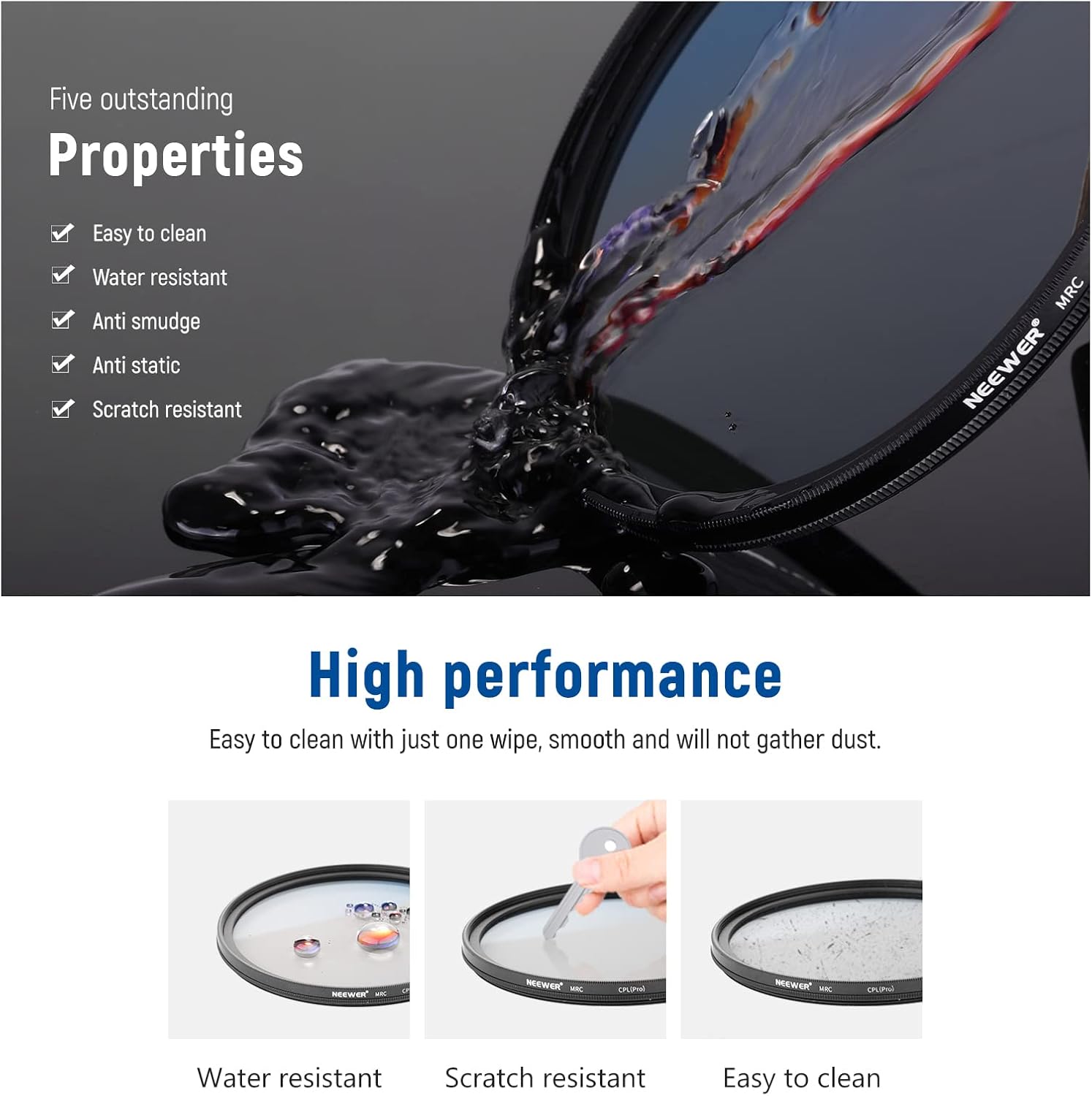
This filter is described as multi-resistant thanks to coatings with water-repellent, oleophobic, anti-static and scratch-resistant properties. Practically, that’s the sort of wording that matters when you’re shooting outdoors where dust, splashes and finger marks happen.
The benefit you can realistically expect is less cling and easier wipe-down—useful when you’re switching between handheld shots and setting up on location. It’s not a replacement for careful lens care, but it’s the right direction if you want a polariser that’s not a chore to maintain.
It also mentions resistance to things like salt water, dust and “other abrasive conditions”. Again, that’s more about making the filter more forgiving in the field than promising it’s indestructible.
Build and front-ring design (why it matters)
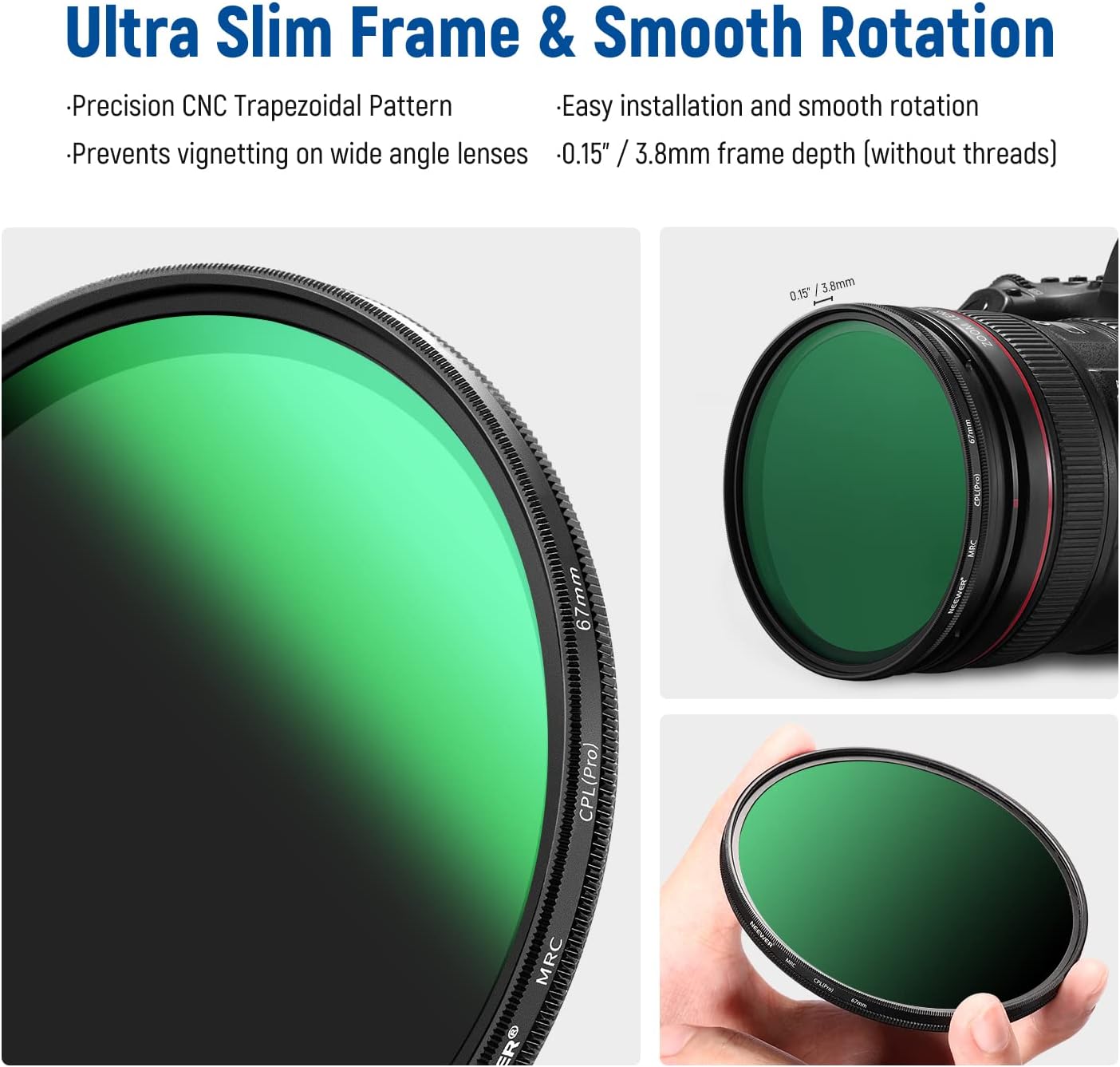
The frame is described as ultrathin: 5.9mm and a 3.8mm front bevel. The stated purpose is to avoid vignetting (“viñetas”) on wide-angle lenses. That matters because a lot of polarising filters—especially thicker ones—can show dark corners when the lens has a wider field of view.
It also notes a smooth rotation mechanism, with straight ridges for easier turning. CPL use is all about subtle rotation, so if the ring feels stiff or awkward, it can be annoying mid-shoot. Here, the product positions the ring as easy to operate, which is a plus.
What’s in the box and what to check before buying
The pack includes 1 x 67mm CPL filter, a protective case and a cleaning cloth. That’s a practical starter set, though you’ll still want to use your usual lens-cleaning habits.
Before you buy, the big thing to confirm is compatibility by size. This is a 67mm filter, so it only makes sense if your lens accepts 67mm filters (or if you already use a matching step-up/adapter approach—if you do). If your lens thread size isn’t 67mm, it won’t screw on directly.
Also worth checking: how you shoot. If you mostly work with diffuse light indoors, you may not benefit from the polarisation effect as much as when shooting bright outdoor scenes with water, skies and reflective surfaces.
Best use cases (with a quick real-world example)
This CPL is aimed at situations where reflections reduce clarity. A simple example: you’re photographing a coastal scene on a sunny day. Without a polariser, the water can look bright and milky with glare. With a CPL, you rotate until the glare drops and the tonal contrast improves—ripples and darker water areas can become more visible, and the sky can look more saturated.
It’s also the kind of filter that can help with: - Blue-sky and cloud scenes where glare steals contrast - Water, snow and foliage scenes where highlights wash out colour - Travel landscapes where you want more “depth” without editing heavy-handedly
Should you buy it?
It makes sense if you own a compatible 67mm lens and you regularly shoot outdoor scenes where reflections are a problem—especially skies, water and other non-metallic shiny surfaces. The multi-resistant coating story, thin frame design and smooth rotation are all the right kind of details for a CPL you’ll actually use more than once a year.
It may not be a great match if you rarely shoot in bright, reflective conditions, or if your main subjects are indoors or mostly non-reflective. And if your lens filter thread isn’t 67mm, you’ll need to look at a different size (or accept that you’re looking at a mismatch until you solve the thread issue).
A final caution with CPLs in general: the effect depends on angle and lighting, so if you’re expecting a guaranteed “instant wow” in every scene, you could be disappointed. But for the right conditions, this one is positioned as a straightforward, field-friendly polariser rather than a gimmick.
Quick FAQ
Will a CPL filter work on any lens?
This one is for 67mm filter thread sizes. If your lens doesn’t take 67mm filters, it won’t fit directly.
What does the “polarising” part actually change?
It’s meant to reduce glare from non-metallic surfaces and improve contrast, often making skies look richer and highlights less overpowering.
Is it easy to rotate while shooting?
The design is described as offering smooth rotation using straight ridges, which is useful because CPL effects are adjusted by turning the ring.
Does the coating replace careful cleaning?
Not really. The coating claims should help with wiping and resisting marks, but you’ll still want to treat it like a lens filter and keep cleaning gentle.
Is the thin frame meant for wide-angle lenses?
The product specifically mentions helping avoid vignetting on wide-angle lenses, which is often a concern with thicker filters.