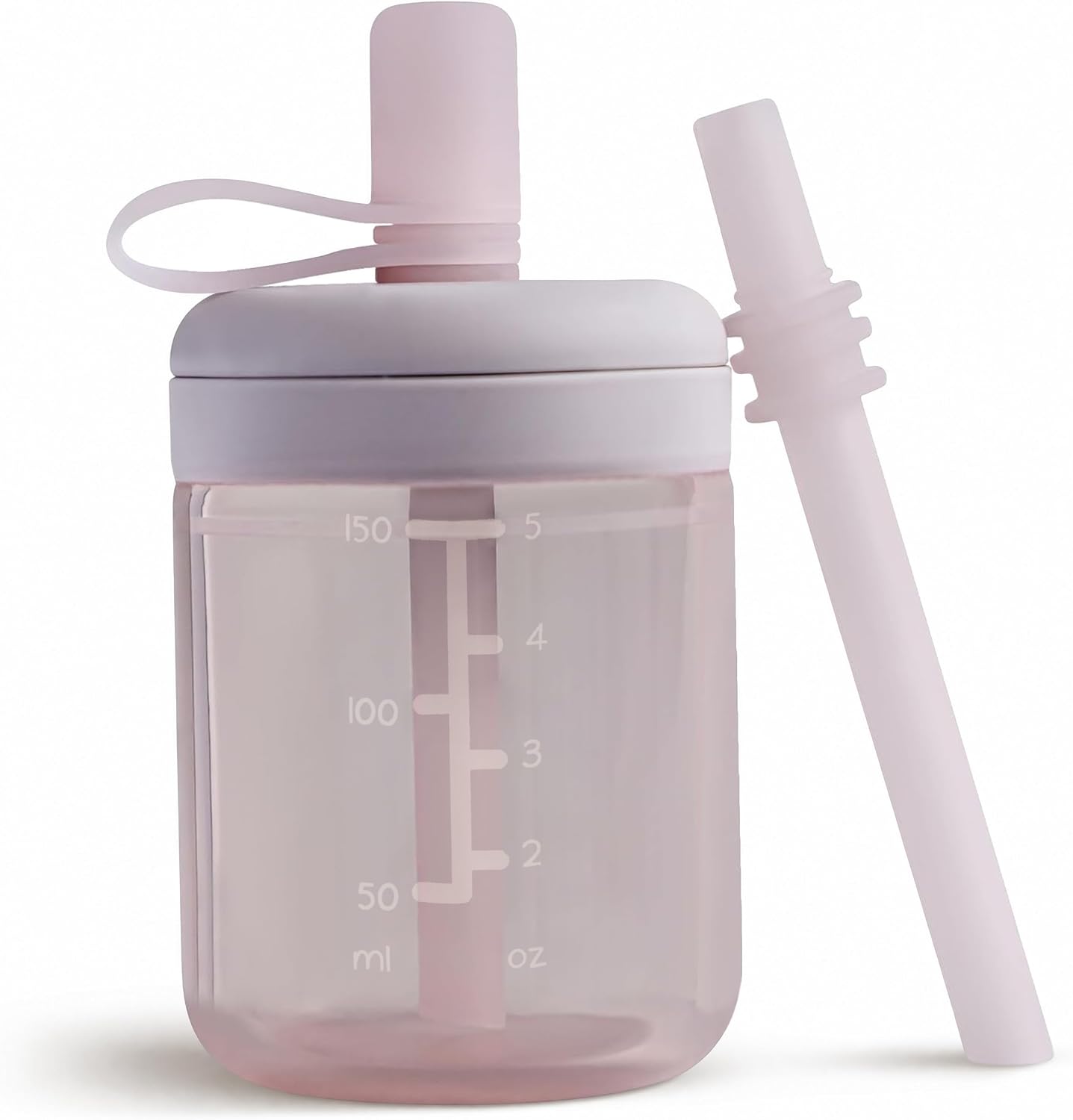
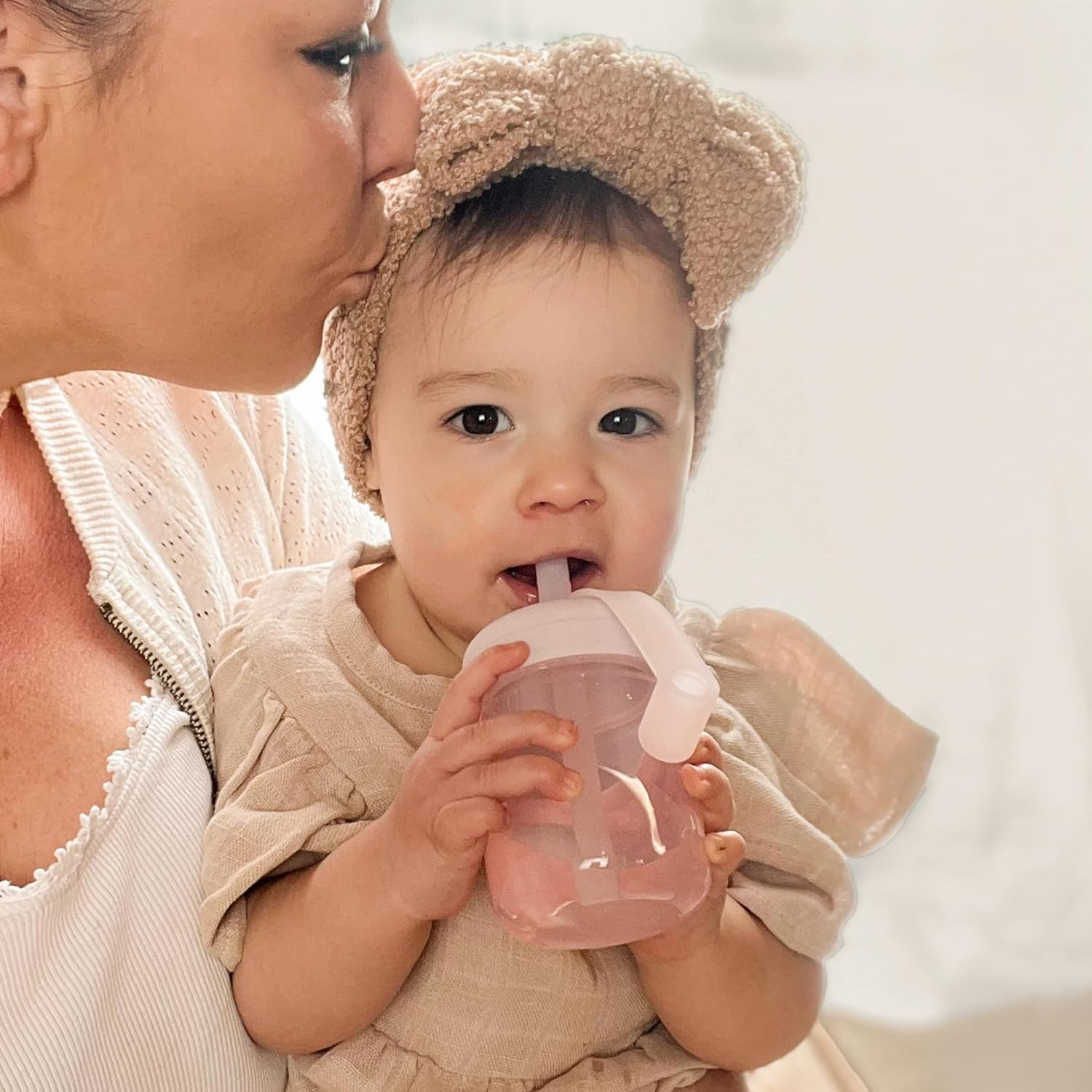
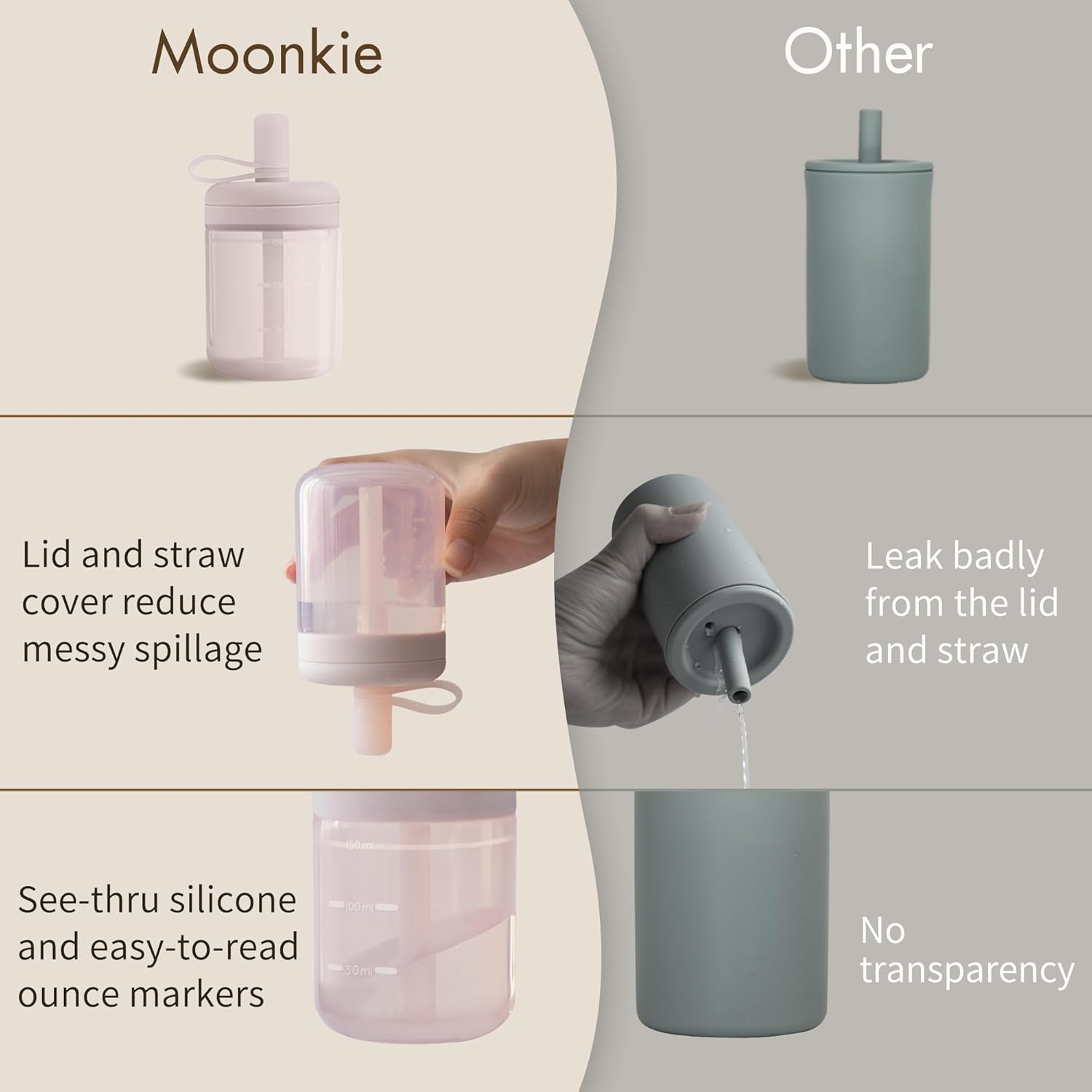
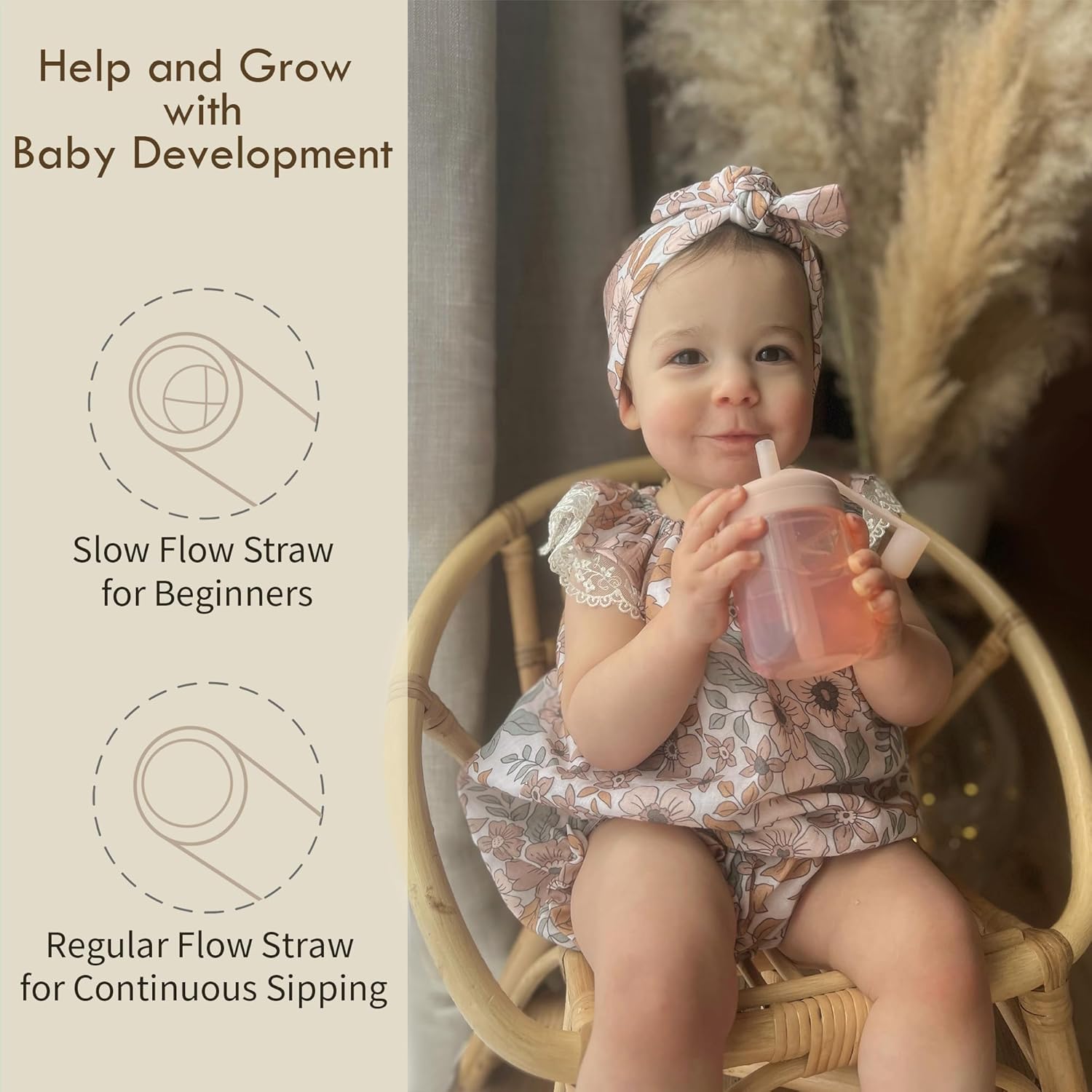
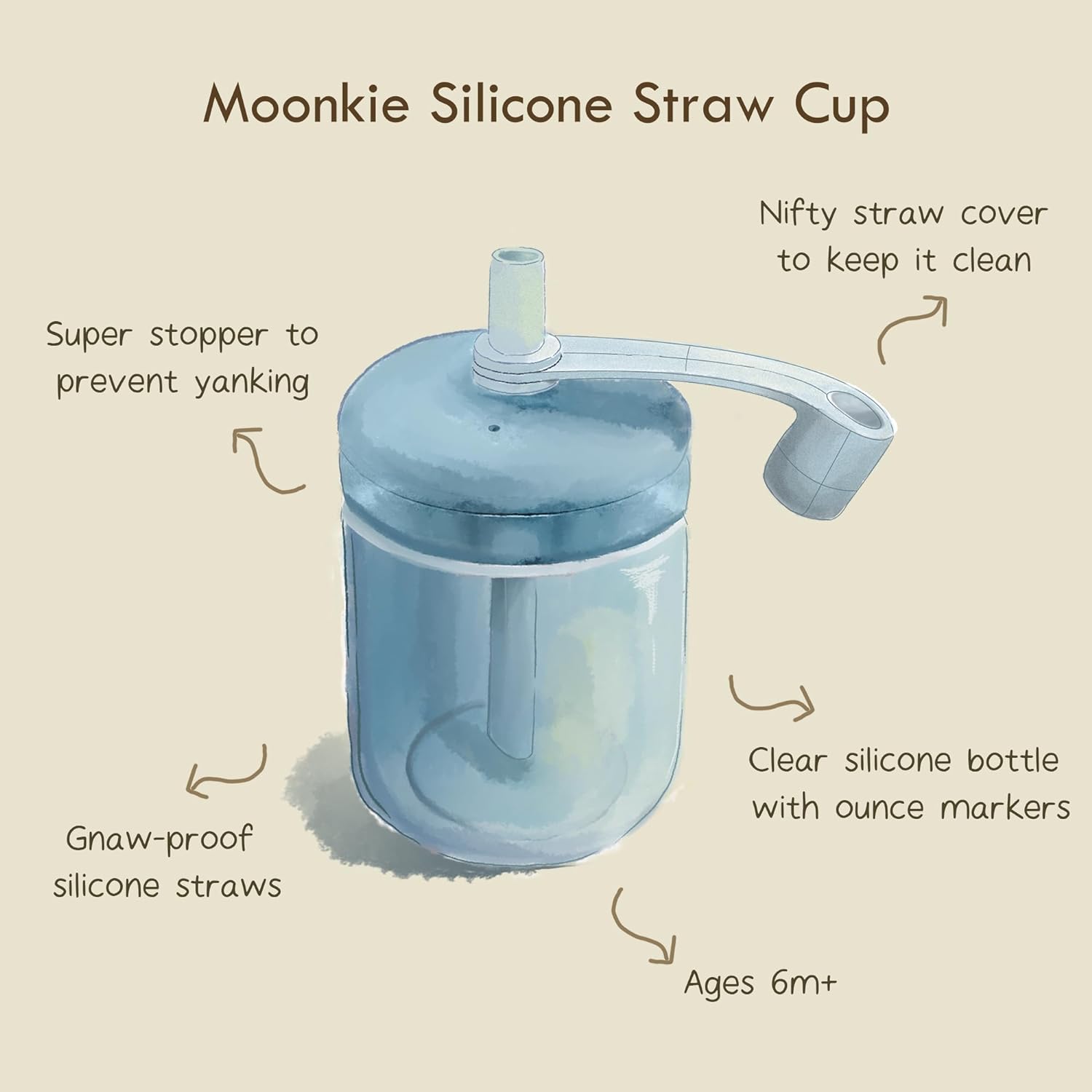
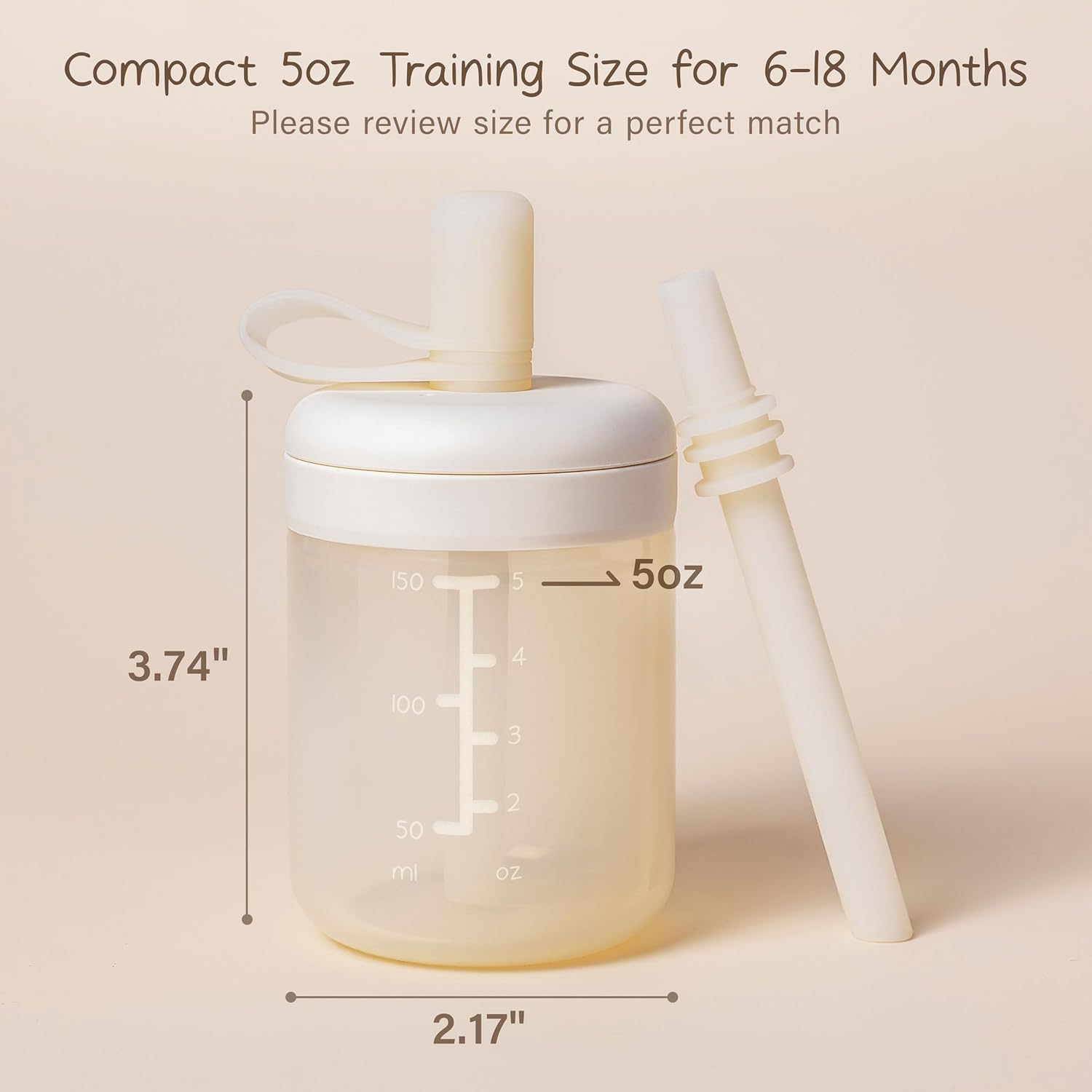
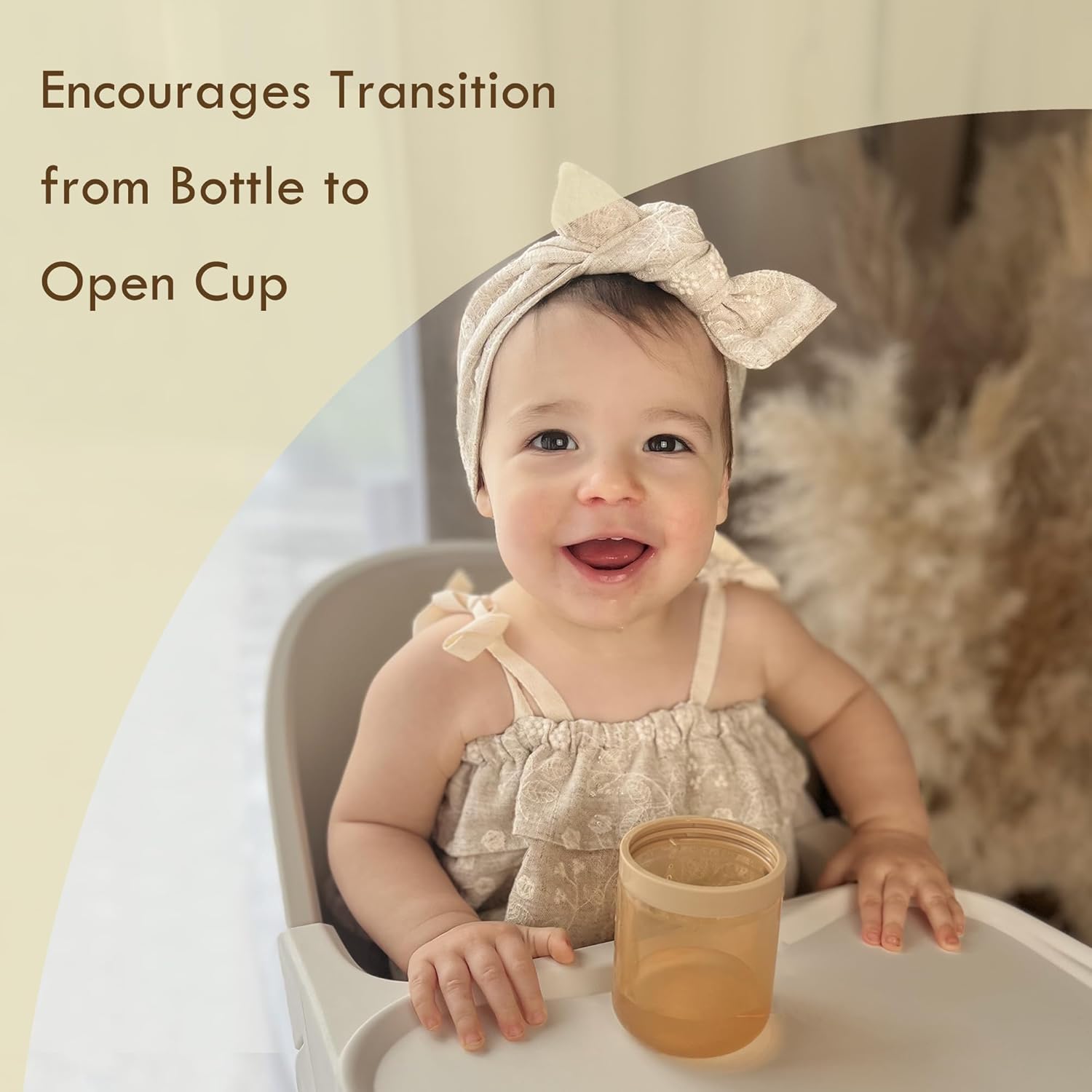
What this is and what it aims to solve\nMoonkie’s silicone straw cup is designed as a transitional sippy cup for toddlers, intended to ease the move away from the bottle while minimising spillages. The cup features a clear silicone body so you can see how much liquid is left without having to pop the lid, and a double-seal design aimed at reducing leaks if the cup gets tipped or dropped. With two straw configurations—one with a built-in valve for a slower, controlled flow and one offering a faster sip—it’s meant to grow with a child as their drinking needs evolve. The 150ml capacity is typical for early stages of independent drinking and aligns with cautious daytime hydration without encouraging overeager sipping.\n\n## Material and safety considerations\nMoonkie handpicks 100% food-grade silicone, and the cup is described as BPA, PVC, phthalate and heavy metal-free. In practice, this kind of material is valued for its soft texture on developing teeth and gums, while being sturdy enough to withstand the usual toddler handling. The claim of dishwasher safety simplifies cleaning, a common concern for busy parents. However, as with any small-part product, it’s sensible to ensure the lid seals remain intact after frequent washing and to inspect silicone for any signs of wear over time.\n\n## How it works in daily use\nThe two-flow straw options give you a practical way to tailor the experience to a child’s age and confidence. Start with the slower flow to minimise spills during the early weeks, then switch to the higher-flow straw as your child becomes more proficient. The built-in straw stoppers keep the straw in place during meals or travel, while a straw cover helps maintain hygiene when the cup is not in use. The leak-resistant design rests on a double-seal closure, which is helpful for little hands that may occasionally tip the cup.\n\n## What stands out in terms of usability\nOn the positives, the transparent body is convenient for quick checks of liquid level, and the soft silicone feel is gentle on tiny teeth. The two-flow approach is practical for a product aimed at multiple stages of early drinking. On the downside, the performance of the seal will depend on proper assembly and care, if the seals wear or misalign, the leak protection could be compromised. The 150ml capacity is appropriate for beginners but may feel small as a child grows and drinks more per feed.\n\n## Who this is for (and who it isn’t)\nThis cup is well suited for parents seeking a gentle transition from bottle to cup, appreciating a tangible grip and a forgiving seal. It may suit toddlers who benefit from visible fill levels and a softer mouthfeel from silicone in the mouth. If you favour larger volumes or very fast-flow sipping, you might look for a higher-capacity cup or a different flow configuration. It’s also worth noting that real-world leakage prevention depends on correct assembly and maintenance.\n\n## When it makes sense to buy\nChoose this Moonkie cup if you want a silicone, dishwasher-friendly option with a dual-flow straw and a transparent body for monitoring intake. It’s a reasonable pick for the 6–18 months window described in the base description, especially if you value gradual transition, hygiene features (stoppers and cover) and a design that aims to reduce tipping.\n\n## When you might want to skip it\nIf you’re after a cup with a higher capacity or a single, high-flow straw for faster sipping, this model may feel limiting. If you’re not able to regularly inspect and maintain the seals, or if you expect more rigorous drop pressure testing, you might consider other designs that emphasise different strengths.\n\n## What to review before purchasing\n- Confirm the two straw configurations align with your child’s current needs and adjust as they progress.\n- Check that the double-seal closure remains reliable after repeated washing and handling.\n- Ensure the lid seals and straw stoppers are present and functioning to prevent accidental removal by a curious toddler.\n- Consider the 150ml capacity in relation to your child’s hydration needs and mealtime routines.\n\n## Practical usage example\nImagine a morning routine: your toddler uses the slower-flow straw first when learning to drink from a cup, then shifts to the faster-flow straw as confidence grows. The visible liquid level helps you gauge when to offer a top-up, while the straw cover keeps the unit clean during car journeys.\n\n## Quick comparison of approaches\nIf you prefer metal or harder plastics with mechanical spillage protections, this silicone cup sits in a mid-range space: soft to the bite, approachable for tiny mouths, yet robust enough for daily toddler use. It works as a bridge between bottle and open cup, without being a large, heavy transition piece.\n\n## FAQ (based on available data)\n- Is the cup dishwasher safe? Yes, it is described as 100% dishwasher safe, which can simplify cleaning for busy parents.\n- What capacity does it hold? 150ml.\n- How many flow options are there? Two straw configurations, one with a built-in valve for slower flow and one with a higher-flow option.\n\n## Is it worth it?\nWorth considering if you prioritise a silicone, leak-aware transition cup with adjustable flow and straightforward cleaning, then this Moonkie model could fit your daily routine. It helps with grip, helps minimise spills, and supports a staged approach to independent drinking. It isn’t necessarily a universal solution for every toddler, and you may want to weigh the value of the two-flow setup against your child’s current drinking pace and a potential preference for speed.