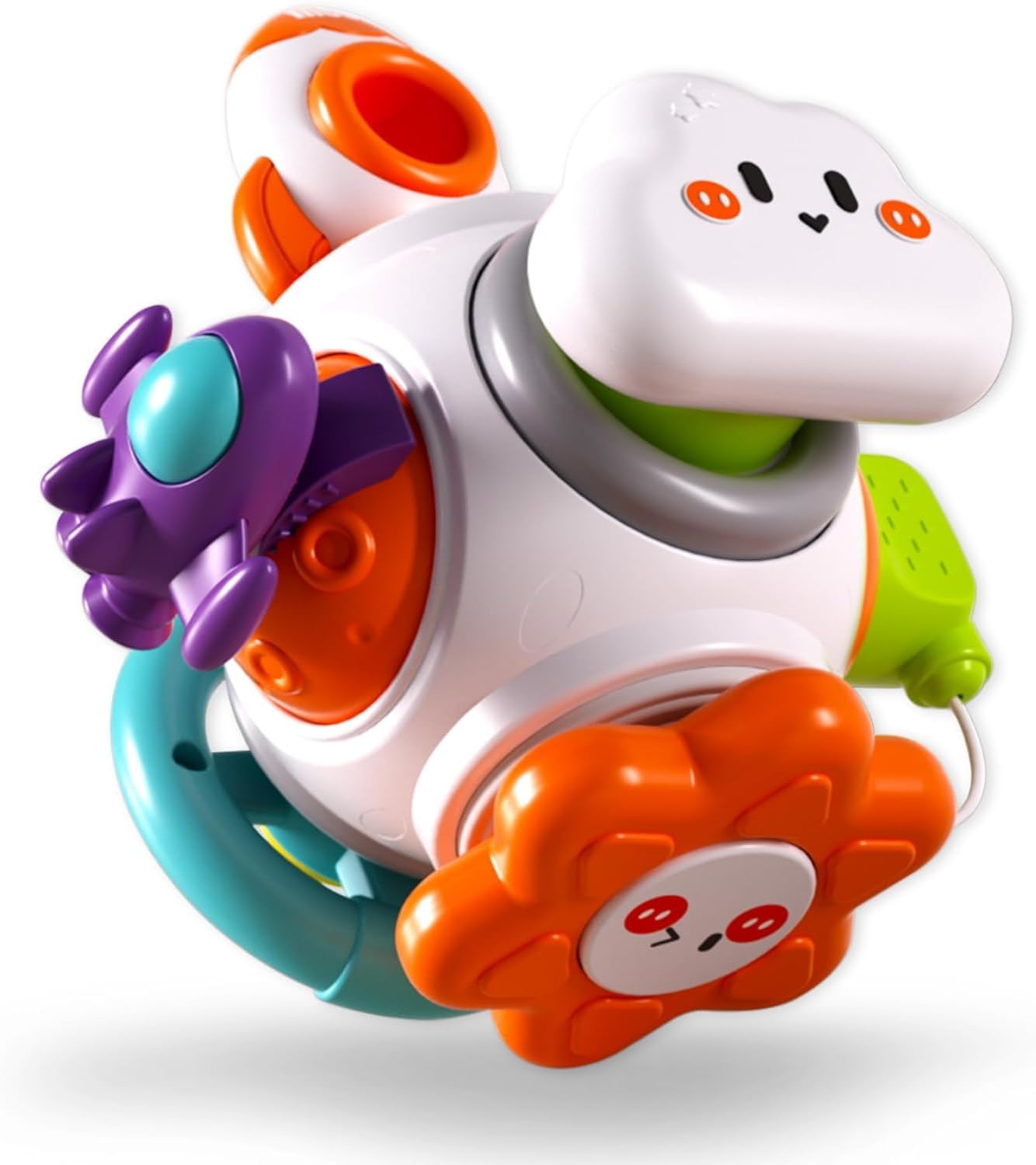
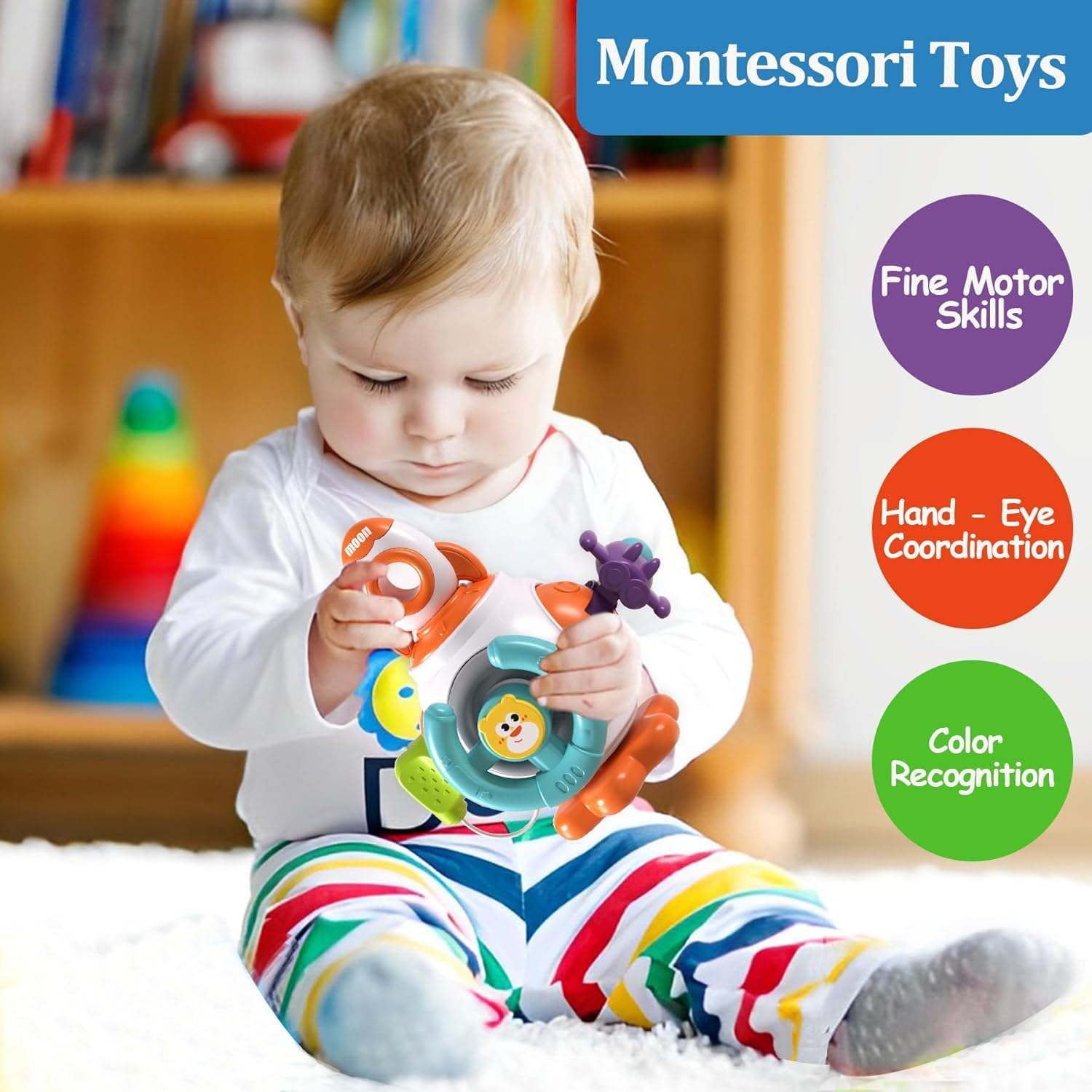
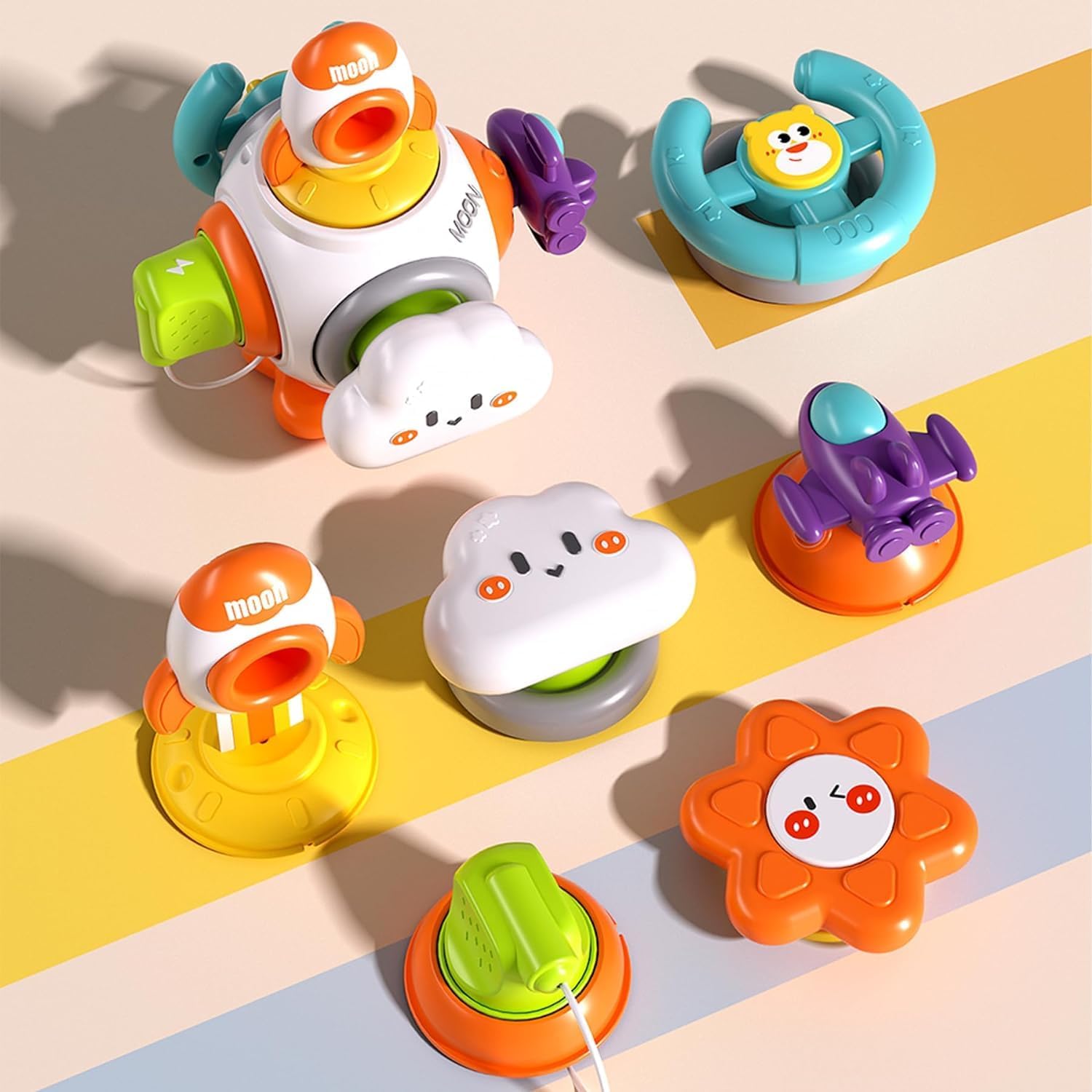
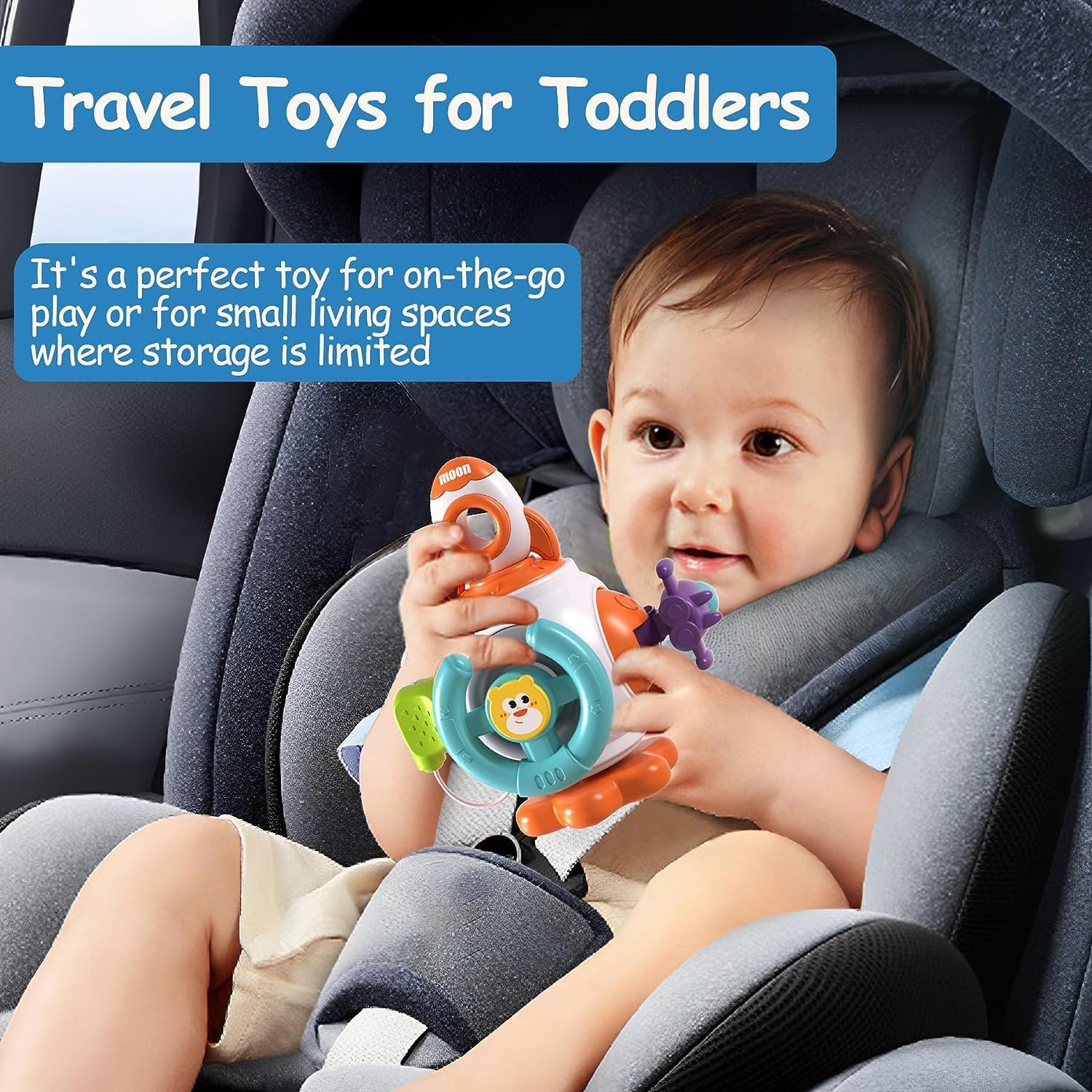
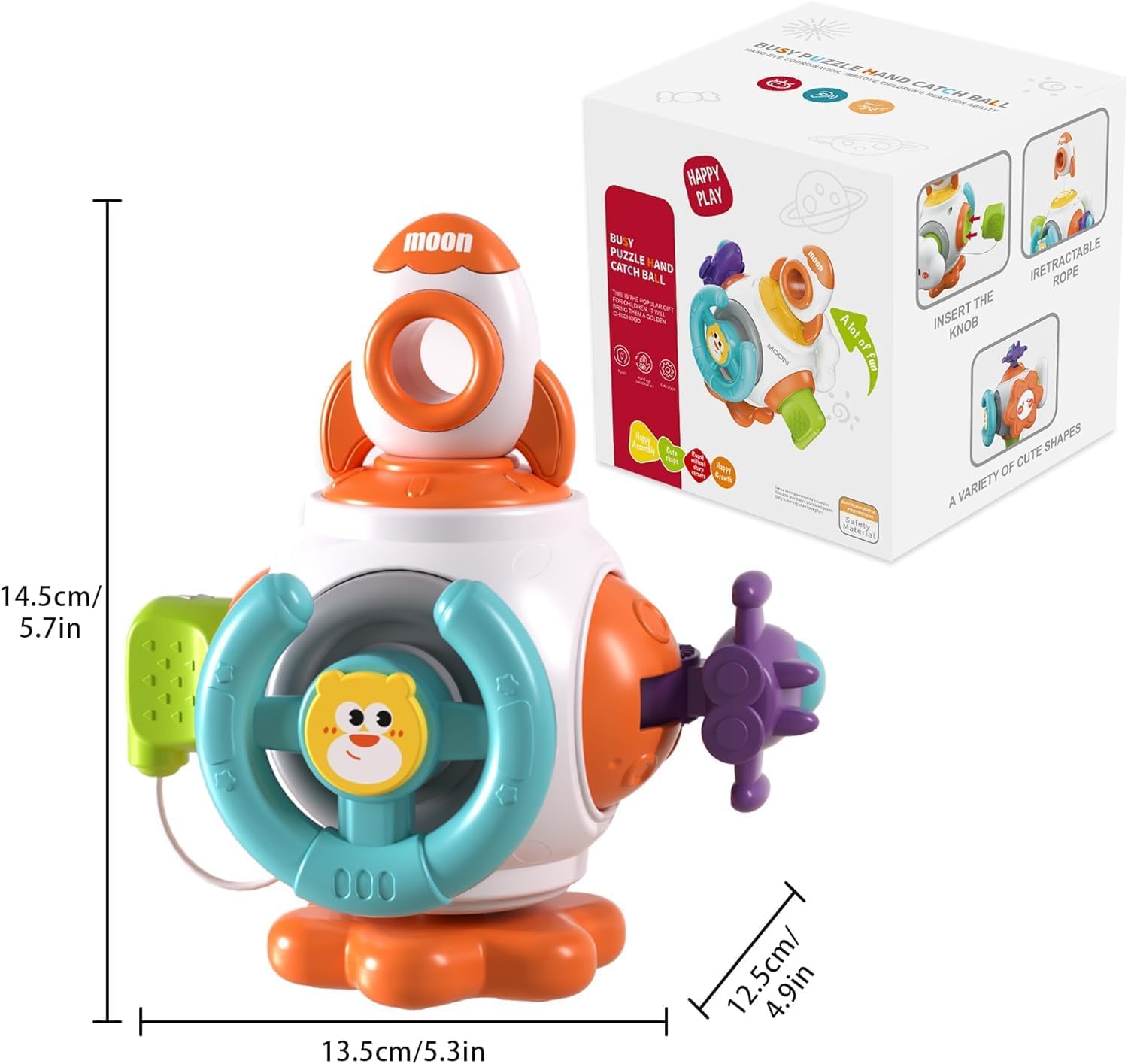
What it is and what it’s for\nThis travel-friendly Montessori sensory busy board cube is designed for toddlers aged 18 months and up. It packs six activity panels into a compact, portable cube, offering a variety of hands-on experiences to keep little ones engaged on journeys or at home. The included features—an extendable rocket, a rotating steering wheel, a simulated plug, a squeeze button, a pushable spaceship, and a spinning spinner—aim to stimulate fine motor skills, hand-eye coordination and sensory exploration without relying on screens. It’s pitched as a developmental toy that can help toddlers practise grasping, pulling, turning and pressing actions while providing colourful, tactile stimuli.\n\n## How it helps little learners\nOn the face of it, the design supports core motor and sensory milestones. The bright colours and different textures invite exploration, while the mix of actions encourages precision and control. For parents or carers, the cube offers a single, self-contained toy that can occupy a child for extended periods during travel or quiet play. It’s not a rigid curriculum tool, but it aligns with a Montessori‑style approach of learning through sensorimotor play and independent exploration.\n\n## The good, the not-so-perfect\nWhat stands out is the variety of activities in a tiny footprint. A single toy counts as multiple play paths, which can help with transition times in cars, planes or waiting rooms. On the downside, some children may be drawn to only a subset of the panels, leaving others underutilised. Durability is highlighted, but as with any busy board, the appeal may fade as a child grows out of the earliest motor milestones. Consider whether a 1‑to‑3‑year‑old will regularly engage with all six panels or simply enjoy a couple of activities during a journey.\n\n## Who it’s for\nThis cube is ideal for busy toddlers who travel frequently or need a compact, engaging activity during quiet times. It should suit parents looking for a tactile, non-digital option that supports motor development and curiosity. If your child is a voracious explorer of textures or enjoys manipulating small components, this may resonate. It might be less compelling for kids who prefer larger, more open-ended play or for households seeking a highly duty‑bound, task‑specific learning toy.\n\n## When it makes sense to buy\nIf you value portability and a mix of sensory and motor activities in one compact package, the Busy Board Cube is a pragmatic choice for travel or daycare. It’s particularly useful for car journeys, flights, or short trips where you want to limit screen time while keeping a child occupied. If your child tends to handle toys roughly, the claim of durability is reassuring, but inspect the joints and safety hinges after extended use.\n\n## Before you buy: what to check\n- Safety and finish: rounded edges and non‑toxic paints are important for toddlers who explore with fingers and mouths.\n- Age suitability: aimed at 18+ months, verify your child’s development stage and interest in small, interactive elements.\n- Maintenance: a simple wipe‑down surface is preferable for travel toys, especially if used in cars or planes.\n- Storage and transport: ensure the cube’s size fits your travel bag or carry-on without becoming a burden during a trip.\n- Variety vs. novelty: while six panels provide breadth, some families prioritise toys that offer longer attention spans or more open-ended play.\n\n## How it compares to other travel toys\nIf you’re choosing between a busy board and a more traditional travel toy, the cube offers more tactile learning via multiple actions in one unit. It’s a sensible middle ground between simple sensory toys and full‑on structured learning kits. For families who want minimal setup and a single toy that travels well, it’s a credible option. If you prioritise a single, dominant activity or a modular system, you might prefer alternatives that focus on specific skills or expandability.\n\n## Practical example of use\nOn a flight, a toddler can practice spinning, pressing and turning different panels while watching the colours and shapes change as they interact. It gives a sense of control during a potentially intimidating travel moment and can help ease restlessness with busy, hands‑on play.\n\n## FAQ (practical answers without hype)\n- Is it safe for toddlers? The product emphasises rounded edges and non‑toxic paints. Always supervise young users and ensure small components aren’t detached during play.\n- How portable is it? The cube is designed to be compact for travel, making it easier to pack than several separate toys.\n- Will it last through rough handling? It’s promoted as durable, but supervision and gentle maintenance will help extend its life.\n- Can it support different ages? It targets 18+ months with features that appeal to early motor skills development, older toddlers may seek more complex play.\n\n## Is it worth it?\nWorth considering if you want a single, travel‑friendly toy that engages multiple senses and motor skills, without relying on screens. If you’re after a toy that truly grows with a toddler’s early steps in hand control and coordination, this cube has practical appeal. If durability or long‑term engagement with all panels matters most to you, evaluate how your child tends to interact with each panel before deciding.\n