

Dancing Saxophone Caterpillar: Interactive Light-Up Toy for Babies 6–12 Months
Product description
What it is and who it’s for
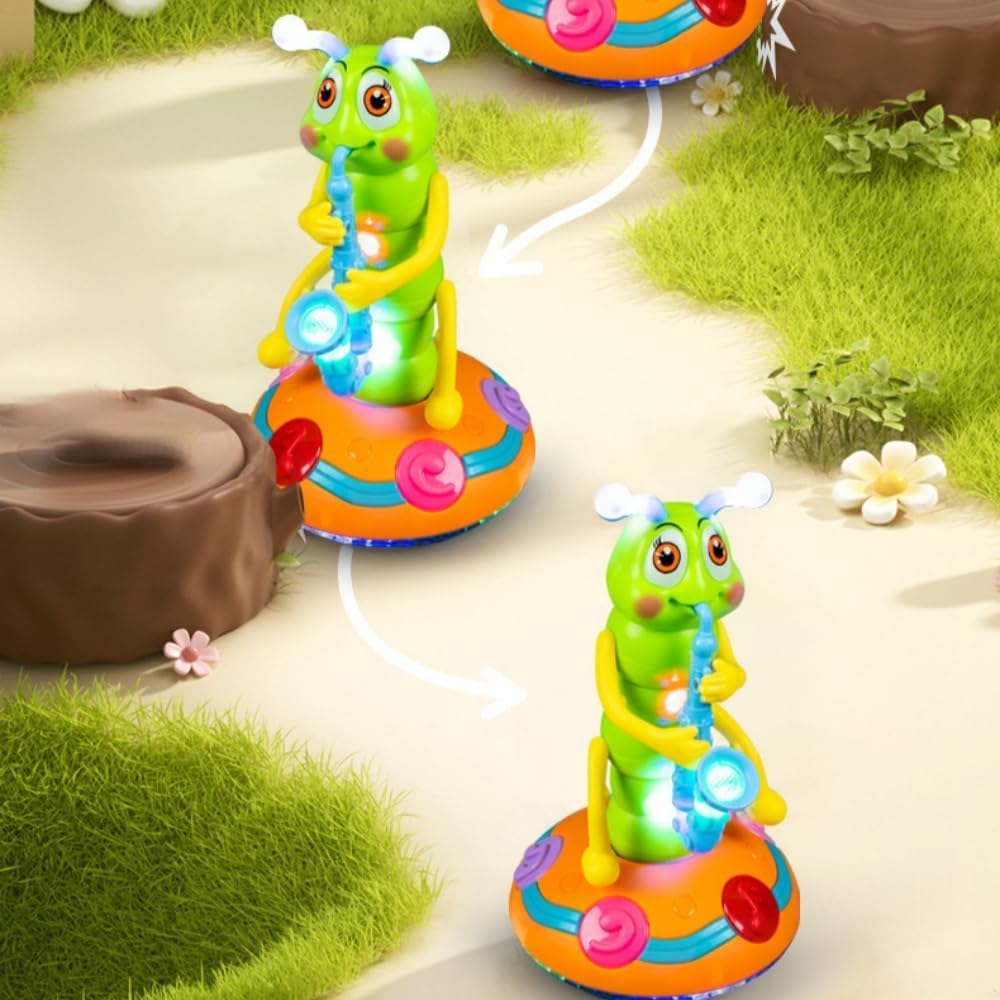
A playful, light-up crawling toy designed for babies from around 6 to 12 months. The Dancing Saxophone Caterpillar offers music, dancing motion and two engaging modes to capture a little one’s attention. It’s pitched as a sensory toy that can help with early exploration, rhythm, and gross-motor activity. It’s suited to curious babies who enjoy cause-and-effect play and parents seeking a compact, indoors-friendly option.
How it works and what it does
There are two main modes. Light mode triggers flashing colours along the caterpillar’s body and base, providing visual stimulation. Dancing mode makes the caterpillar sway to music, encouraging babies to move their hands and twist their bodies in time with the rhythm. The toy is described as able to dance and sing, repeating sounds and songs as part of its play loop.
Materials and safety notes
The toy is described as being made from high-quality, environment-friendly materials with solid construction. It’s positioned as durable enough for everyday use and designed to keep little ones safe while they explore. While it’s marketed for babies and toddlers, the typical guidance for baby motors and cushions applies, so parents may want to supervise during initial play to ensure ages and activities align with development.
Obstacle avoidance and play zones
An appealing practical point is that the caterpillar supposedly avoids obstacles automatically, which can help reduce tipping hazards and give parents peace of mind during independent play both indoors and outdoors. Realistically, this feature should be considered as a helpful aid rather than a guarantee of flawless navigation in all environments.
Who it’s for and who it’s not
If you’re looking for a compact, engaging sensory toy that combines music, lights and movement, this caterpillar could fit well. It’s described as suitable for 6–12 month olds and also referenced as a potential aid for autistic children to stimulate cognition and parent–child interaction. If your child is very energetic or you need a more robust, taller activity centre, this simplified crawl toy may feel limited.

What to check before buying
- Confirm that the two modes (light and dancing) operate reliably in your setting.
- Consider space: the caterpillar’s footprint and how much room the dancing motion requires.
- Check for any age or safety guidance that aligns with your child’s developmental stage.
- Think about cleaning and maintenance—reliability matters for toys that are frequently handled by little hands.
Practical use example
Imagine a quiet play corner: switch on Light Mode and watch the caterpillar’s colour pulses draw your baby’s gaze. When they’re ready for movement, switch to Dancing Mode and observe cheerful music driving gentle shuffles and turns, inviting your child to mirror the motions with arms and legs. It’s a simple, visually guided experience that can support early rhythm recognition and hand–eye coordination.
Pros and cons in real life
- Pros: two clear play modes, engaging lights and music, designed for indoor use, obstacle avoidance feature adds a layer of safety, described as durable and baby-friendly.
- Cons: the motion and songs are fixed features, there may be limits to how complex the play becomes, and some users might want more varied music or taller play options.
FAQ (where data allows)
- What ages is it best for? It’s described as suitable for 6–12 months, with mention of older children up to 2–3 years in a broader sense. Monitor for individual development.
- Does it require batteries? The base description implies electronic functionality but does not provide battery details. Check the packaging for power requirements.
- Is it easy to clean? The description highlights durable materials, cleaning instructions aren’t specified, so follow standard toy-cleaning practices for fibre and plastic toys.
Is it worth it?
A solid pick if you prioritise a compact, light-up toy that combines music and movement to entertain early crawlers and toddlers. It may appeal more to buyers seeking a sensory toy with visual cues and simple, rhythmic play rather than a highly interactive learning device. If you value outdoor versatility or more robust motor activities, you might want to compare with larger or more feature-rich options. Consider whether the two defined modes and the obstacle-avoidance feature align with your regular play space and your child’s developmental stage.