

MAIKEHIGH 10 Ton Tow Rope 5 m with Shackles
Reviews
Product description
This heavy-duty recovery strap from MAIKEHIGH helps pull vehicles out of mud, snow or sand with more confidence, offering a reinforced design and visible colouring for safer roadside work. It is intended for off-road and light commercial recovery where a high load capacity is needed, and it brings simple handling for occasional or emergency use.
Key Points
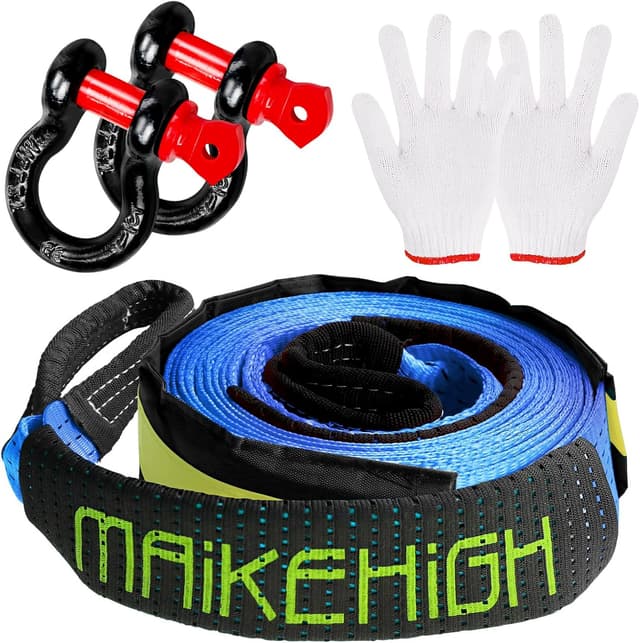
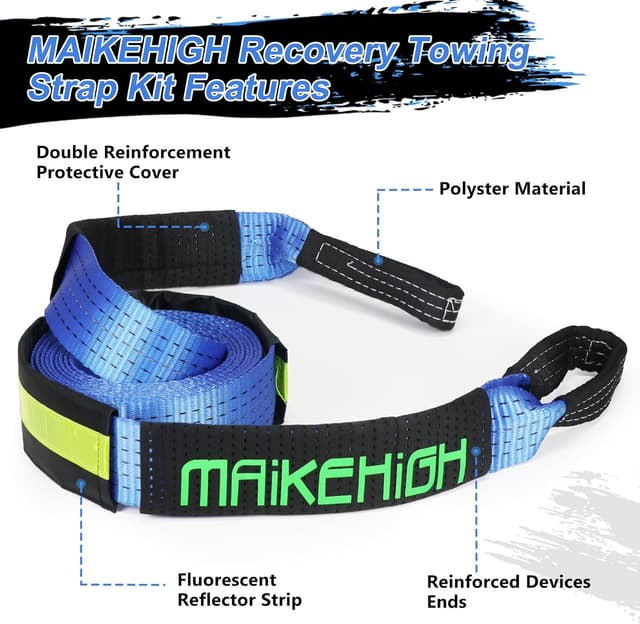
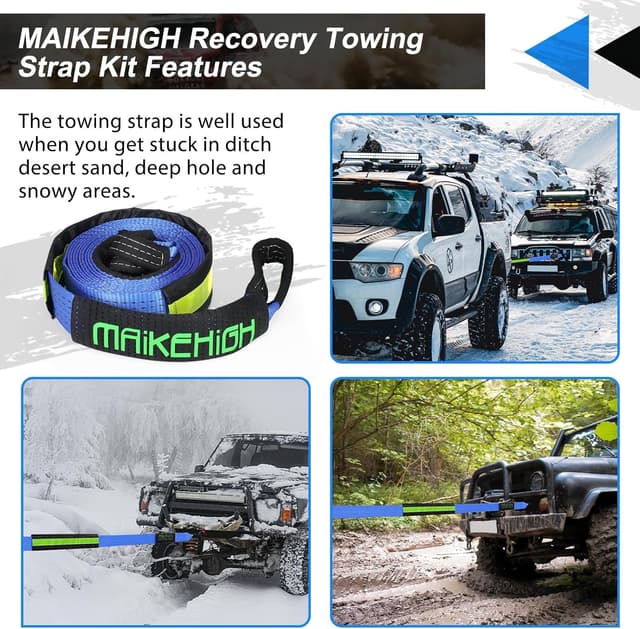
The strap is made from wear-resistant polyester and includes reinforced loop ends to reduce abrasion at the connection points. Bright blue colouring improves visibility during recovery operations and there is a reflective band that can be moved to the strap centre for better night-time detection. The kit includes gloves and shackles so you have basic accessories straight away, which helps when a quick recovery is required on remote tracks or in adverse weather. Note that load capacities are according to the manufacturer and working conditions can affect performance, so allow for some margin when planning a tow. 🧰
Technical Specifications
- Name: MAIKEHIGH Tow Rope 10 Ton
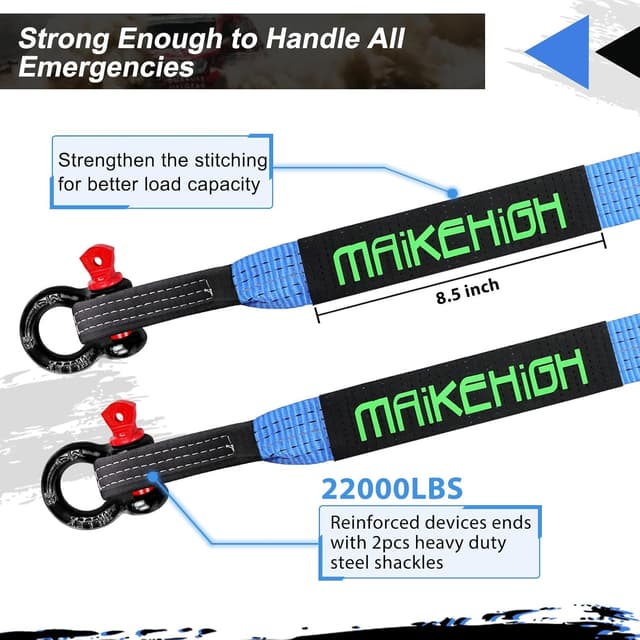
- Capacity: 10 Ton (22,000 lbs)
- Length: 5 m
- Width: 5 cm
- Material: Polyester
- Accessories: 2 reinforced shackles, 2 anti-proof gloves, storage cover
Advantages
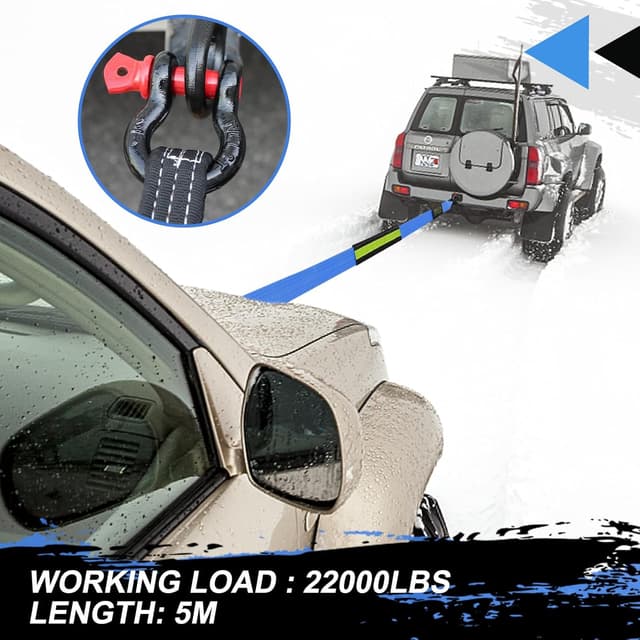
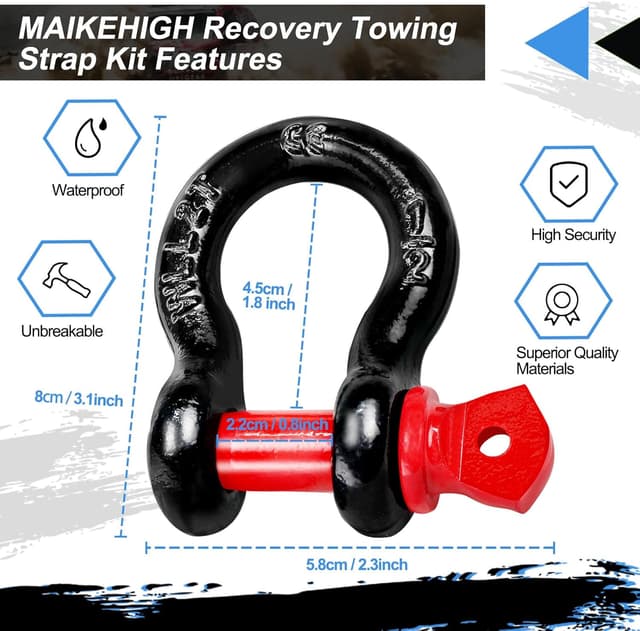
The reinforced end padding is designed to protect the loops from heavy chafing and to add strength at the critical attachment zones. For users who need a compact solution, the 5 metre length is short enough to control snatch dynamics yet long enough for most recoveries between vehicles. The polyester webbing resists wear and is lightweight for carrying in a boot or tool kit. Also, the inclusion of gloves reduces the chance of hand injuries when attaching or detaching shackles in dirty or icy conditions. 🚙
Usage Recommendations
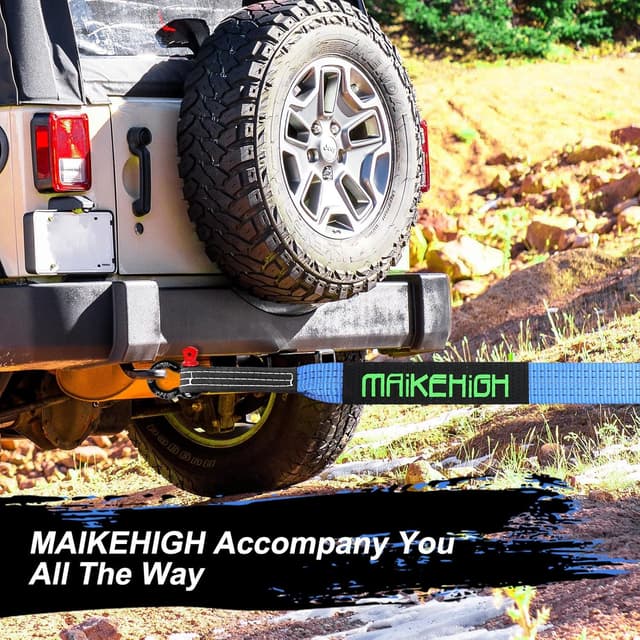
Place the reflective band near the middle of the strap when operating at night to increase visibility to passing traffic. When connecting, ensure both vehicle anchor points are rated for the stated load and that shackles are properly seated and tightened. Avoid tying knots in the webbing and keep the strap clear of sharp edges during the pull to prevent cuts. Consider that the strap is optimised for temporary recovery rather than continuous load bearing, and inspect the webbing and stitching after each heavy use for signs of wear. 🧤