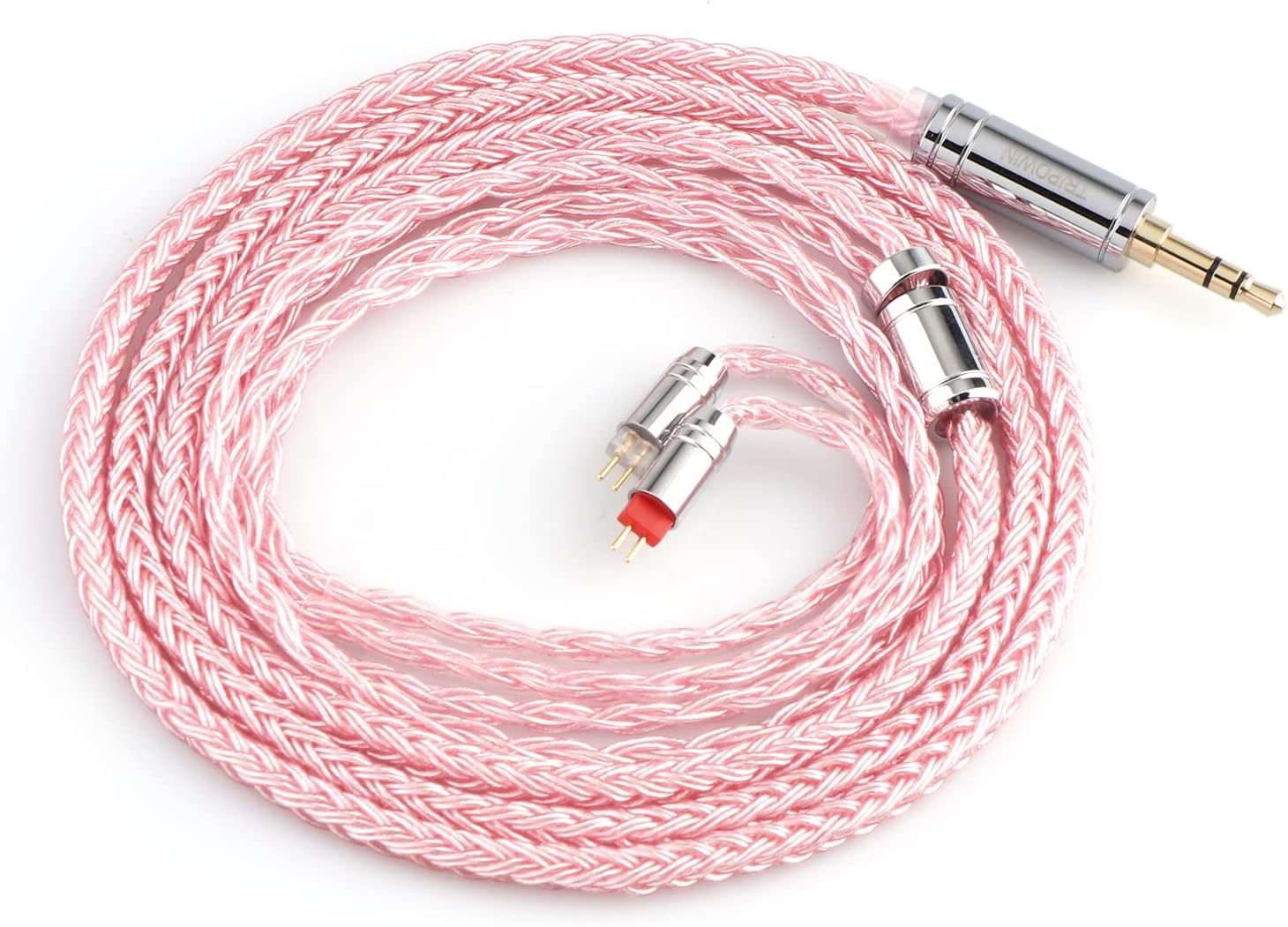
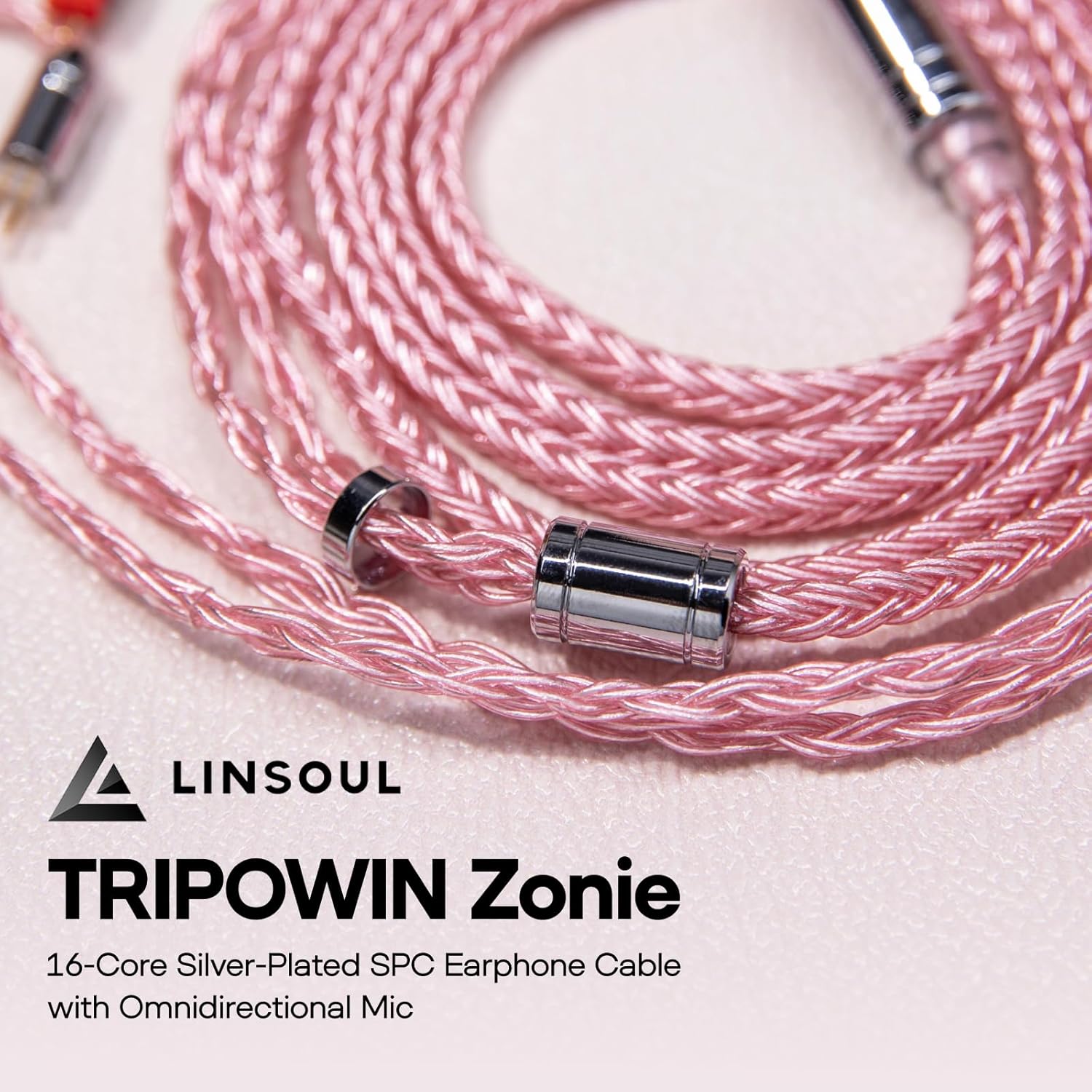
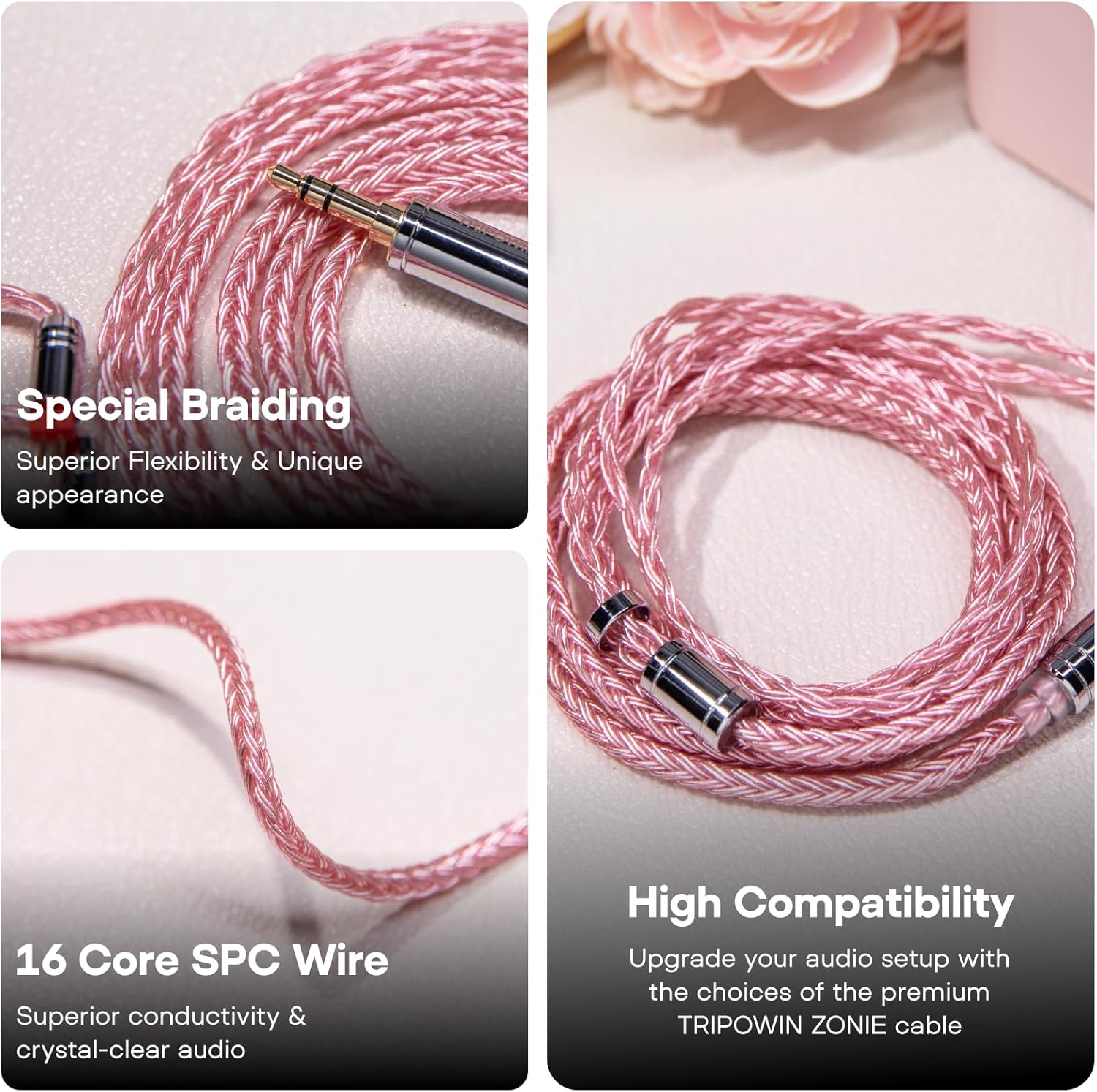
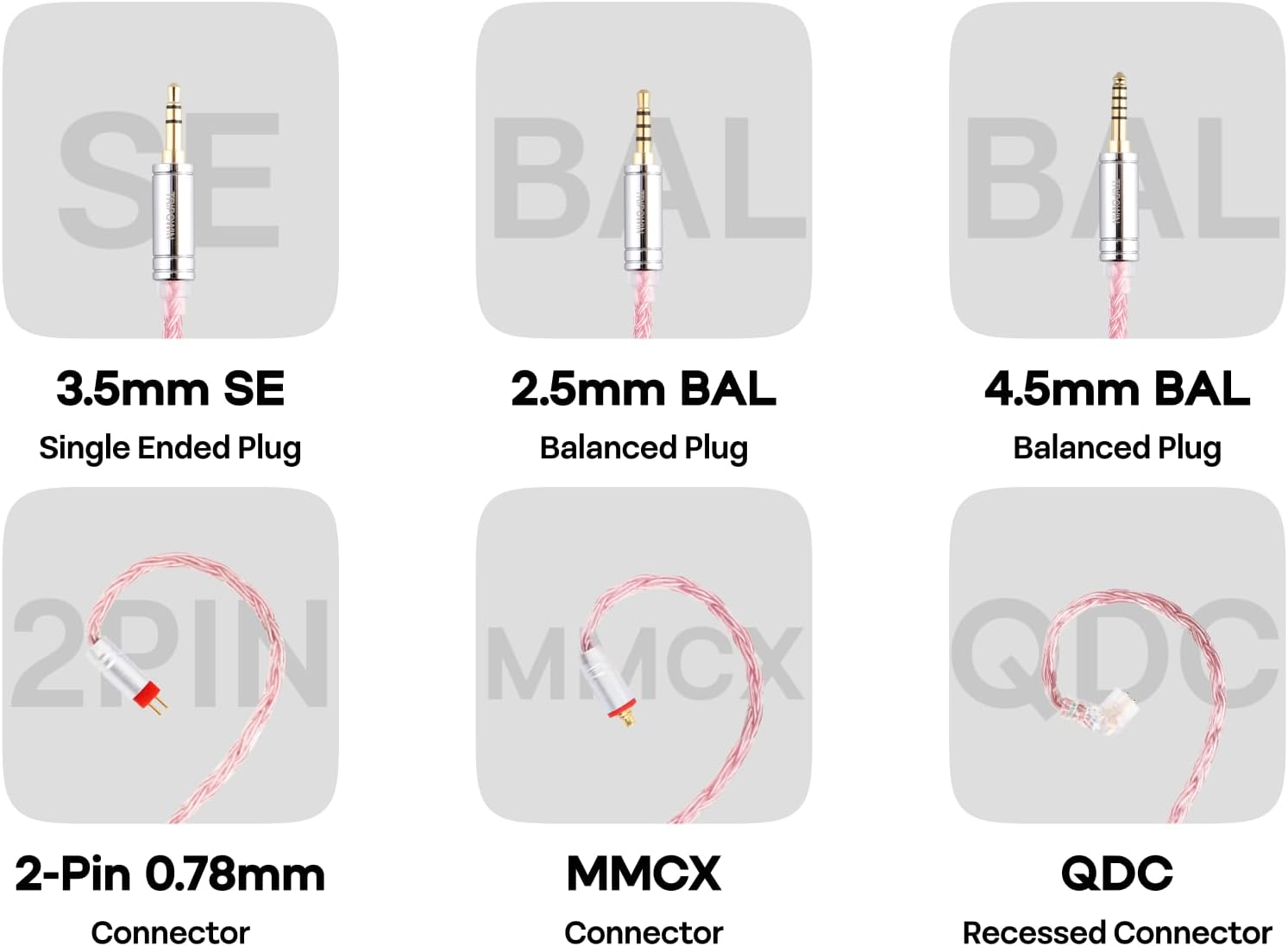
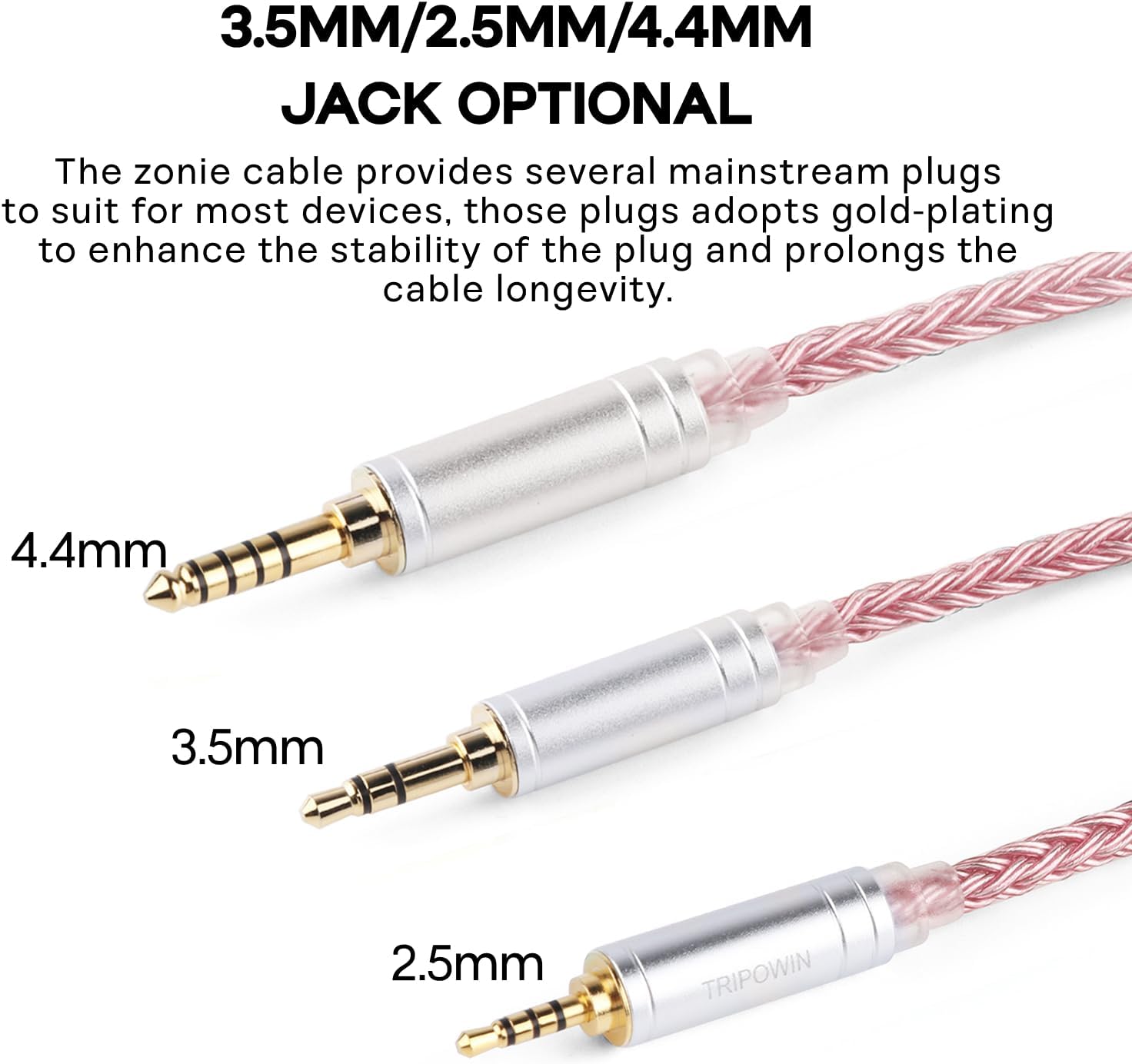
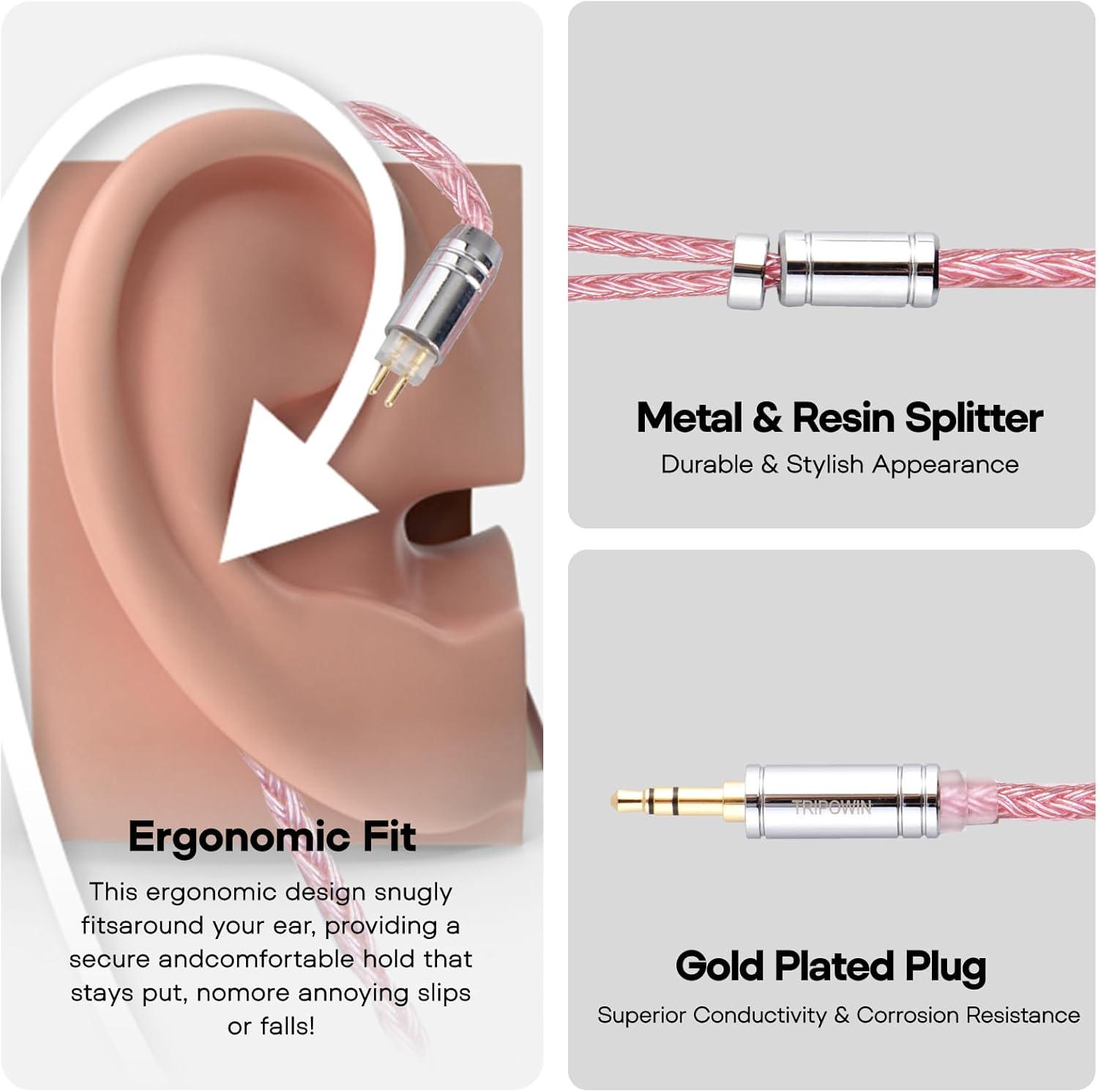
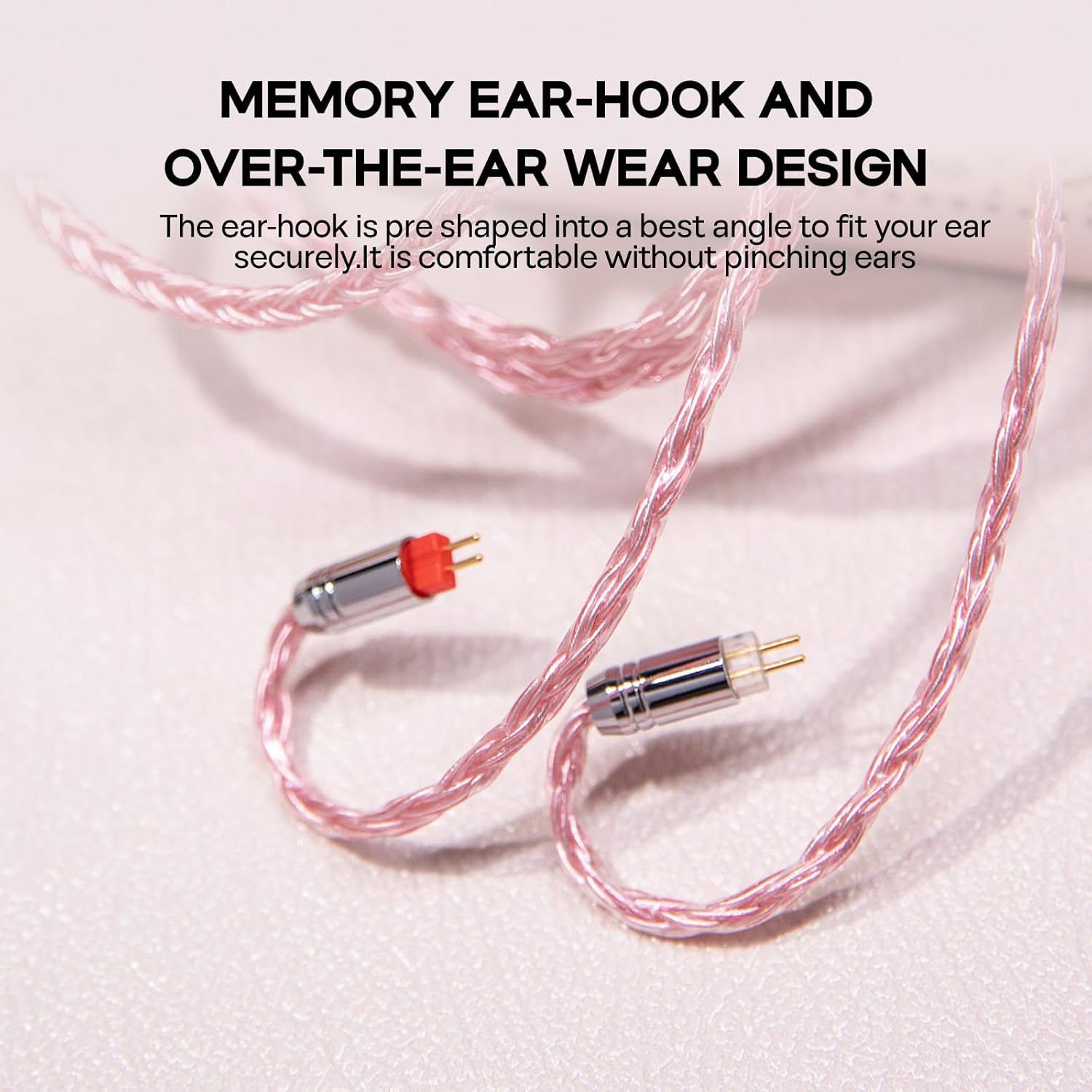
What it is and why it matters\nThe Linsoul Tripowin Zonie is a replaceable IEM cable designed for a broad range of earphones and earbuds. Made with 16 cores of silver-plated SPC (solid core) conductors, it aims to offer a brighter, more open sound with reduced distortion compared with standard stock leads. The 1.25m length and soft, braided construction prioritise comfort and ease of use during daily listening or on-the-go sessions.\n\n## How it fits your kit\nThis cable is built to suit multiple connector styles, including MMCX and 2-pin configurations, with recessed 2-pin variants and three different plug options. The intention is to provide a flexible replacement option that can pair with many devices and earphones without requiring a complete equipment overhaul. If you’ve got a mix of IEMs or you’re experimenting with tune aims, this versatility can be convenient.\n\n## Sound impression on paper\nWith silver-plated SPC conductors, the Zonie claims to deliver a more real, brighter sound with lower distortion and clearer treble, while preserving the midrange. In practice, how much of that you hear will depend on your source, earpieces and listening material. It’s not a guarantee of ‘transformative’ upgrades, but it offers an alternative alignment for those seeking a different character from their existing setup.\n\n## Build and comfort\nThe braid is designed to look refined and to resist tangling, while the earhook is pre-formed for a secure fit. The emphasis is on a soft touch that stays comfortable for extended listening. Do bear in mind that any upgrade cable may alter the perceived impedance and drive requirements of your IEMs.\n\n## Pros and what to watch out for\n- Pros: wider articulation, potential improvements in brightness and definition, versatile connector options, thoughtful craftsmanship in braid and earhook.\n- Cons/limitations: results vary by source and headphone pairing, not all listeners will notice a dramatic change, higher price–performance perception is subjective. If you prioritise a very subtle upgrade, you might find the difference modest.\n\n## Who it’s for\nIf you value modularity and want a single lead that can cover several of your IEMs and accessories, the Zonie may appeal. It’s especially relevant for users who enjoy experimenting with sound signatures or who want to refresh an ageing cable without swapping entire IEMs.\n\n## When it makes sense to buy\n- You own multiple IEMs with different 2-pin or MMCX styles and want a single compatible lead.\n- You’re curious about sign‑posted changes in brightness and clarity without investing in more expensive upgrades.\n- You value a durable, relatively tangle-resistant braid and a comfortable ear hook for daily use.\n\n## When you might skip it\nIf you’re content with your current cable, or if your listening priority is warmth or bass emphasis rather than clarity, the perceptual gain may be limited. It’s also worth noting that some users report subtler improvements with budget upgrades, placebo is real in this space.\n\n## What to check before buying\n- Confirm your IEMs use the supported connectors (MMCX or 2-pin options) and whether recessed 2-pin variants are appropriate for your units.\n- Consider your source and tips: brighter cables can accentuate treble, which may not suit all ears or genres.\n- Ensure you’re comfortable with the 1.25m length for your typical listening setup, be it stationary or portable.\n\n## Practical usage example\nImagine you’re rotating between a couple of IEMs at a desk and on the move. Slipping the Zonie into your routine lets you test a brighter, clearer presentation across different tracks without swapping cables every time. It’s a small adjustment, but for some ears and earsphone pairings, it can reveal new details in cymbals, strings and vocal textures.\n\n## FAQ\n- Will this cable improve bass? It’s not primarily a bass-boosting cable, the expectation is more about clarity and brightness with lower distortion.\n- Is it compatible with all 0.78 mm 2-pin earphones? It covers several variants, but you should verify the specific pin configuration and the recessed vs non-recessed design for your units.\n- How heavy is the cable? The braided design aims for a balanced feel and durability, but exact weight isn’t specified. If you’re sensitive to micro-tussle in an active setting, test fit first.\n
Conclusion: Is it worth it?\nIf you prize modularity, a potentially clearer high‑end feel and a flexible, long-lasting lead for a small to mid-range budget, the Tripowin Zonie offers a practical upgrade path. It isn’t a guaranteed game-changer for everyone, but it aligns with a pragmatic approach to refining your daily listening setup. If your priority is subtle changes or a single‑purpose cable, you might opt to keep things as they are, otherwise, this could be worth trying to see if the sound character suits your ears and music tastes.