

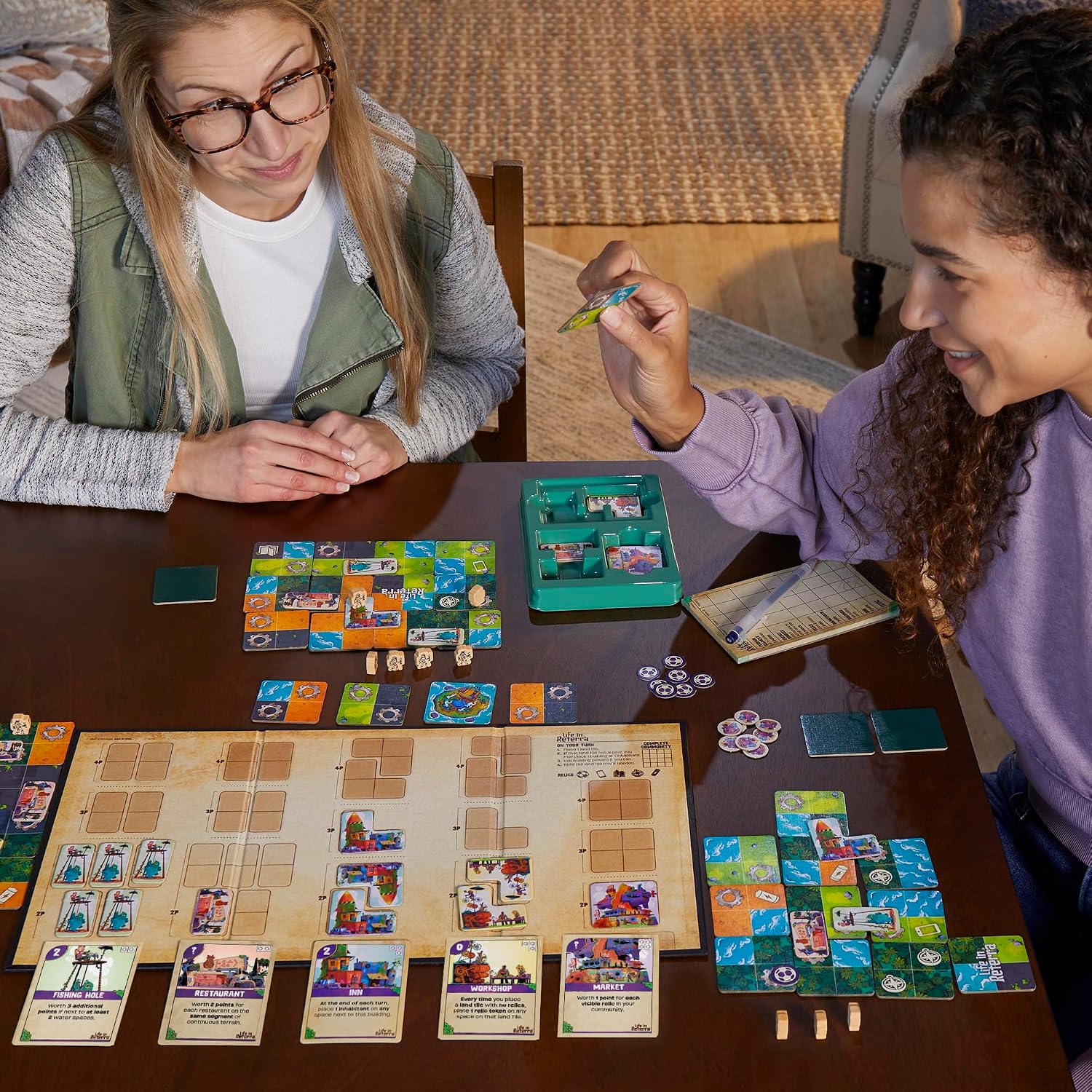
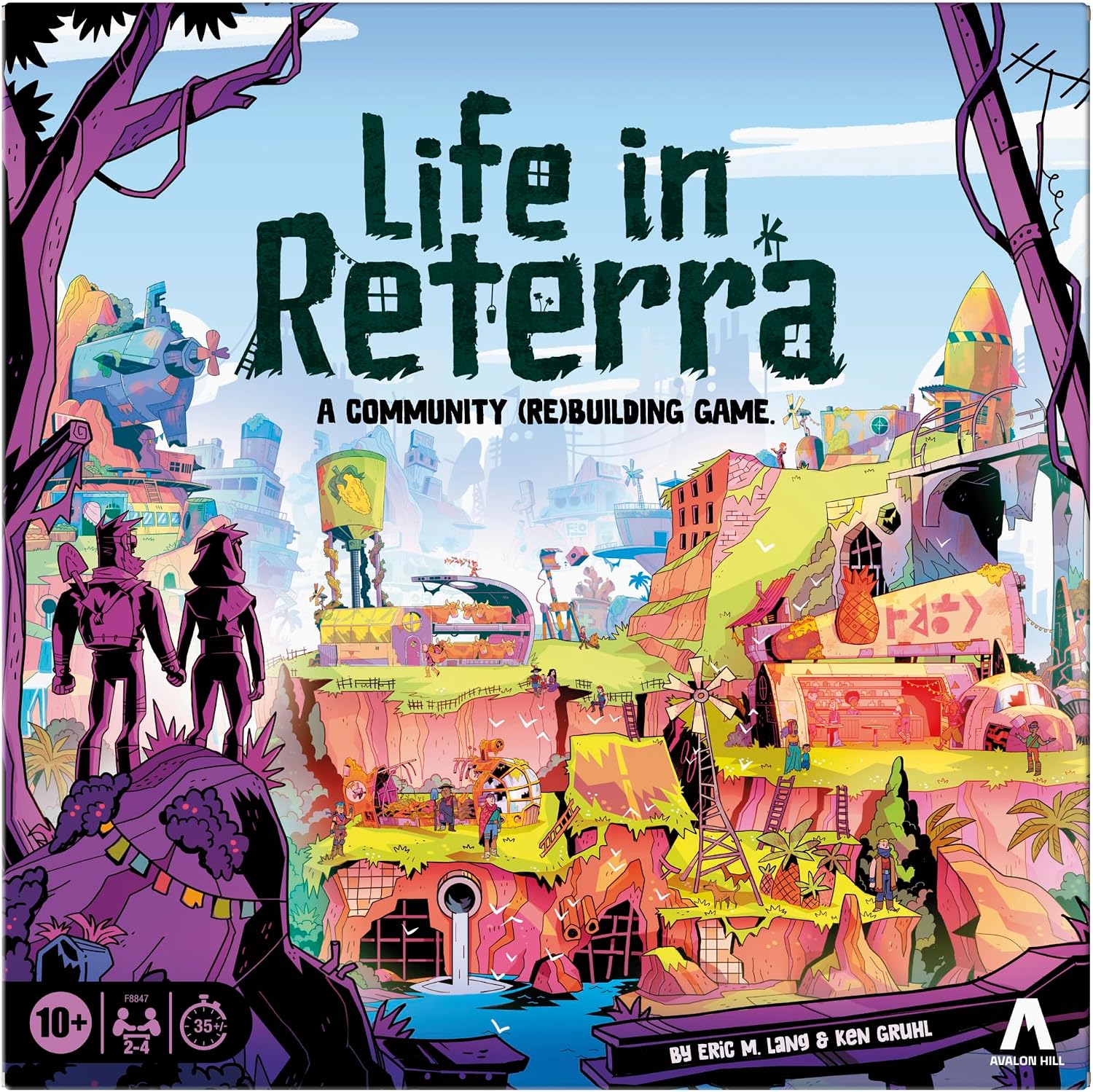
Life in Reterra Strategy Board Game: tile-laying spatial puzzle with wooden pieces & premium storage (2–4 players)
Reviews
Price
Product description
The essentials
Life in Reterra is a tile-laying strategy board game where you build up a community from scattered remnants of the past. Each turn is essentially a planning problem disguised as something cosy and creative: you place land tiles, expand from what’s already there, and aim to grow the most successful settlement to win.
It’s the sort of game you can learn without a night of rules-lawyering, but it still rewards careful placement. The pressure doesn’t just come from optimising your own board, the game also gives you ways to interfere with rivals, so it’s rarely a relaxed “do your thing” experience for long.
It’s not the kind of game that’s all about luck, either. Over several games, the decisions about where to place tiles and how to develop buildings tend to matter more than you might expect.
Worth noting: because the description talks about multiple scoring routes and themed building sets, the game’s feel can change from session to session. If you’re after one consistent strategy, you may find yourself adapting more than usual.
What you’ll actually do in play
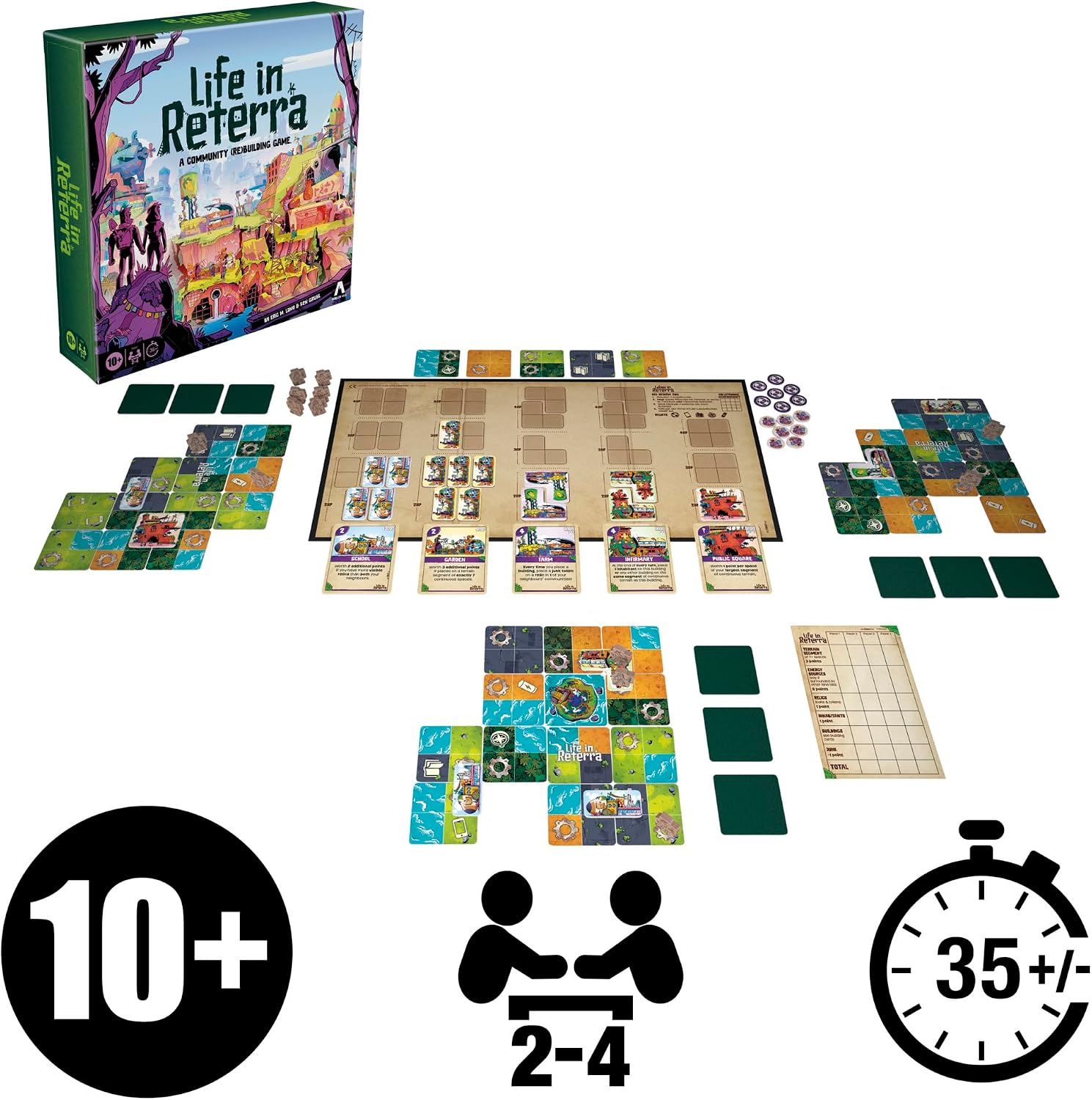
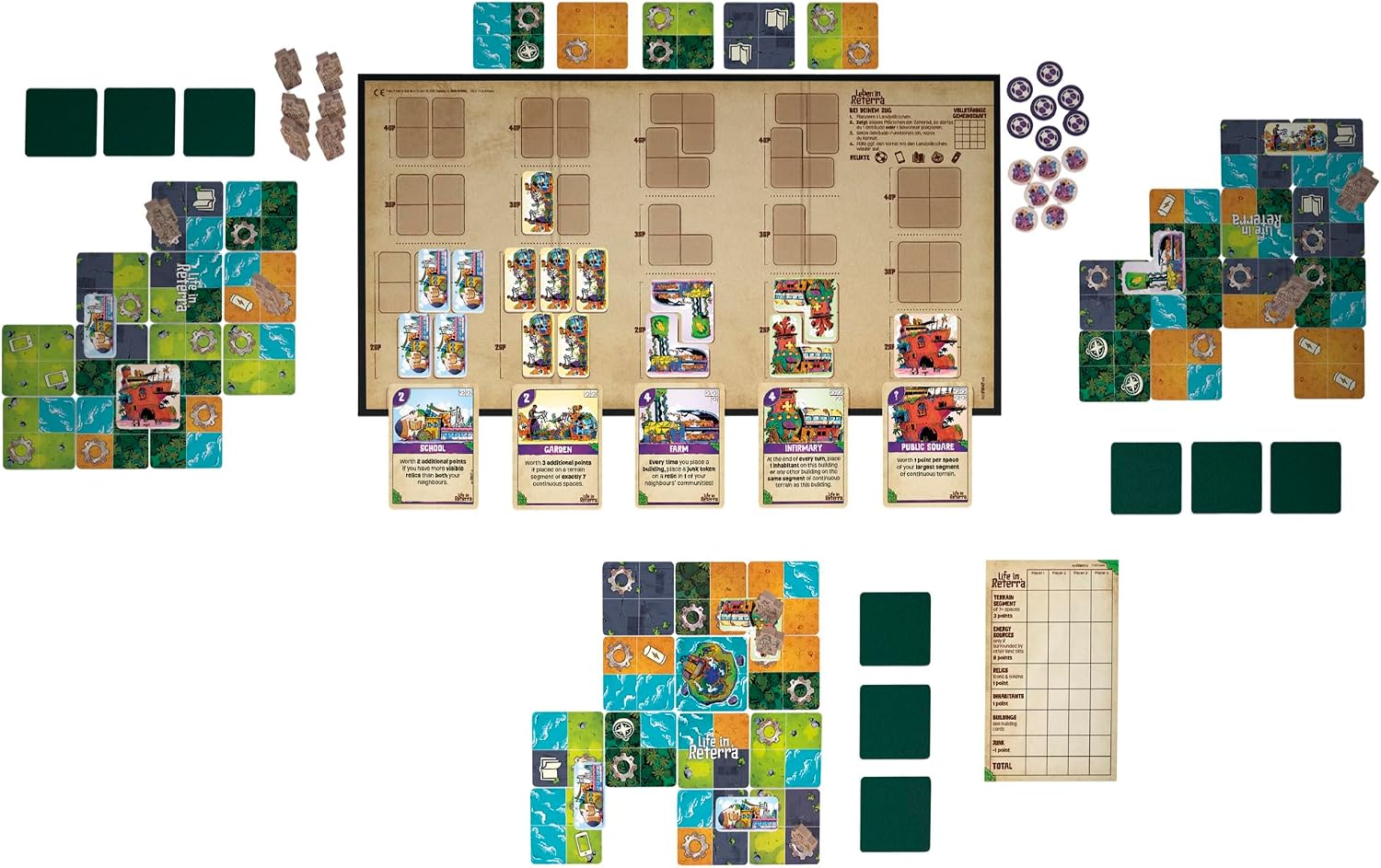
Most games will revolve around a simple loop. You place land tiles that show different terrains, then build on top of that foundation to expand your community. From there, your score builds up through multiple channels, not a single obvious one.
The game highlights several ways to score: adding buildings, placing inhabitants, collecting relics and making use of terrain bonuses. There’s also mention of interfering with rivals to reduce their score. In practice, that means you’re constantly balancing growth with disruption—sometimes it’s worth playing the “best” tile for your own layout, other times you may want to block progress or pull down someone else’s momentum.
A small micro-example: imagine you’ve been expanding onto a terrain type that offers a bonus. Placing a tile that completes a more valuable stretch can be tempting, but you might also look at a rival’s near-finished area and decide whether a disruptive move could swing the score later. That tension is a big part of why the game keeps feeling engaging.
Where it shines
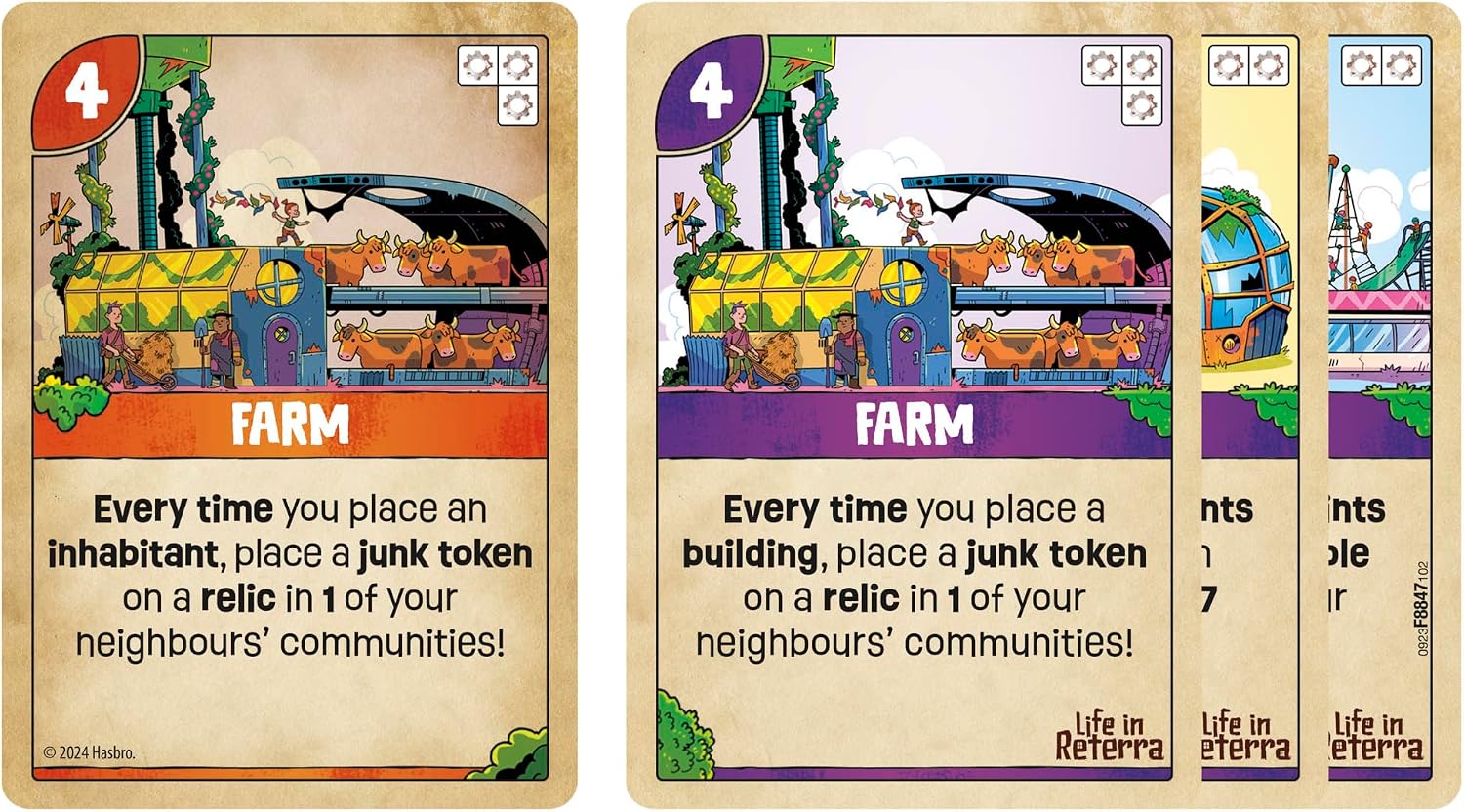
This game is built around replayability. The description mentions three themed building sets, each with unique powers and cards. You can use one set on its own or mix and match them, which should keep the strategic options from feeling identical every time.
There’s also an aesthetic and material side that’s more than just “nice packaging”. The game includes wooden inhabitant pawns and linen-finished cards, plus artwork described as gorgeous. The storage is handled thoughtfully, with each building set having its own storage tray. That tends to help with the everyday friction of board games—setup and pack-up feel more straightforward than with loose components.
On top of that, the game is positioned for families and friends who enjoy classic board games with a modern twist. If your group likes tile-laying spatial puzzles, this one has the added community-building layer and multiple scoring methods that keep turns from feeling repetitive.
Key takeaways on components and setup
The biggest “day-to-day” win here is the premium approach to physical play. Wooden pieces and linen-finished cards suggest you’re not dealing with flimsy tokens, and the storage trays per building set point towards easier organisation between sessions.
That matters if you’re the person who usually sets the game up, or if the board game lives in a cupboard and you want it to be quick to pull out. It’s also relevant if you’re buying as a gift for someone who cares about presentation, not just mechanics.
Limitations to keep in mind: while the description calls it a premium experience, it doesn’t spell out component counts, thickness of cards, or how complex the rules get. If you’re used to very lightweight family strategy games, you may still want to check how long sessions typically run with your group.
Pros and where it may not fit
Pros - Tile-laying strategy with spatial planning and terrain variety. - Multiple scoring routes (buildings, inhabitants, relics, terrain bonuses). - Replayability via three themed building sets with unique powers/cards. - Wooden inhabitant pawns and linen-finished cards, plus storage trays for easier setup. - Built for 2–4 players, ages 10+, so it can work across teen-to-adult groups.
Not the best choice if… - You want a very low-interaction game. The description mentions ways to interfere with rivals, so it’s not purely cooperative or solitaire-friendly. - You prefer games that are the same every time you play. The themed building sets and scoring tension encourage different approaches. - You’re looking for a purely tactical “mathy” game. There’s a storytelling/community-building angle, so it leans slightly towards creative strategy rather than only numbers.
It suits you better if your household enjoys taking turns, planning ahead, and learning new lines over repeat sessions.
Is it worth it?
Life in Reterra is a solid buy if you’re after a tile-laying strategy board game that feels fresh across plays, thanks to themed building sets and multiple scoring methods. It also looks like a good match for families and mixed-age groups (teens and adults), especially if you like board games that combine spatial placement with decision-making and a bit of competitive tension.
You may want to skip it if you prefer a calmer experience without interference, or if you want a “one and done” game with a single dominant strategy that doesn’t change much from session to session.
Before you commit, it’s worth double-checking the rule complexity for your specific group and making sure the 2–4 player format suits how you usually play—because the most enjoyable strategic moments tend to happen when there are enough people around the table to make rival interference feel meaningful.

Mini FAQ
How many players is Life in Reterra designed for?
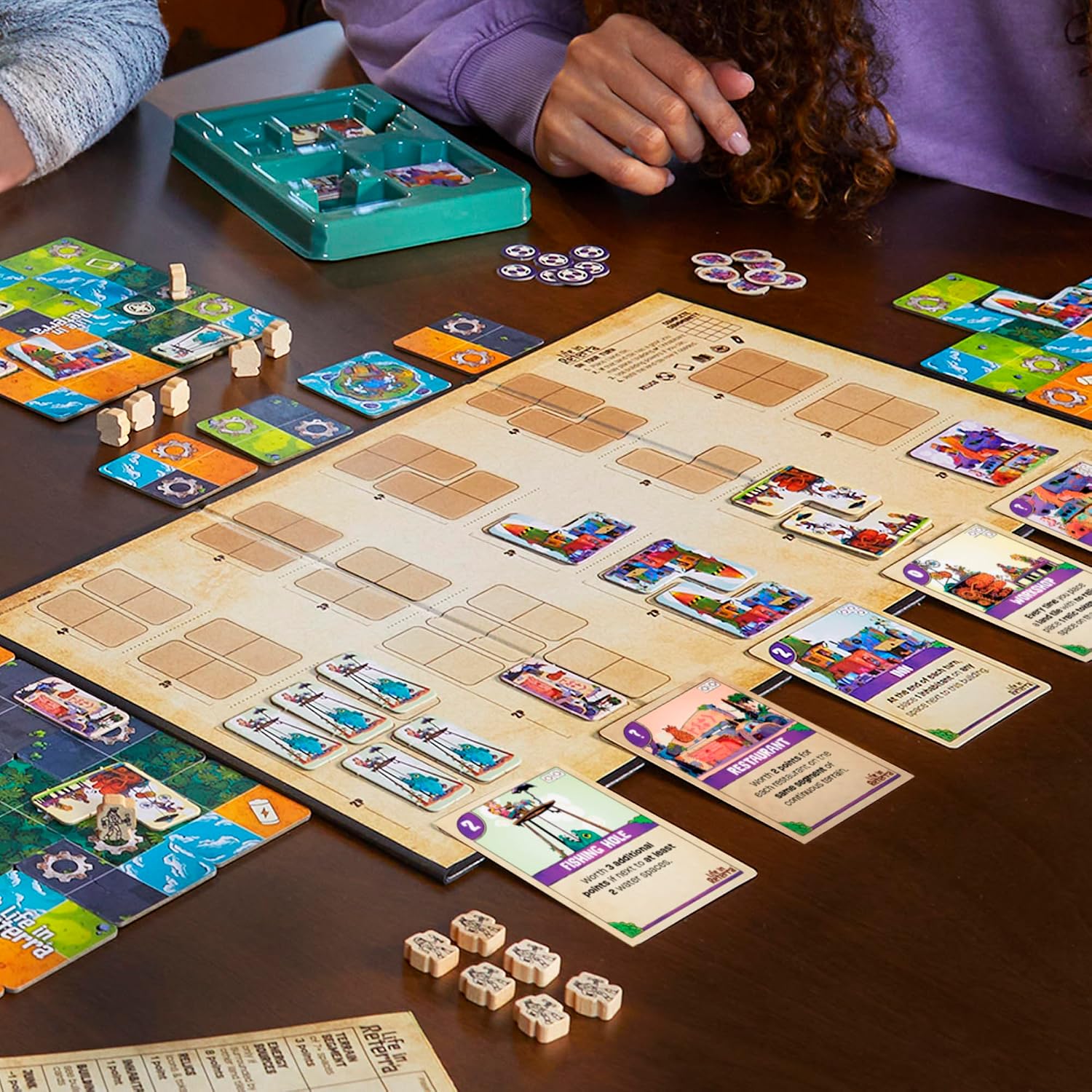
It’s described as suitable for 2–4 players.
What’s the main gameplay style?
It’s a tile-laying spatial puzzle where you place land tiles, then build and expand your community based on terrain and strategic planning.
How do you score points?
The description lists several scoring routes: adding buildings, placing inhabitants, collecting relics and using terrain bonuses, with the ability to interfere with rivals.
Does it play differently over multiple sessions?
Yes, the game includes three themed building sets with unique powers and cards, and you can use one or mix-and-match them.
Is it suitable for families?
It’s marked for ages 10+ and is positioned as a family strategy game for teens and adults.