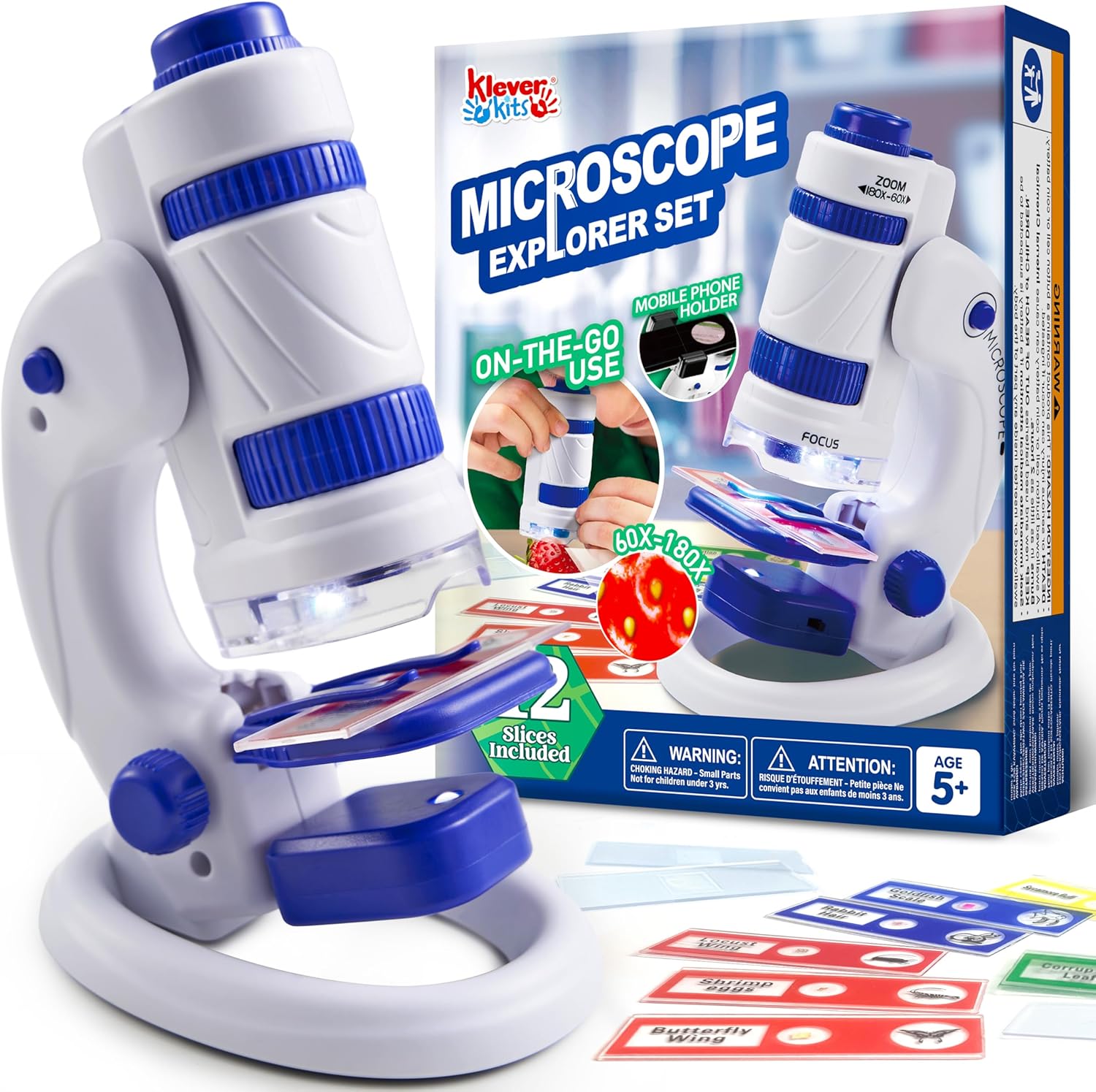
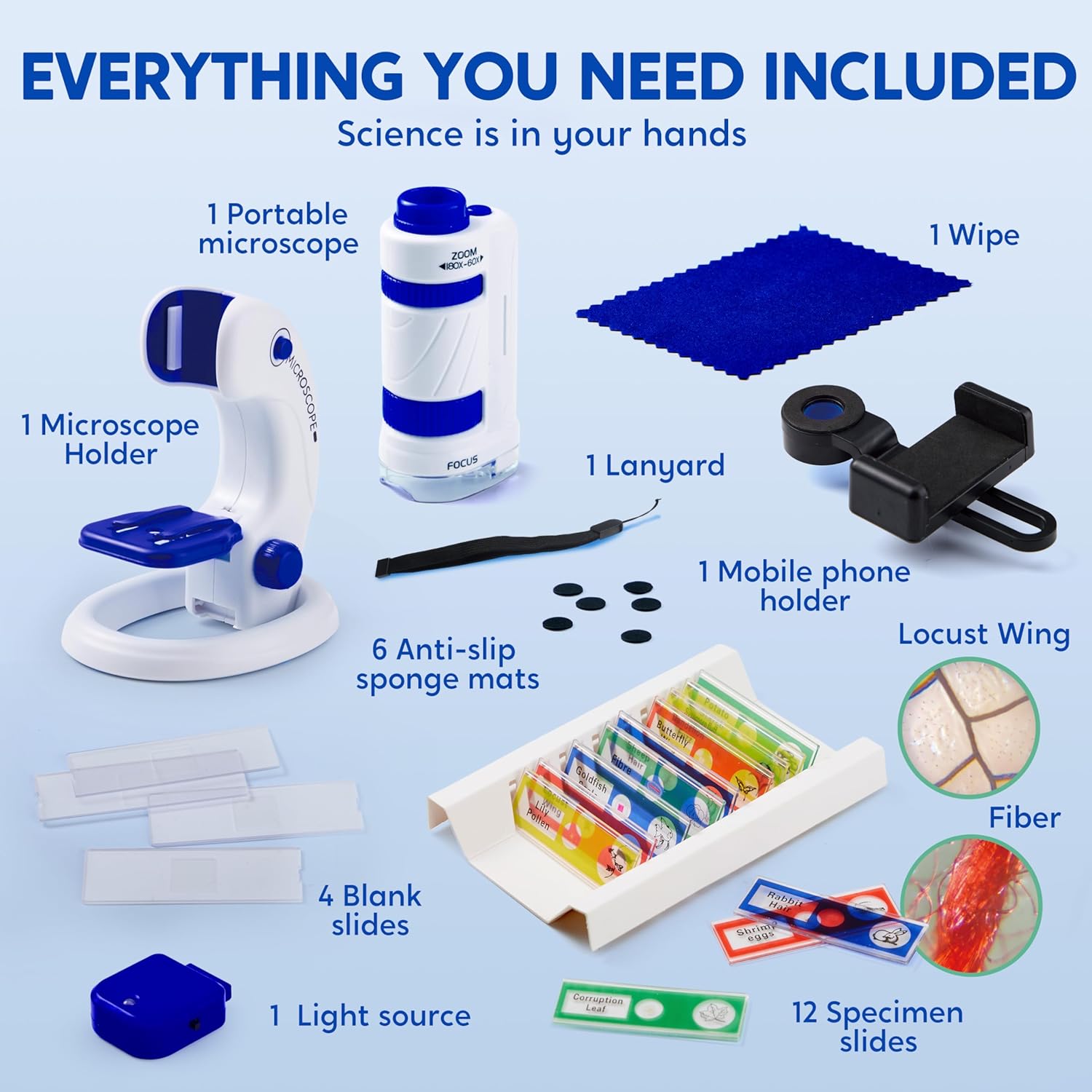
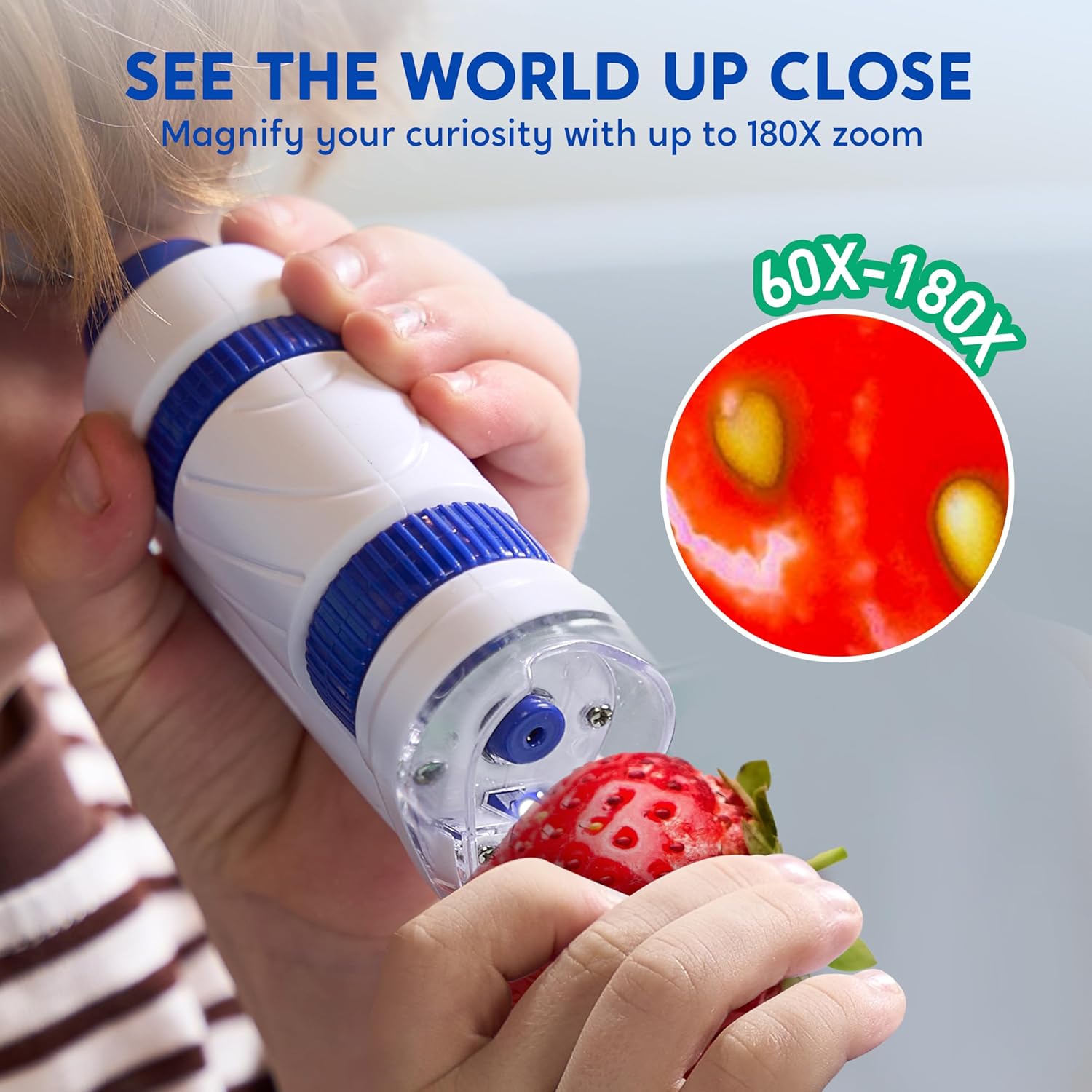
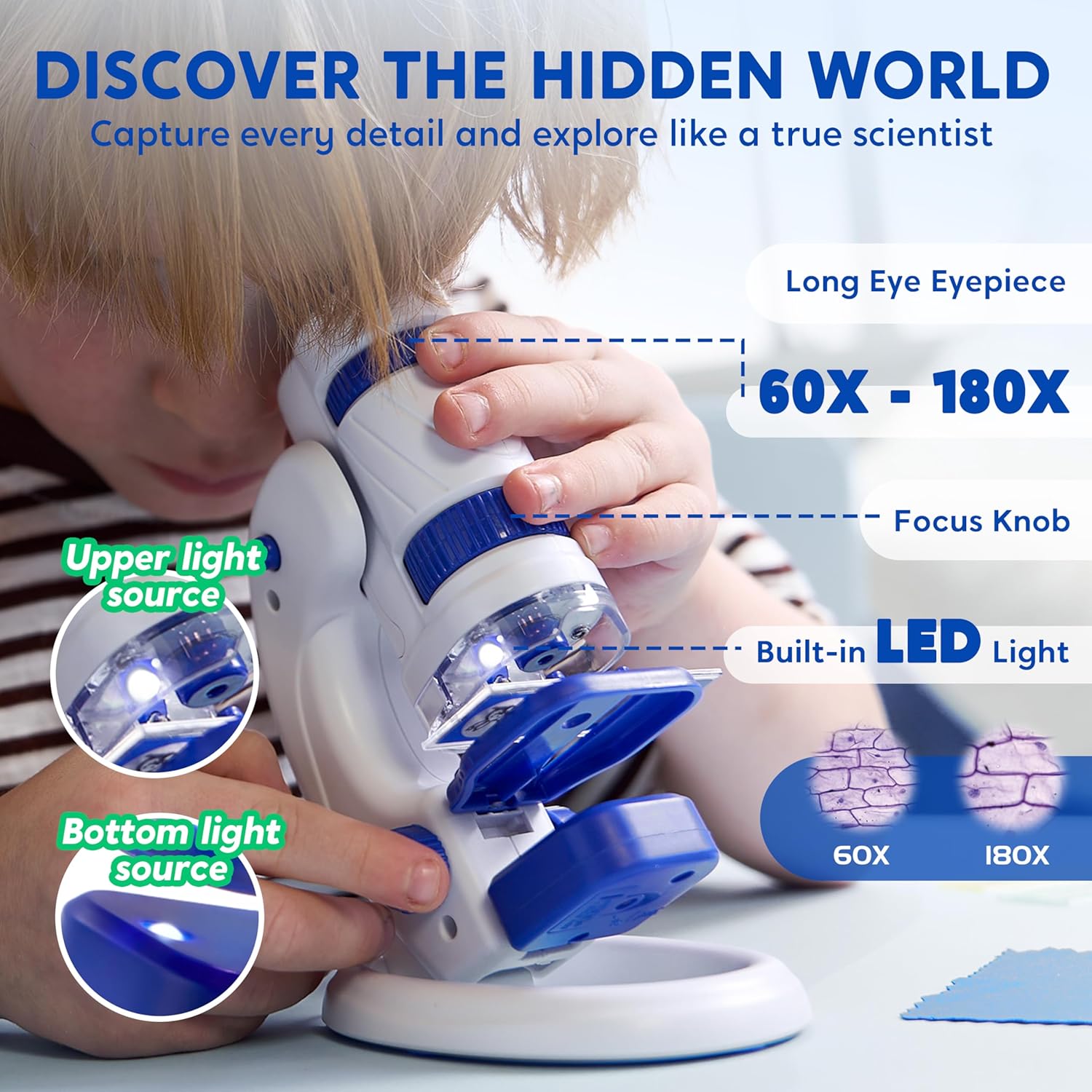
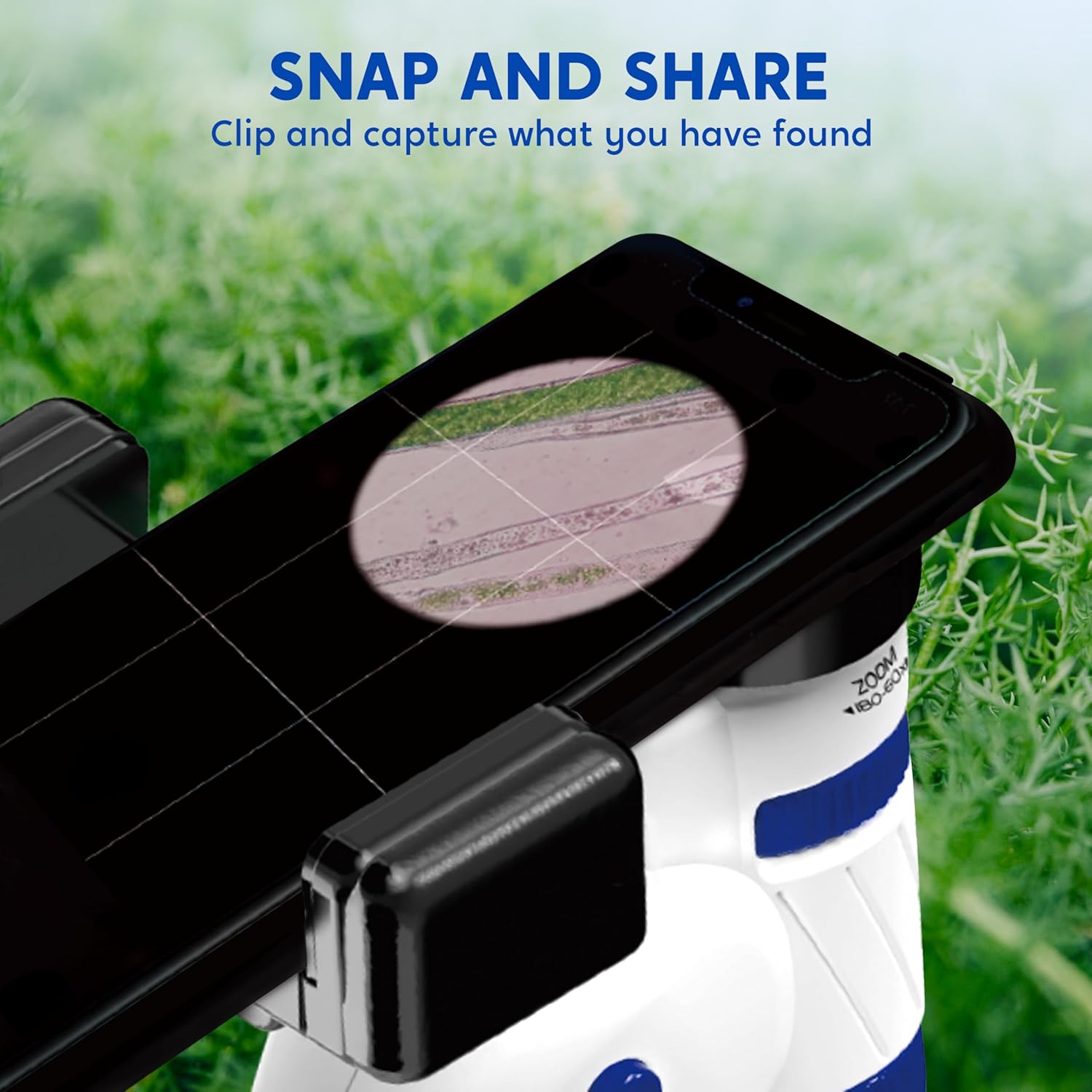
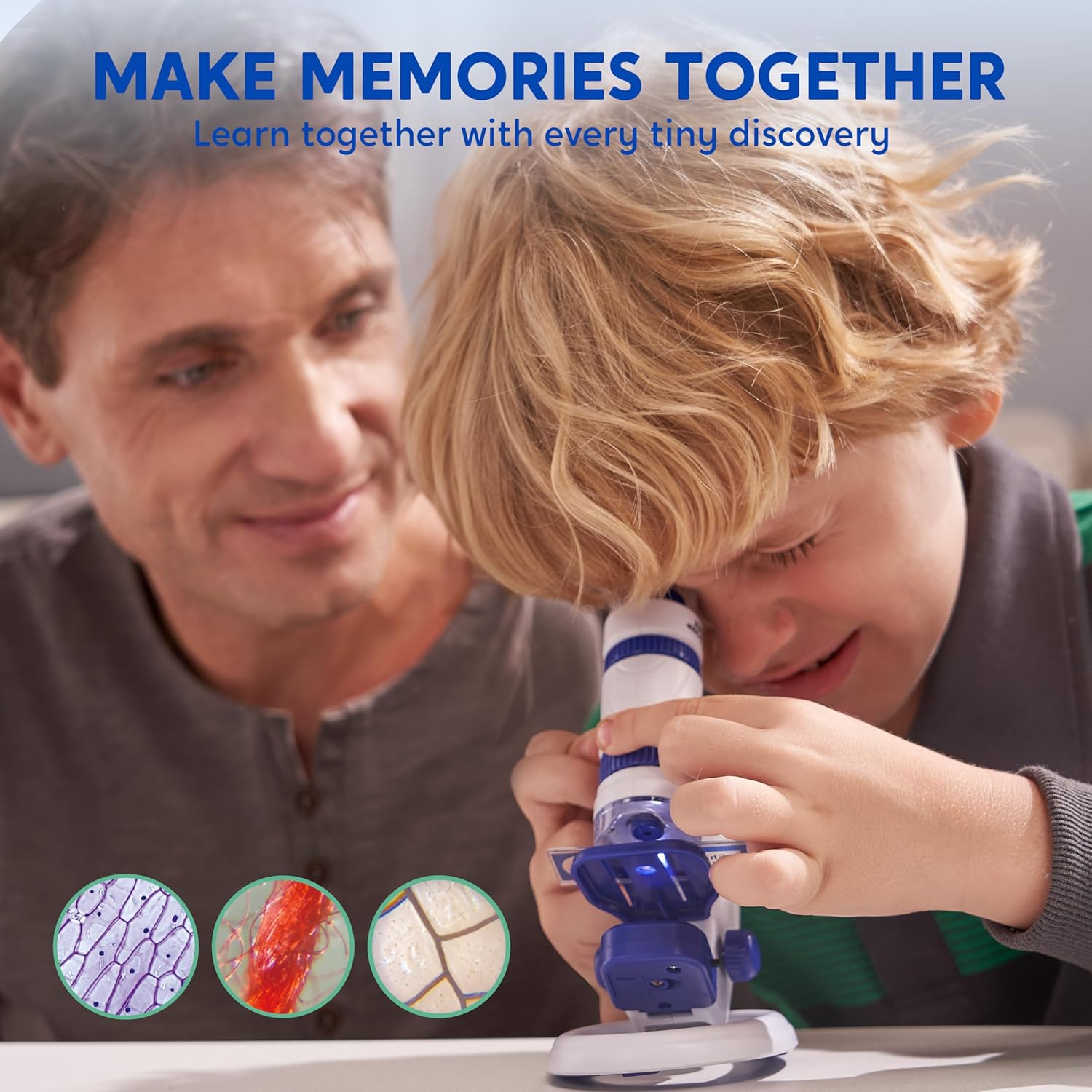
What it is and what it needs to do\nThe Klever Kits Microscope for Kids is a compact, 2 in 1 portable microscope designed to spark curiosity in children aged 5–8. It comes with a complete starter set—12 specimen slides, 4 blank slides, a microscope holder, a mobile phone holder and a lanyard—so little explorers can observe close-up details of everyday objects and prepared samples. The built-in LED light helps illuminate specimens, while the adjustable magnification from 60x to 180x offers a simple path from coarse to fine detail. On paper, this kit aims to combine hands-on science with the convenience of portability, making it suitable for indoor play and outdoor learning alike.\n\n## How it’s designed for young scientists\nThe kit emphasises approachable, hands-on exploration. Its detachable, compact design means kids can carry it in a backpack or by its handle and use it on a kitchen table, a park bench, or on a classroom desk. The 2 in 1 concept suggests both a traditional microscope and a travel-friendly option, enabling observation in a small space without sacrificing image quality. The inclusion of a phone holder adds an interactive element: children can document or share what they see, turning observation into a favourite communication activity with family and friends.\n\n## What stands out in use\nKey advantages include the low entry price point for a science kit, the range of magnification that reveals details unseen to the unaided eye, and the practical accessories that support starting with slides and becoming more hands-on with specimen observation. The dual zoom is a straightforward way to encourage visual discovery without complex setup. The built-in light is essential for seeing finer structures, especially on slides or translucent materials.\n\n## Things that may give you pause\nAs with many beginner microscopes, image clarity at higher magnifications can be limited by the quality of optics and the user’s handling. For younger children, supervision is helpful to guide sample placement and focusing. The kit is designed for educational play rather than professional scientific work, so expectations should be tempered accordingly. If durability or more advanced optics are priorities, this model may feel basic in comparison.\n\n## Suitable audiences and use cases\nThis kit appeals to parents and carers who want an affordable, tangible entry into biology and microscopy. It suits kids who enjoy “show and tell” style activities, school project work, or weekend science play. It’s a sensible choice for gift-giving at birthdays or holidays, especially for children beginning to explore the natural world. It’s less ideal for anyone seeking high-end laboratory equipment or long-term use in more serious scientific curriculum.\n\n## What to check before buying\n- Confirm the magnification range (60x–180x) and ensure the optics and LED are functioning before gifting.\n- Consider whether the included slides align with the child’s interests (prepped specimens vs. blank slides for drawing or mounting curiosities).\n- Check for portability features, such as the detachable design and the phone holder, if capturing observations matters to you.\n- Think about supervision needs and how you’ll integrate it into learning activities.\n\n## How it compares to other approaches\nIf you prioritise a low-cost, beginner-friendly introduction to microscopy, a kit like this offers a concrete, interactive alternative to generic science toys. For families already equipped with a basic classroom microscope, or for children who want stronger magnification and sharper optics, a more advanced instrument could be more appropriate. This kit excels as a gateway tool that motivates hands-on exploration without a steep learning curve.\n\n## Practical example of use\nImagine a rainy afternoon: a child sessions a dry leaf under the lens, switches to a higher magnification to inspect leaf veins, then uses the phone holder to snap a photo and share it with a grandparent who loves the tiny details. The LED light helps reveal subtle textures that aren’t visible to the naked eye.\n\n## Why it makes sense to buy now\nIf you’re looking for a value-for-money, classroom-compatible starter microscope that’s easy to transport and encourages active participation, this kit ticks several boxes. It introduces scientific habits—observation, documentation, and discussion—without requiring a large upfront investment.\n\n## FAQ (quick clarifications)\n- Is the microscope easy to use for a beginner? Yes, the magnification range and simple controls are designed for young learners.\n- Can it be used outdoors? Yes, its portable design makes it suitable for outdoor science explorations with supervision.\n- What age is it appropriate for? It targets children around 5–8 years, aligning with early science curiosity.\n\n## Final decision\n## Is it worth it?\nIt’s a good pick if you want an approachable, budget-friendly entry into microscopy that supports hands-on learning and easy documentation of discoveries. It may not be the best option if you need high-end optics or extensive durability for heavy daily use. For curious kids who enjoy exploration and sharing findings, this kit offers tangible value and encourages ongoing scientific play.