

KKmier Non Contact Digital Forehead & Ear Thermometer (CE certificated) with 3-colour fever alarm
Product description
The essentials
If you’re buying a thermometer for home, the appeal of a non-contact forehead style (with the option to use the ear) is pretty obvious: it’s typically quicker, and it can be less disruptive for young children. This KKmier Ear Thermometer / digital forehead thermometer is built around that idea, offering multiple measurement modes and a fever alarm that uses LCD colours to make readings easier to interpret at a glance.
On paper, it’s aimed at everyday family use rather than anything clinical. It also includes some practical extras—memory for recorded readings, a mute/unmute setting, and automatic shut-off—which are the kinds of details that make it easier to live with.
There is, however, a limitation to keep in mind: infrared temperature readings can be affected by how the sensor is positioned and by recent changes (like a child coming in from outdoors). And while it can measure both forehead and ear, you’ll still want to follow the on-device guidance closely to get consistent results.
Key features and what they mean in practice
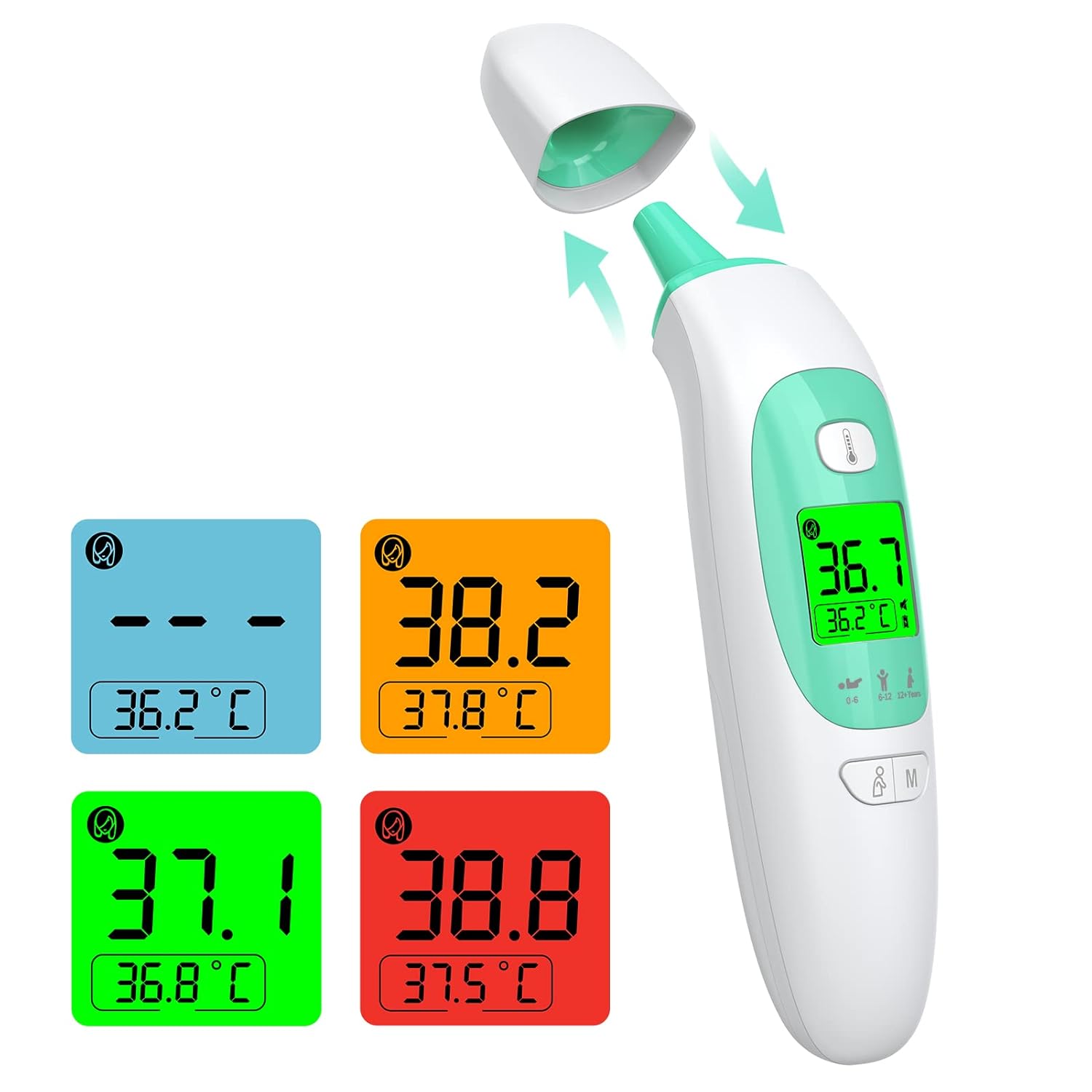
This thermometer is described as a “4 in 1” device, with three modes aimed at different groups and an additional mode for measuring objects and room temperature. In day-to-day terms, that means you’re not only using it for people—handy if you’re checking how warm a room feels or taking the temperature of an object for practical reasons.
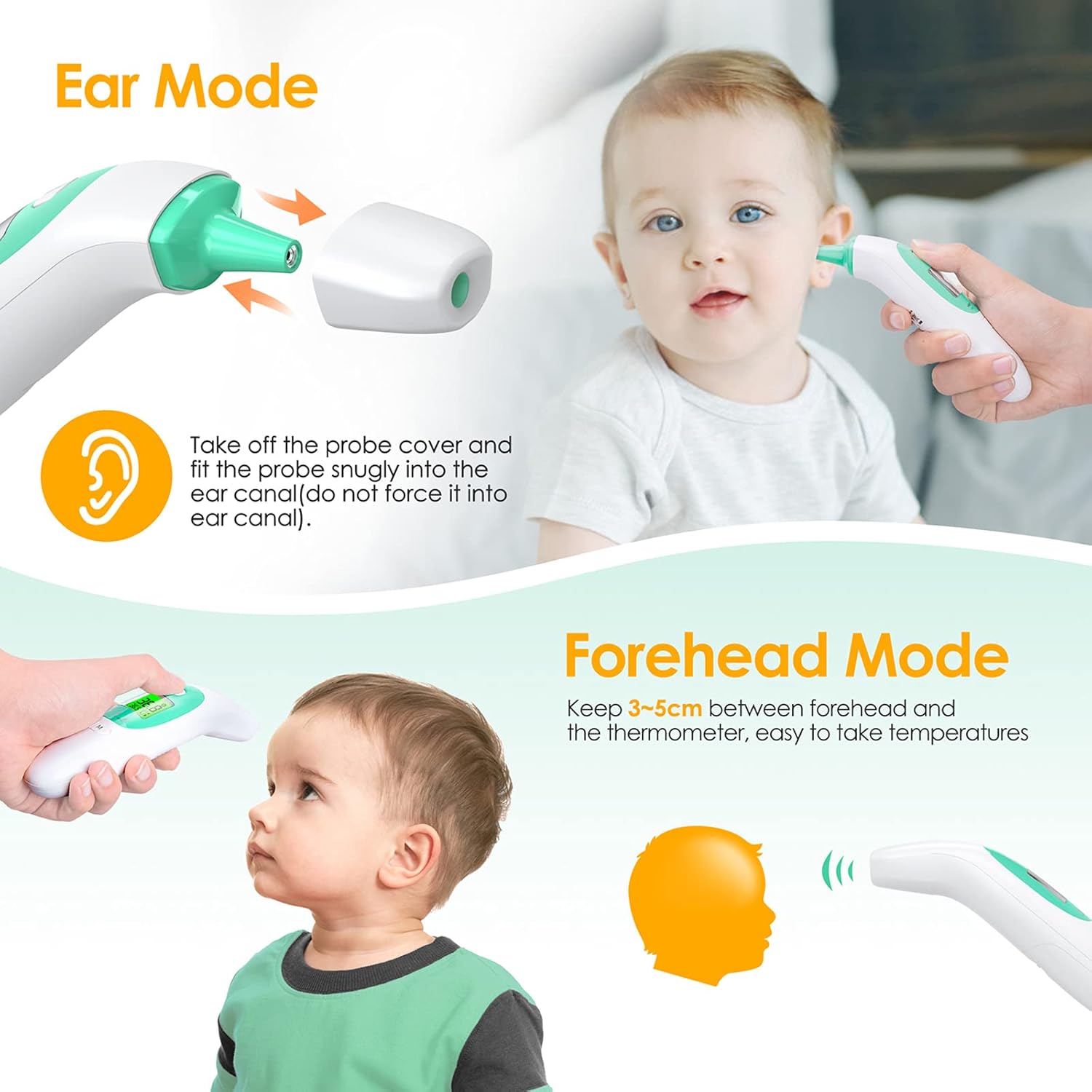
The core modes mentioned are: - Forehead Mode for adults - Forehead Mode for children - Ear Mode for a child of more than 3 months
It’s also designed to switch between forehead and ear mode automatically. Depending on how you approach measurements, that can reduce fiddling—particularly when you’re trying to take a temperature quickly.
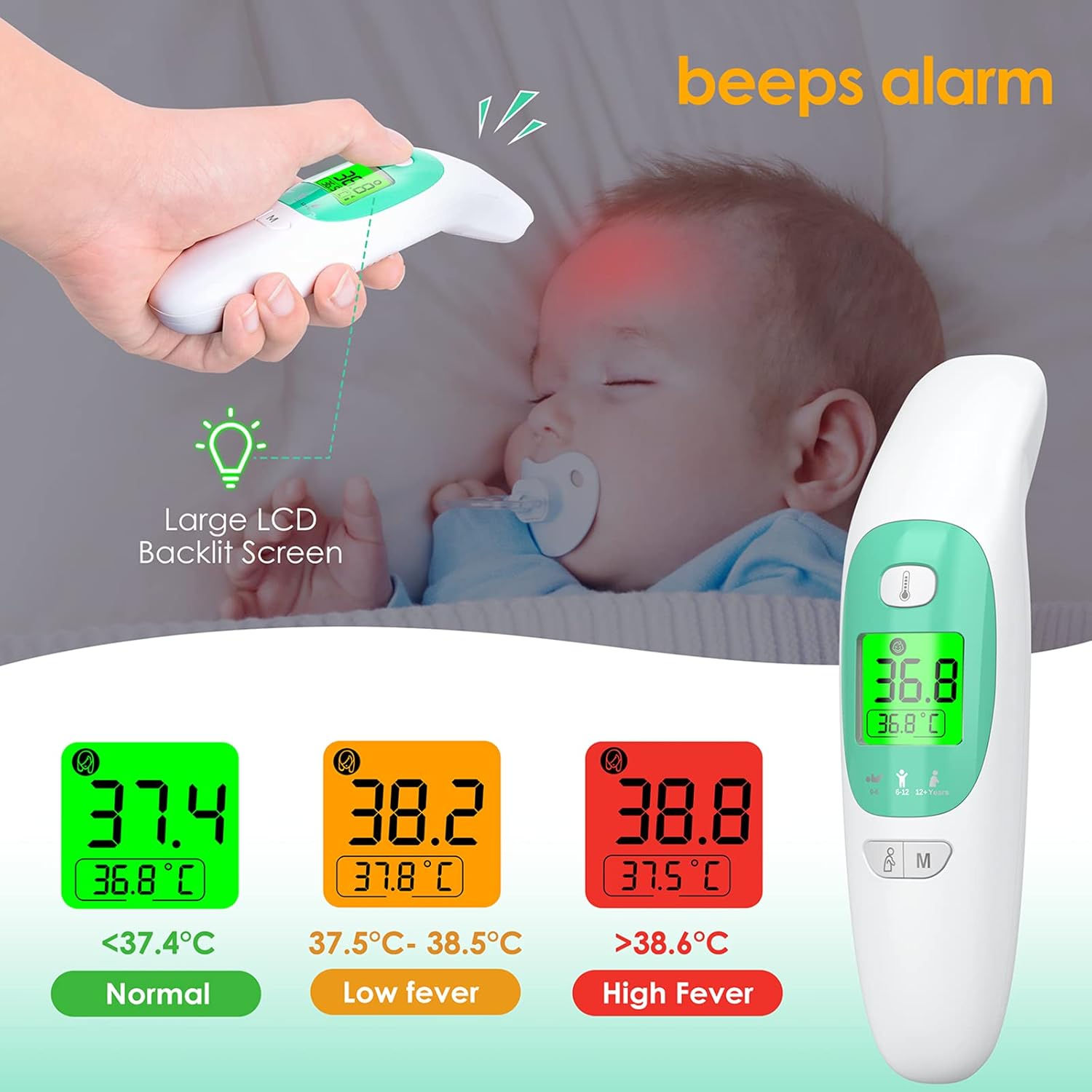
For the alarm, the display uses colour coding: - Green for normal - Orange for mild fever - Red for high fever
There’s also a backlit LCD, which is useful if you’re checking in low light (think early mornings or the night-time routine).
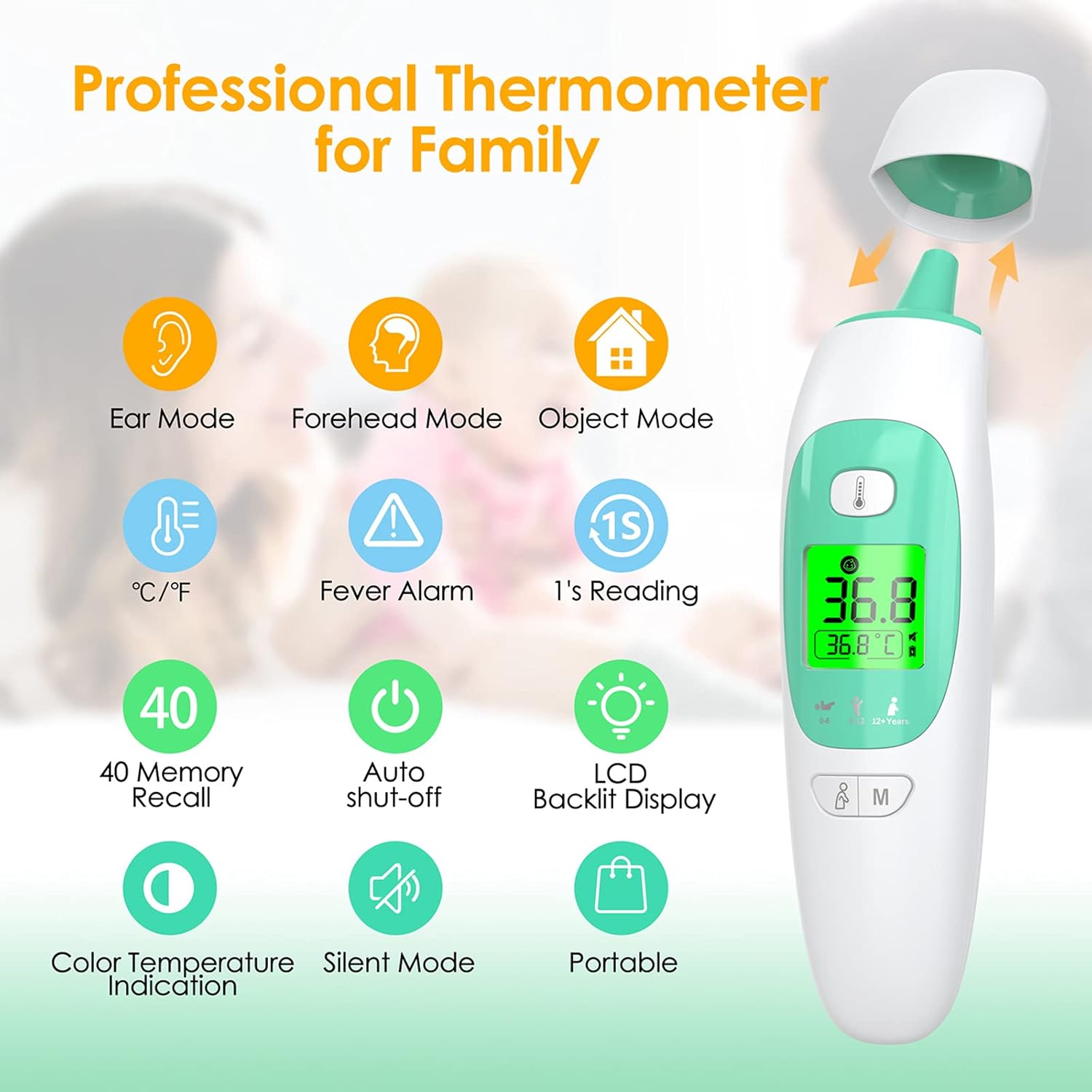
A small but meaningful extra: it can switch between mute and unmute mode. If you’ve ever had a child startled by a beep, you’ll see why that matters.
Key takeaways on speed, calibration, and readings
The manufacturer states it uses a three-step calibration algorithm and that it can measure body temperature within one second. In real buying terms, “fast” is mainly about reducing waiting time during a measurement—so you’re more likely to get a reading without the person moving about.
That said, with infrared thermometers, speed doesn’t automatically guarantee consistency. If your forehead measurement is taken at an awkward angle or too quickly after the child has been moving around, the number may not reflect what you’d expect. If you’re relying on it for decision-making, it’s worth building a routine: same position, same approach, and take a second reading if anything looks odd.
The device also stores 40 sets of memories. For families tracking patterns over time, that storage can be handy—especially if multiple people use the thermometer.
Tech specs
- Type: Non-contact infrared thermometer (forehead) with ear measurement mode
- Modes: Forehead (adult), Forehead (child), Ear (child more than 3 months), and object/room temperature measurement
- Fever alarm display: Four colour LCD backlit display (White startup, Green normal, Orange mild fever, Red high fever)
- Memory capacity: 40 sets of memories
- Temperature unit: Switches between °C and °F
- Power-saving: Automatic shutdown after 13 seconds of non-use
- Certification: CE and ROHS
- Warranty: 12 months from date of purchase
Who it’s for (and where it may fall short)
It makes sense if you want a home thermometer that covers common family scenarios: adults, children, and the practical need to check room/object temperature too. The combination of forehead and ear use also suits households that prefer non-contact for quick checks, but still want an ear option for children older than 3 months.
It may not be the best match if you’re expecting a strictly “one method only” thermometer with no fuss. Because it has multiple modes and an automatic switching design, you’ll still want to be clear which mode you’re using each time.
Also, if you’re primarily concerned with the most accurate clinical-grade readings in every situation, you should set expectations accordingly. This looks like a convenient consumer home thermometer rather than a device designed to outperform higher-end medical equipment.
Careful buying checks before you commit
Before buying, it’s worth thinking about how you’ll actually use it in your household.
Consider whether your typical measurements will be forehead readings for adults and children, and if ear mode will be used for children over the stated 3-month mark. It’s also worth checking you’re comfortable with interpreting the colour-based fever alarm, as that’s a big part of the user experience.
Finally, make sure you’re happy with the quiet setting options. A mute/unmute feature can matter more than people think.
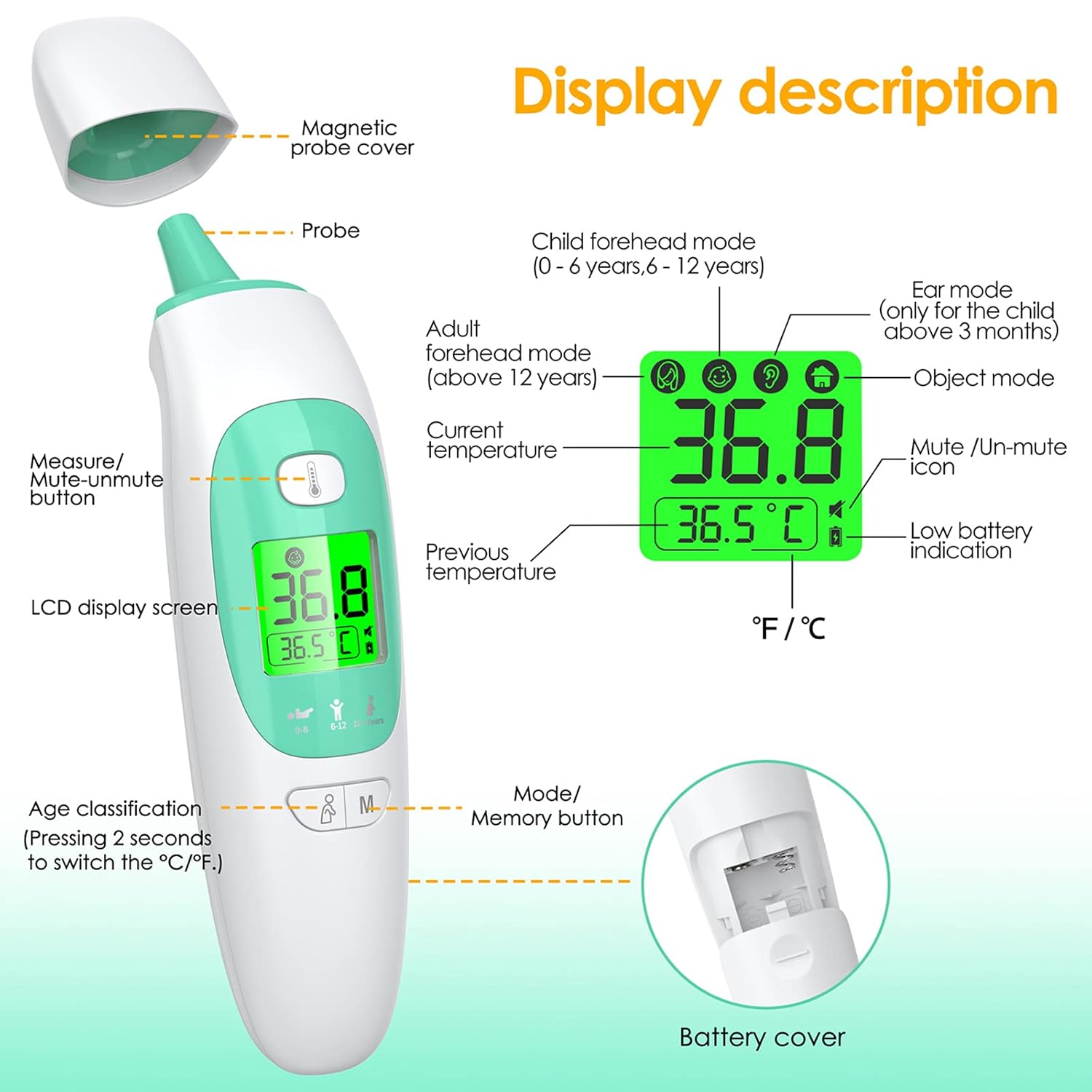
If you want a simple routine example: take a forehead reading using the adult/child forehead mode, wait for the colour to stabilise, then store the reading. If the result seems unexpected, repeat using the same approach rather than jumping straight to a different mode.
Is it worth it?
A solid pick if you want an at-home thermometer that’s quick to use, offers both forehead and ear measurement modes, and includes a colour fever alarm that’s easy to read in the moment. The memory for 40 readings, the ability to switch °C/°F, and the mute/unmute setting all support everyday use.
You may want to skip it if you need a single-method thermometer, or if you’re mainly after the most clinically reliable readings in every environment. As with most infrared options, measurement consistency depends on positioning and timing, so it’s not the sort of device you can treat casually.
Mini FAQ

Can it measure more than just people?
Yes. The product description includes a mode for measuring the temperature of objects and room.
What do the LCD colours mean?
The LCD backlit display uses colours: Green for normal, Orange for mild fever, and Red for high fever (with White used for startup).
Does it store past readings?
It stores up to 40 sets of memories.
Is it for babies?
It includes an ear mode specifically described for a child older than 3 months, and it also has forehead mode options for children and adults.
Does it have a mute mode?
Yes, it can switch between mute and unmute modes.