


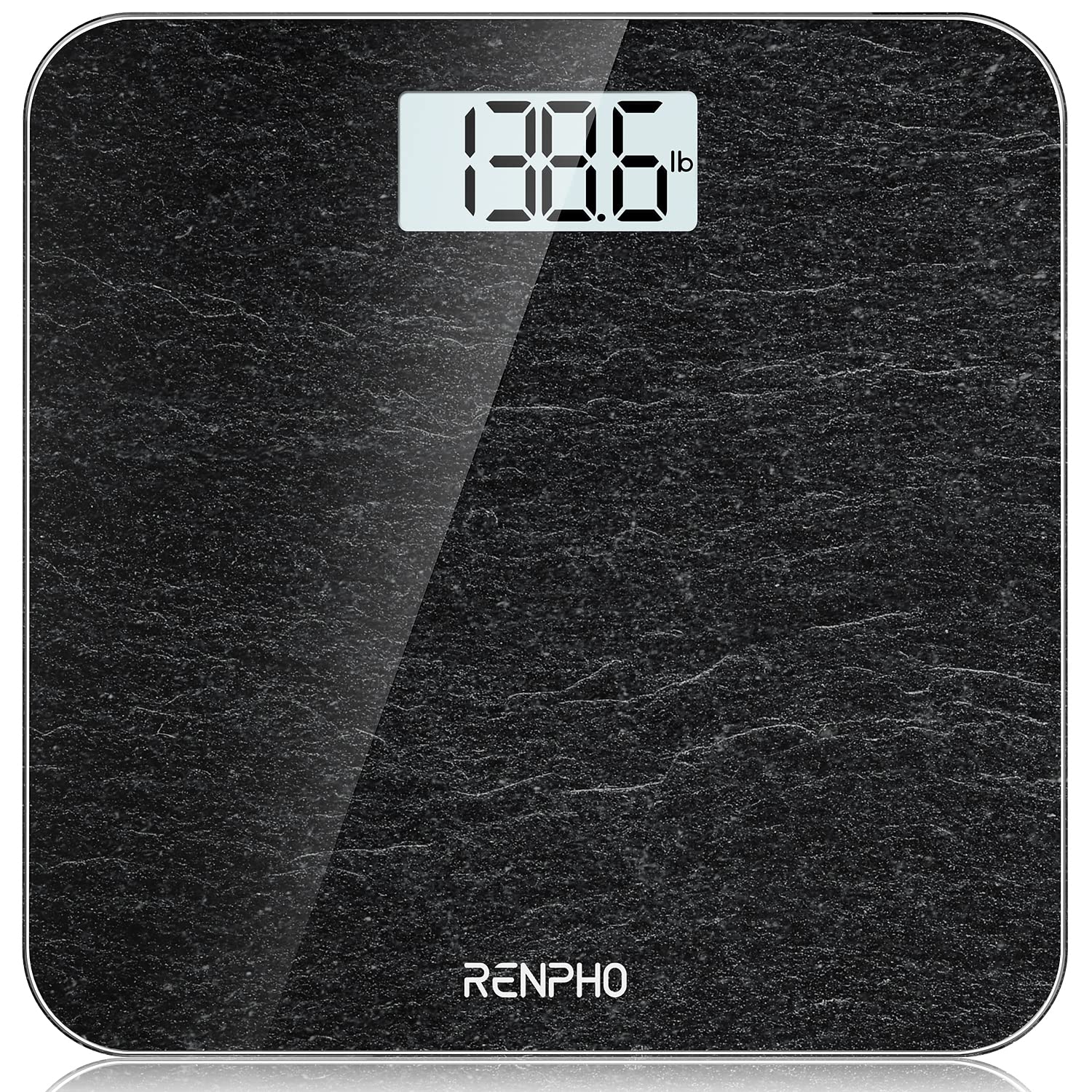
RENPHO Elis 1 smart body scales 13 metrics
Product description
This smart bathroom scale combines precise weight tracking with a wide set of body composition metrics, making it useful for monitoring fitness progress at home. It measures in small increments and syncs via Bluetooth to a companion app so you can view trends over time.
Key Points
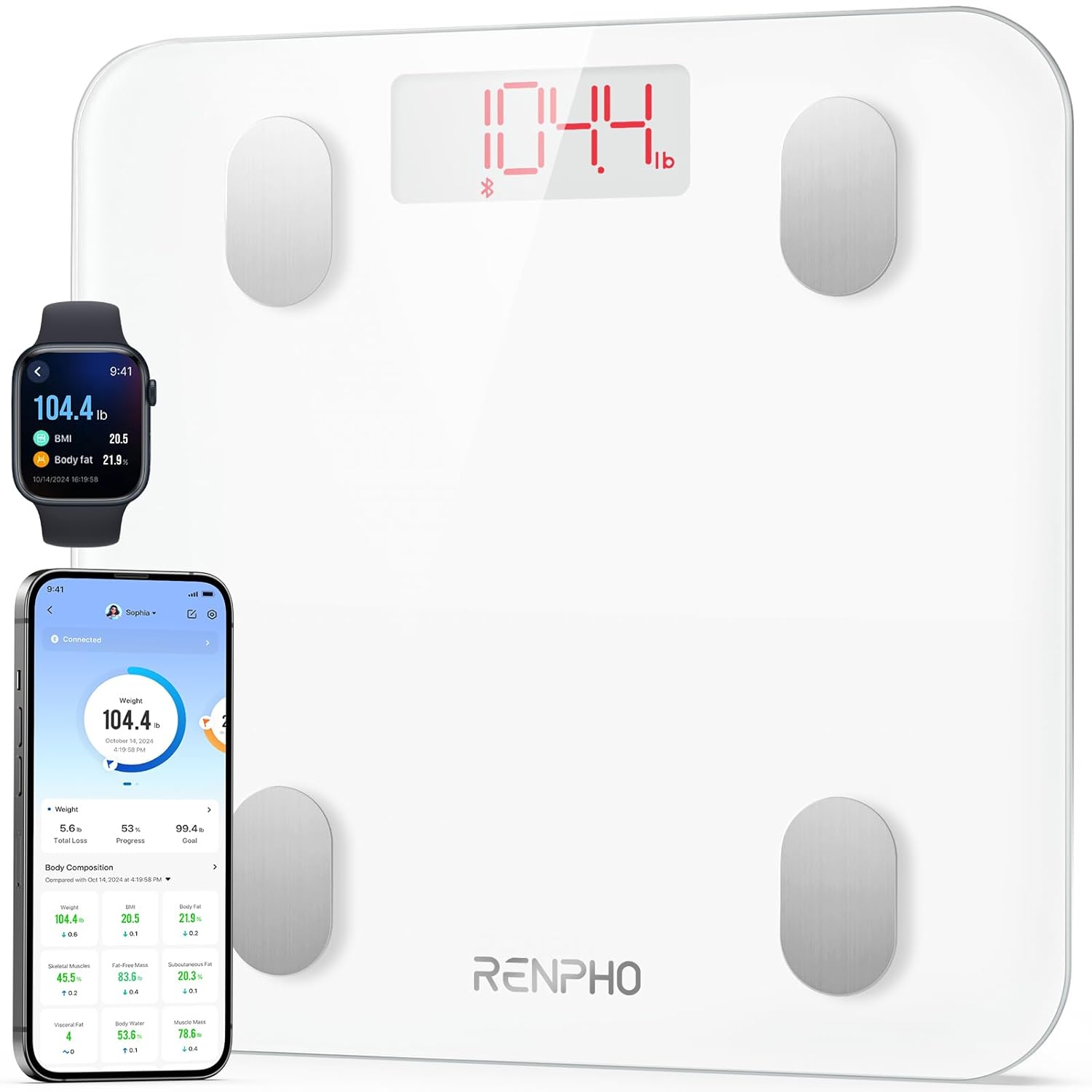
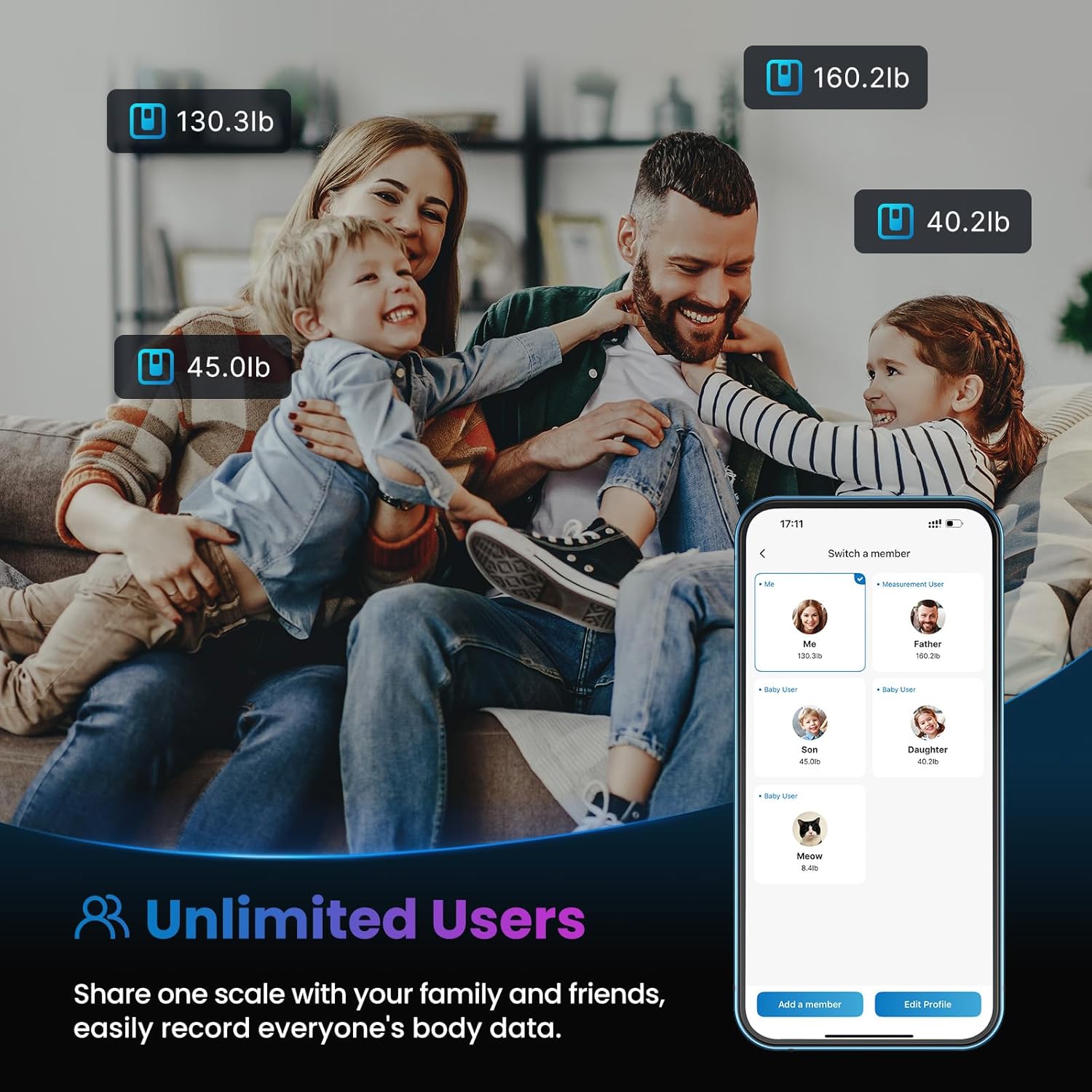
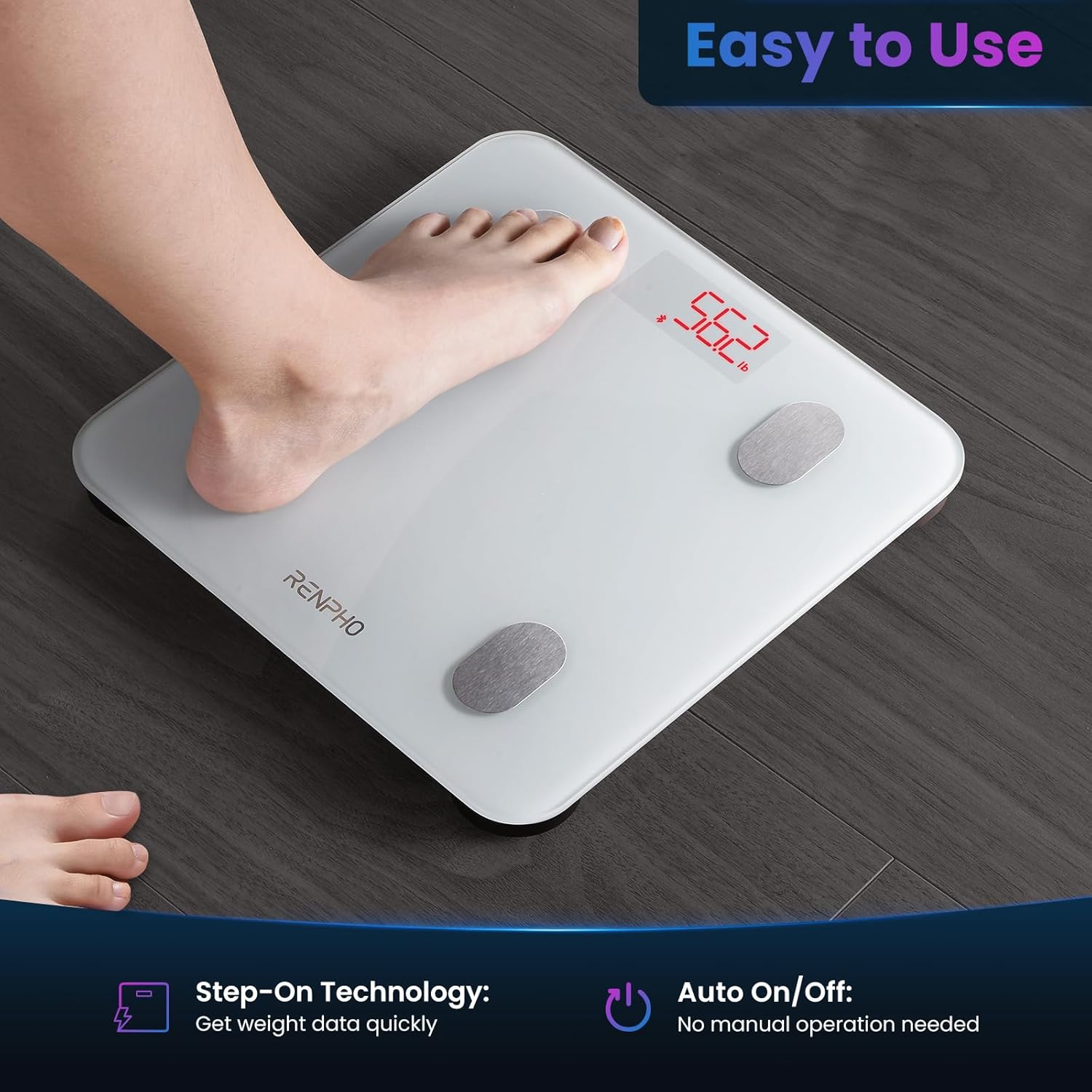
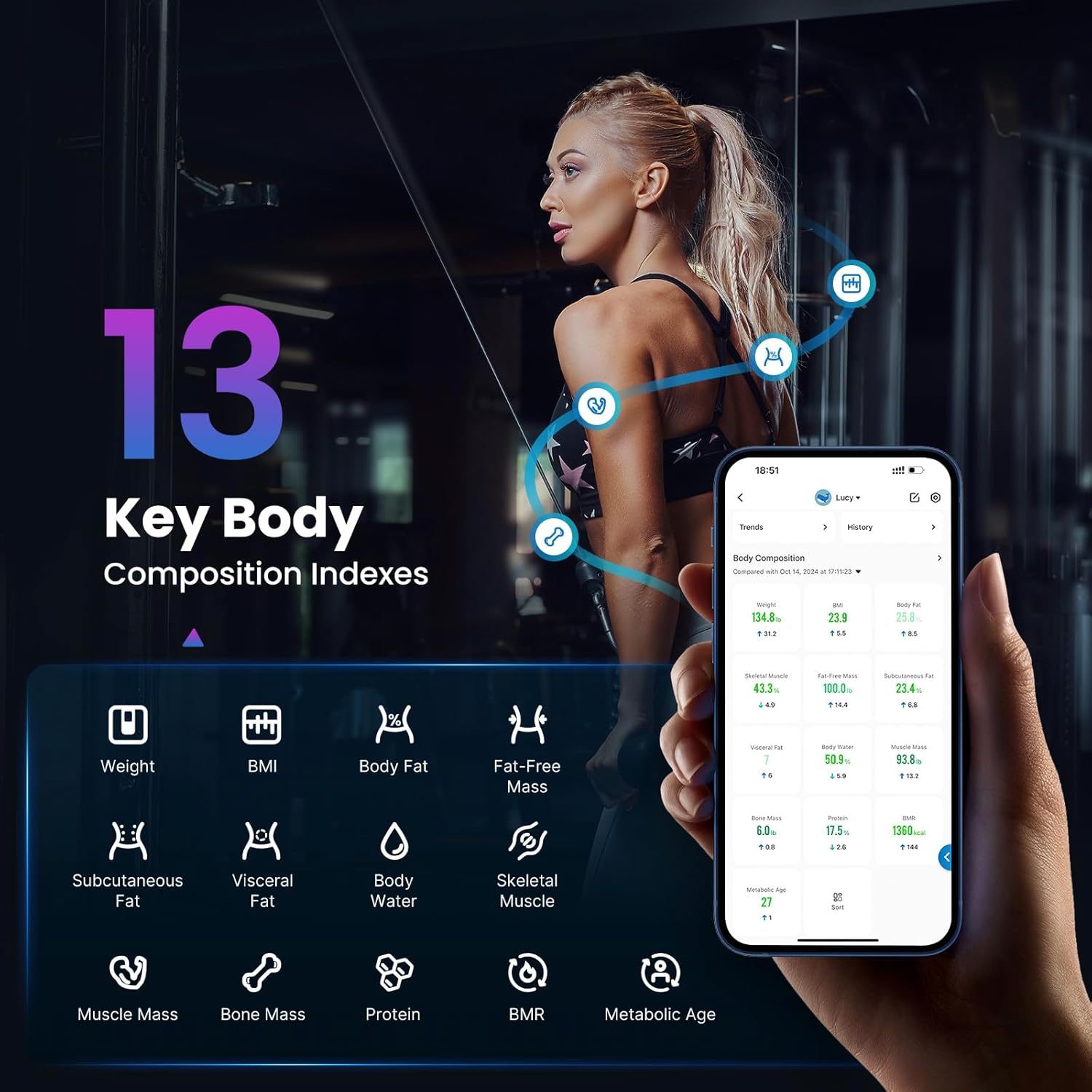
The scale uses Bio-electrical Impedance Analysis to deliver up to 13 body composition measurements beyond simple weight, helping to track changes in body fat, muscle mass and water percentage. It features step-on activation and an easy-to-clean 5mm tempered glass platform for everyday use. For households where several people want to monitor their metrics, the device supports an unlimited number of user profiles through the app and includes a baby/pet mode for weighing infants and animals. ⚖️
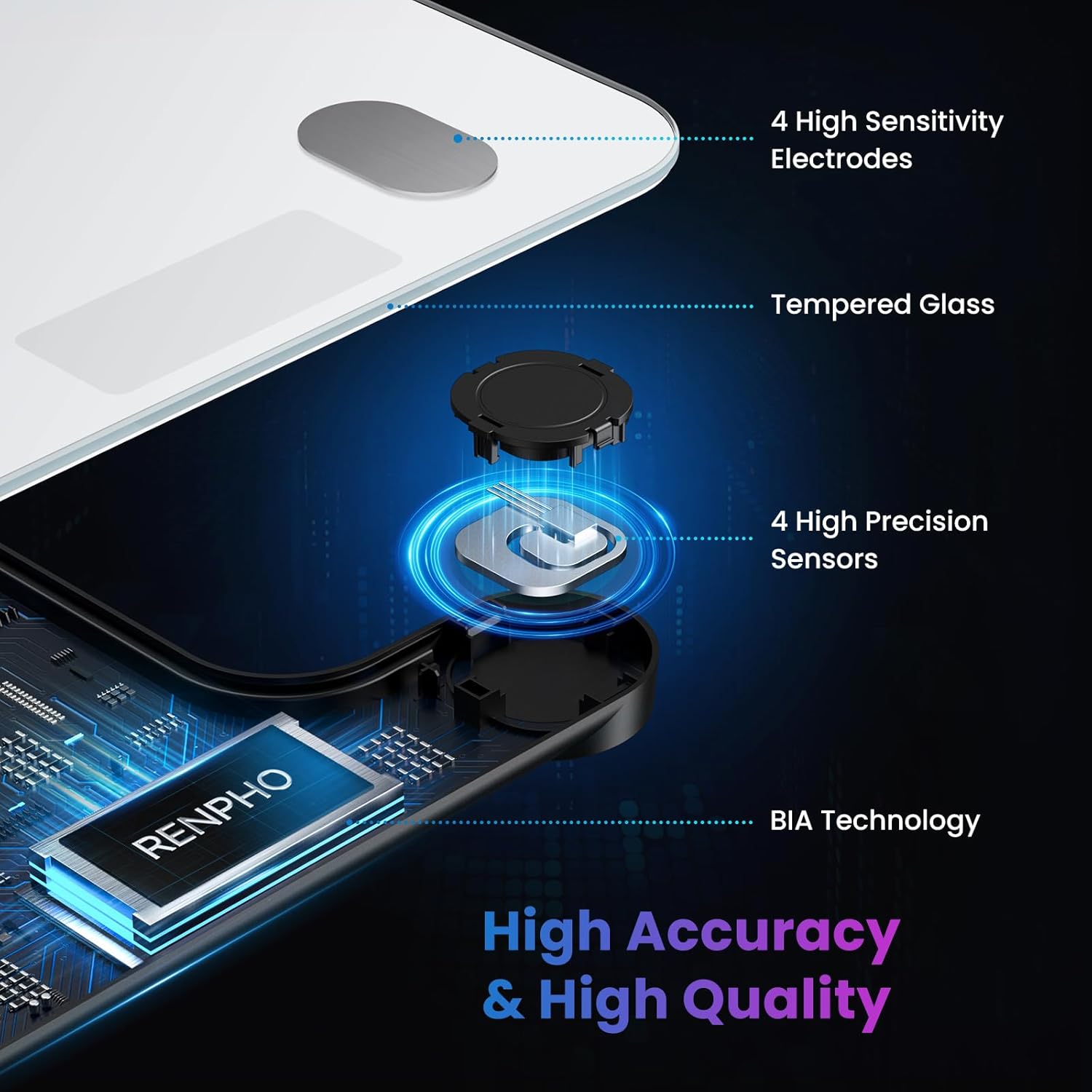
This model is identified as RENPHO Weighing Scales in the app and product literature. The sensors report small changes with a resolution of 0.05 kg, and the scale accepts up to 180 kg capacity, according to the manufacturer. 📱
A practical nuance to consider is that BIA-based measurements can vary with hydration and time of day, so readings are most useful when taken under consistent conditions, according to the manufacturer.
Technical Specifications
- Name: RENPHO Weighing Scales
- Measurement increment: 0.05 kg / 0.2 lb
- Maximum capacity: 180 kg / 396 lb / 28 st
- Platform: 5 mm tempered glass with four high-sensitivity electrodes
- Connectivity: Bluetooth 4.0 and above, compatible with Renpho Health app
- Body metrics: 13 measurements including body fat, BMI, muscle mass, visceral fat and bone mass
Usage Recommendations
Use the scale on a hard, flat surface for the most accurate results and step on with dry feet so the electrodes can register properly. Weigh at a similar time each day for consistent trend data, for example in the morning after using the bathroom and before eating. The app can sync historical data automatically when the phone reconnects, which makes it easier to check weekly and monthly progress without keeping the phone on you at all times. Consider the BIA method as a trend indicator rather than an absolute clinical measurement, and compare changes over time rather than single readings.