


KAIWEETS Voltage Tester VT100K non-contact detector pen (50V to 1000V AC)
Reviews
Price
Product description
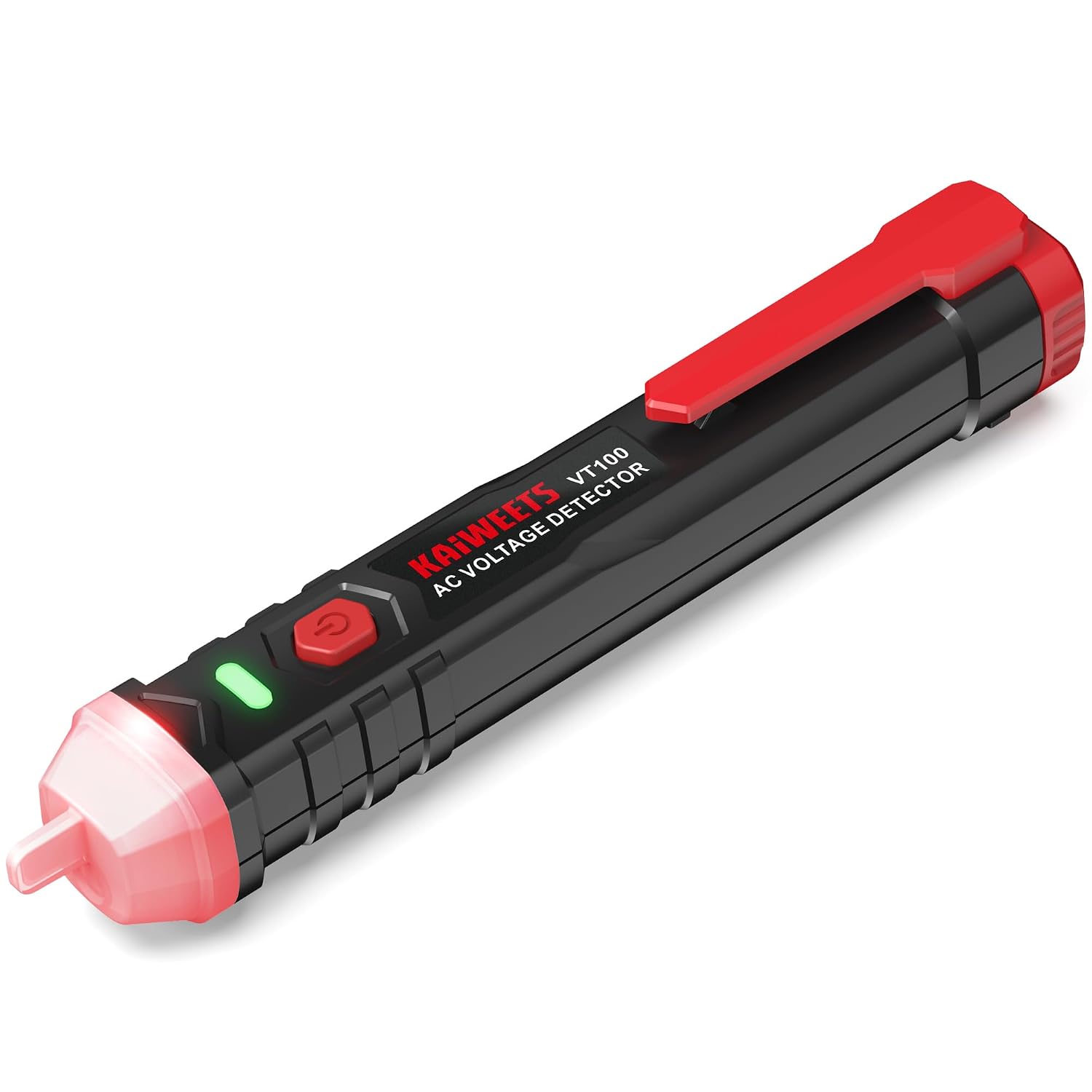
If you’re looking for a quick way to check whether AC power is present without touching bare conductors, this KAIWEETS Voltage Tester is a straightforward non-contact voltage detector pen. On paper, it’s built for practical checks around sockets, cable runs and simple domestic lighting or switch work—exactly the sort of “before you proceed” step that can save time and a bit of stress.
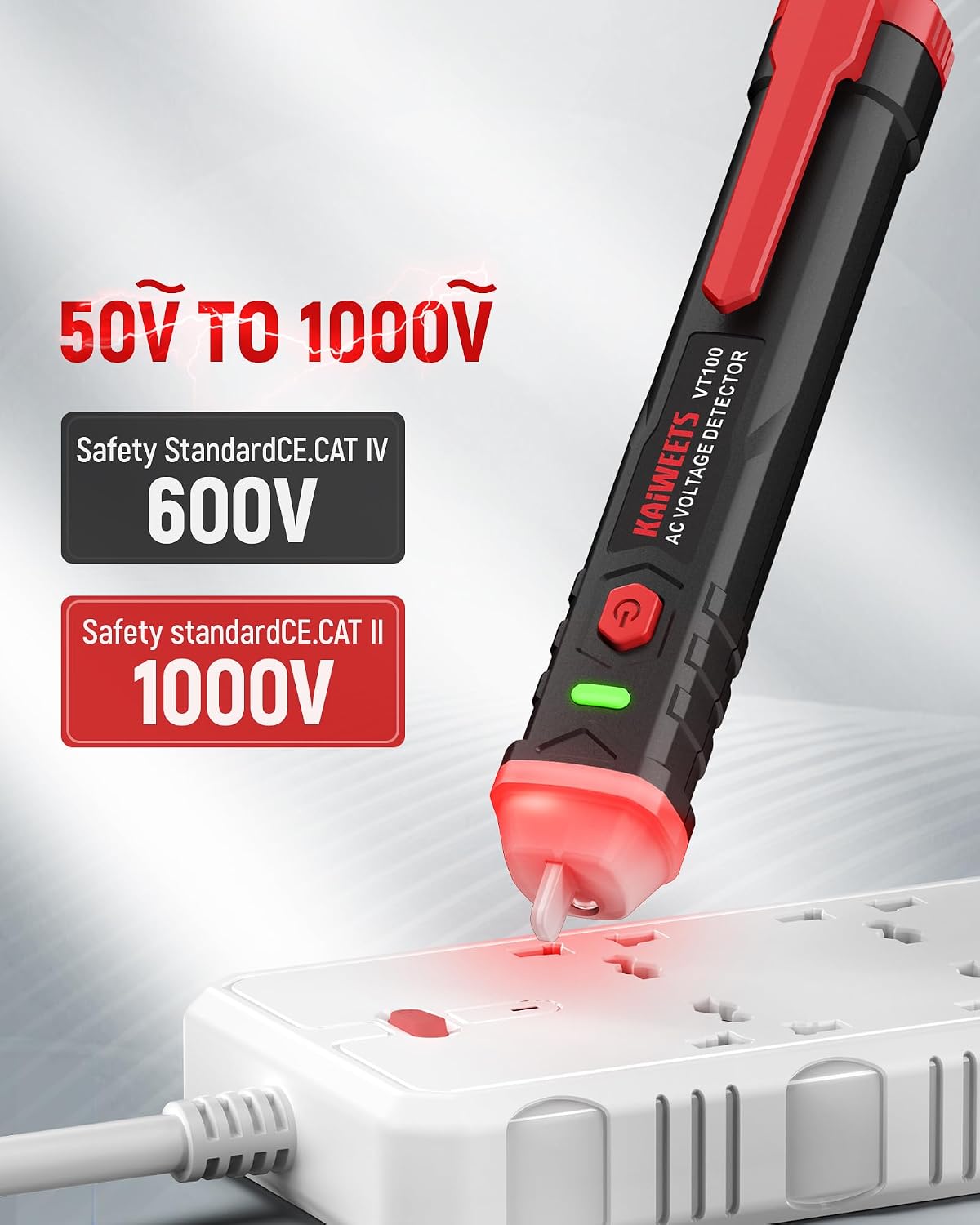
It detects AC voltage in the range of 50V to 1000V and uses a non-contact inductive probe. In use, you hold the tip near a terminal strip, outlet, or supply cord. If voltage is detected, you get a red glow from the tip and an audible buzzer. The LED and beep pattern also helps indicate relative signal strength, so you’re not left guessing in darker or busier environments.
One thing to bear in mind: a voltage tester pen like this is about detection and signal indication. It doesn’t replace proper testing and safe isolation procedures—especially if you’re working on anything where “maybe it’s safe” isn’t good enough.
What it’s for
This is a non-contact voltage detector designed for finding whether AC voltage is present in everyday wiring-related scenarios. The description points to use cases such as cables and wires, circuit breakers, lighting fixtures, and switches.
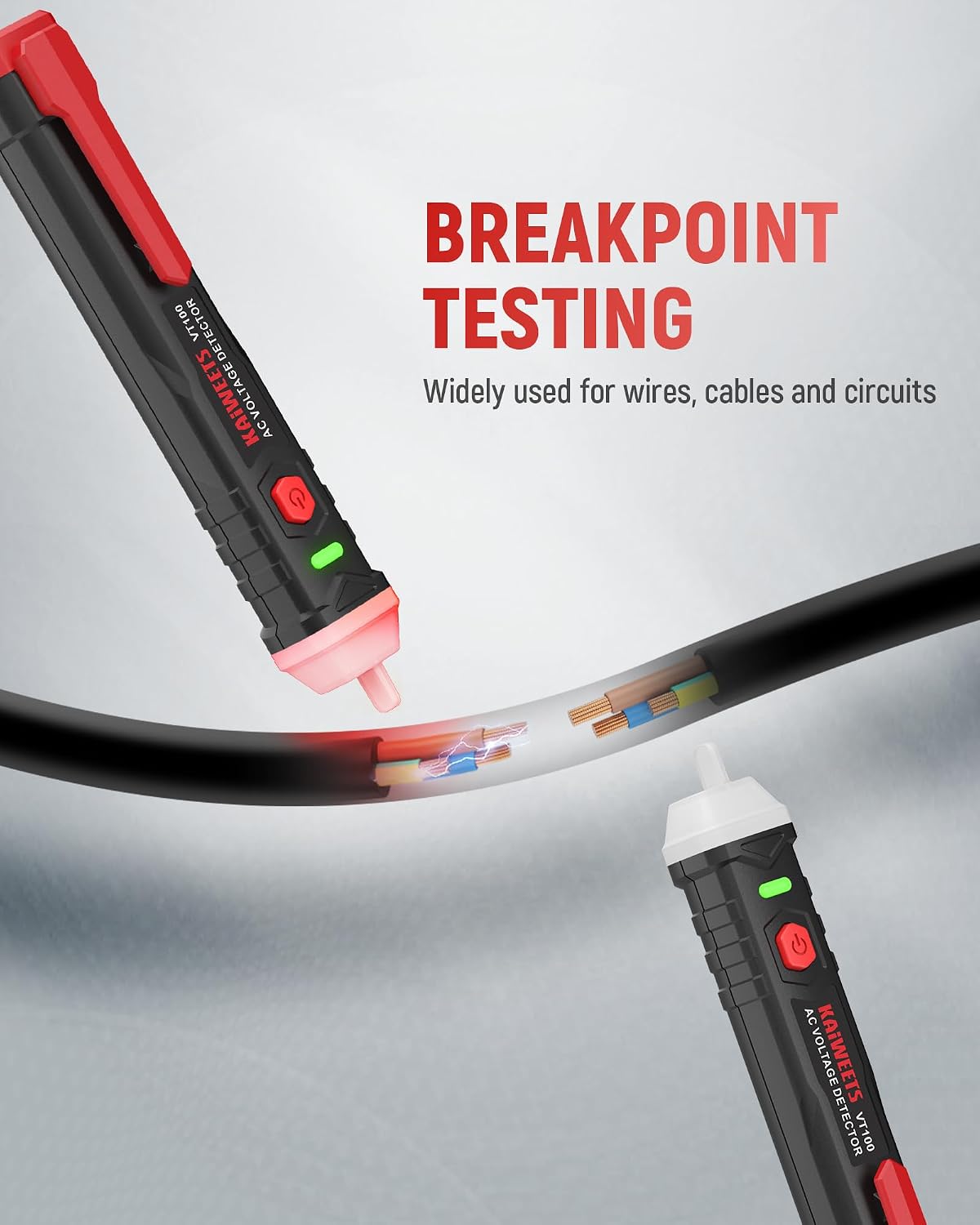
It’s also described as suitable for “breakpoint test”, which is the kind of task electricians and DIYers run into when they need to locate where a problem could be along a cable run. If your job is more about quick checks and guidance than anything highly specialised, this kind of pen tester tends to be the tool you reach for first.
A small practical example: say you’re troubleshooting a wall light that isn’t working. With the circuit appropriately handled, you can bring the tip near the relevant outlet or switch area. If it beeps and flashes red near the suspected live area, that gives you a strong signal to focus your next checks—rather than taking everything apart immediately.
The essentials (how it behaves)
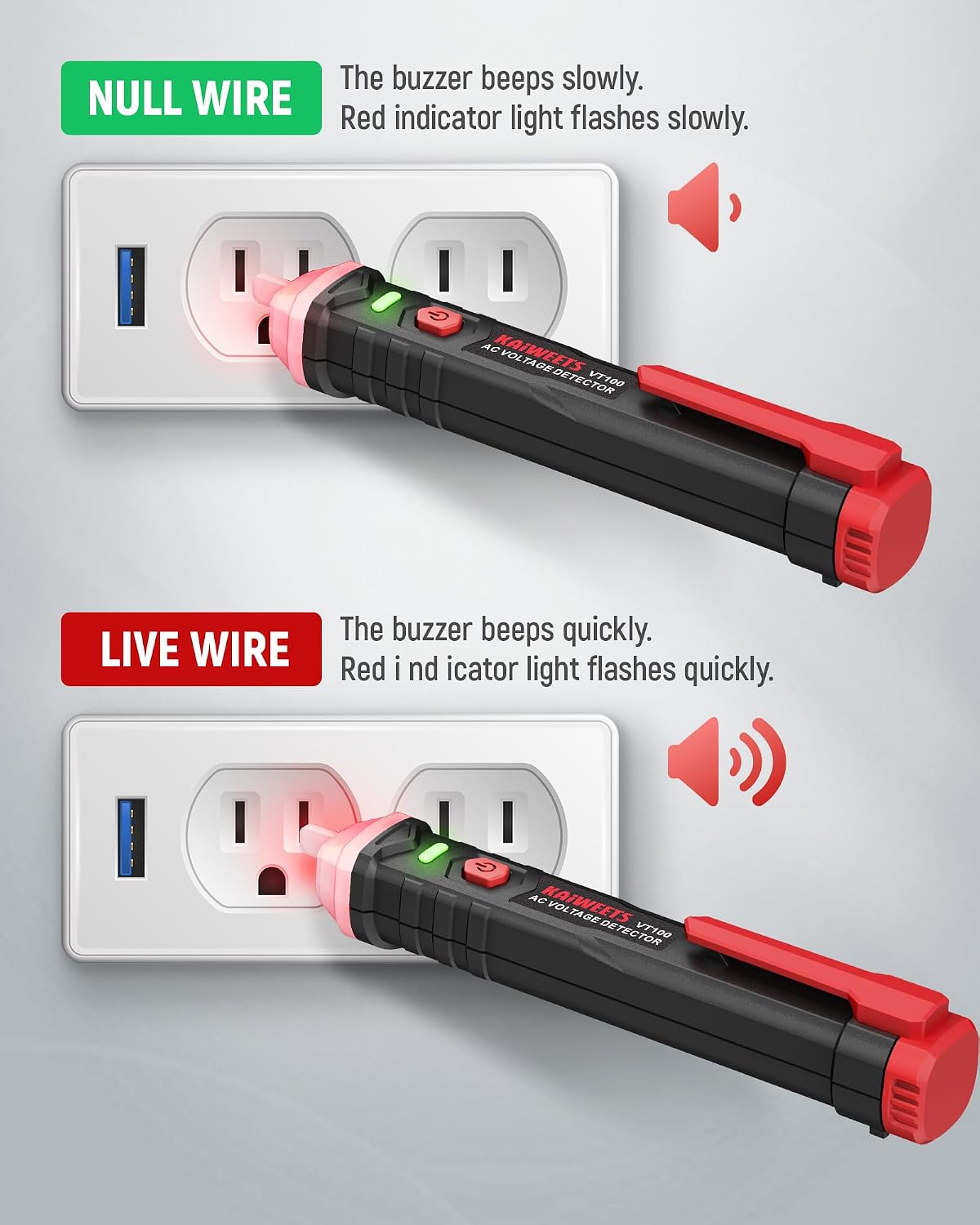
The core method here is a non-contact inductive probe. You simply place the tip close to a target point (like a terminal strip or supply cord). If there’s detected AC voltage, you’ll see the red light and hear a beep.
The tester also signals relative strength: the closer you are to the voltage source, or the higher the sensed voltage is, the higher the beep frequency. That makes it easier to interpret in the moment, particularly if you’re working in a dim area.
Another useful point mentioned is that neutral and live wires are identified by signal strength. In short: live produces a stronger signal and neutral produces a weaker one. That doesn’t mean it’s foolproof for every scenario, but it does give you more than a simple “yes/no” detection.
Where it stands out
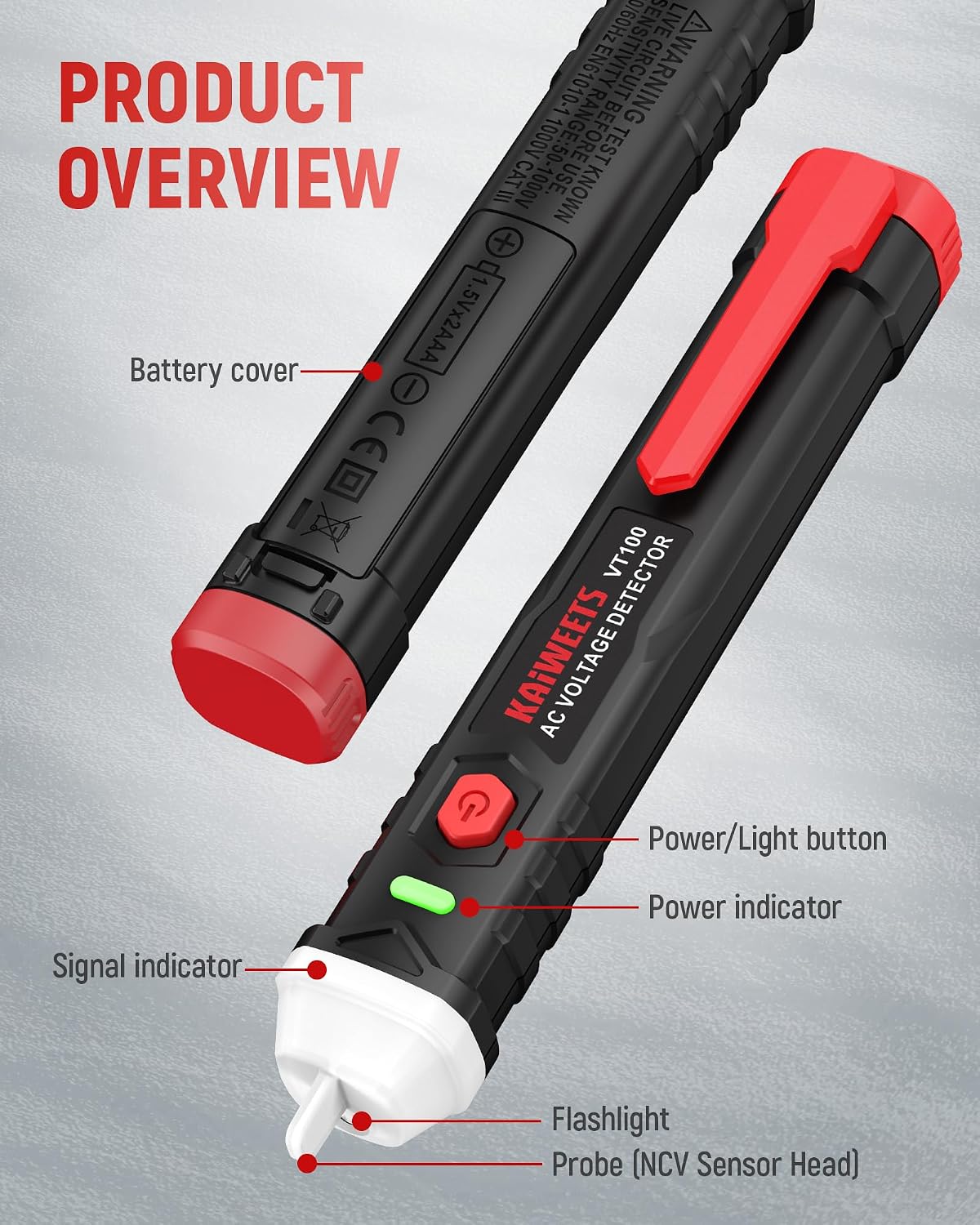
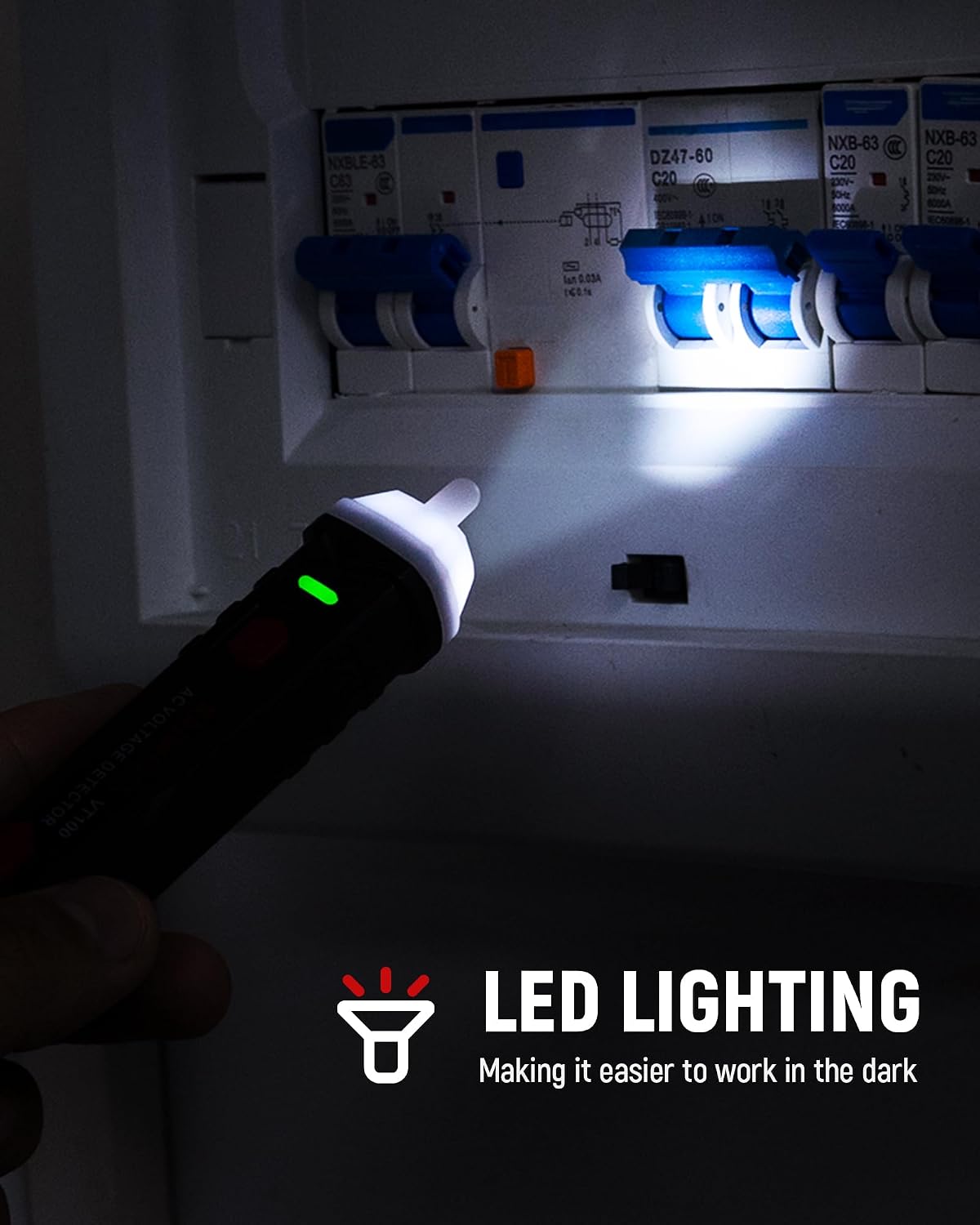
This is a compact, pocket-friendly tool with a bright LED flashlight for working in dim areas. That flashlight aspect is more than just a nice extra if you’re doing tests in lofts, under stairs, or outside where lighting is limited.
You also get both visual and audible alarms: red LED light and a buzzer. For many people, having two alerts is exactly what you want in real conditions—especially when you can’t always look directly at the tip.
Power management is included too: it automatically powers off after 5 minutes without operation or signal detection. That’s the kind of feature that helps avoid draining the tester when you forget to put it back down.
What you should be cautious about
It can be tempting to treat any voltage pen as a guarantee of safety. This one can indicate the presence of AC voltage within its stated 50V to 1000V range, but it’s still a detection device rather than a full test instrument.
You may want to skip it (or at least be extra careful) if your work requires more detailed verification than signal indication—because the description emphasises alarms and relative strength, not measurements.
Also, like most non-contact testers, performance can depend on environment and how near the probe tip is to the conductor and insulation. If you’re working through shielding, deep within a wall cavity, or in a particularly noisy electrical environment, the signal may not be as clear as you’d hope.
Tech specs
- Type: Non-contact voltage detector pen (NCV inductive probe)
- Detection range: 50 to 1000V AC
- Alerts: Audible buzzer and flashing red LED alarms
- Live/neutral indication: By detected signal strength (live stronger, neutral weaker)
- Additional tool: Built-in flashlight
- Auto power off: After 5 minutes without operation or signal detection
- Use cases mentioned: AC voltage detection in cables, wires, circuit breakers, lighting fixtures, and switches, breakpoint testing
- Service: 36-month after sale service (as stated)
Should you buy it?
It’s worth considering if you want a compact, pocketable non-contact tester for quick AC voltage presence checks around common household electrics—sockets, switches, lighting fittings and cable-related troubleshooting. The combination of flashing LED and audible beeps, plus the flashlight and the auto power off, makes it feel aimed at day-to-day practicality rather than specialist workshop measurement.
You may want to avoid it if your job depends on more rigorous confirmation than a detection pen provides, or if you’re expecting precise readings. In those situations, a more measurement-focused tester is usually the safer direction.
Mini FAQ
Is it non-contact or do I need to touch wires?
It’s described as non-contact. You place the tip near the terminal strip, outlet, or supply cord, rather than contacting bare conductors.
How do you know voltage is detected?
When the tip glows red and the pen beeps, voltage is detected. The beep frequency increases with higher sensed voltage and/or closeness to the voltage source.
Can it tell live and neutral apart?
The description says live and neutral are identified by signal strength: live gives a stronger signal and neutral a weaker one.
Does it switch off automatically?
Yes. It powers off after 5 minutes without operation or without detecting a signal.
What voltage range does it cover?
The stated AC voltage detection range is 50V to 1000V.