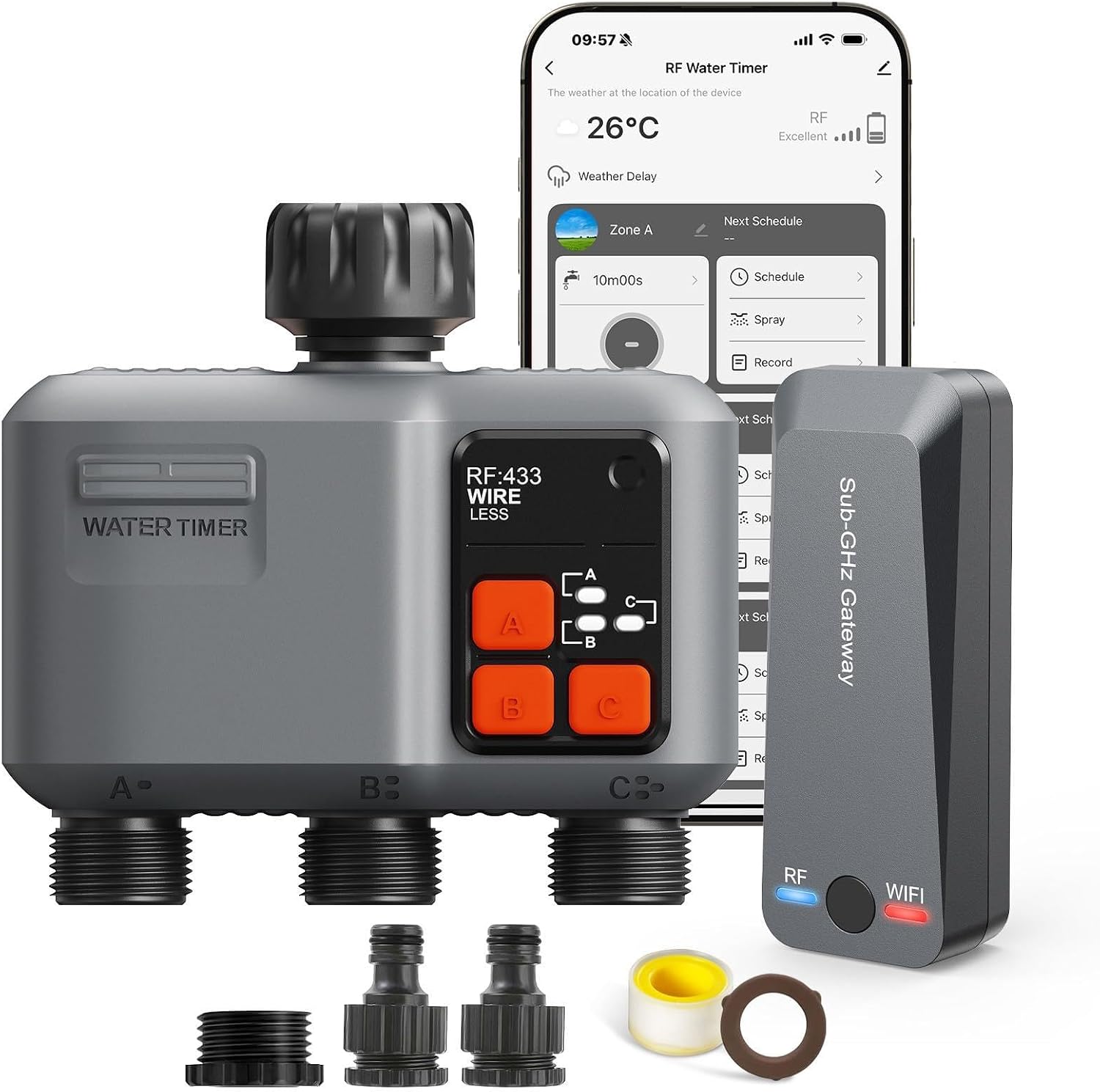
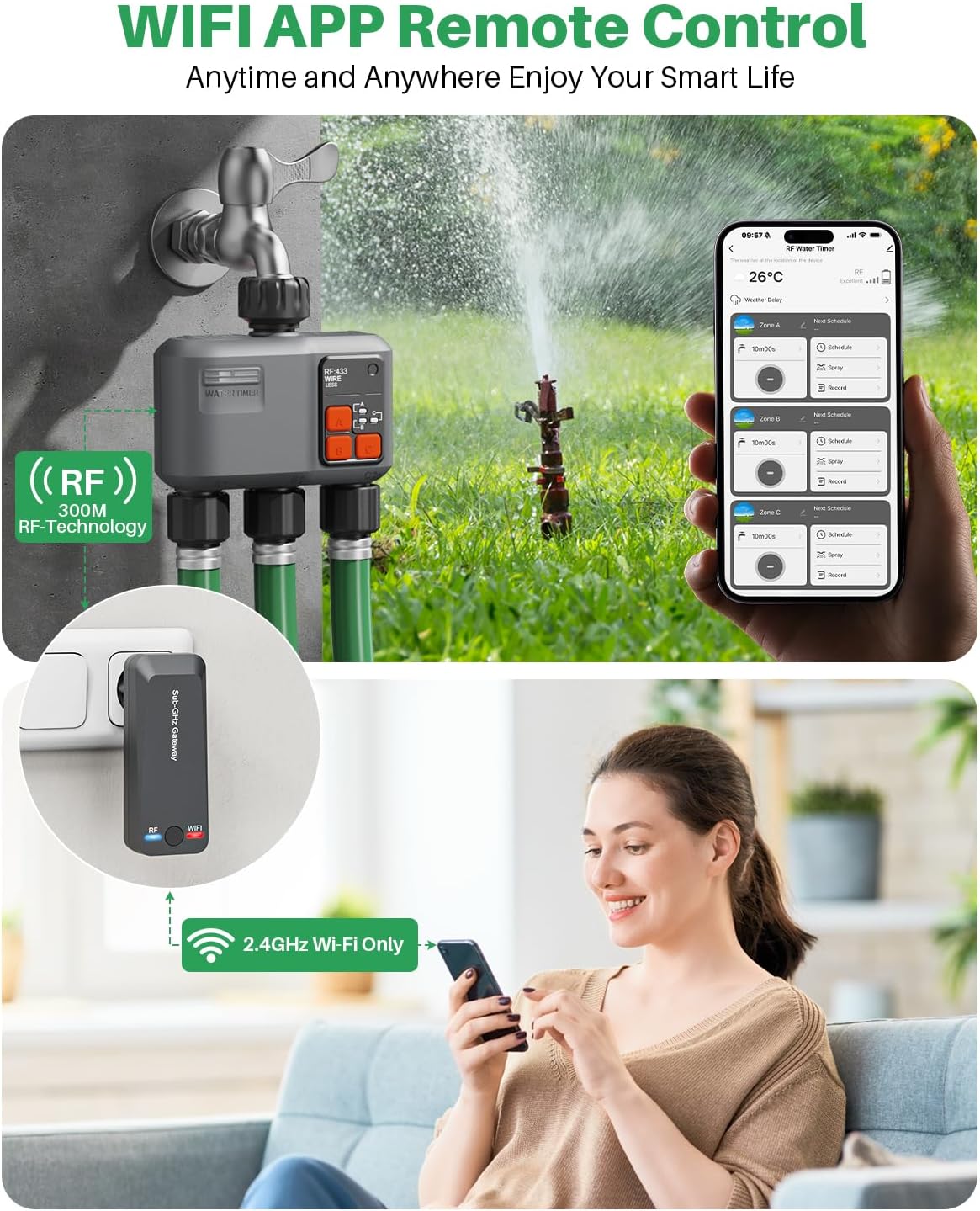
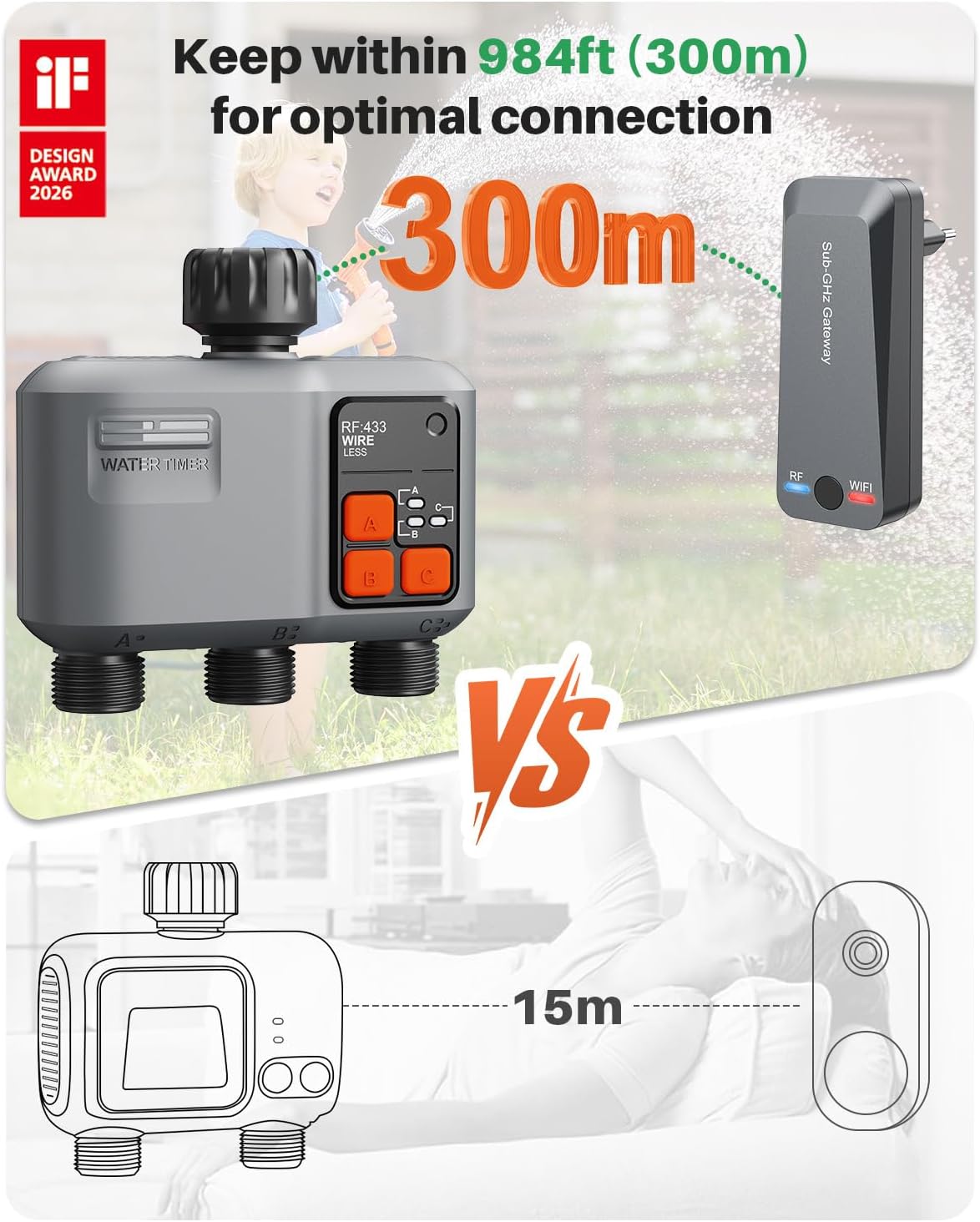
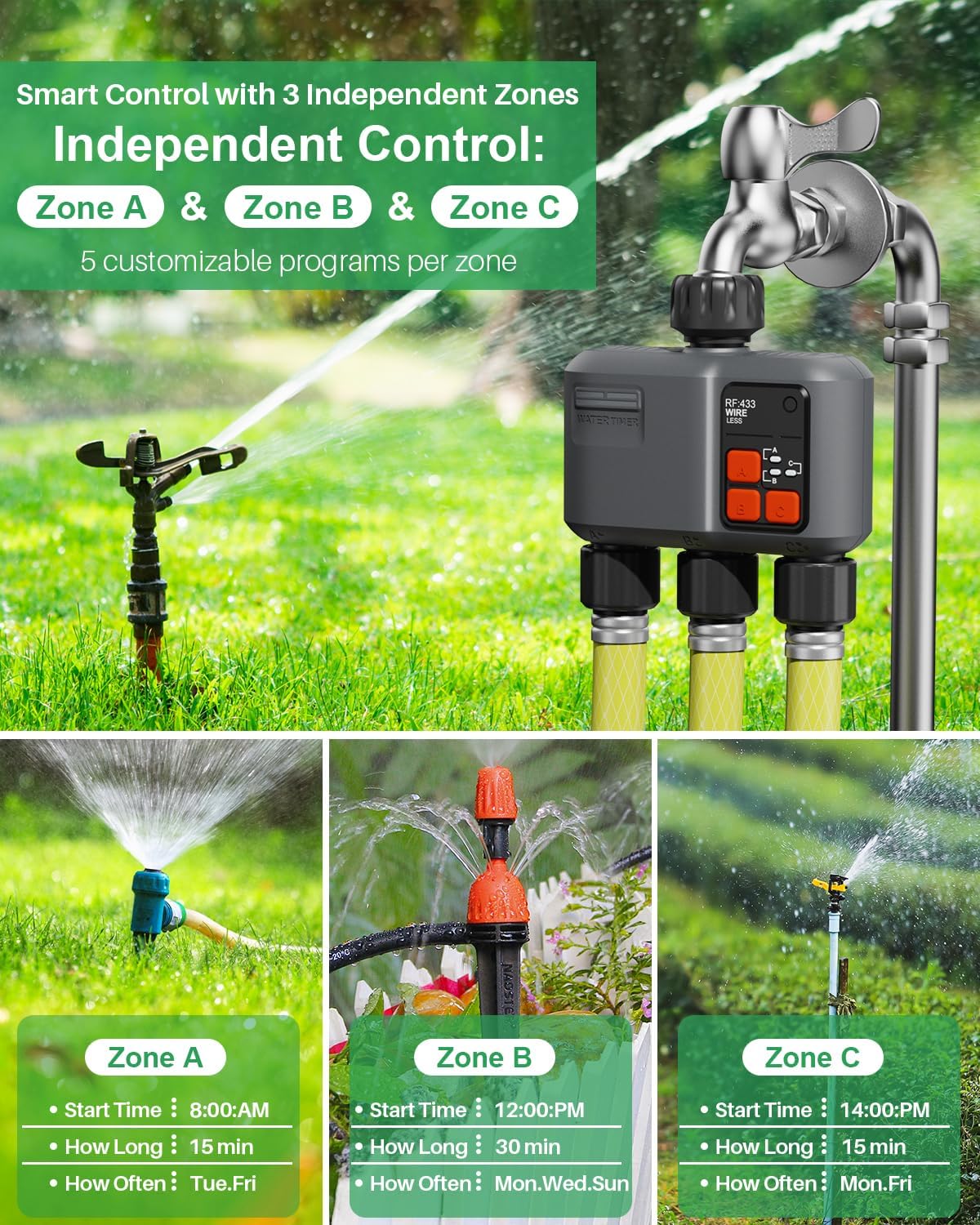
What this is and what it solves\nIf you’re looking to automate garden irrigation without hard-wiring, the Johgee Smart WiFi Water Timer offers three independent outlets that can be programmed separately. The core idea is simple: let one device manage multiple zones with customised watering plans, while you control it from anywhere via a smartphone or voice assistants. On paper, it handles varied irrigation needs across lawns and borders, and the 984 feet (300 m) RF gateway promises stable signal through walls, which is handy for larger plots. The practical value comes from freeing you from manual watering, reducing oversight and ensuring plants get water on a schedule that suits them.\n\n## Connectivity and coverage: what to expect\nA key selling point is the 984 feet wall-penetrating gateway. In real terms, this aims to keep a reliable link between the gateway and the timer across a garden of meaningful size, even when the gateway sits inside a house or shed. The system relies on a 2.4 GHz Wi‑Fi connection and uses the Smart Life app for remote control. If your home Wi‑Fi is steady, you should be able to adjust watering plans, start or stop irrigation, and review run times without being next to the timer. It’s not a universal replacement for a wired controller, but for many homes it offers a convenient, flexible setup.\n\n## How it’s laid out: three outlets, three separate plans\nEach outlet is independent, so you can tailor schedules for different zones—lawn, flowerbeds, pots—without crossover. The timer supports up to five watering procedures per outlet in irrigation mode, with adjustable durations. There’s a separate spray mode for shorter, more frequent runs. Weekly cycles are supported, which helps align watering with seasonal changes. If you prioritise water efficiency, the separate plans are useful, but you’ll want to ensure the schedules don’t overlap unintentionally.\n\n## Control options: app, voice and manual modes\nControl is designed to be convenient. Through the Smart Life app (2.4 GHz Wi‑Fi), you can set, view and adjust schedules remotely. Voice control works with Alexa and Google Assistant, so you can start or tweak watering with simple commands. Manual mode adds a quick, tactile way to start or halt irrigation on the device itself, which is handy for quick adjustments without opening an app. One limitation to note: voice control depends on compatible ecosystems and network reliability, so it’s not flawless in every scenario.\n\n## Weather-aware features: rain delay and logging\nRain delay is built in, allowing 1–7 day delays to prevent watering during rainfall. This is sensible for UK weather, where conditions change rapidly. The timer also keeps a watering log detailing start time, duration and end time for each run. That history can help you spot patterns, but it’s not a detailed garden diary and won’t substitute for broader climate monitoring.\n\n## Durability and expandability\nIP55 weather resistance suggests the unit is built for outdoor use and can cope with typical wet weather. It’s designed to slot into a broader smart irrigation system, with the potential to connect multiple timers (up to four are suggested) to cover larger spaces. Practically, this means you can expand as your garden grows, but you’ll want to plan the layout to avoid overlapping cycles and to keep the network stable.\n\n## What’s good and where it might fall short\nOn the plus side, the three independently programmable outlets are a real asset for multi-zone irrigation. The large RF range and the ability to control via app or voice adds modern convenience that traditional hose timers can’t match. The rain delay feature helps cut waste, and the weatherproof design supports outdoor use. On the downside, you are relying on a 2.4 GHz network and a gateway that must stay within range, if Wi‑Fi is unreliable or if you have a sprawling property, you might hit occasional connection hiccups. Also, setting up multiple outlets with distinct schedules requires careful planning to avoid overwatering.\n\n## Who it’s for\nThis timer is well-suited for garden owners who want zone-specific scheduling without running permanent wiring. It’s a sensible upgrade for those with medium to larger gardens, where different areas have different irrigation needs and run times. If you value remote control, smart integration, and the ability to adjust watering without physical access to the timer, this could fit. It may not be the best option if your garden is tiny, or if you require absolute, fail-safe automation independent of Wi‑Fi.\n\n## When to buy and when to hold off\nBuy it if you prioritise flexible, app-based control across multiple zones and you have reliable 2.4 GHz Wi‑Fi. If your property is very remote, or if you rely on a system that works offline, you might find the dependence on Wi‑Fi a constraint. Also consider whether you really need three independent outlets or if a simpler single-outlet timer would suffice.\n\n## What to check before purchasing\n- Confirm your Wi‑Fi stability in the area where the gateway will sit, the system hinges on a reliable connection.\n- Map out zones to ensure three outlets align with the zones you intend to irrigate.\n- Plan for future expansion if you foresee adding more zones or a larger outdoor space.\n- Consider your preferred ecosystem: if you use Alexa or Google Assistant, check compatibility and routines that you already rely on.\n\n## Practical example in use\nImagine a midsummer day: you’ve got a lawn, a flower border, and a vegetable patch. You programme outlet 1 for a longer watering window for the lawn, outlet 2 for a shorter cycle for the borders, and outlet 3 for a precise, quick soak for seedlings. You activate watering from the app after arriving home, then check the log later to confirm the times line up with your schedule. If rain is forecast, you delay the entire system by a day or two, reducing waste. This is the sort of day-to-day benefit that makes automating irrigation feel worthwhile rather than a gadget.\n\n## FAQ (practical answers you can rely on)\n- Do I need a separate gateway for each timer? No, the system uses a single gateway to connect the timer via RF.\n- Can I control this without the internet? The app is central to control, manual mode provides on-device operation, but remote features require connectivity.\n- Is there a risk of overwatering if schedules aren’t checked? Yes, plan schedules carefully and use the rain delay feature to avoid watering after rain.\n\n## Decision point: Is it worth it?\nWorth considering if you want zone-specific watering, hands-off management and smart control that can be adjusted away from home. It makes sense for medium to large gardens with reliable Wi‑Fi and a preference for app-based scheduling. It may not be the best fit if you need a purely offline solution or if you have very complex irrigation needs that outgrow three outlets.