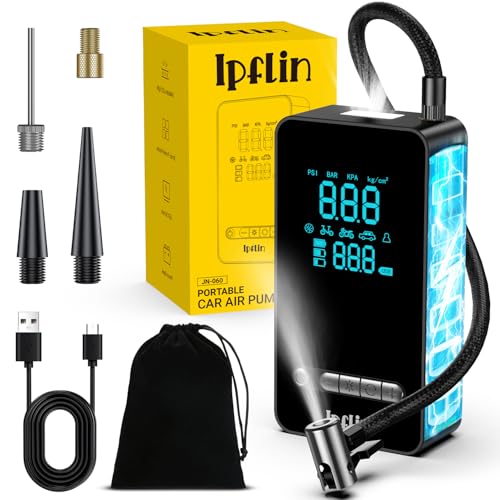
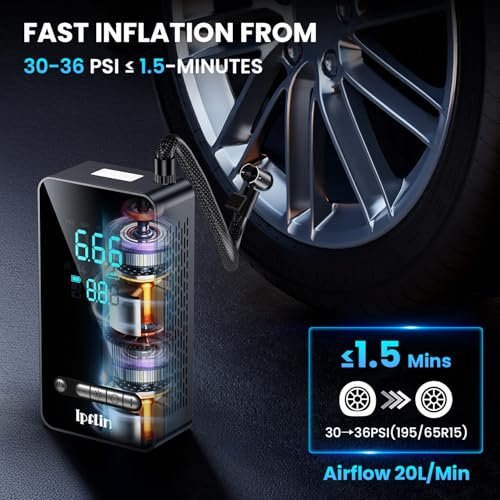
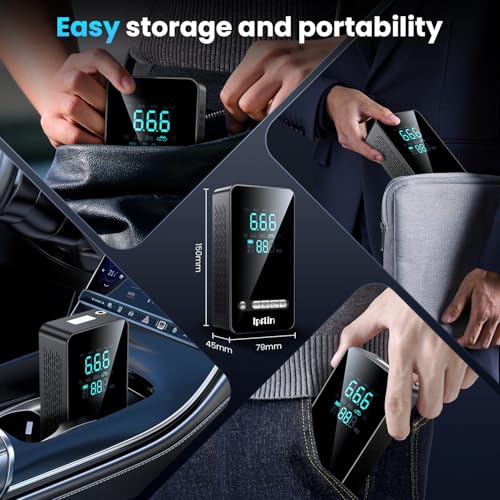
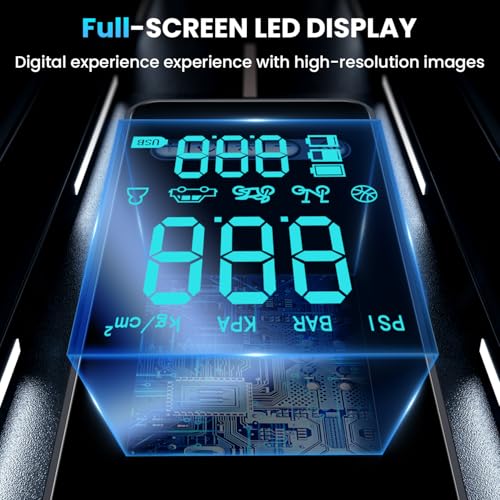
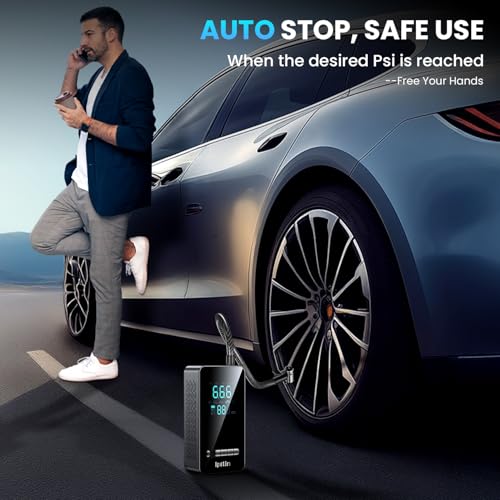
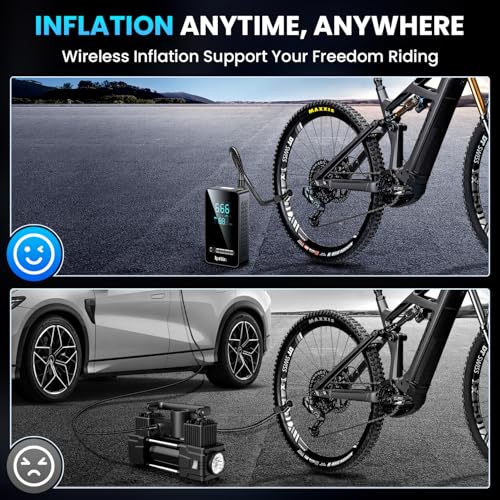
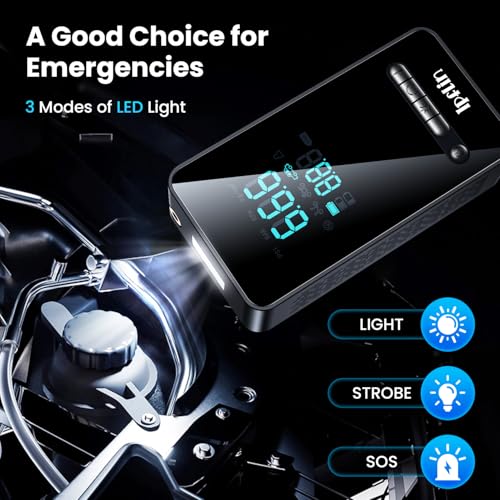
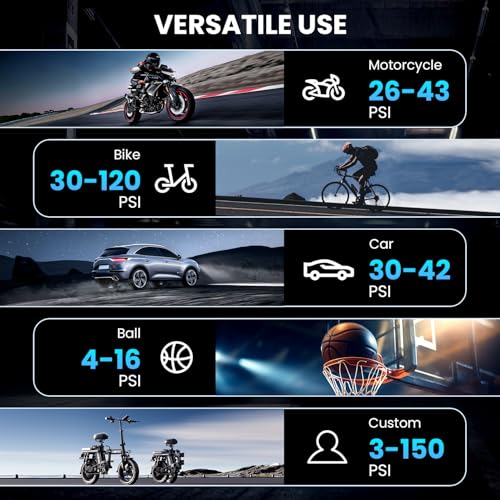
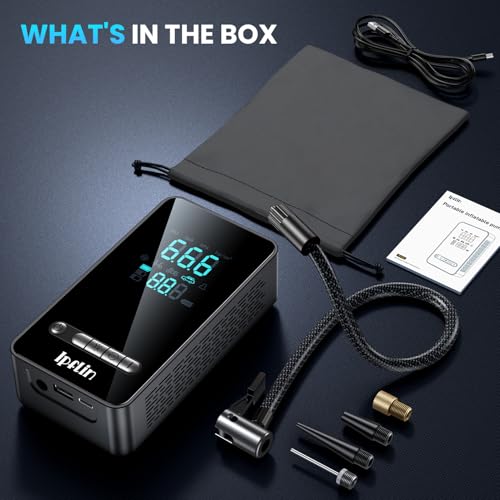
What it is and what it aims to solve\nThe Ipflin Tyre Inflator is a portable cordless air compressor designed to top up tyres and other inflatables up to 150 PSI. It’s aimed at drivers, cyclists and anyone who wants a compact, battery-powered solution to keep tyres correctly inflated without needing a mains power supply. On paper, it combines a digital gauge, a bright LED on top with multiple lighting modes, USB-C power capabilities, and several preset inflating modes to suit different inflatables.\n\n## How it works and what to expect\nUsing the inflator is straightforward: attach it to the valve, select a mode and a target pressure, then start. It automatically shuts off when the preset pressure is reached, which helps prevent over-inflation and saves you time. The unit is described as compact and lightweight, promoting easy storage in a car or on a bike ride. It’s compatible with cars, motorbikes and bicycles, offering a practical, on-the-go solution for common inflation needs.\n\n## What stands out in use\nThe device features an LCD display for clear readings, with inflation figures claimed to be accurate to about 0.5. The top LED light adds utility for inflating in low‑light conditions and can function as an emergency light if needed. A USB-C/USB port arrangement provides a potential power bank capability for mobile devices, which can be handy on longer trips.\n\n## Where it fits best\nIf you prioritise portability, ease of use and a straightforward way to manage tyre pressure, this model aligns with everyday use for car owners, motorcyclists and cyclists who want a no-fuss pump for routine maintenance rather than heavy-duty servicing. It supports several preset modes (car, motorbike, bike, ball) plus a custom mode that lets you set a pressure between 3–150 PSI, which broadens its practical application beyond tyres to other inflatables.\n\n## Strengths and limitations\nOn the plus side, the cordless design and automatic shut-off help with convenience and safety. The LED modes add real practicality for night-time inflation. On the downside, the manufacturer cautions that it’s not intended for heavy-duty tyres (off-road, trucks, etc.), which means it’s more suited to light to mid‑duty tasks. The stated dimensions and weight imply strong portability, but real-world bulk and battery life will vary with usage.\n\n## Before you buy: what to check\nConsider your typical inflation needs, whether you regularly inflate large or heavy tyres, and how important emergency lighting or USB power is to you. If you mainly drive smaller vehicles or ride bikes, this cordless inflator could cover most scenarios. However, if you frequently deal with heavy-duty tyres or long trips without access to charging, you might want to weigh whether a more robust option is worth the investment.\n\n## Quick comparison idea\nCompared with manual pumps or fixed-power inflators, this model offers genuine portability and autonomy, which makes it a more practical everyday carry for most light-to-medium inflation tasks. If you favour more power and durability for frequent high-psi needs, you might explore alternatives designed for heavier workloads.\n\n## Practical example in use\nImagine a slow puncture after work or a chilly morning before a ride: you connect to the valve, set a target around your usual car tyre pressure, and in a couple of minutes the device tops up and stops automatically, leaving you with a properly set tyre and no guesswork.\n\n## FAQ (where information allows)\n- Is it suitable for cyclists? Yes, it supports bike tyres and a custom pressure setting.\n- Can it charge other devices? It has USB input/output ports for powering or charging devices.\n- How long does it take to inflate a typical car tyre? The description mentions a quick increase in pressure, but exact times depend on the starting pressure and tyre size.\n\n## Final decision: Should you buy it?\nIf you want a compact, easy-to-use inflation tool for everyday tyres and inflatables, and the convenience of automatic shut-off and LED lighting matters, this Ipflin model is worth considering. It may be best for light-to-medium use rather than heavy-duty or off-road scenarios.