

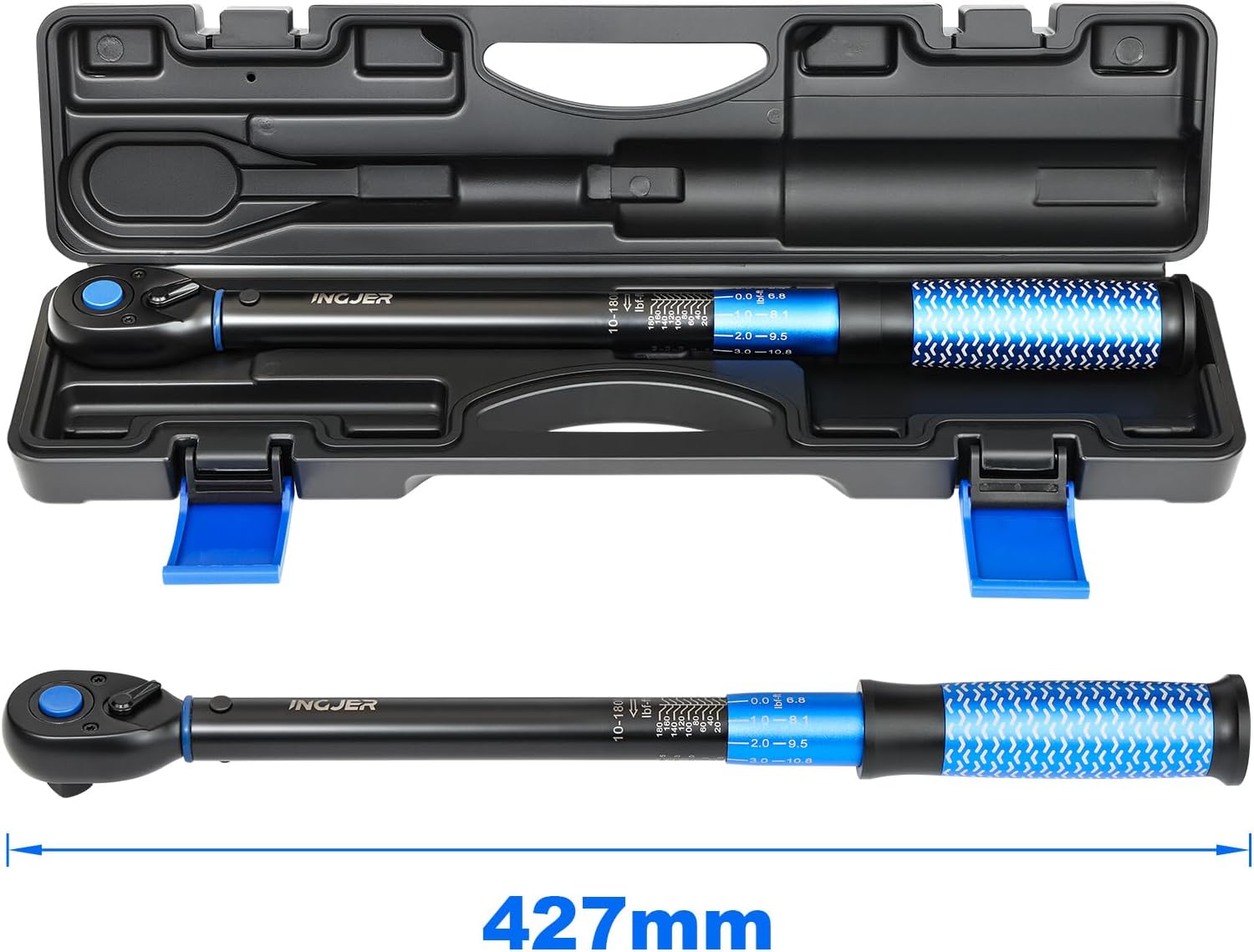
INGJER Upgrade Torque Wrench Auto 1/2" Drive Click Wrench (10–180 ft.lb) with 72-tooth Ratchet
Product description
If you’re fed up with “guessing” tightness on wheel bolts, engine hardware, or any job where torque matters, a click torque wrench is the straightforward way to bring control back. The INGJER Upgrade Torque Wrench Auto is built around audible and tactile feedback (“click” plus vibration through the handle) and a dual-scale setup intended to make it easier to hit your target setting without constantly staring at the dial.
That said, it’s not the sort of tool you buy once and never think about again—torque wrenches still demand careful setting, correct direction use, and sensible storage if you want repeatable results.
Key points
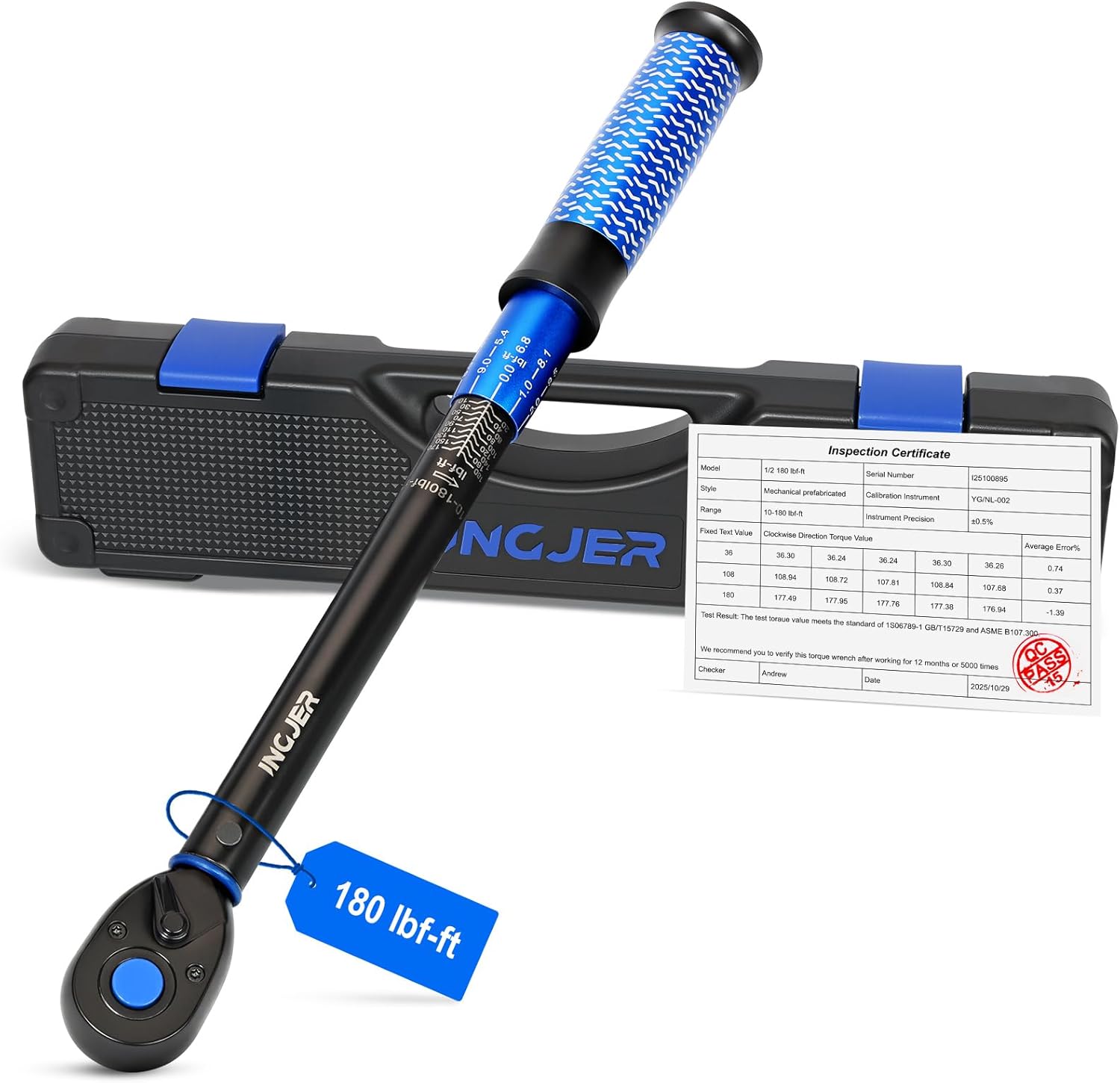
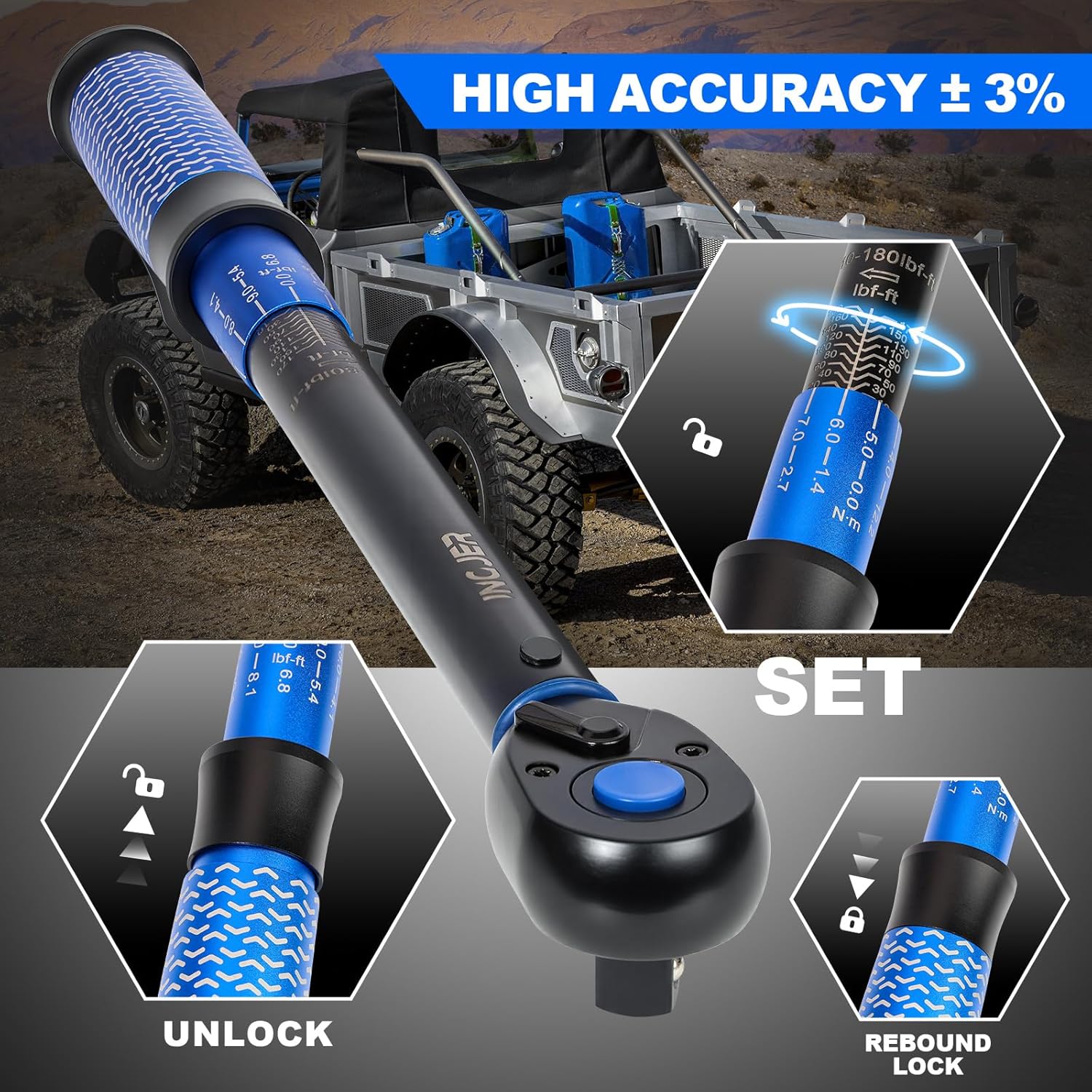
On paper, this INGJER torque wrench is designed to help you avoid both under-tightening and over-tightening—two common ways DIY projects (and garage jobs) can go wrong. It’s advertised as being calibrated and tested to a tolerance of ±3% in a clockwise direction, and it uses a click mechanism intended to tell you when you’ve reached the set torque.
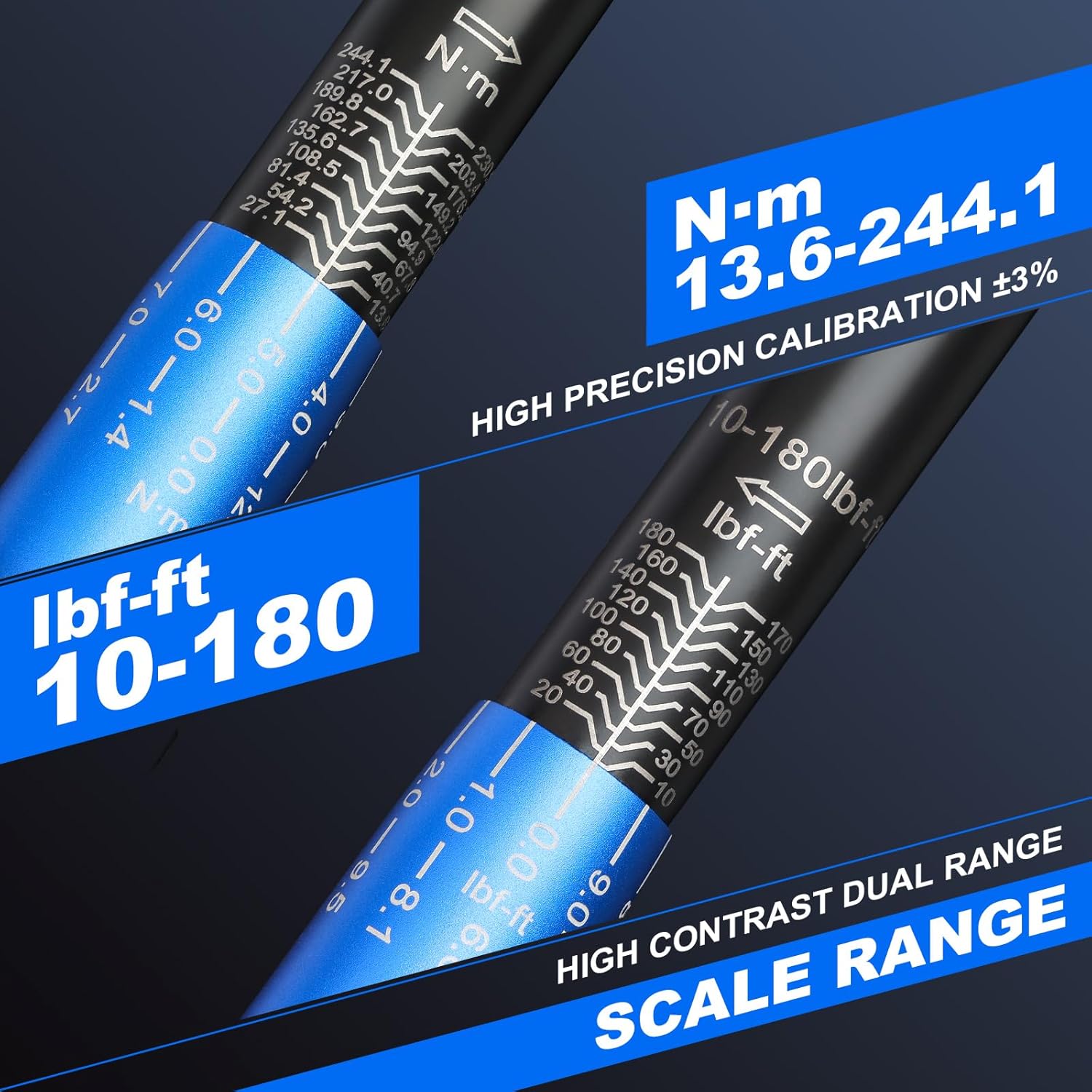
You also get a reversible 72-tooth ratchet head for tighter access, plus dual torque scales so you can work in imperial and metric without doing mental conversions mid-job. The handle is knurled for grip, and the kit includes a protective storage case, which matters more than people think with tools that you’ll only pull out occasionally.
The “auto” part in the product name mainly hints at the click-style control approach rather than any motorised feature.
The essentials
This is a 1/2" drive click torque wrench covering 10–180 ft.lb. In everyday terms, that range is aimed at a lot of common automotive and motorcycle fasteners, plus workshop tasks where you want consistent tightening (rather than relying on feel).
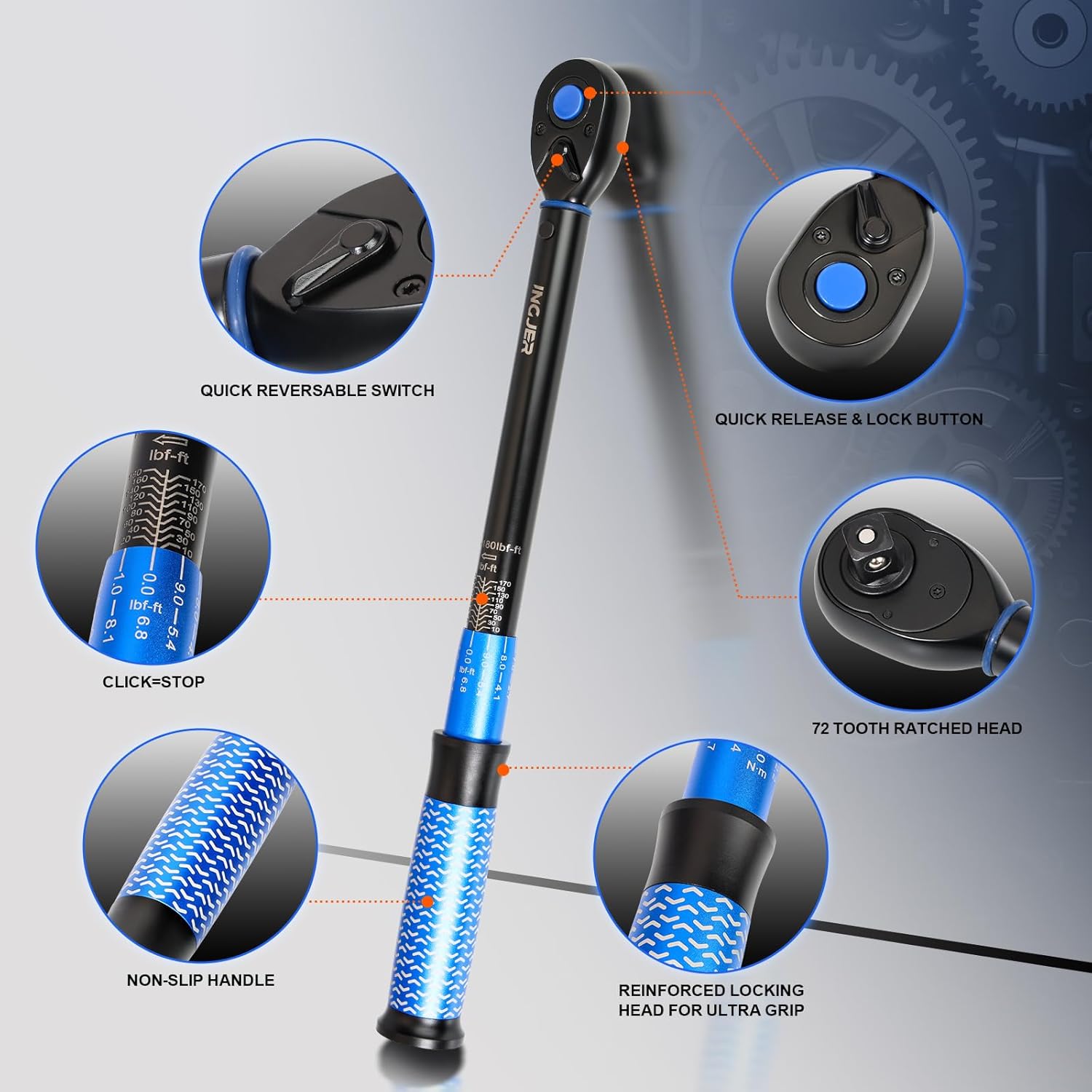
A small but practical detail: the wrench is described as having a double-direction adjustable setup and a reversible ratchet head, so you can tighten and loosen depending on how you set the direction. The dual indication system (sound and vibration) is there to reduce user error and fatigue—handy when you’re wearing gloves, or when you’d rather keep your eyes on the work than on the scale.
For a quick micro example: say you’re fitting a wheel and you already know the required torque for the bolts. You set the handle to the target value, drive the fastener until the click and handle feedback happen, then stop. That “stop at the signal” habit is the whole point—less overshoot, less guesswork.
What stands out in use
The most convincing part of this wrench, based on the description, is the feedback system. Instead of “watch the gauge and hope you stop in time”, you get both an audible click and a physical vibration cue. That can make a noticeable difference if you’re working in awkward positions or you’re juggling the tool, the fastener, and your own body position.
The reversible 72-tooth ratchet is also a sensible feature for real jobs. More teeth usually means smaller swing angles, which helps when space is tight under a car, around an engine component, or in a garage where you’re limited by where you can put your arm.
Finally, the “calibrate after use” approach is mentioned: set the scale to the lowest setting after use to help maintain calibration. It’s a small routine, but it’s the kind that helps torque tools stay trustworthy.
Tech specs
- Type: Click torque wrench (dual-direction adjustable)
- Drive: 1/2" drive
- Torque range: 10–180 ft.lb
- Ratchet teeth: 72-tooth reversible head
- Torque scales: Dual (Ft-Lb and Nm)
- Calibration tolerance: Certified to ±3% (clockwise direction)
- Material: Chrome vanadium steel (Cr-V)
- Finish: Polished chrome finish
Pros, cons, and who it suits
Pros: - Dual indication (audible click plus vibration) can reduce “missed the target” moments. - Reversible 72-tooth ratchet head should help with limited access. - Dual torque scales (Ft-Lb and Nm) are useful when you switch between specs. - Chrome vanadium steel construction is positioned for durability and wear resistance. - Includes a protective storage case, and the guidance to set the wrench to the lowest setting after use is practical.

Cons / limitations to be aware of: - The calibration claim is specifically described for the clockwise direction. If you rely heavily on accuracy in the counter-clockwise direction for critical work, it’s worth paying close attention to the manufacturer’s guidance (the description doesn’t state the same tolerance for anti-clockwise). - Like most click torque wrenches, it can feel a bit “fussy” if you’re expecting to do quick, informal tightening without stopping at the click every time. - The description focuses on repeatability and calibration, but it doesn’t give details like how often you should re-calibrate or whether calibration certificates are included in the box—so if you need documented calibration for professional compliance, you may want to check what’s provided.
It’s a solid fit if you’re a DIYer or enthusiast who wants more control than hand-tightening, or a garage user who needs a dependable tool that’s comfortable to use with gloves and easy to signal-stop.
It may not be the best choice if you only occasionally need torque accuracy and would rather rely on simpler tools, or if your work demands strict documentation for both directions without any extra checks.
Care & maintenance
To keep it behaving like a calibrated tool rather than “just another wrench”, follow the basic routine mentioned: after you’ve finished, adjust the scale down to the lowest setting. That’s often recommended for torque tools because it reduces load on the mechanism during storage.
Also, the chrome-plated finish is described as helping resist corrosion. Still, it’s wise to store it in the included case and avoid leaving it damp or dirty in a way that can shorten tool life.
When it makes sense (and when to skip)
Buying verdict depends mostly on your use pattern. If you regularly work on vehicles or motorcycle components and you already know torque specs (or you’re willing to look them up before tightening), a 10–180 ft.lb click wrench is the kind of “right tool, right job” purchase that tends to pay off quickly.
It’s also worth considering if you find traditional dial reading annoying—because audible and vibration feedback means you can stop confidently without staring at the scale.
However, you may want to skip it if you need guaranteed tolerance in both tightening and loosening directions for high-stakes work (the description only clearly states the ±3% certification for clockwise). And if you expect a torque wrench to replace proper torque-spec preparation, it won’t—this tool is only as good as the setting you choose.
Frequently asked questions
Is it suitable for both tightening and loosening?
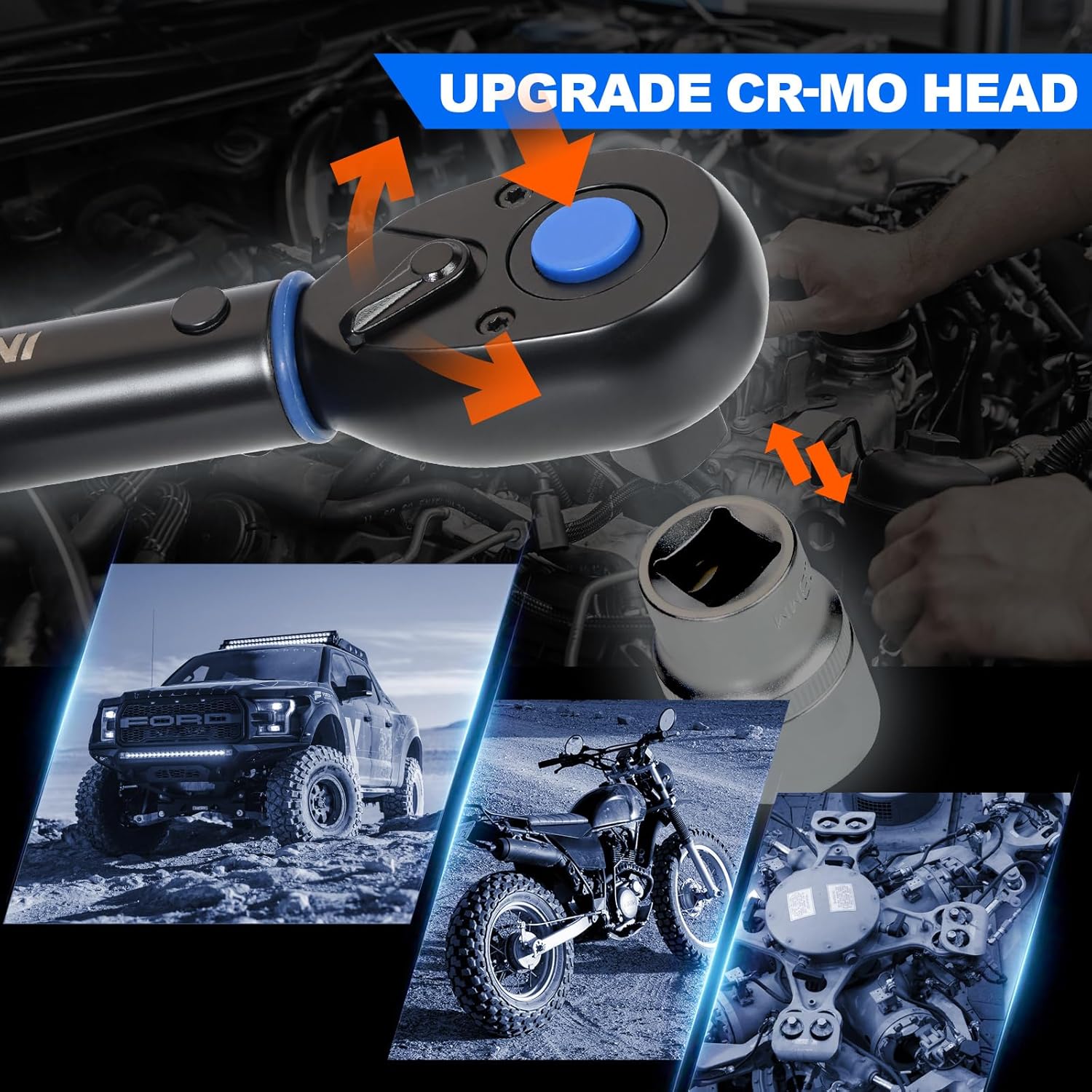
The wrench is described as having a reversible ratchet head and dual-direction adjustable setup, so it’s intended for both tightening and loosening depending on direction settings.
What torque range does it cover?
It’s rated for 10–180 ft.lb.
Does it use both imperial and metric units?
Yes. The description notes dual scales in Ft-Lb and Nm.
How do you know when the target torque is reached?
You’re meant to rely on a clear audible “click” plus vibration through the handle. The idea is that you don’t need to constantly look at the scale.
What should I do after using it?
The description advises setting the scale to the lowest setting after use to help maintain calibration, and storing it in the provided protective case.
Final verdict
Should you buy it? If you’re looking for a click-style 1/2" drive torque wrench with a sensible 10–180 ft.lb range, audible and tactile feedback, and a reversible 72-tooth ratchet for tighter access, this INGJER is worth a close look—especially if you want less eyeballing of the scale.
You might want to look elsewhere if your work depends on equal accuracy in both rotational directions and you need clearer confirmation for anti-clockwise tolerance, or if you require calibration paperwork and details beyond what’s described here. For most careful DIY and everyday garage torque jobs, though, it ticks the boxes you’ll actually use on the bench and under the car.