

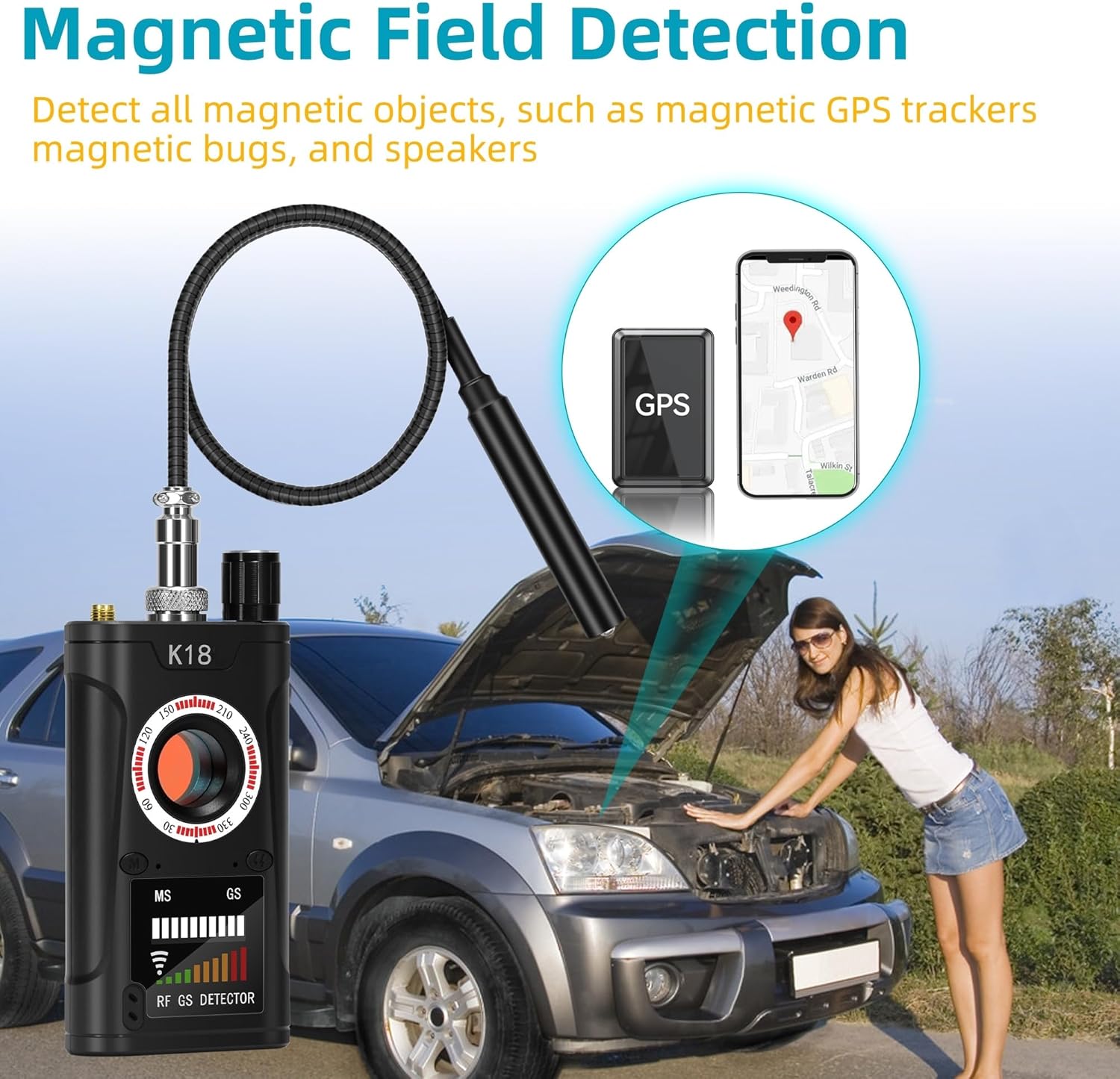

Hidden Camera Detector for Travel and Hotels
Product description
This handheld detector helps locate hidden cameras, GPS trackers and wireless listening devices when travelling, staying in hotels or checking vehicles and changing rooms. It combines an infrared lens sweep and radio frequency scanning across a wide band to quickly point out potential spying equipment, helping you carry out discreet privacy checks before entering private spaces.
Key Points
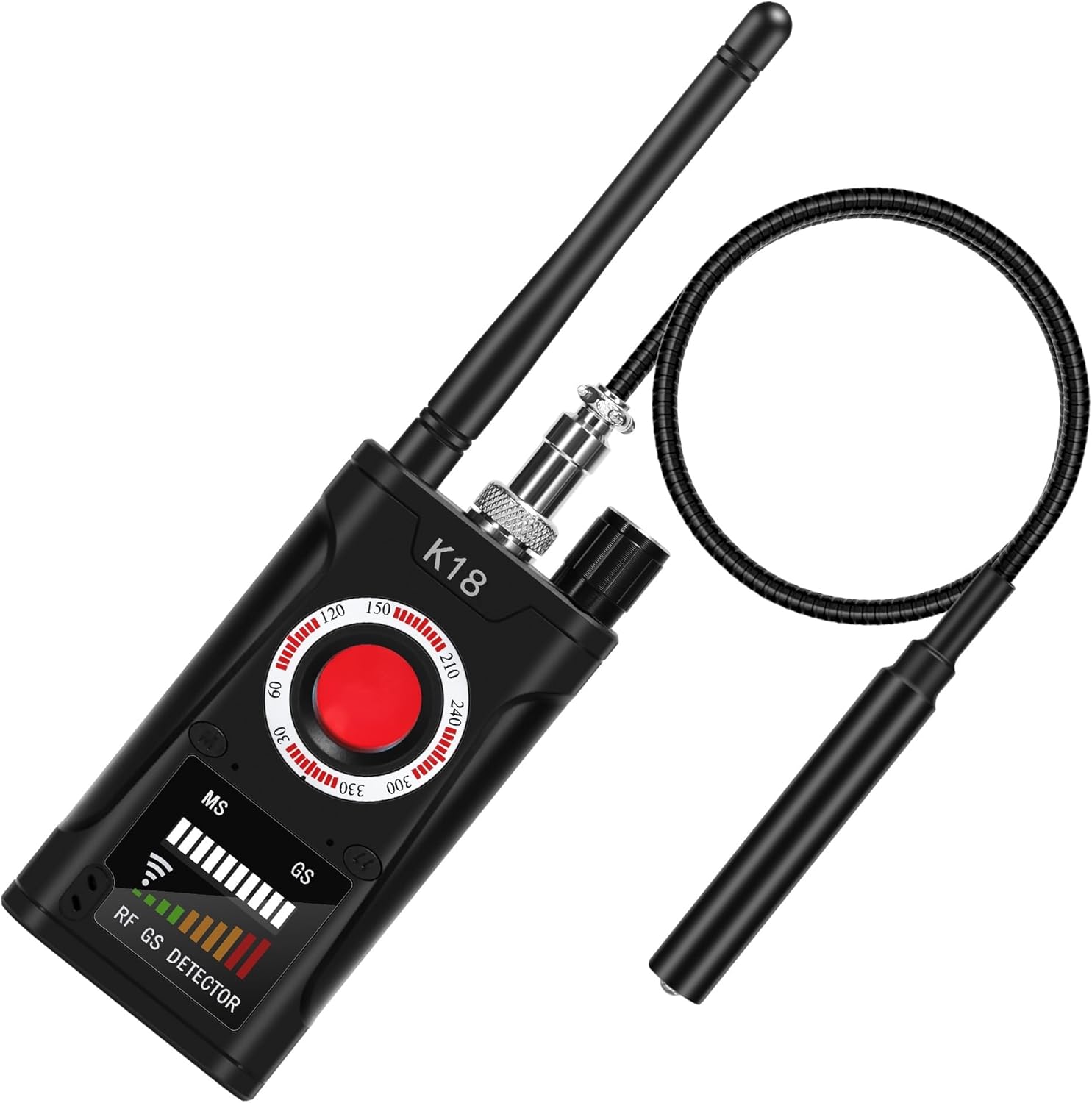
The unit scans frequencies from 1 MHz to 6.5 GHz, which covers common wireless transmitters and many digital camera signals. Sensitivity is adjustable so you can reduce false positives in crowded RF environments and focus on genuine sources of interference. There are three alert modes, including buzzer, vibration and a silent earphone output, which allow covert sweeping without drawing attention. The detector is compact and lightweight, pocket-sized for easy transport and quick checks while travelling or moving between rooms. Note that detection capability depends on the strength and type of the hidden device, according to the manufacturer.
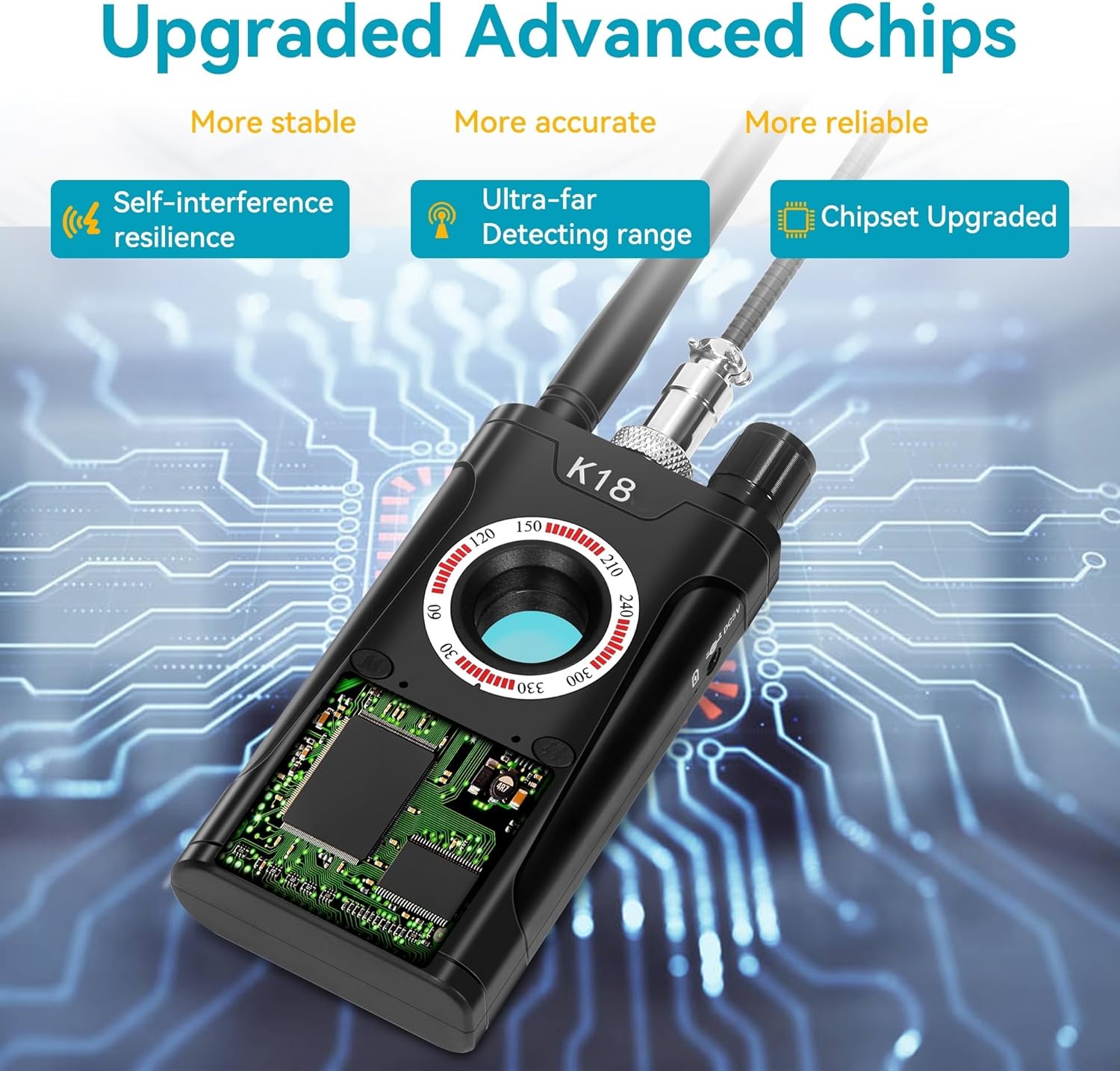
Technical Specifications
- Name: Diseleri Hidden Camera Detector
- Frequency range: 1 MHz–6.5 GHz
- Alert modes: buzzer, vibration, earphone (silent)
- Detection methods: RF scanning and infrared lens sweep
- Power: rechargeable battery (manufacturer information)
- Size: compact, pocket-friendly
Usage Recommendations
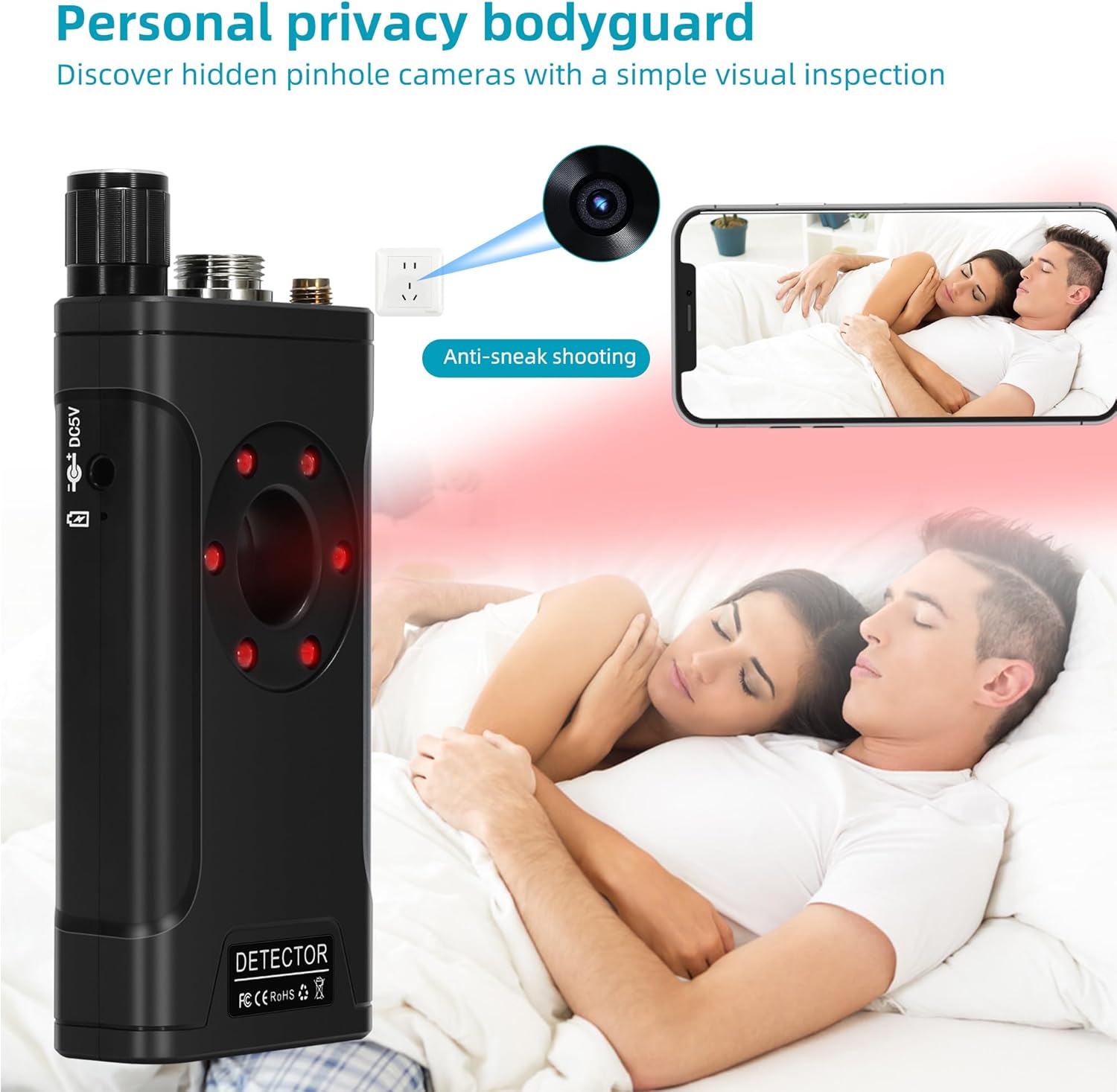
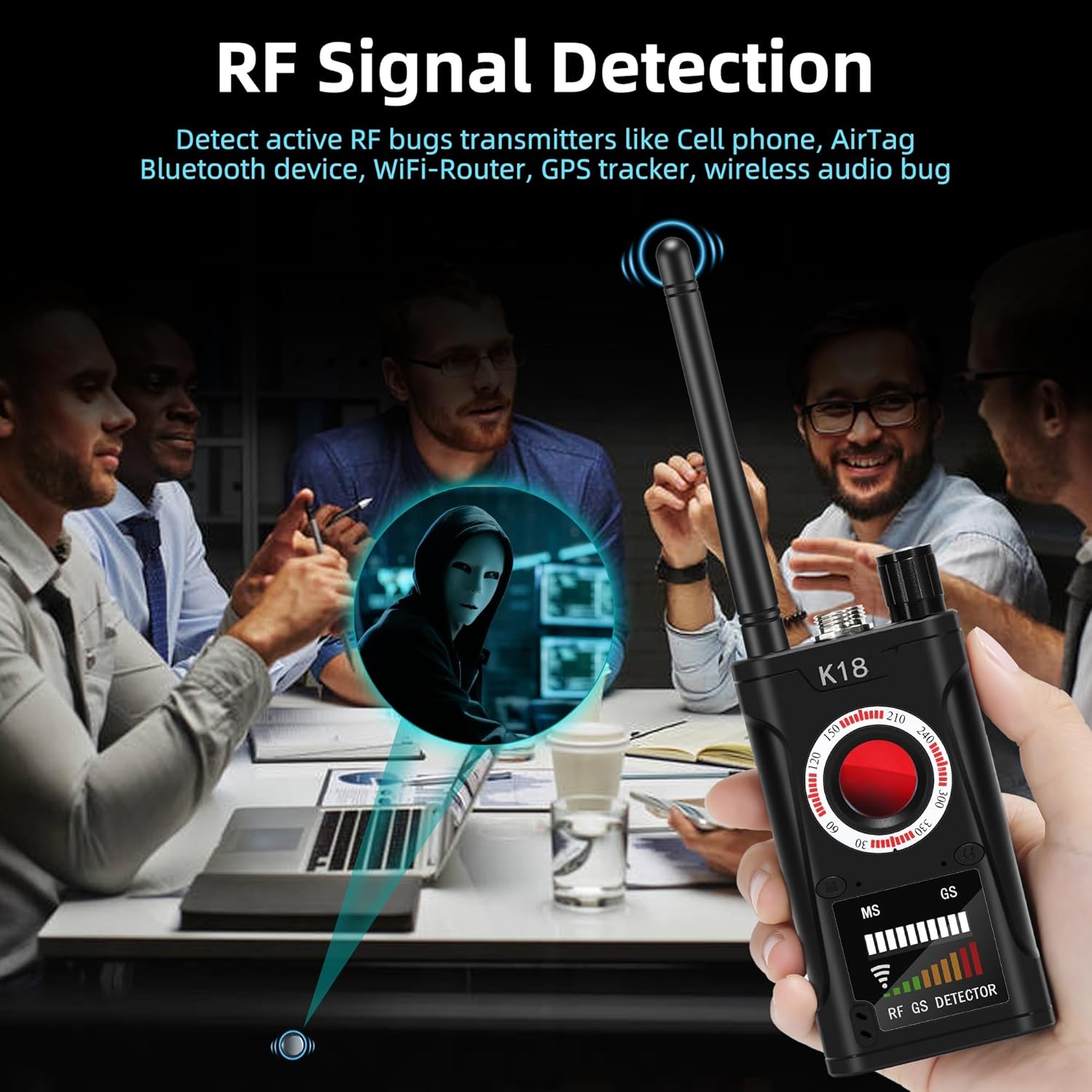
Begin each sweep close to potential concealment sites such as smoke detectors, electrical fittings, mirrors and soft furnishings. For RF detection, move the unit slowly around the space while adjusting sensitivity if you notice many background signals. Use the infrared lens scan in a dimmer setting to spot camera lenses that reflect light, and switch to earphone mode for quiet inspections when discretion is important. When checking vehicles, inspect under seats and inside dashboards where magnetic trackers may be attached.
Nuances and Limitations
While the detector covers a broad radio spectrum, some specialised or shielded devices may be harder to spot, and wired recording equipment will not emit RF for detection. The infrared lens scan is effective for lenses with a direct line of sight but may miss cameras concealed behind several layers or non-reflective materials. If precise forensic verification is required, professional technical inspection is advisable.