

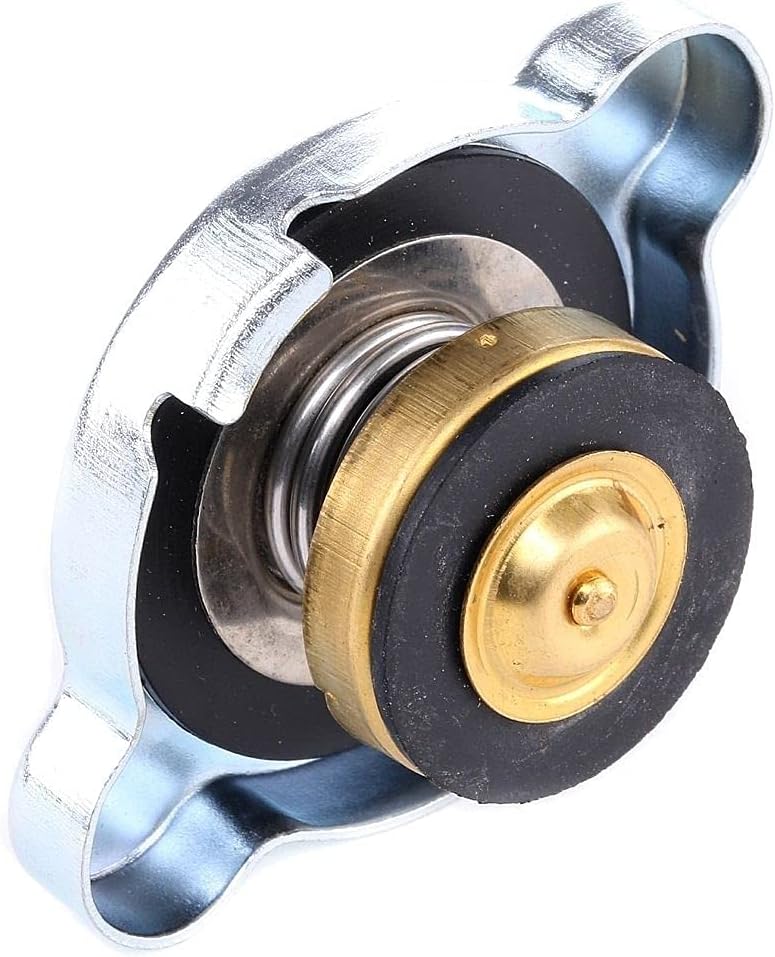
Gates Cap RC124 (radiator cap) for tight closing and precise pressure control
Product description
What this is and what problem it solves
The Gates Cap RC124 is a radiator cap designed for vehicles that rely on correct pressure management in the cooling system. In plain terms: it helps maintain the right system pressure, which can make the cooling circuit behave more consistently rather than running “by guesswork”.
This is the kind of small part that often gets overlooked until something feels off—such as the cooling system not behaving as expected when the engine warms up. A radiator cap that doesn’t seal properly or can’t hold pressure properly can be a headache, and replacing it is usually more straightforward than troubleshooting deeper into the cooling system.
Where it fits in the wider cooling-cap world
From the description provided, this range is positioned as a full selection of radiator caps covering very small up to large-diameter types, including both long-reach and short-reach designs. That matters because radiator caps aren’t truly “one size fits all”. The physical fit and sealing role are everything.
This specific Gates cap is described as having a tight closing action and precise pressure control. That’s exactly the sort of wording you want to see when you’re replacing something that seals and regulates pressure day-to-day.
Worth noting: the base information doesn’t spell out compatibility details (such as vehicle make/model, diameter, or reach). So on paper, the cap’s quality and intent look solid, but your success will depend heavily on choosing the correct type for your radiator or expansion setup.
What you’ll notice day to day
A radiator cap isn’t meant to be a flashy part. Its job is to quietly do the unglamorous work: - Seal tightly when the system pressurises - Help keep pressure control consistent
In use, that can translate into fewer “cooling system surprises” across hot restarts and longer drives. Imagine you’ve just parked up after a normal commute: as the engine cools, the cap’s behaviour is part of how the system transitions safely. If the cap is wrong or weak, the system can feel unpredictable. When it’s right, things tend to feel calmer.
Key points to check before you buy
Because the provided details don’t include fit specifications, you’ll want to double-check the basics before relying on the product alone. For this kind of part, the main risk is ending up with a cap that doesn’t match your radiator’s mounting and pressure specification.
Look for confirmation on: - Whether you need a radiator cap of the correct type (long-reach vs short-reach is mentioned for the range) - The correct diameter/size for your radiator or expansion tank opening (the range spans small to large-diameter types)
If you’re unsure, it can be worth comparing what’s currently fitted (where safe and practical) and making sure the replacement matches the same style.
Pros, strengths, and the likely limitations
What stands out: The description focuses on two important duties: tight closing and precise pressure control. Those are the core reasons people replace radiator caps—sealing and regulating pressure correctly.
The likely limitation: Without the compatibility and physical dimensions in the details you’ve provided, this may be less convenient if you’re buying without the ability to verify the exact fit. It’s not the sort of part where “close enough” usually works.
It also sits in the category where you’re buying for function rather than comfort or performance. If you’re expecting something that upgrades beyond replacement—like major cooling improvements—you may be disappointed. A cap is a fix-or-maintain part.
Who it suits, and who should be cautious
It makes sense if you’re: - Replacing a radiator cap as part of routine cooling-system maintenance - Trying to restore the system’s pressure regulation to how it should behave - Confident you can match the correct radiator cap type and fit
It may not suit you if: - You can’t verify the correct size/type for your current setup - You’re shopping broadly without checking whether you need long-reach or short-reach
It’s a straightforward purchase when you know what you’re replacing, it becomes a gamble when you don’t.
Mini FAQ
Is this radiator cap meant for a specific size?
The range description mentions both small and large-diameter options, plus long-reach and short-reach types. So it’s best treated as something you must match to your radiator/exansion opening, not something universal.
What does “tight closing” mean in practice?
On a radiator cap, it generally refers to the sealing action—how securely it closes when the system pressurises. That’s one of the main reasons caps are replaced.
Why does pressure control matter?
Cooling systems depend on the cap helping manage pressure. If pressure regulation is off, the system can behave inconsistently under heat cycles.
Can I fit it without checking compatibility?
Given the information provided doesn’t include vehicle-specific compatibility or fit dimensions, you should be cautious. For radiator caps, correct fit is crucial.
Is it worth it?
A solid choice if you’re replacing a radiator cap and you can confirm the correct type for your cooling setup. The emphasis on tight closing and precise pressure control points to a cap doing its job properly, which is what most buyers really need from this part.
You may want to skip it if you’re not able to verify the correct diameter/reach style for your radiator or expansion tank opening. In this category, the “wrong fit” is the main problem—not the cap’s intent.
When you get the match right, this is the kind of small, functional component that can make the cooling system feel less temperamental across everyday drives.