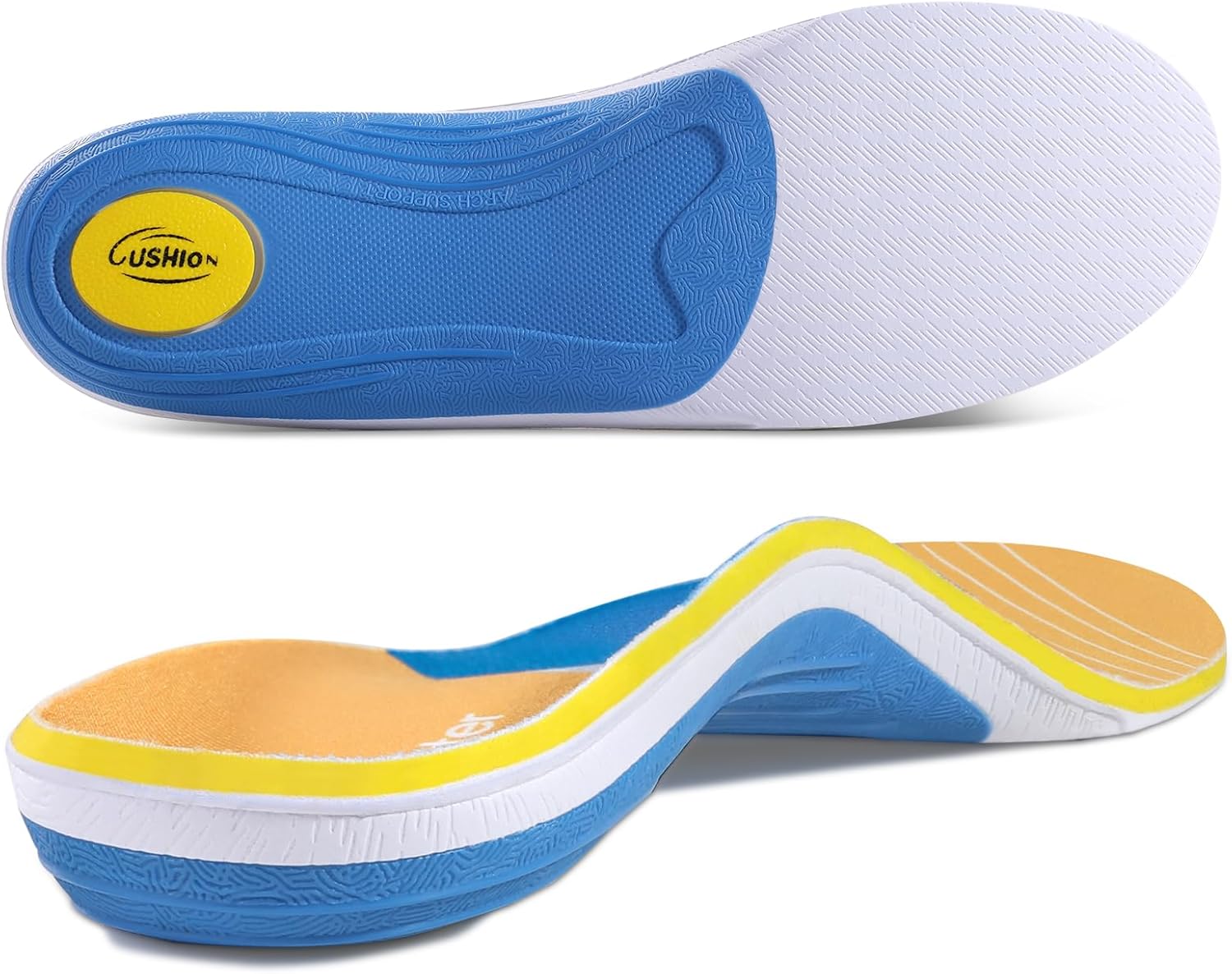
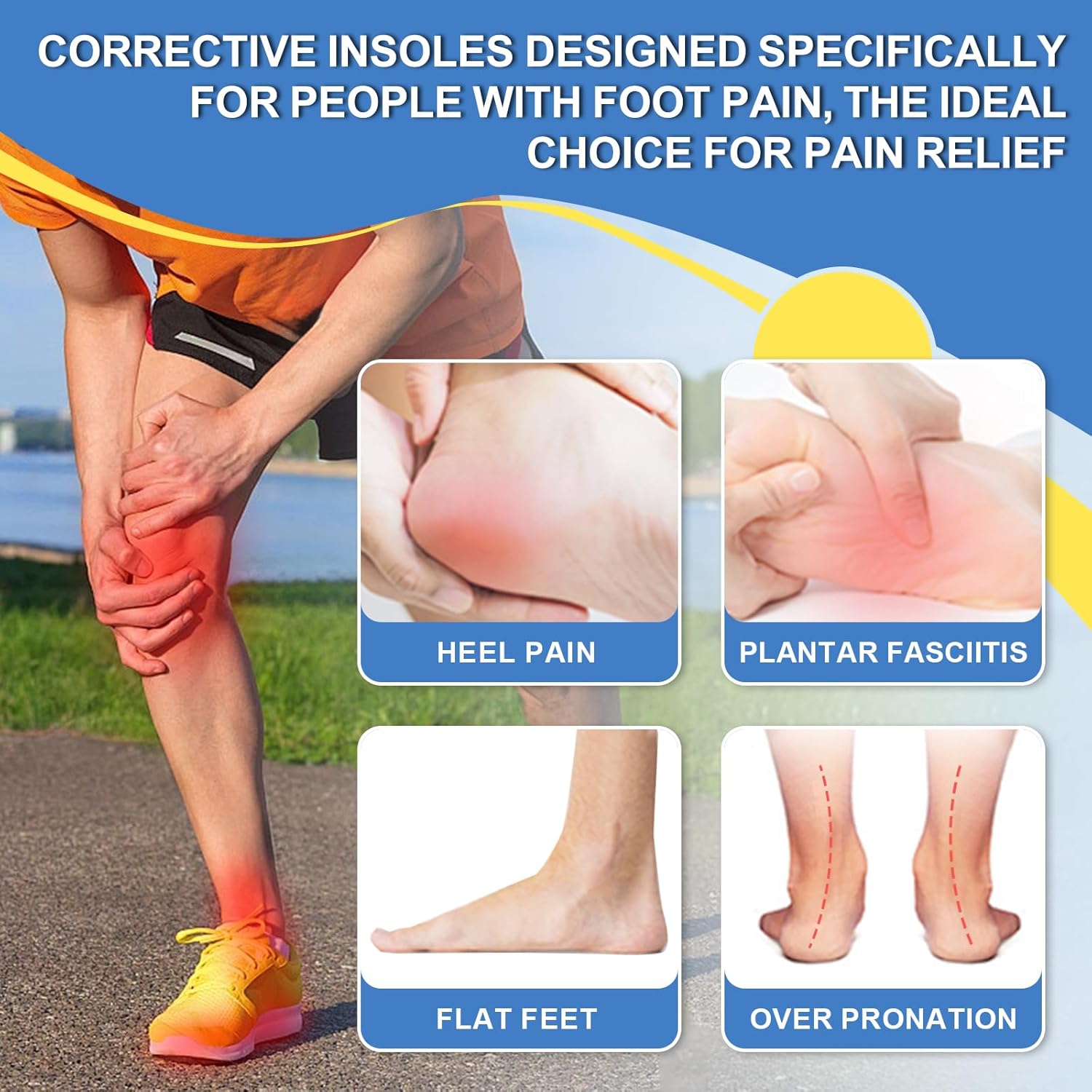
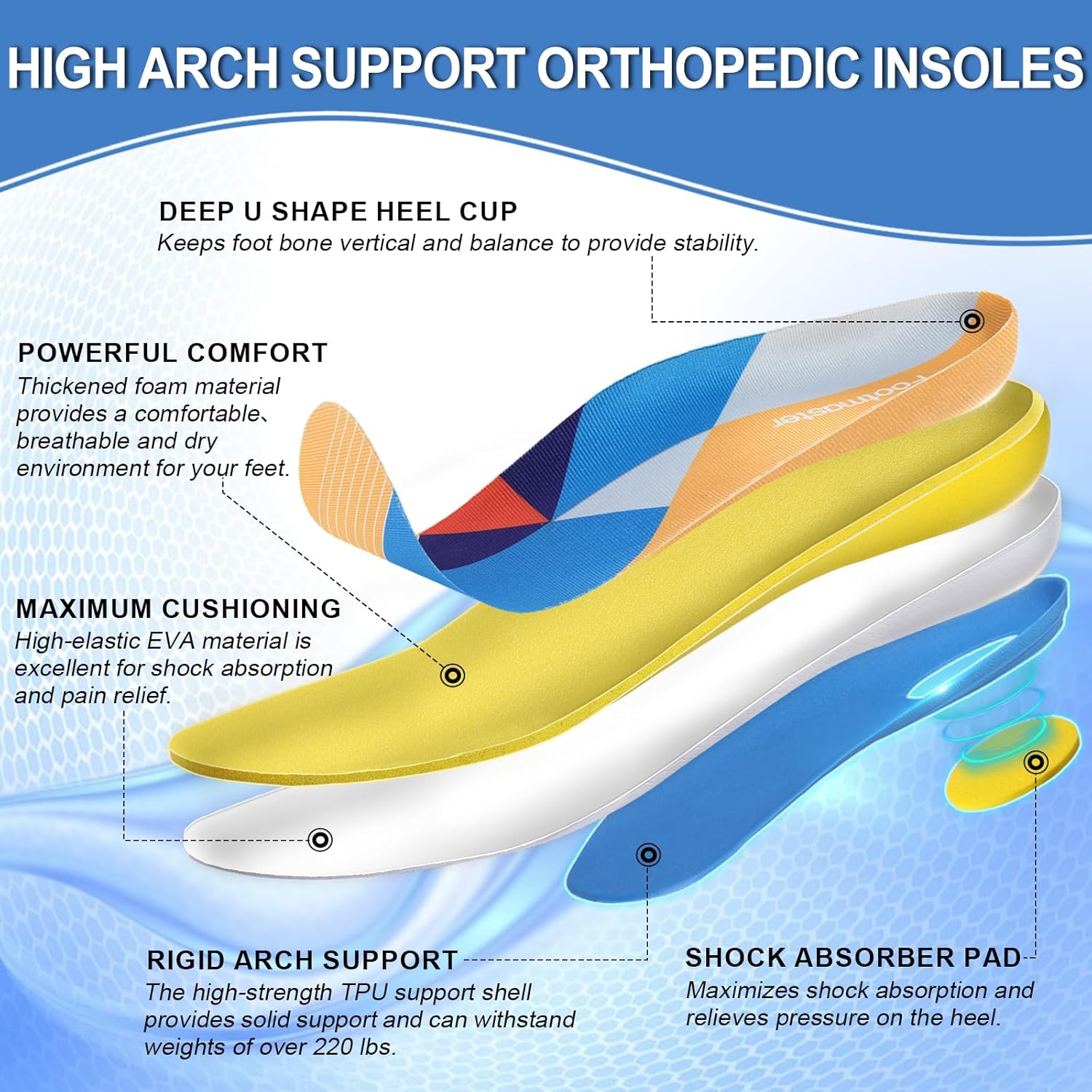
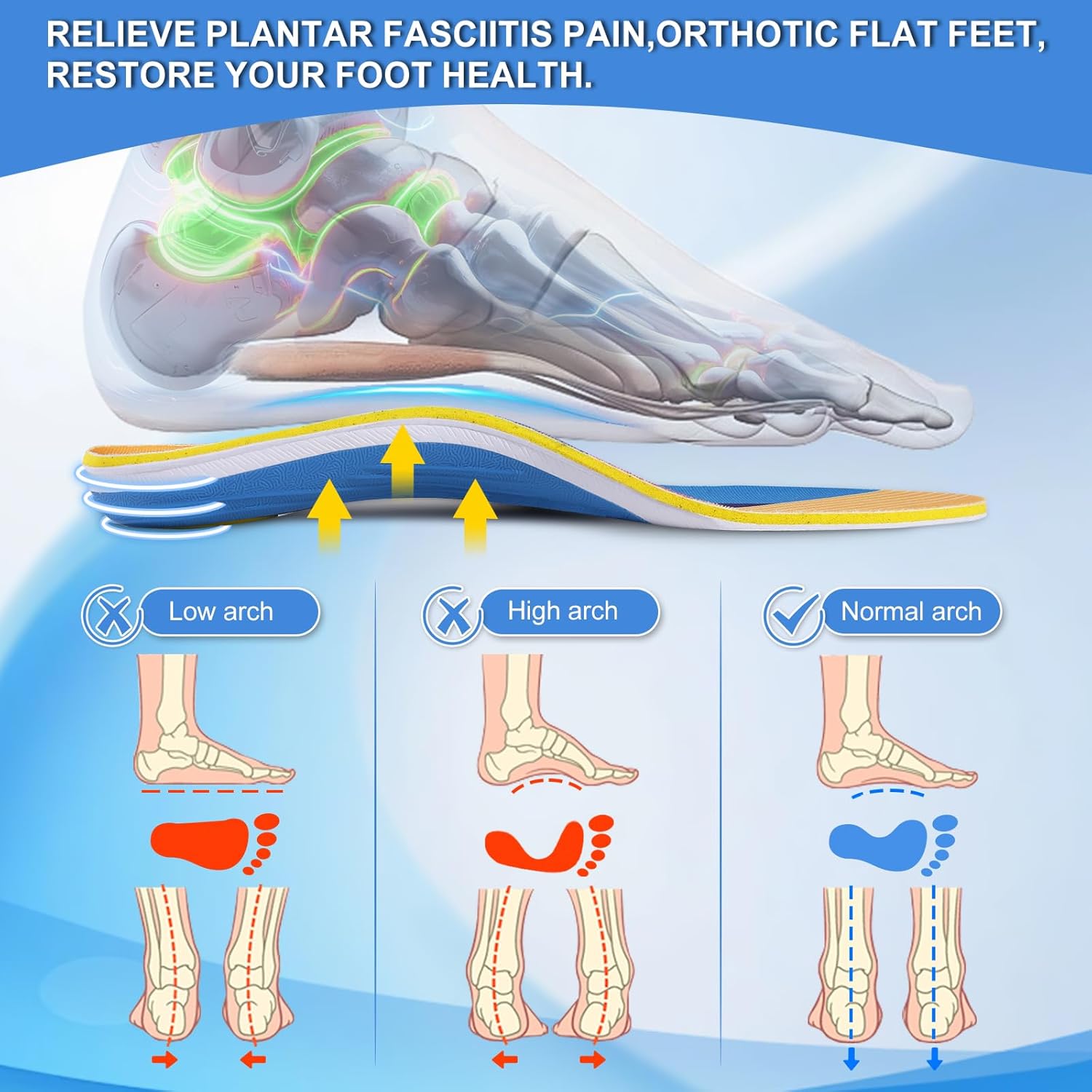
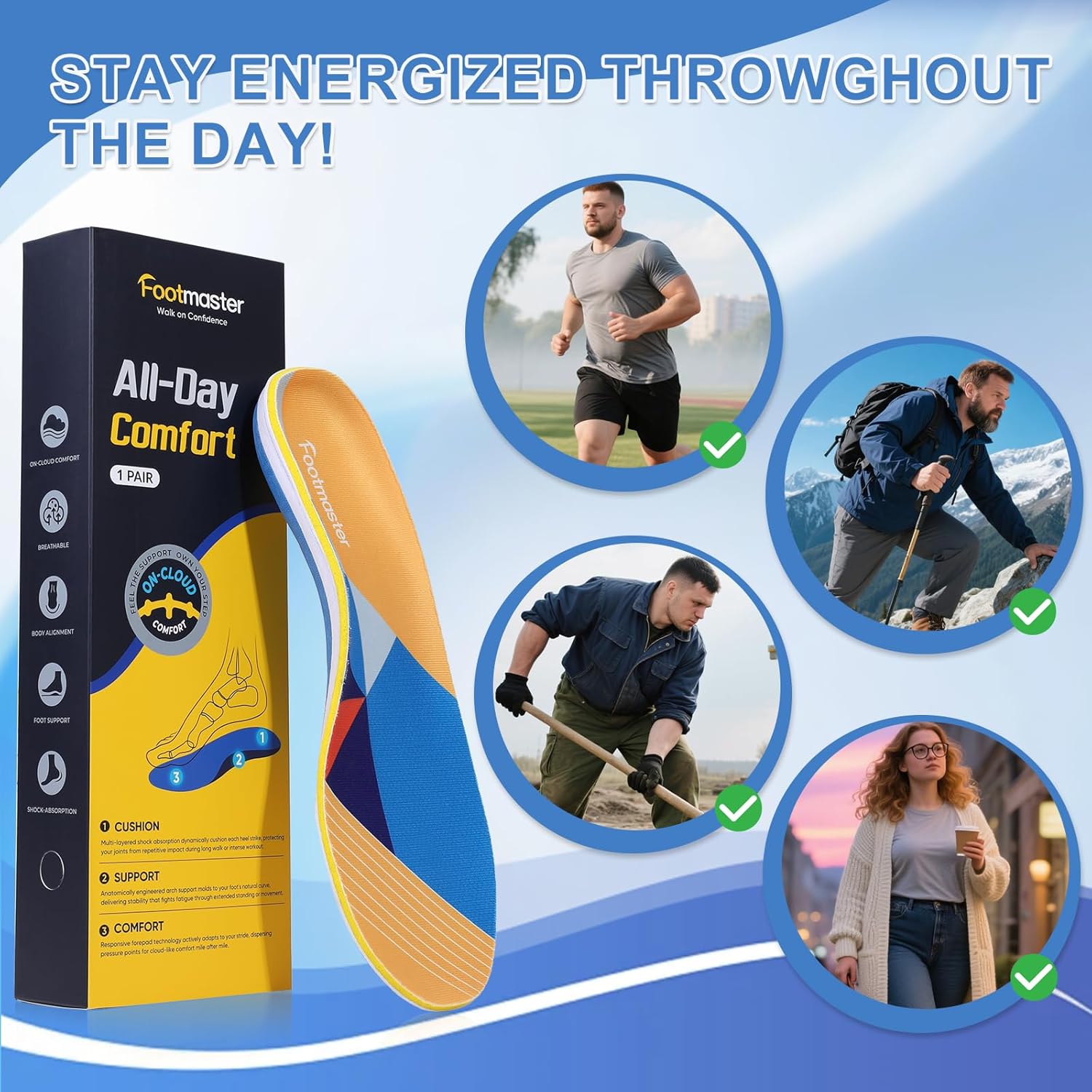
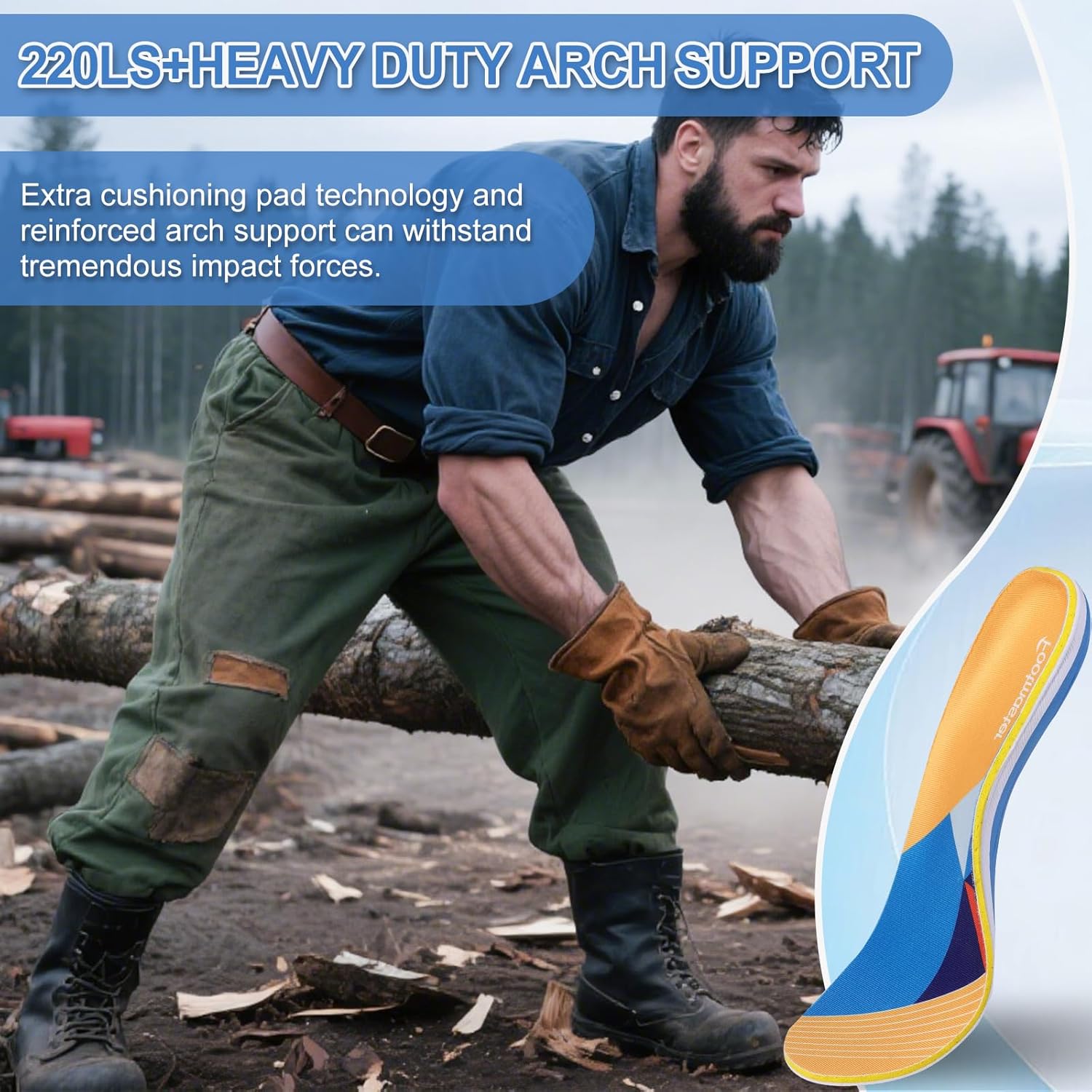
What it is\nFootMaster ProMax Orthotic Insoles are trainer-friendly insoles designed to relieve plantar fasciitis and heel pain with a triple-layer biomechanics approach. Built to support heavy standing and long days, they claim a substantial reduction in plantar pressure and improved posture through a three-point, biomechanical stance.\n\n## How it works\nThe insoles use a three-layer pressure-relief system with a military-grade cushioning layer for enhanced shock absorption and a design that moulds to the foot’s shape. A U-shaped heel base is intended to align the ankle, knee and hip to redistribute weight and reduce uneven shoe wear. The 3D contoured arch aims to correct overpronation within a couple of weeks, while a 12-hour-shift-ready mesh helps feet stay dry during use.\n\n## What stands out\nOn paper, the product offers notable features: a load-bearing capacity up to 150kg, improved shock absorption, and an arch that adapts to the wearer. The claim of 72% reduced plantar pressure in lab tests and a 83% drop in uneven shoe wear are highlighted, but keep in mind these figures are lab-based and individual results may vary. A practical detail is the trim-to-fit design, which helps achieve better arch contact for different feet.\n\n## What to watch for (pros and cons)\nPros: strong support for those who stand for long periods, substantial load capacity, moisture management through mesh, adapts to the foot to address pronation. Cons: real-world results depend on gradual adaptation, may feel stiff at first and requires a period of acclimation (start with 2–6 hours/day).\n\n## Who it’s for\nIdeal for manual workers, nurses, teachers, retail staff and others who spend long hours on their feet. It also targets people with flat feet or pronation issues seeking more controlled posture and heel relief.\n\n## When it makes sense to buy\nIf you experience persistent plantar fasciitis discomfort or heel pain after long standing or walking days, and you need durable support without frequent replacements, this type of orthotic could be worth trying. It may help if you value a reassured load tolerance and a structured arch correction.\n\n## What to review before buying\nCheck your sizing (the model lists UK size 11.5–12) and consider how well a trim-to-fit arch contact would suit your foot shape. Be mindful of the adaptation period and ensure footwear chosen provides adequate room for the inserts.\n\n## How it compares to other approaches\nFor everyday use, a combination of daily stretching and supportive footwear can help with plantar fasciitis. These insoles offer a more targeted biomechanical approach with an emphasis on weight distribution and postural alignment, which may be preferable if you need something more than generic cushioning. They are not a miracle fix and may not suit someone seeking minimal arch support or a very flexible insole.\n\n## Final verdict\nIs it worth it? It’s worth considering if you need solid, long-day support with a focus on biomechanical alignment and durability, especially for those who stand most of the day. It may not be the best option if you’re just looking for light relief or if you wear very lightweight footwear that doesn’t accommodate a trim-to-fit insole.\n\n## FAQs\n- How long does it take to notice relief? Some users report noticeable relief within a week, though individual results vary.\n- Can I use these in running shoes? They’re designed with heavy standing in mind, check the shoe width and interior space to ensure a proper fit.\n- Do they wear out quickly? Premium EVA foam is said to retain cushioning after many miles, but comfort and support may change with wear and activity level.