

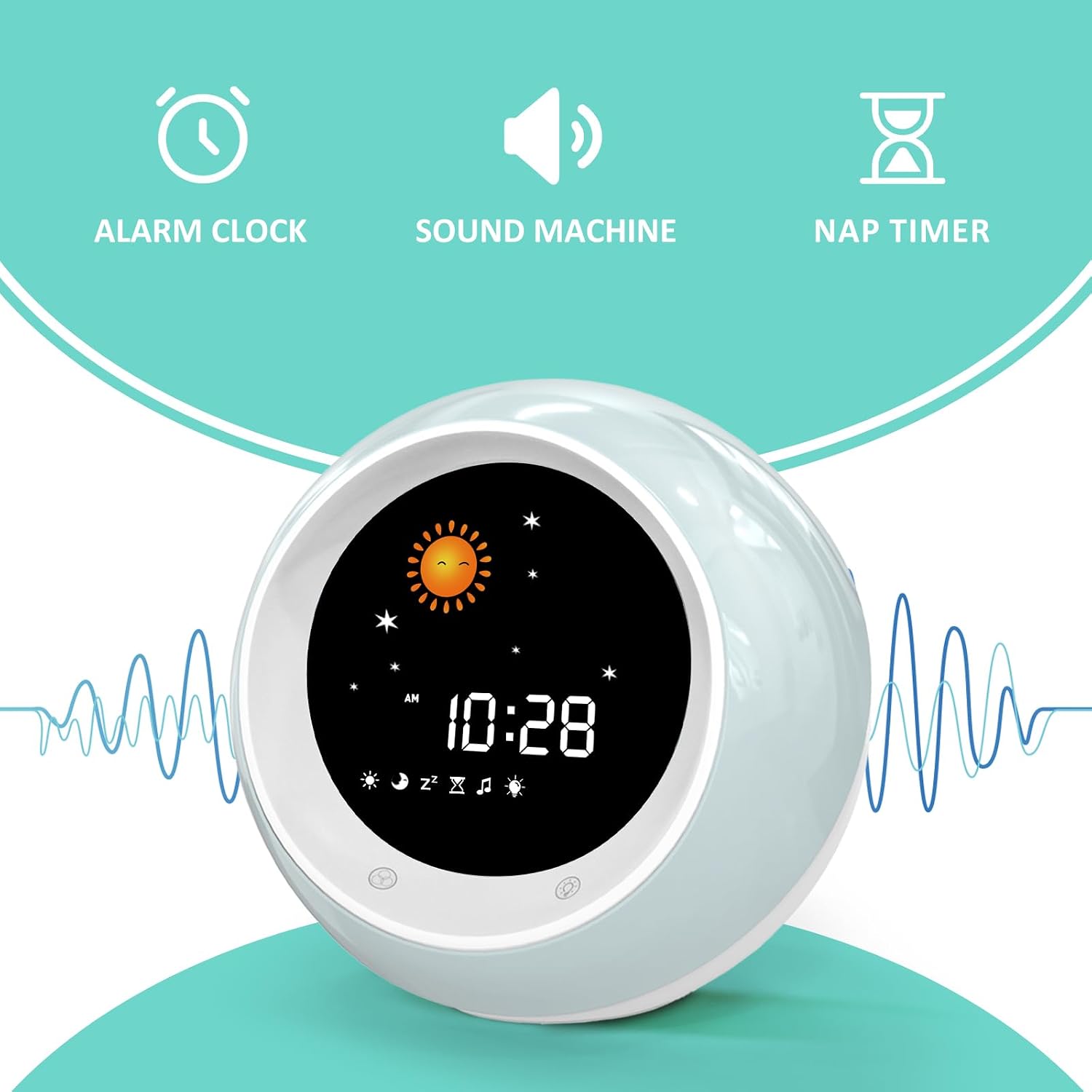
FiveHome Toddler Alarm Clock with Sun & Moon (OK to Wake) for Kids’ Sleep Training
Product description
What it’s for (and why parents buy this kind)
If your toddler consistently wakes up earlier than you’d like, a sleep training clock can be a simple way to nudge routines without a constant stream of reminders. The FiveHome Toddler Alarm Clock is built for that exact problem: helping a child understand when it’s time to wake and when it’s bedtime, using symbols and coloured light cues.
On the surface it’s “just” a clock. But for many families it becomes part of the bedtime script—something children can look at themselves, rather than needing an adult to interpret time every morning.
Key takeaways
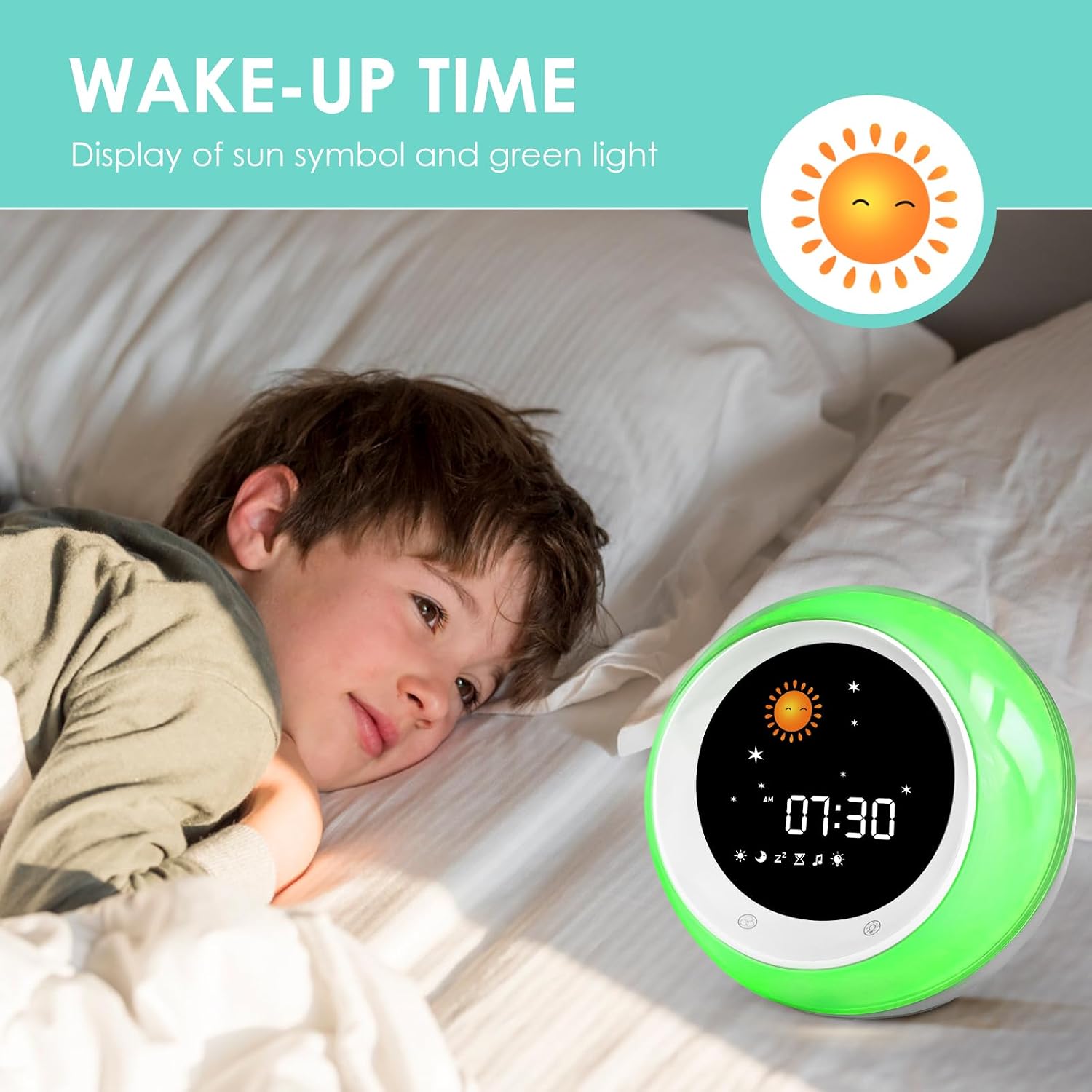
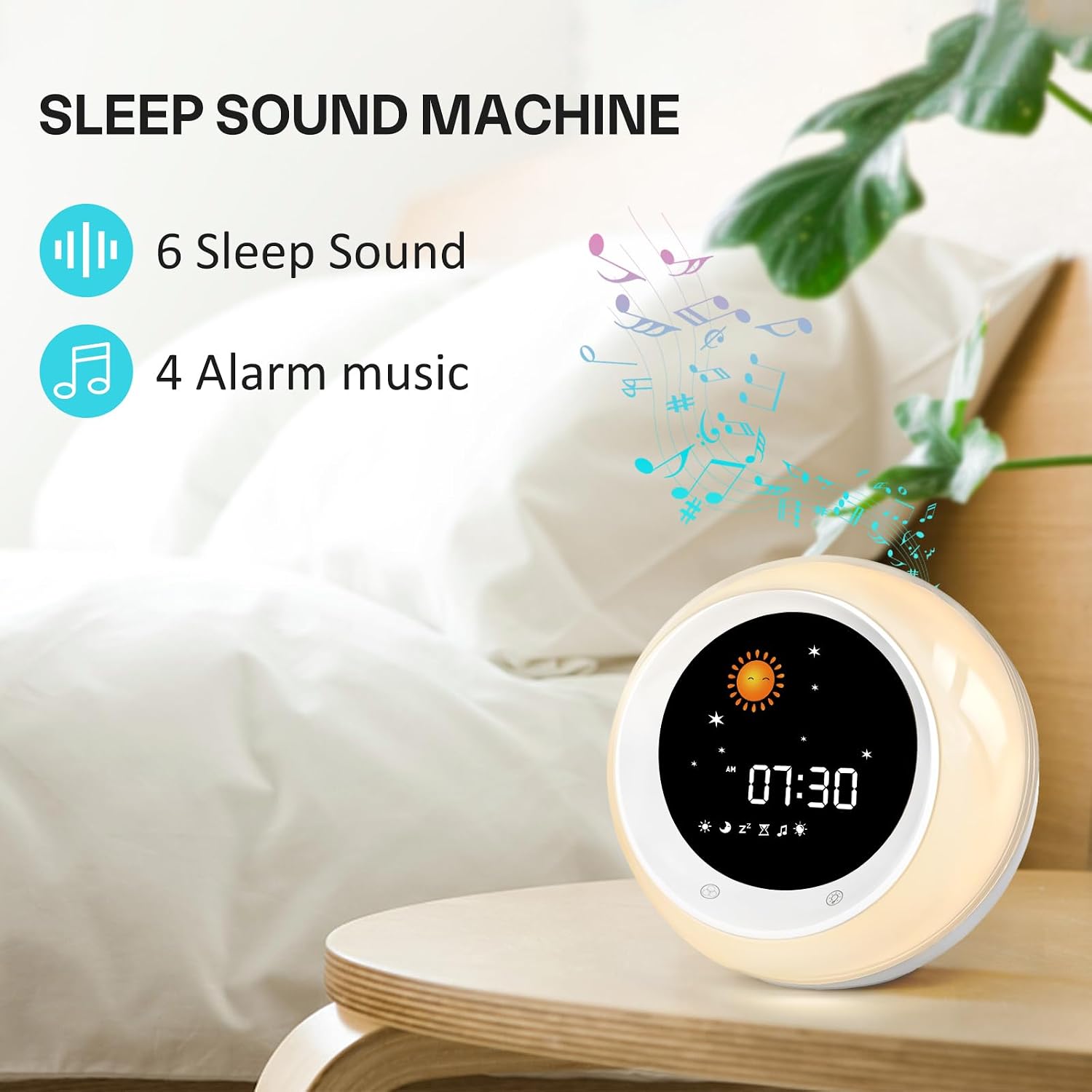
The main idea here is light-based guidance. In the morning, the sun symbol shows on the LED screen so your child can get up and play. At night, the moon symbol is the bedtime signal. It’s designed to support sleep habits through repeatable visual cues, which is often the difference between a routine that sticks and one that keeps slipping.

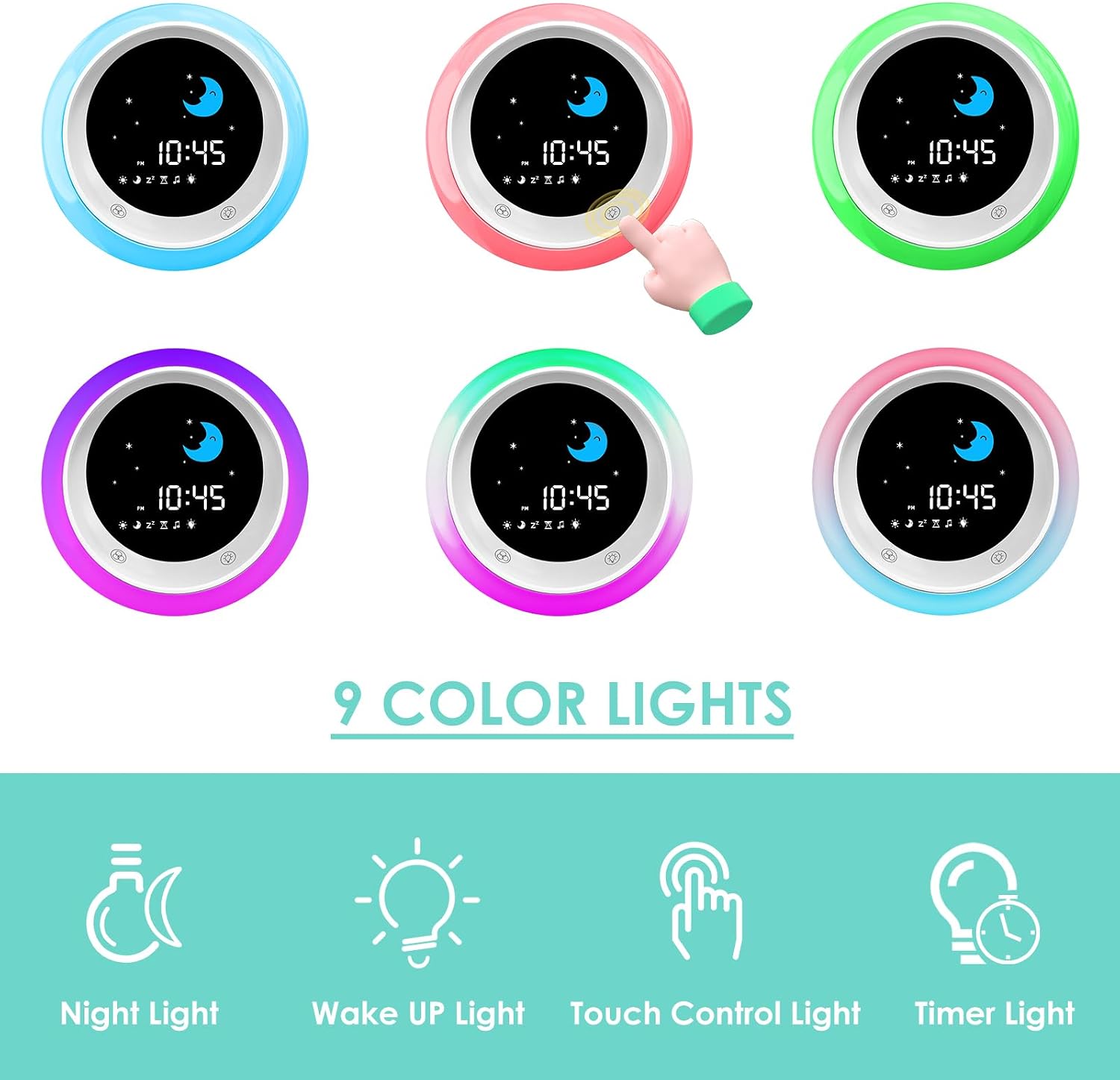
It also leans into comfort. Alongside the clock behaviour, it offers multiple colours of light that can function as a night light, plus sleep sounds to help create a calmer wind-down.
That said, it’s not a magic fix: if your child responds strongly to routine changes, you may need a bit of consistency from you too. And it must be plugged in to work, so it’s best thought of as a fixture near the bed rather than a portable gadget.
What to notice in everyday use
A typical “day 1” scenario looks like this: you switch it on before bedtime, set the bedtime/wake cues, and point out the symbols at the right moments. Then, in the morning when the sun appears, the idea is that your toddler associates that visual with permission to get up.
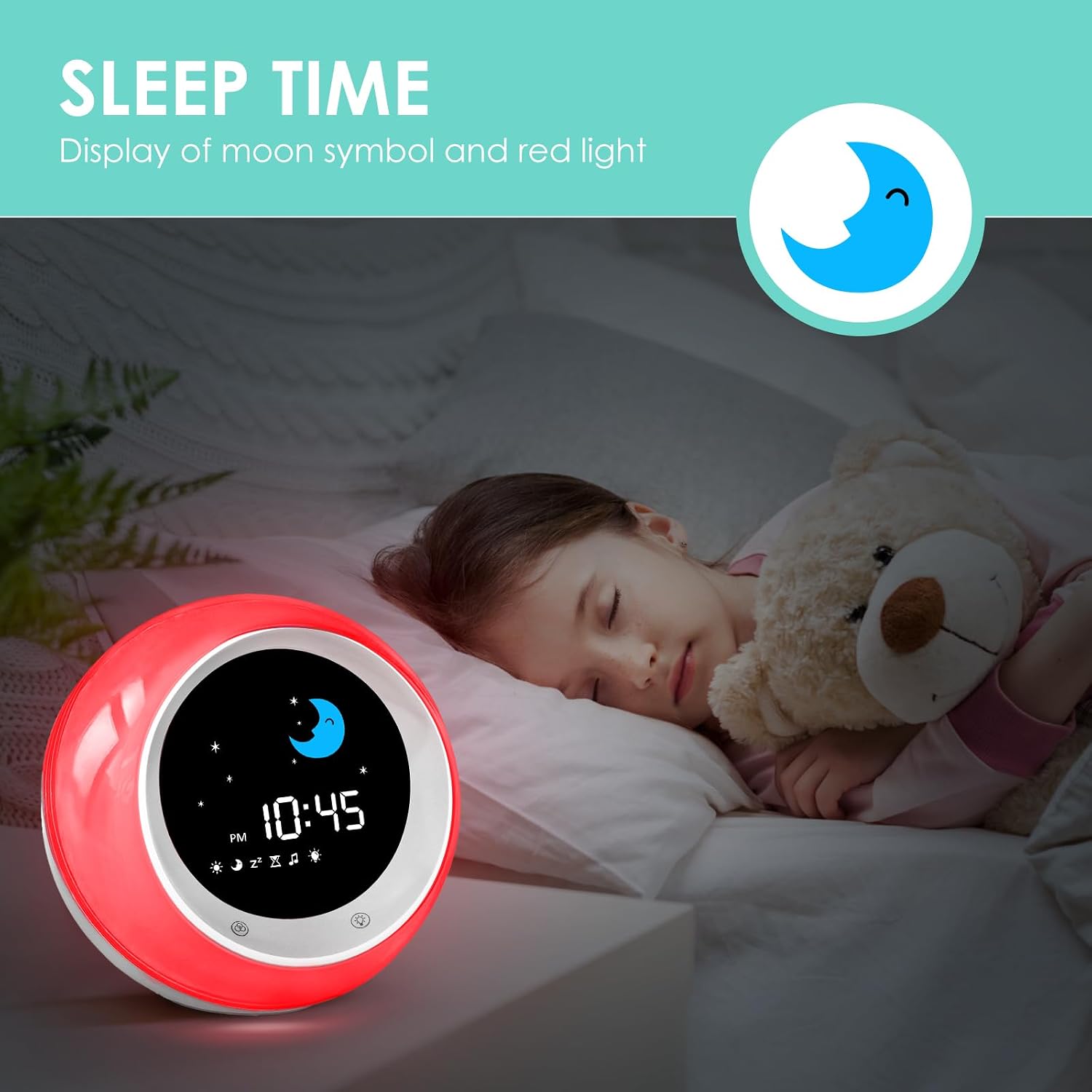
In the evening, the moon cue is meant to signal it’s time to settle. For some kids, the LED symbols plus the environment (night light tones and gentle sounds) makes it easier to stay in the same pattern without as much negotiation.
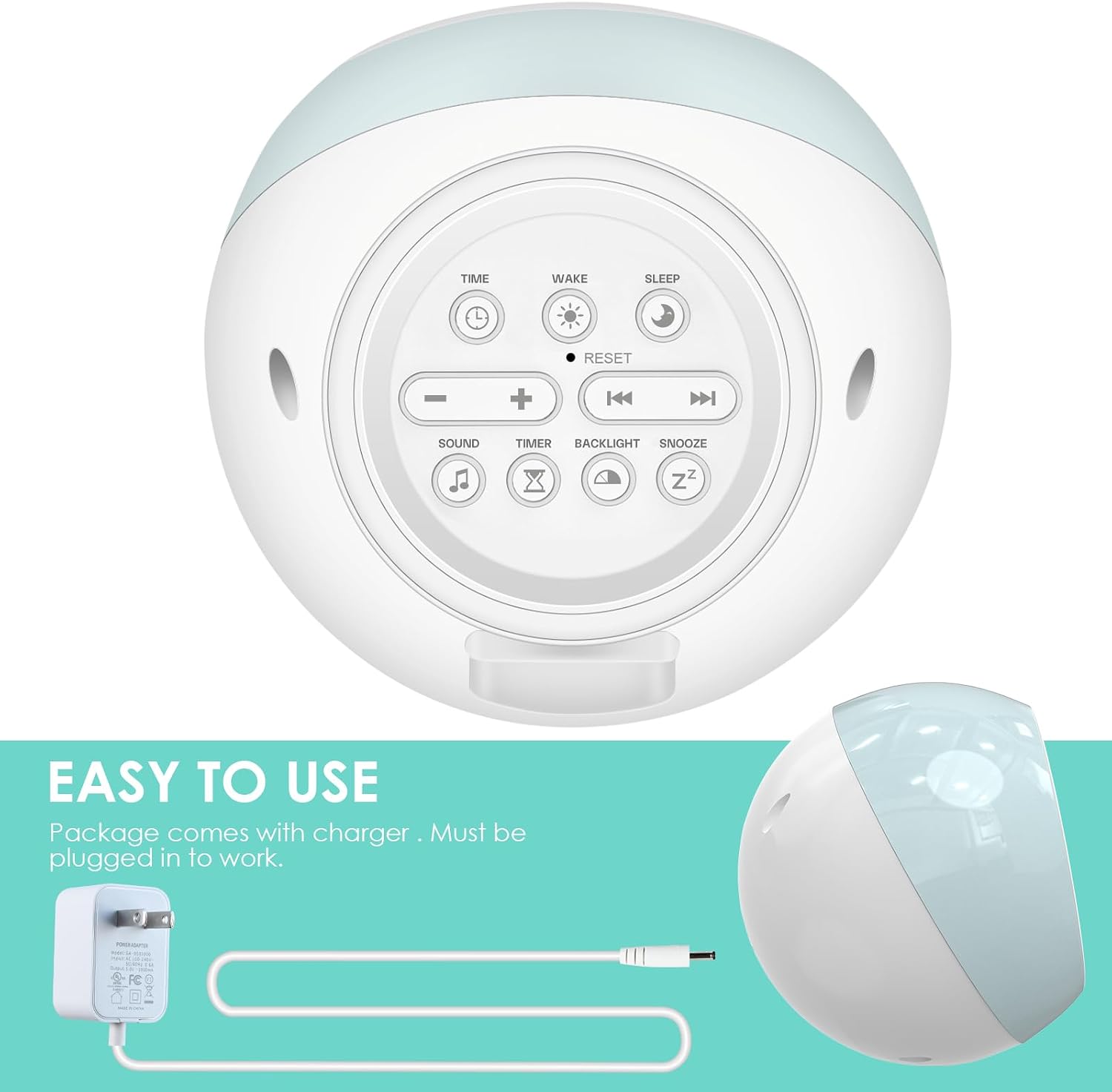
There’s also a timer function that can be used beyond sleep training. The clock supports 15/30/60/90/120-minute options, which can make it useful for things like homework time, play activities, or a midday nap—basically, a simple “time boundary” for activities.
And because it includes snooze (described alongside the timer and wake features), you’re not forced into an all-or-nothing schedule straight away.
Where it stands out (and where it may not)
Strengths: - Sun & moon symbols are an age-friendly way to learn “morning vs night” rather than relying purely on clock numbers. - Multiple wake-up approaches: it mentions two wake-up modes—light only, or alarm+light—so you can choose what suits your child’s sensitivity. - Night-light and ambience: 9 colour lights plus 3 levels of warm light, designed to accompany kids as a softer bedtime environment. - Sleep sounds: 6 kinds of sleep sounds, positioned as mood-friendly audio for settling.
Limitations to keep in mind: - It’s designed for toddlers (the description says 2–10 years), so it won’t necessarily feel “purposeful” for older children. - The clock must be plugged in to use, so if your setup needs a battery-powered option, this particular design may feel awkward. - Sleep training clocks tend to work best when routines are consistent, if you’re frequently changing schedules, the impact can be less noticeable.
Tech specs
- Type: Toddler sleep training alarm clock (OK to Wake style)
- Display: LED screen with sun and moon symbols
- Night light: 9 colour lights
- Warm light levels: 3 levels
- Sleep sounds: 6 kinds of sleep sounds
- Wake modes: Light only, or alarm + light
- Timer: Supports 15/30/60/90/120 minutes
- Alarm features: Snooze supported
- Power requirement: Must be plugged in to use
- Recommended age range (stated): 2–10 years
Who it suits best
It makes sense if you want a sleep training clock that’s based on visual cues (sun for morning, moon for bedtime) and you’re comfortable using light/sound to shape the bedtime environment.
It’s also a decent “two-purpose” purchase if you’re trying to add structure not just to mornings and nights, but also to shorter blocks of time during the day via the timer.
If you prefer a more minimal approach (for example, you only want one signal and no sounds), you might find some of the extra features are more than you need. But for families who like to build a calming routine, it could land well.
When it makes sense (and when to skip)
Worth considering if you’re aiming to reduce the “early wake” tug-of-war by giving your toddler an easy-to-read permission cue.
It might not be the best match if your child finds lights and sounds distracting, or if you need something that can run without mains power.
Also, check that you’re ready to reinforce the meaning of the symbols consistently at the start. The clock can guide the routine, but you still need to help the learning along.
Mini FAQ
Is it suitable for toddlers?
The description says it’s suitable for kids aged 2–10 years.
How does it indicate wake-up time?
It uses a sun symbol on the LED screen in the morning for getting up and playing.
What signals bedtime?
At night, the moon symbol appears on the LED screen as a bedtime cue.
Can it be used for anything other than sleep training?
Yes—there’s a timer function with 15/30/60/90/120-minute options that can be used for activities like homework, play, or naps.
Does it need to be plugged in?
Yes, the clock must be plugged in to use.
Final verdict
The FiveHome Toddler Alarm Clock is a thoughtful sleep-training option on paper: sun and moon symbols for day vs night, plus night light colours and sleep sounds to make bedtime feel calmer. It’s not ideal if you need battery power or if your child doesn’t do well with light/sound cues, but for families who want a visual, routine-friendly approach, it’s the sort of tool that can genuinely reduce early-morning battles—provided you stay consistent with the training.