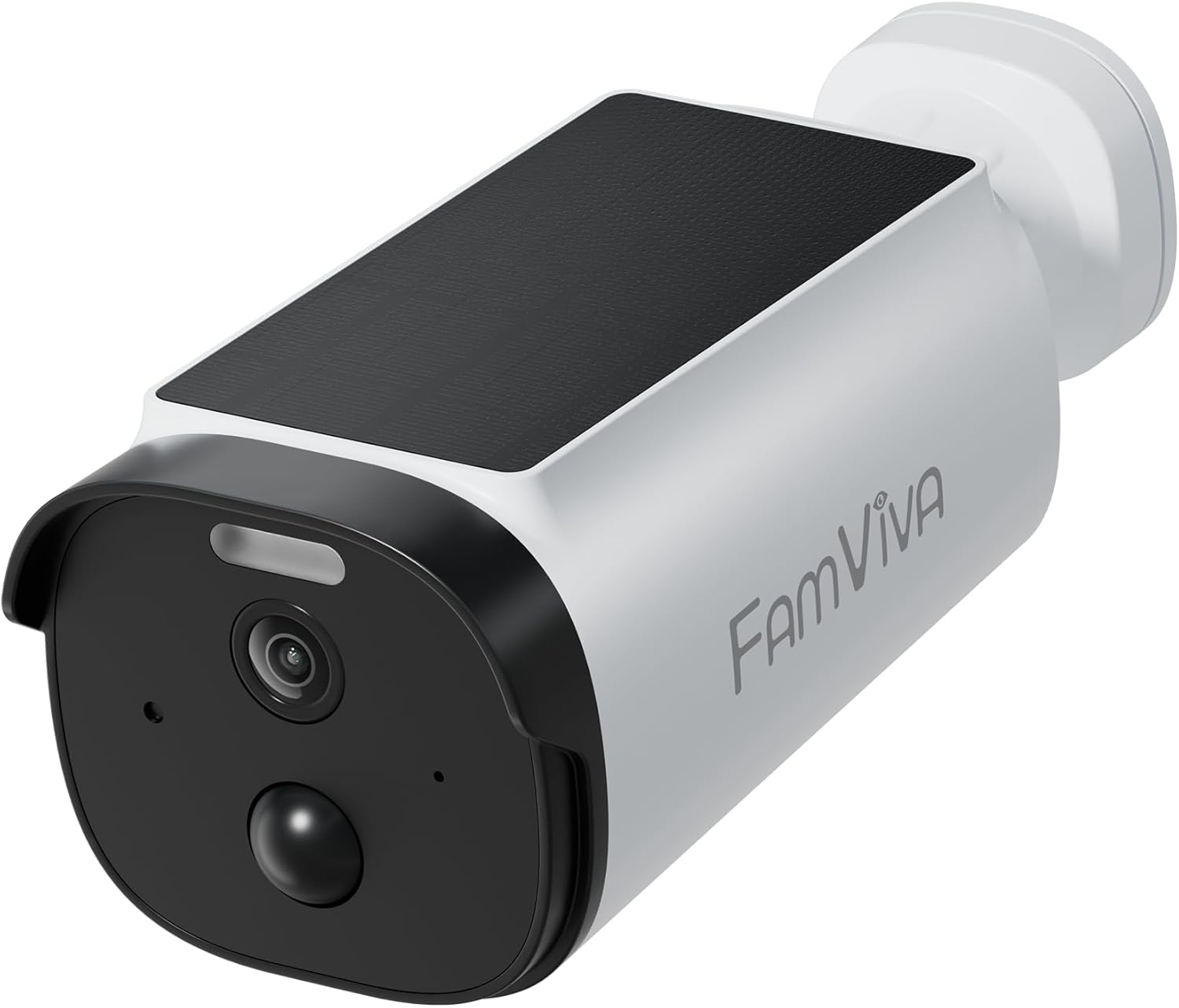
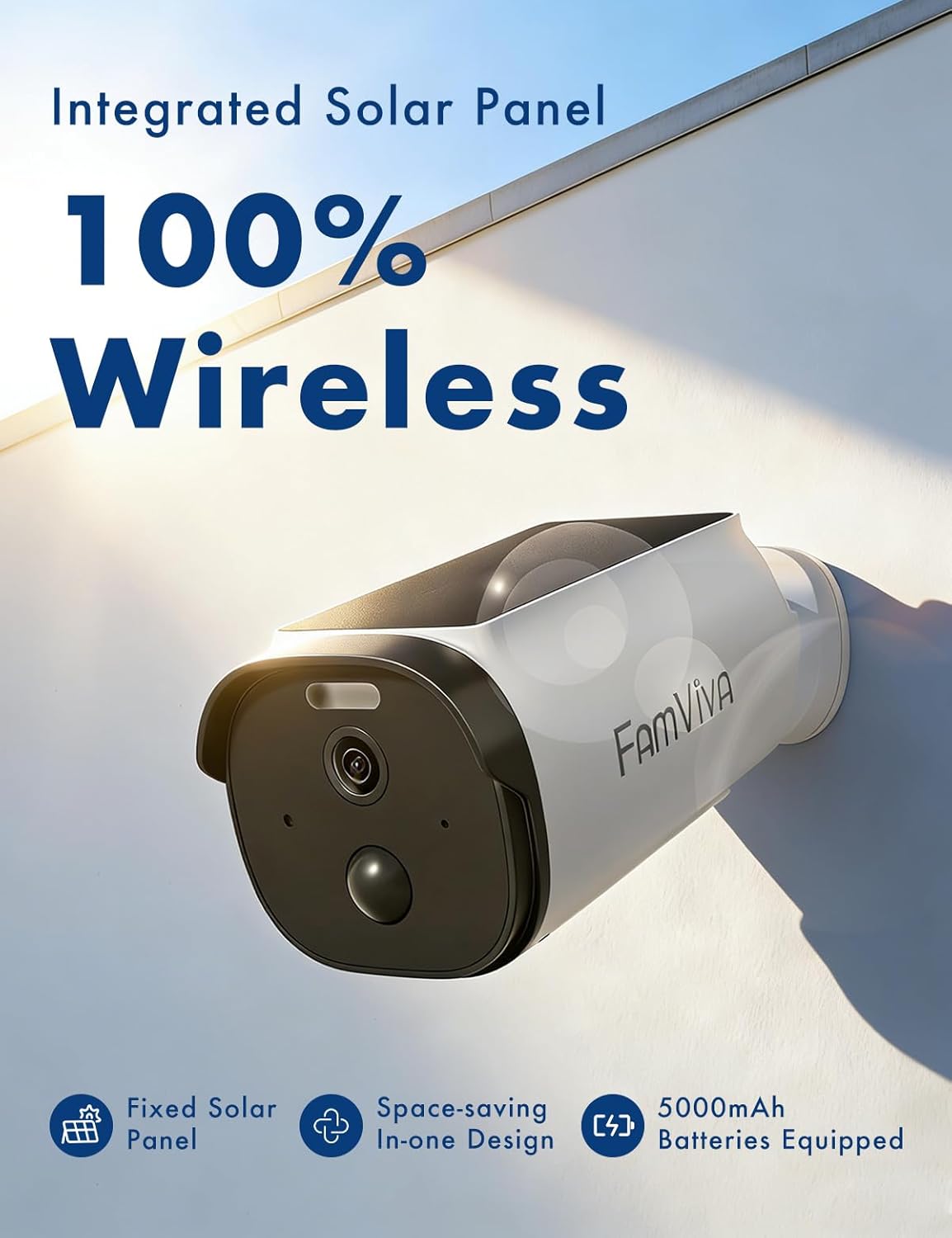
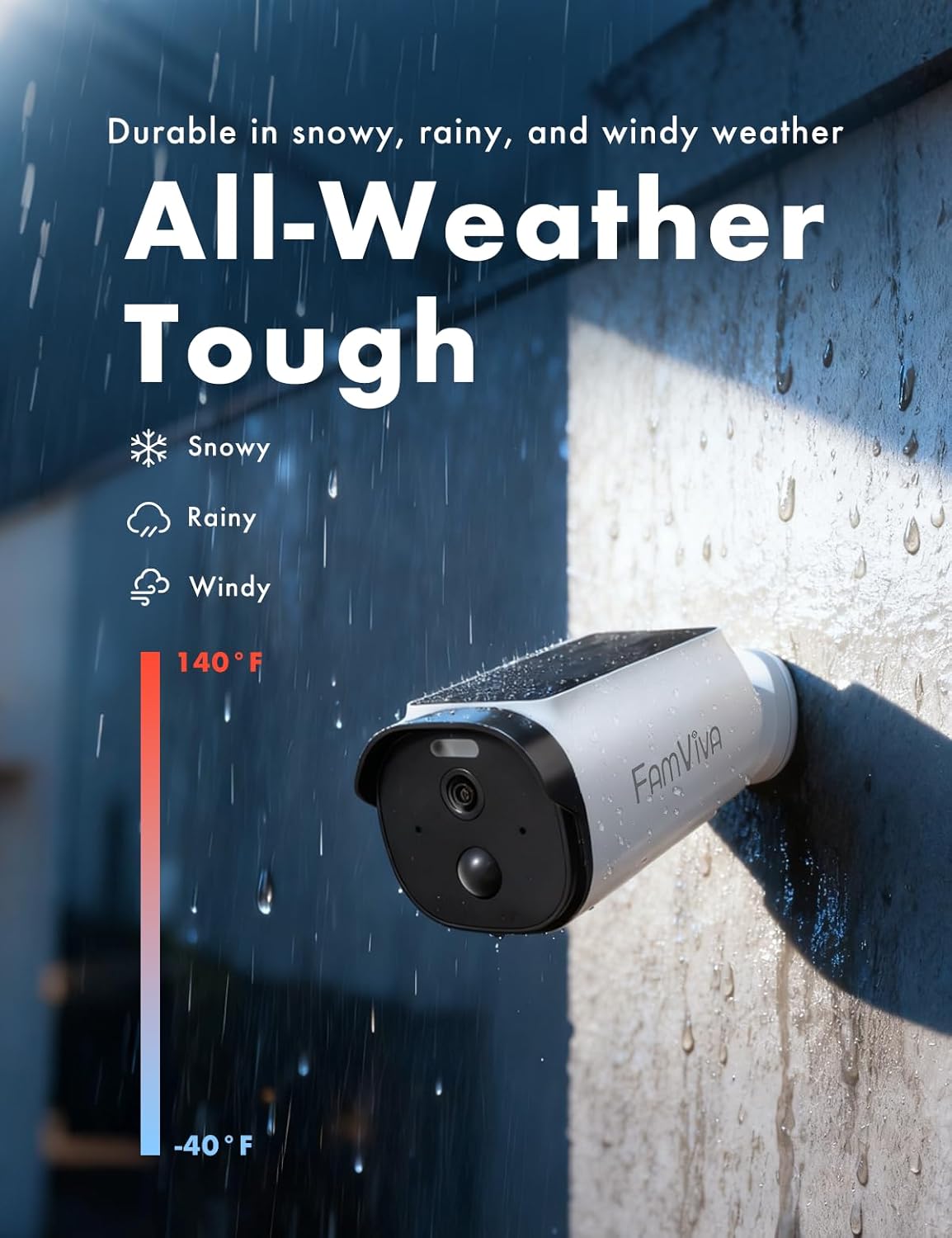
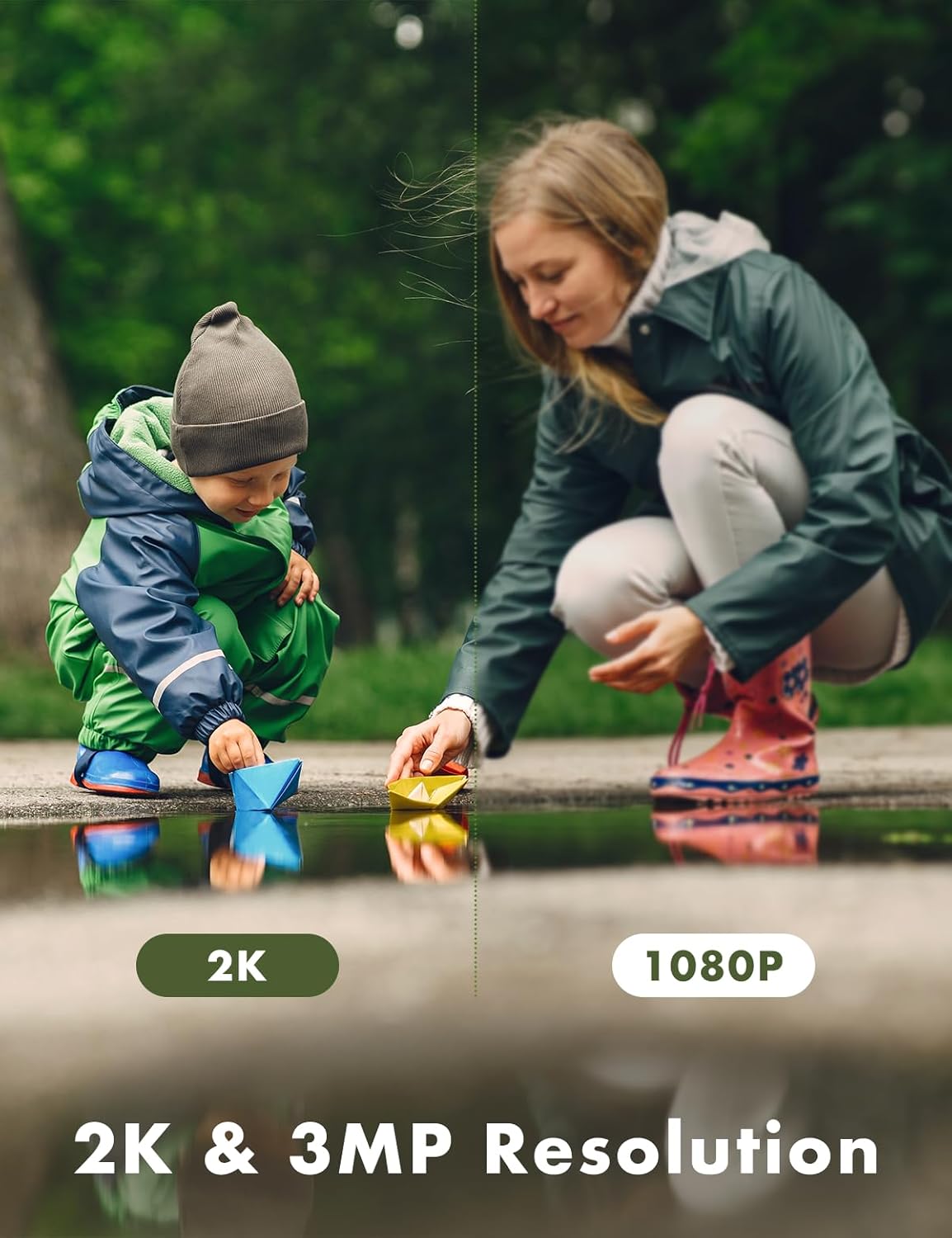
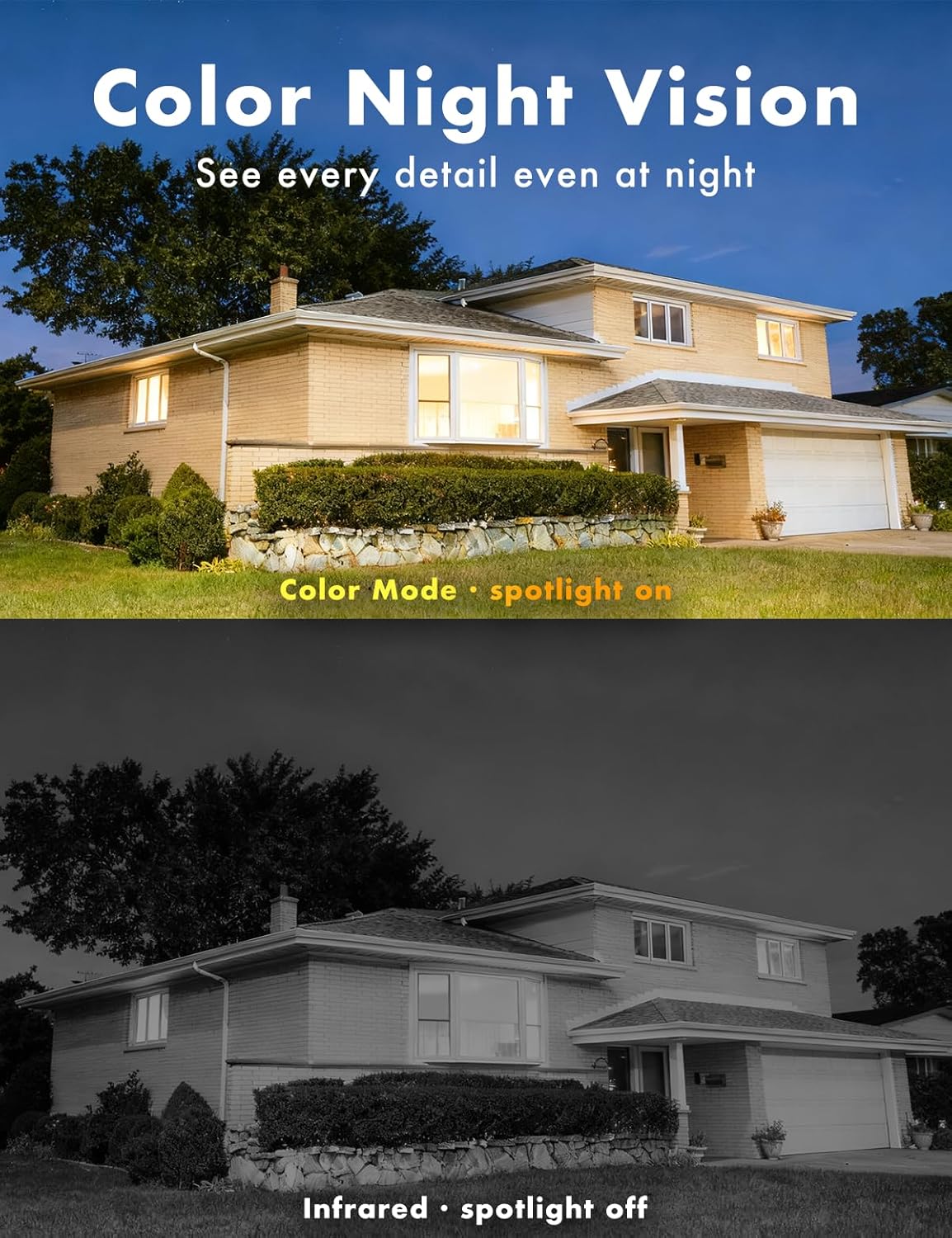
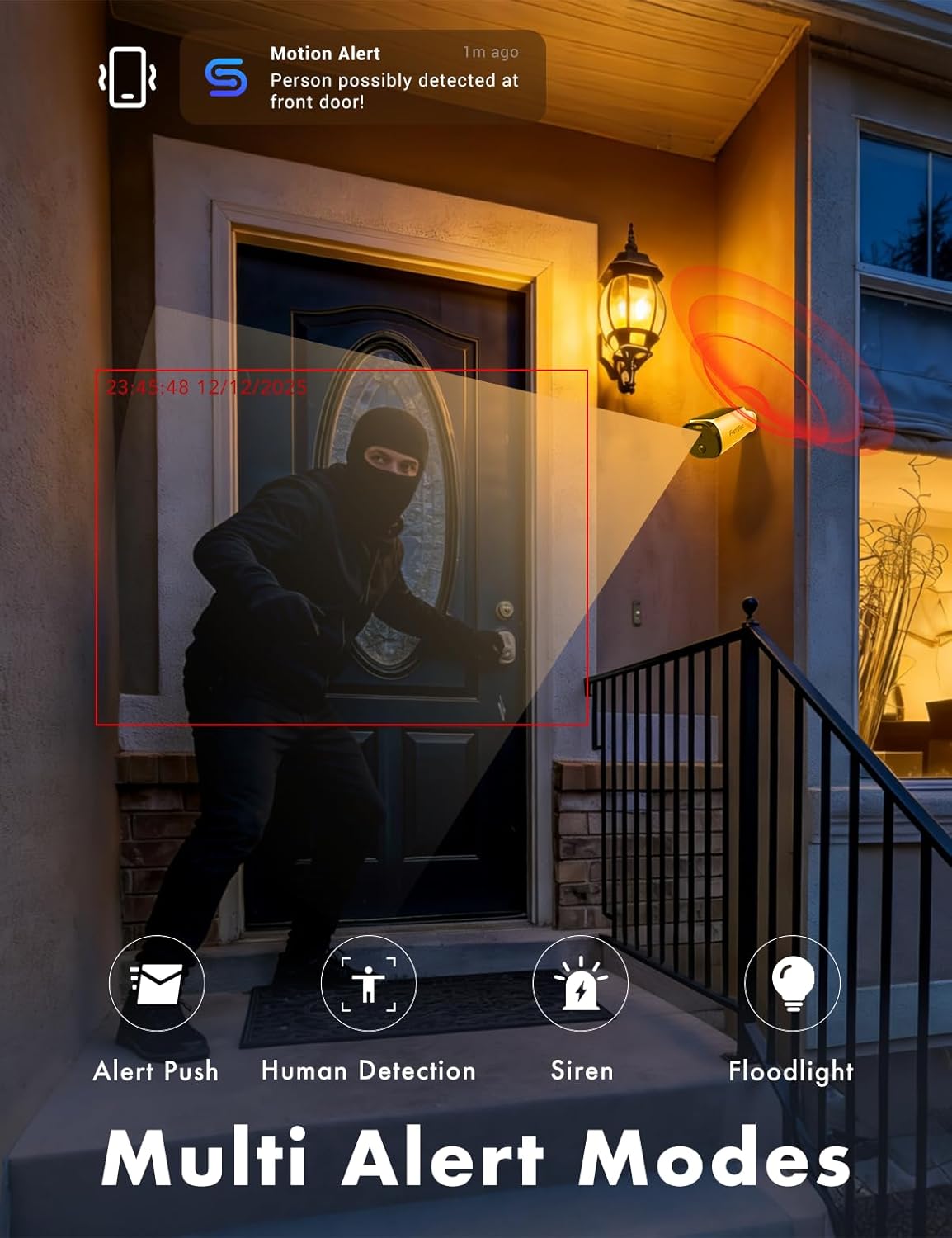
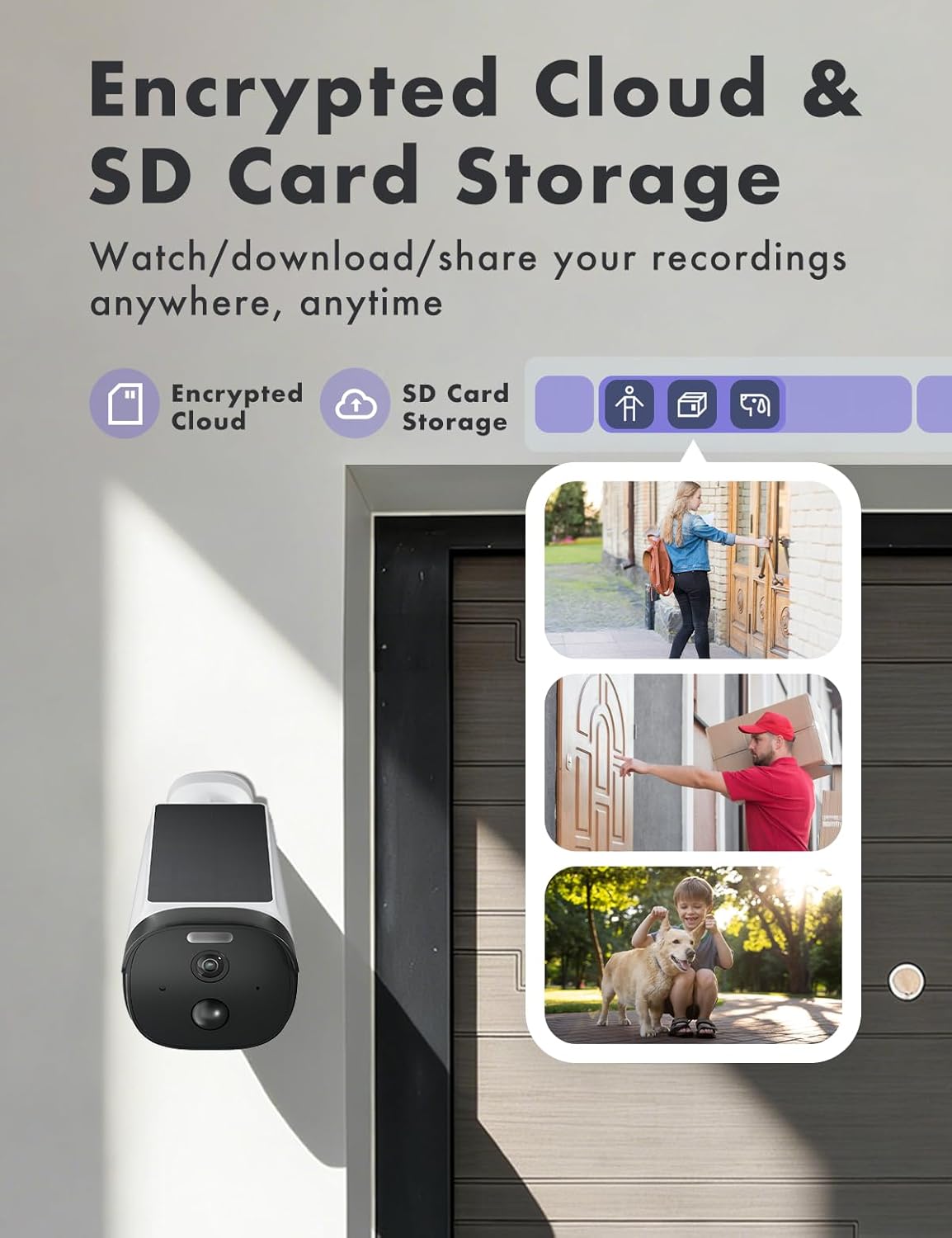
What this is and what it solves\nFAMVIVA’s Solar Security Camera is a wireless outdoor solution that combines a built‑in solar panel with a rechargeable battery to cut down on wiring and frequent recharging. Aimed at homeowners wanting continuous monitoring with flexible installation, it promises extended working time from sunlight and a robust weatherproof shell. On paper, it’s designed to deliver around‑the‑clock surveillance with smart alerts, vivid imaging and two night‑vision options.\n\n## How it performs in practice\nAt its core the camera records in 2K (3MP) resolution, which should offer clearer detail than standard HD footage. Night visibility is supported by both full‑colour night vision and infrared, useful for scenes with varied lighting. The integrated PIR motion sensor and AI processing are intended to reduce false alarms—an important point if motion triggers are a frequent nuisance around your property. In real life this means you’ll get instant app alerts when something is detected and can use a built‑in siren or spotlight to deter intruders. The two‑way audio lets you communicate with visitors or delivery drivers, a small but practical feature for day‑to‑day use.\n\n## Reliability and durability\nThe design emphasises weather resistance with an IP65 rating, suitable for rain, snow and heat ranging from -4°F to 122°F. The solar panel contributes to continuous operation, subject to conditions and usage. Battery performance varies with how often the camera is triggered and sunlight availability, so expect some fluctuation across seasons. A practical takeaway is that you may need to adapt scheduling or storage needs based on local weather.\n\n## Storage and access\nFootage can be stored locally on a microSD card (up to 128GB, card not included) or via optional encrypted cloud storage. This dual approach offers flexibility and peace of mind about footage security, without mandating a single ecosystem or subscription.\n\n## What to look for before buying\n- Placement matters: for best night vision and coverage, pick a corner with a clear line of sight and some ambient light to optimise full‑colour mode.\n- Power strategy: while the panel reduces charging effort, you’ll still want to consider cloudy spells or shorter daylight windows in your area.\n- Internet reliability: as with most wireless cameras, stable Wi‑Fi improves cloud alerts and remote streaming. If your connection is spotty, local storage becomes more important.\n- Card and cloud options: decide whether you prioritise on‑device storage or encrypted cloud, bearing in mind potential costs and data residency.\n\n## How this compares to alternative approaches\nIf you’re weighing options, a solar‑powered camera is generally preferable when running mains cables is impractical, or you want a neater external setup. It can be a sensible middle ground between low‑maintenance solar devices and fully wired solutions, offering ease of installation without completely losing the ability to access footage remotely. It may not suit sites with prolonged overcast periods or where the device would rarely receive adequate sun. In such cases, expect targeted adjustments to charging expectations and storage planning.\n\n## Practical use case\nImagine guarding a garden gate: camera sits on a wall, solar panel catching daylight, alerts ping to your phone if someone lingers near the door. You tap to speak to a courier, issue a warning, and later review crisp 2K footage with colour night vision.\n\n## FAQ snapshot\n- How does colour night vision help? It can reveal facial details and clothing colours in illuminated zones, useful when there is a spotlight.\n- Is cloud storage mandatory? No, you can use local storage and add cloud storage if desired.\n- What happens if power is limited? The solar panel and battery work together, but performance depends on usage and sunlight.\n\n## The decision you’ll face (Is it worth it?)\nIt’s worth considering if you want a wire‑free outdoor camera that combines solar charging with sharp video and smart alerts, and you don’t want to rely solely on mains power or frequent battery swaps. If your area experiences long cloudy spells or you need continuous, unbroken 24/7 recording without local storage limits, you may want to factor in storage options and charging contingency.\n\n## Quick‑start notes and micro‑experiences\nOnce installed, you’ll likely appreciate how the camera’s motion predictions reduce false alarms in busy outdoor spaces. Practically, you’ll want to test the two night‑vision modes to see which works best for your entry points and ensure your chosen storage method aligns with your privacy expectations.\n\n## Final thoughts\nOverall, the FAMVIVA Solar Camera presents a pragmatic option for households seeking a flexible, low‑wiring installation with robust weather resistance and a modern feature set. It’s not perfect for every climate or every storage preference, but for many urban and suburban settings it offers tangible value through convenience and decent image quality.