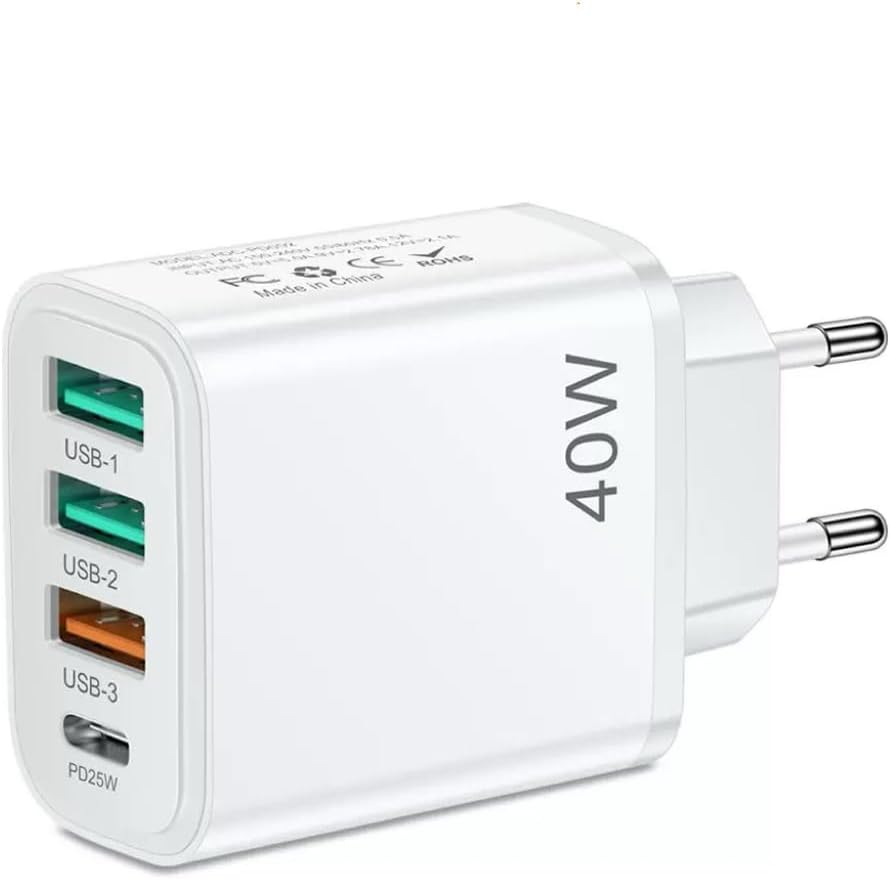
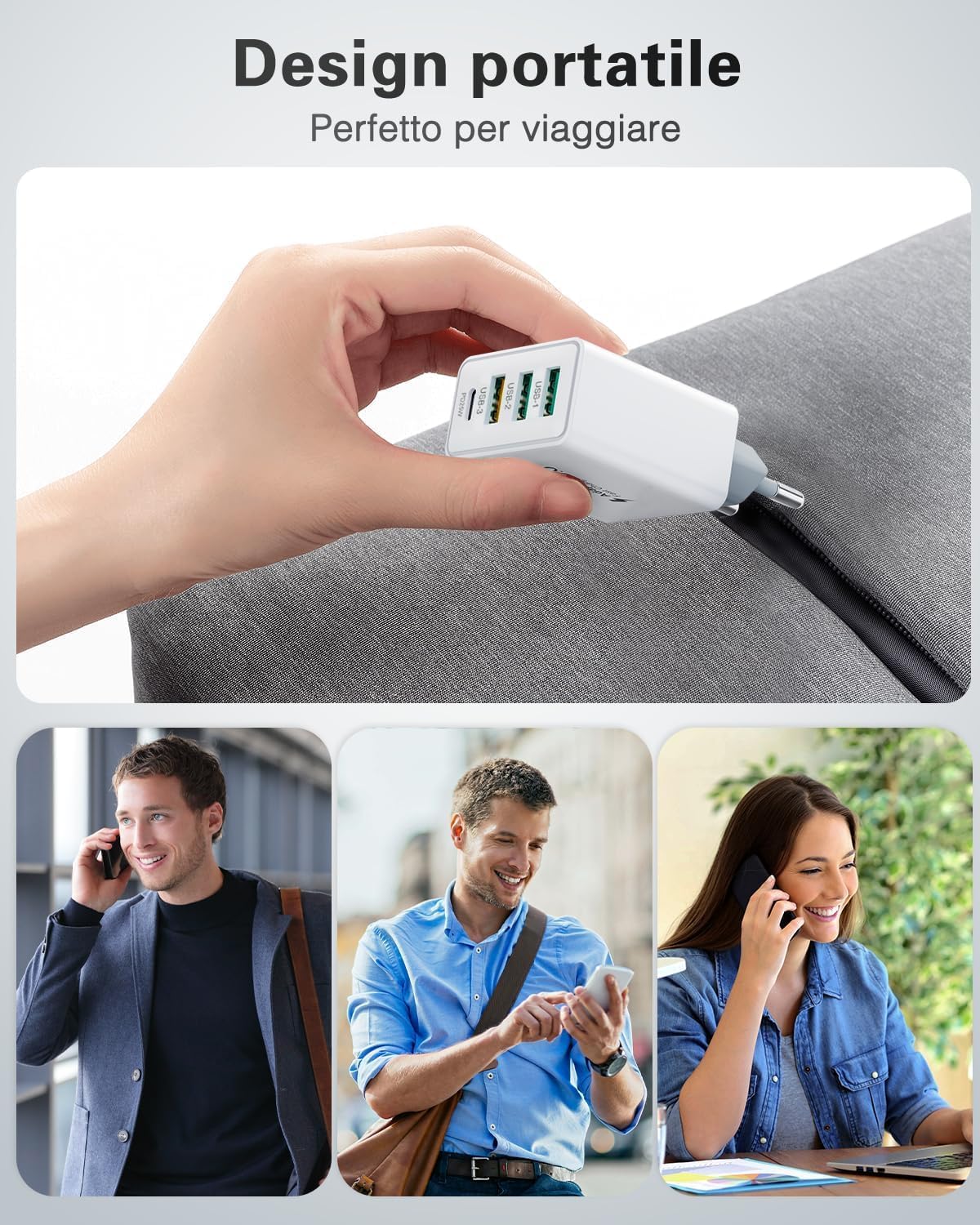
What this is and what it aims to solve\nThe EU Travel Adapter Charger is a compact wall charger designed to work with circular 2‑pin sockets across many EU countries. It provides a practical solution for travellers who carry multiple devices and want to fuel them from a single plug. On the surface, it’s a straightforward travel companion, but its real value emerges when you’re juggling a phone, a tablet and a power bank in hotel rooms or hostels where socket access is limited. If you prioritise simplicity, reliability and the ability to charge several devices at once without hunting for spare outlets, this adapter aims to be that dependable travel helper.\n\n## Design and build: practical and portable\nThe unit’s form focuses on portability and safety. It’s built to slide into a travel bag or carry-on with minimal bulk. The outer shell is described as flame-retardant PC plastic, which helps it stand up to the occasional heat that can occur during fast charging. Inside, there’s a 10A fuse and multiple protective features designed to guard against overload, overcurrent, overvoltage, short circuits and overheating. These protections matter because fast charging can draw higher currents, and having built-in safeguards can reduce worry during long days of moving between cities. However, it’s worth noting that you should still avoid daisy-chaining other high‑draw devices into the same outlet and ensure the adapter’s heat isn’t blocked by a thick bag or a soft surface.\n\n## Charging capability: fast and flexible\nOn paper, the adapter combines PD25W+QC 3.0 fast charging across its ports. It includes 1 USB‑C port and 3 USB‑A ports. The USB‑C output is specified to cover common fast‑charging profiles such as 5V/3.0A, 9V/2.25A, and 12V/1.5A, while the USB‑A ports vary from 5V/3.0A up to higher currents for compatible devices. This means you can simultaneously power a smartphone, tablet or power bank without needing a separate charger for each device. In real-world use, the exact charging speed will depend on your device’s compatibility and the remaining power of the battery, but the setup is convenient for everyday scenarios like commuting, hotel stays or short trips where you want one plug to do the heavy lifting.\n\n## Compatibility and country use: EU friendly\nDesigned for EU wall outlets, the adapter aims to work with many European countries that use circular two‑pin sockets. It’s described as suitable for Spain, Italy, France, Germany, Greece, Portugal, the Netherlands, and other markets listed in its notes. For travellers, this broad compatibility can reduce the number of different travel chargers you need to pack. It is important to verify the specific socket shapes in your destination and to ensure the adapter’s plug configuration matches the country you’re visiting.\n\n## What to consider before buying\n- Power needs: If you routinely charge power-hungry devices at once, watch the total current draw. The combined output capability is 40W, but how that splits across USB ports depends on device demands and the charger’s internal management.\n- Heat and safety: While the shell is described as flame-retardant and there are safety protections, you should still avoid covering the adapter or leaving it in direct sunlight or a hot car.\n- Build and longevity: The compact design is great for travel, but a lighter or smaller adapter might feel less robust in constant use. If you require a device that you’ll rely on for daily charging at home as well as abroad, you may want to assess durability over time.\n- Local compatibility: Always double‑check that your destination country’s sockets align with the EU plug style and that you won’t need a separate adapter for a different region.\n\n## Alternatives and how this fits your plan\nIf your everyday charging needs are modest or you travel with only one essential device, a single-port charger could be enough. Conversely, if you frequently travel with several gadgets and prefer a dedicated multi‑port solution, this model offers a balanced mix of ports and fast‑charging capability in a single compact unit. It sits between entry‑level multi‑port travel adaptors and higher‑end international travel chargers that may offer more ports, universal compatibility or higher wattage. For users prioritising value and practical travel use, it can be a sensible compromise.\n\n## Use case: a tangible scenario\nImagine you’re staying in a European city for a long weekend. You arrive with a phone, a tablet and a compact power bank. You plug this adapter into the wall, connect the phone to the USB‑C port to take advantage of faster charging, and share the USB‑A ports with the tablet and power bank. By the time you’re ready to head out for dinner, most devices have sufficient charge to get you through the evening. It’s not a magic solution that will magically fill every battery from zero to full, but it offers practical, day‑to‑day charging when outlets are scarce.\n\n## Final thoughts: who it’s for and when to buy\n- It’s a reasonable choice for travellers who want a single, compact charger that covers multiple devices in EU countries. It’s particularly useful if you travel light and want to avoid carrying several separate chargers.\n- It may not be the best option if you require extremely high‑current charging on multiple devices simultaneously, or if you expect to use the device in regions outside the EU where socket types differ.\n- Before purchasing, assess your typical device mix and whether 40W total output and port distribution meet your needs. A practical test in a hotel room with a couple of devices is a good way to confirm suitability.\n\n## FAQ (short)\n- Can I charge four devices at once? Yes, but total current will be shared across ports, charging speed on each device may be slower if multiple devices draw power.\n- Is it safe for all EU sockets? It’s designed for circular 2‑pin sockets common in many EU countries, but you should verify compatibility with your specific destination.\n- Does it work with iPhone and Android fast charging? The USB‑C and USB‑A ports support fast‑charging protocols compatible with many phones, but actual speeds depend on the device.\n\n## Decision time: Is it worth it?\nWorth considering if you travel frequently within Europe and want a compact, multi‑port charger that supports fast charging for phones and tablets without carrying several adapters. It won’t replace a high‑end universal charger, but it offers practical value for travel and everyday use.