

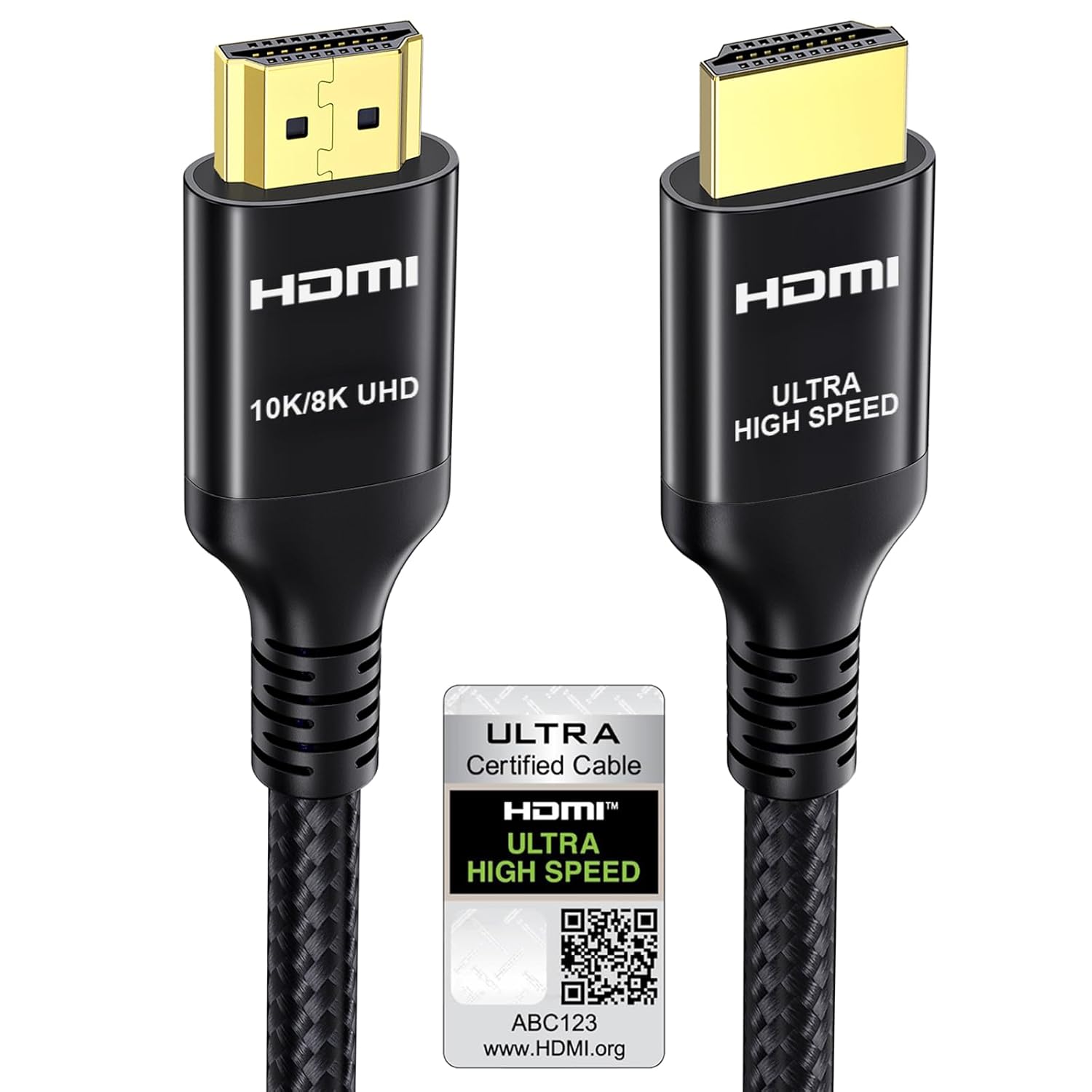
Etseinri HDMI 2.1 Certified 3m Cable (48Gbps) for 4K 240Hz, 8K 60Hz & eARC
Product description
What it’s for
If you’re running modern kit like a gaming monitor, TV and a soundbar/AV receiver, you’ll probably care about two things: smooth picture refresh rates and audio formats that don’t feel “compressed”. This Etseinri HDMI 2.1 Certified cable is designed for that overlap. On paper, it’s built to handle high bandwidth needs (up to 48Gbps) while also claiming support for eARC and gaming features.
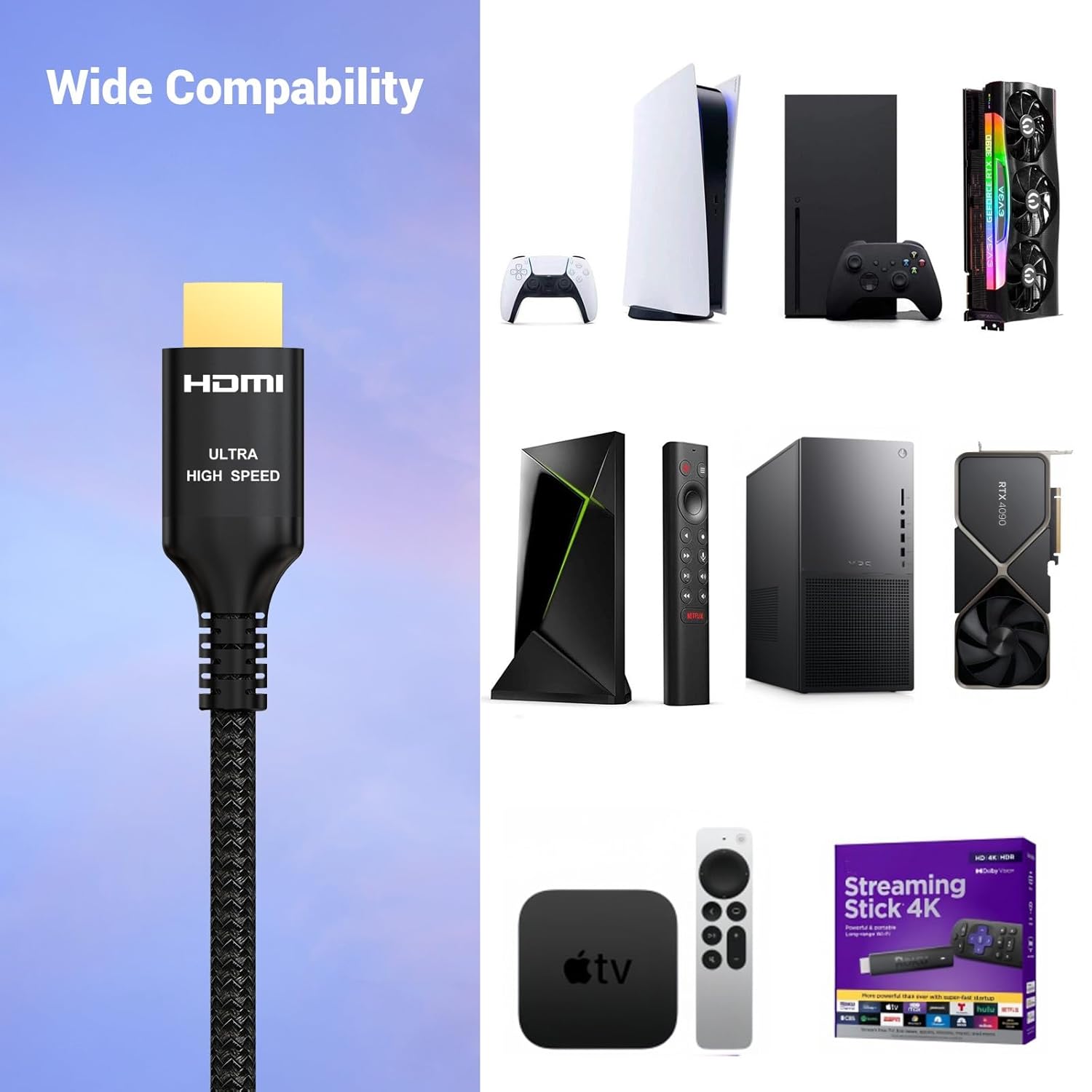
The length here is 3m, so it’s suited to typical living-room and desk setups where your source device and display aren’t right next to each other. Whether you’re connecting a console, a PC/laptop, or a streaming box, the idea is to keep the signal chain capable of modern 4K/8K and richer HDR/audio formats.
Key features worth paying attention to
The marketing here is quite specific, and a few parts genuinely matter when you’re trying to get the performance you see in the spec sheet.
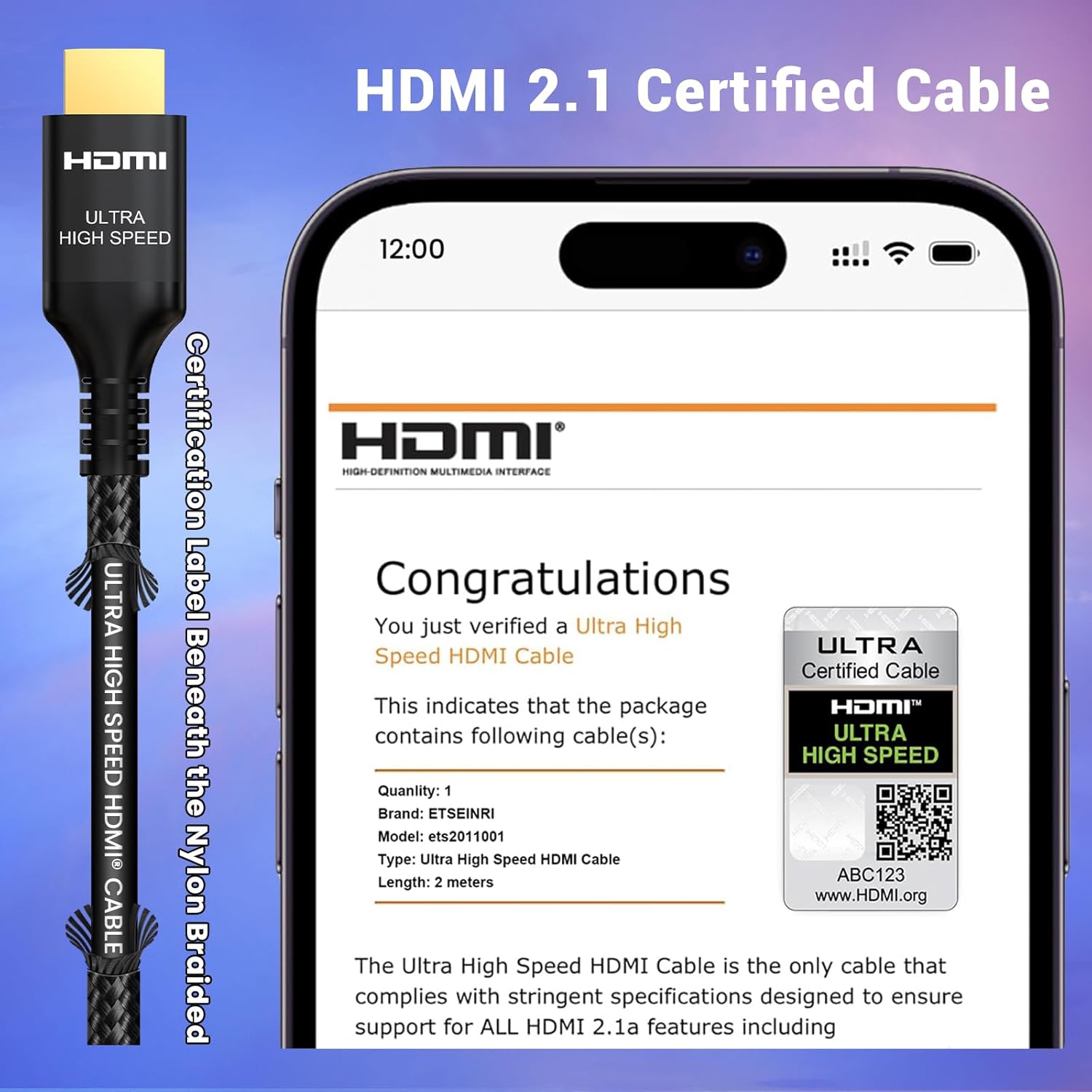
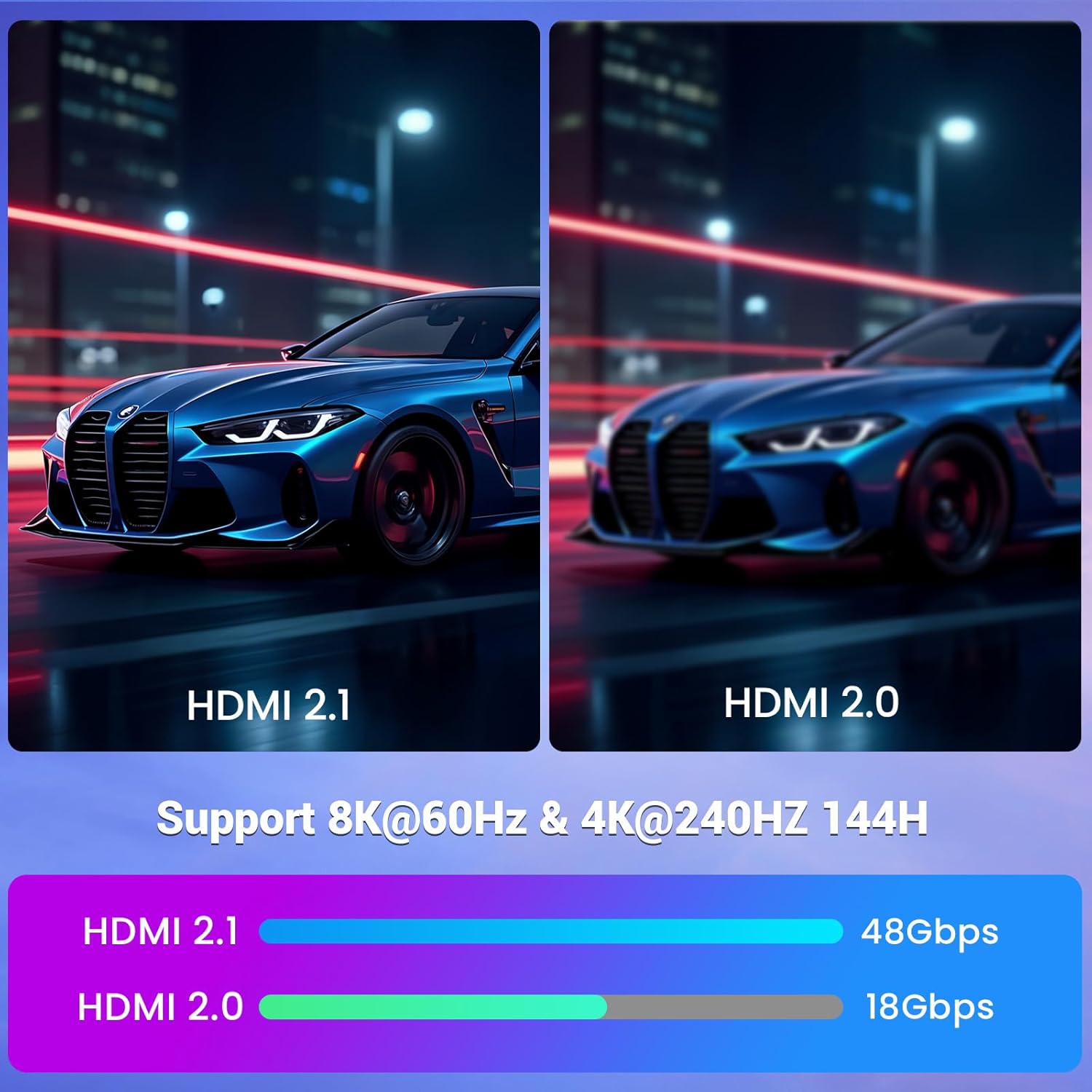
- 48Gbps “Ultra High Speed HDMI 2.1” certification: the cable is positioned for higher-throughput video modes, including 8K at 60Hz and various 4K refresh-rate options (up to 240Hz, plus several other listed rates).
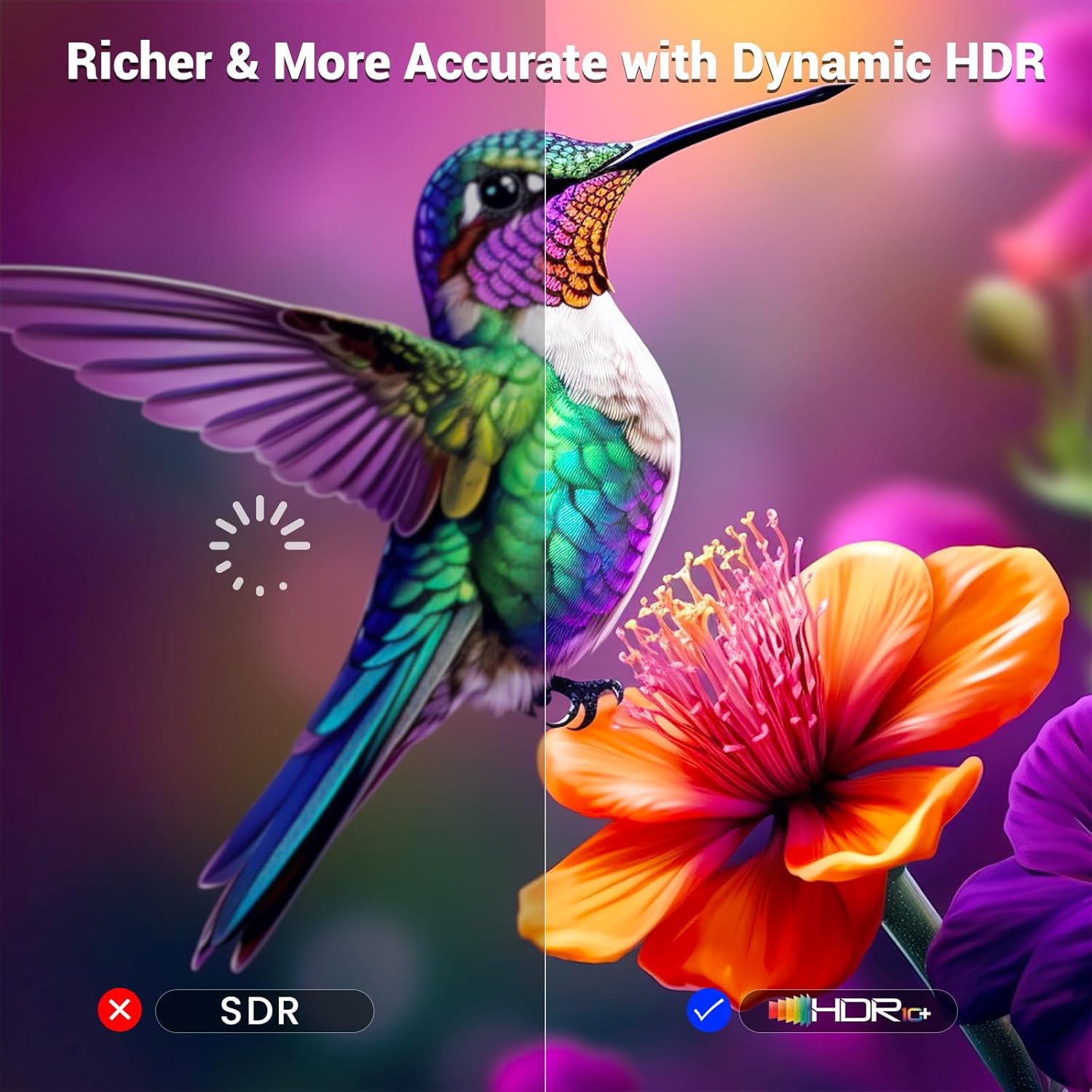
- HDR and colour depth support: it claims support for Dynamic HDR10+ and Dolby Vision, with 12-bit colour accuracy mentioned in the description.
- Gaming-focused features: it lists VRR, QMS, QFT, and ALLM, which are the kinds of features people look for when they want fewer sync issues and smoother transitions.
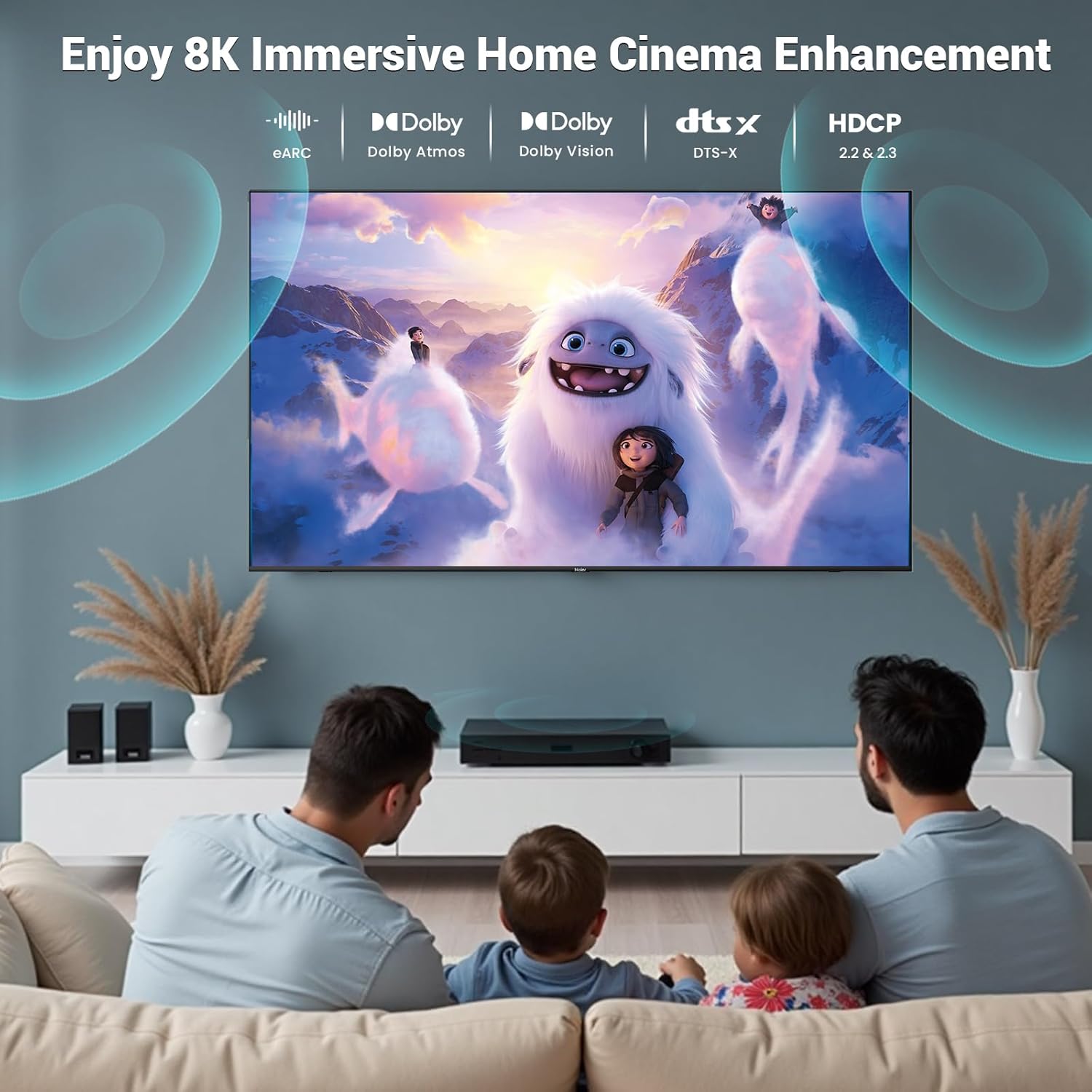
- eARC audio support: it also claims eARC and names surround formats like Dolby Atmos and Dolby TrueHD, plus DTS:X and DTS Master.
You should note that “support” doesn’t automatically guarantee every device will enable every mode. In real life, the TV/monitor and the source hardware still decide what’s actually available in your setup.
What to expect in everyday use
In day-to-day use, this cable is mainly about avoiding the little annoyances that come from an under-spec HDMI link. The description explicitly talks about reducing issues like black screens and flickering, which is exactly the sort of problem you notice when you switch between games, movies, and apps.
A practical way to think about it: if your gaming monitor is capable of high refresh rates, you want the cable in the chain to be able to carry the same capability rather than forcing the device to fall back. For example, with a 3m run from a console or gaming PC to a monitor, a cable like this is aimed at keeping the connection stable when you’re trying to run high refresh modes and HDR.
Where it shines vs simpler HDMI cables
If you’re using older HDMI cables, they can work fine for basic TV viewing, but they may become a headache once you push refresh rate, HDR formats, or advanced audio features.
This Etseinri model leans toward the “future-proofing” side of the purchase: HDMI 2.1 certified, high claimed bandwidth, and support for features often associated with gaming and modern TVs/soundbars. So, it makes more sense when your gear is also reasonably modern and you care about the settings.
That said, if your setup is fairly straightforward (standard TV viewing, modest resolution/refresh expectations, and no real interest in eARC/Dolby Atmos passthrough), you may not feel the difference.
Limitations and what to check before buying
A couple of things are worth double-checking so you don’t end up disappointed.
- Your devices need to support the modes you want. The cable can be capable, but your TV/monitor and source still need to enable things like specific HDR profiles, VRR behaviour, or eARC audio.
- Cable suitability depends on your exact ports and configuration. The listing says it’s backward compatible with earlier HDMI versions (2.0b, 2.0a, 1.4, 1.3, 1.2, 1.1), which helps if you’re mixing older and newer gear, but eARC and the top refresh-rate claims will only matter where the hardware supports them.
- Long runs can still vary by environment. This cable mentions multi-layer shielding and a braided nylon jacket. That’s helpful, but if your signal path is unusually noisy or you pack the cable tightly with power leads, performance can still differ.
If you’re mainly buying to “future-proof” a display for potential upgrades, that’s where this cable’s pitch is strongest.

Tech specs
- Type: HDMI 2.1 to HDMI cable
- Length: 3m
- Bandwidth: 48Gbps
- Max video modes (as listed): 8K 60Hz, 4K up to 240Hz/165Hz/144Hz/120Hz/60Hz, 2K (1440p) up to 144Hz, 1080P up to 240Hz
- Audio: eARC (HDMI eARC support mentioned)
- HDR support: Dynamic HDR10+, Dolby Vision (as stated)
- Gaming features (as listed): VRR, QMS, QFT, ALLM
- Certification: “Ultra High Speed HDMI 2.1” (certified as stated)
In the box / build notes
The description points to a reinforced braided nylon jacket, copper cores and 4-layer shielding to help protect the signal. It also mentions 24K gold-plated connectors to resist corrosion. In practical terms, you’re looking at a cable that’s meant to survive being plugged/unplugged and run through the sort of setups people actually use—console to TV, PC to monitor, and soundbar connections.
Just remember: the cable alone can’t fix compatibility problems coming from unsupported HDMI standards on one side of the chain.
Should you buy it?
It’s a good pick if you’ve got a modern gaming monitor or TV where you’re aiming for high refresh-rate 4K modes, want HDR formats like Dynamic HDR10+ or Dolby Vision to work properly, and you also care about eARC audio to a soundbar or AV receiver.
You may want to skip it if your current setup is older, you’re not bothered about VRR/QMS/QFT/ALLM-style gaming behaviour, or you mainly use the system for basic viewing where bandwidth and eARC formats won’t be used anyway.
If you’re buying with a “keep it simple, but don’t limit future settings” mindset, this cable fits that logic. The one limit to keep in mind is that you’ll only benefit fully when your devices actually support the modes the cable claims.
Mini FAQ
Will this cable work with older HDMI devices?
The description says it’s backward compatible with earlier HDMI versions (including HDMI 2.0b/2.0a/1.4 and others). So it should connect physically to older HDMI ports, though the advanced features will only be available where the devices support them.
Does it support eARC for soundbars?
Yes—eARC support is explicitly mentioned, along with the ability to carry audio formats such as Dolby Atmos and DTS:X (as listed). Your soundbar/AV receiver and TV still need to support the same audio path.
What refresh rates and resolutions does it target?
It states support for up to 8K 60Hz and 4K up to 240Hz, plus other listed 4K/2K/1080P refresh options. In practice, you’ll get what your display and source can negotiate.
Is 3m too long for gaming?
3m is a common length for living-room and desk setups. This cable is built with shielding and is marketed for high bandwidth modes, but the best results still depend on your specific equipment and how you route the cable.