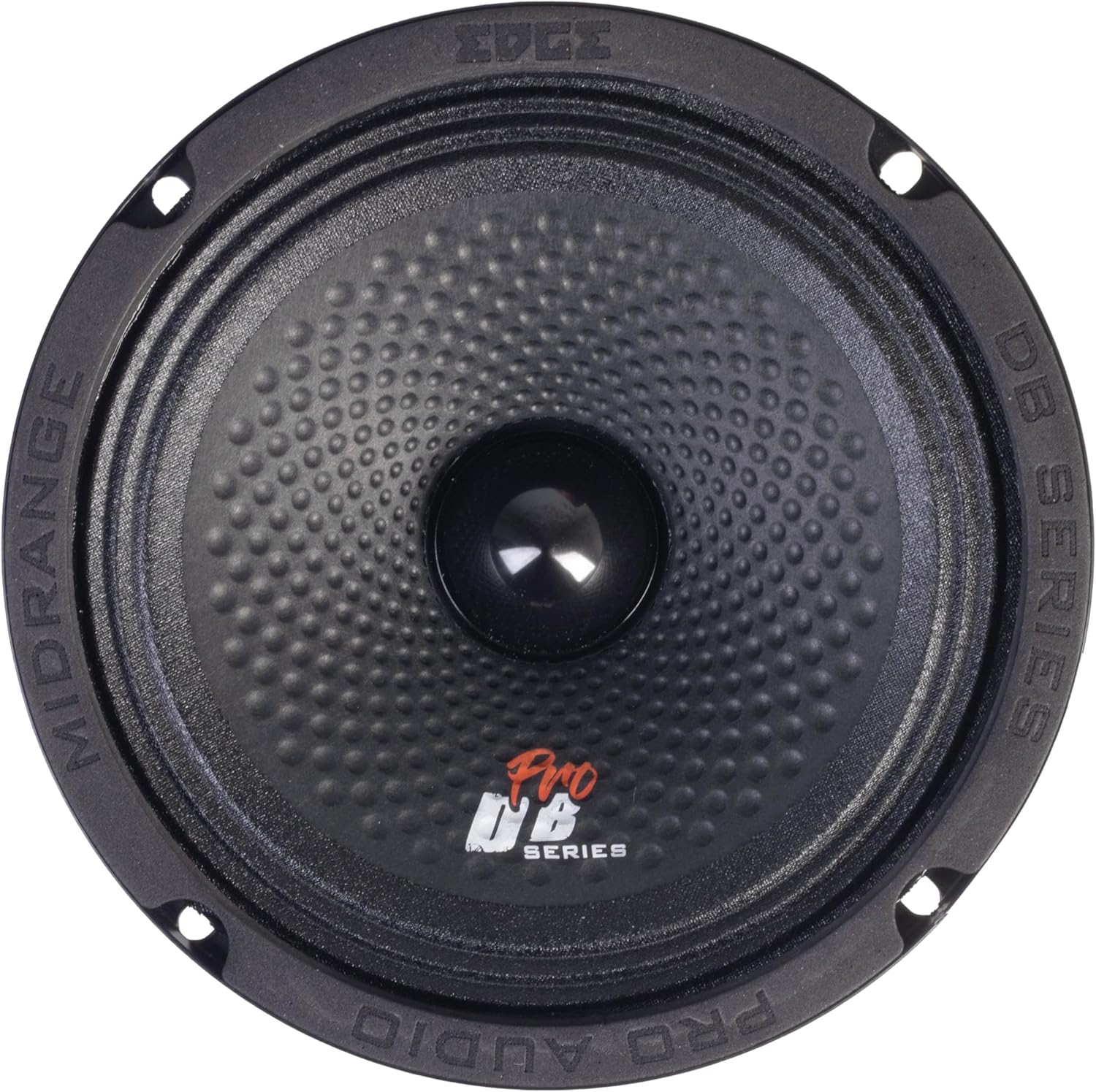
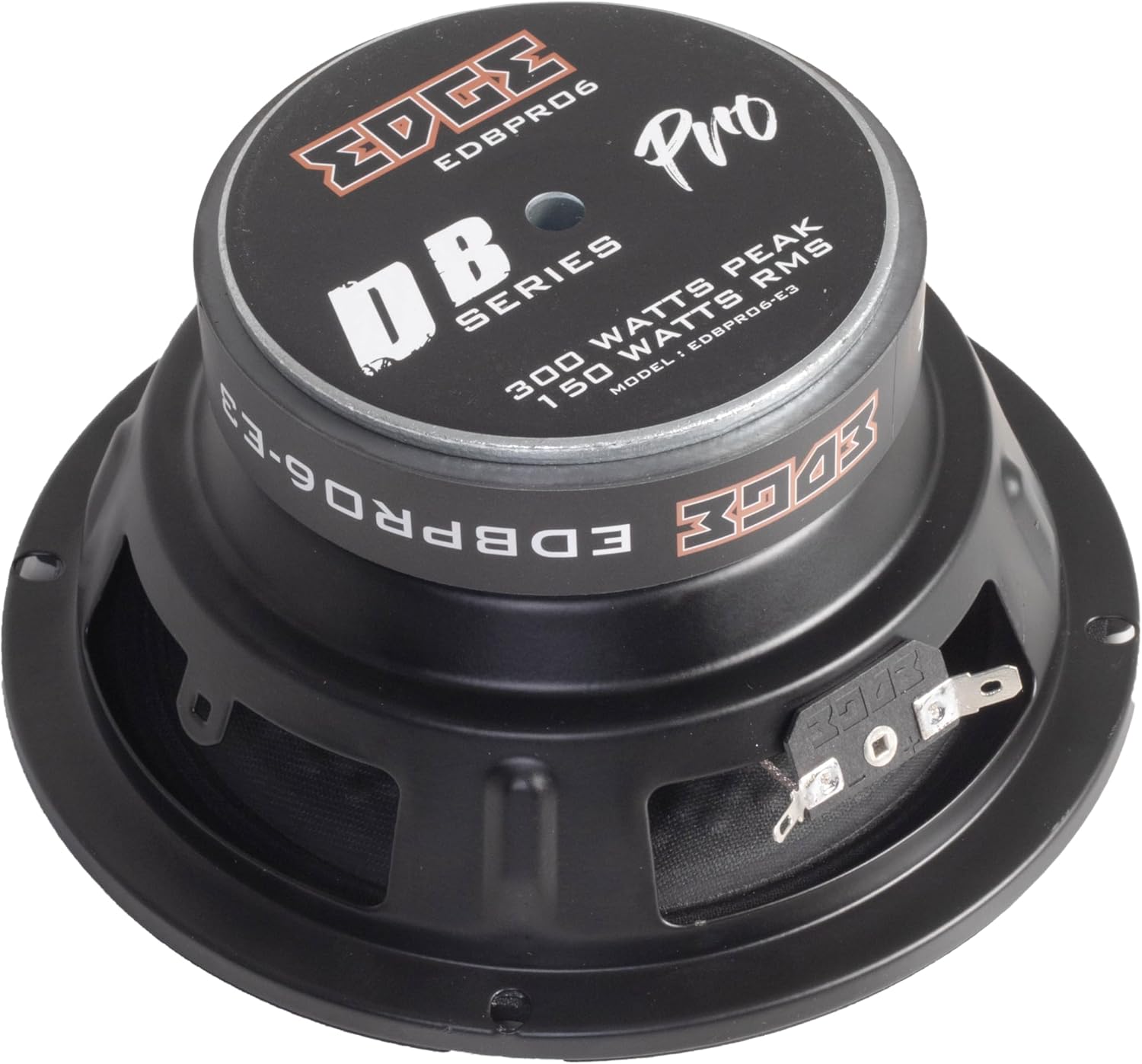
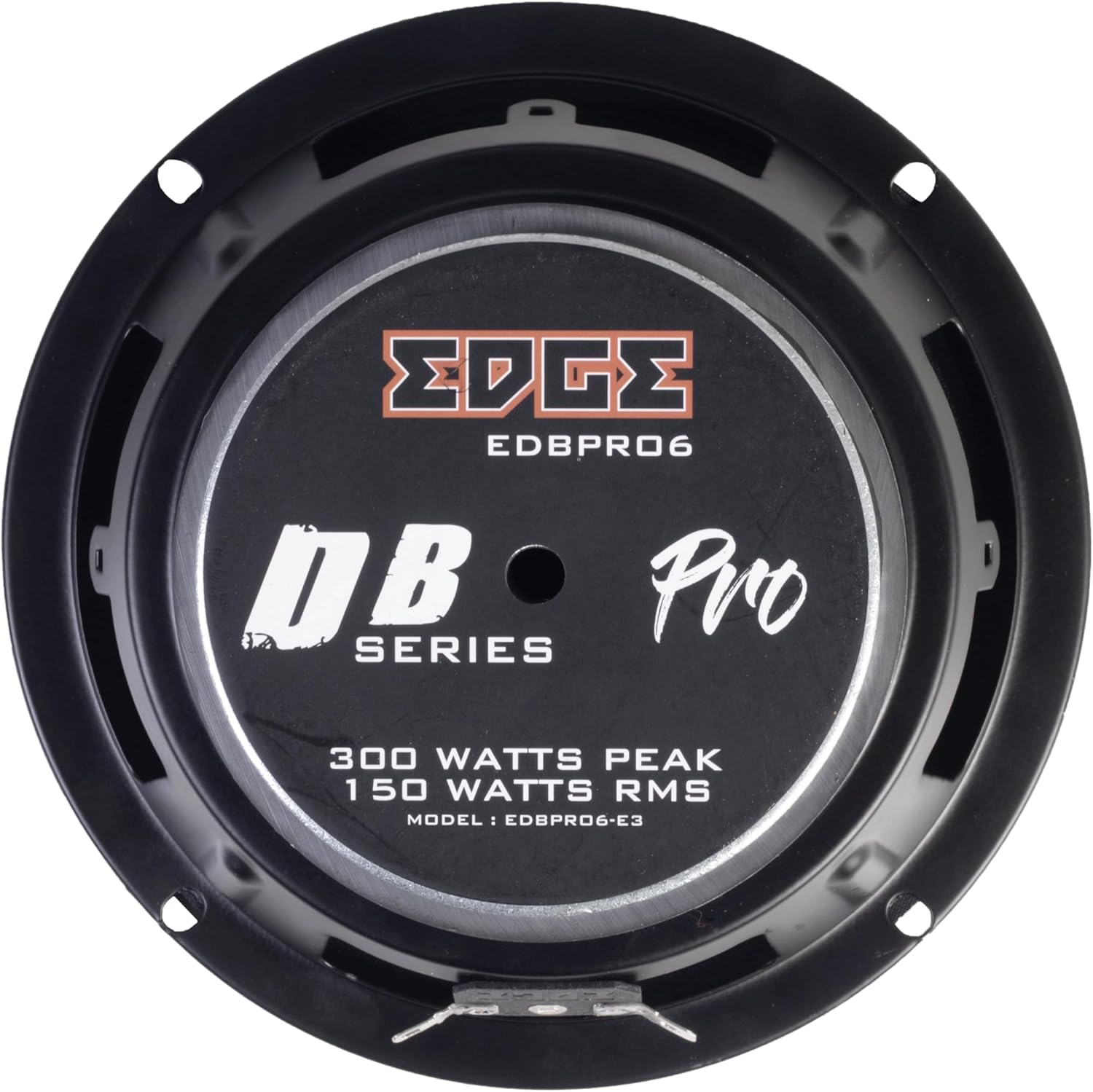
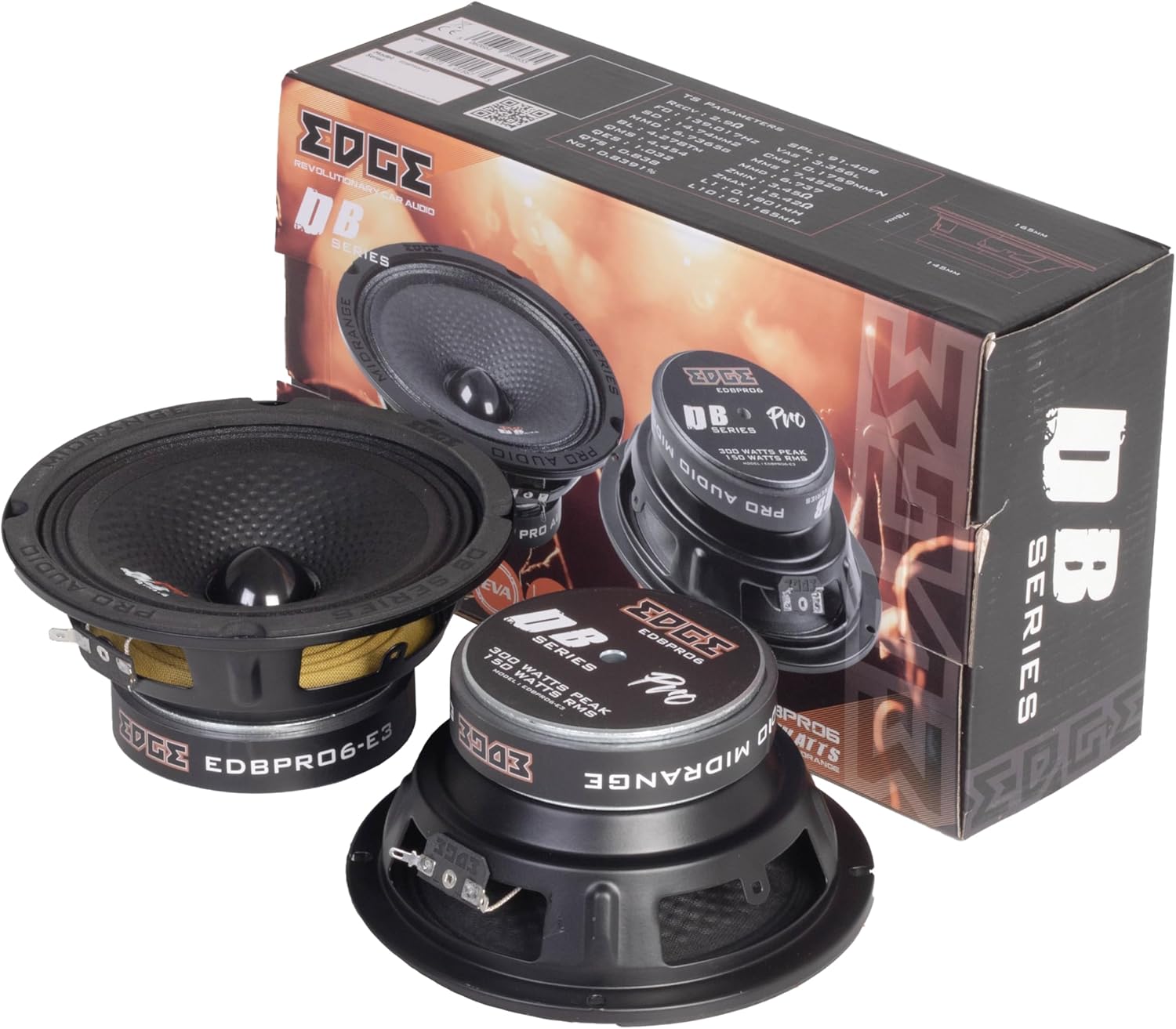
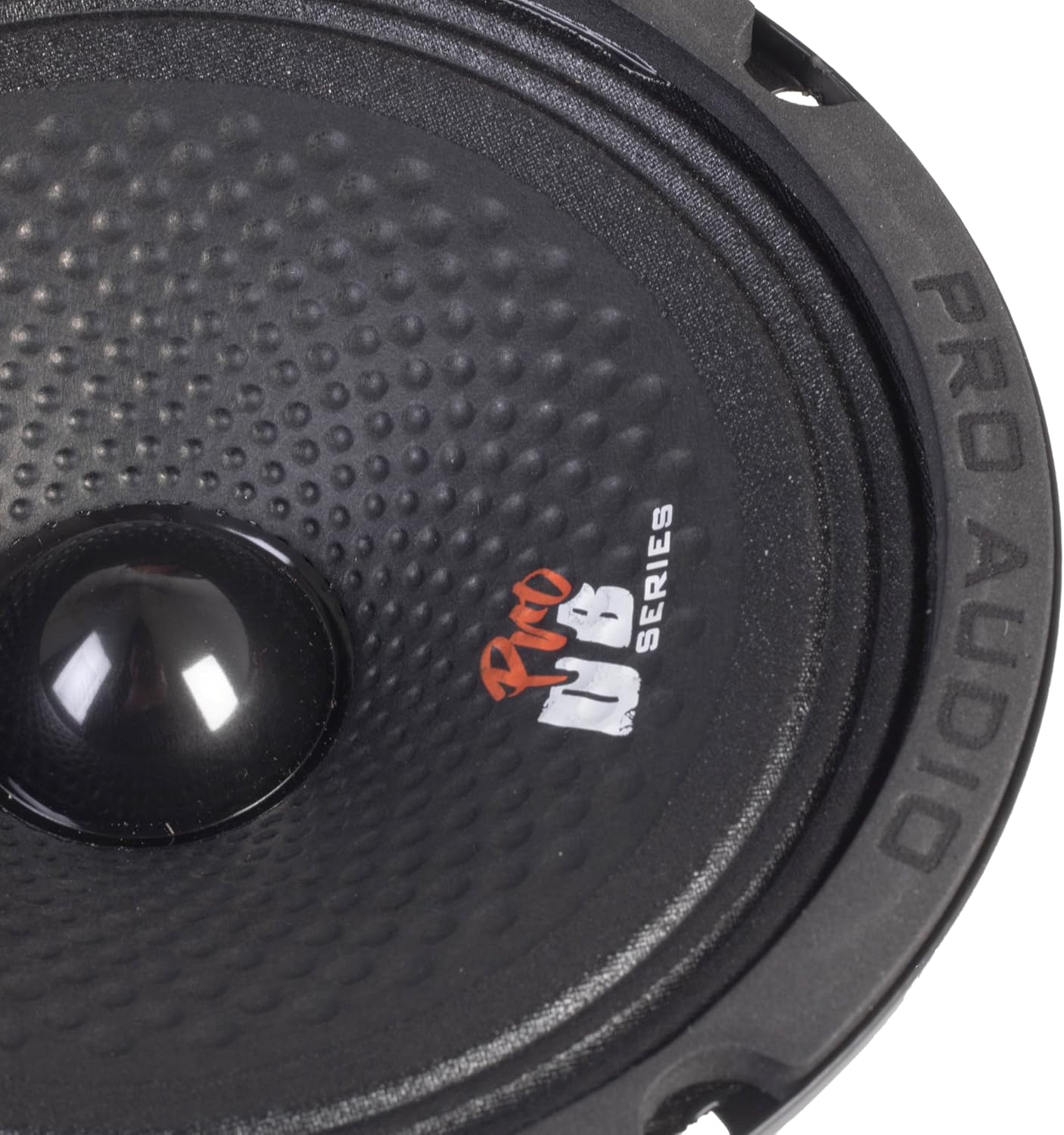
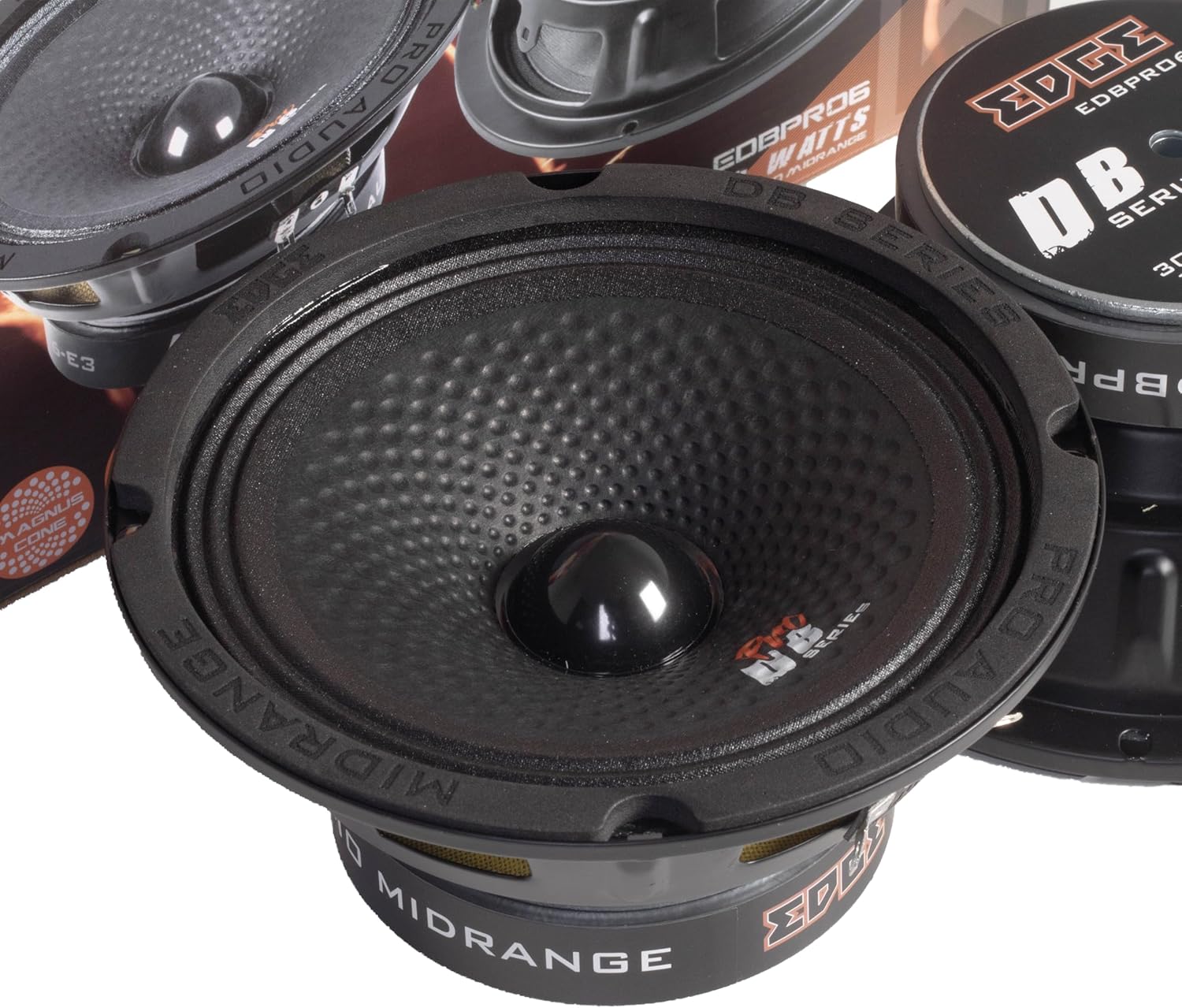
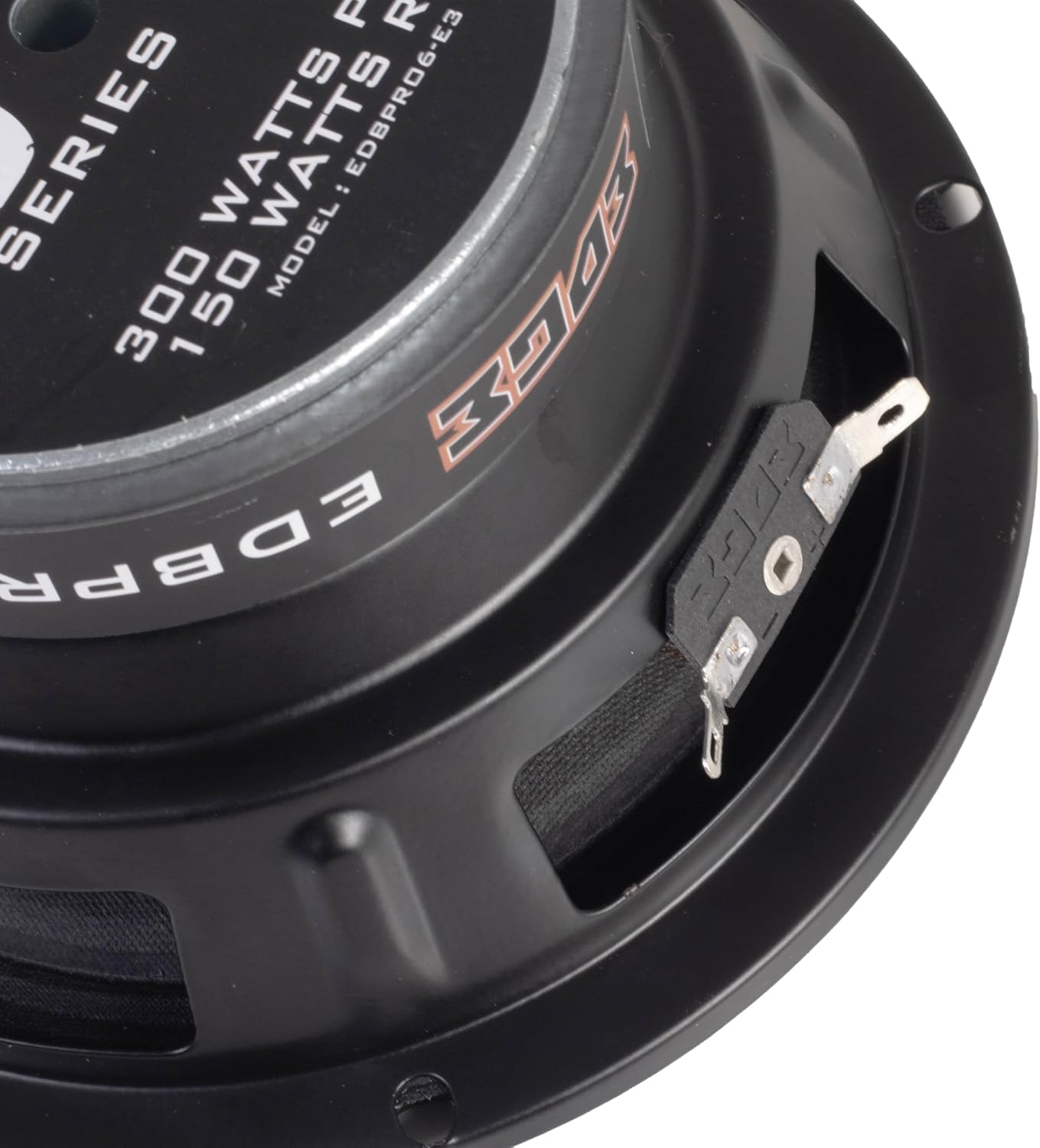
What matters most\nIf you’re chasing louder, clearer sound from your car or van, the EDGE EDBPRO6-E3 pair offers a compact 6.5" midrange solution with a pro‑audio styling. On paper, they’re designed to push more volume while maintaining midband clarity, which matters when you want voice, instruments and on‑road ambience to come through distinctly without excessive distortion at moderate gains. The pair is sold as two speakers, making installation straightforward for a dashboard upgrade or a rear‑door setup.\n\n## How it works in practice\nThe specification highlights a frequency response from 125Hz up to 10.5kHz, which places these units primarily in the midrange to upper midrange territory. That means you’ll likely notice better vocal presence and instrument detail, especially when paired with a separate tweeter for high frequencies. The stated power rating is 300W max with 150W RMS per pair, which implies a higher ceiling for peaking sound levels without immediate clipping, but the real-world benefit depends on your head unit, amplifier headroom and enclosure design.\n\n## Construction and materials\nFrom the data available, the cone is described as a non pressed paper with a dimpled surface, and the surround is dual‑roll foam with poly cotton spiders. This combination aims for a balanced snap and some flexibility, but it’s not a guarantee of durability in all harsh conditions. If you’re routinely pushing loud volumes in a hot engine bay or dusty environment, consider the enclosure and mounting quality as well as how you’ll protect the edge mounting.\n\n## The best fit and potential limits\nConviene tener en cuenta that midrange drivers like these can struggle to deliver deep bass on their own unless paired with a separate woofer or well‑designed enclosure. They’re likely to perform best as part of a three‑way setup or in systems where a dedicated subwoofer handles the very low end. If your goal is extremely loud bass with minimal need for midrange presence, this may not be the optimal choice.\n\n## Who it’s for\nThey suit installers or enthusiasts looking to upgrade midrange performance in a car, van or light truck, where space is at a premium and you want more audible detail from voices and instruments without resorting to oversized drivers. They can work well in a front‑row or rear‑row configuration if paired with appropriate tweeters and a capable amplifier.\n\n## Who it isn’t for\nIf you prioritise deep bass or ultra‑low end extension, a dedicated woofer or a larger enclosure strategy would be a better match. If you’re not planning to add a separate tweeter or amp, the perceived brightness and balance may not meet every listening preference.\n\n## Before you buy\nCheck your vehicle’s mounting depth, the enclosure you plan to use and whether you’ll run the speakers with or without an external amplifier. The frequency range implies midrange emphasis, so pairing strategy matters—think about where you want vocal clarity versus high‑frequency detail. Also verify that your electrical system can handle higher peak demands when you push the volume.\n\n## Practical use case\nImagine a daily commute where you want clearer conversation and more natural music at moderate to high levels. With these speakers, you might notice better midrange articulation at moderate gains, provided you’ve paired them with suitable tweeters and a balanced crossover.\n\n## FAQ\n- Do these deliver strong bass on their own? Not typically, they’re midrange drivers and usually benefit from a dedicated bass/woofer in a multi‑way setup.\n- Can I install them without an amplifier? They can work off a capable head unit, but performance improves with an amp that can comfortably supply up to the RMS rating.\n- Are the cones and surrounds durable for road use? Construction notes suggest reasonable midrange performance, but durability will depend on mounting, climate and care.\n\n## Is it worth it?\nWorth considering if you’re after clearer midrange and more audible vocal detail in a compact 6.5" package and you plan to complete the system with proper crossovers and a complementary high‑frequency driver. If your priority is bass depth or absolute loudness at low frequencies, you may want to look at alternatives that pair a larger woofer with a dedicated bass driver.