

Saiyin Active Bluetooth Bookshelf Speakers (40W) with 3-inch woofers and optical/TV-ARC for turntable, PC and TV (pair)
Product description
What you’re getting and the use case
If you want powered bookshelf speakers that can do a bit of everything, the Saiyin Active Bluetooth Bookshelf Speakers are built around that idea: stereo sound for music, films and streaming, with multiple ways to connect your sources. On paper, they’re aimed at people who don’t want a tangle of boxes—so you can go from a PC or TV straight into proper speakers, and still have options for a turntable.
They’re a paired set of active speakers, meaning you don’t need a separate amplifier. That matters, because it usually keeps setup simpler than “vintage-style” speaker + amp routes. The catch is that, like many compact powered bookshelf options, you’ll still want to manage expectations on the kind of bass depth you can realistically get from relatively modest drivers—though there are features here designed to give lows more punch.
Key features (the stuff that actually changes day-to-day listening)
The most noticeable differences for everyday use are the connection options, the way bass is handled, and the listening modes you can switch remotely.
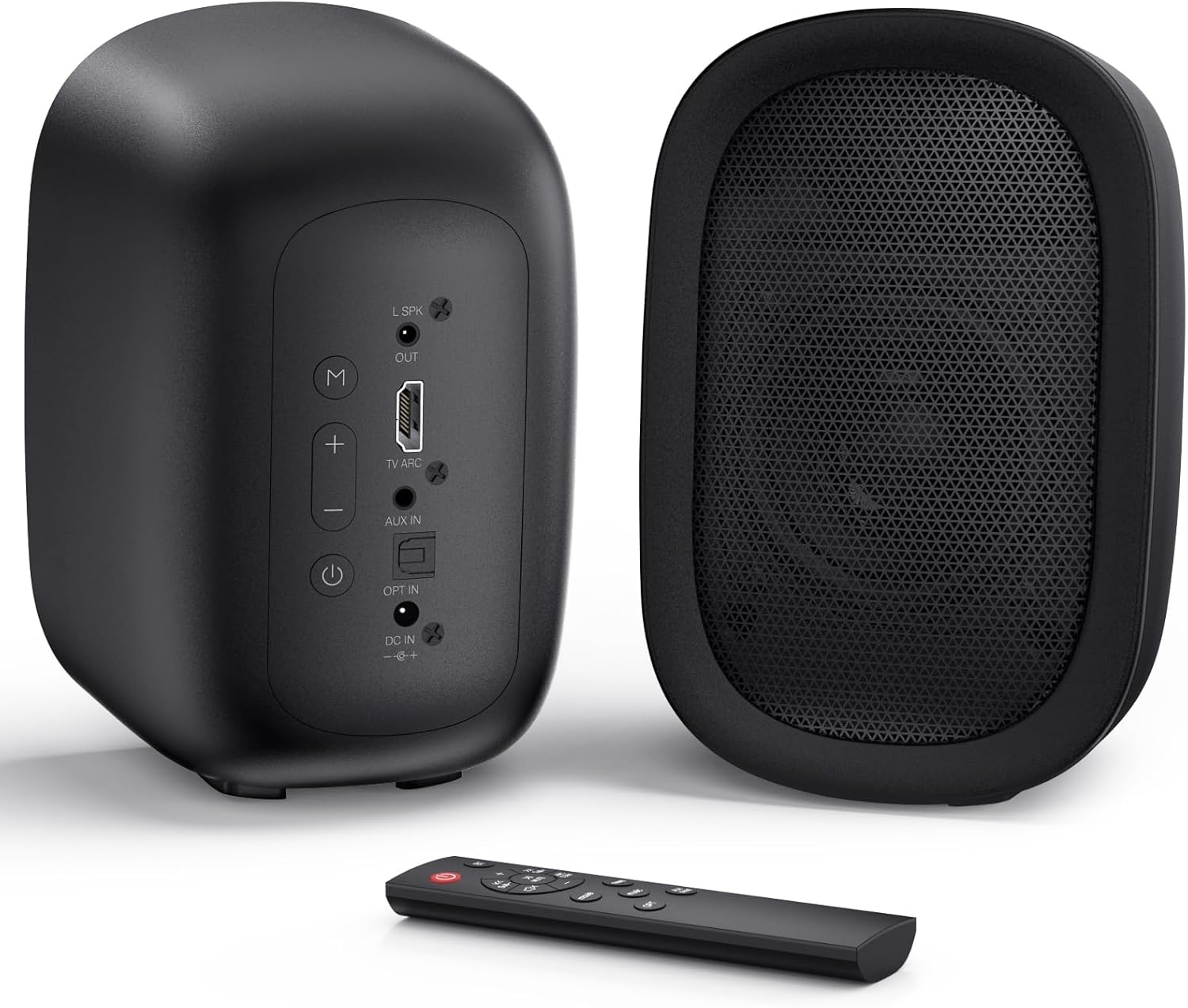
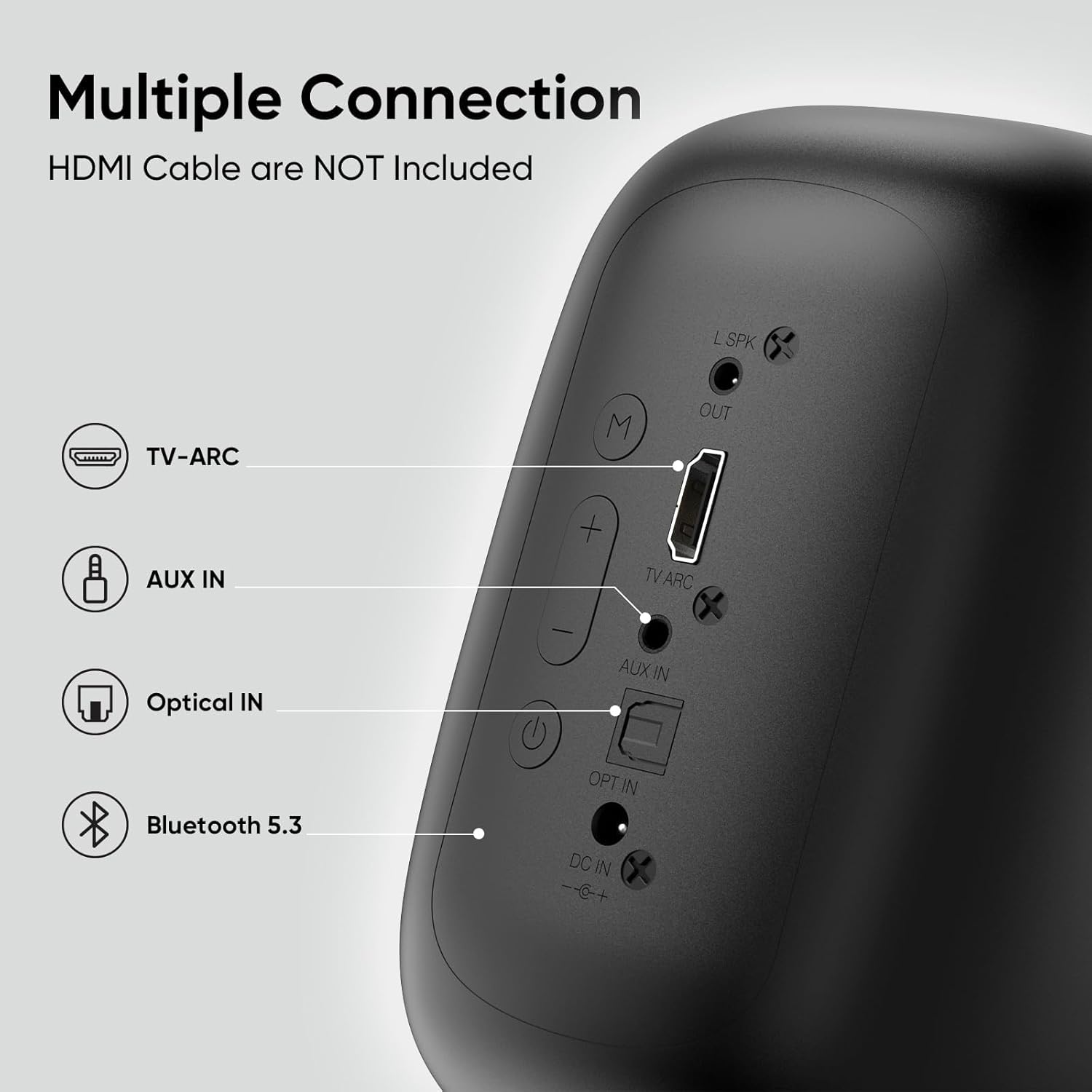
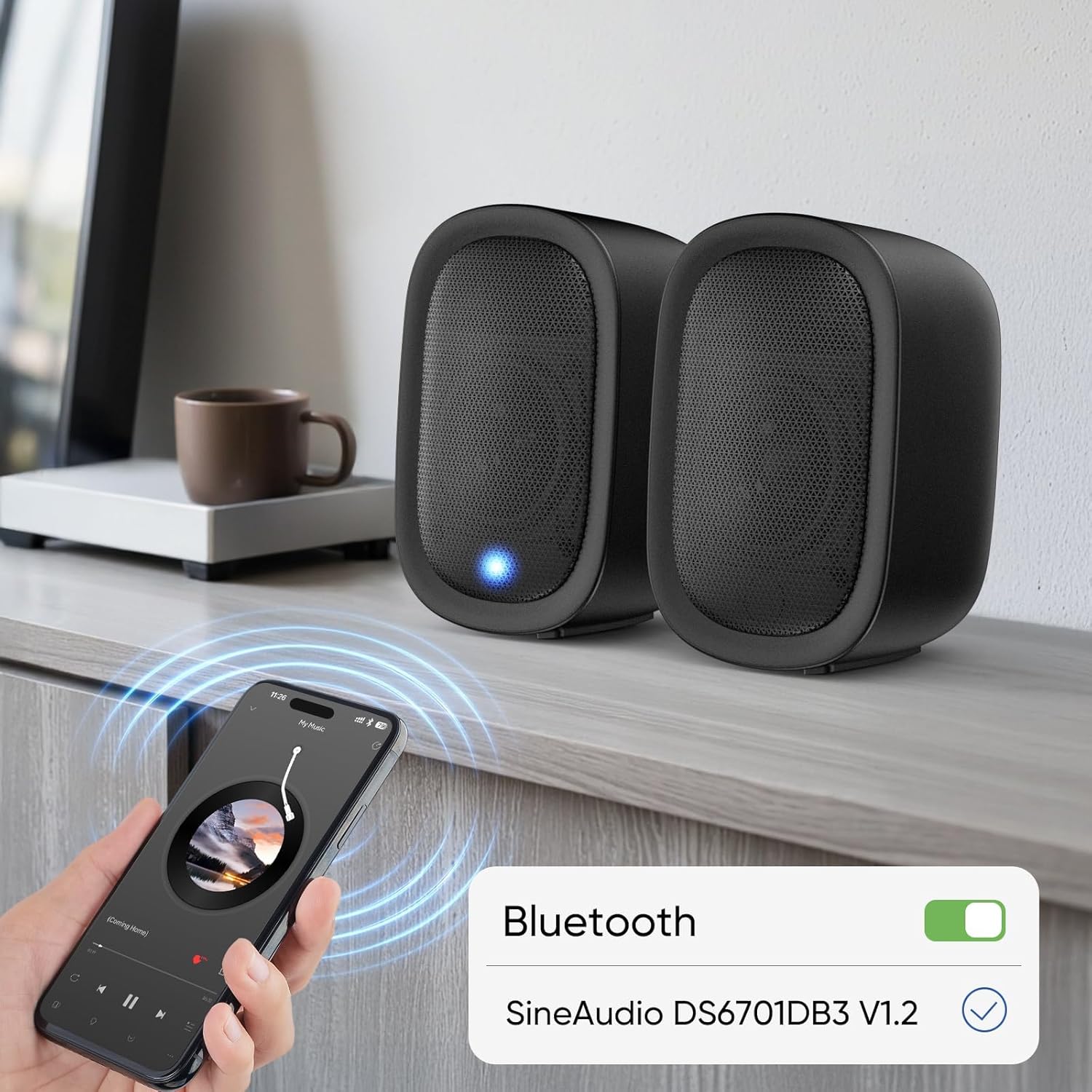
First up: connectivity. You can pair via Bluetooth 5.3, connect by optical, use TV-ARC, or plug in with AUX IN. In plain terms, that gives you a practical set of routes for common setups: a TV for films and apps, a PC for music, and a turntable when you’re using the speakers as the “amp” stage.
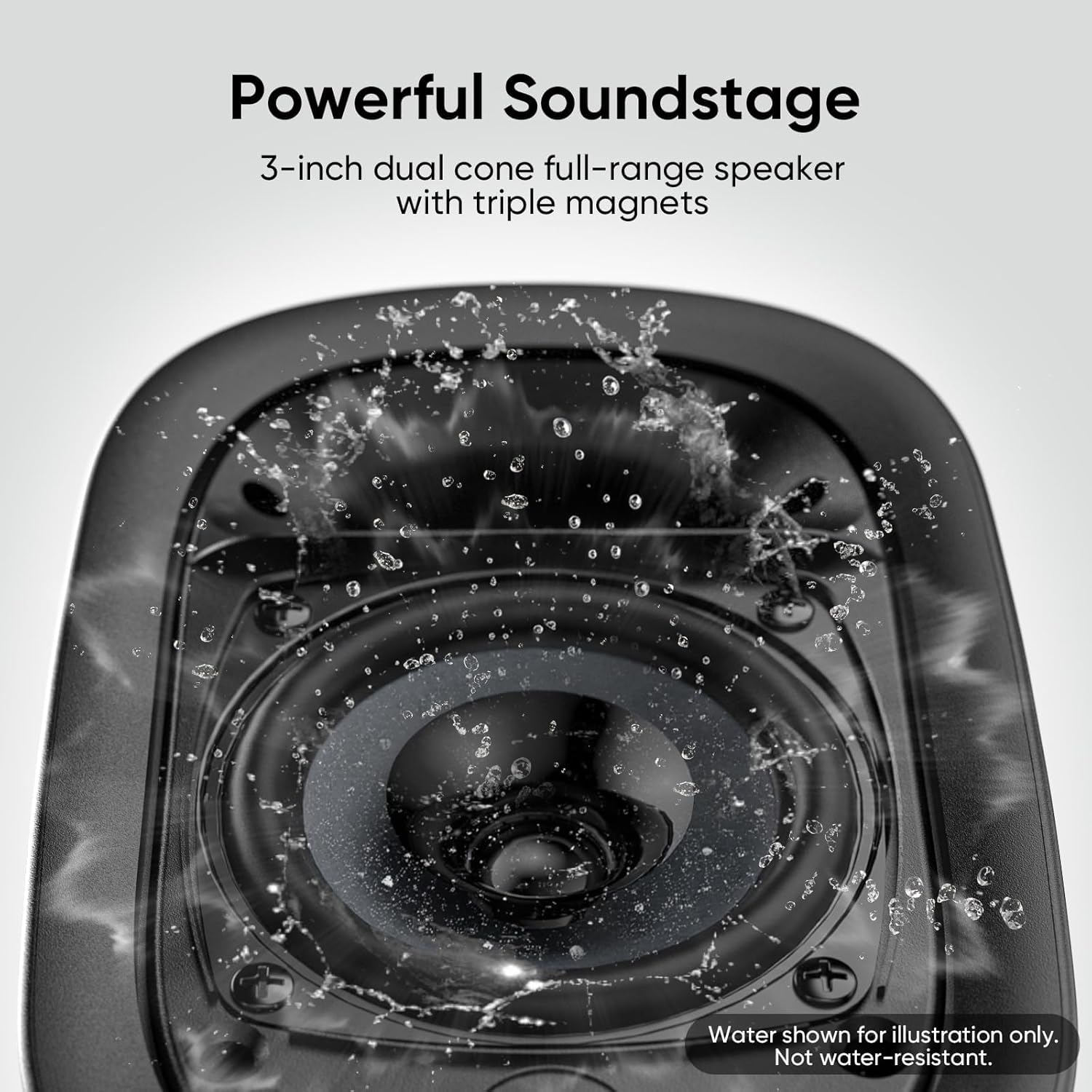
Then there’s bass design. The speakers are described as having dual 3-inch drivers and a dual bass reflex port approach. Bass reflex ports can help low-end presence in smaller enclosures, and the brand also mentions a dual-curved horn bass reflex port intended to reduce midrange distortion—so vocals stay clearer rather than getting smeared when the track gets busy.
Finally, EQ presets. The included remote offers three modes: Movie (virtual surround), Music (powerful bass), and News (clear vocal). This is one of those features that sounds gimmicky until you live with it: it can make dialogue clearer on the TV, and it’s a quick way to change the “character” of the sound without fiddling with a menu system.
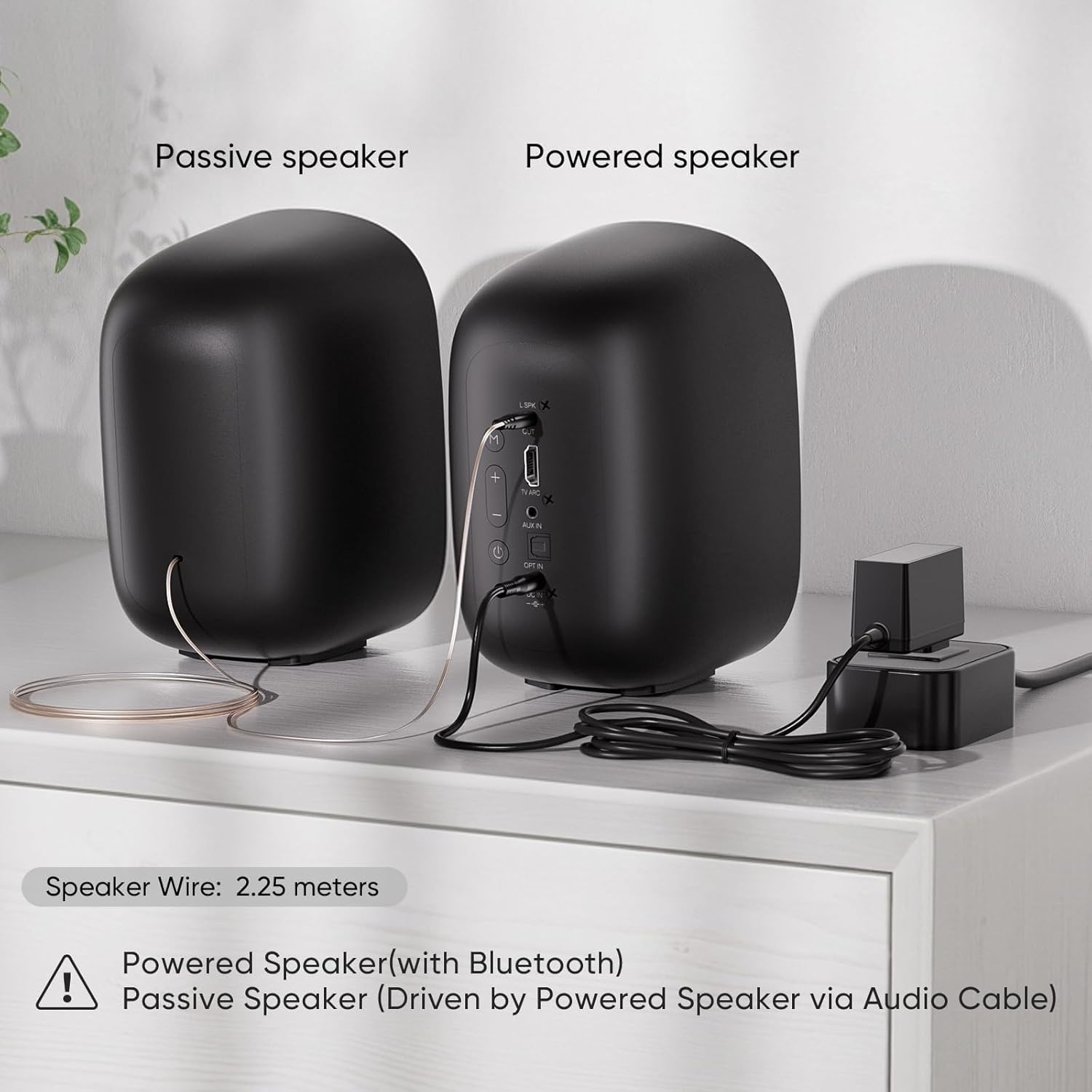
A small-but-important practical note: the speakers connect to each other via speaker wire for uninterrupted sound, while Bluetooth is for the link from your device to the system.
Key specs that shape performance
You don’t get much hard spec detail beyond what’s in the description, but the core points are clear enough to judge fit.
Tech specs - Name: Saiyin Active Bluetooth Bookshelf Speakers (pair) - Type: Powered bookshelf speakers (active) - Format: Stereo sound - Woofer size: 3-inch - Total power (as stated): 40W - Bluetooth: Bluetooth 5.3 - Connection types: Bluetooth, Optical, TV-ARC, AUX IN - Bass/reflex approach: dual bass reflex port (dual 3-inch drivers referenced) - EQ presets via remote: Movie (virtual surround), Music, News - Control: included remote and back-panel buttons
What stands out in use
If you’re setting these up around a TV and a couple of everyday sources, they tick a lot of boxes quickly. Optical and TV-ARC are particularly useful if you want the TV to do what it does best, while the speakers handle the heavy lifting.
A micro example: say you’ve got a film night. You select TV-ARC, then use the remote to switch to Movie mode for virtual surround. For news or a chatty documentary, you can swap to News mode for clearer vocals. It’s not a substitute for perfectly mixed audio, but it’s the kind of “one-button” change that can genuinely improve perceived clarity.
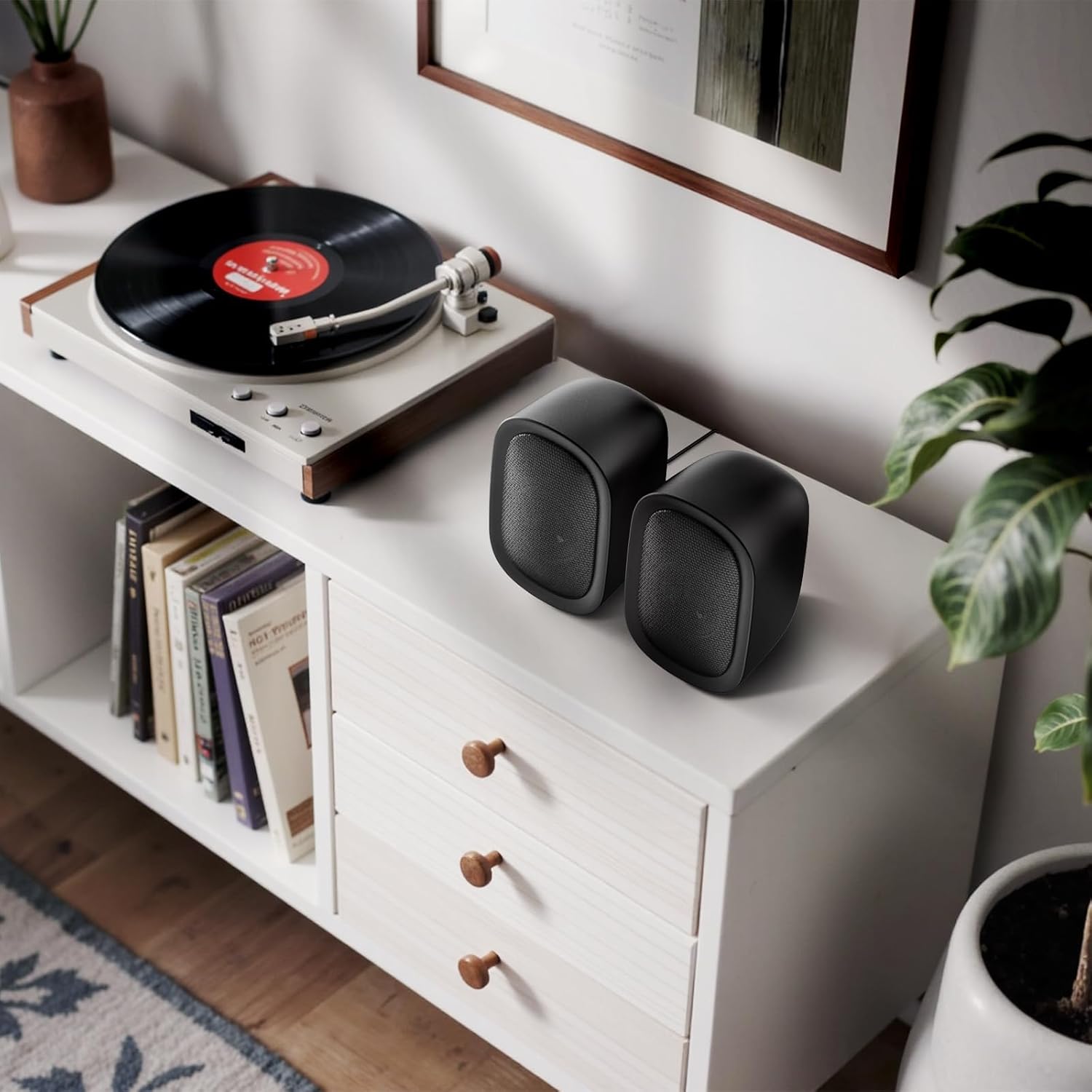
For music, Bluetooth 5.3 is there for casual listening, while the “Music” preset leans into stronger bass. For a turntable setup, the positioning is clear: the speaker system is presented as particularly good for record playback, especially where midrange clarity matters for vocals.
Limitations and who should think twice
Here’s where it may not be the best match.
If you’re expecting deep, room-filling sub-bass like you’d get from a dedicated subwoofer system, you may feel underwhelmed. With 3-inch drivers and a total power figure stated as 40W, these are more in the “bookshelf with boosted presence” category than a “club-style bass” solution.
Also, the description includes an audio caution about connecting via ARC/optical with certain TV audio formats (it suggests switching TV output format to avoid crackling noise). That’s not unusual, but it does mean you may need to spend a couple of minutes in your TV’s settings if you hit any noise issues.
Finally, speaker placement still matters. Bookshelf speakers can sound different depending on how close they are to a wall and how you angle them—so if you’re buying purely for “set-and-forget”, it might take a bit of tuning in your room.
Compatibility and setup things to check before you buy
To avoid headaches, it’s worth double-checking your sources and how you’ll connect them.
- If you plan to use TV-ARC or optical, be prepared to adjust your TV’s audio output format if you run into crackling noise (the description explicitly flags this possibility).
- If you’re using a turntable, confirm you have the right output for the connection method you intend to use (the listing positions the speakers as a good record player pairing, but doesn’t spell out any phono preamp details).
- If you mainly listen via Bluetooth, remember Bluetooth is for the device-to-speaker link, while the pair itself uses speaker wire.
If you want a straightforward setup with fewer moving parts than a traditional passive speaker + amplifier route, this design generally makes that easier.
Final verdict
Should you buy it? It’s a good fit if you want powered bookshelf speakers for a living room setup—TV, PC and casual wireless music—where optical/TV-ARC plus AUX gives you flexible day-to-day connections. You’ll also like the remote EQ modes if you value quick switching between film-like sound, bass-leaning music playback, and clearer dialogue.

You may want to skip it if you’re chasing very deep bass without additional speakers, or if you strongly prefer a setup that never requires any TV audio format tweaks. And if your turntable needs a specific input stage, you’ll want to be sure your setup matches the connection you’ll use.
Mini FAQ
Do these speakers need a separate amplifier?
No—the listing describes them as powered active bookshelf speakers.
How do they connect to a TV?
You can use TV-ARC or optical, and there’s also AUX IN if needed.
Can I control the EQ modes without getting up?
Yes, the description says there are three EQ presets accessible from the included remote.
Is Bluetooth the only wireless option?
The system supports Bluetooth 5.3, but it also uses optical/TV-ARC for TV connections.
Do the two speakers connect wirelessly to each other?
Not for the pair connection. The description says the speakers link to each other with a speaker wire for uninterrupted sound.