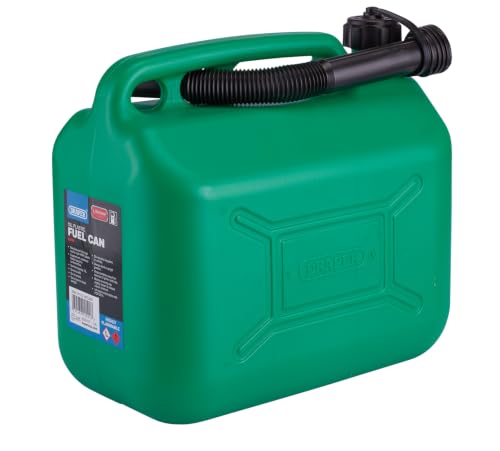
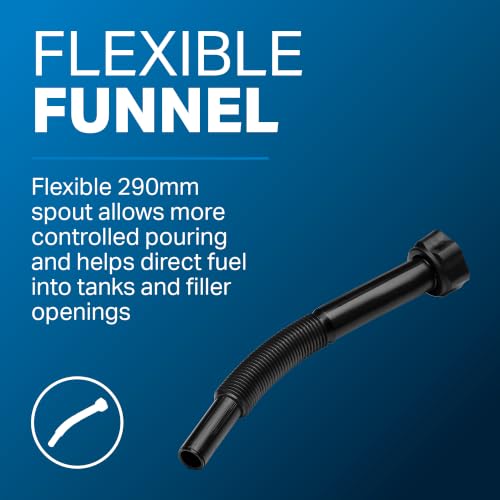
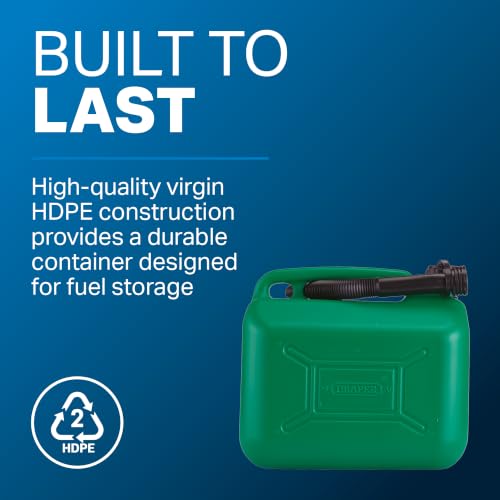
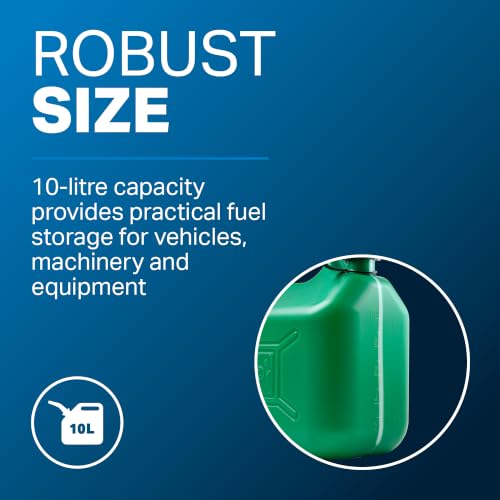
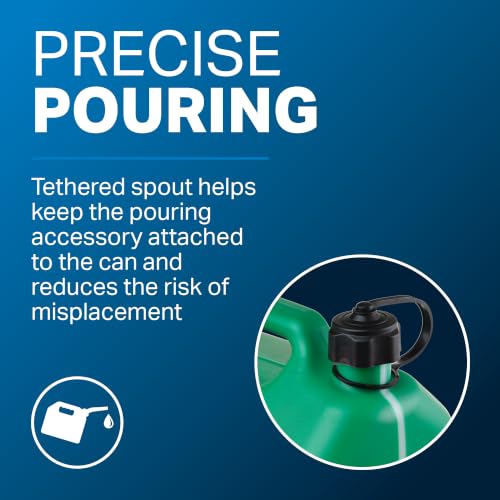
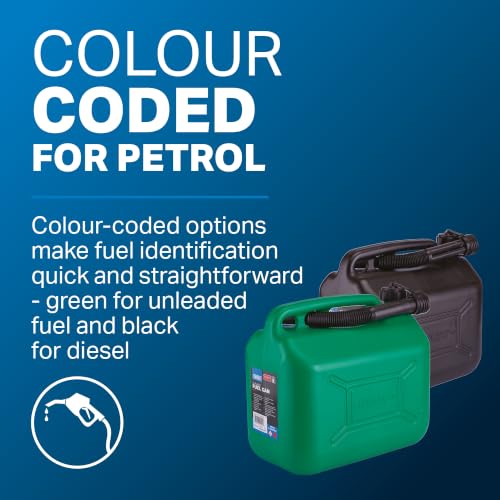
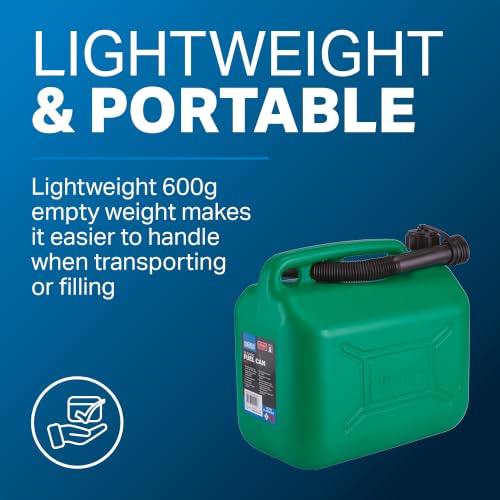
What it is and what it’s for\nThe Draper 10L Plastic Petrol Can is a lightweight, durable fuel container designed to store petrol or diesel for vehicles, machinery and equipment. With a flexible 290mm spout, it aims to offer more controlled pouring and easier access to tanks or filler openings. On paper, the high‑quality virgin HDPE construction promises long‑lasting use, while colour‑coded options help distinguish petrol from diesel quickly. If you prioritise portability and practical storage, this can ticks several boxes.\n\n## How it helps you day to day\nThe 10‑litre capacity strikes a balance between usable fuel storage and manageable weight. At around 600g empty, it’s light enough to handle when filling or transporting. The flexible spout is designed to reduce misplacement during pours, which can cut down on spills, particularly in tight spaces or awkward angle fills. The colour‑coding is a simple, practical touch for quick identification in shared workshop spaces or fleets.\n\n## What stands out, and what might hold it back\nOn the plus side, the combination of a durable HDPE body and a relatively compact footprint makes this can a sensible everyday option for small to medium workloads. The spout design and flexible length are practical for precise pours, especially when space is limited. However, the real-world performance depends on how you use it: if you routinely pour from a full can into stubborn filler necks, the spout’s flexibility could be more or less helpful depending on your angle and ventilation. It isn’t a high‑end, heavy‑duty container, so if you expect to fill large machinery or frequent high‑volume refuelling, you may notice the limits of 10 litres.\n\n## Who it’s best for\nThis Draper can is well suited to homeowners, small workshops, fleet drivers or anyone who needs occasional, controllable refuelling for cars, garden machinery or light equipment. It’s a pragmatic addition where a compact, easy‑to‑stow can is valued over sheer capacity.\n\n## When to consider alternatives\nIf you regularly refuel larger engines or require ship‑shape durability under heavy industrial use, a bigger capacity can or a metal container might be worth exploring. If the priority is minimal spillage in extreme conditions or you need rigid, non‑flexible pouring control, you might compare with alternatives that offer different spout geometry or locking mechanisms.\n\n## What to check before you buy\n- Confirm compatibility with the fuel type you typically store (petrol vs diesel) and ensure the colour code aligns with your needs.\n- Consider how you plan to use the can: garden work, light vehicle maintenance, or workshop refuelling can guide whether 10 litres is the right size.\n- Inspect the spout length and flexibility to ensure it fits your tank openings and access space.\n- Look at the overall quality of the HDPE material and the join points, a loose cap or stiff lid can hamper usability over time.\n\n## Practical use example\nImagine topping up a riding lawn mower in a compact shed. The Draper 10L can sits neatly on a shelf, the long flexible spout guiding petrol straight into the filler neck with minimal wobble, reducing drips and the mess that comes with heavier cans.\n\n## Is it worth it?\nFinal verdict: this can makes sense if you value portability and controlled pours for smaller scale refuelling tasks and you’re not chasing maximum capacity or industrial-grade durability. It’s a sensible mid‑range option for home and light‑work use.\n\n## Quick FAQ\n- Is the spout flexible? Yes, it’s described as a flexible 290mm spout for controlled pouring.\n- What’s the capacity? 10 litres.\n- What material is it made from? Virgin HDPE for durability.\n- Can it be used for diesel and petrol? Colour coding helps identify petrol, the base description supports both types as general purpose fuel storage.