

Draome Phonics Flash Cards for Toddlers – 120 First Words for Ages 1–3
Product description
What it is and what it aims to do
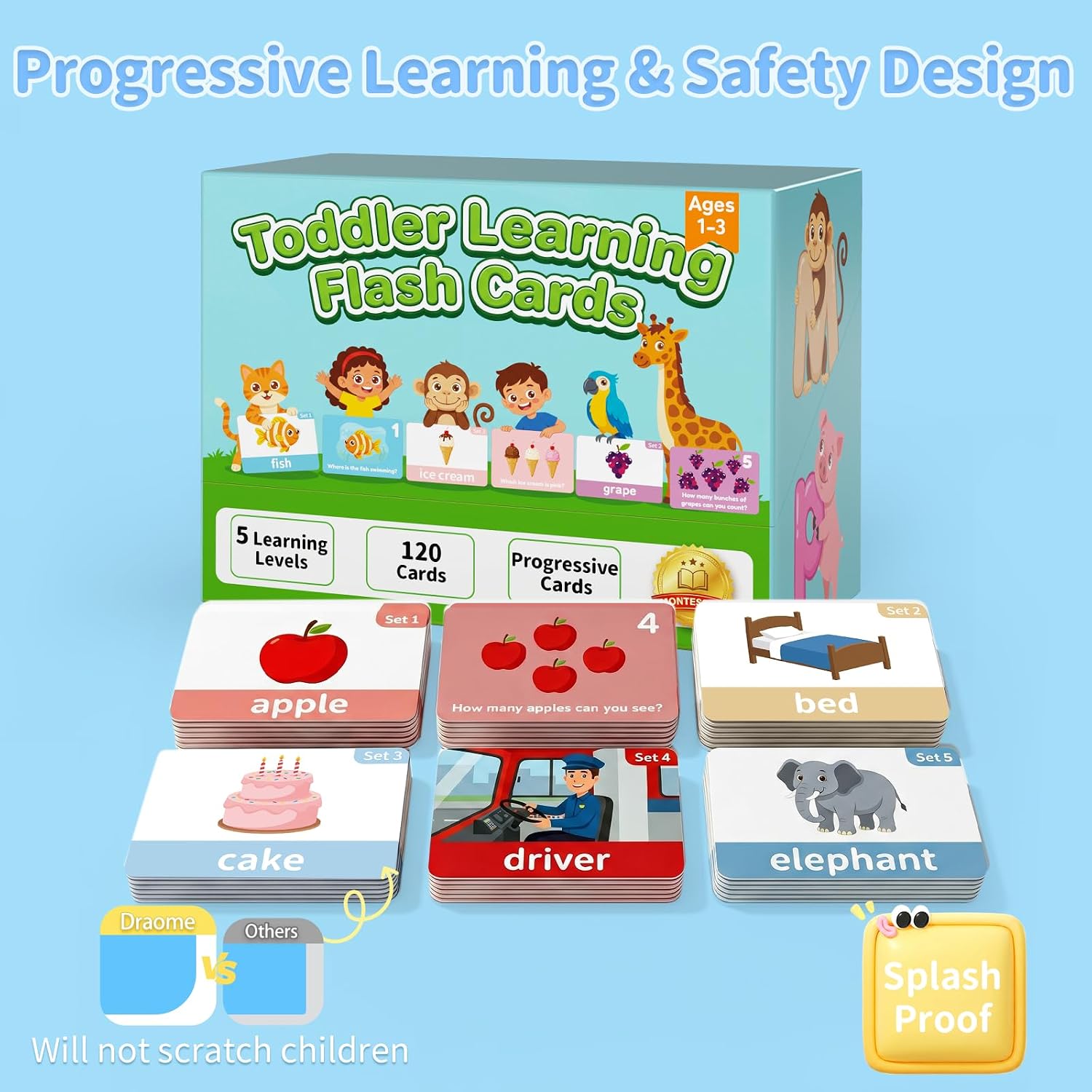
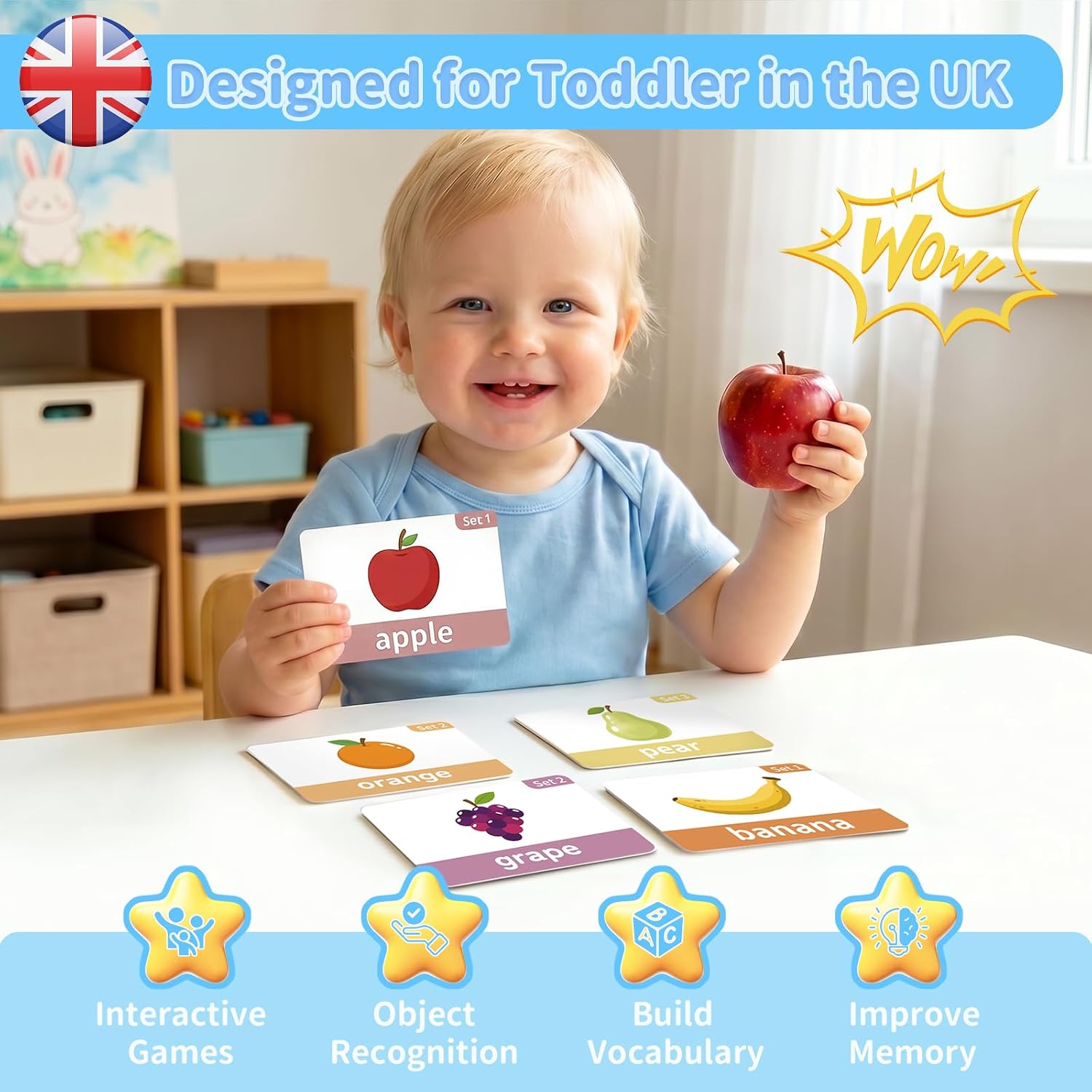
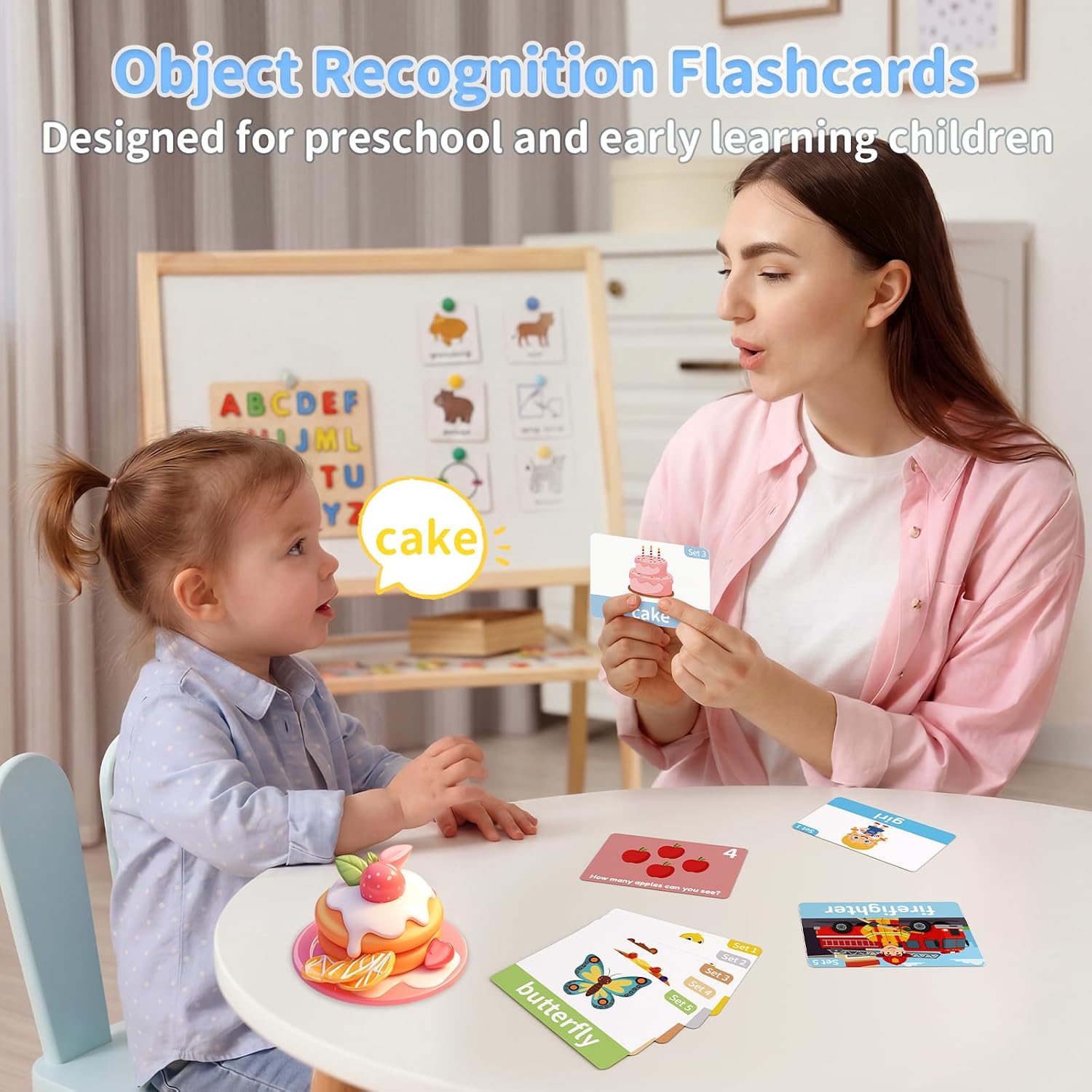
Draome Phonics Flash Cards for Toddlers are a set of 120 double‑sided word cards designed to support early language and vocabulary development in children from 12 months to 3 years old. The pack combines large, colourful illustrations with simple words to help with visual recognition and speech foundations, all without screen time.
How it fits into daily learning
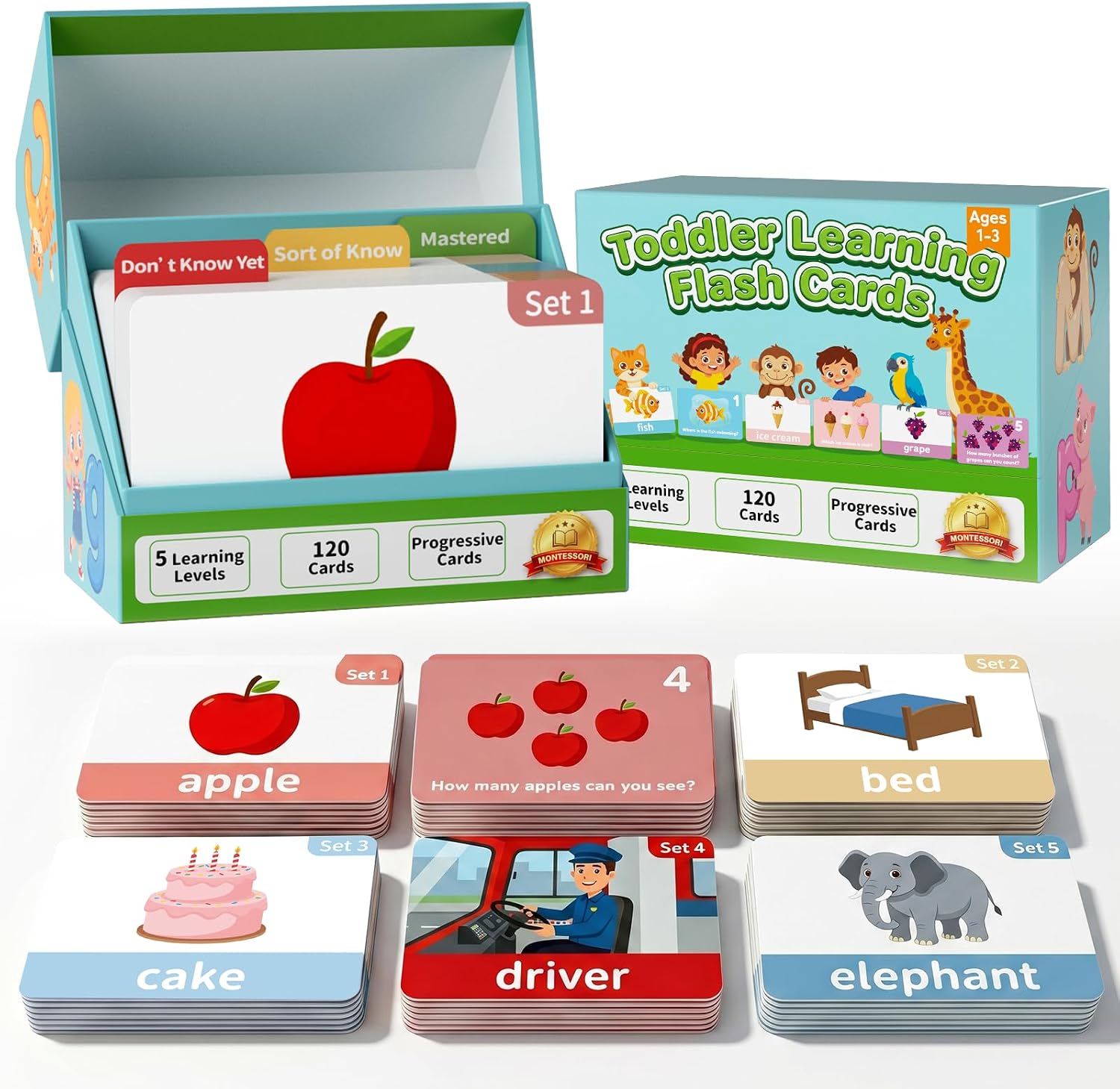
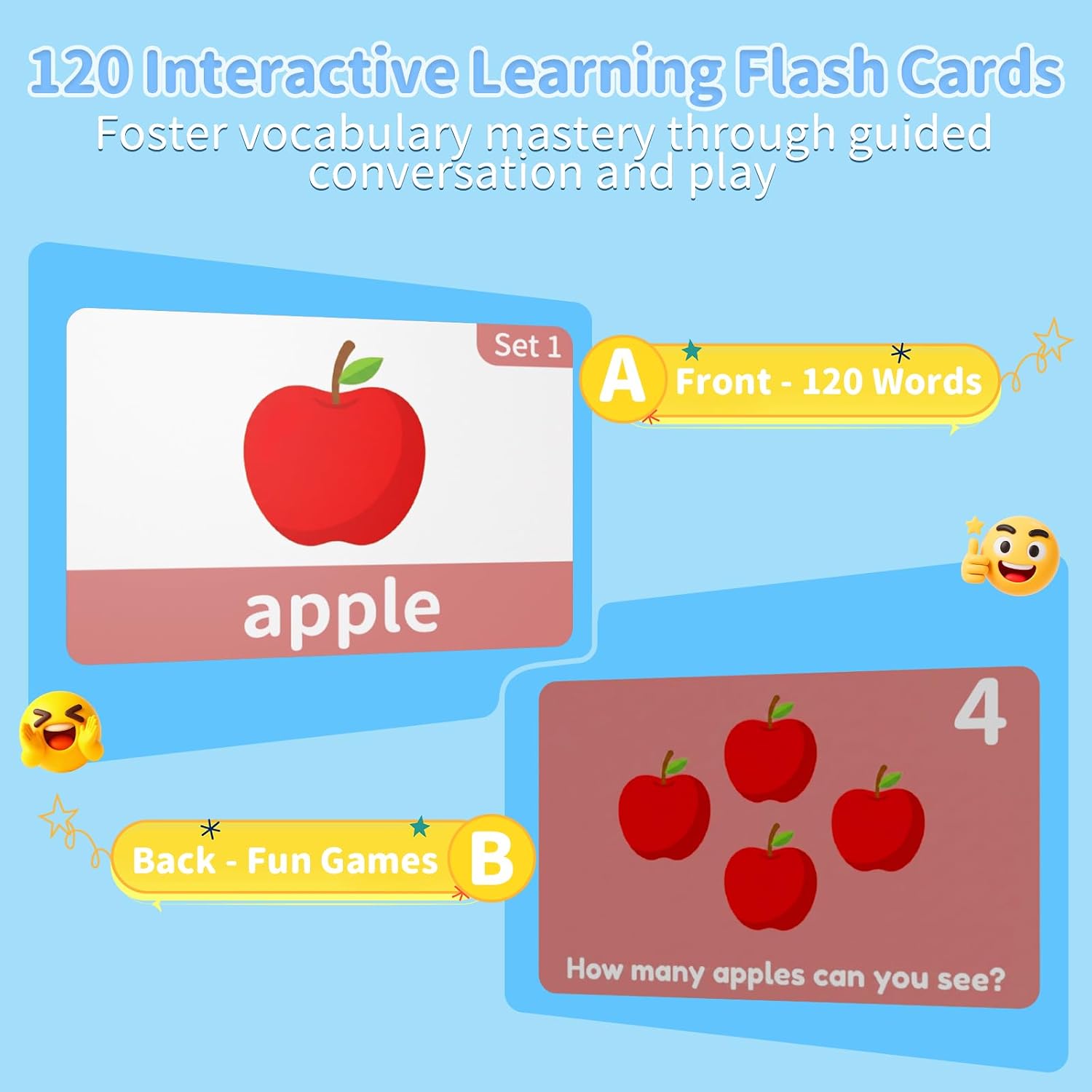
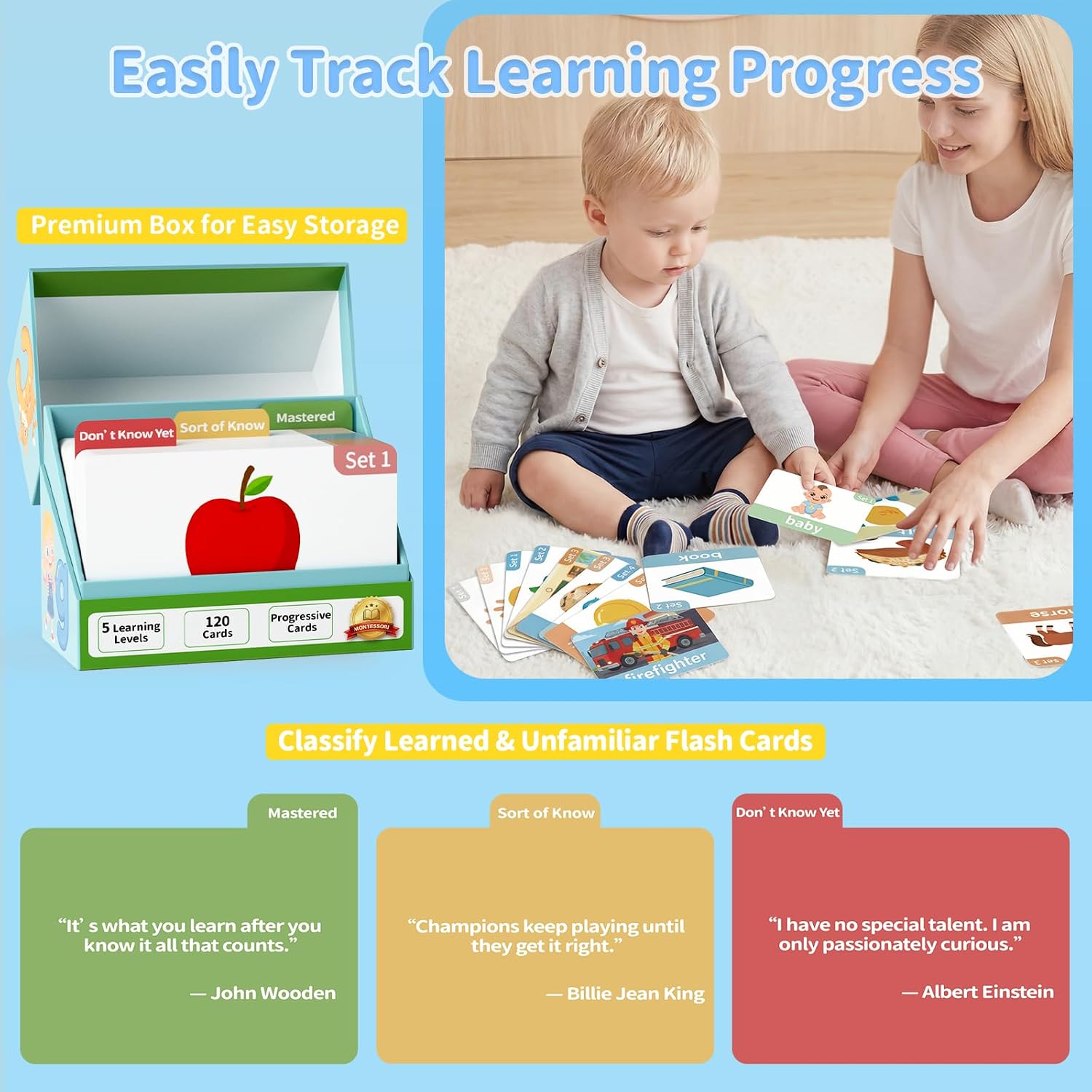
The cards are sized at 11x7.5 cm with rounded corners and a wipe‑clean surface, making them practical for repeated handling during everyday play. The core side focuses on word recognition across themes such as animals, food, household and outdoor items, places and letters. The reverse side adds interactive games—colour recognition, spot‑the‑difference, animal sound imitation and light speech‑therapy style prompts—to foster conversation and parent–child interaction.
What stands out on paper
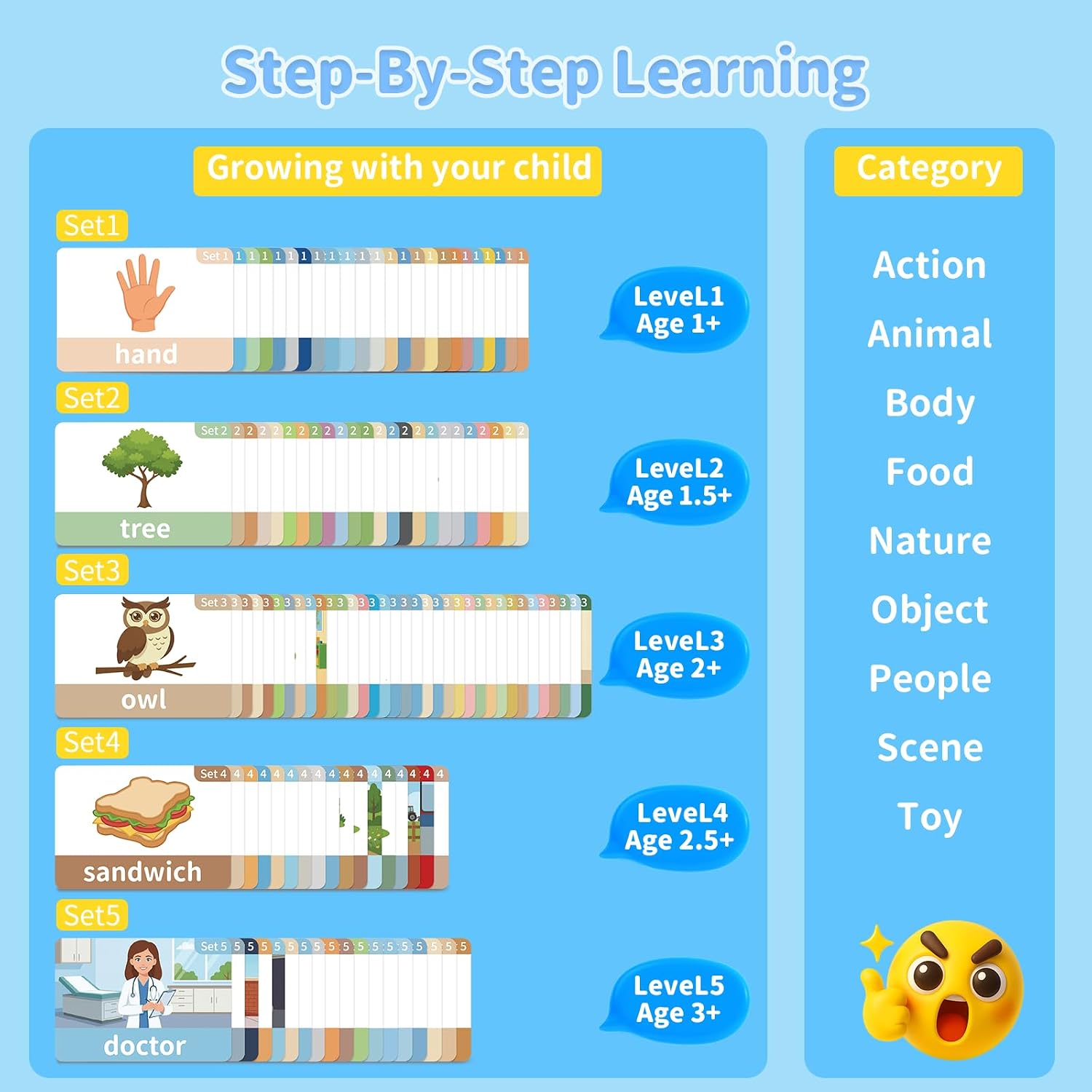
If you prioritise rotation between activities, the dual sides provide a simple way to switch from recognition to active use within the same session. The design targets toddlers’ developing cognitive and language skills while supporting parents who want screen‑free activities. The set deliberately scales in approach: start with basic word recognition and gradually increase difficulty as your child grows, which can help maintain engagement over time.
Pros and cons at a glance
Pros: visually engaging, durable and wipeable, encourages interaction, includes multiple activity ideas beyond memorisation, suitable for early speech development and for autistic children as part of inclusive play. Cons: the games are relatively simple and may feel repetitive after a period, progress relies on adult facilitation to guide language use.
Who this is for
This pack is well suited for parents, carers and early years settings seeking a practical, screen‑free resource to build vocabulary and early communication. It may fit families looking for a structured activity that also supports independent exploration and parent‑child bonding. It’s less ideal if you want a highly advanced or classroom‑level curriculum in a single purchase.
When it makes sense to buy
If you want a durable, compact tool to start or reinforce language learning at home or in nurseries, and you value physical interaction over digital apps, this set offers tangible benefits for daily play. It can be a sensible purchase as part of a routine that includes reading, singing or naming familiar items during everyday tasks.
What to check before buying
Consider whether you’ll be guiding the activities or if a tutor will, the effectiveness of the games depends on warmth of interaction and repetition. Examine whether your child responds well to bright pictures and simple prompts. Verify you’re comfortable with a broad focus on foundational words rather than advanced phonics in this phase.
Useful comparisons and context
This kind of flash card set sits between basic word flash cards and more structured language‑therapy resources. If you’re after a no‑frills, durable option for daily play with optional game ideas, it could be a better fit than image‑heavy boards or digital modes for families seeking offline learning. It won’t replace specialist resources where targeted speech therapy is required, but it can support early vocabulary growth in normal development contexts.
FAQs (practical, non‑technical)
Q: Is it suitable for toddlers with different learning speeds? A: Yes, because you can tailor the pace of introducing words and games to your child’s level. Q: Can it help autistic children? A: The set is described as suitable for autistic children and aims to aid communication skills through structured, interactive play—but outcomes vary with individual needs. Q: How durable is the material for rough handling? A: The cards are wipe‑clean and designed for frequent use by toddlers, though care should still be taken with younger children who bite or chew. Q: Do I need to follow a fixed progression? A: Not strictly, you can adjust the order and intensity of activities to fit your routine and your child’s interests.
Final decision
Final verdict: Worth considering if you want a compact, screen‑free tool to support early vocabulary and language development with guided play. It suits parents who value tactile learning and regular interaction, and who are looking for a durable, easy‑to‑use resource. If you’re seeking a highly advanced phonics curriculum or extensive personalised prompts, you may want to supplement with additional materials.