

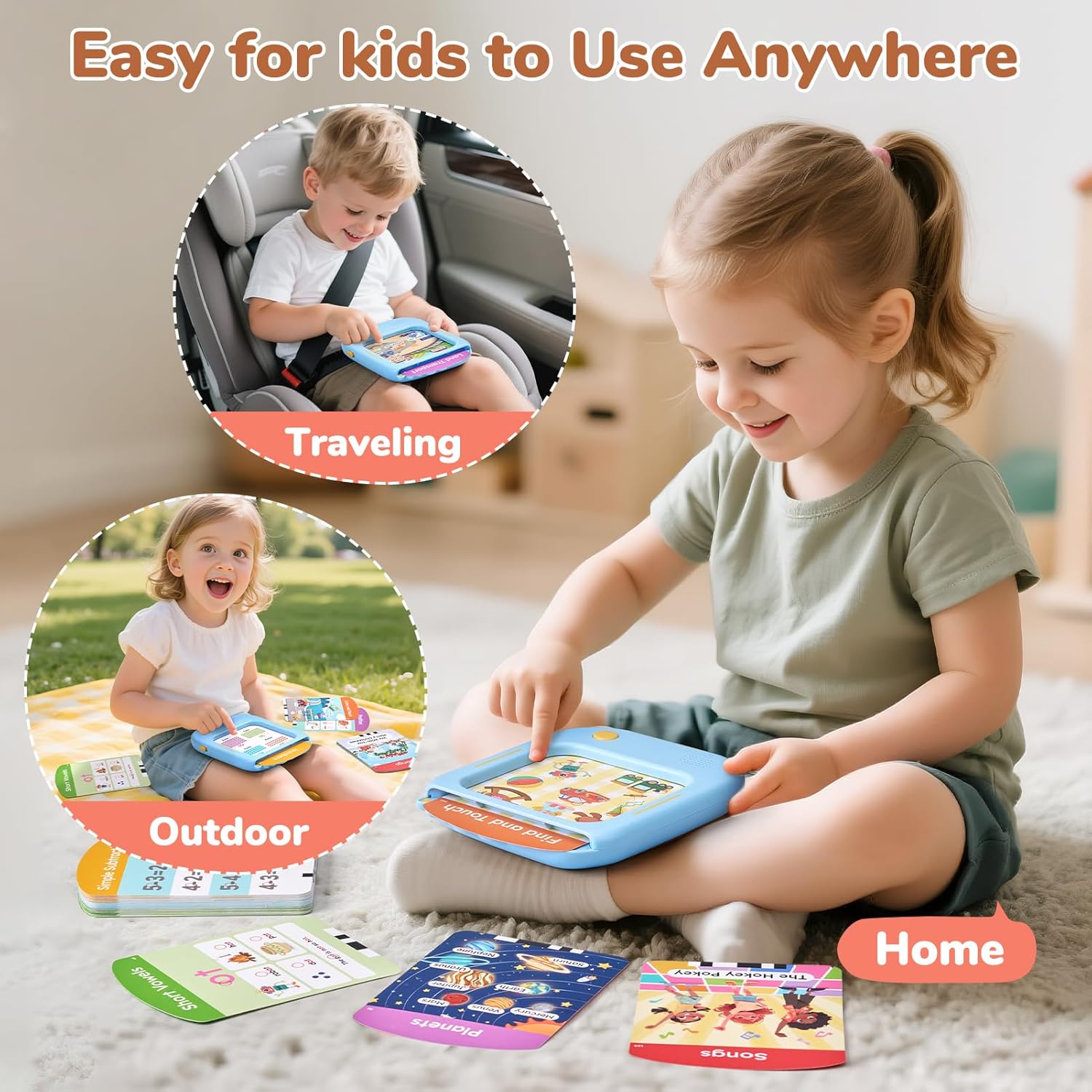
JoyCat Kids Learning Tablet (screen-free) with 156 tap-to-read flash cards and 20 listen & find games
Product description
What it is and what it’s for
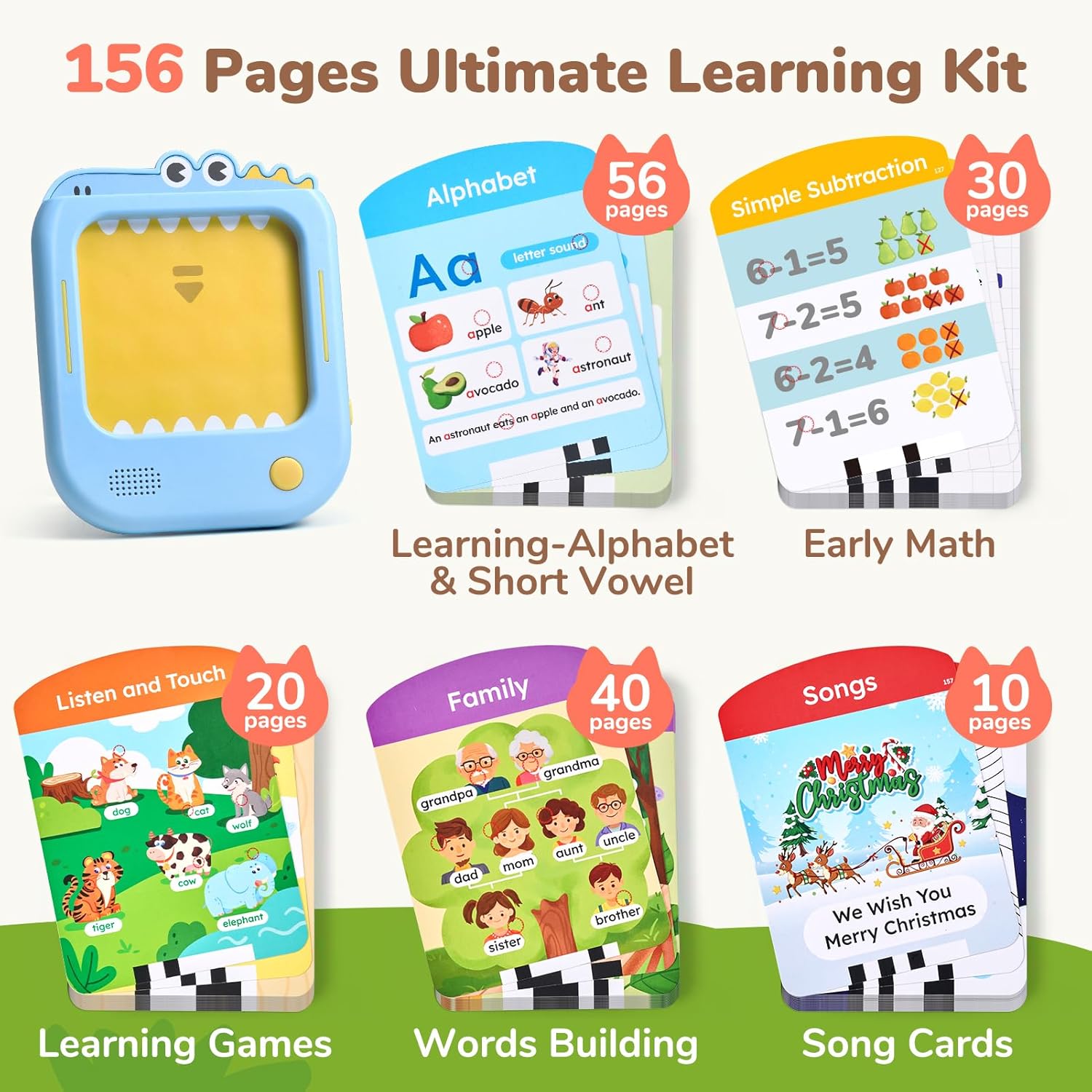
The JoyCat Kids Learning Tablet is a screen-free learning toy designed around “tap-to-read” audio cards. Instead of a tablet display, kids insert cards into the pad’s slot and tap to hear words pronounced (described as a standard American accent). It’s built to support early literacy and basic numeracy through repeated, playful interaction, with a library of 156 talking flash-card pages and 20 “listen & find” style games.
On paper, it’s aimed at getting kids practising phonics, letters and words in short bursts—something that fits how many parents actually use learning toys: a few minutes, then back to play. The big selling point here is avoiding visual screen time while still using audio-led learning.
Key takeaways for busy parents
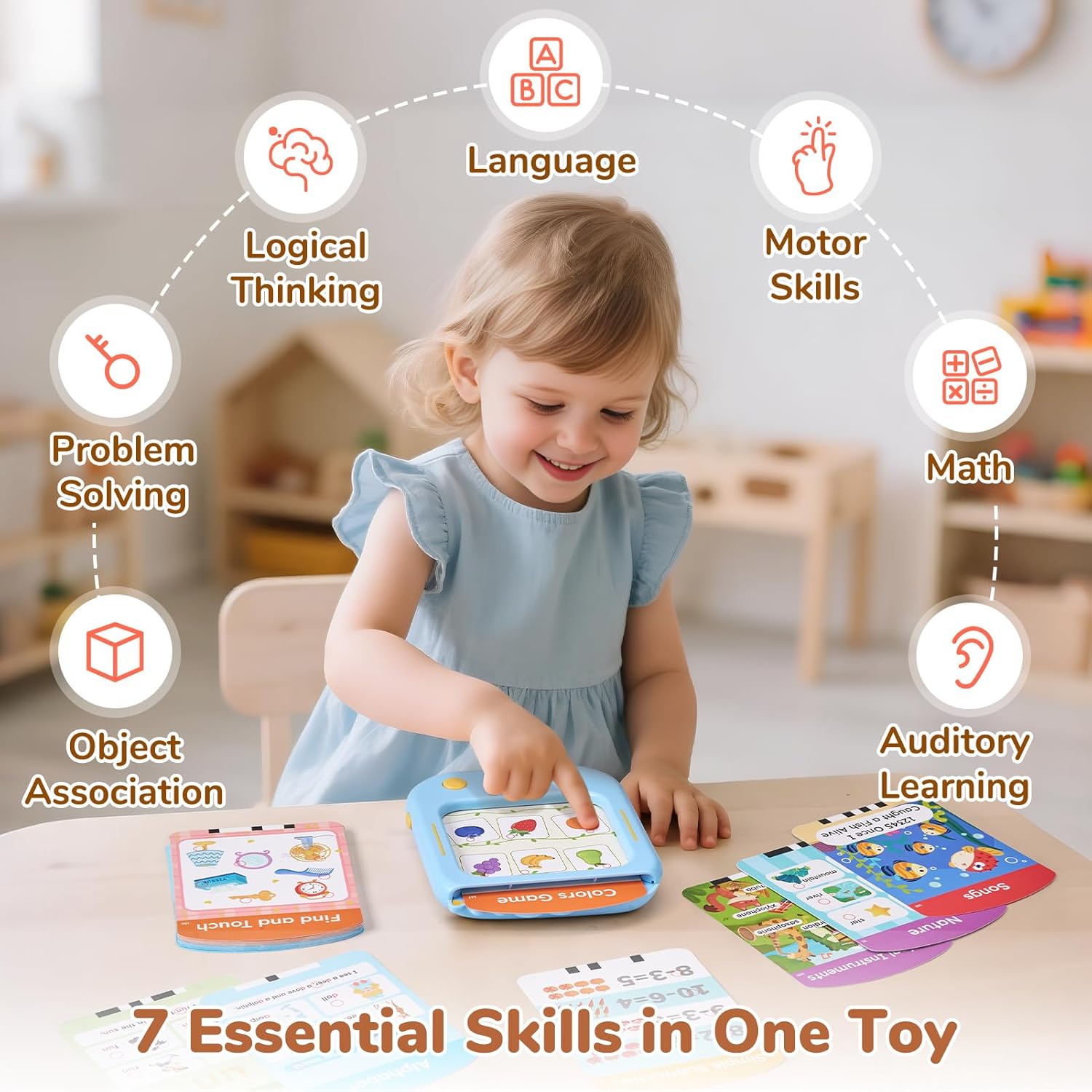
The content is broad for this age range: letters, short vowels, words and expanding vocabulary, plus simple math, colours, shapes and songs. It also leans into phonics rules, with a guided progression described as starting with letter sounds, moving to short vowels, and then moving into word building.
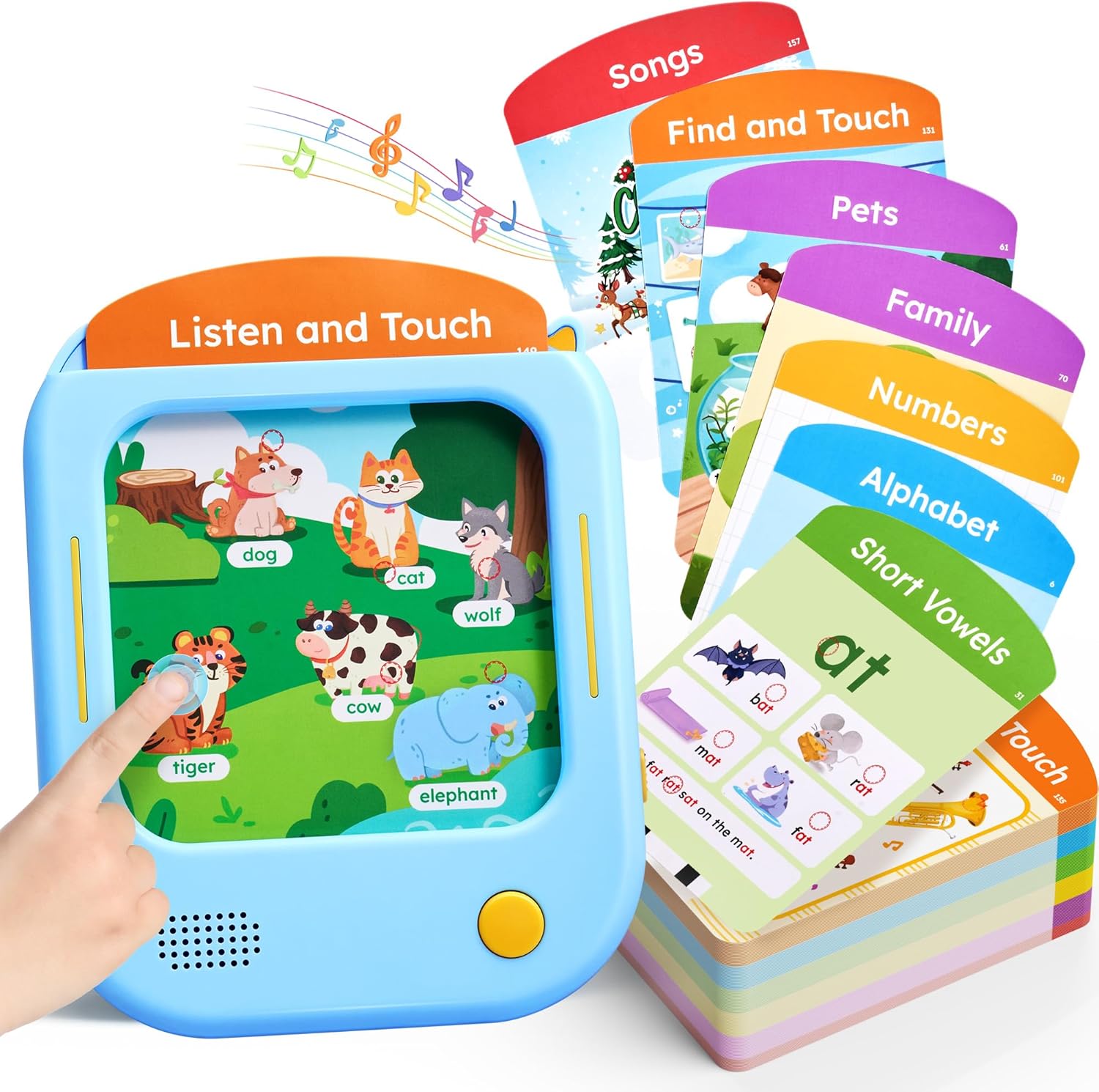
What you’ll like day to day is the “hands-on” feel. The act of inserting a card, tapping, and hearing the prompt makes it less like passive viewing and more like a small learning routine kids can follow. It’s also positioned as engaging enough for self-directed play, rather than something that only works when an adult is hovering.
That said, it’s not a full curriculum tablet replacement. If you’re expecting deep interactive screens, animations, or lots of customisation, this won’t match that kind of experience. It’s more about structured audio prompts and quiz-like games built around the printed cards.
What stands out in play (and a realistic limit)
A good thing to consider is how well this format supports repetition. Tap-to-learn is naturally repeatable, which matters for early reading practice—especially when children are learning the sounds behind letters and how those sounds join into simple words.
It also includes talking flash cards made from FSC-certified paper, which is a small but meaningful detail if sustainability matters to you.
One limitation to bear in mind: the toy teaches and quizzes through the cards you have in the pack. That makes it great for the topics included, but less flexible if your child is already beyond those stages or you want to use your own custom card set (the available information doesn’t suggest that’s a feature).
And while the audio accent is described as standard American, it’s still worth thinking about what your household prefers—particularly if you’re focused on UK pronunciation.
Who it’s best for (and who may want to skip it)
It suits you if you want a screen-free learning toy for ages roughly 2–6, with a strong focus on early phonics and vocabulary, plus simple math concepts. It’s also a good match if your child enjoys tapping, listening and matching activities, and you’re happy to use a prompt-based approach rather than guided lessons.
It may not suit you if you specifically want UK-accent audio, a visually rich learning interface, or a toy that adapts content on the fly. It might also feel more “starter-level” than “advanced” once a child moves quickly beyond letter sounds and short vowels.
How it works in everyday use
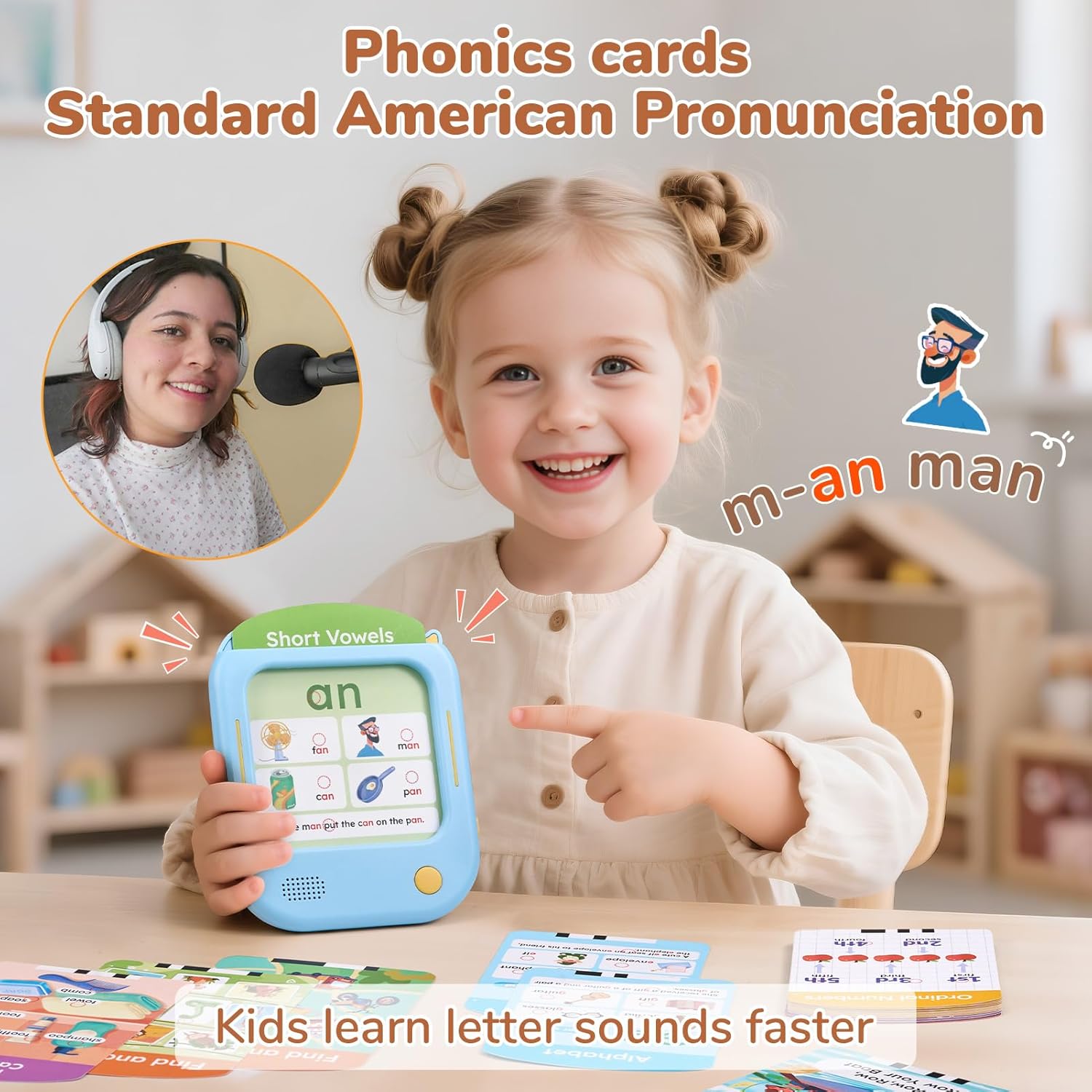
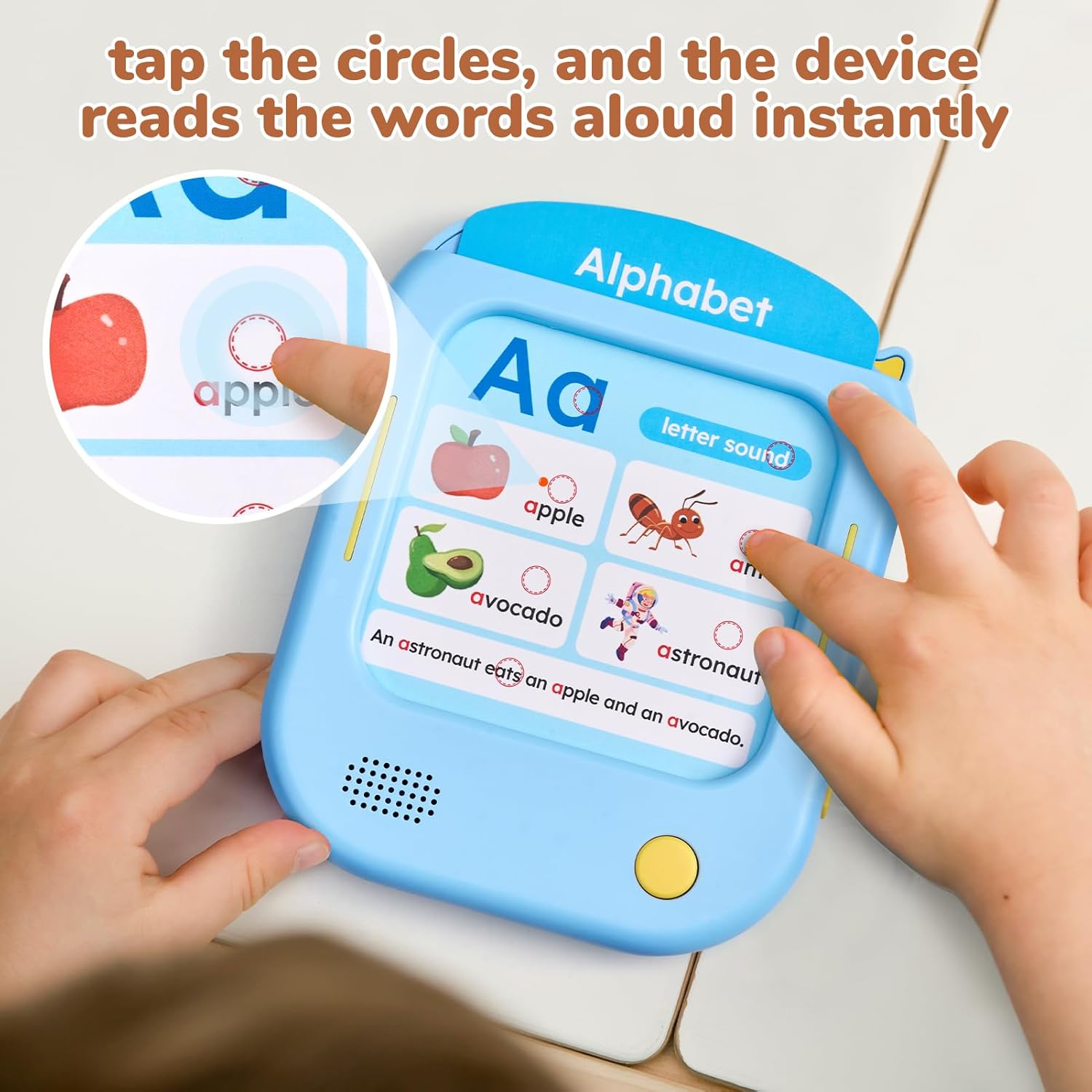
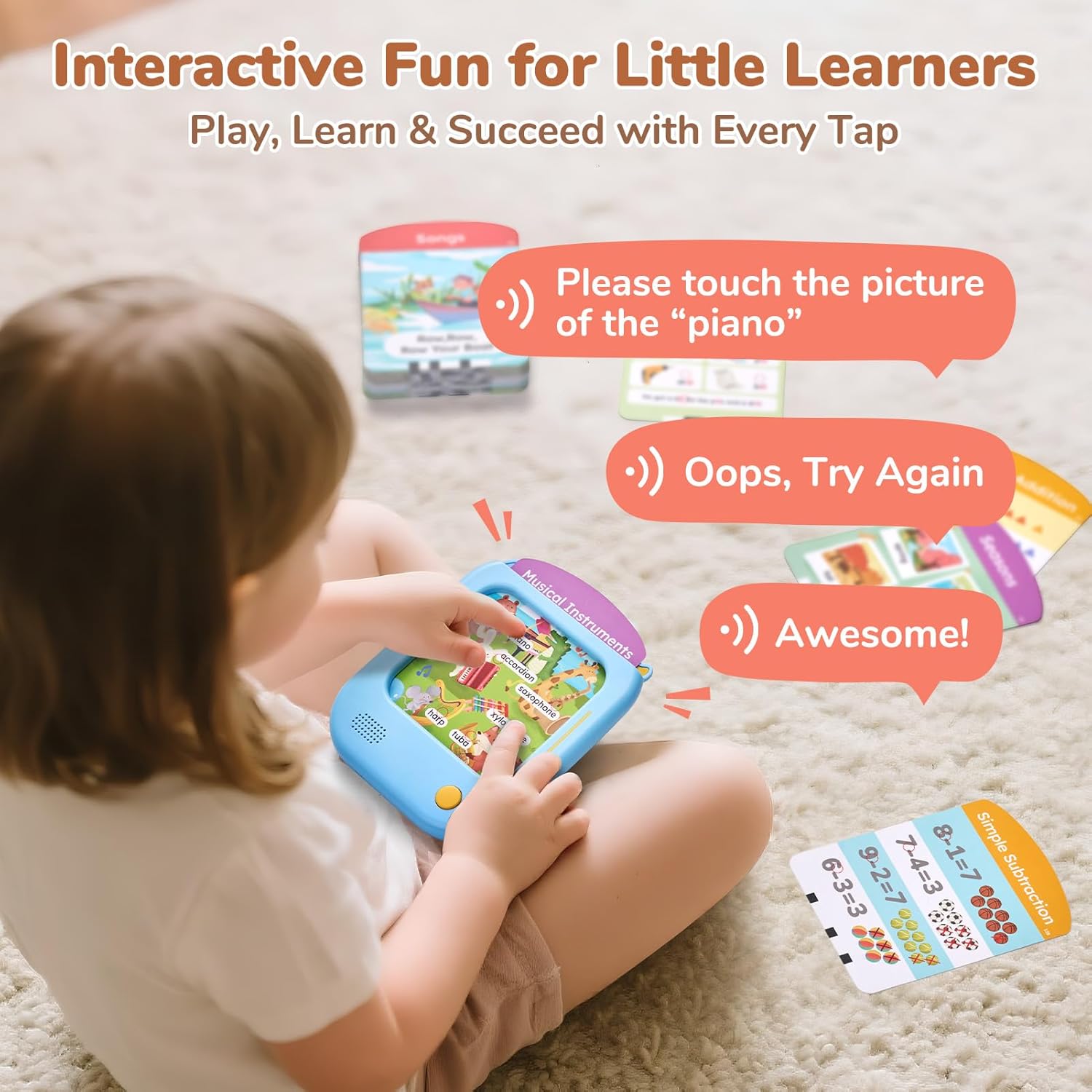
In practice, the workflow is simple. You insert a flash card into the tablet’s slot, then the child taps to hear the words pronounced. From there, the toy covers both learning prompts (like letter sounds and short vowels) and interactive “listen & find” games.
A quick example of how this can look at home: after nursery pickup, you sit down for a short session, pick a card linked to a sound your child is practising (for example, a short vowel), tap to hear it, then ask them to find a matching card during a listen-and-search round. Because it’s designed for self-directed play, many children can take over the sequence once they know the routine.
Care, durability and what to check before buying
Because it relies on physical flash cards, it’s worth being realistic about everyday handling. Cards made from paper are easy to manage and light, but they’ll naturally need careful treatment if your child is rough with toys or tends to bend paper.
Before purchasing, check the basics in the product listing: confirm the age range shown, confirm how many cards/pages are included (described as 156 pages), and look for details on how the learning pad takes cards and whether batteries or power details are listed clearly. Those points can make the difference between a toy that fits your routine and one that becomes a hassle.
Mini FAQ
What topics does it cover?
The included content is described as letters, short vowels, words and expanding vocabulary, plus simple math, colours, shapes and songs, with phonics rules and “listen & find” games.
Is it screen-free?
Yes—it's presented as a screenless educational tablet that uses audio and tap-to-read flash cards rather than a visual display.
What accent are the words pronounced in?
The cards are described as being pronounced with a standard American accent.
What age is it for?
The gift guidance in the description points to ages 2–5 (and the product name mentions ages 2–6), so it’s best seen as an early-learning toy for toddlers and preschoolers.
Does it require an adult to play?
It’s described as supporting self-directed learning, so adults may not be needed for every session—though you might still want to supervise at first to build the routine.
Is it worth it?
It’s worth considering if you want a screen-free way to practise early phonics, letter sounds and vocabulary using repeatable audio prompts, with extra game-style activities for variety. The 156 tap-to-read pages and included listen & find games suggest good content breadth for preschool age.
You may want to skip it if you’re chasing a visually interactive experience, prefer UK-accent pronunciation, or you’re buying for a child who’s already well past short vowels and basic word building. As with any learning toy built around physical cards, also keep in mind that the format works best when the cards are handled carefully and used as intended.