

Dr.meter LX1330B Illuminance Meter: A Practical Lux Meter for Indoor and Outdoor Plant Care
Product description
What this is and the problem it solves
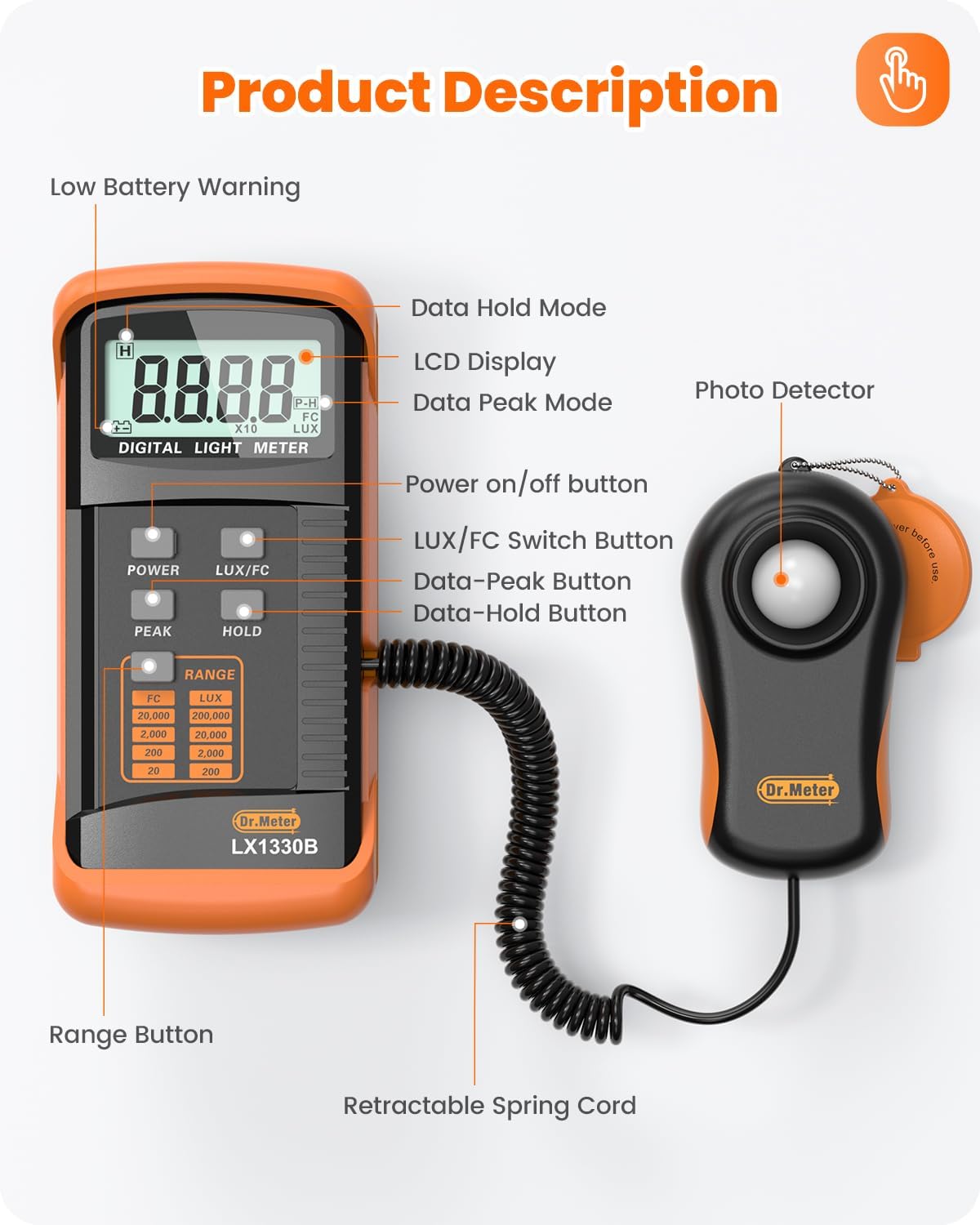
The Dr.meter LX1330B is a digital illuminance meter designed to quantify light levels in both indoor spaces and outdoor environments. If you’re trying to optimise a growing area, photography setup, or workplace lighting, understanding light intensity helps you create more predictable conditions without guesswork.
How it works in practice
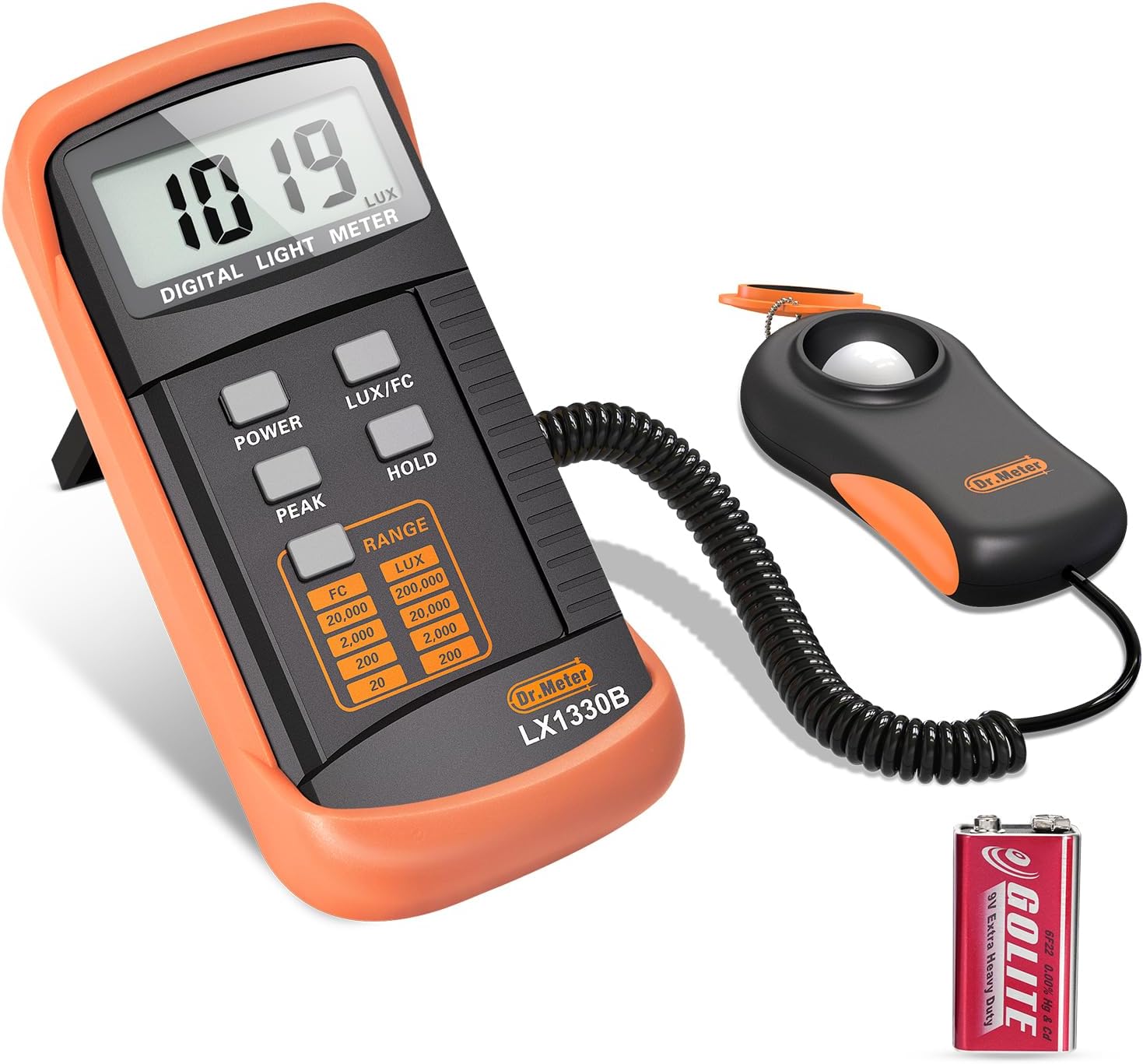
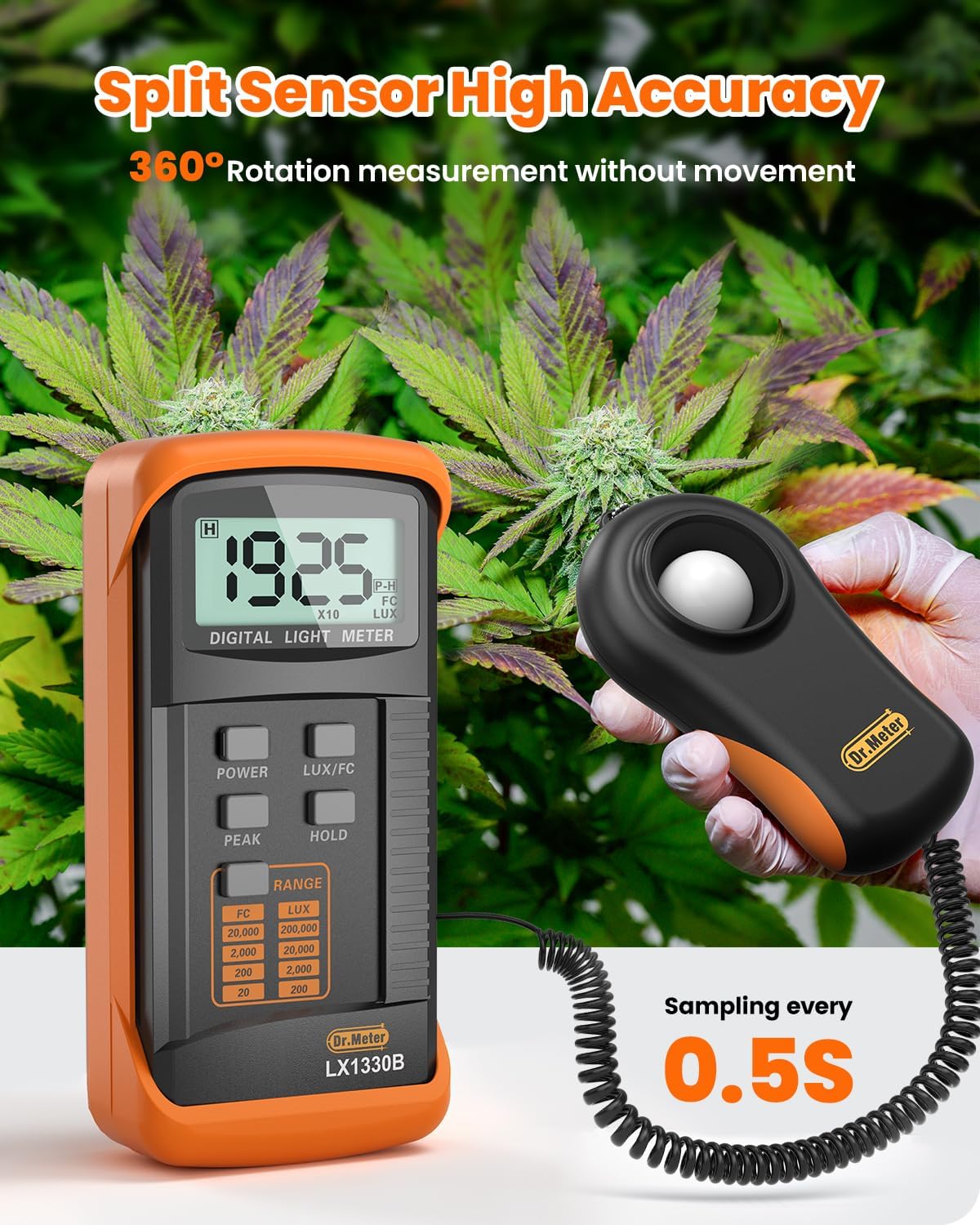
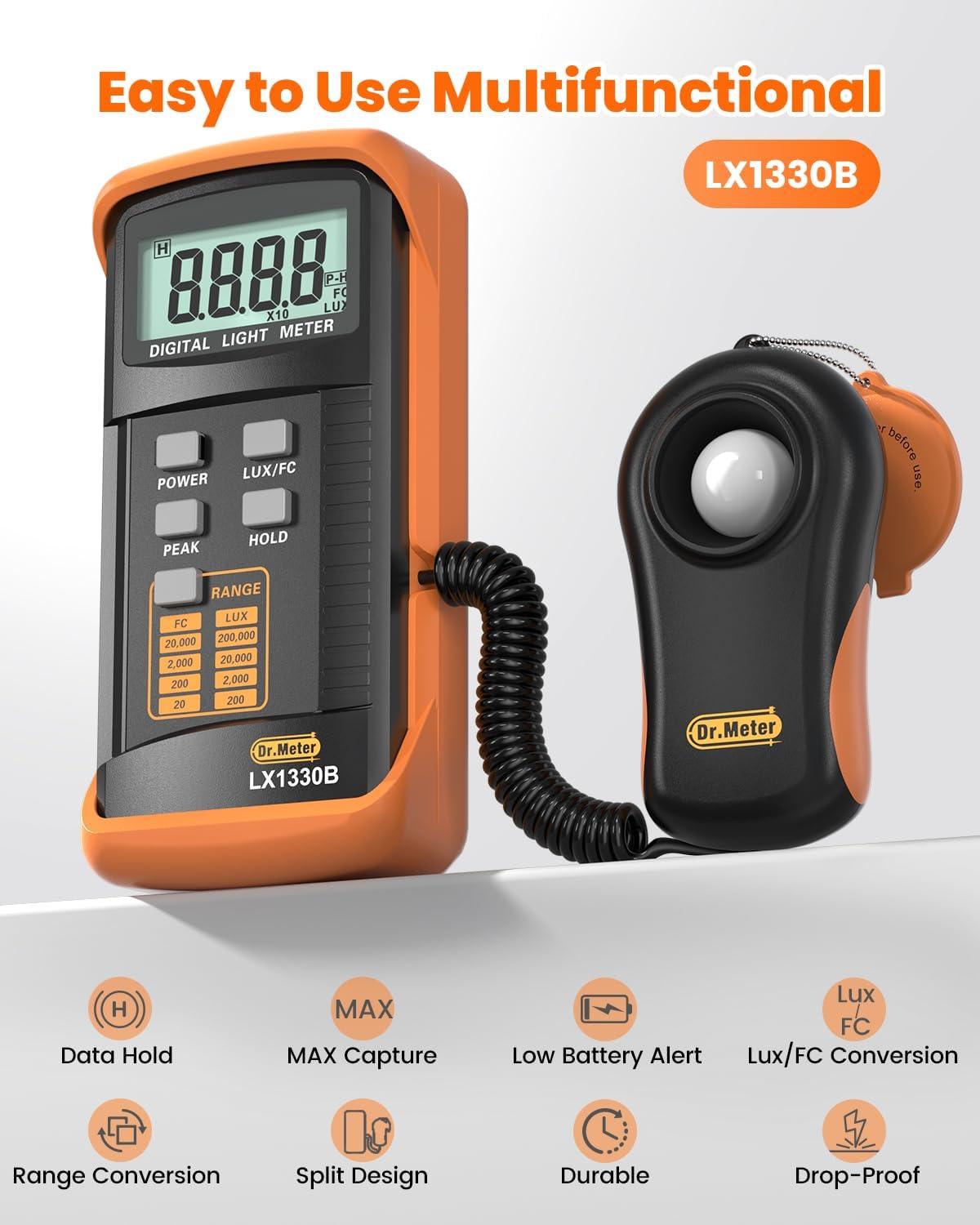
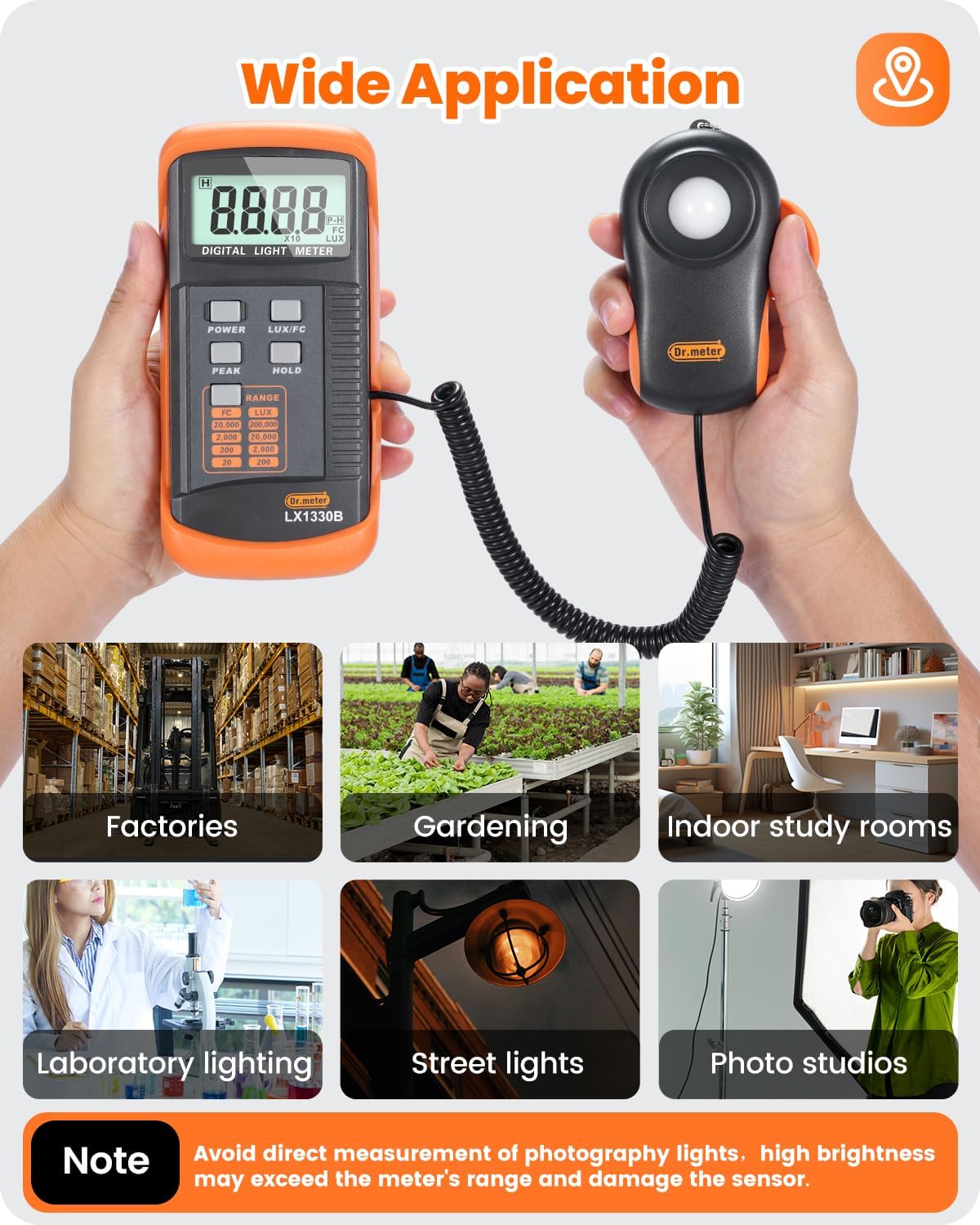
On the face of it, this device offers a wide measurement range up to 200,000 lux and responds quickly, delivering readings twice per second. That speed matters when you’re tracking fluctuating light—for example, changing daylight or when adjusting artificial lighting for plants. A practical feature is the FC/LUX switch, letting you measure in the unit that makes the most sense for you. It’s the kind of convenience you notice when you’re juggling different tasks in a studio or greenhouse.
What stands out and what might hold you back
On the positive side, the peak data recording capability means you can capture brief, intense light pulses—handy for moments when light intensity spikes from sunbeams, LEDs, or other sources. The low battery indicator is a small but helpful touch, reducing the risk of an unexpected drop in readings mid-session.
However, this device is a single-purpose tool. If you need more than illuminance data, or want extra features like data logging over time or Bluetooth connectivity, you’ll want to weigh whether this model fits your broader measurement needs. Also, the use case relies on trusting the sensor’s accuracy across its full range, which is typical for consumer-grade meters but worth noting if precision is critical for you.
Ideal user profile
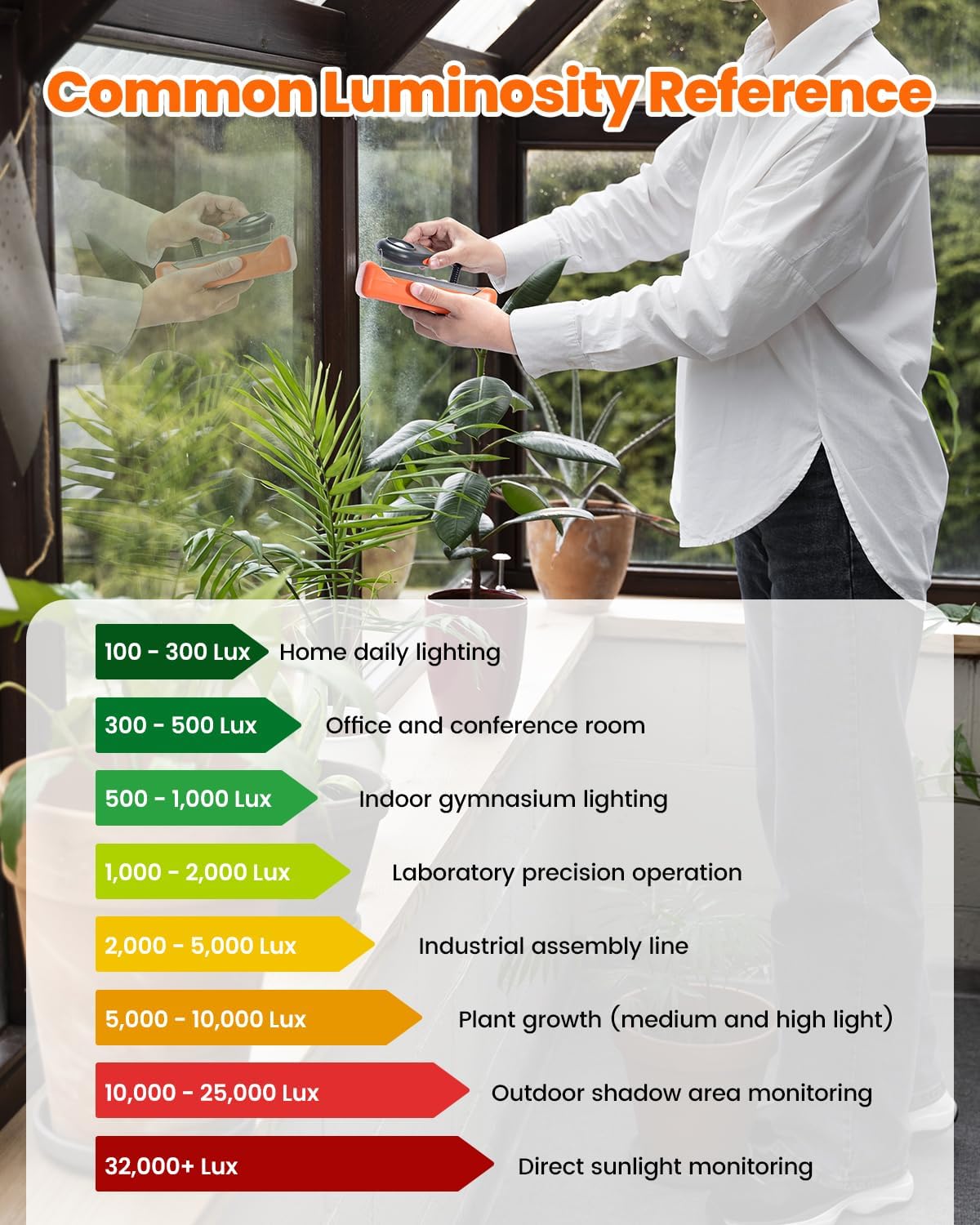
This meter suits hobbyists, home growers, and small‑scale professionals who want a straightforward way to verify light levels in spaces such as grow tents, desks, offices, or outdoor nooks. If your goal is to fine‑tune plant lighting, you’ll likely value the quick readings and the ability to compare different setups side by side.
When it isn’t the best fit
If you require long‑term data logging or integration with other equipment, or if you routinely work with exceptionally narrow tolerances, you may outgrow this model. In those scenarios, you might prefer a device with extended features rather than a focused, single‑purpose tool.
What to check before buying
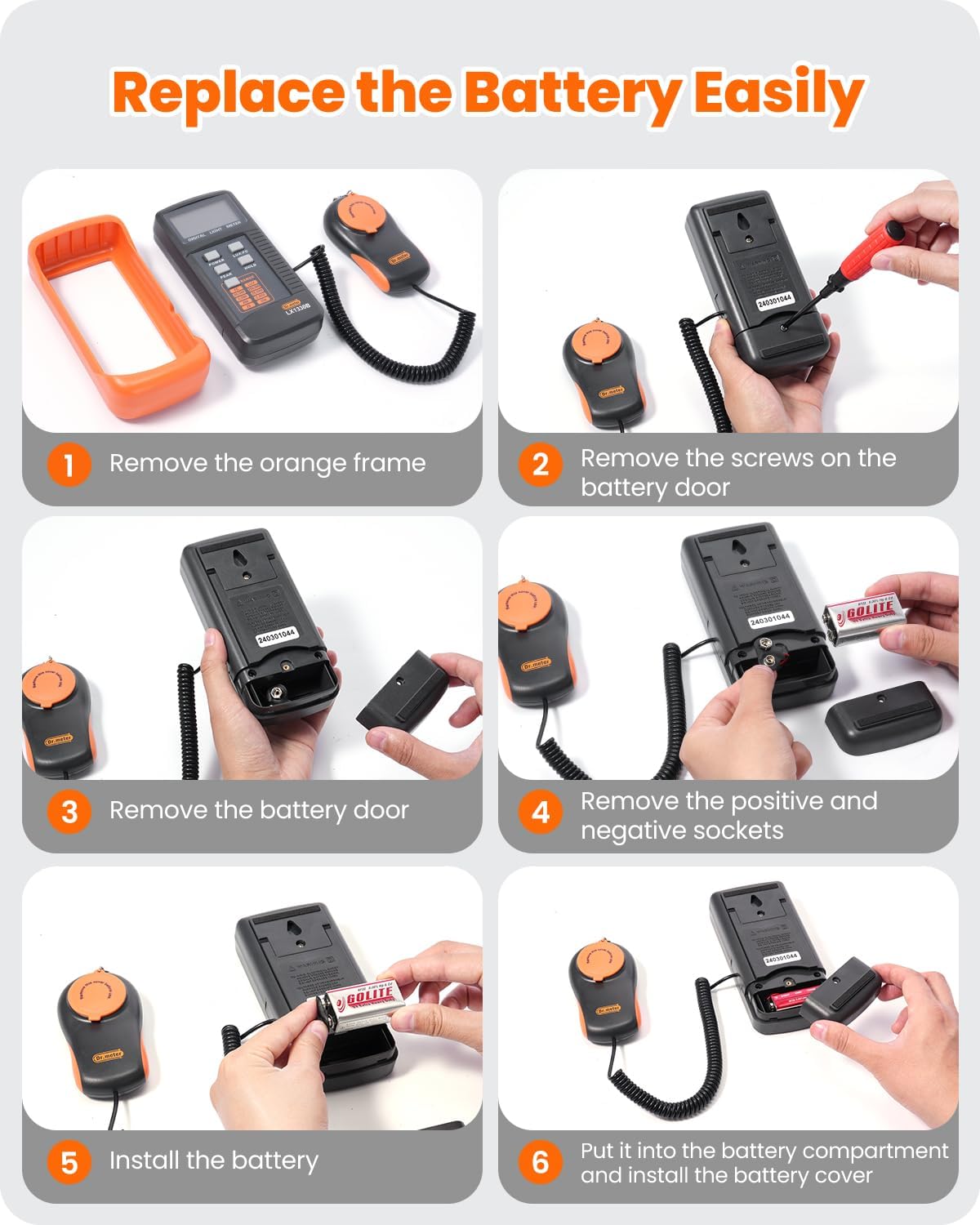
- Confirm you’re comfortable with a 9V battery supply and occasional battery swaps.
- Verify that the measurement range covers your typical light levels, from dim ambient to bright daylight.
- Consider whether you need quick toggling between FC and LUX for different measurement contexts.
How this compares in practice
Compared with entry‑level light meters, the LX1330B provides a broad range and fast response, which is helpful for dynamic environments. It won’t replace high‑end research gear or devices with remote logging, but for immediate, in‑the‑moment readings in homes, offices, or small grow spaces, it represents practical value.
Should you buy it? Decision points
- When it makes sense: you want a simple, reliable way to measure light intensity to support plant growth or basic lighting decisions, and you don’t require extensive data history.
- When you may want to skip it: you need rich data logging, Bluetooth or cloud connectivity, or multi‑sensor measurements.
- Who benefits: growers, hobbyists, and small spaces where quick feedback on light levels matters.
- Who to avoid: if you’re after professional‑grade analytics or multi‑sensor insight, this model may feel limited.
Quick usage example
Set the meter near a plant canopy or light source, switch between FC and LUX depending on what you’re comparing, and watch the display as you adjust your lights. If a brief afternoon sun moment causes a spike, the PEAK feature lets you lock that peak value to inform future placement.
FAQ
- How often does it update readings? About twice per second, for fast changes.
- What happens when the battery runs low? A + - symbol appears to indicate the need to replace the 9V battery.
- Can I measure both indoor and outdoor light with the same unit? Yes, it’s described as versatile for indoor and outdoor use.
What to know before you buy
If you’re prioritising straightforward light measurements with quick feedback for plant care or workspace planning, this model delivers. If your needs lean toward advanced data logging or integration with other systems, you might want to look for additional features beyond the basics.