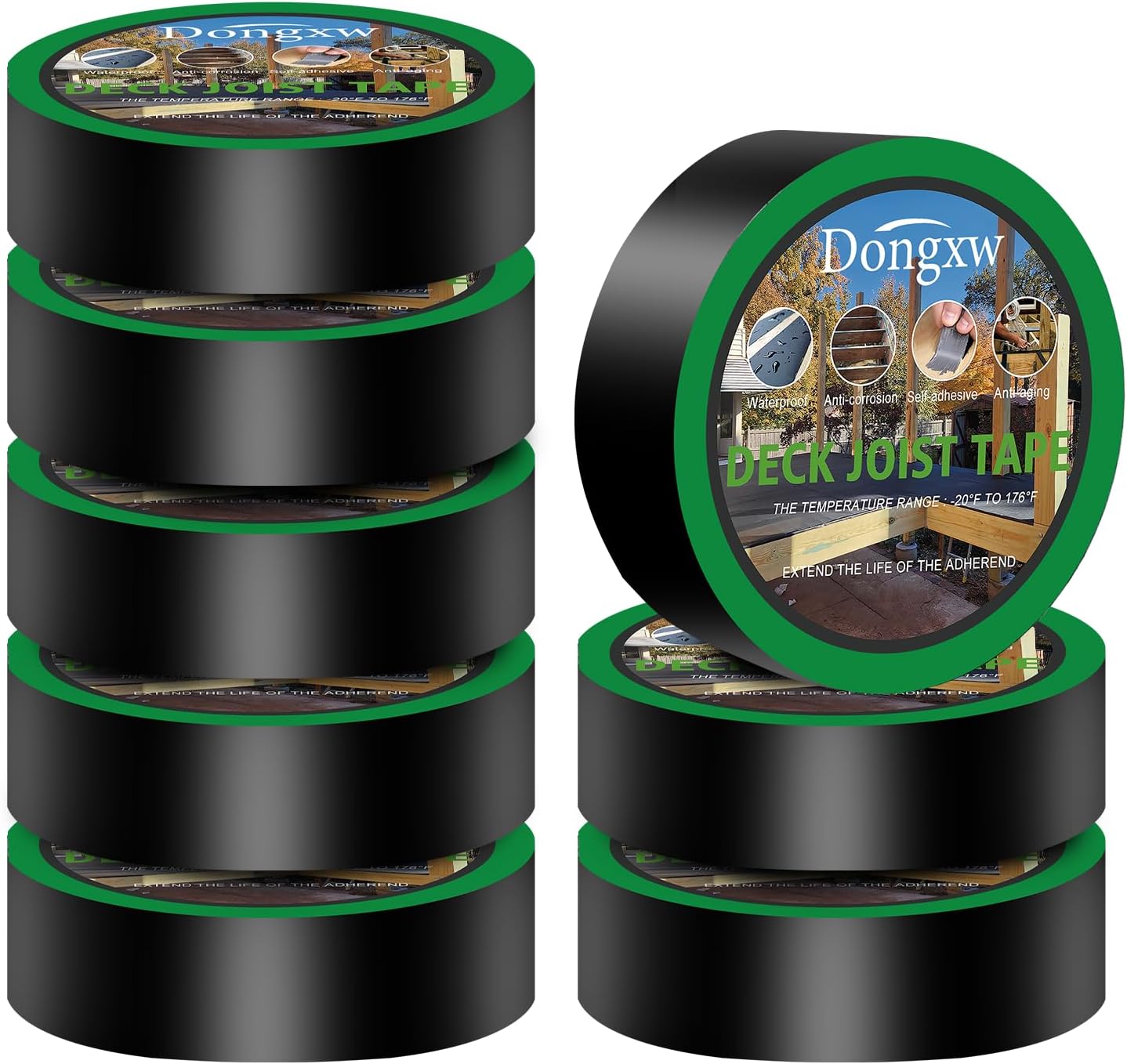
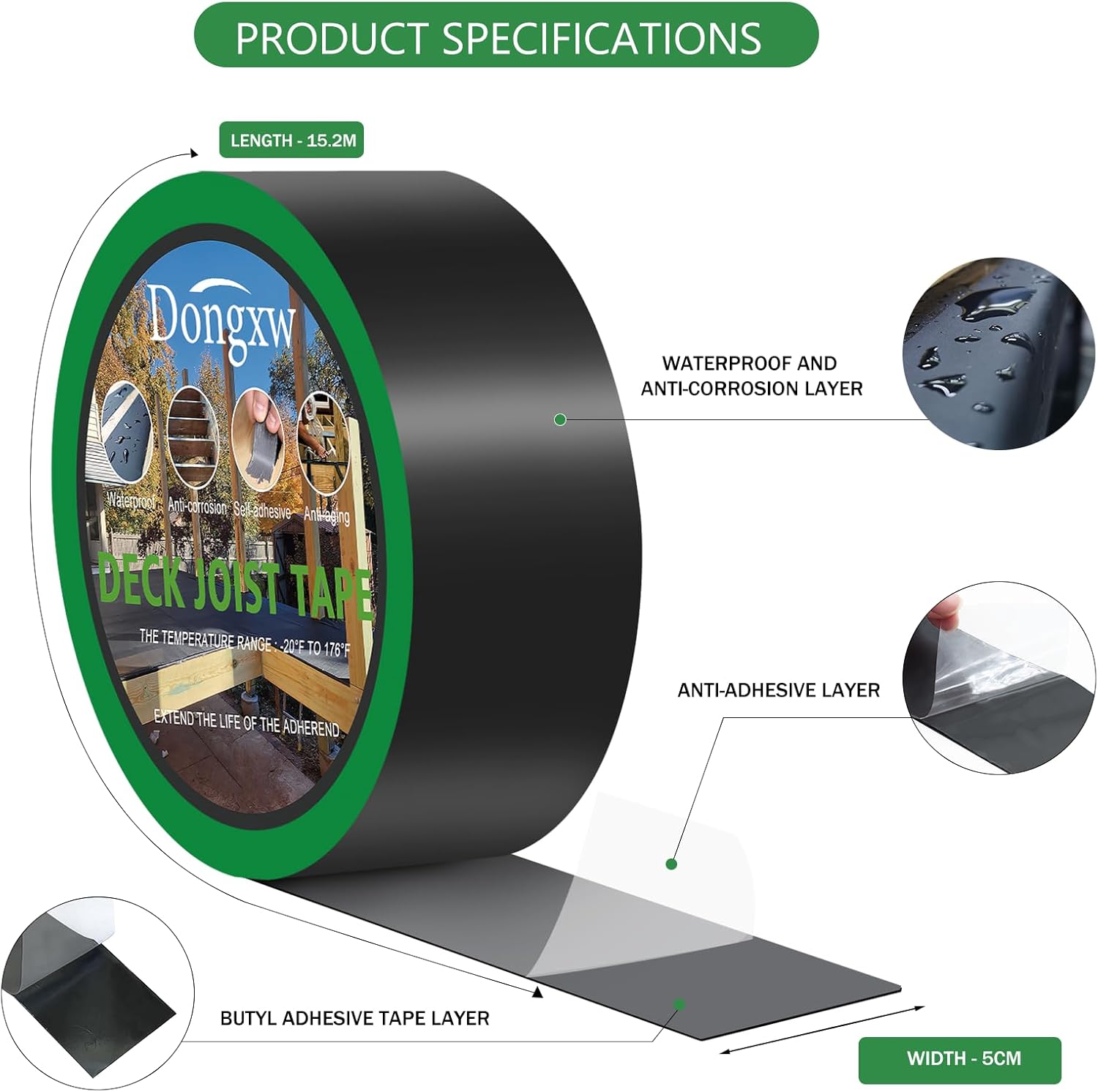
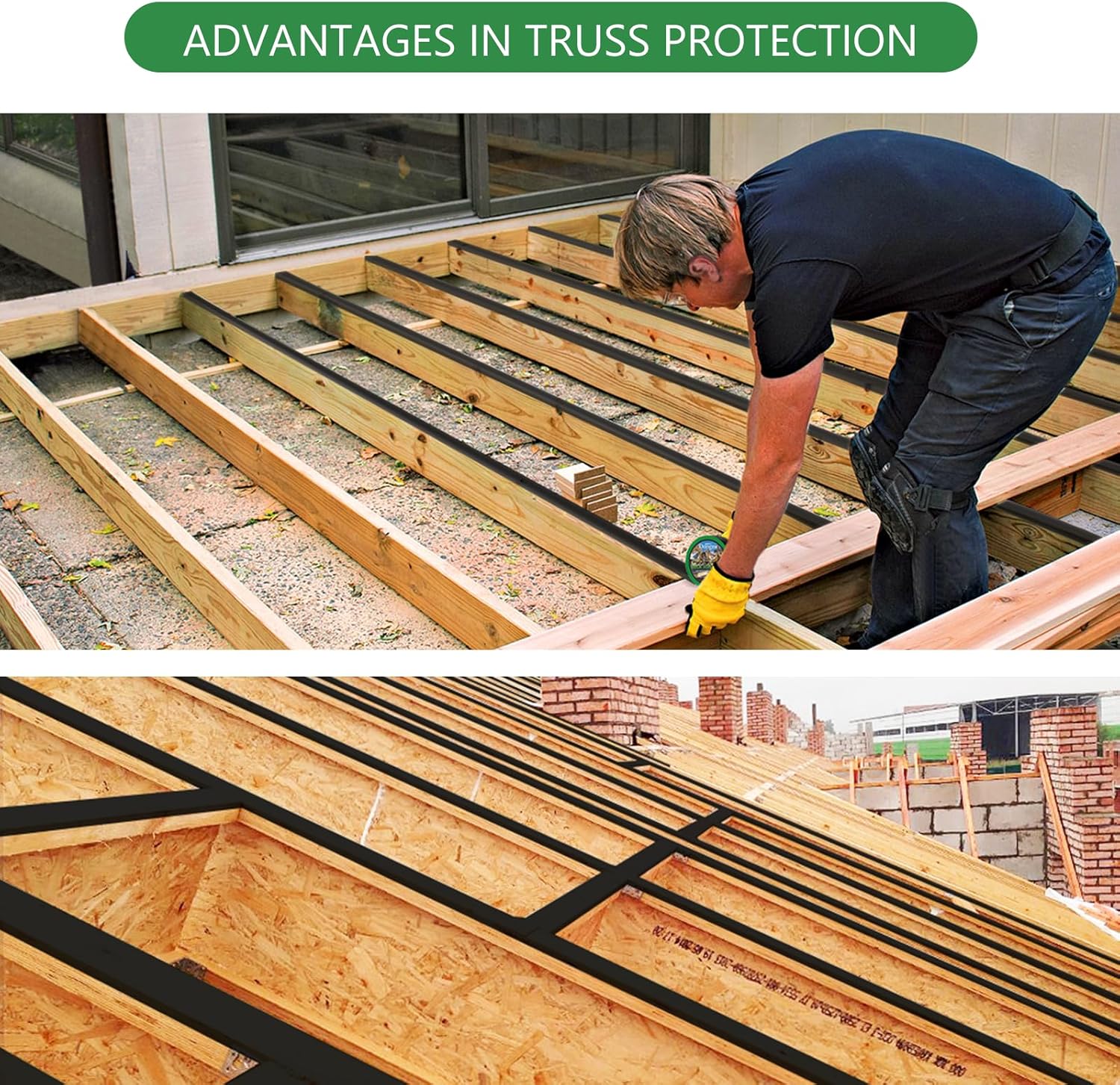
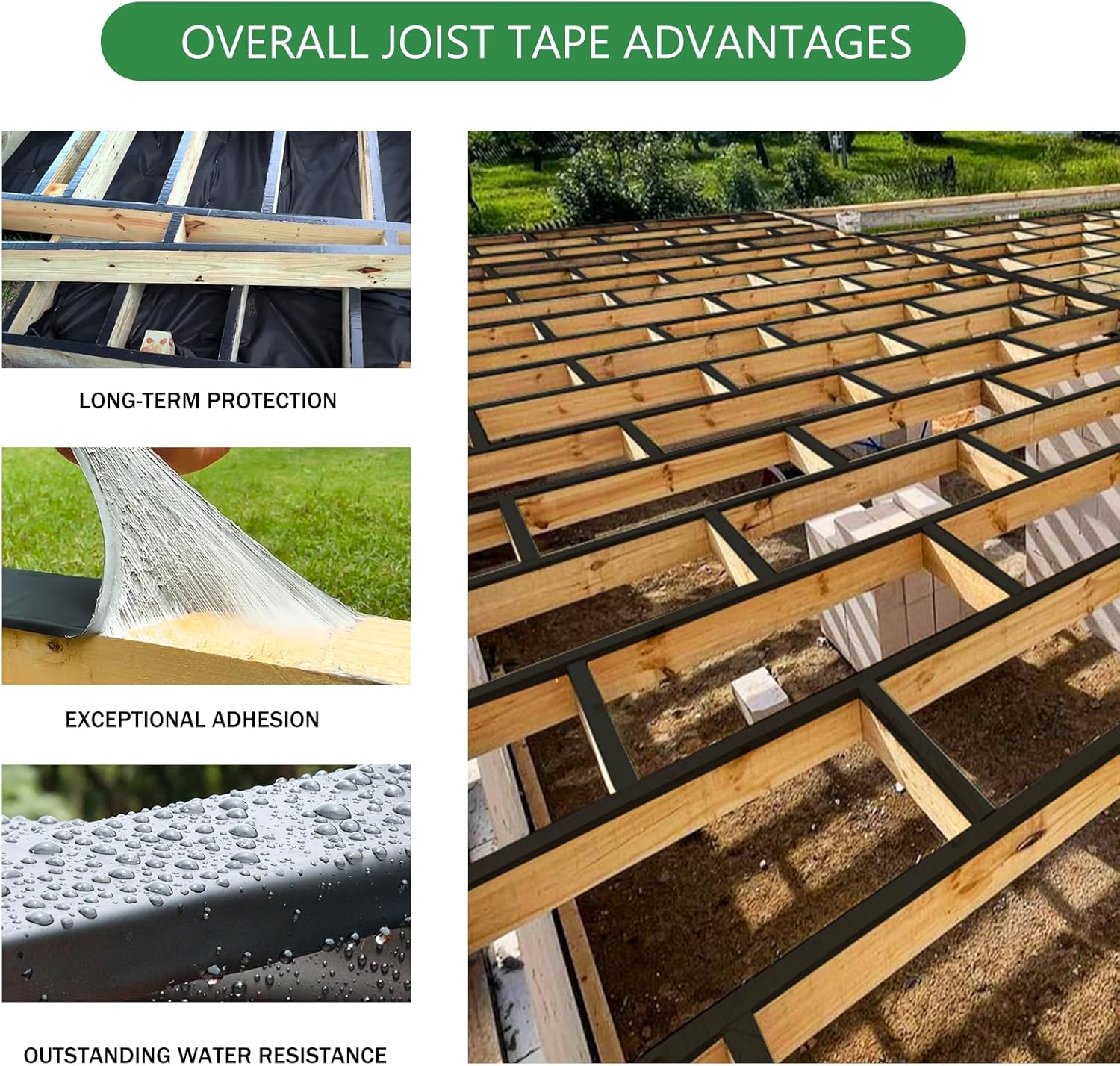
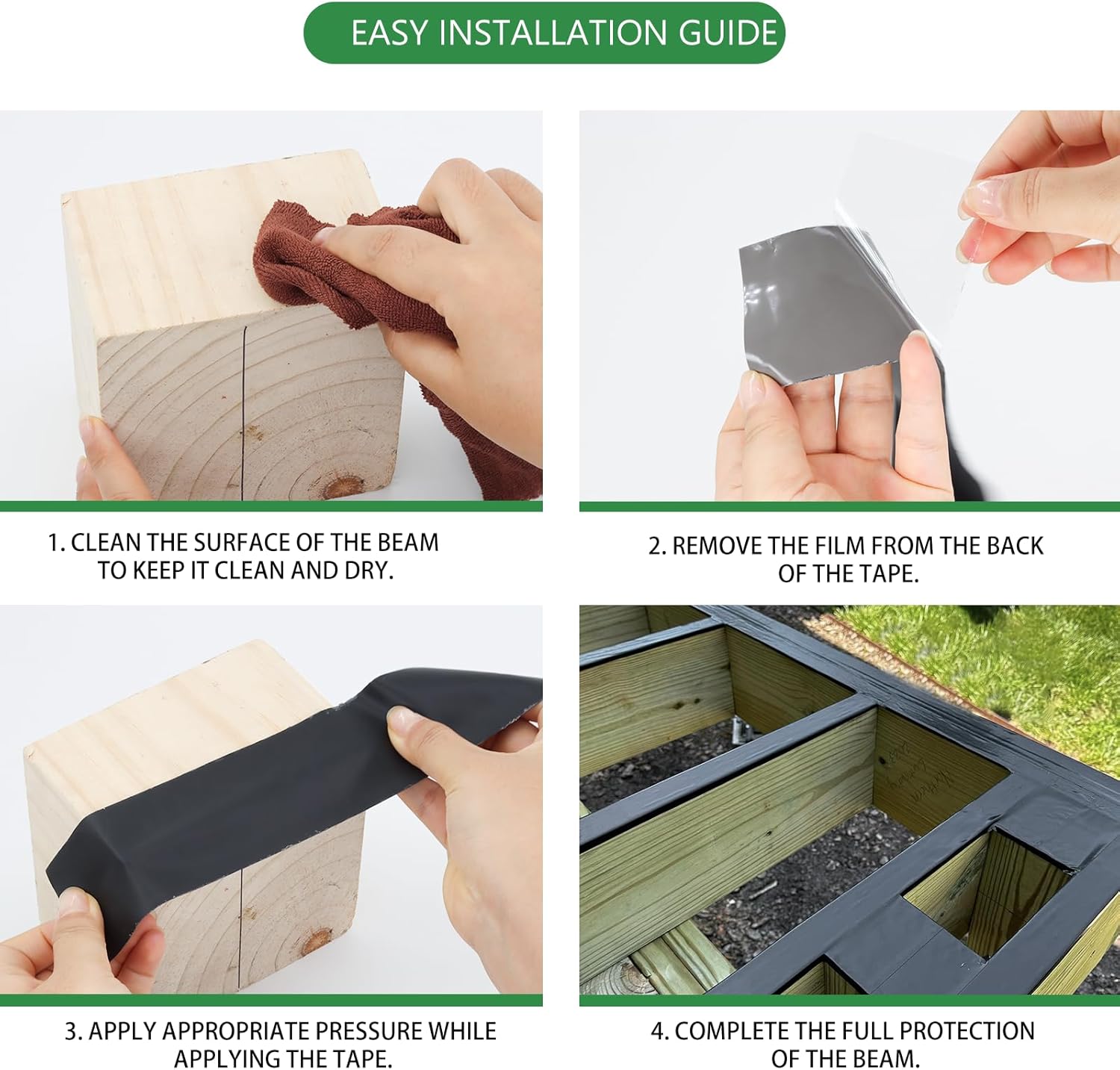
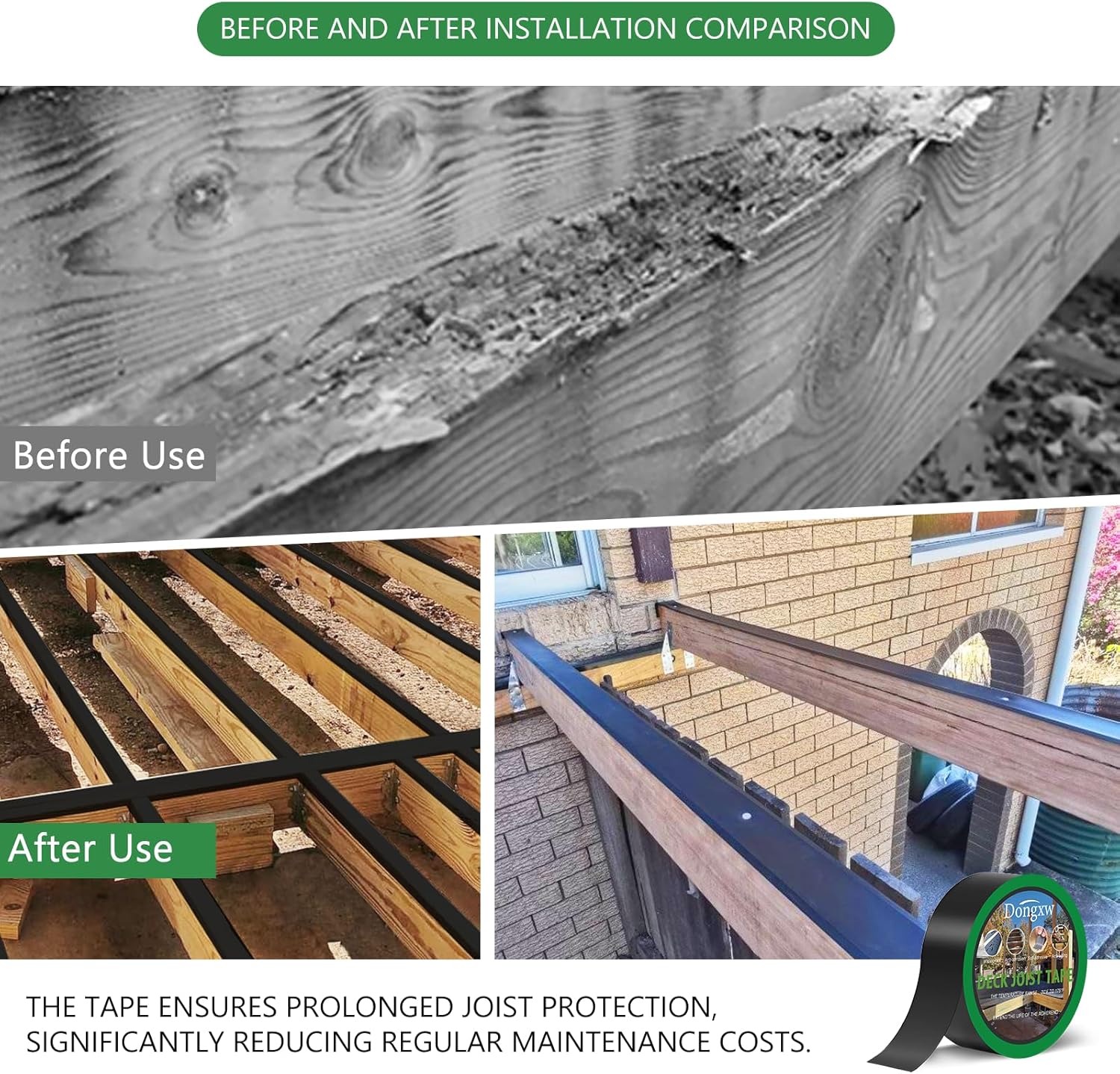
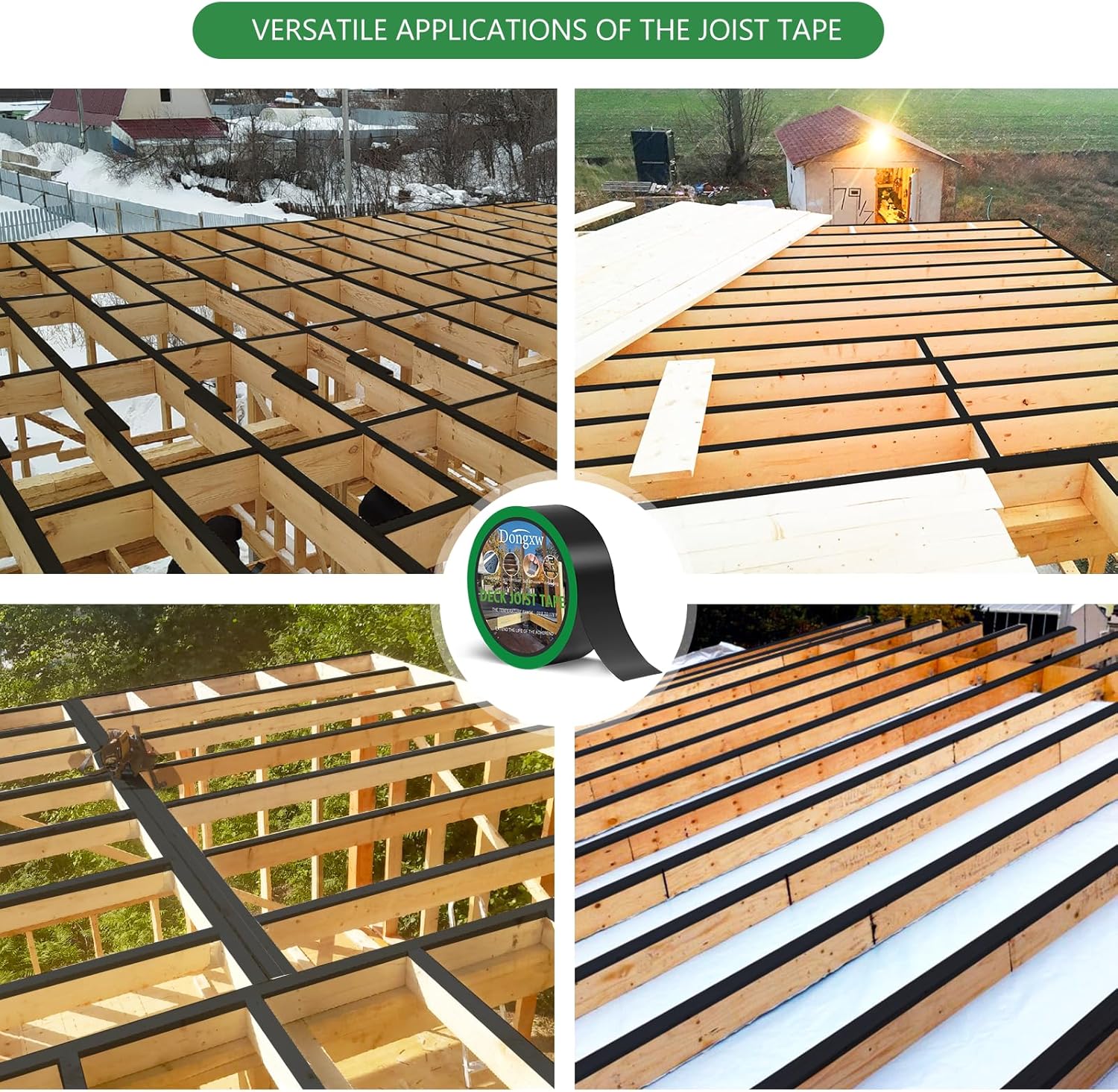
What it is and what it’s for\nThe Dongxw Joist Tape is a waterproof butyl deck flashing tape supplied in a pack of eight rolls, each measuring 5 cm by 15.2 m. It is presented as a moisture-sealing solution for exterior joists, beams and related timber components, with a broader claim to work on a variety of surfaces such as wood, metal, glass, plastic and rubber. On the surface, the product is pitched as a practical, long‑lived repair and protection option aimed at extending the life of timber frameworks used in decking and similar structures.\n\n## Why you might consider it\nIf you are building or maintaining an outdoor structure, protecting joists and beams from water ingress is a common concern. The tape is designed to offer weather resistance across a wide temperature band, reportedly withstanding temperatures as low as -20°F (-29°C) and up to 176°F (80°C). This suggests it could perform in both cold and warm climates, reducing potential corrosion and rot when applied to exterior framing. The packaging implies easy installation with multiple combinations, which may help in covering awkward shapes or junctions during a project.\n\n## What stands out on paper\nThe value proposition rests on durability and coverage: eight rolls provide substantial material for a typical decking frame, and the butyl-sealed backing is intended to improve adhesion and create a waterproof barrier. The ability to seal around joists and other timber components could simplify repairs and future maintenance, potentially saving time and labour.\n\n## Practical considerations and limits\n- It is described as suitable for exterior wall joist framing during construction, but the exact environmental exposure limits beyond temperature range aren’t specified.\n- The claim of compatibility with “most pressure-treated wood” is reassuring, yet real-world adhesion can vary with substrate preparation, humidity, and surface cleanliness.\n- While the product is versatile, it may not replace purpose-built flashing in every scenario, and the installer should consider local building codes and deck design requirements.\n- The description does not provide explicit thickness, adhesion type, or tear strength, which can matter for long‑term wear and ease of application in tight corners.\n\n## Who it’s for\nThis tape seems suited to DIY enthusiasts and professionals who are sealing deck frames, beams or timber joists, especially when working with pressure‑treated wood. It may appeal to those wanting a single‑solution product that can be applied across multiple surfaces and environmental conditions.\n\n## Who it isn’t ideal for\nIf you require precise technical specs, a guaranteed adhesive compatibility chart, or performance data under specific climate or substrate tests, this product description does not provide those details. For exact decking systems or higher‑spec projects, a more technical flashing solution might be preferred.\n\n## When it makes sense to buy\nIf your project involves outdoor timber framing where water ingress is a concern and you want a practical, broad‑use sealing tape with substantial roll coverage, this could be worth considering. The temperature tolerance is a useful indicator for varying UK weather, and the eight‑roll pack helps with larger jobs.\n\n## What to check before buying\n- Ensure the substrate is clean and dry before application to maximise adhesion.\n- Consider whether your project needs specialty flashing in joints or corners in addition to joists.\n- Plan coverage according to the deck design to avoid leaving gaps or overlaps that might compromise the seal.\n- Verify any local guidance on moisture barriers and deck framing before committing to a particular solution.\n\n## How it compares to alternative approaches\nCompared with more rigid metal or foil flashing, this butyl tape offers flexibility and ease of use, which can be advantageous for irregular shapes or retrofit work. However, it may not deliver the same mechanical protection or longevity in high‑traffic or structurally demanding areas as purpose‑built flashing systems. For simpler, cost‑conscious projects, the roll format and weather resistance could represent reasonable value.\n\n## Practical use example\nImagine you’re sealing a small timber deck with several joists visible from above. You cut a length of tape, press it along the joist edge and across the joint line, and smooth it to expel air bubbles. The roll coverage means you can work in stages, aligning adjacent sheets neatly, and the butyl backing helps achieve a tight seal even on slightly uneven surfaces.\n\n## FAQ (based on available data)\n- Q: What temperature range does it tolerate? A: It is described to work from -20°F to 176°F, indicating suitability for cold and hot conditions.\n- Q: Is it compatible with most pressure‑treated wood? A: The description claims compatibility with most pressure‑treated wood, though real‑world adhesion can vary.\n- Q: Can I use it on metals or plastics? A: It is stated to be usable on wood, metal, glass, plastic and rubber, enabling sealing beyond joists.\n\n## Decision and final thoughts\n### Is it worth it?\nIt makes sense if you prioritise practical, flexible sealing for exterior timber framing and want substantial roll coverage in a single pack. It may not be the strongest option for high‑demand structural joints or where exact technical specifications are required.\n### Final verdict\nA workable, mid‑range choice for budget‑conscious decking projects where weather resistance and coverage are important, provided you manage expectations about technical data and site conditions.