

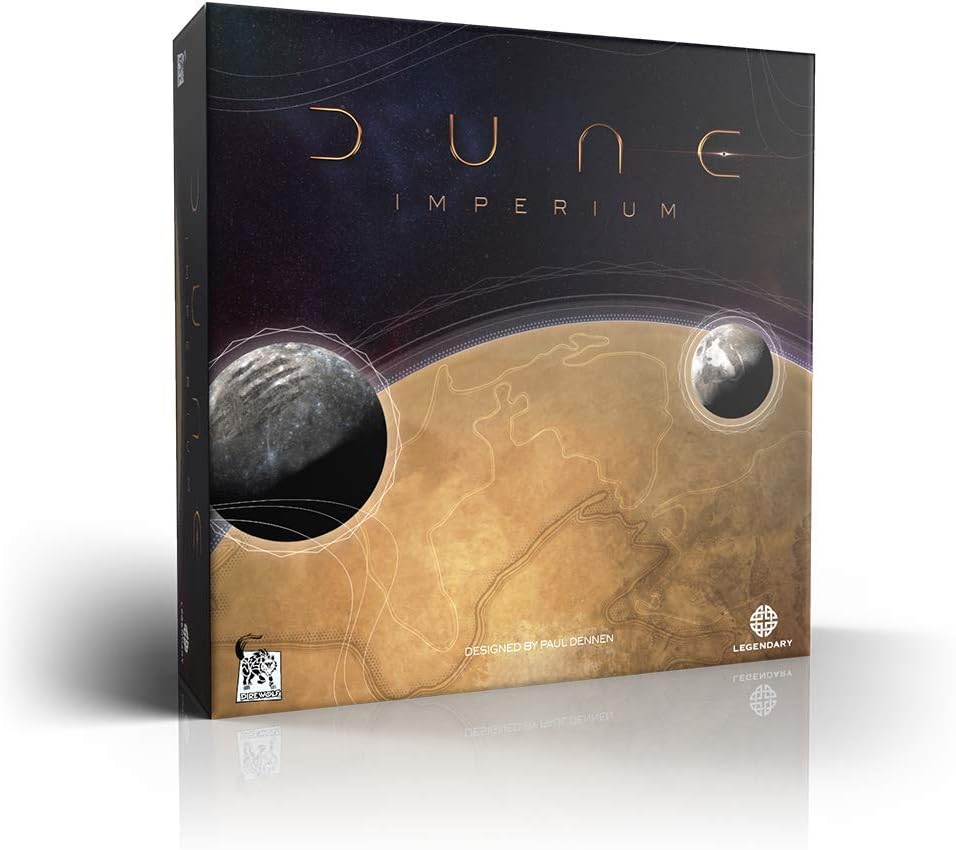
Dire Wolf Dune: Imperium (Black) board game, 11 x 11 x 4 inches
Product description
What it is and why people are looking at it
Dire Wolf Dune: Imperium is a board game that blends two popular mechanics: deck-building and worker placement. In practice, that means you’re not only thinking about how to collect and improve your cards, but also about how you spend limited actions each turn. The Dune theme is a big part of the hook too—this is positioned as the first new Dune board game in nearly 40 years, and it’s described as drawing inspiration from the upcoming film.
If you’ve been curious about “deck-building meets strategy”, this one has a clear angle. It’s not trying to be light party entertainment, it’s aimed at players who enjoy planning ahead and making trade-offs. Still, depending on your taste, the combo of mechanics can feel like a lot—so it may not be the smoothest ride if you prefer simpler, single-layer gameplay.
The essentials for decision-making
From the basics provided, this is an English version for 1–4 players and it’s labelled ages 14+ with a playing time range of 60 to 120 minutes. That’s the kind of schedule you’d typically set aside for an evening session rather than a quick after-work game.
It makes sense if you want something with depth: deck construction and action selection working together. You also get a clear audience fit—teens and adults who like strategy. Where it may not land is if you’re primarily after something short, casual, or largely luck-driven. The time window suggests it’s built for deliberate decisions more than rapid, repetitive turns.
Key features (what stands out on paper)
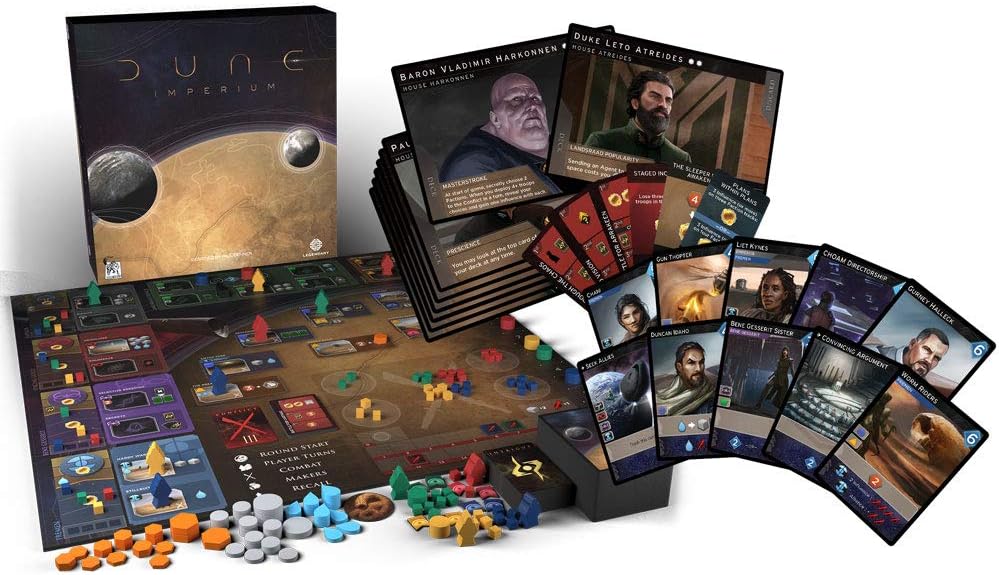
The headline is the mechanic mix: deck-building plus worker placement. That combination generally appeals to players who enjoy both: - building a better engine over time (cards and synergies) - using workers/actions efficiently (choosing where your influence lands each round)
Also, the theme isn’t just pasted on. It’s explicitly described as inspired by the upcoming film from Legendary Entertainment. The Dune connection is likely a major draw if you’re already in the franchise, but you don’t need to be a hardcore lore expert to enjoy the gameplay loop as described.
One limitation to keep in mind is that a Dune-themed strategy game still has to balance accessibility with depth. The listed age and 60–120 minute range lean towards “strategy first”, so it might feel dense if you’re new to deck-building or worker placement.
Practical example: what a typical session feels like
Imagine you sit down with 3 friends. You start with a baseline set-up and the early game is about figuring out what kind of deck direction you want—while also placing your workers to secure the most useful actions. If you choose an action that helps you draw or improve what you’ll have later, you’re effectively sacrificing some immediate power for future tempo. Meanwhile, other players are doing the same kind of calculation, so the board placement matters.
That’s the practical reason people gravitate towards this sort of design: decisions aren’t isolated. Your card choices affect your later turns, and your action placement influences which cards you’ll get to build with.
Who it suits best (and who should think twice)
It’s a good fit if you enjoy strategy games where you manage multiple resources and plan your next few moves, not just the next turn. It suits players who want a structured game session, and it’s likely to feel rewarding if you like deck-building progress rather than static decks.
It may not suit you if you’re expecting a quick, casual game, or if you don’t particularly care about either deck construction or worker placement. Also, because it’s listed for ages 14+, it’s probably not aimed at younger players who just want the theme without heavier decision-making.
It might not be a great match if you prefer games with fewer interconnected systems. The blend here can be fantastic, but it can also be cognitively demanding.
Tech specs
- Name: Dire Wolf Dune: Imperium
- Type: Board game
- Format: English version
- Size: 11 x 11 x 4 inches
- Players: 1–4
- Age: Ages 14+
- Playing time: 60 to 120 minute playing time
- Colour: Black
Is it worth it?
Buying makes sense if you want a Dune-themed strategy board game with a real planning element—deck-building and worker placement working together—and you’re happy to commit around an hour to two hours per session. It’s also a sensible pick if you regularly play with a group of up to four and you’re looking for something more “game night” than “filler game”.
You may want to skip it if you’re after something light, fast, or easy to teach in minutes. Also, if you only like one of the two mechanics (either deck-building or worker placement) and don’t care about the other, the combined approach could end up feeling like effort rather than fun.
Before you buy, double-check that the English language version fits your group and that the 60–120 minute range is realistic for your usual evenings.
Mini FAQ
Is this game suitable for new board gamers?
It’s likely best for people who are comfortable with strategy and don’t mind a longer session, given the 60 to 120 minute playing time and the ages 14+ guidance.
How many players can play it?
It’s designed for 1–4 players, so it works for solo, couples, or a small group.
What kind of gameplay should I expect?
Expect a mix of deck-building and worker placement, where your card direction and your action choices both matter.
What language is it in?
It’s listed as an English version.
How long does a game take?
The playing time is stated as 60 to 120 minutes, so it’s not a quick turnaround game.