

CMYK Daybreak cooperative engine-building board game about stopping climate change
Product description
What it is (and why it’s different)
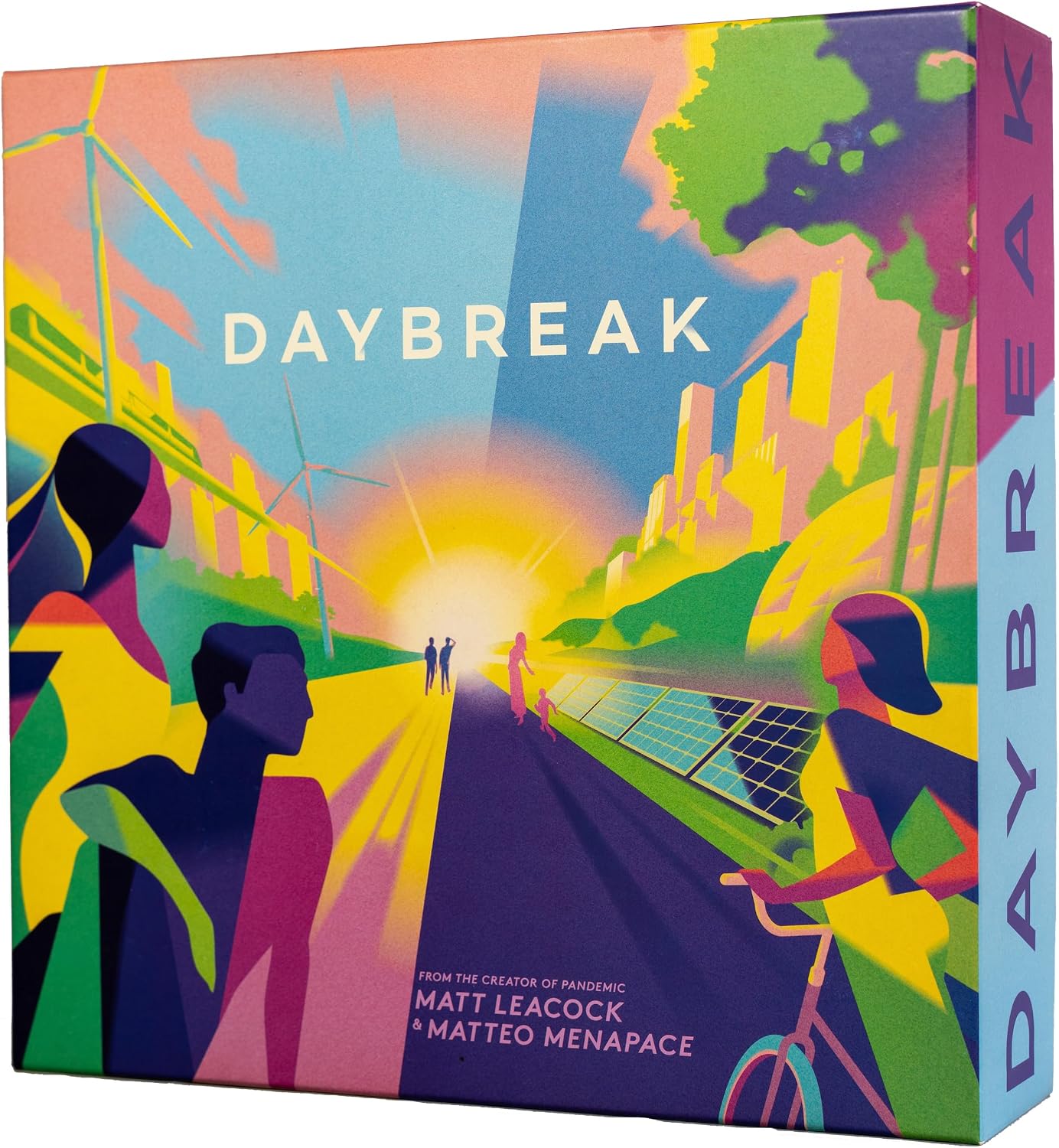
CMYK Daybreak is a cooperative, engine-building board game built around stopping climate change. The clever bit is the theme: it’s not “science education” in board-game form, and it’s not a light party filler either. It’s an engine-builder where you’re working together to steer outcomes, rather than racing your mates for points.
If you’ve ever wondered whether a heavy, real-world topic can be made fun without becoming silly, Daybreak is aimed squarely at that gap. On paper it sounds like it could easily miss—climate change is complex—but the game’s approach is about making the challenge playable: you make choices, you build systems, and you keep adapting as the game pushes back.
Key points to know before you buy
Daybreak is designed for 1 to 4 players and takes about 10 minutes to learn, with 60 to 90 minutes of play per session. That combination matters. It suggests you can get it to the table relatively quickly (no long rules ramp), while still committing enough time for the decisions to feel meaningful.
It also leans cooperative first. In a lot of co-op games, “cooperative” can sometimes mean everyone tries to do their best while the difficulty curve does the rest. Here, the engine-building framing implies you’re actively shaping your shared engine over multiple turns—so the group decisions tend to be central, not optional.
The game loop: engine building meets teamwork
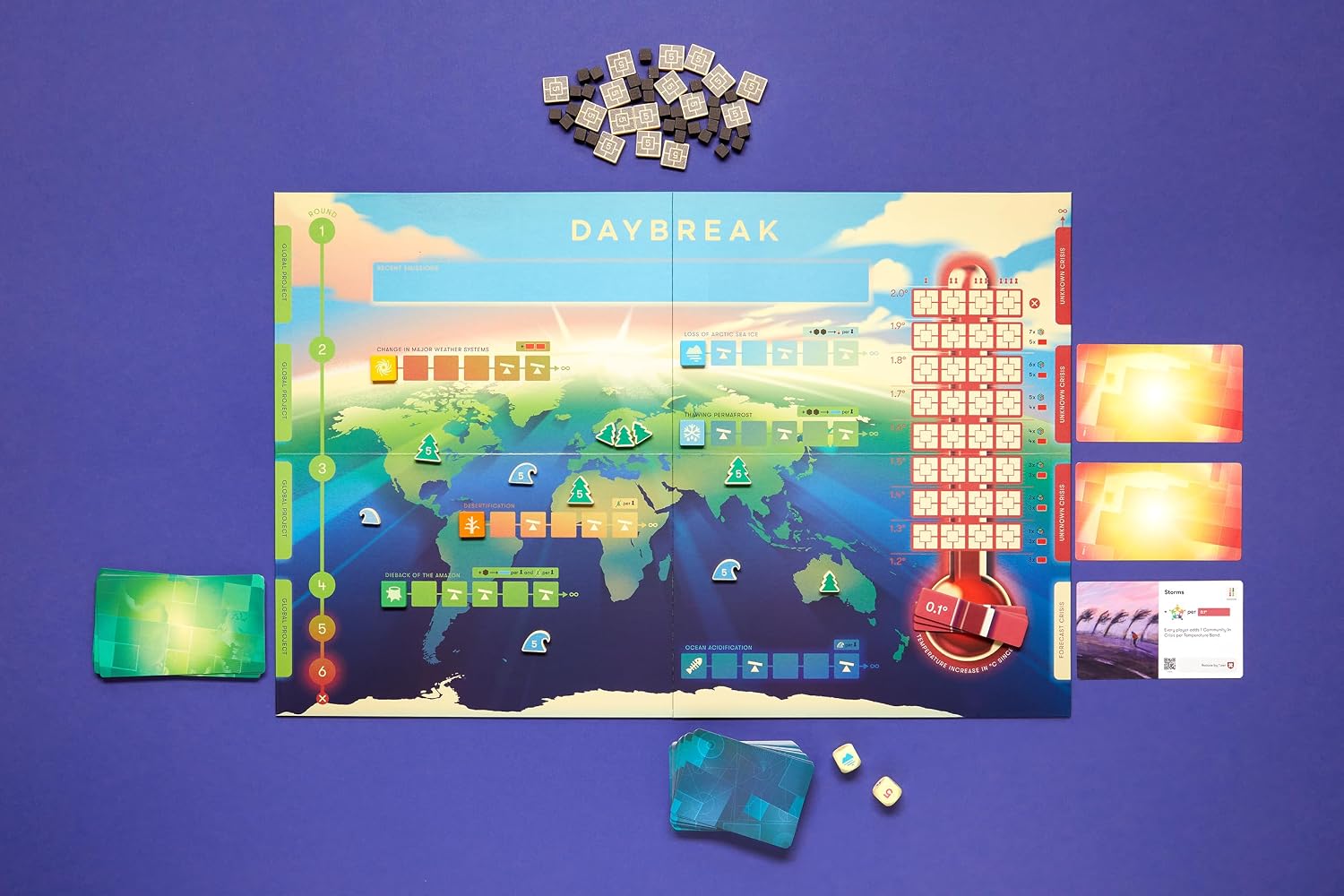
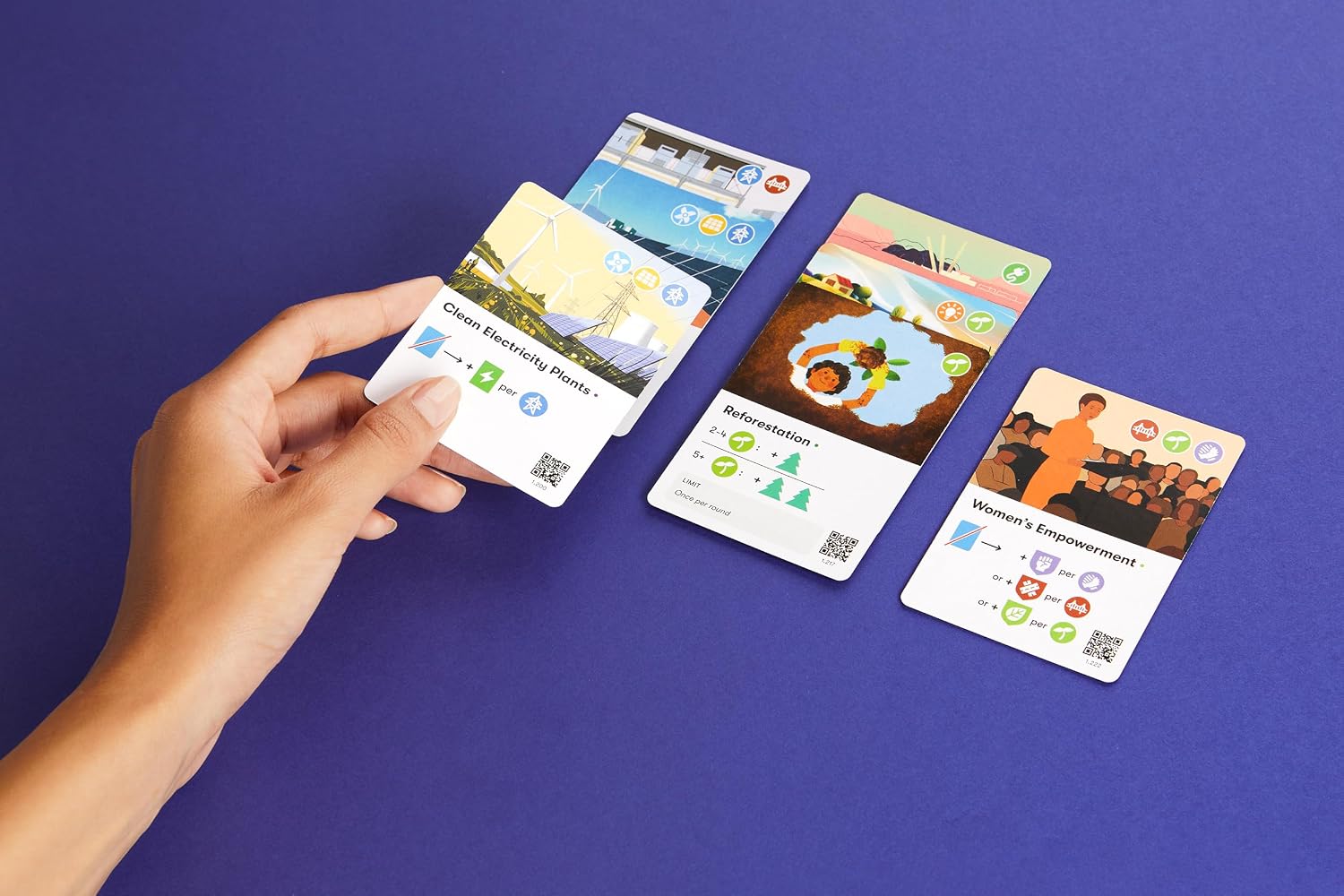
Engine building is all about creating a chain reaction: your earlier choices make later turns smoother or more powerful. In Daybreak, that idea is used in a cooperative context. In practical terms, you can expect moments like: - You and your group start by setting up what you think the engine needs. - Then the game state develops in a way that forces a rethink—either because your plans aren’t lining up, or because the climate-focused challenge demands different priorities. - You’ll likely spend at least part of the session discussing trade-offs rather than playing on autopilot.
It’s the kind of experience where communication is part of the mechanics. If your group enjoys planning together, this is where it shines. If your group prefers low-talk, head-down optimisation, you may find it harder to get momentum.
What stands out (based on the info you’ve got)
There are a few signals in the provided details that shape expectations.
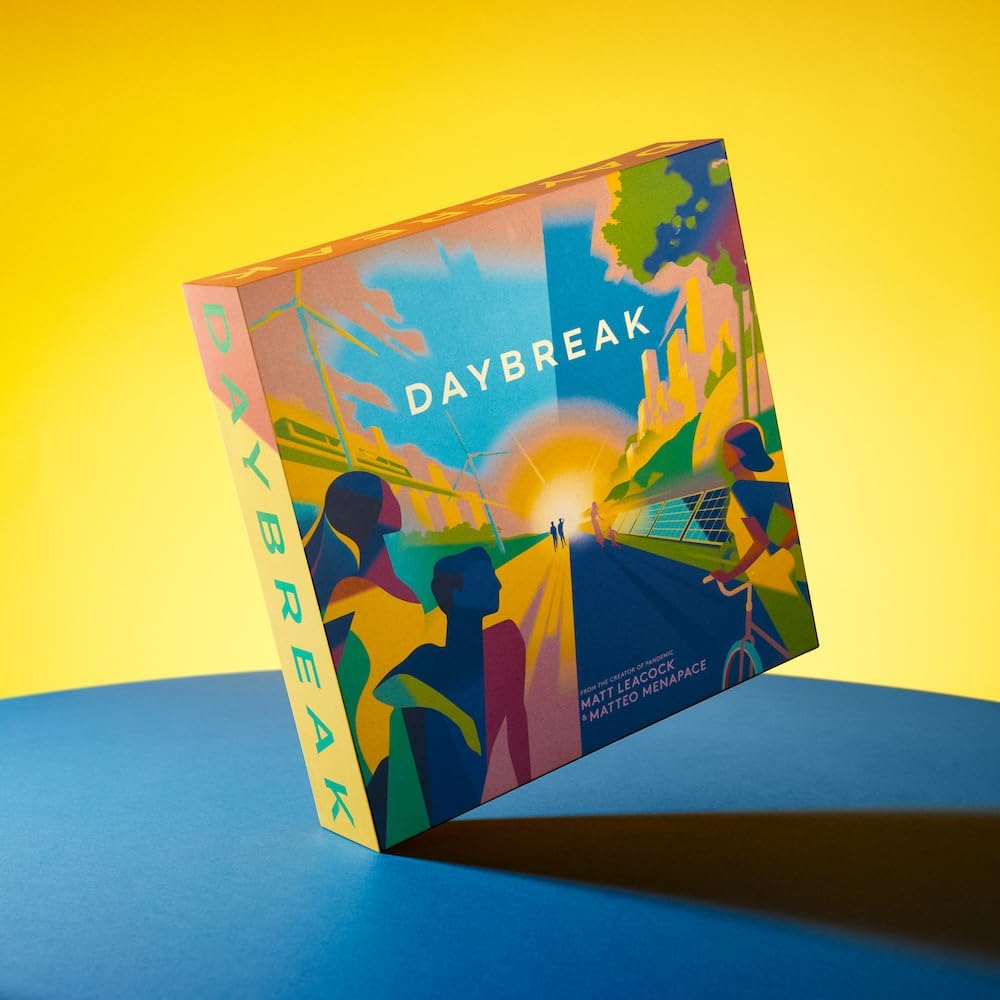
First, it comes from the creator of Pandemic. That’s relevant because Pandemic is known for accessible rules paired with tense cooperative play. Daybreak is described as cooperative with relatively short learning time, which fits the idea of “easy to get started, tricky enough to stay interesting.”
Second, it’s been highlighted in Polygon’s “The best board games we played in 2023”. That doesn’t tell you whether it’ll suit your tastes, but it does suggest it’s in the conversation rather than being a niche novelty.
Third, the quotes from designer Elizabeth Hargrave and co-designer Rob Daviau point to confidence that the game can make a challenging subject feel engaging. Again, you should treat quotes as impressions—not guarantees—but they do hint at a thoughtful design approach.
Where it may not be the right fit
Daybreak isn’t trying to be a lightweight, click-and-go experience. Even though it’s quick to learn, 60 to 90 minutes means it will ask for attention and planning.
Also, because it’s focused on stopping climate change and framed as an engine-building co-op, it may not suit players who want either: - purely narrative play (story-first experiences), or - purely competitive play (race-to-win mind-set).
And a small limitation to keep in mind: with cooperative games, the group’s willingness to communicate and commit to shared decisions can make or break enjoyment. The same mechanics that feel brilliant to one table can feel frustrating to another.
Tech overview (only what we can confirm)
- Type: cooperative, engine-building board game
- Theme: stopping climate change
- Players: 1 to 4
- Learn time: around 10 minutes
- Play time: around 60 to 90 minutes
Notably, the information provided doesn’t include components list, exact rules themes, or any specific mechanics beyond the engine-building/cooperative framing—so it’s best to rely on those pillars when judging whether it matches your group.
Who it’s for (and who should skip it)
It makes sense if you want a cooperative board game with enough depth for planning, and you’re open to tackling a big theme in a gameable, decision-driven way. It’s also a strong candidate for mixed-experience groups where people don’t want a long rules session first.
You may want to skip it if your group prefers competitive head-to-head games, or if you’re after something purely casual with minimal discussion.
It’s also worth thinking about your “climate” tolerance. Some people enjoy themes like this when handled through gameplay systems, others prefer the same tension but with less real-world subject matter.
FAQs
Is Daybreak good if I’m new to engine-building?

It’s described as taking around 10 minutes to learn. That suggests it’s approachable even if you haven’t built engines in games before, but engine-building still rewards understanding the cause-and-effect of your choices.
How long does a typical game take?
The stated play time is about 60 to 90 minutes, so plan for a proper session rather than a quick evening diversion.
How many people can play?
It supports 1 to 4 players, so it covers solo and small group setups.
Does it play like a competitive game?
No—everything provided points to it being cooperative. Your experience will depend heavily on shared decision-making.
Final verdict
Daybreak is worth considering if you want a cooperative engine-building board game about stopping climate change and you value shorter setup/learning time with a longer, more thoughtful session. It’s the sort of game that can work well when your group enjoys discussing trade-offs and building a plan together.
However, it may not be a great match if you want a purely competitive experience, or if your table struggles with co-op communication. If you like the idea of making real-world tension feel like something you can actually engage with through gameplay systems, Daybreak is the kind of game that can earn a spot on the shelf—just don’t expect it to be a quick, mindless play.