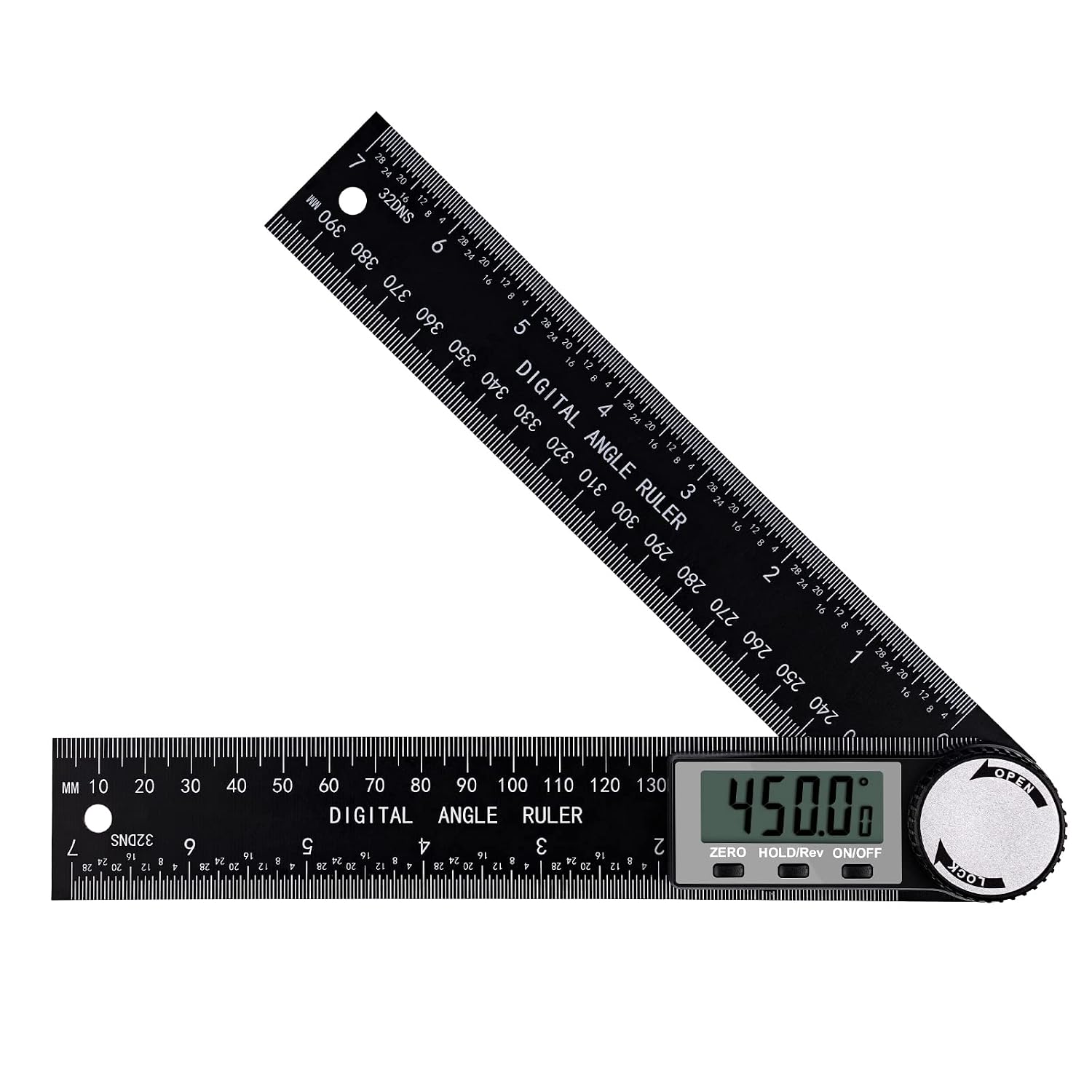
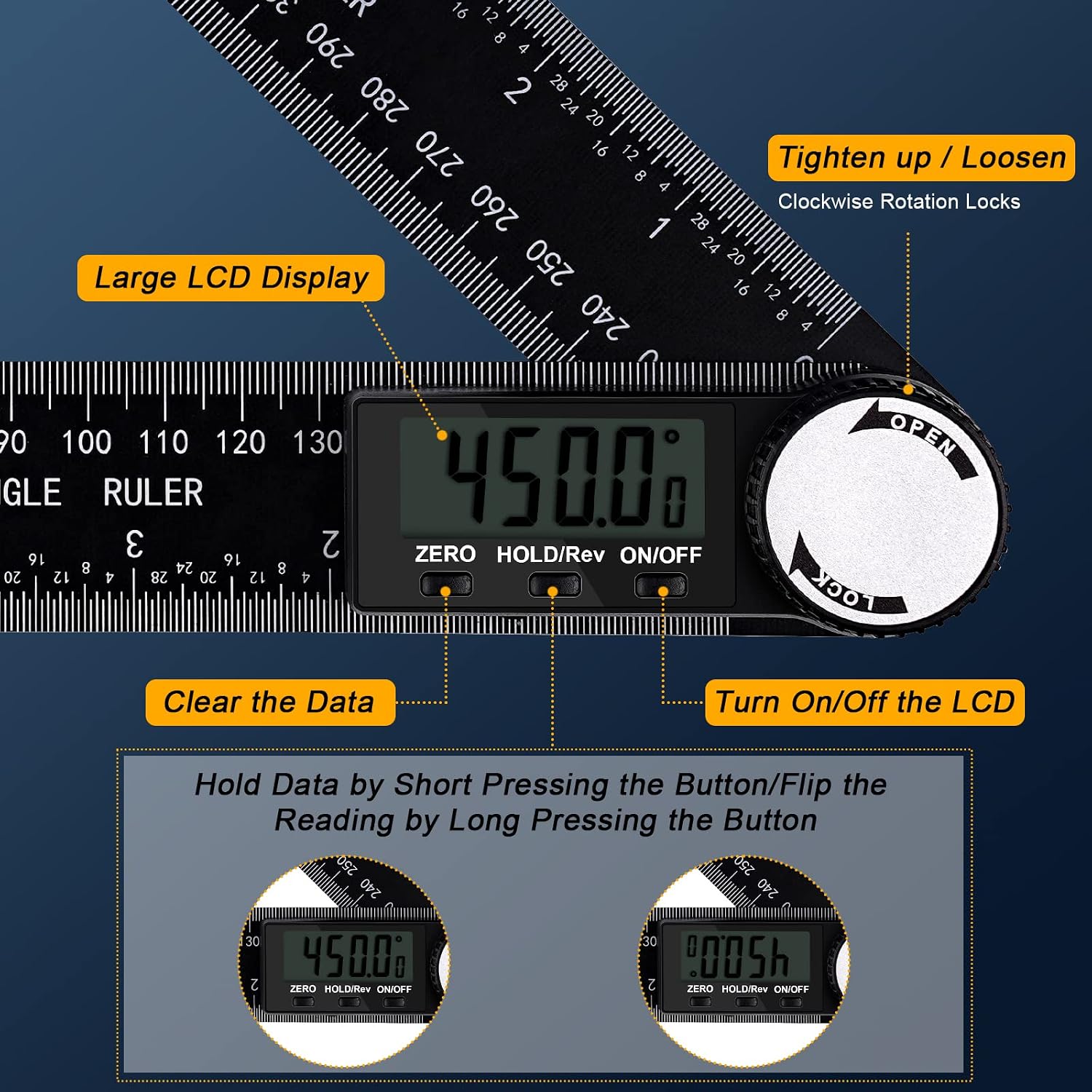
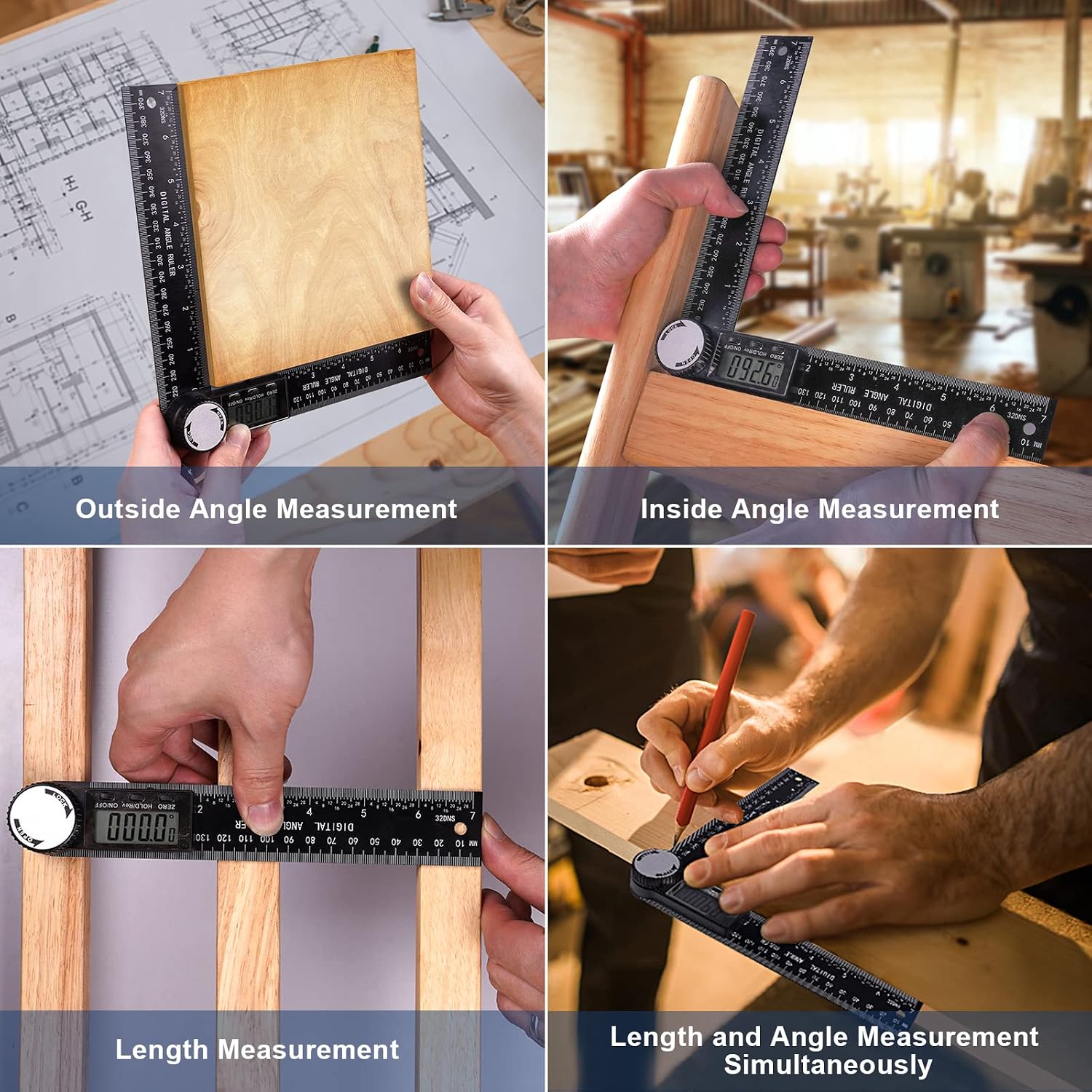
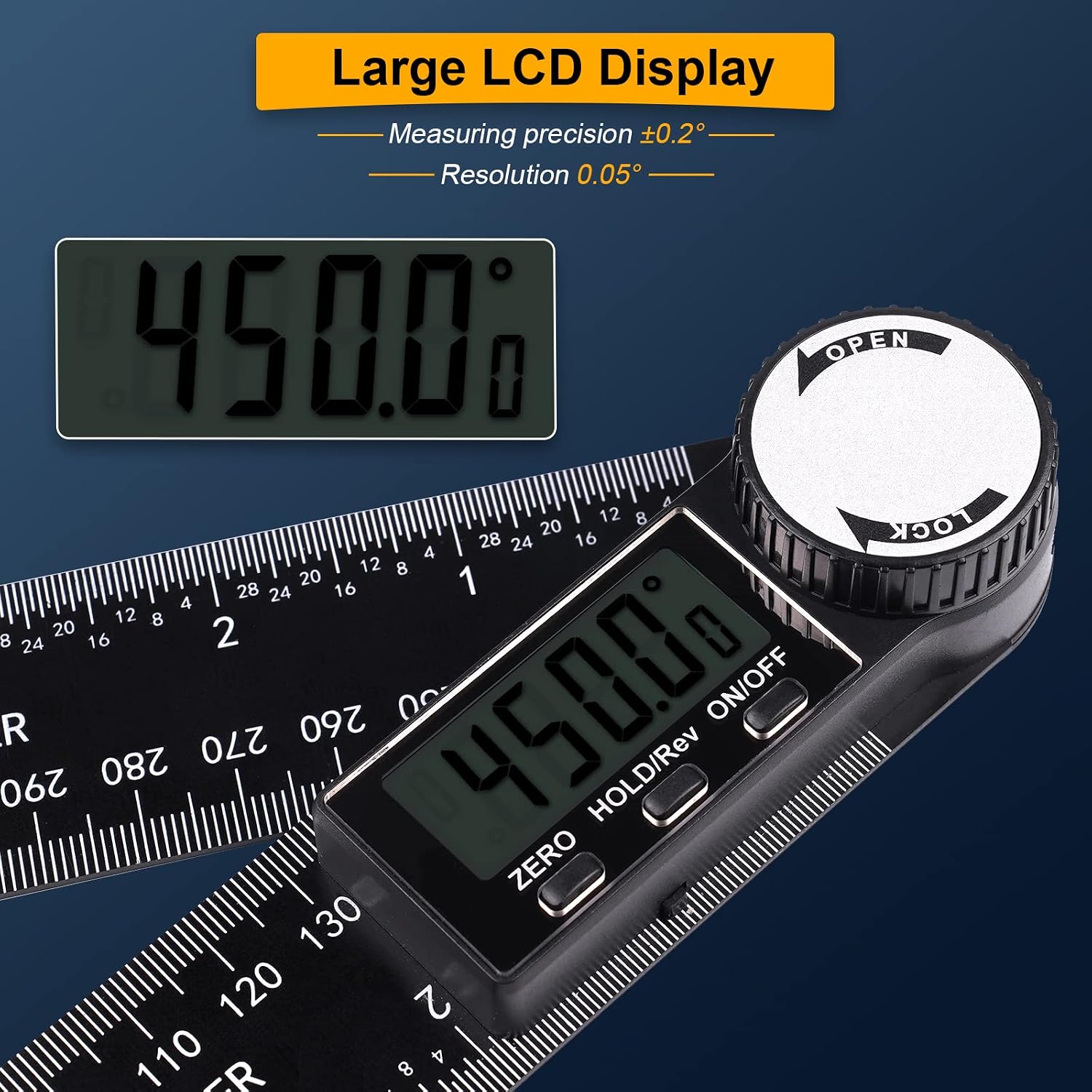
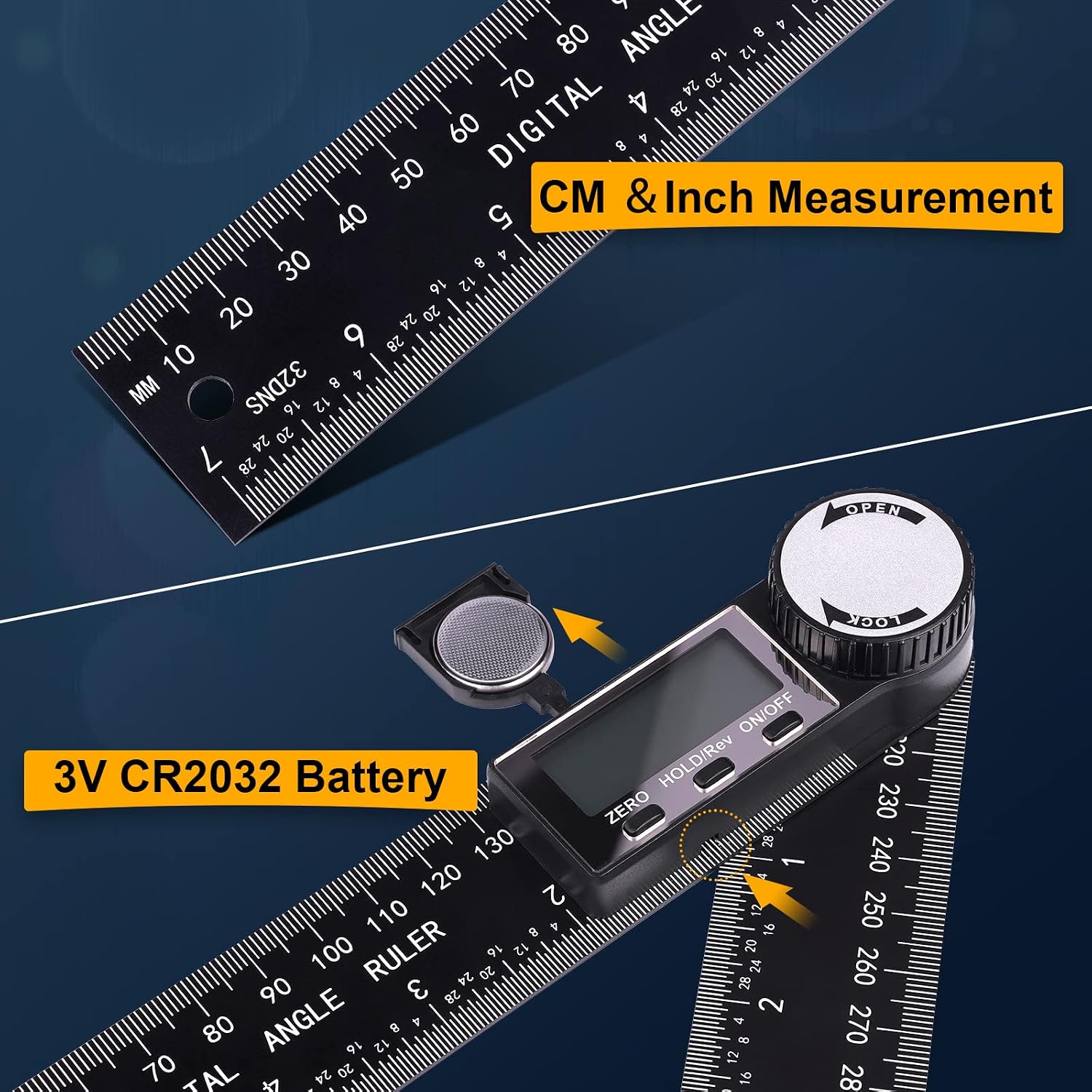
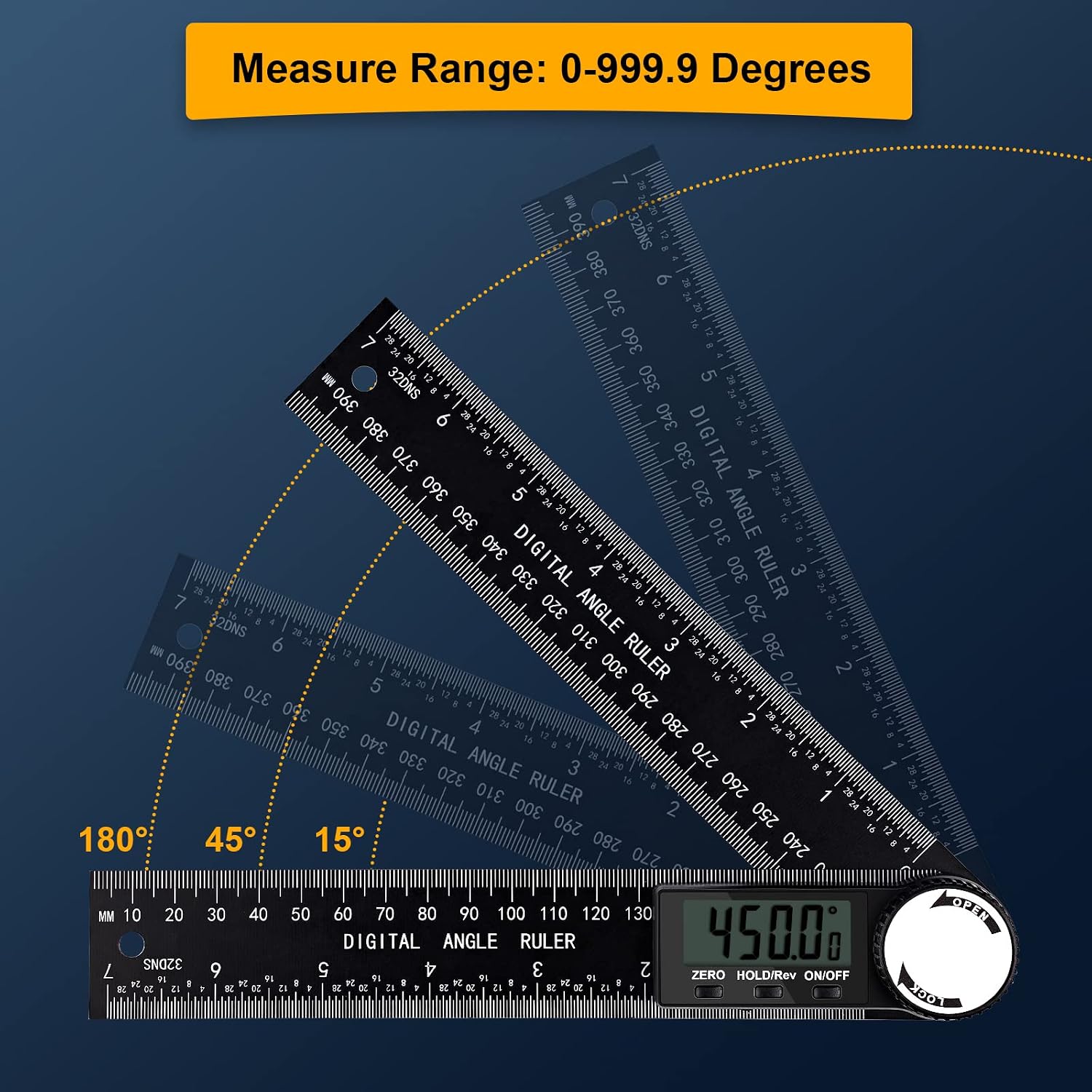
What it is and what it’s for\nThis Digital Angle Finder is a compact inclinometer and protractor designed for woodworking, construction, and general layout tasks. Built from carbon fibre and ABS, it aims to resist wear and remain comfortable to handle during long jobs. With a large LCD readout, you get clear numbers at a glance, which helps reduce guesswork when marking angles or transferring measurements across surfaces.\n\n## How it works and what you’ll read\nThe device measures angles from 0 to 999.9 degrees and offers a precision of ±0.1 degrees with a 0.05° resolution. Before taking a measurement, you reset to zero with the Zero function, this step is important for accuracy. The display can be inverted via the Hold/Rev button for easier viewing on large angles or when measuring from different orientations. Measurements can be read in metric or imperial units, which adds flexibility for varied projects.\n\n## What stands out in use\n- A big, easy-to-read LCD screen makes quick checks easier, especially on busy workbenches.\n- The built-in laser-engraved scale stays legible over time, avoiding muddled readings.\n- The folded length is 200 mm and the total length is 400 mm, making it reasonably portable for site work or the workshop.\n- The Hold/Rev and ZERO functions add practical convenience for repeated or inverse measurements, helping you lock in angles more reliably.\n\n## Pros and what might not convince you\nPros: robust construction (carbon fibre/ABS), wide measuring range, straightforward zeroing, true dual-unit capability, easy-to-read display.\nCons: the requirement to zero the baseline before measuring means you need to remember the setup step, if you forget, readings can be off. It isn’t a high-end digital level with additional features, so if you need advanced data logging or Bluetooth, you’ll want to look elsewhere.\n\n## Who it’s for\nThis tool suits DIY enthusiasts, hobbyists, and professionals who frequently cut angles or transfer angles between surfaces in wood, plaster, or small construction tasks. It’s particularly handy for cornices, skirting, or wall angles where quick verification matters more than ultra-high precision.\n\n## When it makes sense to buy\nIf you prioritise a straightforward digital angle finder with a large display and a solid build for everyday use, this model offers practical value without overcomplication. It’s a sensible choice if you want a single tool that covers both angle measurement and basic length checks in a compact package.\n\n## When you might want to skip it\nIf your work demands far higher precision, data logging, or wireless connectivity, this unit may feel plain by comparison. If you routinely measure very small angles near the limit of ±0.1 degrees, remember the need to reset to zero to ensure accuracy.\n\n## What to check before buying\n- Confirm the measurement range (0–999.9°) aligns with your typical tasks.\n- Ensure you’re comfortable with the zeroing step to avoid measurement drift.\n- Consider whether you need metric/imperial flexibility in your workflow.\n\n## How it compares to a more basic ruler or traditional protractor\nOn the one hand, a digital finder saves time and reduces parallax errors compared with a manual protractor. On the other, it may not replace a dedicated digital level for vertical alignment or advanced surveying needs. If you mainly need quick angle checks during woodworking, this unit sits between a basic ruler and a more feature-rich instrument.\n\n## Practical example of use\nYou’re fitting decorative cornices around a room. You set the Zero when the ruler is horizontal, read a precise angle on the LCD, and lock in the cut with the Hold function as you transfer measurements to a miter saw. The inverted display helps when you’re working from the opposite side of a tall wall, keeping readings visible without repositioning the tool.\n\n## FAQ\n- Q: How do I ensure accuracy? A: Place the ruler horizontally and reset to zero before measuring.\n- Q: Can I use this in imperial units? A: Yes, it supports metric and imperial readings.\n- Q: Does the display stay legible over time? A: The laser-engraved scale is designed to remain clear, but avoid heavy impact to protect the LCD.\n\n## Is it worth it?\nWorth considering if you need a practical, single-tool solution for angle measurement and light-length checks in everyday workshop tasks. It offers a balanced mix of durability, readability, and usefulness for common timber and decorating jobs.