

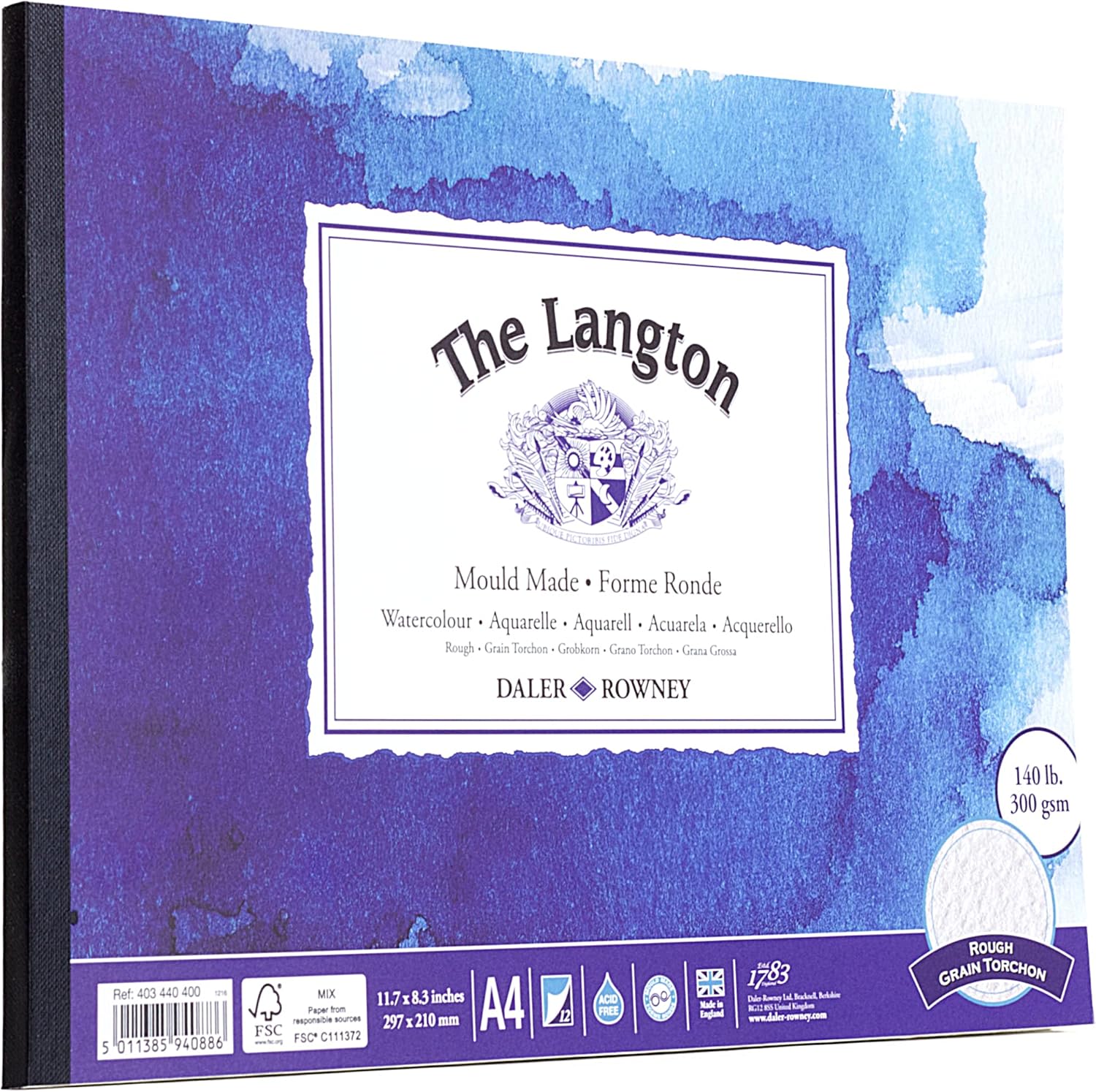
Daler-Rowney The Langton Rough A4 300gsm watercolour pad 🖼
Reviews
Price
Product description
This A4 watercolour pad offers a sturdy surface for painters seeking reliable texture and good colour handling. With a rough finish and 300gsm weight, it suits washes and granulation well for watercolour and gouache, making it useful in studio or plein air sessions. The pad also works with acrylics, inks and dry media depending on your technique 🎨.
Key Points
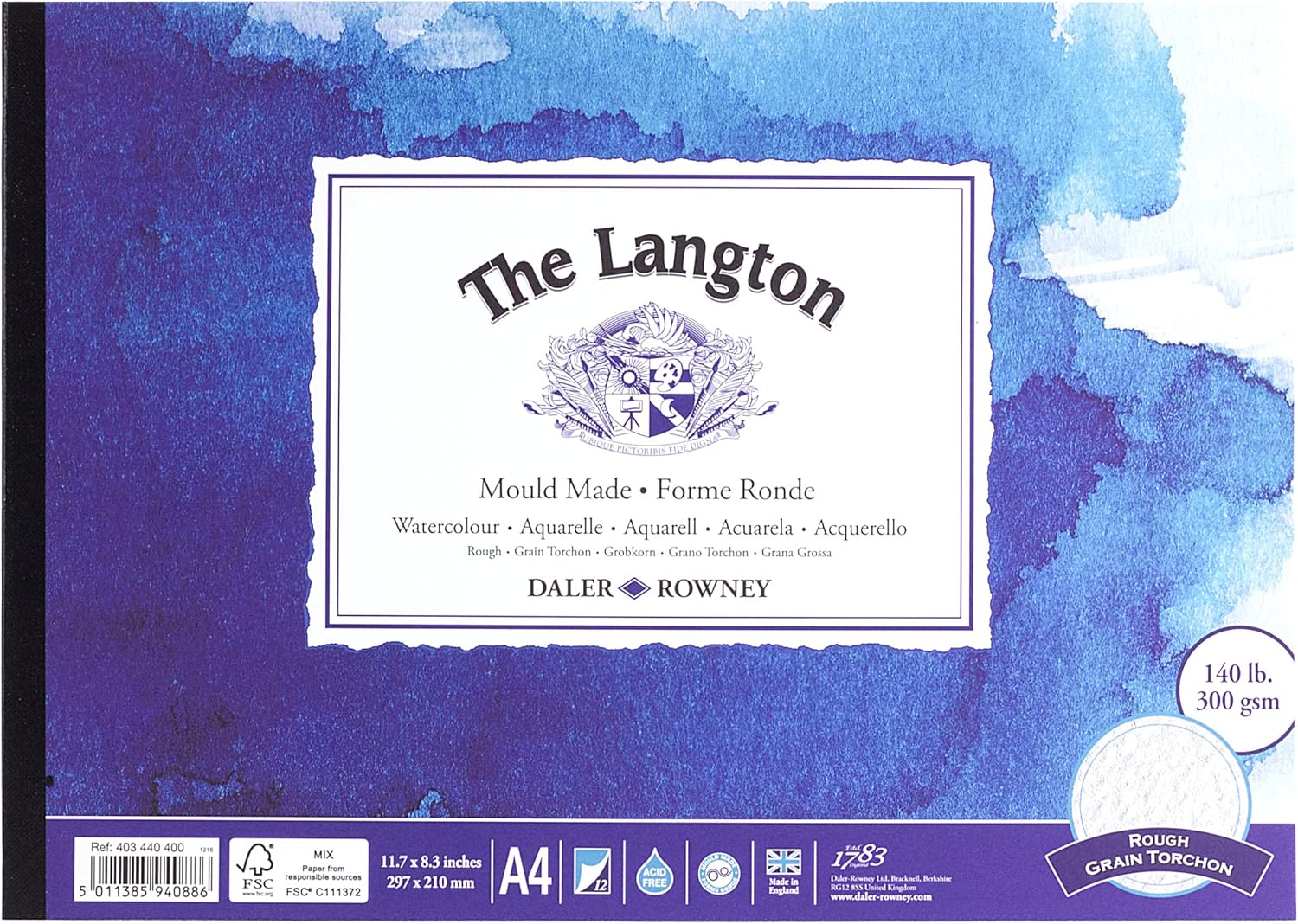
The paper is made on mould for consistent tooth and stable sizing, which helps control water absorption and pigment behaviour. It is described by the manufacturer as acid-free and resistant to fading, offering archival quality for finished pieces. The pad includes 12 natural white sheets, glued on one side to keep pages flat during painting and to allow easy removal when dry.
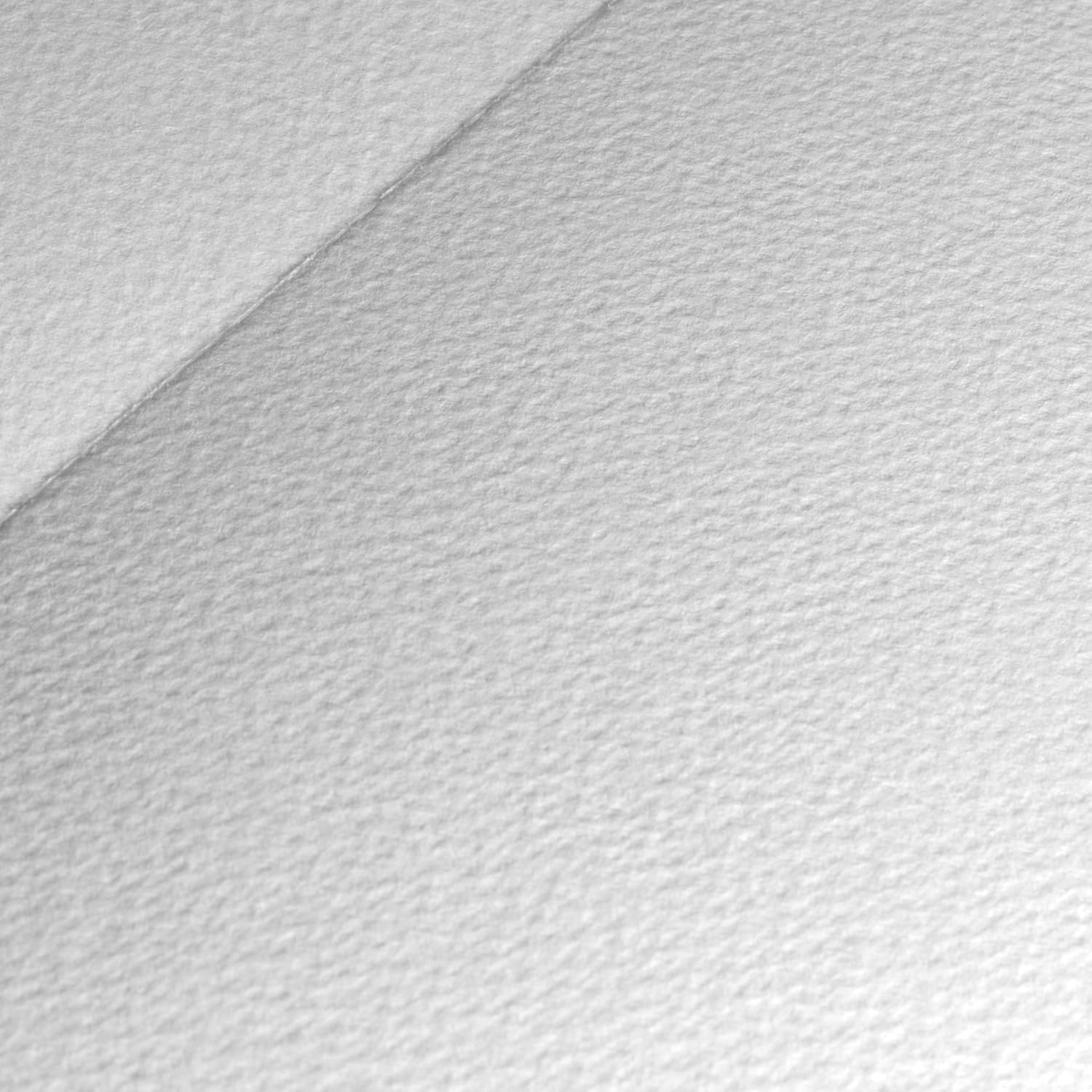
Texture plays a big role in watercolour results. The rough surface enhances granulation and creates visible texture in washes, which some artists prefer for landscapes and atmospheric effects. For heavier manipulation or repeated lifting, consider the 300gsm weight and the specific techniques you use, as very aggressive scrubbing may still cause surface damage according to the manufacturer. 🌿
Technical Specifications
- Name: Daler-Rowney The Langton Rough 300gsm A4 Watercolour Paper Pad
- Weight: 300gsm
- Size: A4
- Sheets: 12, glued one side
- Colour: Natural white
- Acid-free: Yes
Usage Recommendations
Start with modest washes to test how the sheet responds to water and pigment. The rough grain accepts multiple layers for textural effects, and it can be used for both wet-on-wet and controlled glazing approaches. For ink and acrylic details, allow initial layers to dry fully to prevent unwanted lifting. When removing a sheet, peel gently from the glued edge after the paper is largely dry to avoid tearing.
For stretching, the natural sizing reduces the amount of cockling compared with unsized papers, yet if you expect heavy water use throughout a large area, a light pre-stretch may help keep the surface flatter. Portability is another advantage, since the glued pad keeps pages secure when transporting materials to outdoor locations. ✏️🖌️
Benefits
The paper gives good colour vibrancy while keeping pigments stable on the surface, so colours do not sink excessively into the fibre. The archival quality and acid-free make it a practical choice for works intended to last. It represents a versatile option for artists who want a single pad able to handle watercolour, gouache and some mixed media approaches without frequent paper changes.